On Friday, June 2nd, Futureman Records will release Thrift Store Troubadours, the new record from It’s Karma It’s Cool. On the same day, the band celebrates the release at the International Pop Overthrow festival in Liverpool.
James Styring tells the story.
A new record coming up, what can we expect?
Yes, a brand new album, ‘Thrift Store Troubadours’ will be released on Friday 2nd June. We’ve been hard at work in the studio on a real strong set of songs, some of the band’s best. There’s some rockier songs, some pop kind of things, some acoustic folky stuff. Folks who have followed us this far won’t be disappointed, but there’s certainly some surprises on there. We also have the legendary Peter Holsapple (The dB’s, REM, Hootie & the Blowfish) guesting on a bunch of the songs. We can’t wait for you to hear this record.
The band has become a fixture in the Power Pop community. Does that create obligations or freedom?
We’re very grateful that the Power Pop community seem to enjoy what we do, though we’ve never labelled ourselves as a power pop band; I guess there’s elements of power pop in some of what we do, but you’ll hear a whole load of other influences in there too. We listen to rock, alternative, indie, folk, it’s all thrown into the pot. We’ve always left it up to other people to label us, as long as they’re listening and enjoying what we do, we don’t mind how they catorgorise us. We try not to pay too much attention.
I think your lyrics don’t get enough attention. Is it always easy to find the right words?
Thank you. It’s always good to know people are listening to them. I always keep the words open to interpretation, and not too obvious. I’ve said it many times, but it’s far more important what the listener thinks they’re about, than what I was thinking when I wrote them. Everyone can hear something different in them and that way the song becomes more personel, it belongs to everyone, in their own way.
What makes you happier: finding a great melody or finding the right words for a certain emotion or thought?
I would say both go hand in hand. The mood of the music will often dictate to me where the words are going to go. I’m always looking for an unexpected melody, or a curve ball, to catch the listener out and keep it interesting. We write big emotional stuff, so my melodies and lyrics have to reflect that.
They have a great reputation and put out some cool music. We’ve been on the Kool Kat Musik label up to now, but just felt it was time for a change; there’s no bad feeling between us and Kool Kat, it’s an amicable parting of ways. Ray is one of the good guys and has always been supportive of the band, but we just thought it was maybe time to move on.
How will you promote the new record?
You’ll be reading about it nearer the time, I guess, and we’ll be out playing shows to support it; we’ll have a load of new songs to play for people! There’s also a series of digital singles currently being released from the record, so look out for those.
Any gigs planned?
Yes, we have a very special album launch. We play Liverpool International Pop Overthrow festival on release day, Friday 2nd June, at the Cavern Club and Cavern Pub. The IPO Liverpool is always a great time, and we get to see some great bands too.
future strangers is the 21st release of the black watch, but quantity means nothing to creator John Andrew Fredrick. The quality of the music generates new followers every week and the urge to make music that no one else makes is indestructible.
future strangers is the 21st full-length release from the black watch, an incredible number. Eat, drink, sleep, write and record songs, repeat?
There is another one coming in the UK very soon called The Morning Papers Have Given Us the Vapours. Yes, we put out a lot of music. It might bother me that listeners sometimes focus too much on how prolific we’ve been if I let it. And I kind of used to, but when you think about it, you wouldn’t level that accusation (it sort of IS when that’s what the reviewer or punter zeroes in on rather than the quality) at a Kandinsky or a Shakespeare. As in, “what? ANOTHER painting? or what? another PLAY?”).
“Songs pour out of you,” a producer called Misha Bulluck (who drummed on Here & There) said to me recently. He’s not wrong, and I’ve always said that I make the music I want to hear–the stuff that no one else is making, so I ‘will bloody’ do it. Hahaha.
I think Wish I Had Something is beautiful. It initially reminded me of Echo & the Bunnymen. Do you see that as a compliment, or do you find these comparisons superfluous?
I don’t mind it at all, especially the Bunnymen whom I adored for the first five LPs and then shook my head in total dismay at how they waned. I think that Wish I Had Something really has its provenance in the Beatles, and when they went to India. As a kid, hearing George’s India-influenced songs, I freaked and started making my mom and dad buy me Ravi Shankar records. Never been there myself, but I am a total fanboy for Indian fiction and film. I doubt if I’m tough enough to travel there ever–save on youtube! Hahaha.
future strangers, the title track, immediately grabs you through the beautiful intro. I notice that the sadness that emanates from the title alone touches me. How did the number come about?
The phrase “future strangers” just kinda came from contemplating how we’ll be estranged (by death, by events, by chance) from everyone we’ve ever known. But the song itself is about someone I was in love with but who turned out to be a very confused and self-and-other deceiving woman. Not a new story by any stretch! It’s always a risk to give oneself to someone, but it’s one I think that would be tragic if one indeed stopped taking it. Nevertheless, I rather believe that things DO work out for the best. There’s that sanguine side of me coming out!
There is a statement by a Dutch writer, Connie Palmen, who says that the writer is in complete control, but I think when a book or record is finished, the reader or listener provides further interpretation. How do you see this? And would it bother you if something other than what you were trying to convey was heard?
So many friends who’ve come back and gone into a closet for a month or lose or gain their faith in God. Of course, as I don’t believe in what Eliot called the Intentional Fallacy, anybody’s game/welcome to interpret songs how they wish. I am not the Ur interpreter at all, nor is any artist. It’s nice to be asked, “what does this song mean?” but of course, the auteur or composer is just another wonderer, if you will. So much of what I do comes from the unconscious anyway. The world? Well, I’ve tried my damnedest NOT to pay attention to politics (other than Plato’s or Aristotle’s! How pretentious does that sound? Ahhaa. So I will throw in Hobbes as well….), but they’ve parasited into all facets of life and society, so they’re ever-harder to ignore.
I do indeed think the world’s gone mad, and as an overeducated person, I will say that Identity Politics and the way a certain Party has emphasized them has been nothing less than revolting. At heart of course, I am deeply cynical about almost everything, save the sacredness of music and literature, but one must acknowledge the notion that deep-down every cynic is HOPEFUL, through-and-through that good will prevail–in both people and artifacts. One more thing for now: I’d be most bothered if people DIDN’T bother interpreting my records and books. And we are gaining more fans all the time. It’s been funny to hear or get an email from music fans weekly who say, “I can’t believe I have not heard you guys.”. That NEVER gets me down. I’m just glad that they’re embarrassed about it. Kahaha. Kidding. Happy to have them on our side, so to speak.
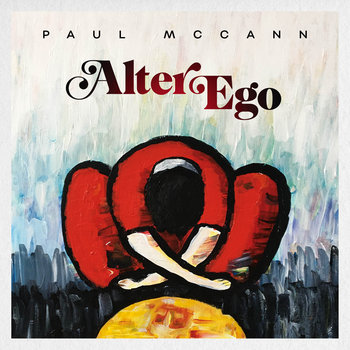
Alter Ego is a beautifully varied pop album. Pure Power Pop alternates totally natural with Rufus Wainwright/John Grant-esque wizardry.
Paul McCann, a singer, songwriter and multi-instrumentalist from Cavan, Ireland, explains how that came about.
How did this record come together?
A lot of the stuff I write, and record happens quite organically. After I put out my first record, ‘Here Comes the Rapture’, it was very much a blank canvas, but I knew I didn’t want to make Rapture 2. The idea was always to go bigger and bolder. I played most of the instrumentation on the first record, so from quite early on, I wanted as many great musicians on this one as possible. It was amazing having Sylvie Lewis, Jason Falkner, Gary Luca,s and so many other people whose music I love involved this time. It was always important to me that the songs be good enough for these guys to play on too. If anything, that made me raise my game a little too, with regards to the songwriting.
When you’re that close to creating something, it’s hard to tell if it really is any good. A number of times when I thought I was failing in creating something better, Martin Quinn (Producer and Engineer) would always reassure me that we were creating something special. I brought in a lot of friends to record parts on these songs too, as well as having the amazing Avoca String Quartet involved. It is a wonderful feeling to hear a song you wrote in your kitchen being played in the most elegant manner by a string section.
How do you decide when a song is finished and ready to be recorded?
This can vary, song-to-song. Some songs can arrive fully formed, and within a half hour or an hour it’s there…it’s done, and ready. Other songs can take much longer, months or years to have a final format that I’m happy to take into the studio. In some cases, I might still be scribbling or re-writing a lyric or part of a lyric in the vocal booth as it’s happening, but that is rare. For example, the chorus and main guitar run of ‘Lost in this Moment’ was part of a completely different song that I was working on with my band ‘The Plan’ about 6 years earlier. Whereas ‘Where has the Music Gone’ was pretty much written in one sitting and something I started working on in the studio with Martin the very same week.
How do you balance experimentation with commercial appeal in your music?
I’m in a very lucky position that these songs are 100% written without any influence or ambition to appeal to anyone. I have never written anything that I thought might be catchy or might be a hook. It’s been a really enjoyable experience arranging these songs with a live band and hear their reactions to certain songs, as in what songs they are enjoying or what earworms they’re finding hard to shake off.
It feels like a much purer approach to write the music I want to write and not what type of music I think people want to hear. This possibly explains why and how my music can make drastic jumps in genre, from folk to rock, to funk, etc, but this certainly isn’t pre-planned. Each album, or EP just happens to be a collection of whatever songs I’ve been working on at that time, that I think don’t suck too much.
How do you incorporate feedback and criticism into your creative process?
I think you do need a thick skin to survive the world of reviews and criticism. We’re a sensitive bunch, ha ha ha… Over the years, I’ve had to remove myself from criticisms and just tell myself that it’s just one person’s opinion, and hey, maybe this just wasn’t for them. A couple of people have commented on my choice of words or rhyming choices, but in truth, in most cases I strive not to go with a “cat” and “hat” type rhyming structure when I’m writing lyrics. It’s much more about the musicality of words, than simple rhyming for me. It’s more Lennon than McCartney if that makes sense.
To me art is supposed to be about pushing boundaries and not just doing the same thing time and again. I must be sincere and honest with what I want to create, and not what people think I should create. If what I do doesn’t work for you, then “move along please”.
If you could pick three singers to sing harmony vocals on your next record, who would you ask?
This record was kind of like that to be honest. Before this record, if I had to answer that, I would probably have included Sylvie Lewis and Charlotte Hatherley. They are two incredible vocalists and I’m genuinely honored to have them involved in ‘Alter Ego’. For the next album, I’m going to reach for the stars and say Paul McCartney, PJ Harvey and Thom Yorke. Macca, because I think he’s the greatest living songwriter and performer (and I think alphabetically I’m listed next to him on most streaming sites); Polly Jean, because I love how she can continuously reinvent herself with every album and nail it every time; and Thom, because he is amazing. Similarly, he and his bands have evolved album to album and always delivered something innovative. He has crafted his own sound and appears to not have had to conform to label influence.
If any or all of those three are reading this and are open to collaborate, hit me up! Ha ha ha…
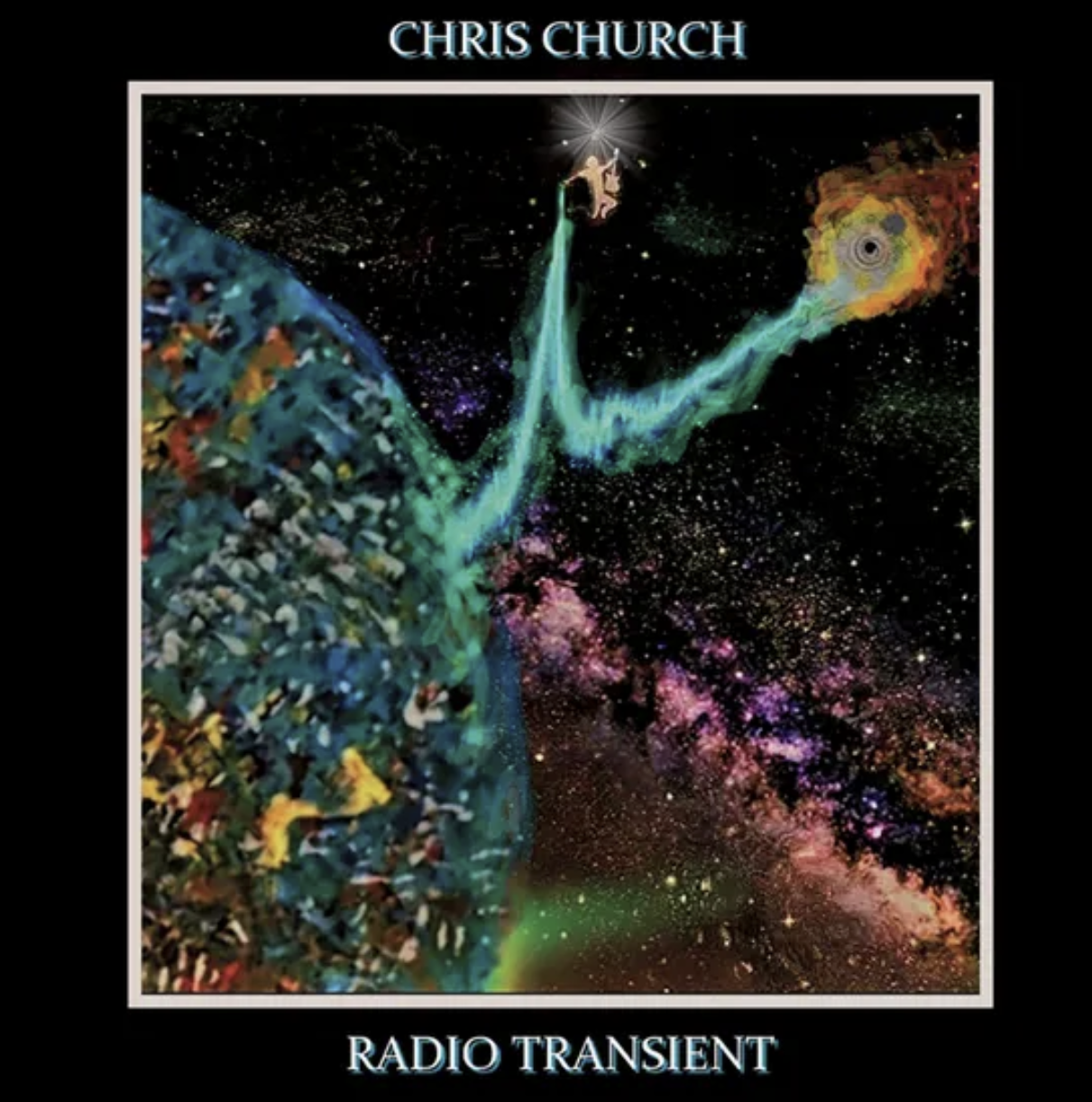
Chris Church has been releasing one great record after another over the years. And the new one, RADIO TRANSIENT, to be released March 24th by Big Stir Records, is fantastic again; more pop than rock this time. Incredibly infectious pop, that is.
Wow, you seem to have reinvented yourself musically, or am I exaggerating? I hear a lightness I’m not sure I heard before.
I was interested in trying to combine the sound of The Fixx and the solo stuff by Lindsey Buckingham, for whatever reason. That’s how I got started on this album. I used my Danelectro 12 string electric guitar almost exclusively, and got that thin “silvery” sound. In the past I have only used that approach to my guitar sounds sparingly, but I have begun to realize that I work well with self imposed limitations, so I stuck with it. That pretty much forced a lighter sound. I insisted on making the vast majority of the songs on Radio Transient a faster, more kinetic tempo, and I think that is also a factor.
I dance to your new record just like I dance to the old Rick Springfield and Danny Wilde/The Rembrandts songs? Do you consider that a compliment?
Absolutely! Rick Springfield is criminally underrated as a songwriter. I absolutely love “Don’t Talk To Strangers”, “Love Somebody”, and several others. Both he and The Rembrandts have written some really sophisticated pop rock. “Rolling Down The Hill” is a masterpiece. I definitely take that as a compliment, and I appreciate it!
Your voice and Lindsay’s match very well. How did you find out?
I reached out to Lindsay to tell her how much I loved the excellent Gretchen’s Wheel album she made several years back called “Black Box Theory”, and we immediately hit it off musically. We’ve since become friends. She’s an amazing artist, and I think anyone would sound great if she was singing along with them!
Did Radio Transient come about differently than usual?
Not really. I just get the vibe that starts me on a new project and carve it out from there until it’s finished. Same as it ever was, but different every time!
Actually, all your records are well received. That will also be the case with this one, I write in all my wisdom 🙂. What do you actually think of that?
The ‘TLAK GOES DIY series‘ is a wonderful invitation to get acquainted with the idiosyncrasy of artists such as LMNOP, R. Stevie Moore, Hawk Percival, Fran Ashcroft, and Brian Bordello.
Record boss Roger Houdaille (Ex Norwegian) talks about the creation of this series.
What prompted you to start the series?
As with many things I do, it just sort of manifested itself. Brian Bordello got in touch with his album at the same time I heard from Fran Ashcroft. Both are very different, but still kind of this DIY thing. Then, I was working with Alex Wroten and his Gatekeepers project, which R. Stevie Moore is on. Through that, I requested putting something of his out. Then I thought about LMNOP, who I’ve been in touch with the artist forever via his Babysue review site. Finally, an LA-based artist Hawk Percival surprised me with her songs, and we quickly made plans to put an album together. These were atypical releases, so I knew I had to tie them together somehow so it could be marketed better, and the DIY series was born.
The offer seems inexhaustible to me. How did you make choices; (first) which artists and (second) which records of those artists?
It’s true; it’s a vast and mostly unchartered world when it comes to DIY artists. However, since I didn’t start with the idea, the choices really made themselves. For R. Stevie Moore, I asked Alex which is his best album that hasn’t had a proper reissue, and “Games & Groceries” was high on that list. The “LMNO3” album hadn’t been available on CD, and it made sense to put that out.
Did everyone immediately think it was okay that you were going to polish up the sound?
Well, I didn’t try to truly polish the sound up. For example, “Songs For Cilla To Sing” wouldn’t work without its characteristic tape hiss. The same with RSM’s album, which had minimal polishing done. More cutting out bits that really shouldn’t be there, like tape drop outs at end of tracks, some sound balancing, basic EQ, etc. Overall, we do want a professional final product, but stayed faithful, taking into consideration that some releases are lo-fi. “LMNO3” probably received the most cleaning up, using the most up-to-date methods, and I think it helped in that case.
Will you continue the series after these releases?
I hope so. Of course, depends a lot on the reaction to this first batch. I definitely would like to keep releasing some more RSM and LMNOP records. As far as brand new efforts – I’m not sure. I won’t be looking for it. I don’t have time to look for any music, to be honest. But I’m sure some cool things will come around my desk. I have some of my own early DIY things that I may like to put out too.
How do you feel the series fits within the overall catalog of TLAK Music?
It adds a lot of character. I’m happy to have TLAK celebrate such an eclectic mix of artists that are not cookie-cutter, yet still accessible. I hope fans can tune in and get turned on to other artists who may not be on their radar otherwise, thanks to the diverse roster.
Back in the days when Power Pop was called “New Wave-Punk”, The Bings recorded a bunch of songs that were only released this year. Mark Randle, Dave Chrenko and Quint Randle talk about how that could have happened.
After all these years a great release; how did that happen?
(Mark) We’ve all stayed in touch over the years. We’d also see our 45 single up for sale on E-bay and Discogs, places like that. So that was cool. So from time to time the band was on our minds. We even had a few reunions or some of us would have lunch from time to time with band members. Plus, one of my bandmates is my younger brother, Quint.
Then, in the middle of the Pandemic, I was doing some deep house cleaning, digging through a filing cabinet with a bunch of old scrapbook kind of stuff in it. In the very back underneath the some band memorabilia I found two boxes of tapes. I had them but didn’t really know exactly what they were so I had forgotten about them. So I texted a photo to our original studio engineer (my older brother Guy) and that’s when he said they were the multitrack masters. And when we realized these were the 16-track masters, that’s when we said, “We have to get these songs out there, cause the greater world has never heard them.”
So Guy had them transferred to digital by a place that specializes in tape restoration and Guy basically rebuilt/remixed the tracks from scratch at Rosewood Recording in Provo, Utah, where all songs were originally tracked 40 years earlier. We sort of had a vision that we wanted to keep the album true to the original 16-track sessions, which is totally different from today where bands have many, many overdubs and a song is built one track at a time. This album is old school in that there were the live rhythm tracks, a few tracks of vocals and then some lead guitar overdubs. That’s about it.
Since the time the songs were recorded the music completely changed. How did that work out for you?
(Dave) Back in the ’80s our 3-hour shows were filled with then-obscure songs by The Plimsouls, Elvis Costello, The Clash, etc., and our own originals. We were the only band treating Punk like Top-40 hits. That sound exploded on the Southern California suburbs!
“Power Pop Planet” is literally from 40 years ago. If you traveled back in time 40 years from when we recorded “Please Please Please” – in 1981 you’d be standing in 1941. See how much music changed from World War II until 1981? Well, it’s the same for us after 40 years. Yet, the response to our songs has been very gratifying. We have fans in Japan, Sweden, England, Germany… Somehow, in 40 years The Bings’ music has spread far beyond Southern California. Some of that has to do with our 1981 45 being popular among vinyl collectors.
I imagine you knew at the time that you had recorded some great songs or does that appear to be retroactive now?
(Dave) The Bings didn’t think in terms of “great songs.” That was for others to decide. We just enjoyed making music you could sing along with and dance real fast to — and that turned out to be some great songs. The tracks have been brought back to life like a time capsule. I think music fans will be surprised at how well the songs have held up.
There’s a lot of debate about what Power Pop is and what isn’t. Power Pop Planet is pure. Did you want to be a Power Pop band at the time or was the genre not important at all?
(Dave) In the late ‘70s I worked for Greg Shaw’s “Bomp! Magazine” & “Bomp! Records”- an epicenter of the U.S. Punk-New Wave scene. Bomp! Magazine popularized the term “Power Pop,” though it took years before it became a recognized genre. It’s definitely debatable how “Pure Power Pop” we were. Power Pop wasn’t a genre back then. We were “New Wave-Punk” at the time. But I had this very specific vision for a band. It’s only now that people say, “Oh, you’re Power Pop.” So “Power Pop Planet” seemed a good fit for the album title.
Have you talked about playing these songs together again?
(Quint) There has been some talk. Though we’ve all aged a few decades the core of the band is still doing music full- or part-time. Our drummer on about half the tracks, Chris Ralles’ has been a long-time member of Pat Benatar/Neil Giraldo’s road band. So he’s pretty busy! But never say never. We might possibly do some more recording of songs that were in our setlist back then. We are going to take this one day at a time and see how this plays out. In the meantime, we are having a blast sharing the music we made in our 20s — that’s both old and new all at the same time.
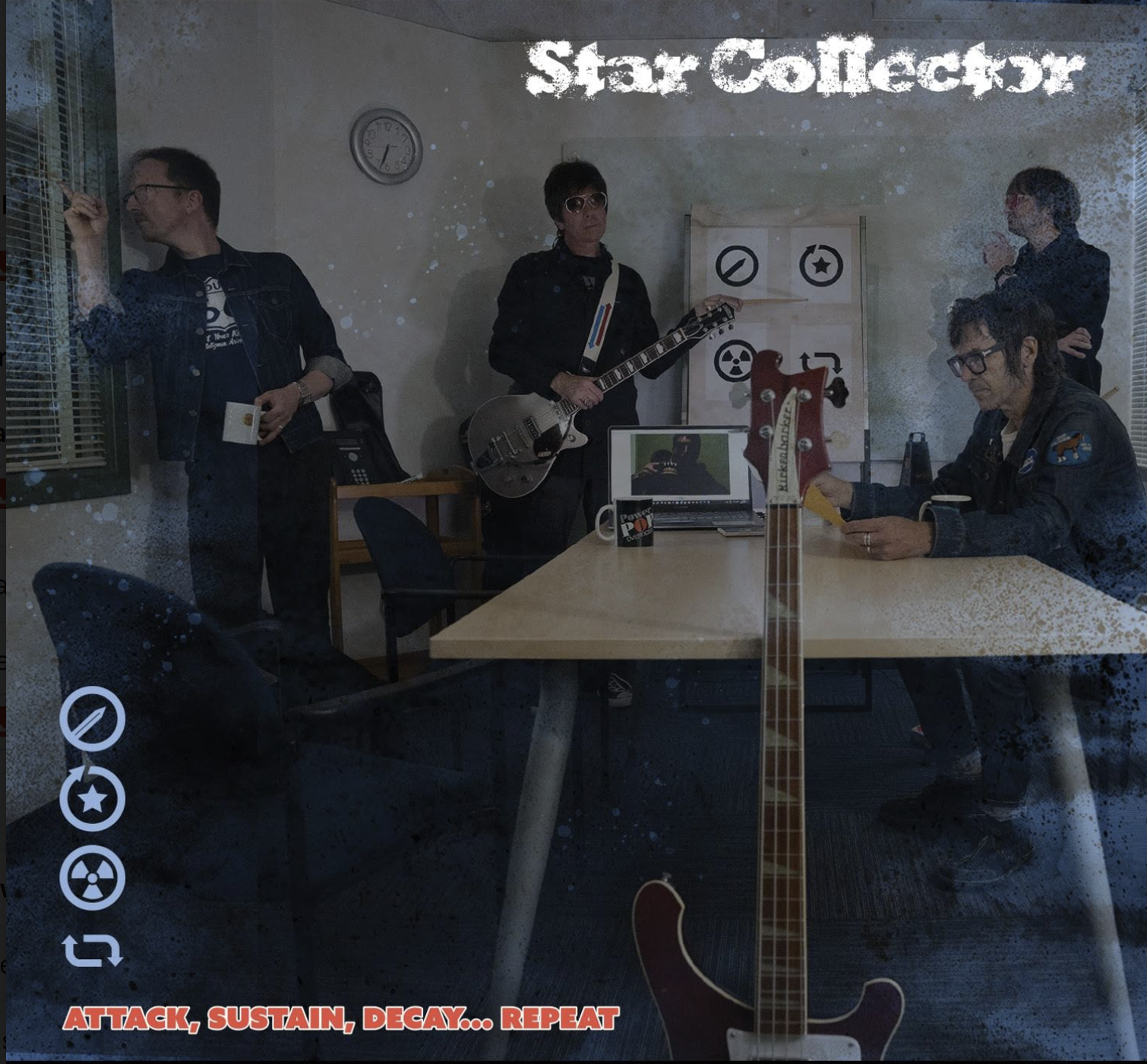
Vic Wayne talks in depth about how Star Collector’s beautiful new record ‘Attack, Sustain, Decay... Repeat’ came about.
Was it hard to work on ‘Game Day’s successor because of how intensely personal it was?
Well, that is certainly a fair question, Patrick. A lot of insanity and trauma led to the majority of ‘Game Day’, which was probably another reason I was a bit taken aback (happily, mind you) by how fully the power pop community embraced it. I suppose the influences that inform much of the music (The Jam, Big Star, The Who, etc.) might’ve made it easier to gloss over the introspective lyrical content, inherent chaos, and soul-searching, but, hey, that’s the beauty of music… we get out of it what we hear individually.
As for the new album, ‘Attack, Sustain, Decay… Repeat’, no, it wasn’t hard at all. A DJ friend of mine, Michael, and I were discussing the other day how an album is a representation of a moment in time and each one, therefore, kinda has its own life and uniqueness.
I also subscribe to that when it comes to songs. Each one is it’s own entity and I approach every lyric that way. I also think the band is experienced enough to go down the many paths we chose with confidence on ‘ASDR’ without worrying what anyone else might think.
Now, I’m not saying we weren’t hoping people would dig it. Of course, we’re always kids at Christmas when that happens, but as I was writing a 6+ minute psychedelic song like “If We Can’t Take A Joke” or the band was arranging a 2-minute nugget like the album closer, “Don’t Have To Fold”, it was simply, what do we feel is the song in its best form? If someone out there disagrees, no problem; to each his own, but as the band, we felt the songs ended up just as they were meant to be.
Funnily enough, even though ‘Game Day’ DID have a ton of personal stuff on it, ‘ASDR’ does as well. It’s got songs about everything from joy, love, loyalty and sex to fear, illness, revenge, aging, excess, and even murder. Maybe not prototypical power pop stuff, but certainly life stuff. Of course, as on every Star Collector album, there’s fair modicum of cowbell too, so there’s that… Haha.
‘Attack, Sustain, Decay … Repeat’ has a heavier sound than its predecessors. Was that a conscious choice at the beginning or did it happen while doing it?
It happened as the album began to take its shape. Each song, as mentioned, is written in its own bubble and then you sit back after you have a slew of them as assess the aural damage… haha. You hope they’ll work together as an album and, though we definitely stretched out further on some tangents this time, we feel it still sounds like us. It wasn’t conscious, it’s just the way this batch of songs turned out.
As to the idea that it has a heavier sound, that’s an interesting observation as ‘Game Day’ had “Super Zero Blues”, and ‘Flash-Arrows & The Money Shot’ had “Start To Shine”, for example, which I’d call pretty heavy. Of course, the guitars and bass are up front on ‘ASDR’ but there’s also 3 quieter tunes, including “Cross My Heart” which is only me and my acoustic, and a bunch of straight up power pop-ish rock tunes (“Feel It Comin’ On”, “Beat It To Death”, “Crashin’”, “Don’t Have To Fold”) but some of the others do push out into other directions. “The Back Of Your Head” is more STP-like, and “Halfway Home” which I thoroughly enjoyed writing with my brother, Adam (who played bass and sang all the harmonies on it) is almost like a Tom Petty meets Echo & The Bunnymen (a band we both adore) vibe.
And then there’s “Running Through The Rain” (where I really get to pull my Ian McCulloch bass voice – one day I’d like to voice wrestle Mac for the lowest note… winner gets to open for the Bunnymen! Haha).
On that song, we also have Paul Myers (an old friend and well-known musician, podcaster, filmmaker, and author of ‘Go All The Way’ – A Literary Appreciation of Power Pop) singing fantastic BGs along with another pal, Derek Macdonald, on organ and toy piano. I wrote that one with Ian Person of The Soundtrack Of Our Lives, which was sweet.
Here’s the story, Morning Glory: I’m wearing their t-shirt in our “Rip It Off” video and another DJ, Wayne, who lives in Sweden and was playing our stuff, said he knew Ian and played the vid for him; and he dug it. So, as we were starting to get songs together for ‘ASDR’, I suggested to Wayne that he connect me to Ian with the thought of writing together. He did… and presto, a few days later I received 2 unfinished demos that I loved, and thought would work well with our sound. I wrote lyrics and melodies, added a bridge here and there, and structured them, and came up with the finished version of “Running Through The Rain” and the first single, “Feel It Comin’ On”.
I can totally hear the TSOOL influence in them, which is why I like to co-write with people I respect; you get the combo of their thing and your thing. It’s the same when I listen to the songs I write with Steve; or the one I wrote with Kevin Kane (The Grapes of Wrath) on the ‘Flash-Arrows’ album; or the songs on our debut, ‘Demo Model 256’ that I wrote with childhood friend, Dave Lawson. Talented folks just bring their own innate musicality and approach, which is different than when I write alone.
Overall, sonically, on ‘ASDR’ I feel it’s just us pushing our own boundaries to see if we stretch or snap… and so far, with the exception of our drummer, Adrian’s impending back surgery, it’s the former…haha… just kidding. He’s too skinny to have back problems!
You’ve been making music for a long time. Is making music together and the fun that comes with it the driving force or do you also have something to prove to yourself? I ask because I feel the urgency and I was wondering where that came from. It’s a compliment by the way
Thank you for that. It’s definitely both, no question about it. Some lines from “Feel It Comin’ On” can answer that: “I’m going to play it out a long time; I ain’t no raindrop in the streetlights… A touch sentimental but I’ll be fine; I’m all or nothing by design”, well that right there is a bit of a personal introspection that covers my outlook and my need to express myself from my own unique standpoint (as are everyone’s, of course… “We’re all individuals!!.. “I’m not” – sorry, but any chance to quote Python).
Regarding “urgency”, that’s a very interesting word to put to the songs… I suppose, yes, there are songs about getting older (“Nineteen Dream”, “Don’t Have To Fold”) and some of the other topics mentioned earlier refer to difficult situations so I guess one might see it that way. I do know that if I died tomorrow, the songs I’ve written are a pretty good representation of my life and how I thought and felt about lots of stuff, but I don’t feel a sense of urgency, like I AM going to die tomorrow. I guess that’s back to the ear of the beholder again, but I do hear what you’re saying.
About the “making music together for fun” bit, well it was when I was a kid and it’s just as true now. Another line from “Feel It Comin’ On”: “I’m sticking to wide eyes”. Yep, I love creating, recording, performing, all of it… keeps me feeling youthful. And when you can do it with top-notch people like Steve (who I refer to as my second wife, it’s been so long… haha) and our outstanding rhythm section: Adrian, who’s coming up on 5 years with us shortly, and Tony (1.5 years), well you’ve hit the fucking jackpot! Getting that confluence of personalities and talents together is no mean feat. I consider myself one lucky Canadian. And having my brother, Adam, along for the ride on bass and vocals these last couple of albums has just been the icing on the cake.
There are a few lines of text from “Black and Baby Blue” that immediately stand out to me. “You feel like a fool, underneath so much cool, But you shut your mouth, and pound by pound, you beat yourself black and baby blue”. How did the song come about?
That’s a very personal song I wrote about one of the few times in my life that I actually felt anxiety about, “what the fuck am I going to do next?” with my outside-of-music life. I’d worked the same day gig for many years and my whole department was dismantled in a very short time, fairly unceremoniously, but, hey, that’s life, isn’t it? Shit happens.
However, finding a new career path was harder than expected. I was at a crossroads and, quite unlike me in most other aspects and times of my life being the ‘bugger with the swagger’, was having real trouble deciding what’s next. But you know, like most guys, we try to cover up the hard inside stuff… “be a man” n’ all (hence the lyrics you quoted above) cause that’s how men are socialized. I eventually went back to school, got another degree and career, and figured it out with the help of my lovely, supportive wife, but in the interim, I was feeling “Black And Baby Blue”, pretty much word for word: “Well, that’s the price you pay for being so naïve; And where’s the magic when there’s nothing up your sleeve?”. Dark, I know, but there is light at the end with the refrain: “It’s never too late to start again”. I suppose that line could also be our band mantra about the looong break we took between our ‘Hundred-Bullet-Proof’ and ‘Game Day’ albums. Haha!.. but hey, what’s 15 years between friends??
Looking back at the creation of the new record, is there a moment that you can identify as most satisfying?
Hmmm…not any single moment, no. I know that when Steve and I wrote “Beat It To Death”, I felt we had a great track to build an album around, which was quite early in the process. I also know that when I finished the two songs with Ian, that was another big moment.
When Steve brought in the killer 70’s boot stompin’, arena rock riff of “Crashin’” I almost said “Nah”, and what a mistake that would’ve been as that turned into a showcase of the band embracing our Sweet, Cheap Trick, Sloan, hell, even Grand Funk-ness! which IS part of our DNA, so there’s a moment. Writing “Halfway Home” with Ad was special too. He’d toured with us and performed on our records but we hadn’t written a proper song together for decades.
There were too many excellent moments to count working with Adrian as he engineered, I produced, and the others would play these excellent parts (like Tony’s incredibly inventive spidery-bass parts in “The Back Of Your Head”, or Steve’s melodic solo in “Beat It To Death”, or Ad’s fantastic bass work in “If We Can’t Take A Joke”)… and we’d both just go, “WHOA!!”.
Seeing Steve’s finished video for “Feel It Comin’ On” was brilliant too as it’s flash, crash n’ bash in all the right places. I’d love for folks to check it out on our YouTube channel and subscribe. With every album, getting the CD version back with Steve’s always fab artwork is always satisfying too so no, no single moment, but lots of them!
In the end, we’re stoked with how ‘Attack, Sustain, Decay… Repeat’ turned out and no matter what reception it gets (fortunately, reviews have been very generous so far – happy face emoji), we’re proud of it. It showcases the many faces and influences of the writers, players and production team that made it. Oh, and, for the Record (see what I did there?), I’m hoping I DON’T die tomorrow!
The Sylvia Platters have been crafting well-tuned guitar pop since 2014. Hailing from BC’s Fraser Valley, the band has demonstrated a keen appreciation for melody and melancholy across their many releases.
Their 2022 cassette Youth Without Virtue exhumed the band’s shared adolescence in the evangelical church, and garnered praise from The Vancouver Sun, Janglepop Hub, and college press across Canada. Brandon Kruze of Cups N Cakes described it as “catchy as all hell.”
The band will be releasing a five-song EP, Live at Malibu Sound, this spring before recording their studio follow-up at the Noise Floor.
The Sylvia Platters are Alex Kerc-Murcison (guitar), Stephen Carl O’Shea (bass), Nick Ubels (vocals and guitar), and Tim Ubels (vocals and drums).
Nick Ubels talks about the creation of Youth Without Virtue.
How did this record come together?
Our most recent record came out of a lot of writing we had been doing during the pandemic, when shows and even rehearsing in-person were no longer an option. From this big batch of music, we selected songs that shared a theme and mood. Youth Without Virtue unearths and processes a lot of our shared experiences growing up in the evangelical church, with its many contradictions and constrictions, yet strong sense of service and community. You might even say it was therapeutic! The songs were tracked with Jordan Koop at the Noise Floor Studio, a very special place tucked away on Gabriola Island just off of BC’s Vancouver Island. Getting away from our day-to-day lives to focus on recording and mixing this music helped us focus and enjoy the process of creating something new together.
These days, we’re sorting through songs for our upcoming record. We’ve written a lot and are continuing to work on new songs before returning to the studio this summer. I feel really good about where things are headed. I think we’re building on our strengths and also challenging ourselves to write our best material to date.
How did the pandemic and social climate impact the creation or release of the record?
It was a very strange time to be creating music. For a long time, we had no hope of being able to safely rehearse in-person, let alone play shows. And then it was off- and on-again for a long time. We tried rehearsing virtually, but the lag made it impossible. We also went through a line-up change, with Stephen Carl O’Shea joining on bass in late 2020. Eventually, we settled into a pattern of rehearsing in a well-ventilated space, wearing masks, and playing along with pre-recorded vocals. It was an odd set-up, but it allowed us to slowly, but surely, prepare the material for our latest album.
At the same time, the lack of live shows and intermittent rehearsals allowed more time for writing songs and sending demos back and forth. So we ended up with an abundance of material to choose from.
How do you typically come up with new song ideas?
It’s really a mix of different things for me. My brother Tim Ubels also writes about a third of our songs, and I can’t speak for him. Personally, I try to stay open to ideas as they present themselves and get into some habits that create better conditions for those ideas to emerge. On the lyrics side, that can be jotting down phrases I like or ideas for lines on my phone. Sometimes I’ll play word games to see if anything interesting emerges. On the music side, my favourite thing is starting from someone’s idea for a part at practice, playing around with it a bit, and then fleshing it out at home. But I also try to make a habit of spending some time creating new motifs for at least a half an hour a few times throughout the week. Exercising those muscles seems to keep the ideas flowing. We will also send each other fragments — a riff, progression, or melody — and see if someone else in the band has an idea for how to make use of it. Occasionally, I’ll light upon a melody while I’m going for a walk or something, but that tends to be more rare. I usually need to have some intention towards creating something new.
How do you decide when a song is finished and ready to be recorded?
I usually write by demo-ing and then working out and refining the arrangement with the band. But most of the songs I write don’t get to the rehearsal stage, let alone recording. It feels like a question of quality, fit with the band’s style, and what kind of time and financial budget we can set aside that determine which and how many songs we record.
In terms of finishing writing songs, some never feel like they’re done. Others seem to emerge very quickly, like within an hour. I recently finished writing a song called “Kool Aid Blue”. It was based on a chord progression Alex [Kerc-Murchison] came up with that I’d been playing around with for a while. I had the chorus melody and lyrics locked in, but I spent about a month of consistently working it over before I felt like everything finally clicked into place. Some ideas aren’t worth that kind of effort, but when I feel like there’s something compelling trying to get out, I’ll keep pursuing it.
Lyrics are too often taken for granted. What is the line of text or are the lines of text that you hope listeners will remember? And why?
I try to balance mystery and cohesiveness in my writing. Some of the best lines I’ve written are the ones that feel like they convey a few layers of meaning. A favourite from “Youth Without Virtue” is “You hate the touch of silver/But you fasten it for your mother.” I feel like it evokes a lot of the themes of the record in a single scene of a disaffected teenager putting on a cross necklace. But I also love the big, affirming outro: “Distill what you want/You will what you need/You made me believe/You’ll make it in time.”
If you could tour the world with two other bands, who would you ask, and why?
Alvvays and Teenage Fanclub. Two all-time greats and I think it would make for a really cohesive line-up.
Bill Majoros (The Foreign Films) just keeps putting out one great record after the other. Magic Shadows is, again, full of richly arranged, cinematic pop songs. What a wonderful listening experience!
What feeling would you like to leave the listener with after listening to Magic Shadows?
Did you think about that when you were recording, that you wanted to create an experience?
I definitely contemplate these things when writing and recording!
I think about creating music in a very cinematic way; it’s a theatre of the mind!
I’d love the listener to feel like they’ve been on an exciting musical journey! Like they’ve been in a technicolor dream.
Every song on the album is like a scene from a movie with various characters and atmospheres.
An album should be a sonic and emotional experience.
An adventure through time and space lol!
The feeling I’m trying to leave the listener with is at the heart of my songwriting- it takes me back to why I became a musician in the first place.
I’ll explain it this way-
When I was a boy, I recall falling in love with records.
It was an incredibly magical and mysterious feeling- a sense of wonder and discovery. I was under the spell of music!
My aim is to conjure up that kind of musical magic for the listener; creating dreamy escapism from the ordinary world. It’s like a magic potion of sound!
I always hope the songs paint pictures with the lyrics and arrangements- an alchemy of various decades of music; I think of it as retro-futurism.
Ultimately I’d like people to feel inspired and illuminated by the songs and by the great musicians who contributed to the record!
One more thought…
I truly believe in the old-fashioned notion of creating full-length albums.
The chemistry between the musicians is very important to me!
It’s important to never lose the heart and soul of music.. the humanity.
At a time when music is being reduced to tiny soundbites, I feel artists should do the exact opposite..expand. Create your own musical universe.
Create an experience.
That’s what I strive to do!
Into The Light, my favorite song after the first few listens, wouldn’t look out of place on an ELO greatest hits. That’s a nice compliment, I think?
That’s a wonderful compliment! Jeff Lynne is truly a musical genius, and I love the artists he’s worked with The Beatles, Bob Dylan, Tom Petty, etc
All of those musicians influence my songs consciously and subconsciously.
To learn the secrets of songwriting, you have to listen to the greats!
We had a fantastic time, recording my song “Into The Light” and the whole LP, for that matter!
Carl Jennings always comes up with amazing bass lines-we have an almost telepathic way of working together!
I’ve recorded all of The Foreign Films’ records with him (Distant Star, The Record Collector, Ocean Moon, Starlight Serenade, and the new release Magic Shadows)
Carl is a truly brilliant studio wizard, and an absolute pleasure to work with!
On the song “Into the Light” I sang lead vocals and played guitar and the drums.
I’ve been very interested in the musical twilight between decades.
When drumming, I was trying to juxtapose a driving Motown/ Stax/ Rolling Stones-type groove with syncopated world-beat rhythms vis-à-vis 80’s new wave!
My music is definitely a reflection of my record collection.
It may not be obvious, but my guitar influences on this song are a combination of artists like The Cars, Big Star, Cheap Trick, Be Bop Deluxe, Television, and yes…ELO!
If only Jeff Lynne would do a version, he could make it a “Greatest Hit” lol!
That would be the honor of a lifetime.
Perfect Future could be an ode to Sparks, perhaps to Roy Orbison. Or do I want to hear things that aren’t there?
As I was saying, I take a number of influences, mix them together like a cocktail, and hope to create something new!
The guitar work on Perfect Future was influenced by early dream pop. I was thrilled to be playing my very first guitar again, rebuilt after many moons!
The main vocal influences on this song are people like David Bowie and Scott Walker.
But yes, you’re correct; when slipping into the higher falsetto, I was definitely trying to manifest a little bit of Roy Orbison! In an incredibly humble way, I try to channel that type of energy.
When I’m drumming on my records, the influences often come from the 60s and 70s.
On the new album, I’ve been tapping into the stylistic elements from the 80s
Roxy Music, Talk Talk, Peter Gabriel, Kate Bush, Talking Heads, etc
Drummers like Omar Hakim, Mark Brzezicki, Dennis Davis, Mel Gayner, and Stewart Copeland are also influences.
Interestingly, I’ve heard a few people compare it to Sparks. I must confess I’m not very familiar with their music. I’m assuming they must have similar influences; I’ll definitely check it out.
I always love to discover new things!
Was there an immediate reason to write Time Machine? How did the song originate?
When writing and recording, I literally think of music as a time machine- visiting the past, present and future!
I swirl together elements from various decades to create new ideas.
The spark of this song comes from the magical realism of sci-fi like The Twilight Zone and The Planet of the Apes, asking the question, “what if you could travel through time? What would happen? How would it affect the future?” It’s a fun philosophical thing to ponder.
That’s the basic premise of the song, with a romantic story intertwined within it.
Halfway through the song, there’s a rhythmic time change, and I thought that was a cool way to metaphorically represent the idea with the sonic arrangement!
Legendary keyboard player Rob Preuss contributed his musical magic to the song!
Jason Frederick created wonderfully cinematic orchestrations that illuminate the melodies.
I’m incredibly lucky to work with such fantastic musicians!
I find it incredible that after the release of The Record Collector in 2018, you still have creativity left. It was and is such a statement, a true piece de resistance. But the stream of creativity seems endless?
I deeply appreciate the kind words!
“The Record Collector” was an epic undertaking! (a 31 Song, Triple Vinyl Box Set) That album was a major personal accomplishment!
At the end of the day, I love making records. Once it was completed, I immediately needed to move on.
I’m always chasing the next idea, trying to catch lightning in a bottle!
I look at artists from the 1960s as a template; they’d put out a couple of LPs a year, plus singles!
Artists I admire often reinvent themselves; they’re creative chameleons… always moving forward.
This is something I try to emulate!
Here’s a technique/ secret I use to keep inspired, to tap into the stream of creativity- I think of songwriting as my imagination’s jukebox or radio station.
Visualizing like this allows me to explore the subconscious…
it’s a way of almost meditating songs into existence. Pulling a rabbit out of a hat musically lol!
Songwriting is a lifelong pursuit. It’s a daily ritual for me. I love the mysterious process of songwriting, creating something from nothing.
The Foreign Films’ Magic Shadows LP is the newest selection from my imagination’s jukebox.
I truly hope people enjoy it!
One more thing-
Heartfelt thanks and love to everyone who worked on my new LP, “Magic Shadows“
Carl Jennings, Rob Preuss, Jason Fredrick, Steve Eggers, Dave Rave, Kristie Ryder, and Brian Hetherman.
Steve Stoeckel wrote 15 beautiful, thoughtful, and personal stories. The kind of songs that don’t need a big production to make an impact. The Power Of And will be released on February 24 by Big Stir Records.
Was doing a solo record the most natural thing to do right now?
Absolutely! After so many years composing and recording songs with the Spongetones, Jamie and Steve, and Pop Co-Op, I still found myself with lots of songs waiting, backed up in the queue, with little chance of all of them getting out. All those bands have strong songwriters, and we shared the space on each record. I had the songs and I had my studio, but the nuts and bolts of putting it all together and releasing it was too daunting.
And then I met Christina and Rex of Big Stir Music. A perfect fit. They not only knew how to do it but did it well. And, being recording artists themselves, they completely got the artist point of view. They liked my songs, and signed me up with a few singles, hinting I should take the leap. Thank goodness I did. It was a perfect moment all around.
How came The Power of And about?
After the singles, I made up my mind, just do it. I got a long list of songs, trimmed it down to 15, and started redoing a few old tunes (If/Then, Hummingbird, The Emerald Sea, for example) and then dived in and wrote. I have several very talented friends who were glad to step in on many songs: Pat Walters, Jamie Hoover, and Eric Willhem (my fellow Spongetones) played/sang on “Mod Girl,” along with Elena Rogers. Joel Tinnel (from Pop Co-Op ) played guitar on two songs. Bruce Gordon and Stacy Carson helped on some songs. Rick McClanahan and Keith Shamel played on a few also. David Harper played keys on two tunes. A good friend, Michael Mitsch played pennywhistle. Irene Pena co-wrote and played on “Why,” a duet. Some are all me.
Five of the fifteen recordings were mixed down at Old House Studio; I wanted real drums on those, which Eric played. The rest were all mixed here in my studio, with me playing the drum parts (and assorted keyboards, horn, strings, guitars).
You didn’t choose a bombastic production and you do not use unnecessarily debauched language, so I use the words ‘pure’ and, even, ‘vulnerable’ to describe the new songs. Would you take that as a compliment?
Why yes, I do! While I sometimes do like complex arrangements and long songs with big intros and outros and slick production, I wanted simple, heartfelt pop tunes, each expressing something I felt, and in a short time. Most are less than 3 minutes, and some (“Birds,” for example) are very sparse. I also wanted the lyrics to be able to stand on their own. That’s hard to do, and not always necessary for a good song, but I aimed for that. “Vulnerable” is a good adjective when you get down to this level of simplicity.
The Emerald Sea is my favorite song and seems like an ode to Ireland. Is that right?
Absolutely! There’s a story here. In the past, I’d often write birthday songs for my close friends. I’d think about their personalities and compose a song, then do a video with their pictures and post on Facebook on their birthday. It was a gift that always made them smile. Michael Mitsch, the aforementioned pennywhistle player, was of Czech descent, but married an Irish girl and fell in love with Ireland, visiting there on a regular basis, and learned to play Celtic music. I wrote “the Emerald Sea” and (without telling him it was his birthday song) sent the music bed to him and told him to just “improvise pennywhistle solos in the key of G. I’ll cut and paste them in the song.” Of course, when he heard it on his birthday, he was overwhelmed! It was such a good song, I took out the “happy birthday” part and tweaked it a bit, adding the verse about Trina, his wife. Thanks for noticing that—it’s a special one for me (and him!)
When the first The Spongetones records were released, the music industry was completely different than it is today. How did you experience those changes?
I was lucky to get into digital recording early on, with the Spongetones records after the first 2 LP’s, which were done in a large, expensive studio with the label footing the bill. After that, it was Jamie Hoover recording us, first on tape in his studio, then in digital workstations. By the mid 90’s I had my own digital studio here in my house and we’d record things and send files back and forth, with Jamie doing the final mixes. That continued though the Jamie and Steve duo CD’s, and by the time Pop Co-Op came about (four guys composing and mixing),I had a complete system, capable of putting out quality recordings here. The freedom of that is enormous. I have complete control of my songs; this CD sounds just the way I want it to.
All I have to do is compose, record, and mix, which is my passion. I’m a lucky guy!






 Sweet Sweet Music Blog