The Kynd – TIMELINES (Q&A)
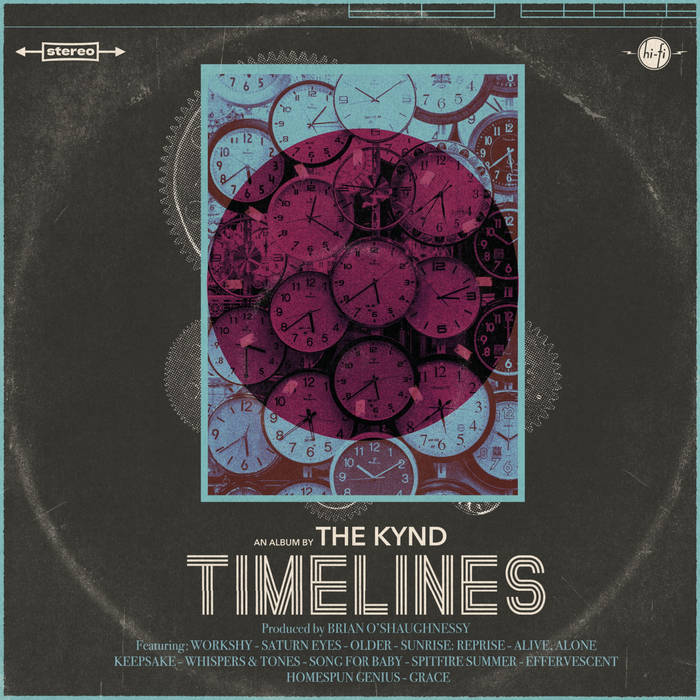
After The Kynd’s first single, Egotripper, produced by Andy Bell (RIDE/Oasis), and the release of the debut album, Shakedown, we did not hear from the band for 23 years. Now, they are back, with a very recognizable sound and 12 fantastic new songs.

Danny Tipping tells how that happened.

How did this record come together? 

The new album TIMELINES, has a 23-year backstory! At the time The Kynd originally spit up right at the end of the 90’s, we were writing and demoing songs for what would have been our second album. When we reformed towards the end of 2021 we began sorting through piles of tapes, CDs, mini discs (!) and our old notebooks and we started to piece these songs back together again like musical archaeology.  Once we’d reassembled the core of the album, we wrote a handful of new songs to tie the whole thing together, always keeping in mind that we wanted this to sound like the album we would have released back in the day, in an alternative timeline, had we not split up. 

What was the moment you knew you were on to something? 

We started the process online, sharing files and collaborating digitally. It was exciting to hear it coming together but, for me personally it wasn’t until we all got in the rehearsal room and started to play this collection of songs as a band and knocking them in to shape for the studio that the magic really started to happen. The hardest part was deciding what to leave out and some great songs didn’t make it. But that’s a good problem to have! 

The meaning of success has changed over the years. What would success look like for the new record? 

Well success is all relative. Releasing this new album has helped us reconnect with fans and old friends which has been amazing. We’re back out playing live which is where this band is at its’ best and bringing our music to a new audience. That’s success for us. 

How do you balance experimentation with commercial appeal in your music? 

At our level of success, this has rarely been an issue! We’ve never really censored ourselves or held back but then I think our music is naturally accessible – we’re all about pop hooks and sing-along choruses! 

Lyrics are too often taken for granted. What is the line of text or are the lines of text that you hope listeners will remember? And why? 

Lyrics are really important to us. I can’t speak for Paul, our singer and lyricist but there are so many great lines across the 12 songs of the album. A personal favourite is from Homespun Genius, “So, steal me a compass and call me Columbus, I’ll find my own way home.’’ 

Cassettes are back. Which 5 five songs would make your first mixtape? 

Only 5 songs!? That’s so hard and it would change daily, but right now it would be a song each from; REM, The Beatles, RIDE, Teenage Fanclub and Blondie – that’s as close as I can get in the space we have here. This is going to keep me up at night…. 

You can’t control the way people ‘hear’ your music. But if you could make them aware of certain aspects, you think, set your songs apart. What would they be? 

On the surface, we wear our musical influences very much on our sleeves, the great 60’s bands, the Paisley Underground, classic indie pop and college rock – the music is (mostly) melodic, upbeat and life affirming. But if you dig into the lyrics there’s layers there, stories and characters and deeper themes. It’s that juxtaposition between light and shade that all our favourite bands have. 

Suppose you were to introduce your music to new listeners through three songs. Which songs would those be and why? 

Another tough one! I’d pick ‘Egotripper’ from our debut ‘Shakedown’. It was our first single and was produced by Andy Bell (RIDE/Oasis), definitely not our best song but it’s a statement on intent and sounds great! Then I’d go with ‘Older’ and ‘Sunrise: Reprise’ from the new album. I think they are a good representation of where we are now. 

If you could tour the world with two other bands, who would you ask, and why? 

RIDE and The Charlatans have just been out on the road together in the US – that would be a great tour to be on because we love both of those bands. 

If you could pick three singers to sing harmony vocals on your next record, who would you ask? 

We’d take a holy trinity of Susanna Hoffs, Mike Mills and Graham Nash. Would have loved David Crosby but sadly he’s no longer with us. 

The record is done, the music is out. Is the best fun done now or is it just beginning? 

Well, recording new music and playing live are the best bits for sure. Promoting your release can be a frustrating slog but it’s a necessary part of the whole process of course – so we’ll take the rough with the smooth! We’ve got some live dates coming up, a few great UK Festivals to announce and a new single in May so lots still to look forward to. We’ll be promoting TIMELINES until the end of this year at least! 
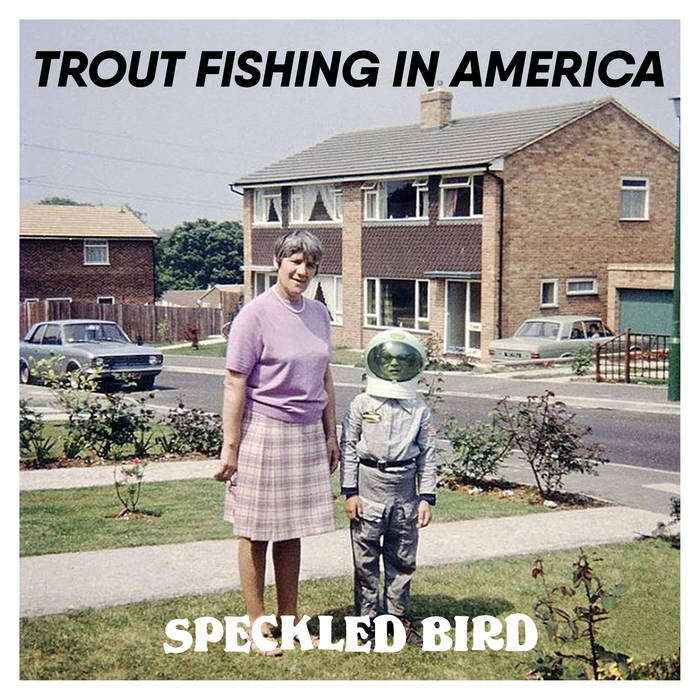
Speckled Bird – Trout Fishing in America

‘I love it when people really go for something. Not hide behind cleverness, or a plan, or tried and true tricks. It doesn’t matter all that much if it lands, I’d rather see something interesting than something boring. We’ve definitely made a point of embracing that idea, and having a good time while we do it.’, says Adam Morrow of Speckled Bird. Among other things, that led them to making a wonderfully beautiful dreamy jangle pop ep, Trout Fishing in America.

How did this record come together?

Speckled Bird has been a bit of a rotating cast of characters since 2019, with the two constants being myself (Adam Morrow) and Jamie Sego. Jamie runs Portside Sound, which is located in the old Studio B of Muscle Shoals Sound’s final location, right on the bank of the Tennessee River. We spent a lot of time together in the studio, working on ideas and chasing sounds. As the pandemic settled in, obviously that all slowed down quite a bit. The initial lineup also kind of blew to the wind; folks moved away, moved on, etc.

What really got things going again was Drew Kellough (drums) and Austin Motlow (keys) asking me if I had any fresh songs to mess with. A day earlier, I had dreamed a melody and the start of a song and woke up in a rush to finish it. That is not a common occurrence, so it feels sort of wild that they happened to reach out when they did. That song was “21st Century Ghost,” one of the tracks on the EP.

We kept playing together, and recruited Spencer Duncan (bass), and now we’ve been a steady five piece lineup for a couple of years. The EP is really the tip of the iceberg, in terms of what we’ve written and recorded, but it is a cohesive set of songs with a through line and arc. That includes the Dylan cover choice, too. It’s really about moving across the American landscape and trying to make sense of it in these post post-modern days, or whatever term you want to apply to the amorphous reality we’re living in. 

How do you decide when a song is finished and ready to be recorded?

One fun part of living in a town known for its studios is that the line between “finished song” and “ready to be recorded” can get really blurry. I suppose that’s also the dangerous part; it can be easy to get bogged down. But we indulged that a bit this time, and wrote in the studio instead of formulating the songs for a live setting first or worrying about what “done” meant. Our process usually begins on my small setup at home, in Logic, and then that file gets passed around through the other guys’ home studios until we’re all at Portside, making notes and adding on parts. It can get chopped up and rearranged, and as the songwriter, I make it a point to avoid being precious about things as much as possible. I believe in our collective power. I love that it has to go through multiple checkpoints.

I have to be proud enough of something to send it to the band, and can usually tell immediately if they’re into it or not. If they are, folks start thinking about parts and we work on the puzzle together until it feels complete. Jamie helped me finish the lyrics to the choruses of “Trout Fishing In America,” and Austin pitched in a few phrases for “Lousy Island.” Vocals went on last. No one else touched this EP at any stage. We engineered and mixed it together, and Jamie mastered it. That can be a little iffy, it can be easy to lose perspective, but it worked out for us this time. 

As an artist, you choose to show your emotions to the world. Is it always comfortable to do so?

I’ve spent way too much time wrapping my head around this. I’m certainly not a guy who can stand up and loudly draw the attention of a room. I don’t really have a problem expressing my emotions in lyrics, but I do think I’ve learned to accept being much more direct in both how the songs are written and how we produce them. Part of it is honestly just growing up and having experience as a helpful guide.

Letting the vocals sit out front, not loading the tracks down with endless guitars and synths or drowning it all in reverb. There’s certainly a time and place for all of that, and I love a lot of music that’s done that way, but for us right now, the biggest thing is distilling the song down to its essential parts, deleting the rest, and building from there. Sometimes it takes a bunch of layers before we find the right thing.

That’s fine, we may be attached, but we know whether or not they’re honest and worth keeping, so they usually get deleted in favor of the one thing that really works. Nothing is precious. I also think allowing some vulnerability is a strength. Honest writing, clear vocals, taking chances on stage; that feeling of humanity, or that something could really go wrong, I love that when I’m in the audience. I love it when people really go for something. Not hide behind cleverness, or a plan, or tried and true tricks. It doesn’t matter all that much if it lands, I’d rather see something interesting than something boring. We’ve definitely made a point of embracing that idea, and having a good time while we do it. 

How do you balance experimentation with commercial appeal in your music?

I want people to like the songs that I write. There are melodic hooks for a reason. We spend a lot of time making it sound as good as we can for a reason. A huge part of that is self satisfaction, but we also want to invite other folks in to what we’re doing. We want more people to listen, we want more people to come to the shows as the months and years go by. But there is absolutely no pressure or expectations on us, so we’re completely free to do what we want.

But it is 2023. I don’t see experimentation as something that would keep us from finding more of an audience. An indie rock band is in no danger of getting on the radio or shooting to the top of streaming playlists, so being as truthful to our vision as we possibly can be seems like the best path forward. 

The meaning of success has changed over the years. What would success look like for the new record?

Success at this point is just getting to continue making music, and maybe reaching a few more folks every time we put something out or go play shows. There’s been a bit of freedom that’s accompanied the pandemic and getting that much older; I’m in my 30s, I’m still doing this, and a global catastrophe hasn’t stopped me. I think the rest of the guys feel the same way. We’re all thankful to be healthy and alive, so I guess we’ll keep going.

Liquid Mike – s/t (Q&A)

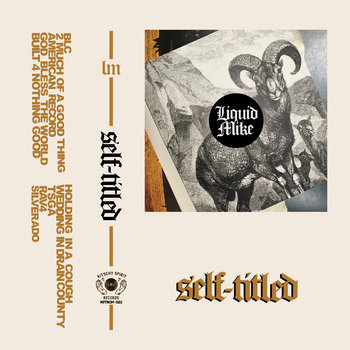
Eleven songs that are barely 18 minutes in total, but I guarantee that’s all you need today.

Liquid Mike makes POWER Pop, which is infectious, energetic, catchy, solid, and, most of all, very, very good.

Mike himself explains.

The meaning of success has changed over the years. What would success look like for the new record?

As long as Monica, Cody, and Zack like the album and like the parts they play I don’t have to worry about people liking it or not. I trust their instincts and tastes, so as long as we’re all on the same page, I’ll know we made something good. That’s our only goal as a band is to make something we’re proud of and to write songs that are fun to play live. So far, we’re a huge success.

Cassettes are back. Which 5 five songs would make your first mixtape?

Virginia – Clipse,

If You Don’t Love Me (I’ll Kill Myself) – Pete Droge,

Same Old Life – The Flashing Lights,

Milk Man – Deerhoof,

Sittin’ Sideways – Paul Wall.

Haven’t figured out what order I’d put these in, but these are the best songs ever recorded, to my knowledge.

How do you decide when a song is finished and ready to be recorded?

I like to record them as I go, so as soon as I have at least a verse and a chorus, I record it. As a band, we don’t like having a bunch of songs sitting around waiting to be recorded because the process gets overwhelming. We like having one song to think about when we record. I don’t like revisiting the recording after the initial takes are laid down; I usually get attached to the demo and decide to just go with that one haha. The new record is filled with metronome bleed, crackles, talking, and feedback. I think that’s a more honest reflection of the music and how we do it ourselves. Plus, nothing’s worse than a crystal-clean record.

If you could pick three singers to sing harmony vocals on your next record, who would you ask?

I’m gonna go ahead and use dead or alive people. So Harry Nilsson, Elvis, and my Dad. Might as well get some crazy voices on the album! My dad’s not dead, but I think that would be fun haha. 

How great is the urge to stay creative?  To keep writing songs and lyrics?

I find the recording process to be the most exciting. I think that’s why our songs are so short, so we can record more of them. So I try to write at least something every day. Sometimes (rarely), it’s a complete song; most of the time, it’s a riff or a lyric or two. but those add up pretty quickly, and you can pump out a lot of songs that way! I have a fear sitting in the back of my head that if you don’t use it, you lose it, so I try to treat it like exercise and do a little something every day. 

It’s Karma It’s Cool – Thrift Store Troubadours (Q&A)

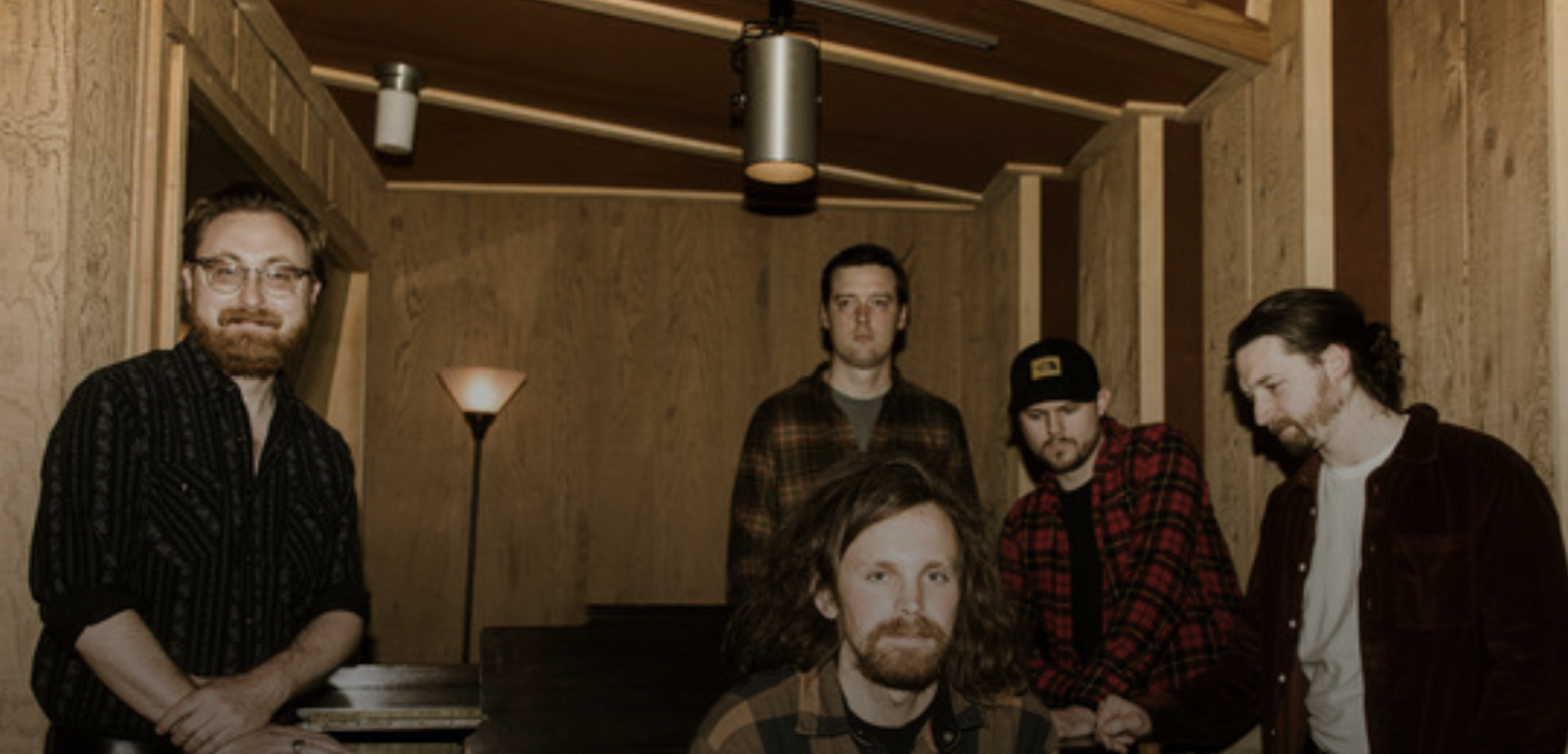
On Friday, June 2nd, Futureman Records will release Thrift Store Troubadours, the new record from It’s Karma It’s Cool. On the same day, the band celebrates the release at the International Pop Overthrow festival in Liverpool.

James Styring tells the story.

A new record coming up, what can we expect? 

Yes, a brand new album, ‘Thrift Store Troubadours’ will be released on Friday 2nd June. We’ve been hard at work in the studio on a real strong set of songs, some of the band’s best. There’s some rockier songs, some pop kind of things, some acoustic folky stuff. Folks who have followed us this far won’t be disappointed, but there’s certainly some surprises on there. We also have the legendary Peter Holsapple (The dB’s, REM, Hootie & the Blowfish) guesting on a bunch of the songs. We can’t wait for you to hear this record.

The band has become a fixture in the Power Pop community. Does that create obligations or freedom? 

We’re very grateful that the Power Pop community seem to enjoy what we do, though we’ve never labelled ourselves as a power pop band; I guess there’s elements of power pop in some of what we do, but you’ll hear a whole load of other influences in there too. We listen to rock, alternative, indie, folk, it’s all thrown into the pot. We’ve always left it up to other people to label us, as long as they’re listening and enjoying what we do, we don’t mind how they catorgorise us. We try not to pay too much attention. 

I think your lyrics don’t get enough attention. Is it always easy to find the right words? 

Thank you. It’s always good to know people are listening to them. I always keep the words open to interpretation, and not too obvious. I’ve said it many times, but it’s far more important what the listener thinks they’re about, than what I was thinking when I wrote them. Everyone can hear something different in them and that way the song becomes more personel, it belongs to everyone, in their own way. 

What makes you happier: finding a great melody or finding the right words for a certain emotion or thought? 

I would say both go hand in hand. The mood of the music will often dictate to me where the words are going to go. I’m always looking for an unexpected melody, or a curve ball, to catch the listener out and keep it interesting. We write big emotional stuff, so my melodies and lyrics have to reflect that.

How did you end up with Futureman Records? 

They have a great reputation and put out some cool music. We’ve been on the Kool Kat Musik label up to now, but just felt it was time for a change; there’s no bad feeling between us and Kool Kat, it’s an amicable parting of ways. Ray is one of the good guys and has always been supportive of the band, but we just thought it was maybe time to move on. 

How will you promote the new record? 

You’ll be reading about it nearer the time, I guess, and we’ll be out playing shows to support it; we’ll have a load of new songs to play for people! There’s also a series of digital singles currently being released from the record, so look out for those. 

Any gigs planned?

Yes, we have a very special album launch. We play Liverpool International Pop Overthrow festival on release day, Friday 2nd June, at the Cavern Club and Cavern Pub. The IPO Liverpool is always a great time, and we get to see some great bands too. 

the black watch – future strangers (Q&A)

future strangers is the 21st release of the black watch, but quantity means nothing to creator John Andrew Fredrick. The quality of the music generates new followers every week and the urge to make music that no one else makes is indestructible.

future strangers is the 21st full-length release from the black watch, an incredible number. Eat, drink, sleep, write and record songs, repeat?

There is another one coming in the UK very soon called The Morning Papers Have Given Us the Vapours.  Yes, we put out a lot of music. It might bother me that listeners sometimes focus too much on how prolific we’ve been if I let it. And I kind of used to, but when you think about it, you wouldn’t level that accusation (it sort of IS when that’s what the reviewer or punter zeroes in on rather than the quality) at a Kandinsky or a Shakespeare.  As in, “what?  ANOTHER painting? or what?  another PLAY?”).

“Songs pour out of you,” a producer called Misha Bulluck (who drummed on Here & There) said to me recently. He’s not wrong, and I’ve always said that I make the music I want to hear–the stuff that no one else is making, so I ‘will bloody’ do it. Hahaha.

I think Wish I Had Something is beautiful. It initially reminded me of Echo & the Bunnymen. Do you see that as a compliment, or do you find these comparisons superfluous?

I don’t mind it at all, especially the Bunnymen whom I adored for the first five LPs and then shook my head in total dismay at how they waned. I think that Wish I Had Something really has its provenance in the Beatles, and when they went to India. As a kid, hearing George’s India-influenced songs, I freaked and started making my mom and dad buy me Ravi Shankar records. Never been there myself, but I am a total fanboy for Indian fiction and film. I doubt if I’m tough enough to travel there ever–save on youtube! Hahaha.

future strangers, the title track, immediately grabs you through the beautiful intro. I notice that the sadness that emanates from the title alone touches me. How did the number come about?

The phrase “future strangers” just kinda came from contemplating how we’ll be estranged (by death, by events, by chance) from everyone we’ve ever known. But the song itself is about someone I was in love with but who turned out to be a very confused and self-and-other deceiving woman. Not a new story by any stretch!  It’s always a risk to give oneself to someone, but it’s one I think that would be tragic if one indeed stopped taking it. Nevertheless, I rather believe that things DO work out for the best. There’s that sanguine side of me coming out!

There is a statement by a Dutch writer, Connie Palmen, who says that the writer is in complete control, but I think when a book or record is finished, the reader or listener provides further interpretation. How do you see this? And would it bother you if something other than what you were trying to convey was heard?

So many friends who’ve come back and gone into a closet for a month or lose or gain their faith in God.  Of course, as I don’t believe in what Eliot called the Intentional Fallacy, anybody’s game/welcome to interpret songs how they wish.  I am not the Ur interpreter at all, nor is any artist. It’s nice to be asked, “what does this song mean?” but of course, the auteur or composer is just another wonderer, if you will.  So much of what I do comes from the unconscious anyway.  The world?  Well, I’ve tried my damnedest NOT to pay attention to politics (other than Plato’s or Aristotle’s! How pretentious does that sound?  Ahhaa. So I will throw in Hobbes as well….), but they’ve parasited into all facets of life and society, so they’re ever-harder to ignore. 

I do indeed think the world’s gone mad, and as an overeducated person, I will say that Identity Politics and the way a certain Party has emphasized them has been nothing less than revolting.  At heart of course, I am deeply cynical about almost everything, save the sacredness of music and literature, but one must acknowledge the notion that deep-down every cynic is HOPEFUL, through-and-through that good will prevail–in both people and artifacts. One more thing for now: I’d be most bothered if people DIDN’T bother interpreting my records and books. And we are gaining more fans all the time. It’s been funny to hear or get an email from music fans weekly who say, “I can’t believe I have not heard you guys.”. That NEVER gets me down.  I’m just glad that they’re embarrassed about it. Kahaha. Kidding. Happy to have them on our side, so to speak.

Paul McCann – Alter Ego (Q&A)

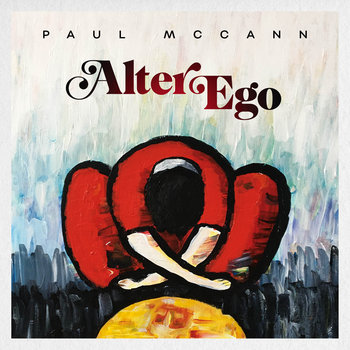
Alter Ego is a beautifully varied pop album. Pure Power Pop alternates totally natural with Rufus Wainwright/John Grant-esque wizardry.

Paul McCann, a singer, songwriter and multi-instrumentalist from Cavan, Ireland, explains how that came about.

How did this record come together?

A lot of the stuff I write, and record happens quite organically. After I put out my first record, ‘Here Comes the Rapture’, it was very much a blank canvas, but I knew I didn’t want to make Rapture 2. The idea was always to go bigger and bolder. I played most of the instrumentation on the first record, so from quite early on, I wanted as many great musicians on this one as possible. It was amazing having Sylvie Lewis, Jason Falkner, Gary Luca,s and so many other people whose music I love involved this time. It was always important to me that the songs be good enough for these guys to play on too. If anything, that made me raise my game a little too, with regards to the songwriting.

When you’re that close to creating something, it’s hard to tell if it really is any good. A number of times when I thought I was failing in creating something better, Martin Quinn (Producer and Engineer) would always reassure me that we were creating something special. I brought in a lot of friends to record parts on these songs too, as well as having the amazing Avoca String Quartet involved. It is a wonderful feeling to hear a song you wrote in your kitchen being played in the most elegant manner by a string section.

How do you decide when a song is finished and ready to be recorded?

This can vary, song-to-song. Some songs can arrive fully formed, and within a half hour or an hour it’s there…it’s done, and ready. Other songs can take much longer, months or years to have a final format that I’m happy to take into the studio. In some cases, I might still be scribbling or re-writing a lyric or part of a lyric in the vocal booth as it’s happening, but that is rare. For example, the chorus and main guitar run of ‘Lost in this Moment’ was part of a completely different song that I was working on with my band ‘The Plan’ about 6 years earlier. Whereas ‘Where has the Music Gone’ was pretty much written in one sitting and something I started working on in the studio with Martin the very same week.

How do you balance experimentation with commercial appeal in your music?

I’m in a very lucky position that these songs are 100% written without any influence or ambition to appeal to anyone. I have never written anything that I thought might be catchy or might be a hook. It’s been a really enjoyable experience arranging these songs with a live band and hear their reactions to certain songs, as in what songs they are enjoying or what earworms they’re finding hard to shake off.

It feels like a much purer approach to write the music I want to write and not what type of music I think people want to hear. This possibly explains why and how my music can make drastic jumps in genre, from folk to rock, to funk, etc, but this certainly isn’t pre-planned. Each album, or EP just happens to be a collection of whatever songs I’ve been working on at that time, that I think don’t suck too much.

How do you incorporate feedback and criticism into your creative process?

I think you do need a thick skin to survive the world of reviews and criticism. We’re a sensitive bunch, ha ha ha…  Over the years, I’ve had to remove myself from criticisms and just tell myself that it’s just one person’s opinion, and hey, maybe this just wasn’t for them. A couple of people have commented on my choice of words or rhyming choices, but in truth, in most cases I strive not to go with a “cat” and “hat” type rhyming structure when I’m writing lyrics. It’s much more about the musicality of words, than simple rhyming for me. It’s more Lennon than McCartney if that makes sense.

To me art is supposed to be about pushing boundaries and not just doing the same thing time and again. I must be sincere and honest with what I want to create, and not what people think I should create. If what I do doesn’t work for you, then “move along please”.

If you could pick three singers to sing harmony vocals on your next record, who would you ask?

This record was kind of like that to be honest. Before this record, if I had to answer that, I would probably have included Sylvie Lewis and Charlotte Hatherley. They are two incredible vocalists and I’m genuinely honored to have them involved in ‘Alter Ego’. For the next album, I’m going to reach for the stars and say Paul McCartney, PJ Harvey and Thom Yorke.  Macca, because I think he’s the greatest living songwriter and performer (and I think alphabetically I’m listed next to him on most streaming sites); Polly Jean, because I love how she can continuously reinvent herself with every album and nail it every time; and Thom, because he is amazing. Similarly, he and his bands have evolved album to album and always delivered something innovative.  He has crafted his own sound and appears to not have had to conform to label influence. 

If any or all of those three are reading this and are open to collaborate, hit me up! Ha ha ha…

CHRIS CHURCH – RADIO TRANSIENT

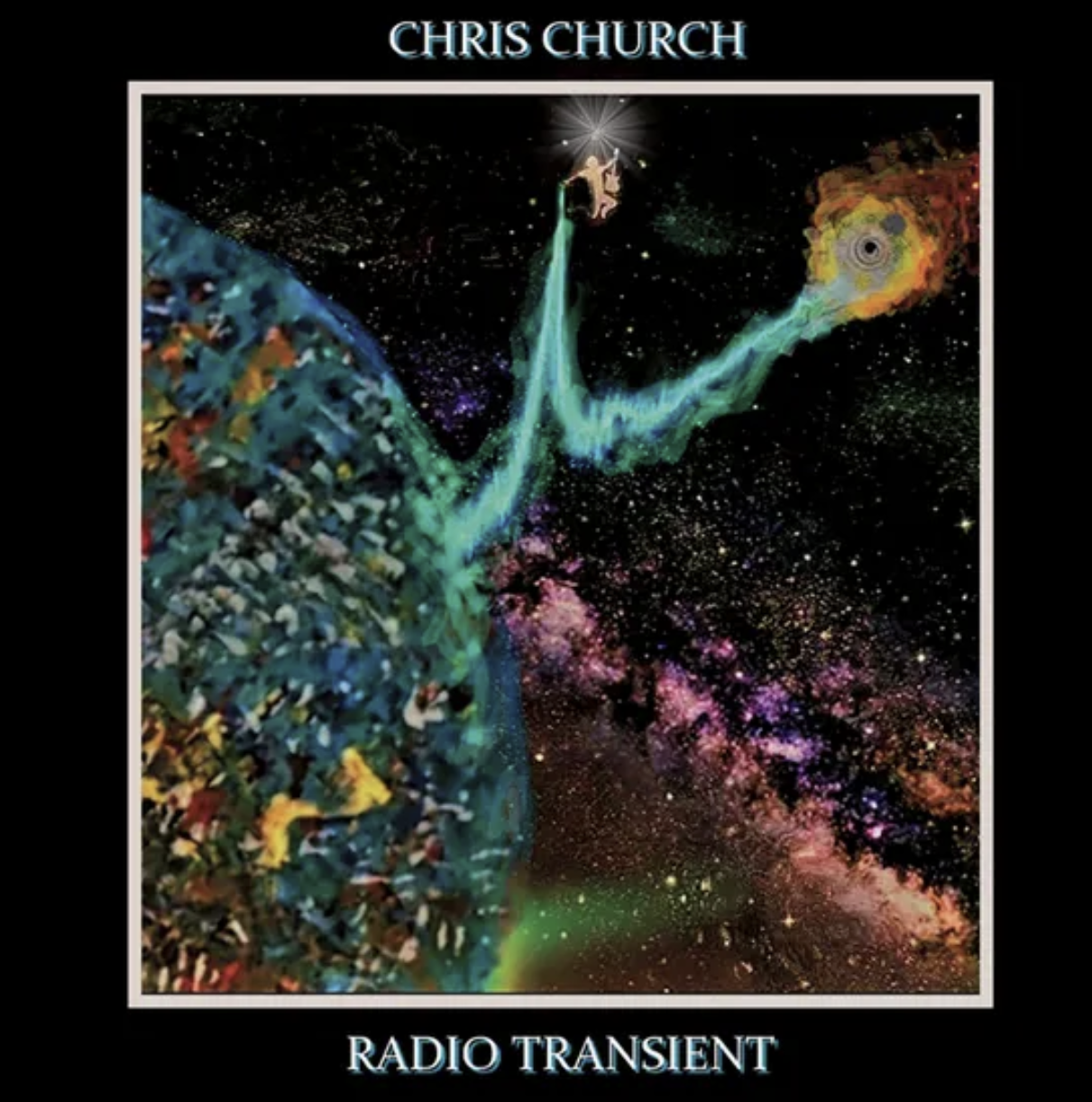
Chris Church has been releasing one great record after another over the years. And the new one, RADIO TRANSIENT, to be released March 24th by Big Stir Records, is fantastic again; more pop than rock this time. Incredibly infectious pop, that is.

Wow, you seem to have reinvented yourself musically, or am I exaggerating? I hear a lightness I’m not sure I heard before.

I was interested in trying to combine the sound of The Fixx and the solo stuff by Lindsey Buckingham, for whatever reason. That’s how I got started on this album. I used my Danelectro 12 string electric guitar almost exclusively, and got that thin “silvery” sound. In the past I have only used that approach to my guitar sounds sparingly, but I have begun to realize that I work well with self imposed limitations, so I stuck with it. That pretty much forced a lighter sound. I insisted on making the vast majority of the songs on Radio Transient a faster, more kinetic tempo, and I think that is also a factor.

I dance to your new record just like I dance to the old Rick Springfield and Danny Wilde/The Rembrandts songs? Do you consider that a compliment?

Absolutely! Rick Springfield is criminally underrated as a songwriter. I absolutely love “Don’t Talk To Strangers”, “Love Somebody”, and several others. Both he and The Rembrandts have written some really sophisticated pop rock. “Rolling Down The Hill” is a masterpiece. I definitely take that as a compliment, and I appreciate it!

Your voice and Lindsay’s match very well. How did you find out?

I reached out to Lindsay to tell her how much I loved the excellent Gretchen’s Wheel album she made several years back called “Black Box Theory”, and we immediately hit it off musically. We’ve since become friends. She’s an amazing artist, and I think anyone would sound great if she was singing along with them!

Did Radio Transient come about differently than usual?

Not really. I just get the vibe that starts me on a new project and carve it out from there until it’s finished. Same as it ever was, but different every time!

Actually, all your records are well received. That will also be the case with this one, I write in all my wisdom 🙂. What do you actually think of that?

Your wisdom knows no bounds!

Going ‘Til We Go can also be found on The Best Power Pop of 2023 Spotify playlist.

Think Like A Key Music – DIY series

The ‘TLAK GOES DIY series‘ is a wonderful invitation to get acquainted with the idiosyncrasy of artists such as LMNOP,
R. Stevie Moore, Hawk Percival, Fran Ashcroft, and Brian Bordello.

Record boss Roger Houdaille (Ex Norwegian) talks about the creation of this series.

What prompted you to start the series?

As with many things I do, it just sort of manifested itself. Brian Bordello got in touch with his album at the same time I heard from Fran Ashcroft. Both are very different, but still kind of this DIY thing. Then, I was working with Alex Wroten and his Gatekeepers project, which R. Stevie Moore is on. Through that, I requested putting something of his out. Then I thought about LMNOP, who I’ve been in touch with the artist forever via his Babysue review site. Finally, an LA-based artist Hawk Percival surprised me with her songs, and we quickly made plans to put an album together. These were atypical releases, so I knew I had to tie them together somehow so it could be marketed better, and the DIY series was born.

The offer seems inexhaustible to me.  How did you make choices;  (first) which artists and (second) which records of those artists?

It’s true; it’s a vast and mostly unchartered world when it comes to DIY artists. However, since I didn’t start with the idea, the choices really made themselves. For R. Stevie Moore, I asked Alex which is his best album that hasn’t had a proper reissue, and “Games & Groceries” was high on that list. The “LMNO3” album hadn’t been available on CD, and it made sense to put that out.

Did everyone immediately think it was okay that you were going to polish up the sound?

Well, I didn’t try to truly polish the sound up. For example, “Songs For Cilla To Sing” wouldn’t work without its characteristic tape hiss. The same with RSM’s album, which had minimal polishing done. More cutting out bits that really shouldn’t be there, like tape drop outs at end of tracks, some sound balancing, basic EQ, etc. Overall, we do want a professional final product, but stayed faithful, taking into consideration that some releases are lo-fi. “LMNO3” probably received the most cleaning up, using the most up-to-date methods, and I think it helped in that case.

Will you continue the series after these releases?

I hope so. Of course, depends a lot on the reaction to this first batch. I definitely would like to keep releasing some more RSM and LMNOP records. As far as brand new efforts – I’m not sure. I won’t be looking for it. I don’t have time to look for any music, to be honest. But I’m sure some cool things will come around my desk. I have some of my own early DIY things that I may like to put out too.

How do you feel the series fits within the overall catalog of TLAK Music?

It adds a lot of character. I’m happy to have TLAK celebrate such an eclectic mix of artists that are not cookie-cutter, yet still accessible. I hope fans can tune in and get turned on to other artists who may not be on their radar otherwise, thanks to the diverse roster.