
Twenty years and twelve albums into their journey, Smug Brothers show no signs of slowing down. Their latest release, Pinhole To Vortex, delivers another irresistible mix of crunchy guitars, jangling melodies, offbeat lyrics and infectious hooks. Recorded over several years at their own Fork Rock Studios, the album captures a band that continues to explore new ideas without losing its distinctive identity. We caught up with Kyle Melton to talk about the making of the record, the enduring appeal of guitar-driven indie rock, the bands keeping the scene alive and the satisfaction of releasing new music after two decades.
Pinhole To Vortex is your 12th album, and Smug Brothers have been making music for twenty years now. Looking back, how has the band’s sound evolved over that time, and what still defines a Smug Brothers record for you?
KM: Well, I think there are always the core elements we’re interested in: big hooks, slightly obtuse lyrics, and mix of crunchy and jangly guitars, and songs that have a way of sticking with the listener. In the early days, it was much more haphazard and scattershot. We tried a lot of ideas, and a lot of times we went with the initial spark of an idea rather than spending a little more time hashing it out and polishing it. These days, we have a bit more opportunity to flesh out ideas at our home studio, Fork Rock Studios, and add layers to the recordings that we didn’t in the early days. That said, we still try to stay as close to the spark of the idea as we can without working an idea into boredom for ourselves. As far as what makes a Smug Brothers record: it has to have some good hooks, there has to be a little weirdness in there, and some kind of throughline and flow for the listener from beginning to end. We want each album to be a complete and unique listen.
How did Pinhole To Vortex come about? Where did the songs and ideas for this album originate, and how did they develop into the finished record? Did you have a particular direction in mind, or did the album take shape as you went along?
KM: We started tracking for this album in summer 2024 and continued tracking until early 2026, but there were only a handful of tracking sessions with drummer Don Thrasher and I to get songs together. Some of the material was older, but I was writing a lot of new stuff as we went along, and slowly a coherent album emerged. There were 3 songs that ended up as digital B-sides, and several more that are still just in the pot for the future. It wasn’t until the very last recording session in fall 2026 that I knew what the last few songs needed to be to really tie the album together. That’s kinda the process of listening to what we have and figuring out what pieces complete the puzzle, so to speak.
Smug Brothers have been part of the independent guitar-pop and indie-rock world for a long time, and there’s a lively community of bands and listeners keeping that music alive. Do you feel part of a wider Power Pop or indie-pop scene? And are there contemporary bands you feel a particular connection with, or that you’re especially excited about?
KM: Oh yeah, there are a ton of great bands and fans in the guitar-centric indie rock world, and we’re thrilled to be a part of it in our own way. We’ve been good friends with The Laughing Chimes [Slumberland Records] for a few years now, typically doing a weekend of shows in Columbus and Athens once a year. They’re great and we’re looking forward to where they go in their adventures. We just played with Ex Pilots out of Pittsburgh a few weeks ago; Lavender Jets out of Cleveland are really great. And we’re big fans of Kiwi Jr., Sharp Pins, and Good Flying Birds. Lots of great music happening these days.
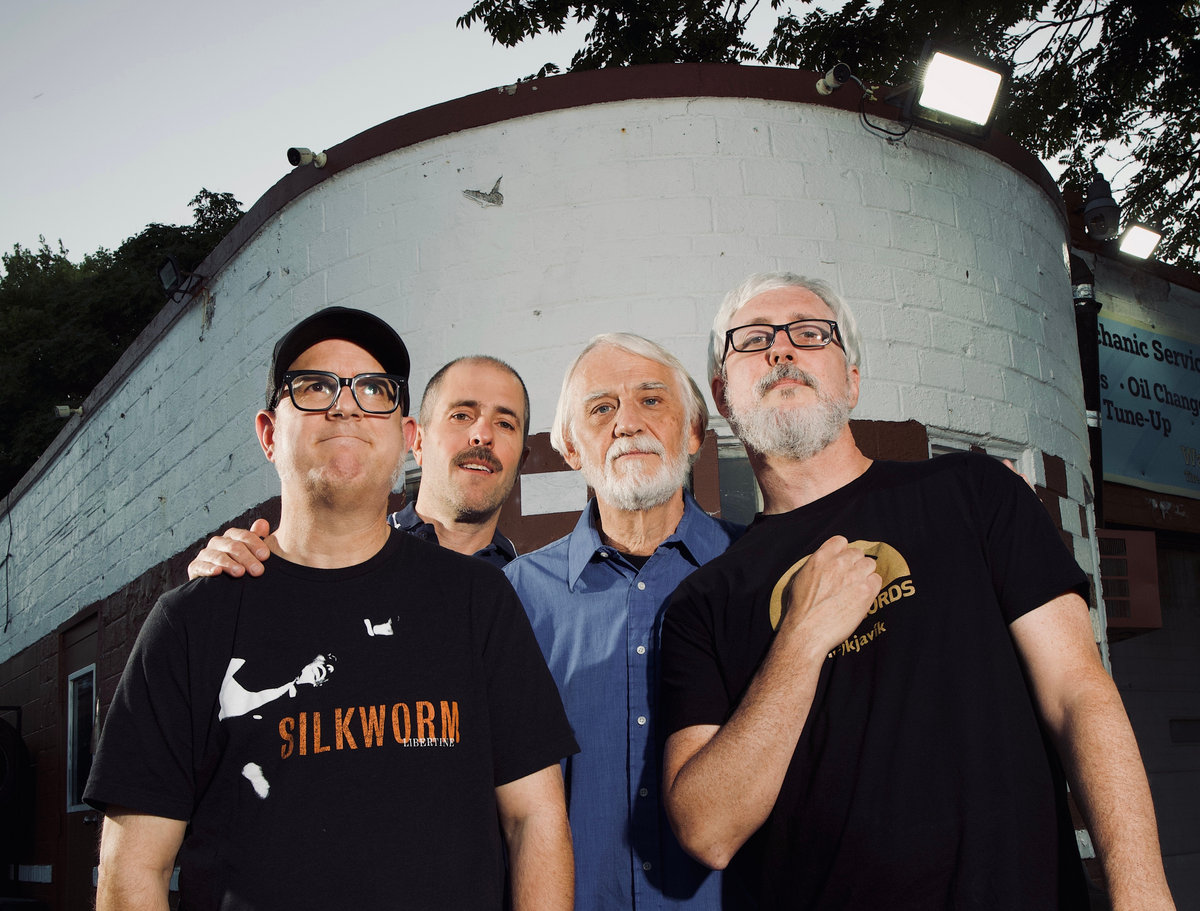
Has the response to Pinhole To Vortex surprised you in any way? Have the reviews, online coverage and word of mouth brought new listeners your way, or changed how people discover and engage with Smug Brothers?
KM: Well, it was exciting for us to get coverage in MAGNET this year, which has always been an important resource for all of us. It seems people are tuning in slowly to this new one, but that’s alright. We did a much shorter lead-up to the new album; one month instead of three from announcement to release. But we were able to get out to different cities with the new album, which we’ve not really been able to do in the past, so that’s helped a bit. It keeps growing at a glacial pace, which suits us just fine.
Pinhole To Vortex is out now, and the songs are no longer really yours — they belong to the listeners. After twenty years and twelve albums, what does it feel like to release a new collection of songs into the world? Is there a particular track on this record you’re especially curious to hear people make their own?
KM: Putting out a new album is always a buzz for me. Now that I’m handling all the recording and mixing, as well as doing the cover art with my own collages, it’s a new level of intense, sustained involvement for me with this album. But when it’s done and pressed and out to the world, it’s a great feeling that it’s alive, you know? I put so much of myself on the line and it’s great that there are people who are excited to hear it. I would really love to hear about people who are into tracks like “I’ve Seen Them Patch the Same Hole Trying to Get it Right” and “Drive Open in the Delicate Streams”. Those both have special meanings for me personally, so when other people can get into them, that makes me happy.

