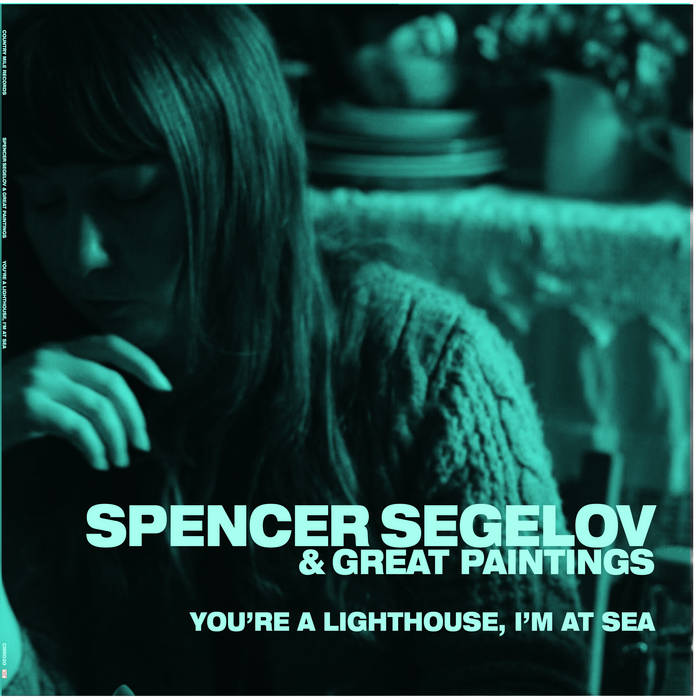
Undoubtedly, ‘You’re a Lighthouse, I’m at Sea’ is set to captivate the attention of the indie/jangle pop community. As it garners recognition, inevitable comparisons with the genre’s luminaries will emerge, highlighting the unmistakable quality embedded in the music. The sophistication and layered composition of Spencer Segelov’s songs are likely to draw parallels with established acts such as Prefab Sprout and Belle & Sebastian. Beyond its formidable strength, the album possesses a compelling fragility, and therein lies its true power.
From the first listen, the album warmly envelops you, and with each subsequent play, its grip remains steadfast. ‘You’re a Lighthouse, I’m at Sea’ is truly exceptional, ensuring that once it takes hold, you won’t be inclined to let it slip away.
You can discover ‘Don’t You Know?’ featured on the Best Power Pop of 2024 Spotify Playlist.
Could you share the journey of bringing this record to life? How did all the pieces come together to create the final product?
It was written and recorded over 2 months during the second lockdown. The isolation made many of us reflective. I was thinking about my life when I was younger, and when I first started going to indie nights, playing in bands, making friends. I was missing going out dancing, so I wrote an album to replicate a typical night out.
I asked a few musicians if they wanted to contribute and sent them the songs. They sent parts to me, and pretty quickly, we had an album.
Then we got together once the lockdown was over to play it live, and I realized that accidentally we’d put together a decent indie band.
Was there a particular moment or experience that struck you, signaling that you were onto something special with this project?
Playing it live and seeing people of all ages get up dancing to original songs they’d never heard before made me think we’d achieved our goal of a danceable Saturday night record.
Success can take on different meanings as time goes on. When envisioning success for this new record, what does that picture look like now?
I’ve made an indie album that’s out on vinyl and stocked in Rough Trade—I think that’s job done—but we’d like to play as many gigs as possible.
Within this collection, do you feel that the best song you’ve ever written finds its home? If not, what distinguishes this record’s essence from your prior work?
This is the first indie album I’ve done since 2006, so it’s a bit of a homecoming for me. I haven’t played electric guitar as a main instrument for a while, so this album will be different from the seven others before it.
I don’t really have a best song; I tend to dislike most of what I’ve done, in the same way we can look at pictures of ourselves and recoil in horror at our clothes and haircuts.
As an artist, the act of baring your emotions to the world is profound. Does this vulnerability come naturally to you, or is it a constant journey of finding comfort?
Well, this album is for dancing, and while there are some quiet moments, it’s mainly an up-tempo, happy thing. It’s made to be played live and for people to hear together, so it’s not hard.
Other times you can hide the truth in plain sight and get away with saying things that people won’t catch but which can be cathartic to say out loud.
Imagine you could collaborate with three co-writers of your choice for new songs. Who would you select, and what qualities or dynamics draw you to them?
Serafina Steer is talented in multiple areas, and I think she would have a deconstructionist approach that I wouldn’t have considered. She’s able to conjure up simultaneous feelings of dread and childlike curiosity on a sixpence.
Julia Jacklin—so much good music is coming from Australia, and Julia has this confidence to let the songs just be what they want and breathe. Also, she has that voice.
CMAT—hilarious, bittersweet pop at perfect lengths. Actually, I’d be fine just being her drummer, but she has a great sense of vocal delivery and a huge voice which she often keeps in a pocket and displays at judicious moments.
Among the gigs you’ve performed, which one holds an indelible place in your memory and why does it stand out?
Playing drums for Daniel Johnston for a one-off gig in Cardiff was incredibly special. We got to pick his setlist, and I played my favorite song of his, “Walking the Cow,” on the piano with him. The only song he vetoed was “Portrait of an Artist.”
Defining a song’s completion can be elusive. How do you determine when a composition has reached its final, ready-to-record form?
For this album, I wrote and recorded each song on the day or in that particular week. Everything was done very fast. I don’t have an issue finishing things; it all comes quickly, and the solutions are usually obvious and predetermined by decisions you’ve already made.
I believe a song only needs two sections, and within that, you only need one good main section (and then just something to break it up). After the second chorus, you really want to be wrapping it up around the 2.30-minute mark (what professional wrestlers call ‘going home’), and you’d better have a damn good reason for including a third section or a middle 8.
People who struggle with songwriting get hung up on their song not being “complicated enough,” or that feeling of ‘this song is only D and A’ and therefore I must keep searching until I find something more interesting—as if someone is going to call you out on it.
It’s a bit like when you tidy the house for visitors—you end up cleaning rooms and obscure places that no one is ever going to look at.
Also, if you’re at a party with guitars around and someone calls out a big-hit song, they will often then explain ‘it’s only these basic chords’—and that’s all the best songs need.

Striking a balance between experimental artistry and commercial appeal is a challenge. How do you navigate this dynamic within your music?
I tend to do albums for me and then albums for an audience. I recorded a completely live album called “Signs, Wonders & Miracles” (on Bandcamp); it was done in someone’s house and replicated the recording techniques of the Western Electric recording machines of the 1920s (as best we could). It was a folk/country/proto blues type thing channeling my experiences meeting Pentecostal Evangelists—needless to say, not many people were interested.
This new one is about drinking Jack Daniels and Coke on a Saturday night.
Lyrics often carry profound meaning. Are there particular lines you hope listeners will always remember from your songs? If so, what’s the significance?
Music is first for me. I can dash off songs and a melody and arrangement to go with them easily enough, but lyrics are always difficult. I don’t know how good I am with lyrics, but I like the phrase ‘your 2:2 humanity’ from “Couples Therapy.”
Can you recall the last instance when you felt the immediate certainty of having penned a hit song?
I’ve never had a hit, so I’m not sure, but lots of people have told me my songs sound like ‘proper songs’ or like songs that have always been around, and this is great to hear as I try and specifically do that when writing.
When I wrote ‘The Records in your Dad’s Collection’ on my album Loser Leaves Town, I somehow got very emotional, and I thought I’d done something proper.
Before I wrote “The Contender” on this current album, I did a fake prayer to the indie gods to give me just one more of those jangly riffs. I sat down with a guitar, and it happened straight away, so I recorded most of it there and then. That was a tremendous feeling.
With the resurgence of cassettes, imagine curating your inaugural mixtape. Which five songs would be must-adds and why?
- 20/20 – Remember the Lightning: A great lost riff song.
- Laura Jean – Teenagers: The inflection she puts on the end of every line, like the tradition of folk singers singing from the floor.
- Arthur Russell – I Couldn’t Say It to Your Face: The saddest song ever written.
- Pavement – Home: Dragged out, slowed down, burnout.
- The Church – Tristesse: Jangly magnificence.
Performing music before an audience holds a unique allure. What aspects of this experience contribute to the excitement and enjoyment for you?
I always feel like I belong on stage. I’m comfortable and happy there, and you can get a sense in real-time of how your writing is understood. With this album, people have been getting up to dance, so it’s satisfying seeing my drum and rhythm parts working as they’re supposed to.
Also, who doesn’t want to be applauded every 3 minutes?
If tasked with introducing your music through three songs, which ones would you choose and what story do they collectively convey to new listeners?
- Soft Rock is My Radio (released as Instructions): A sort of Prefab Sprout thing with lyrics I actually like. This is the most money I’ve ever spent recording a single song (taking 5 days of expensive studio time). Making this took longer than some albums I’ve made.
- Home Truths (as Instructions): This was a joint effort with the band, a sort of Talking Heads groove with some afrobeat inspirations.
- Leader of the Chain Gang (released as Spencer McGarry Season): Many people have told me it is their favorite song of mine. This was the song I wrote about working in a call center that led me to hand in my notice that same day to start my own band (I later had to take other day jobs).
Among the compliments you’ve received, is there one that remains etched in your memory? If so, what made it particularly unforgettable?
‘You smell really good’ – Peter Brewis, Field Music.
‘Your punctuation is ambitious yet accurate’ – Ishmail, my University lecturer.
I really care about both of the above in my daily life, so it’s nice to get recognized.
Studio moments often hold a touch of magic. Could you recount an instance that stands out as the most enchanting during your creative process?
I think the studio is a place for hard work, long 10-hour days with no food. There is no fun for me when I’m in a studio; I’m just battling to get things done before the clock runs out. It’s not a place for experimenting as I don’t have the money; therefore, I’m just recording all the parts in my head to the best of my ability.
Where do you see yourself situated within the broader landscape of the music industry? How do you perceive your unique role and contribution?
I’ve got no idea, really. I’m not sure how unique I am or what I have to contribute, but I’m usually round to help out other bands with their recording and live performances, so I enjoy that. I can’t say no to anyone who asks me to drum for them.
Envision recruiting three singers to provide harmony vocals on your next record. Who would you invite, and what qualities do they possess that resonate with you?
I’m lucky because I have a great group of singers, and I know many multi-instrumentalists. I tend to gravitate towards multi-instrumentalists because I find them like-minded people.
In the past, I’ve sung with a close harmony group called Barefoot Dance of the Sea, and they reunite for a song on this album called “Friends with Playlists.” If I ever need anyone, I would always ask Bec, Beth, and Sophie as they’ve got a unique blend all their own.
With the record completed and the music released, do you believe the pinnacle of enjoyment has been reached, or is this just the beginning of an exciting phase?
It’s the beginning of as many gigs as we can play based on who will have us. I want to keep playing this album for at least the next year if we’re lucky enough to get some gigs.
Looking ahead to the next couple of months, what exciting plans or projects are on the horizon for you?
I’m excited for our launch in the Norwegian Church Cardiff on 27th Jan, where we’ll play the whole album through supported by our label mates Burning Ferns and The Adventures of Bert and Henry
Then it’s mainly other gigs like Wales Goes Pop, and hopefully some festivals will come off.
Can you take us through the creative journey of bringing this album to life? What were the key milestones, challenges, and breakthroughs you experienced along the way?
I decided to give myself two months to write and record an album.
My process is like a novelist. I enjoy the research phase which, for this album, lasted about a month. It was quicker than others because indie music is an area I’m very familiar with, having played in so many bands. After compiling playlists/albums and listening to music for say 7-10 hours a week for 4 months, the songs all came easily. I would often go for a walk with a rough idea of the sort of song I wanted i.e.- jangly or acoustic. I live near a mountain and forest in Caerphilly, so I go walking in nature and compose (recording bits on my phone), then I’d return to the house and begin recording. After I’d done the guitars, drums, and singing, I would send it to the others to see if they had ideas which I would then add as appropriate.
The challenges were in explaining what I wanted to people who weren’t in the same room (because of Covid), so there was a lot of communication breakdown.
How would you describe the evolution of your sound in this new album compared to your previous works? Were there intentional shifts in style or themes?
This is my ninth album, and most of them all sound different.
Essentially, I haven’t done an electric guitar album since 2007, so I’ve come full circle because of the way Covid made me think about the past (both in a positive and negative light). I decided it would be fun to do an electric guitar album again.
There was an intentional rule to try and get every song finished by the three-minute mark and to only have guitars on it. There is some piano/keys, but I got other people to do it as I didn’t feel the need to touch the piano at all having mainly recorded songs on that for the last 10 years.
Albums often involve collaboration with various musicians and producers. Could you shed light on how these collaborations contributed to shaping the album’s identity?
This is the first album I’ve produced involving other humans, so Charlie Francis contributed additional production ideas and instrumentation to fill out the sound. He was also a good reducer of my ideas.
As for the band Great Paintings:
Huw Thomas’ bass lines were always interesting and unexpected, and he had the great idea to play the bass like a heart-beat on “Disco in your Heart,” which changed the feel completely for the better. His playing on “Hard Work” is a relentless, runaway juggernaut.
Edd Reardon Smith is our lead guitarist; he can do things I cannot. His lead lines have a bit of rock history scattered through them, and his subtle voicing of chords adds emotion to the songs. He also plays on the beat, and I tend to play off the beat, so we stay out of each other’s way.
Joseph Grant is a talented multi-instrumentalist who we have on drums. He’s creative at coming up with beats and leaving spaces, and if I can persuade him to sing live, we’ll be on to something.
Sheena Bailey plays guitar like no one else. She’s come up through a Jonny Marr/Peter Buck school, and live she tends to either mirror my parts or go off on her own interesting adventures. We’ve started writing songs together.
Pete Ford, who plays live drums with us, is the best-kept secret in drumming. He will learn everything you’ve sent him, then show you how to do it better.
In the digital age, visual elements are intertwined with music. How did you approach the album’s visual aesthetics, such as album art and accompanying visuals? How do they complement the sonic experience you’ve crafted?
I wanted the genre of the album to be apparent from the cover in the same way art from novels works or the typeface of an art exhibition can give an indication of the pieces. At the same time, each picture had to be only semi-defined and open to some interpretation. We spent a long time finding pictures for the album and preceding two singles. Matt Jarrett did a great job bringing it all together.


One comment