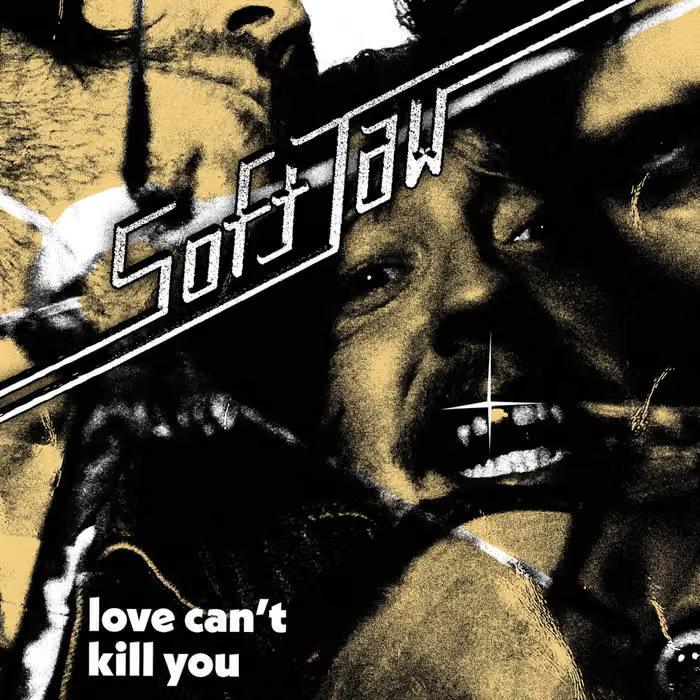
Softjaw – Love, Hooks & a Little Bit of Telepathy

Some bands spend years trying to find the right chemistry. For Softjaw, it seems to have happened almost instantly. When songwriters Dustin and Tanner joined forces, they discovered a shared love of melody, hooks and all the little details that turn a good pop song into a great one.

Their new album, Love Can’t Kill You, is packed with the kind of effortlessly catchy, beautifully crafted songs that remind you why power pop is such an irresistible genre in the first place. There are plenty of familiar influences, but Softjaw never sound like they’re simply looking backwards. Instead, they’ve found their own way of making those timeless ingredients sound fresh and exciting.

In fact, Love Can’t Kill You is one of those albums that will help define 2026 as a great year for power pop. We caught up with Dustin and Tanner to talk about songwriting chemistry, the art of making a great song even better, avoiding the nostalgia trap and the joys and frustrations of recording an album themselves.
When did you realise that Softjaw could write genuinely great pop songs? Was there a particular song that made you think you were onto something?

Dustin: I had a couple songs knockin around before I met Tanner. One of them was “Don’t Go Walking Out”. I was definitely leaning in a more power pop direction but didn’t have anyone to hash them out with. Once Tanner came along we both started writing and things just seem to click right away. It’s a rarity to find your musical counterpoint so effortlessly.

Tanner: I met Dustin…that’s about it lol. I’ve kind of always been in a collaboration when it comes to music so when we met and shared influences I got a pretty good idea of what Dustin was going for and that got me super excited to start working that influence into my own songs for the band. The influence is mutual i believe and the combo of our approach seems to be workin out.

With two songwriters in the band, how does a Softjaw song usually come together? Do you bring in finished ideas, or do songs take shape together?

Dustin: It’s happened a few different ways but typically one of us has a song pretty much figured out. Then we all get in a room and give it a spit shine. I think we will attempt to be more collaborative for the next record.

Tanner: Usually Dustin writes an amazing song that breaks my brain and then i try and match it but never really get it, wherever it lands seems to be close tho and we go from there. my favorite times are when we show each other a song and we get telepathic and it falls right out. Thats straight up magic.

How do you make a good song even better? What do you tend to change between the first idea and the finished recording?

Dustin: For me personally it’s the little hidden gems you can sneak in. A special chord, a witty lyric, an unexpected key change, a change in time signature. The trick is doing it without people noticing. Don’t be flashy!

Tanner: I honestly have no clue. refer to Dustin on that one lol. I usually pour out my guts and call it pollok.

Your influences are clear, but Softjaw never feels like an exercise in nostalgia. How do you find your own voice while drawing on music you love?

Dustin: We have a pretty wide collective palette I think. We also try to steer clear of anything being too on the nose. If it’s a carbon copy we might as well be a cover band. The hope is to add some originality. That’s how music evolves.

Tanner: I think you gotta feeeeeel it maaaaaan. I was just trying to rip off the “deface the music” record by utopia… WHERE DOES THE WORLD GO TO HIDE?!
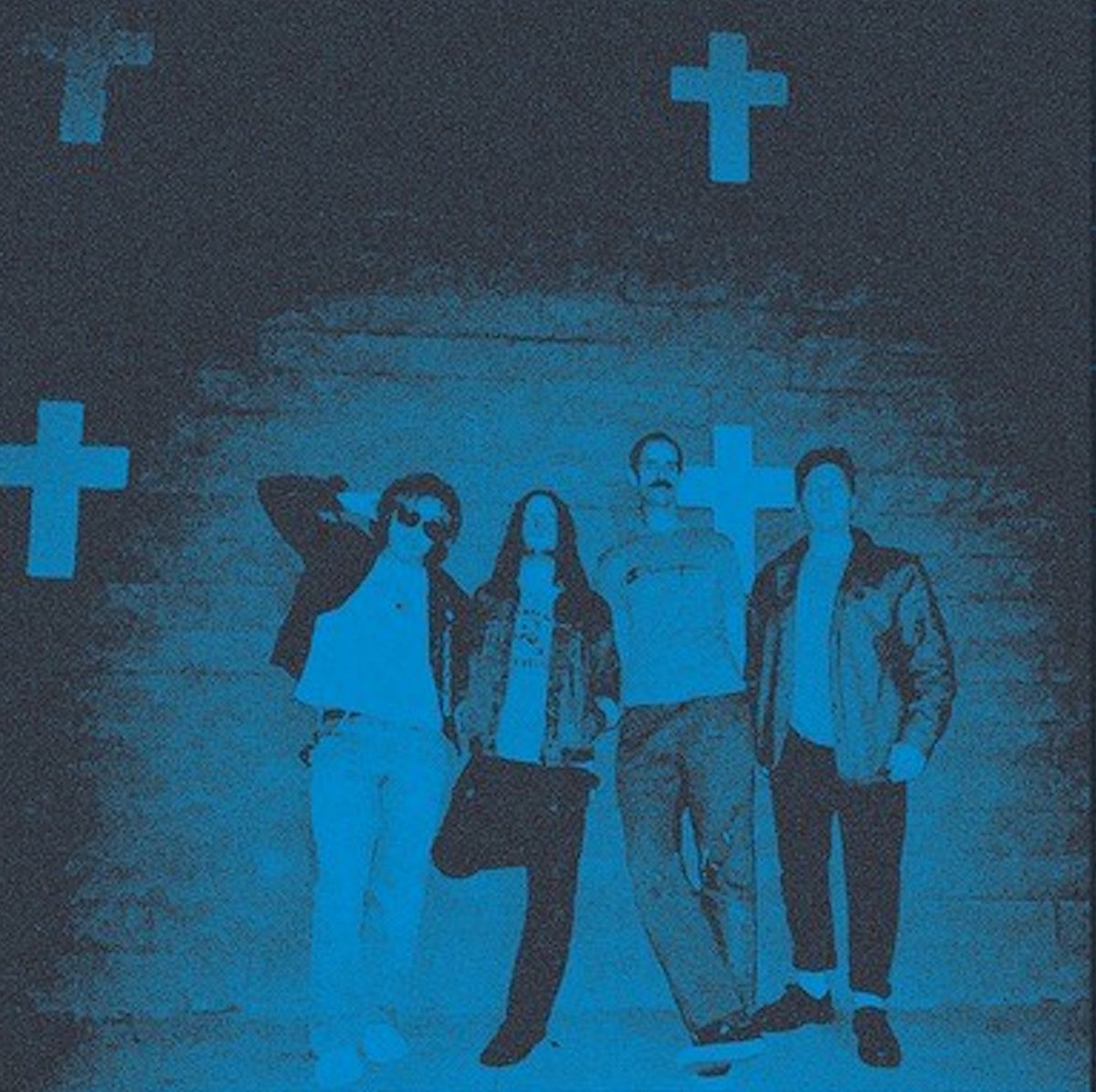
You recorded Love Can’t Kill You yourselves. Did that freedom make it easier to get the songs exactly where you wanted them, or harder to know when to stop?

Dustin: The recording process wasn’t too painful. I tried to mix it and drove myself insane. We eventually brought in Wyatt Blair for mixing. I was able to take a deep breath and see the finish line once he started sending mixes in. He’s got the magic!

Tanner: I don’t have too much experience in a studio so i gotta give it to Dustin on this one. its best to trust the person behind the wheel.
Almost Famous, Never Finished: The Rosenbergs’ David Fagin on a Lifetime in Rock ’n’ Roll

Some bands make great records and become stars. Others make equally great records and somehow slip through the cracks. The Rosenbergs belong firmly in the latter category.

For power pop aficionados, albums like Department Store Girl and Mission: You are reminders of just how much wonderful guitar pop emerged around the turn of the millennium without ever finding the audience it deserved. Packed with irresistible melodies, crunchy guitars and hooks that could give the best in the business a run for their money, The Rosenbergs had the songs. What they didn’t have was the breakthrough.

But there’s much more to their story than a couple of criminally overlooked records.

Frontman David Fagin and his band shared stages with Duran Duran, The Strokes, Supergrass and Echo & the Bunnymen, crossed paths with rock royalty, and found themselves at the center of some of the music industry’s biggest upheavals. They challenged Universal, embraced Napster when the record business was declaring war on it, and even managed to get themselves into trouble with the powers that be. And then there’s the story of Fagin landing in jail for stealing supermarket sushi just hours before opening for Duran Duran. You really couldn’t make this stuff up.

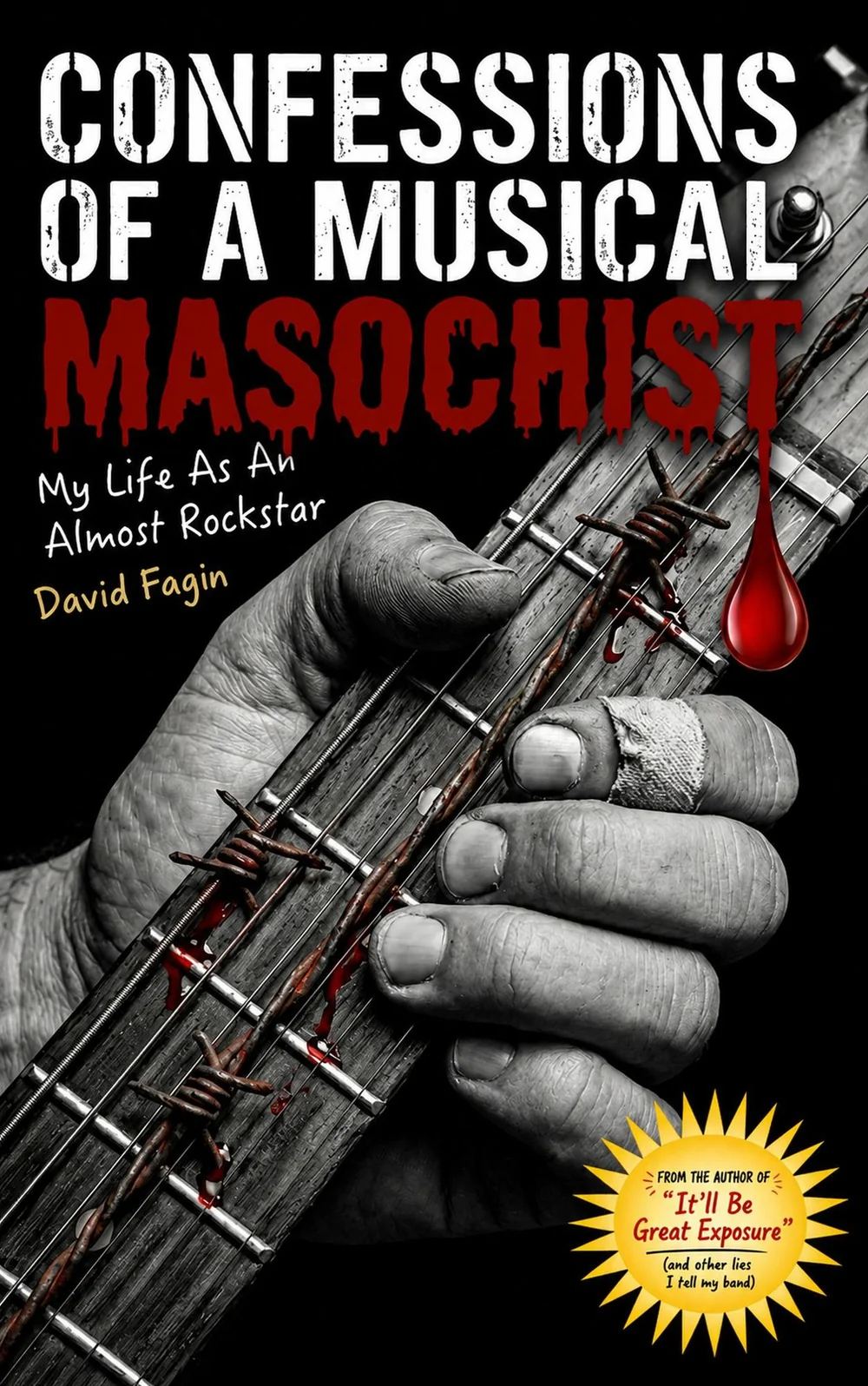
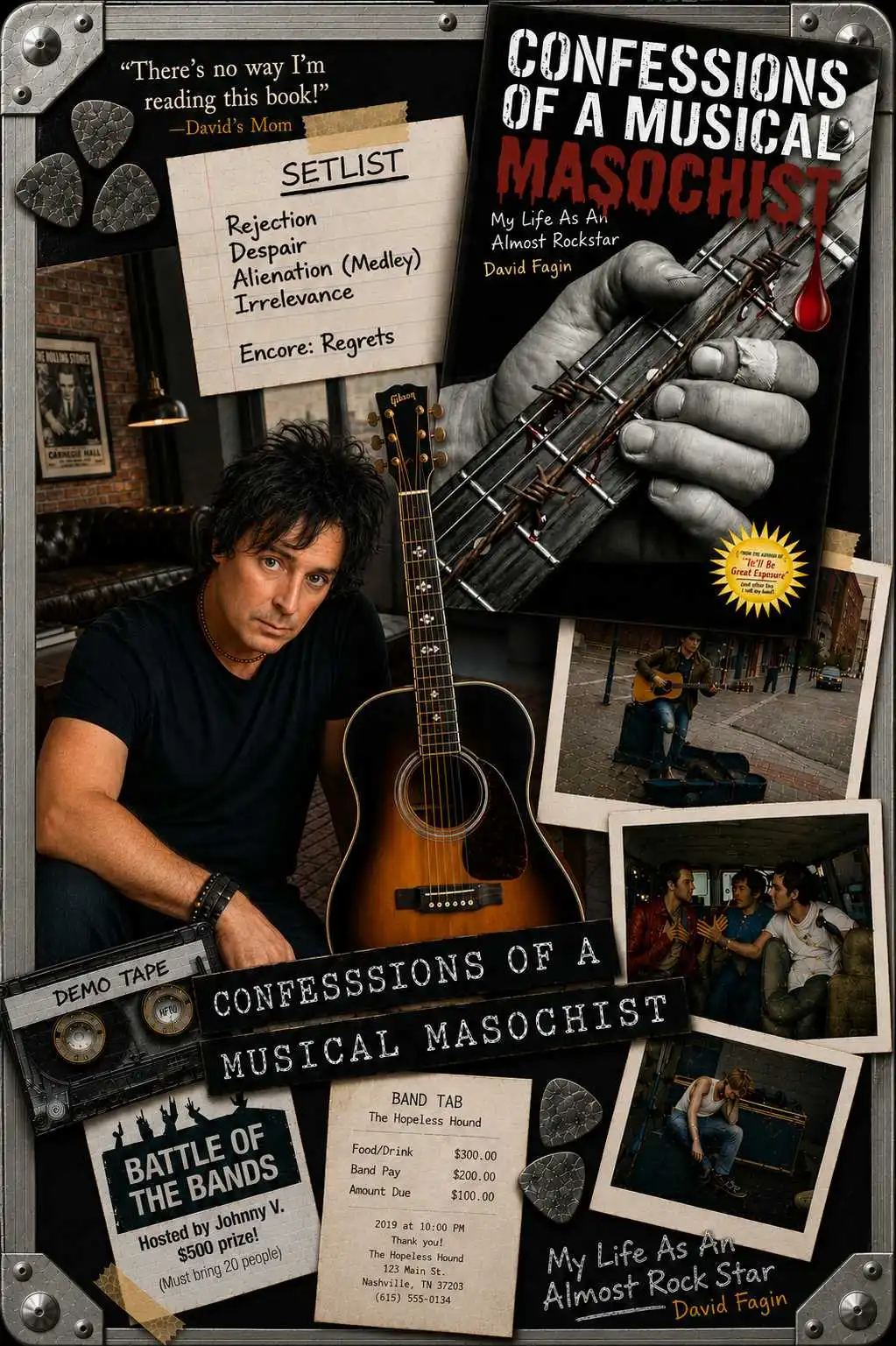
Now Fagin has put it all down on paper in Confessions of a Musical Masochist: My Life As An Almost Rockstar, a memoir that’s as much about the ridiculous business of rock ’n’ roll as it is about the stubborn determination to keep making music when fame and fortune refuse to cooperate.

Nearly four decades into his musical journey, Fagin is still at it. Still playing, still chasing gigs, still believing in the power of a great song. And perhaps that’s the real story here. Not why The Rosenbergs didn’t become huge, but why someone who came so close, so many times, never stopped trying.

I caught up with David to talk about The Rosenbergs, the records that deserved better, taking on the music industry, and what it really means to spend your life as an almost rock star.


Confessions of a Musical Masochist looks back on decades of chasing the elusive dream of rock stardom. When you started The Rosenbergs, what did you imagine success would look like? And looking back now, has your definition of success changed?

One thing that writing the book illustrated for me was that my dream of rock stardom was not that of your typical musician.

Looking back, I realized I never really was interested in performing for 75,000 people at Giants Stadium. Rather, my main goal with The Rosenbergs was simply to get a booking agent who could keep us working and who would do the legwork that I had to do myself 24/7. In that respect, we succeeded.

And today, as we speak, my goal for my Britpop tribute, The Wankers, is pretty much the same: to find an agent who’ll keep us working and take the pressure off of me having to do the heavy lifting 24/7.

Ultimately, my goal has always been the same: to be a working musician. To be able to survive doing what I love instead of being one of the “sheep,” taking the train or the bus every morning, an hour or two each way, to work for a company that views me as a number. The price you pay for this choice is zero stability and security. Easy to say when you’re young. Not so easy when you’re older.

I’m a big fan of The Rosenbergs, and listening to your records, it’s hard not to wonder how songs that strong didn’t take you further commercially. How do you look back on the band’s music today, and is there an album or song you feel deserved a much bigger audience?

Thanks. When we were doing it, the only game in town was commercial radio. There was no YouTube. There was no Spotify. There was no Apple Music. Radio – both terrestrial and satellite – still remains the best way to build an instant nationwide following. I am of the belief that it really doesn’t matter how good your music is. If your band gets on Z100, with 100k watts behind it, you will find an audience – it’s that simple.

Because we were based in New York, we were up against the worst, most unsupportive network of radio stations in the history of the music biz. The last thing they cared about was supporting the local scene. To the point, when The Rosenbergs won K-Rock NY’s Best Unsigned Band contest in ’96, the GM whose idea it was was fired within days of putting us on the radio.

As far as our songs go, I think “Birds of a Feather” could be a hit in any decade. It deserved more attention than it got. It has a very Beatle-esque hook and a pretty poppy vibe. But I’m sure there are a million songs out there that deserve more attention than they got. Off the top of my head, I could name a few dozen.

The Rosenbergs found themselves at the centre of some remarkable moments in music-industry history, from your confrontation with Universal over the Farmclub contract to your partnership with Napster. At the time, did you realise you were challenging the way the industry worked, or were you simply trying to find a better way for your band to reach its audience?

Looking back, we really had no idea we were at the center of the storm that was the “Big Bang,” i.e., the advent of the Internet, dot-coms, MP3s, file sharing, etc.

We were just trying to do what we felt was right. We knew the industry was going to try and continue to own everything the artist, no matter the decade, and we were just trying to say, “Hold on. There’s a better way that could benefit everyone.” Obviously, the powers that be had no interest in that.

In hindsight, I’m pretty proud of what we did. We weren’t Pearl Jam or Smashing Pumpkins or R.E.M., so for a baby band to speak out against the entire industry was considered lunacy. We had everything to lose, which we pretty much did.

Your memoir seems to embrace both the comedy and the pain of being perpetually close to making it. Was it difficult to revisit some of those disappointments and bad decisions while writing the book?

Not at all. It was cathartic. And nostalgic.

Did putting the stories on paper change the way you feel about that period of your life?

Yes. As previously mentioned, it really made me proud of what we did. The little band I started in my bedroom in New Jersey wound up playing a pivotal role at the dawn of the Internet and was at the center of the conversation, re: how labels should treat artists in the new millennium.

Despite all the setbacks, you never really walked away from music. What is it about making and performing music that keeps pulling you back?

I just love it. Everything about it. Except the booking part. That I could do without.

And when you look at The Rosenbergs’ songs today, do you feel they’ve found the audience they were always meant to find, even if it took longer than you imagined?

Not even close. Although my mom likes them.


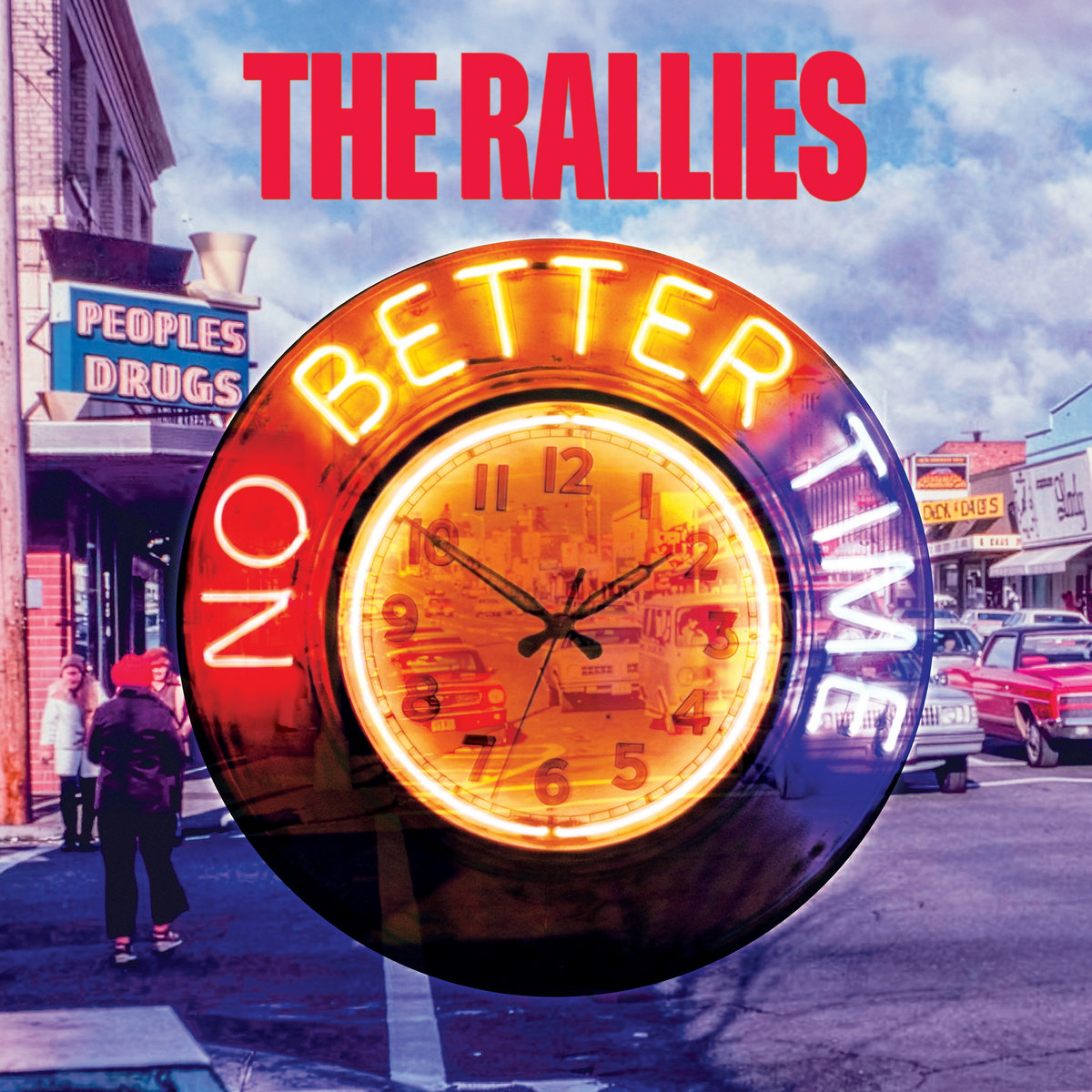
The Rallies – Somewhere Between Then and Now

Nearly fifteen years into their journey, The Rallies are back with their fourth album, No Better Time. Rooted in the timeless appeal of melodic guitar pop, the record finds the band embracing both their musical influences and the unexpected turns of the creative process. We caught up with frontman Steve Davis to talk about the making of the album, finding inspiration across generations, the enduring spirit of power pop, and the magic of connecting with listeners around the world.

No Better Time is your fourth album, and after almost fifteen years as a band, there’s a real sense of a sound that has become your own. When did you feel that The Rallies had found that sound?

My taste in melodic pop music spans way back to the 1950’s and every decade after, up and through today’s music. And I’m sure that “that sound” you’ve mentioned in The Rallies music can be tied to so many of those artists that I have listened to and have been inspired by. What’s been really cool is reading some of our album’s music reviews, and to have a few of these historic artists referenced, such as; The Beatles, The Turtles, The Monkees, The Raspberries, Big Star, Tom Petty, Squeeze, The La’s.

And what were you trying to capture with this album?

I think going into the studio to work on this album was pretty much the same as the previous albums. We’ve fully rehearsed the songs we want to record, and feel that we have a pretty good understanding of how the songs should sound and how to record. And that might be the case for most of them, but then there are the exceptions that can end up sounding entirely different from what you had imagined. I think that being open to that and having a willingness to try out ideas to find out where it can take a song might be what we are all trying to capture, the unexpected.

How did No Better Time come about?

Well, to be honest the album almost didn’t come about. That’s what I was thinking back in the summer of 2024 when our guitarist of six years left the band. But as fate would have it, the open position was filled almost immediately by Brian Chase and we picked up where we had left off without missing a beat! We were in the studio by the end of the year to record a few songs. And then throughout 2025 back in the studio on several occasions to finish up recording the entire album by year’s end.

When did you realize you had the songs and the idea for another Rallies album?

For me the idea of making an album is always there, it’s the endgame of why I’m doing this. So, it’s more about making it happen, that’s the challenge, and that turned out to be easier than expected on this album. For the song selections I have a stockpile of recorded demos that I share with the bandmates. And the ones that get the most positive responses we’ll try out together to determine if we want to pursue recording. It’s a democratic approach for the most part and it worked really well on this album.

And how did the record take shape from those first ideas to the finished album?

For this album and the previous one we worked with producer Johnny Sangster at his Seattle recording studio. He is a very hands-on engineer at the mixing board, and works with us to flesh out arrangements and the sound palette on his cool vintage gear. We’ll usually grab a solid rhythm track with drums and bass and basic guitar, then start filling in the landscape with some tasty overdubs and harmony vocals…sometimes it’s hard to stop adding new ideas! Lead vocals and acoustic guitar are usually recorded in the same take in hopes of bringing out the immediacy and emotion.

The Rallies were included in Bandcamp Daily’s “Why Power Pop is the Sound of Now,” alongside a whole range of other bands. Did that make you feel part of a wider power-pop scene or community?

It was wonderful to read that power pop music might still have a place in the enormous landscape of today’s music. And it’s wonderful that other contemporary artists are still out there making the kind of music that I grew up listening to. It makes me hopeful that power pop music will keep living on well into the future.

And were there any of the other bands mentioned in the article that you were particularly excited to find yourselves alongside?

The article talked about the “waves” of power pop by the decades and listed featured artists for these periods. Everyone they mentioned was spot on, I loved them all! “The First Wave (The Raspberries, Big Star, Todd Rundgren), the Second Wave (The Cars, Cheap Trick, Nick Lowe), and the Third Wave (Teenage Fanclub, Matthew Sweet, Fountains of Wayne)”. I also loved the article mentioning the following great bands; Nada Surf, Sloan, and The Lemon Twigs.

Did the Bandcamp feature actually change anything for The Rallies? Have you noticed new listeners, messages, sales, radio play, opportunities — or reactions from places and people you wouldn’t normally have reached?

Bandcamp provides statistical data to artists and I noticed that our play count was much higher than normal, and that’s when I discovered the article. So yes, it’s helped us reach way more listeners than we would have otherwise. Here’s one delightful message for example that we received from one of those new listeners, “Hey. Your music sounds great. I’m a Beatles fan, and your band captures that vibe. I never heard of you till this week. My college age daughter got me listening to The Lemon Twigs, so I investigated their stuff on Bandcamp and I came across your band, and I liked what I heard. Anyway, you’ve got one new listener from the Midwest. Keep up the good music. -Joe D.”

No Better Time is out now, and the songs are no longer really yours — they belong to the listeners. What does it feel like to let the album go into the world?

It’s a very gratifying feeling to finish an entire album of songs. A lifelong accomplishment for me, and one of the most rewarding things that I’ve done in my life. It’s also really rewarding seeing that people are listening to your album, hearing their positive reviews about your music, and then spending their own money to purchase it. Some of these moments are quite unexpected and hard to believe, like internationally mailing CDs and vinyl records around the world to places like; Austria, Denmark, and the United Kingdom. I do feel truly grateful for having this shared life experience with people from around the world brought together by their love of music. I’d some it all up as something magical, that’s how it feels to me.

And is there a particular song you’re especially curious to hear people make their own?

I’m always curious to hear what songs connect with people, and also find out why they do connect. And I’m especially interested to hear if our songs reach listeners emotionally, that they actually felt moved by a song. But the truth of the matter is that I’m attached to all of our songs, so with that in mind I hope that each and every one of them can attach itself to someone else.

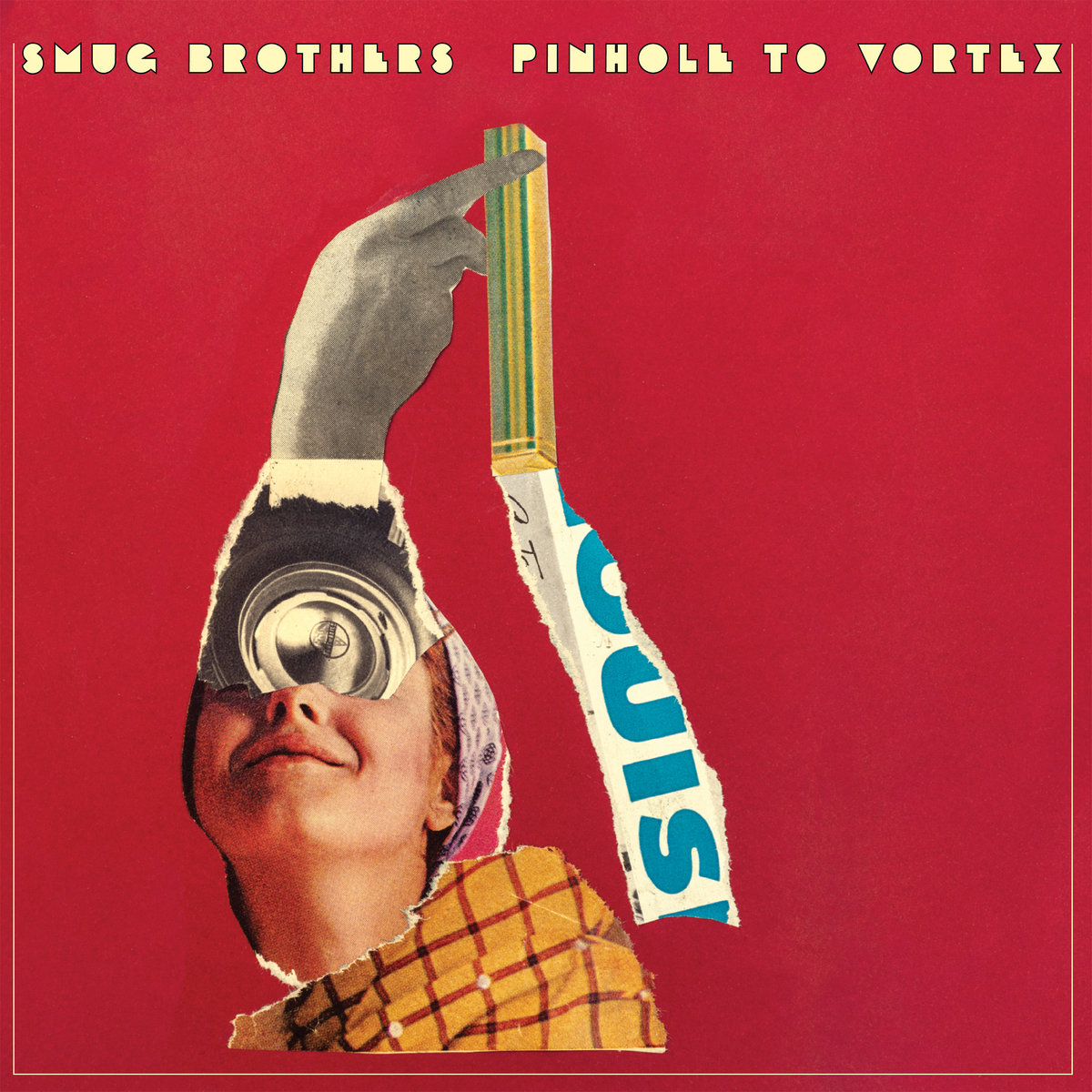
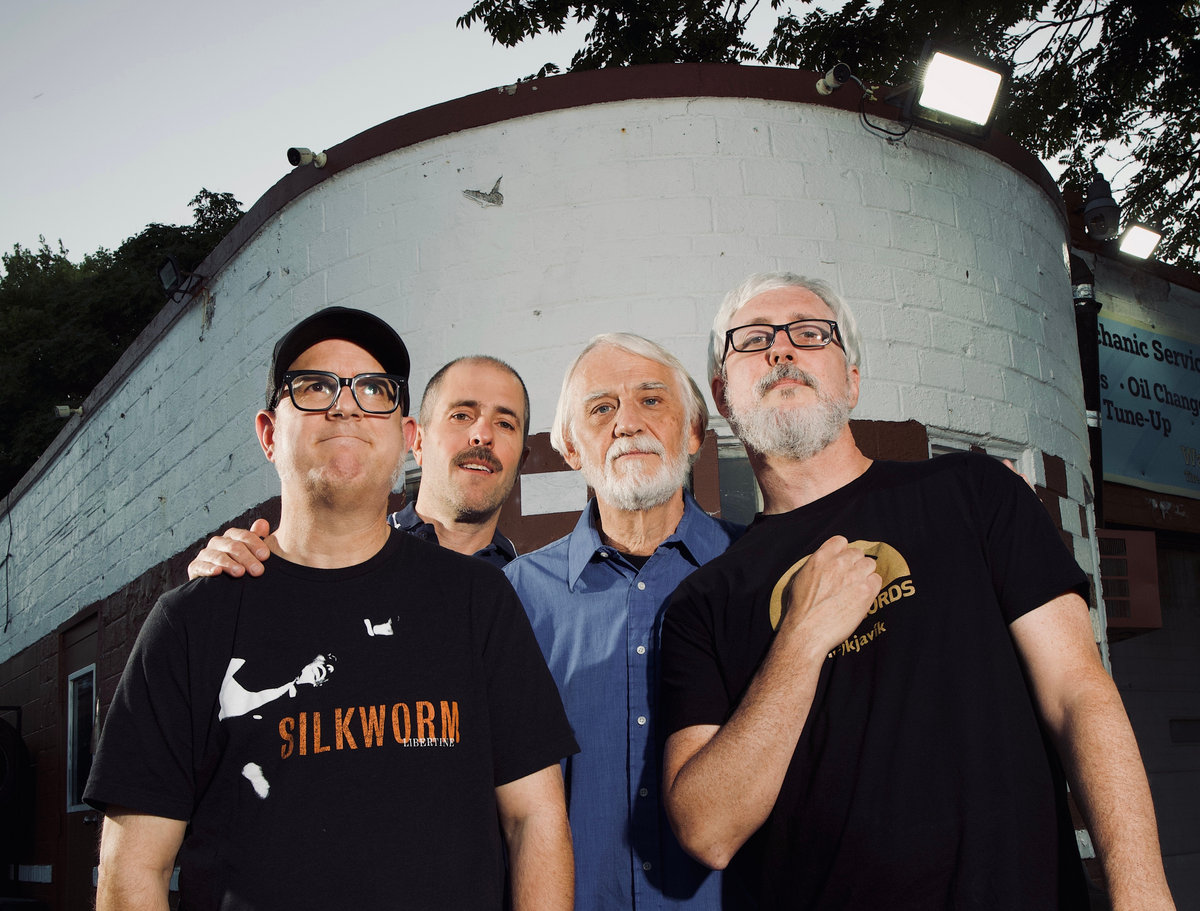
Smug Brothers: Twenty Years, Twelve Albums and Still Chasing the Perfect Hook

Twenty years and twelve albums into their journey, Smug Brothers show no signs of slowing down. Their latest release, Pinhole To Vortex, delivers another irresistible mix of crunchy guitars, jangling melodies, offbeat lyrics and infectious hooks. Recorded over several years at their own Fork Rock Studios, the album captures a band that continues to explore new ideas without losing its distinctive identity. We caught up with Kyle Melton to talk about the making of the record, the enduring appeal of guitar-driven indie rock, the bands keeping the scene alive and the satisfaction of releasing new music after two decades.

Pinhole To Vortex is your 12th album, and Smug Brothers have been making music for twenty years now. Looking back, how has the band’s sound evolved over that time, and what still defines a Smug Brothers record for you?

KM: Well, I think there are always the core elements we’re interested in: big hooks, slightly obtuse lyrics, and mix of crunchy and jangly guitars, and songs that have a way of sticking with the listener. In the early days, it was much more haphazard and scattershot. We tried a lot of ideas, and a lot of times we went with the initial spark of an idea rather than spending a little more time hashing it out and polishing it. These days, we have a bit more opportunity to flesh out ideas at our home studio, Fork Rock Studios, and add layers to the recordings that we didn’t in the early days. That said, we still try to stay as close to the spark of the idea as we can without working an idea into boredom for ourselves. As far as what makes a Smug Brothers record: it has to have some good hooks, there has to be a little weirdness in there, and some kind of throughline and flow for the listener from beginning to end. We want each album to be a complete and unique listen.

How did Pinhole To Vortex come about? Where did the songs and ideas for this album originate, and how did they develop into the finished record? Did you have a particular direction in mind, or did the album take shape as you went along?

KM: We started tracking for this album in summer 2024 and continued tracking until early 2026, but there were only a handful of tracking sessions with drummer Don Thrasher and I to get songs together. Some of the material was older, but I was writing a lot of new stuff as we went along, and slowly a coherent album emerged. There were 3 songs that ended up as digital B-sides, and several more that are still just in the pot for the future. It wasn’t until the very last recording session in fall 2026 that I knew what the last few songs needed to be to really tie the album together. That’s kinda the process of listening to what we have and figuring out what pieces complete the puzzle, so to speak.

Smug Brothers have been part of the independent guitar-pop and indie-rock world for a long time, and there’s a lively community of bands and listeners keeping that music alive. Do you feel part of a wider Power Pop or indie-pop scene? And are there contemporary bands you feel a particular connection with, or that you’re especially excited about?

KM: Oh yeah, there are a ton of great bands and fans in the guitar-centric indie rock world, and we’re thrilled to be a part of it in our own way. We’ve been good friends with The Laughing Chimes [Slumberland Records] for a few years now, typically doing a weekend of shows in Columbus and Athens once a year. They’re great and we’re looking forward to where they go in their adventures. We just played with Ex Pilots out of Pittsburgh a few weeks ago; Lavender Jets out of Cleveland are really great. And we’re big fans of Kiwi Jr., Sharp Pins, and Good Flying Birds. Lots of great music happening these days.

Has the response to Pinhole To Vortex surprised you in any way? Have the reviews, online coverage and word of mouth brought new listeners your way, or changed how people discover and engage with Smug Brothers?

KM: Well, it was exciting for us to get coverage in MAGNET this year, which has always been an important resource for all of us. It seems people are tuning in slowly to this new one, but that’s alright. We did a much shorter lead-up to the new album; one month instead of three from announcement to release. But we were able to get out to different cities with the new album, which we’ve not really been able to do in the past, so that’s helped a bit. It keeps growing at a glacial pace, which suits us just fine.

Pinhole To Vortex is out now, and the songs are no longer really yours — they belong to the listeners. After twenty years and twelve albums, what does it feel like to release a new collection of songs into the world? Is there a particular track on this record you’re especially curious to hear people make their own?

KM: Putting out a new album is always a buzz for me. Now that I’m handling all the recording and mixing, as well as doing the cover art with my own collages, it’s a new level of intense, sustained involvement for me with this album. But when it’s done and pressed and out to the world, it’s a great feeling that it’s alive, you know? I put so much of myself on the line and it’s great that there are people who are excited to hear it. I would really love to hear about people who are into tracks like “I’ve Seen Them Patch the Same Hole Trying to Get it Right” and “Drive Open in the Delicate Streams”. Those both have special meanings for me personally, so when other people can get into them, that makes me happy.


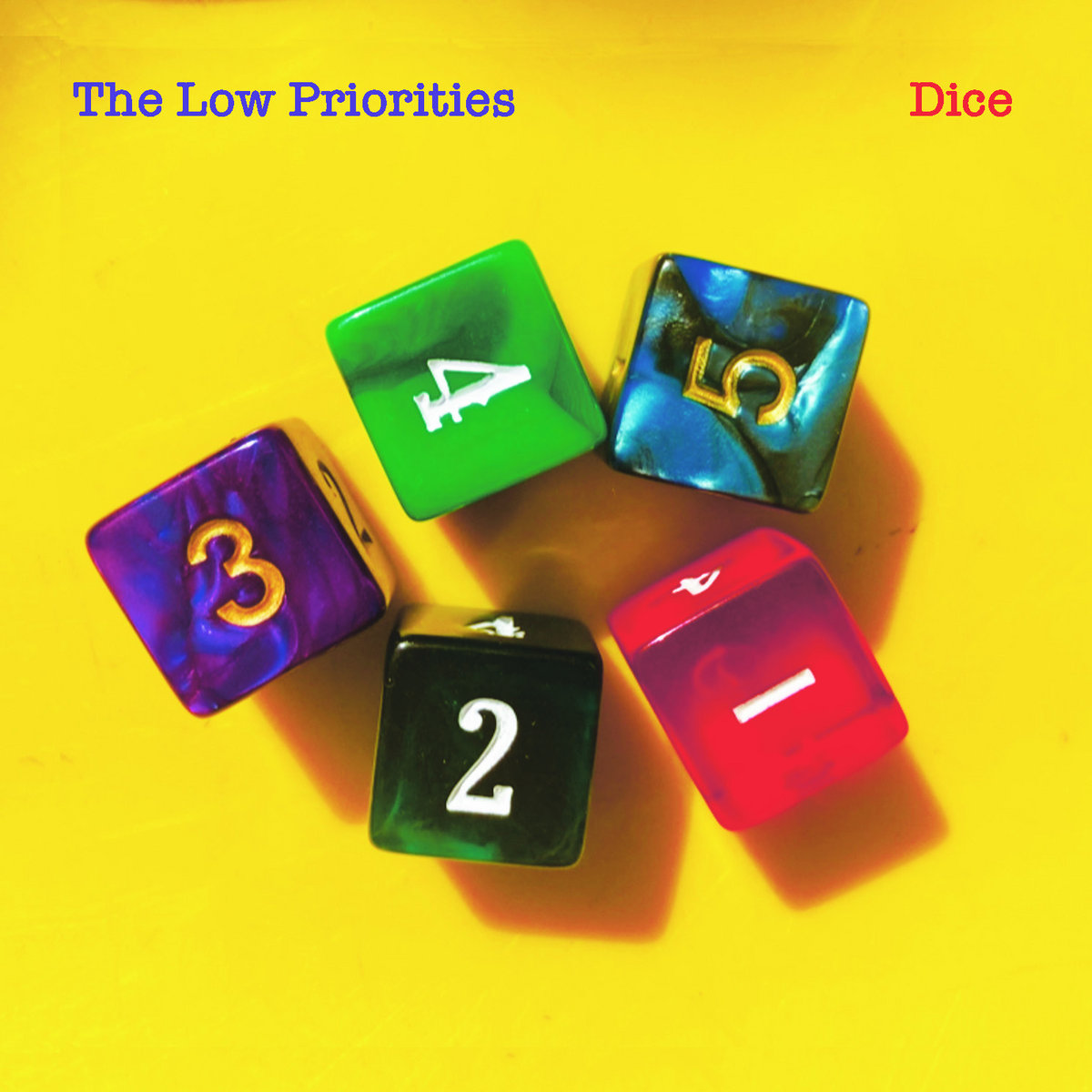
The Low Priorities: Rolling the Dice on Power Pop Perfection

Sydney’s The Low Priorities have arrived with Dice, a debut album bursting with jangling guitars, infectious melodies and classic Power Pop energy. Drawing on decades of friendship and a shared love of guitar-driven pop, the band have turned what began as a modest EP project into a full-length record that’s already attracting attention well beyond Australia. We caught up with Dan Keary to talk about the making of Dice, the band’s musical influences, Sydney’s thriving guitar-pop scene and what might come next.

Dice is your debut album. How did The Low Priorities come together, and how did these songs develop into the record we’re hearing now?

We’re all old friends who have played with one another in different bands on and off over the years.

About a year and a half ago, we had the idea to start a band specifically to play songs with a power pop feel. We thought that if we recorded a few songs as a self-released EP, it might be a good calling card to get some live gigs here in Sydney. While we were making those recordings, Dave wrote another batch of songs so we’d have enough for a live set. We got excited enough about them that we thought we may as well record all the songs and release an album rather than an EP.

So the album was done before we’d actually played any live shows.

There’s a real sense on Dice that you’re drawing on a long tradition of melodic guitar pop while still making it sound like your own. What were the musical touchstones for the band when you were making the record, and how consciously were you thinking about finding your own sound?

You’re absolutely spot on in referring to a long tradition of melodic guitar pop.

We’ve been playing together in bands since the 1990s and have spent many years sharing our love of music and enthusing about hundreds of different artists and records. The common thread of what we love is guitar-based bands with memorable, melodic songs. While making the Dice album we really enjoyed drawing on these inspirations, sometimes several within the same song. We’d often find ourselves talking excitedly all at once about bands like The Who, Blondie, Elvis Costello, The Nerves, Guided By Voice, Badfinger…to name only a few!

We wanted to make a high energy, catchy record that was clearly inspired by these and other great bands, but which still had a sound that was a unique blend of our own voices and playing styles. We weren’t looking to reinvent the wheel, but hopefully to create something with its own identity within the guitar power pop tradition.

There’s clearly a strong guitar-pop and power-pop tradition in Australia, and Dice has already been mentioned alongside that history and the current Sydney scene. Do you feel part of a wider Australian guitar-pop community, and are there bands from that scene — past or present — that you feel particularly connected to?

Yes, we’re certainly fans of a lot of the bands that people would associate with classic Australian power pop, such as The Hoodoo Gurus, Sunnyboys, The Stems, The Someloves etc.

In terms of the current Sydney scene, there’s still plenty of great guitar pop artists and bands like Bryan Estepa, Hoolahan, The Pyramidiacs, and The On and Ons playing regularly and everyone knows each other either directly or indirectly.

We did an album launch gig in Sydney in August and have another Sydney gig in mid December. Next year we’ll be looking at playing some more shows with other like-minded bands both here in Sydney and hopefully down in Melbourne.

The album has been getting some really strong reactions since its release, including the description of Dice as an “exemplary” power-pop record. Has the response surprised you, and have you noticed it bringing new listeners, contacts or opportunities your way?

We’ve been really happy with the response so far. We were confident we’d made a really good record so were always hopeful it would be well received but, yes, we’ve been pleasantly surprised at the airplay and positive reviews its been getting both here in Australia and in the US and Europe.

We’ve made quite a few new connections in different countries and there’s also some opportunities for some overseas shows next year and hopefully we’ll be in a position to confirm these shortly.

Dice is out now, and the songs are no longer really yours — they belong to the listeners. What does it feel like to let your first album go into the world, and is there a particular song you’re especially curious to hear people make their own?

That’s a nice way to put it – that the songs now belong to the listeners. We’d like to think that’s the case because that’s how real music fans perceive the songs they love – as their songs – and hopefully there’s enough people out there who have formed or will form that attachment to our songs.

We wanted to make an album on which every song could stand up on its own and hopefully we achieved that, so that every song could potentially be someone’s favourite.

We’ve been promoting the title track “Dice” as the main track, as we think it best captures some of those classic power pop elements we love – jangle, melody, power etc – but equally, there may be sonic or lyrical elements of other songs that people can relate to.

As long as we know there’s people out there enjoying the album, we’ve achieved what we set out to do.

One Joke Changed Everything: A Conversation with Gentle Hen


Gentle Hen’s Wink is an album of gentle, thoughtful but quietly provocative jangle pop. There’s an ease to these songs that disguises just how carefully they’re put together. Melodies that linger, small lyrical turns that open unexpected doors, and arrangements that reveal more with each listen. We talked to Henning Ohlenbusch about songwriting as a time capsule, trusting instinct, letting songs find their own meaning, and why music needs time to become a close friend.

Wink feels remarkably consistent — twelve songs that seem to belong together, with hardly any drop in quality. Were these songs written in a relatively concentrated period, or did you deliberately select songs from different periods that somehow fit together?

Thank you for saying so. Ever since I can remember I’ve been writing songs. I always have a few developing at a time. Eventually, I’ll step back and take stock and realize that I have enough to put together an album. That means that all of the groups of songs are written in the same chapter of my life so it only makes sense that there would be a common thread of some kind between them, a combination of my age, my surroundings, and the general mood of the world during that time. I think the same happens with the rest of the band. They develop their parts and play them in whatever voice they have in the current state of their existence. Each album is like a time capsule.

There’s a lot of craftsmanship in these songs, but they rarely sound labored over. How do craft and inspiration work together for you? Do you tend to start with an instinct and then refine it, or are you consciously constructing songs from the beginning?

Thank you! I like the way you put it, “start with an instinct and then refine it”. That is pretty accurate. I sit on the arm of the sofa everyday with my good old acoustic guitar and try to open myself up to some kind of inspiration by just letting my gut ride around the neck freely. The trick is to be ready to recognize the bit of music that speaks to you. Or sometimes it’s the same approach but with an emotion or idea, a snippet of words, a concept. Then it’s all about refining, which comes with just letting the song-in-process marinate in the background of my head at all times until more depth reveals itself.

I keep coming back to “One Joke,” partly because of the instrumentation, but especially that line, “One joke changed everything.” It suddenly opens up this whole story without explaining it. How does a line like that work for you — did the song grow out of that phrase, or did you discover the phrase while writing the song?

I believe the phrase appeared during the writing process after the first couple of verses already existed. But I’m not positive. It trickles out rhythmically with that descending almost sinister melody like a very clear statement, almost like the melody demanded those words. I had no choice.

“Parking Lot” feels almost like an emotional outburst at the end of the record. You’re not holding much back, and because of that it gives the album a lot of depth. Was it difficult to let the song get that emotionally direct, or was that exactly what it needed to be?

One of the many great things about the guys in the band is that Brian, Max, and Ken, besides being nimble and creative musicians, are all very empathetic people. When I introduce a song like Parking Lot, they’ll instinctively know just what to play to elevate the feeling. Brian’s rumbling drums during the verses are almost heartbeats, Max’s subtle bass slides by like trucks on the highway, and Ken’s lingering open guitar chords hang in the air like low clouds in a night sky. It didn’t have to be the final song on the record but it does seem like the right place doesn’t it?

On the Bandcamp page you specifically ask people to give the album three focused listens in a row, “the way you used to listen to albums.” Why is that important to you — and what do you hope somebody starts hearing on the second or third listen that they might miss on the first?

I have a fear that today when we have an endless array of distractions cascading in front of our faces, music is starting to become disposable. Why listen to a particular album again when there are another twenty thousand knocking on your door? I find that the real magic of music is how it can weave its way into your core. But that doesn’t happen if you don’t spend time with it. When I’m discovering something new, I make it a point of listening multiple times in a row, close listens and background listens. You might fall in love with a song at first sight but the connection is way more valuable and intense after it has really become a part of you. Songs are like people, you might like them when you first meet them, but they don’t become real friends until you spend lots of time with them. Better to have a circle of close friends than an army of acquaintances.

Hollow Hand: The Ordinary Is Always the Extraordinary

Max Kinghorn-Mills on Wish Road South, finding power in understatement, making music as a trio and turning the everyday into songs.

There’s a beautiful contradiction at the heart of Hollow Hand’s new album, Wish Road South. Its melodies feel gentle and restrained, yet beneath them is something much bigger: songs that quietly open up and stay with you. There are words with meaning, observations that become stories, and moments that make the ordinary feel anything but ordinary.

We spoke with Max Kinghorn-Mills about making the record, letting Hollow Hand become a collective endeavour, the seemingly disconnected images of “Heavy Metal T-Shirt”, and what happens when an album finally leaves your hands and heads out on the road.


There is something almost contradictory about the songs on Wish Road South: the melodies are often beautifully restrained and intimate, yet so many of them seem to contain a huge anthem trying to get out. I sometimes hear something in them that reminds me of the emotional lift of “The Whole of the Moon”. How do you manage to keep those melodies so small when they seem to have such enormous potential?

I don’t really have any plans when I’m writing, other than to follow what feels most inspiring. I suppose generally speaking I prefer ‘small’ music to anthem bands. The only exceptions are really in the world of heavy metal; I love being in the audience when everyone sings Metallica solos. I think less is generally more. I think I felt I had a fairly understated personality early on as a kid, whether I wanted that or not.

How did Wish Road South actually come together? Did the songs already feel like they belonged together when you started, or did the album gradually reveal itself as a record while you were making it?

Every time I make an album things feel different. This time I had many songs to choose from, I made demos for them, whittled them down, dropped a song if it wasn’t exciting me enough. That’s just the way things are, most people will tell you the same. It wasn’t until we started recording as a trio that we realised where the path was taking us. On other records I’ve sat and worked away on tracks for much longer, so I’d say Wish Road South was a much more dynamic experience.

You’ve described this as a different way of making an album, with Oliver Newton and Leo Clarke involved from the beginning and the three of you recording together as a band. What changed for you when Hollow Hand became more of a collective process rather than something you largely built yourself?

I started this band by myself in my basement flat at university. I spent 2 years hidden away ignoring phone calls, siphoning my dad’s record collection, discovering obscurities and recording demos. I’m a pretty solitary person most of the time; life just works better that way for me. I collaborated with 2 close friends on the album Star Chamber, but the others were very much on my own clock. Wish Road South is the result of a tight-knit trio who’ve spent a few years on the road together touring & backing other artists. Being in a band is hard, I just try to work out what I can do with the situation at hand, it’s always changing.

“Heavy Metal T-Shirt” has such an intriguing lyric, moving through seemingly disconnected images, memories and observations. There is something almost mysterious about the way the different pieces come together. What drew you to write the song in that way, and what do you feel holds it all together?

I never think about how I should write the song, it either happens or it doesn’t. I think if you’re being honest with yourself as a writer then the best songs will surface. When I was younger I used to focus on books I was reading, films, take other people’s much grander ideas and reinterpret them. More recently (and with this album), I’ve been much more interested in the day to day, the observations that you might call mundane. I was watching Kenneth Branagh with Judi Dench last night and he mentioned that “the ordinary is always the extraordinary”. I agree!

The album is out now, which means that for the first time these songs are no longer just yours. Other people are listening to them, interpreting them and forming opinions about them. Does that change the way you hear Wish Road South yourself, now that it has left your hands?

I’m pleased to have the album out there. In some ways it’s a relief but people forget that the next step is playing this music out in front of an audience, that’s very important & the decisions you made previously will stay with you for years. Many times I’ve found myself preparing to play an album live & finding it difficult to reinterpret the music. Just because a song worked well on a recording doesn’t mean it’ll be exciting on a stage, sometimes these can be very different crafts. Wish Road South is the first time where I’ve been able to really ‘road test’ some of the music (on various tours) leading up to the studio time. We’re leaving to tour the album for the first time in a couple of weeks, I’m in the studio today planning the set list and I’m really excited to get out!

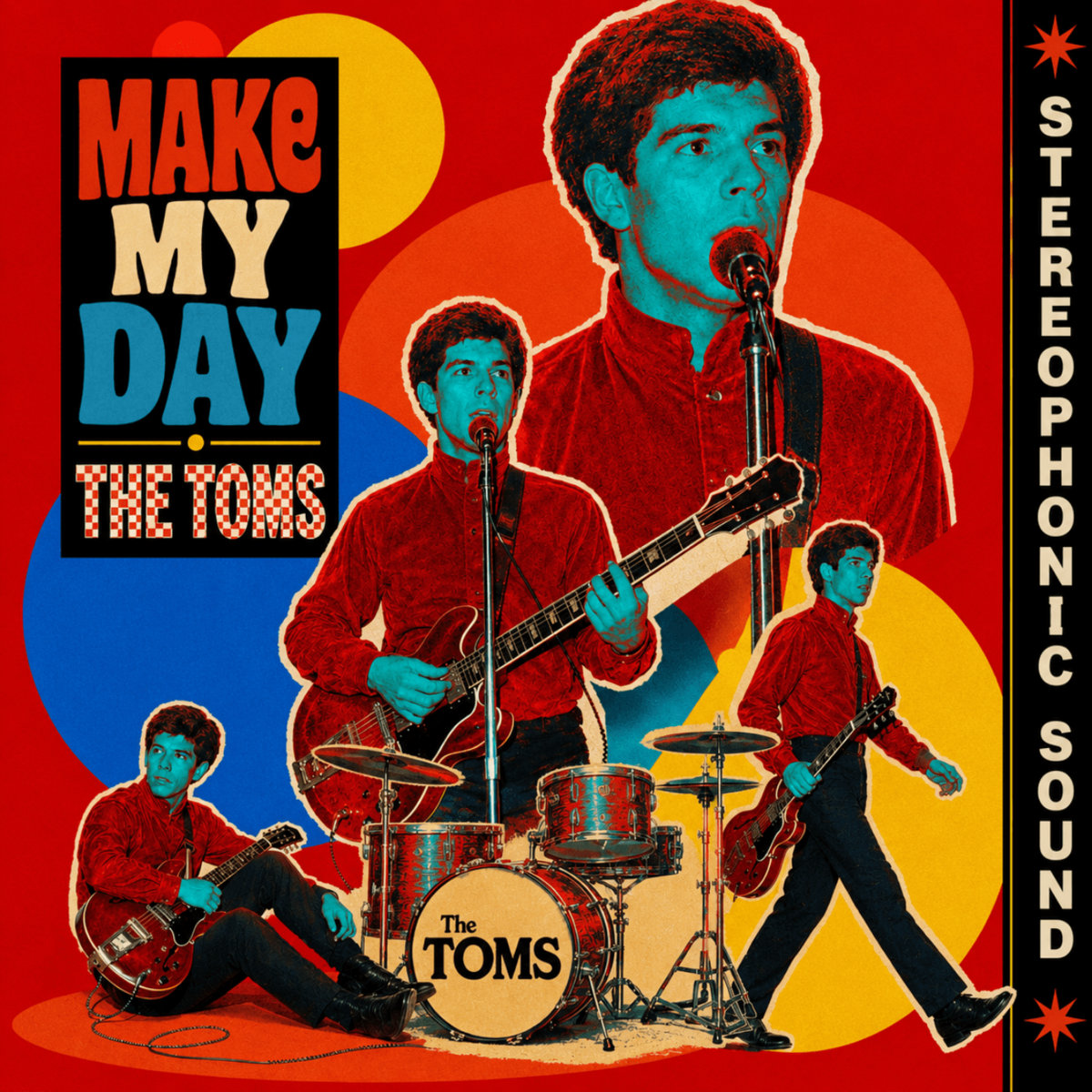
Thomas Marolda of The Toms: Make My Day

With Make My Day, Thomas Marolda reaches another milestone with The Toms: his 25th release. Yet there’s little sense that he’s running out of songs—or reasons to make them. For Marolda, writing and recording remain both an obsession and a source of exhilaration. We spoke with him about inspiration, craftsmanship, knowing when a song is finished, and what keeps the Power Pop fire burning.

Make My Day is your 25th release. What still makes you want to write another Toms song?

Some people get high or buzzed by other means. My high comes from writing and recording new songs. It’s always inspiring when my fans, friends and relatives ask me when The Toms are coming out with new material.

Also, it seems that in the last ten years music has diminished in all areas, so I almost try to make up for the lack of originality, excitement, musicianship, songcraft and production. Sometimes I improve and sometimes I stay the same.

You describe the album in terms of emotion, craftsmanship and innovation. How much of a Toms song is craftsmanship—and when does the art kick in?

I’m never satisfied after spending many hours over a particular song, so I scrap numerous songs and try to outdo myself with the replacement.

I may start a song and finish it very quickly, but the production direction may take the song somewhere that’s not working for me. If I don’t get goosebumps from any part of the track, I will ditch it.

How do you keep the Power Pop fire burning after all these years without simply recreating what worked before?

That would be like asking Paul McCartney why he continues to write and record. You never know where that next gem is coming from, so you keep exploring your own talents and your own preferences in what’s out there.

I normally have to go back to my roots, as today’s new artists and songs fall short of inspiring or impressing me.

Great Power Pop can sound effortless, but there’s usually a lot of craftsmanship behind it. How do you know when a song is finished—and when to stop?

That’s an easy question: goosebumps will tell me that the track is where it’s supposed to be with me.

So, what can we expect from The Toms when Make My Day comes out?

It’s scheduled to be released October 2, 2026. There is also a preview available now.

The Creepy Jingles: Finding the Gold in the Dirty Corners


On Against All Opps, The Creepy Jingles pack humor, hooks and some surprisingly heavy ideas into six compact songs. Behind the oddball titles and instantly accessible melodies, there’s plenty going on beneath the surface: love bombing, hypocrisy, self-examination and the uncomfortable possibility of becoming the very thing you once criticized. I spoke with Jocelyn Olivia Nixon about finding comedy in dark places, writing melodies that stick, and why the best material is often hiding in the dirty corners we’d rather avoid.

One of the things that really stands out on Against All Opps is the balance between humor and more poetic, sometimes even vulnerable lyrics. A title like “Throw Me in Some Rice” immediately makes you smile, while other lines hit in a very different way. How do you find that balance? Do you start with the funny or absurd idea and discover something deeper underneath it, or is it the other way around?

Yeah, exactly. If it’s a heavy theme, I naturally want to take the piss and lighten the mood to entertain myself. If I start out with a funny idea, I look for the depth or tragedy to fill out the idea.

A great song has layers, just like people, and if I’m doing it right, it’s left open-ended enough that other people end up projecting their own meaning onto my songs. Which means I made them feel or care.

My goal is always to make something melodic enough, catchy enough, that they don’t hear the lyrics right away anyway. They get swept up in the beat or the hook, then after a couple of listens the lyrics start to stand out and people go, “What have I been singing?”

I always like to leave plenty of Easter eggs in my lyrics for the people who look closely enough. That was always my experience as a listener anyway. My favorite art felt interactive. I learned to put that focus into my work. The more layered the song is, the more time you will spend with it trying to see every angle.

The melodies on Against All Opps feel incredibly fluid. Even when the songs take unexpected turns, nothing seems forced — the melodies just seem to naturally find their way to the next part. How do you develop your melodies? Do they usually arrive quickly, or is finding that natural flow something you work on extensively?

When I’m writing melody, it happens in different ways. Sometimes I’ll have a hook idea that just comes to me, and I figure out the chords around it and build an arrangement. Most times I will just block out a chord progression that sticks with me and focus on the space in between.

I’ve noticed over the past couple of years that when I restrict myself within a simple progression, I find some of the catchiest melodies in those spaces, and it informs where I’m going for the chorus. Then the chorus melody informs the bridge.

Melody comes easily for me, typically. I labor over the words more because my focus is to write something that reflects the human condition. A melody can start to lose meaning without the weight of that experience grounding it.

“You Don’t Trend” feels like a pretty good introduction to The Creepy Jingles. What was the idea behind the song?

I like the idea of the narrator of the song being an underdog, completely aware of how ridiculous and rigged the whole game is, pointing out the hypocrisy of it all, but participating anyway to attempt to overcome it and try to change things from the inside.

However, once they gain the access, attention, power and influence, we find the character falls victim to the same missteps they criticized and attempted to change, ultimately failing to break the cycle.

It’s part comedy, part cautionary tale. A story of the prey becoming the hunter. Or the hero living long enough to see themselves become the villain. The ugly duckling becoming the swan and then judging beauty contests. Take your pick.

“Funhouse Mirror” has a different feel from some of the more playful songs on the EP. What’s behind that song?

I wanted to write a song about love bombing. I just saw a lot of meat on the bone with the idea that one person is being sincere and attempting to have a thoughtful dialogue, while the other person shuts down the concern and is just like, “Baby, I love you. You’re crazy, you’re my everything. Come back to bed.”

Once a song is finished and released, it stops being entirely yours. The listener brings their own experiences, interpretations and meanings to it. With these six songs now out in the world, what are you most curious to hear from listeners — and is there a song on Against All Opps where you particularly hope people will find something that you didn’t necessarily put there yourself?

I hope all my songs elicit that reaction. I think people naturally project onto things that resonate with them. If I do my job well, someone will think I’m singing directly to them or about them.

If I had to pick one song in particular, “Nü Fables.” It’s definitely the most personal song on the album. It would be cool for people to see themselves in that song.

I spend a lot of time looking into the depths of myself and my relationships to understand the greater picture of everything. I think the best songs and life lessons are in the dirty corners we don’t want to look at or address. I see that as golden fodder.

I hope listeners will put themselves under the microscope and explore their inner world and hearts. I want people to look deeper at themselves and the people in their lives. If folk can come to love and accept themselves, they will naturally have a much easier time extending that grace to others.

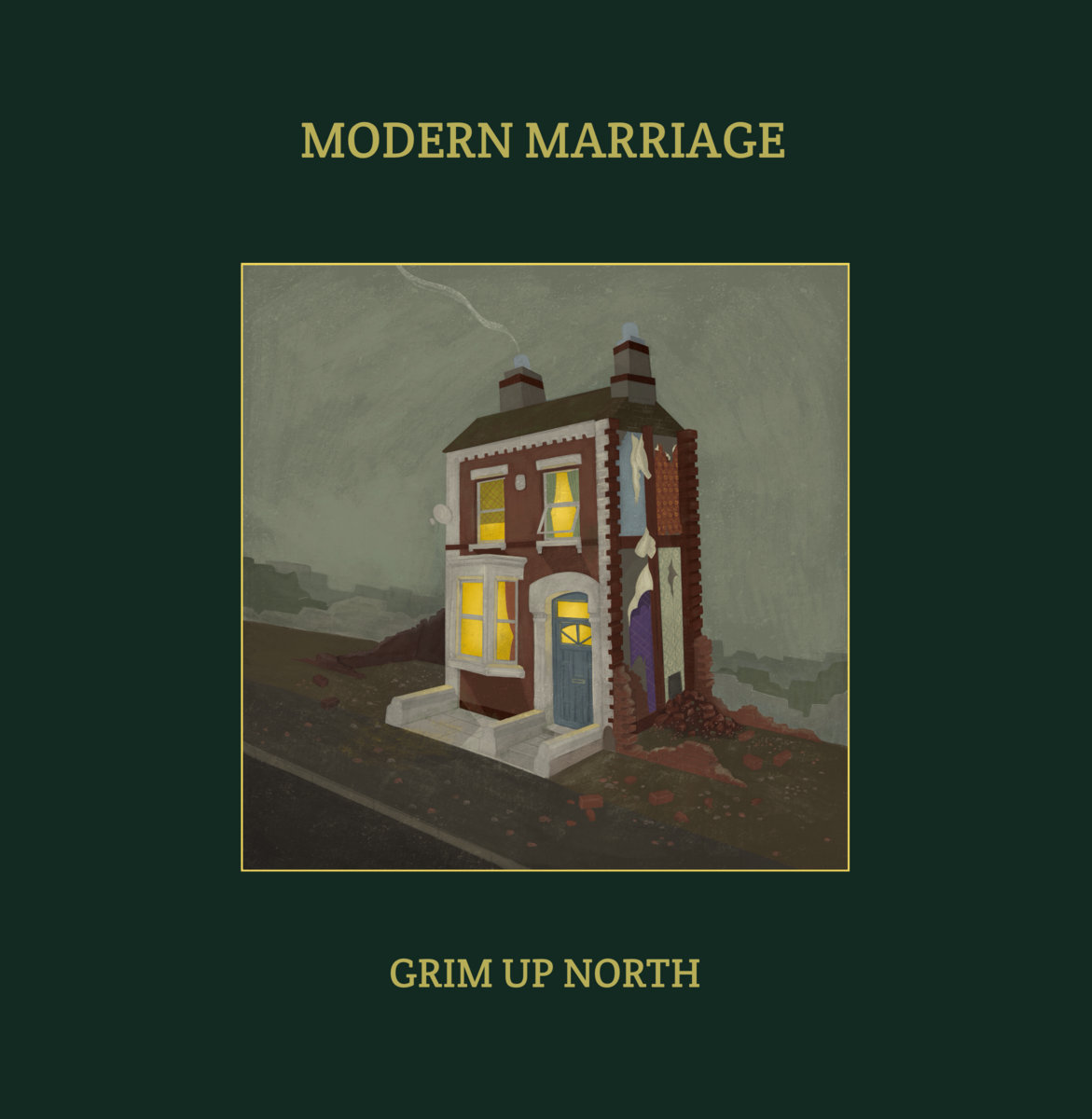
Modern Marriage: Power Pop, Pacemakers and IKEA Flatpacks.

On their new record Grim Up North, Modern Marriage wrap darkly funny stories, oddball characters and sharp observations in irresistible power pop. We spoke to Ben Savage about Merseyside, melody and the peculiar everyday moments that find their way into the band’s songs.

There’s something very English about Modern Marriage — rough, melodic, witty and slightly awkward. Where does that come from?

Our ‘Englishness’ is potentially just a reflection of who we are and the result of growing up in Merseyside. The songs are predominantly about everyday life and the strange characters encountered along the way, and it wouldn’t make sense to present them any other way. The three of us consider ourselves very genuine people and what you see is pretty much what you get. Merseyside is full of oddball characters, and Scousers have an idiosyncratic sense of humour, which hopefully comes across in the songs. I do of course love very ‘English’ bands, from the Kinks and the Who through to TV Personalities and Half Man Half Biscuit, who have always been fairly insular from outside influences.

Your songs are wordy, but the melodies never get lost. How do you balance storytelling with melody?

The storytelling aspect comes fairly naturally – for further reading, feel free to check out the ‘Customer of the Day’ series on the ‘Skeleton Records’ Facebook page, which is me living my day job. The melody is a bit of a non-starter, and I wouldn’t take a song to the band unless I feel the melody is adequately strong enough in the first place. We’re often told that the songs are “catchy,” or “earworms that stay in your head for days, whether you want them to or not.”

I hear The Jam, Buzzcocks, Squire and The Real Kids, but Grim Up North never feels nostalgic. How do you make those influences your own?

I personally feel the songs live in their own detached state of time, where the sensibilities of the 1977 music explosion are applied to growing up in 21st Century Liverpool. They’re never truly modern nor truly nostalgic – they’re all somewhere in between, and I like that. As for influences, we’re all music geeks and we’d be here all night giving the full list. To oversimplify, I’m a proud mod/power pop fan, Eloise likes the obscurest music in the history of the world, and Danny has an encyclopaedic knowledge of Tenacious D that confounds all but his closest friends and family.

Your songs are full of specific people, places and situations. What comes first — the story, the melody or the character?

The songs tend to start from one idea, usually a title or key phrase that stimulates my curiosity, and then I go away and pretty much write the whole thing in one go. I’ve got a leftfield imagination, so the smallest of ideas usually ends up a long way away from where might be expected. For example, ‘Terry’s Last Fag’ was a piece of graffiti on the wall of a rehearsal studio, which turned into the story of a man working the night shift at his local supermarket, getting caught shoplifting and needlessly drinking bleach to evade the long arm of the law. ‘Gerry and His Pacemaker’ is about an octogenarian banjo player and ‘IKEA Flatpack’ a jealous lover, who kills her ex and disposes of his body in the titular item of Swedish household furniture. ‘Blue, Red and Yellow… Maybe’ was a deliberate attempt to write a very dark song from the point of view of a stalker, but dress it up as giddily happy power pop, to reflect his contentment stalking his crush around B&Q, “humorously whistling Husker Du.”

The album feels deeply rooted in Northern England. Could these songs have been written anywhere else?

Probably not. The North of England famously doesn’t take itself too seriously and we’re quite a self-aware bunch up here. Merseyside in particular has a warped sense of humour and identity even for Northern standards. We also have a disproportionately high number of local eccentrics, and I couldn’t have dreamed the song scenarios up in the first place without being acutely conscious of our local environment.