Michael Simmons – Happy Traum EP

Daryll-Ann broke up in 2004, yet the band, together with Johan, is still seen as the flagship of the Dutch Indie Pop, a ship that has been sailing through the low lands since the mid-90s.

On April 24 this year, the Dutch record label Excelsior celebrated its 25th anniversary in the Amsterdam Paradiso. Daryll-Ann performed a one-time reunion. It was enchantingly beautiful. Jelle Paulusma is a great singer, and Anne Soldaat is an even better guitarist. I’ve seen a lot of concerts this year, YEAH, but it doesn’t get much better than that night in Paradiso.

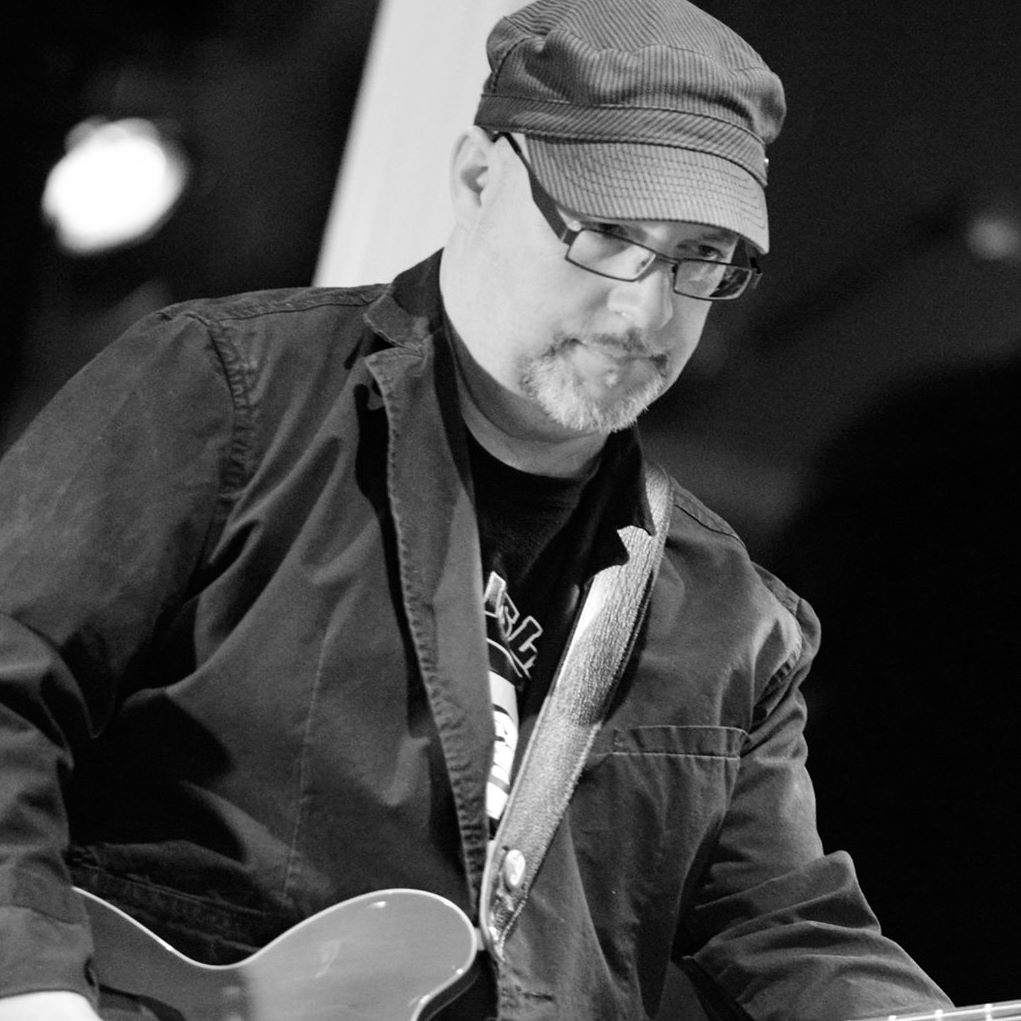
When I saw on Bandcamp that Michael Simmons (Sparkle* Jets UK, Yorktown Lads) is going to release (Sept. 9) an EP covering only songs from Daryll-Ann’s Happy Traum, the band’s masterpiece, I was curious as to how that could have happened.
Michael explains: ‘Sometime around 2014 or 2016, when I was working on getting the Yorktown Lads LP pressed and looking for plants, I was watching a YouTube video about a pressing plant that had run on local TV in Amsterdam. It showed them putting together these fancy box sets of a band called Daryll-Ann, that I’d never heard of before. I wouldn’t have noticed, except that they called them a Power Pop band, which obviously made me wonder what they sounded like. I found the album and Happy Traum on Amazon music or something and downloaded it.

Back then, I did a lot of riding around town on my bicycle, listening to my Bluetooth speaker, and I fell in love with many of the songs on that album. And I immediately kept thinking about how fun it would be to record them for myself. When I really like a song, that’s often my reaction. Recording songs gives you extra time and intimacy with the material. It’s just like seeing an attractive person and wanting to get to know them better. Earlier this summer, I was again riding my bike around listening to that record and thinking I should just pick a few songs and do it.

So over the course of a few days last month, I just did, and Big Stir Records was kind enough to humor me and let me release it. It is a personal vanity project, but I hope that people will hear it and learn to love the songs like I do. My entire experience with music has always been wanting to share; whether it’s playing songs for people, which I’ve done since I was a little kid, or recording them, It’s all about sharing.

Regarding the song themselves or why I chose these, these, in particular, were the ones that really floored me off this album. There are other great ones on Happy Traum; they have a great catalog anyway.

I tried to get a copy of that box set for myself. Honestly, until I saw the documentary, I had never heard of Daryll-Ann, and I think only maybe one other person I know has any idea who they are. And I’ve been screaming about it ever since I found it telling people to check it out, and I don’t know if any of them ever have. So by making this little record may be just a few more people will be won over.

What I like about the songs is that they’re just really beautiful, and they can be sunny and dark and happy and brooding all at the same time. The guitar work is really interesting and kind of similar to the weird style that I play. I added a little more keyboard to it because that’s what I’m into now. I recorded the whole thing in about three days. I did the drums in 20 minutes and then did the rest, almost all by myself.

Susan from Sparkle* Jets UK, who would come by the house for a rehearsal, and I said, ‘Do you wanna sing on this?’, and she sang a few lines in five minutes. And there’s also a harmonica track by our friend Greg Carrol. I’ve never done harmonica on anything, and having that new texture was fun; ironically, there was a harmonica on the original that I hadn’t really thought about. I wasn’t trying to replicate that part; I just let him do whatever he felt like doing, and it came out really nice.

I’ve already talked about this for longer than it takes to listen to it.’.
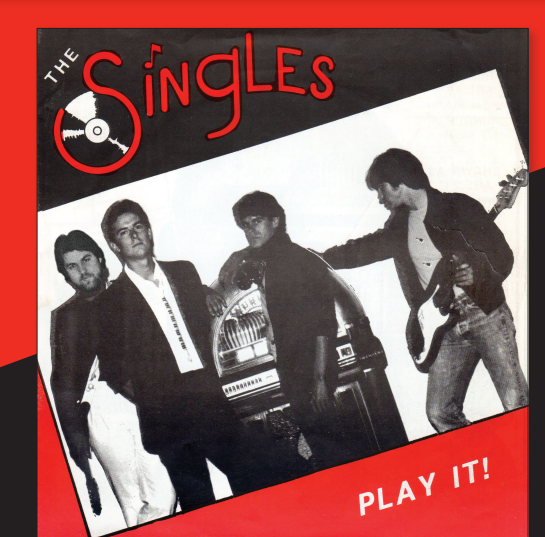
The Singles – L​.​O​.​V​.​E. From The Santa Cruz Archives ’82​-​’85 (Q&A)

‘What’s in the barrel doesn’t sour’ is a Dutch saying. Rick Gallego (Cloud Eleven, Jiffipop) recorded many songs with his band The Singles in the early ’80s. The vast majority were only played live and not released as vinyl or cassette. With the Kool Kat Musik release L​.​O​.​V​.​E. From The Santa Cruz Archives ’82​-​’85, that has now changed. And yes, although the music ‘has been kept in a barrel for a long time’ it didn’t sour. It’s sweet and delicious.

The Singles were active in the early and mid-80s.  I don’t think you would have thought then that the songs would still be very special 40 years later, or did you know that something special was going on?

I always thought we were a good band, but we reached our ‘sell by’ date in 1985. The vinyl EP we made in 1983 has kept the band in the public eye, and also last year, two of the songs from the EP were released on a vinyl compilation in France. I think that is what made me decide to dig in the vaults and release this stuff.

Can you tell us something about how The Singles operated then and how the songs came about?

We started in 1982, and I sang and wrote most of the songs. I was influenced by the late ’70s power pop music (The Plimsouls, The Beat, Costello), and that’s where our style came from. Various members came in and out of the band, but in 1984, the final line-up emerged, and we did quite well in our little music community of Santa Cruz, California. We won a battle of the bands that year out of 70 other competing bands, so we thought we were on our way!

If an artist has just released a new album, the question of what that person thinks is the best song cannot be answered.  That’s different now, I guess Would you like to give it a try: which two songs still make you proud and why?

If you are talking about the music I made with The Singles, then I would say the later stuff we recorded, like “LOVE (Spells Trouble)” and “Think It Over”. We were very well rehearsed, and I think it shows in our performance on these tracks. But one of the best tracks The Singles did was a song called “Talkin’ Back”, but we only played it live and never recorded it at the time. I recorded it recently (under the name Cloud Eleven), and it just came out on Kool Kat’s Ukraine benefit CD. It has a simple riff, but it rocks!

How did this release come about?

When I was gathering all the tracks for the release, I asked Ray at Kool Kat Musik if he was interested in putting it out, and he was, and he did!

I would like to label The Singles as a pure Power Pop band, just like The Beat for example, did you want to be that or was that not important at all?

Of course I wanted to align my band with those bands (as I mentioned above), they were the best…and that’s why in the early ’80s we didn’t really sound like other bands at that time with all the keyboards and drum machines, we were a throwback to 5 years earlier! Ironically, I got to work with Paul Collins in the mid ’90s, because he re-released my 1996 Jiffipop CD in Japan on his Wagon Wheel label.

No Wasting Time sounds like a hit to me?! For Huey Lewis, maybe. I hope you take that as a compliment?

That is a compliment, thanks! Our bass player Joe Laub wrote and sang that song; it’s a great one with an irresistible groove! 

Any idea how the other band members are doing?

They are all doing well, I was in contact with all of the former members of The Singles during the making of the compilation. They are still musicians and still making music, happy to say.

The Valery Trails – The Sky Is Blue (Q&A)

‘Atmospheric guitar-based indie rock’ is how The Valery Trails describes their own sound. The Sky Is Blue is the new record, and Andrew Bower explains to Sweet Sweet Music how the record came to be, and that story is strikingly different from how most bands have recorded in recent years.

The Valery Trails makes nicely thought out Jangle Dream Indie Shoegaze Power Pop.

How did this record come together?

This one started like our previous albums, with demos I recorded in my home studio in Houston, Texas, where I was living at the time. The plan was then to send them to the other band members in Brisbane to add bass and drums, then for me to add vocals and overdubs back in Houston. However, we didn’t manage to get through this process before I set off for a round-the-world trip with my family in June 2019, so everything went on hold.

In March 2020, our travels were interrupted by the COVID-19 pandemic. We were in Uzbekistan as borders around the world started to close, but we managed to make it to Brisbane before all air travel ground to a total halt. After a few months of waiting things out in Brisbane, we decided to stay in Australia instead of returning to Houston.

As lockdowns and restrictions eased, we took the opportunity to pick up work again on the songs that became the album. Ironically, while other bands were making records via online collaboration in separate locations the way we made our earlier albums, the pandemic brought me to the same city as the other band members, so we made this album in a more traditional way – spending time together in the studio.

How great is the urge to stay creative? To keep writing songs and lyrics?

The way my songwriting process tends to work is that a few lines, or a verse will pop into my mind, just enough to know that they could be the basis for a song. I’m then compelled to do the work to finish them (which is sometimes hard work) to “clear the decks” for the next new song idea.

I’m not the kind of songwriter who will sit down every day and try to write something, but as long as the song fragments and ideas keep coming to me, I’ll keep writing to turn them into finished songs to record and play live.

Playing music in front of a crowd. What’s all the fun about?

With band members previously living in separate countries, live shows have been a rare occurrence. We’ve played a handful of shows in Brisbane and in Texas, but now that we are all living in the same country, we are looking forward to playing live more often, starting with a tour of the east coast of Australia in September.

After carefully constructing songs in the studio, putting it all together live and the joy of playing together has a whole different level of energy, and when an audience responds to that, it’s great fun.

Suppose you were to introduce your music to new listeners through three songs. Which songs would those be and why?

From the new album, Zancudo, See Me Fall and Make No Mistake would give you an idea of our stylistic range. However, we tend to explore quite a few different genres and influences, so hopefully, new listeners will dig a bit deeper and want to hear more than three songs to really get what we’re about.

What compliment you once received will you never forget?

A random anonymous internet commentator once described a song of ours as sounding like “Social Distortion fronted by Morrissey”. I’m not sure if that was a compliment, but I’ll never forget it.

Those magical moments when you’re working in the studio. Which moment was the most magical?

The best moments in the studio are when you have the basic tracks down and they are working well so you can have fun with some overdubs. Finding a little guitar part that just works, or a great harmony that lifts a chorus to the next level are the magical moments where you really feel you’re bringing something cool into existence.

What place do you occupy in the music industry?

I’d say we dabble in the industry to the extent we need to in order to make records, play shows and get them out into the world so people can hear them. Hopefully we are creating music that resonates with people, not just creating content to feed into the big music industry machine.

Kingdom of Mustang – Into Beautiful Blue

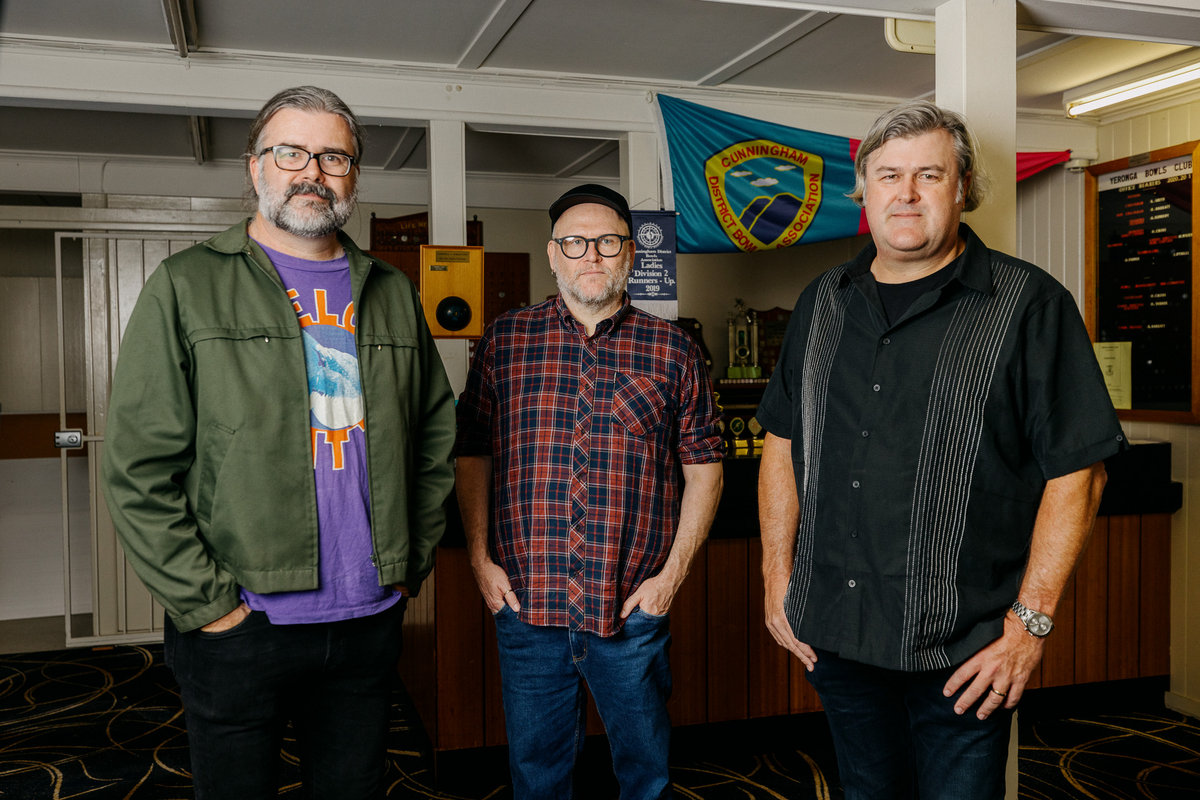
Kingdom of Mustang is a musical collaboration featuring Mark Roebuck [The Deal, Big Circle, Sub-Seven], Michael Clarke [The Deal, Left Lane], Tim Ryan [The Gladstones, Jeebus, Left Lane], and Rusty Speidel [SGG&L]. Kool Kat Musik released their new record, Into Beautiful Blue.

Sweet Sweet Music spoke with Mark Roebuck and Tim Ryan about loving nothing more than writing a good melody with interesting chords and then finding meaningful words for that melody.

How did this record come together?

Mark Roebuck: Tim and I had been writing prolifically over the past year. We had gathered about 25 new songs, and the first step in bringing the record together was to get that number down to 14. For us, this is a very democratic process, involving the whole band. Once the songs were chosen, we rehearsed them as a band and then began the process of turning them into studio recordings.

Tim Ryan:
 We tend to start each new project right on the heels of the previous one, so we were doing demos for the new record as the last one [Tales From The Atomic Tambourine] was being released. I think we had our best batch of songs yet for this project, and things came together pretty quickly after we picked our favorites from the larger pool of songs that Mark and I had written. We managed to spend a little less time in the studio this time around, so I guess we’re getting better at it !


The meaning of success has changed over the years. What would success look like for the new record?

Mark: This album being released by Kool Kat Music felt pretty great! I think our fundamental goal is to feel we succeeded in realizing each song’s potential to its fullest.

Tim: Working with Ray Gianchetti at Kool Kat Musik has been great, we’re already seeing a bump in responses to the new album and it’s not even officially released yet. I think that ultimately we feel successful when we create music that we’re proud of and that the work we’ve done gets heard and is well received.

How great is the urge to stay creative? To keep writing songs and lyrics?

Mark: My urge to stay creative is a strong one! Unlike Tim, Michael and Rusty, who are amazing musicians, my contribution is songwriting. I love nothing more than writing a good melody with interesting chords and then finding meaningful words for that melody.

Tim: It’s hard to keep up with Mark when it comes to songwriting, but I’m trying ! For me, songwriting hits different pleasure receptors than playing or singing. It’s hard work, a craft. I’m not the singer / songwriter type, so most of my songs don’t see the light of day unless the band runs with them. I hope that I always have the drive to capture song ideas that bounce around in my head and turn them into something real.

You can’t control the way people ‘hear’ your music. But if you could make them aware of certain aspects, you think, set your songs apart. What would they be?

Mark: I think our songs are strong both musically and lyrically. A listener can immediately enjoy the guitars and harmony, and then return to the music to explore the messages in the words.

Tim: As a musician, I hope that listeners each find something that makes them want to listen again. Mark is a really great writer of melodies and harmonies, so there’s plenty of goodness there. As an engineer / producer, I hope that people hear and appreciate the subtle, or not so subtle, sonic ideas and arrangements that make us sound like Kingdom of Mustang.

Suppose you were to introduce your music to new listeners through three songs. Which songs would those be and why?

Mark: All I Can Do- because it has pretty much all Kingdom of Mustang has to offer wrapped in one driving package; hooks, great guitar, harmonies, background vocals, and a cool lyric.


High-because it shows the range of Kingdom of Mustang, going far outside our normal box; and because it’s a great song!


A Little Bit Behind the Times- because its a 2:30 minute slice of pure 3 part harmony PowerPop!

Tim: I’d start with the song Kingdom of Mustang off of the first album [also called Kingdom of Mustang]. I think that tune really captures who we are, and it’s one that Mark and I wrote together. I love The Little Rocket Song from the second record [MORE], I think it really shows our influences and is a nice clean, compact arrangement with a little bit of everything. And from the latest record [Into Beautiful Blue] I’d have to pick Divide By Zero, another co-write by Mark and I that really just sounds like a single to me, and showcases Rusty Speidel on the lead vocal. And just for completeness sake, I’ll throw in Jeannie When You Killed The Stars from our 3rd album [Tales From The Atomic Tambourine]. It’s a great example of Mark’s ever-evolving songwriting skills and it shows the band stretching its musical comfort zone a bit.

If you could pick three singers to sing harmony vocals on your next record, who would you ask?

Mark: Hmmmm…Trent Reznor, Sheryl Crow, and of course Paul McCartney. That’s variety!

Tim: Glenn Tilbrook, Joey Spampinato, and Aimee Mann. I can’t wait !

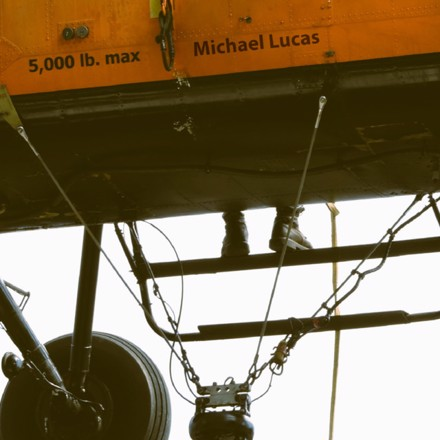
Michael Lucas – 5,000 lb. Max (Q&A)

‘These songs are a collection of my favorite collaborations with Jim (Trainor) from the past five or so years.’, says Michael Lucas about the delicious five Power Pop bangers that can be found on the ‘5,000 lb Max.’ EP, which was released earlier this year.

What was the moment you knew you were on to something?

From the moment Jim Trainor, the singer on this record, sent me a vocal idea for the first song I ever submitted to the collaboration website, Kompoz.com. His vocal melodies and harmonies are incredible. Since then, we have collaborated on many songs, with me playing guitar and keyboards on some of his music, and using his vocals on my music.

How did this record come together?

These songs are a collection of my favorite collaborations with Jim from the past five or so years. They were saved on my computer, and I decided maybe I should just release them. So, I contacted some of my favorite players from the Kompoz.com website and remixed them for the record.

The meaning of success has changed over the years. What would success look like for the new record?

You got that right! When I began playing in bands in the late 1980s, it was unheard of to release quality, radio-ready music to the general public without a record contract. For me, success is having my music heard by more than my friends and family. The ability to work with musicians from all over the world right from my apartment in Chicago is amazing. So, to write, record, mix, and master my own record and release it on all music streaming platforms is success, to me.

You can pick 3 co-writers to write new songs with. Who? … and Why?

Nick Bertling, Tom Curless, and if I could choose one from the grave, it would be Chris Cornell.

Nick is a great musician, goofball, and mixer. I have begged him to collaborate before and I am doing it right here, again!

I mastered Tom Curless’s last record, Person of Interest, and I listen to that record a lot. He and I share the same musical influences so it would be fun to see what a collaboration would sound like.

And, Chris Cornell is probably my biggest influence from the 90s. His voice, melodies, and unique guitar tunings and riffs just give me goosebumps. I was really sad when I heard he died. I had just seen him in Chicago on his solo acoustic tour a year or two before he died. I still listen to his entire catalog still, all the time.

Cassettes are back. Which 5 five songs would make your first mixtape?

Limelight (Rush) – that guitar solo!!
Killing in the Name Of (Rage Against the Machine)
Tompkins Square Park (Mumford & Sons)
Steppin’ Out (Joe Jackson)
Outshined (Soundgarden)

ABOB’s Summer Home (Q&A)

‘A turn through Andrew Bobulinski’s back Bandcamp pages suggests he’s an artist just toying with us, stylistically that is. After a long stint in heavy metal bands Bobulinski’s solo career has been careening all over the indie pop rock map, from Weezer-like slathered guitar and sibilant vocals to horns aplenty over 1970s-ish soft rock. His latest project is an ABOB release entitled ABOB’s Summer Home. The songs have that breezy 70s pop feel, contrasted with some punchy horns on “Sabrina Knows” and “Talk to Her.”, Dennis Pilon writes on his great Poprock Record blog.

Sweet Sweet Music spoke to Andrew about experimenting with electronic drums, wanting to become the next Peter Criss, 40’s lounge, 80’s new wave, and meeting Val Kilmer at Comic Con.

How did this record come together?

Writing material for this EP was interesting because I was in an entirely different headspace than when I wrote and recorded my last album. I finished recording my last album in March of 2020, right before most of the world went into lockdown, and I was in a slightly peppier mood, as I’m sure we all were!

As the pandemic kicked in, my mental health went into a bit of a decline and I went through some significant life changes which inspired a lot of the new material. I recorded ten songs with my friend/collaborator/producer Les Nuby over the course of a year and narrowed them down to the six that you hear on the EP.

Soundwise, I think this EP has a more raw feel to it than my last album. I experimented a lot with synth and electronic drums last time around and I decided to ditch those elements entirely and try incorporating different layers like horns and piano on this release. I had the opportunity to work with two really talented horn players, Desmond Sykes and Jacob Walker, who brought an awesome dynamic to the songs.

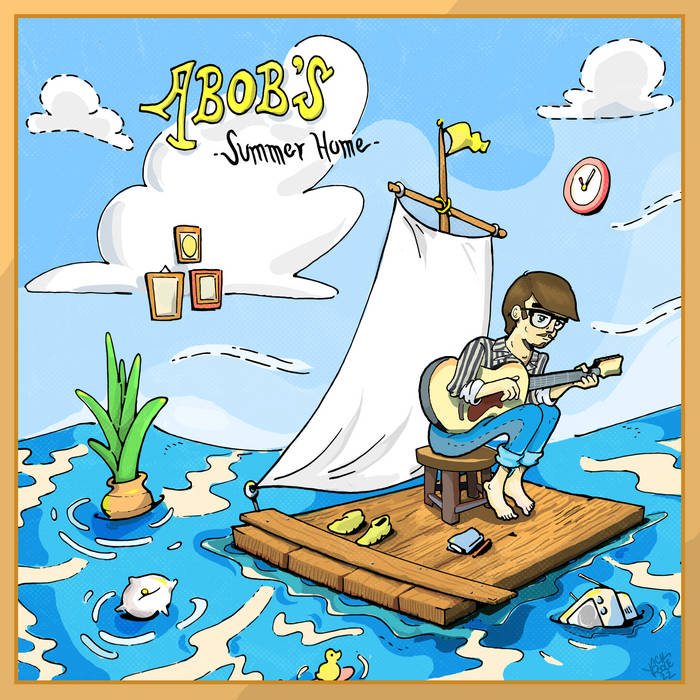
Lastly, the artwork was illustrated by a cool artist named Jack Poole. The concept I gave him was basically the album cover to “What’s Wrong With This Picture?” by Andrew Gold meets Cast Away. At first, I just thought ABOB’s Summer Home sounded like a cool title, but the more I think about it, it’s really a metaphor for the isolation I felt over the pandemic and I think the artwork perfectly conveys that.

The meaning of success has changed over the years. What would success look like for the new record?

The meaning of success definitely has changed, even in terms of what it means to me personally. When I was younger, I think I had much more grandiose ambitions of wanting to become the next Peter Criss, but at this point, even if just one person listens to one of my songs and connects with it, I feel like I’ve succeeded. Don’t get me wrong, being Peter Criss would still be cool though!

How great is the urge to stay creative? To keep writing songs and lyrics?

The urge is vastly great and rarely is it ever satisified. I always feel a need to push my creative boundaries and incorporate different sounds into my music. I’m trying to figure out a direction to go in for new material right now and I’m torn between 40’s lounge, 80’s new wave, and Tom Petty-esque folk rock. It’ll probably end up sounding like none of those things.

As an artist, you choose to show your emotions to the world. Is it always comfortable to do so?

I wish! Writing songs for this new EP in particular was uncomfortable. As I mentioned before, there are aspects of my life that have changed a lot in the last couple of years, and as someone who can be very resistant to change, processing those emotions and figuring out how to express them through song wasn’t easy at first. It was ultimately pretty therapeutic though and I think I grew a lot as a writer.

Cassettes are back. Which 5 five songs would make your first mixtape?

The dBs- “Love is for Lovers”

The Wonders- “That Thing You Do!”

Andrew Gold- “Must Be Crazy”

Cab Calloway & His Orchestra- “Minnie the Moocher”

KISS- “Shout it Out Loud”

What compliment you once received will you never forget?

I met Val Kilmer at a Comic Con once and he told me he liked one of my tattoos. That doesn’t happen everyday!

We All Shine On: Celebrating The Music Of 1970

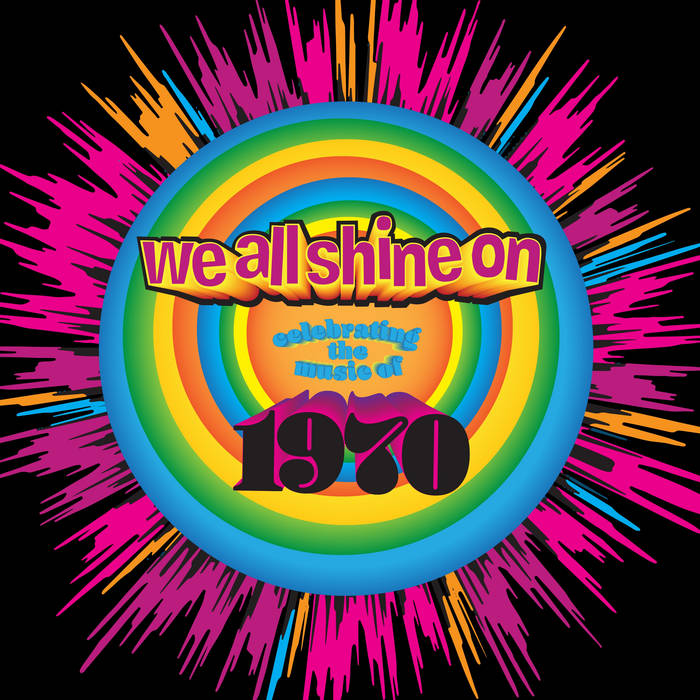
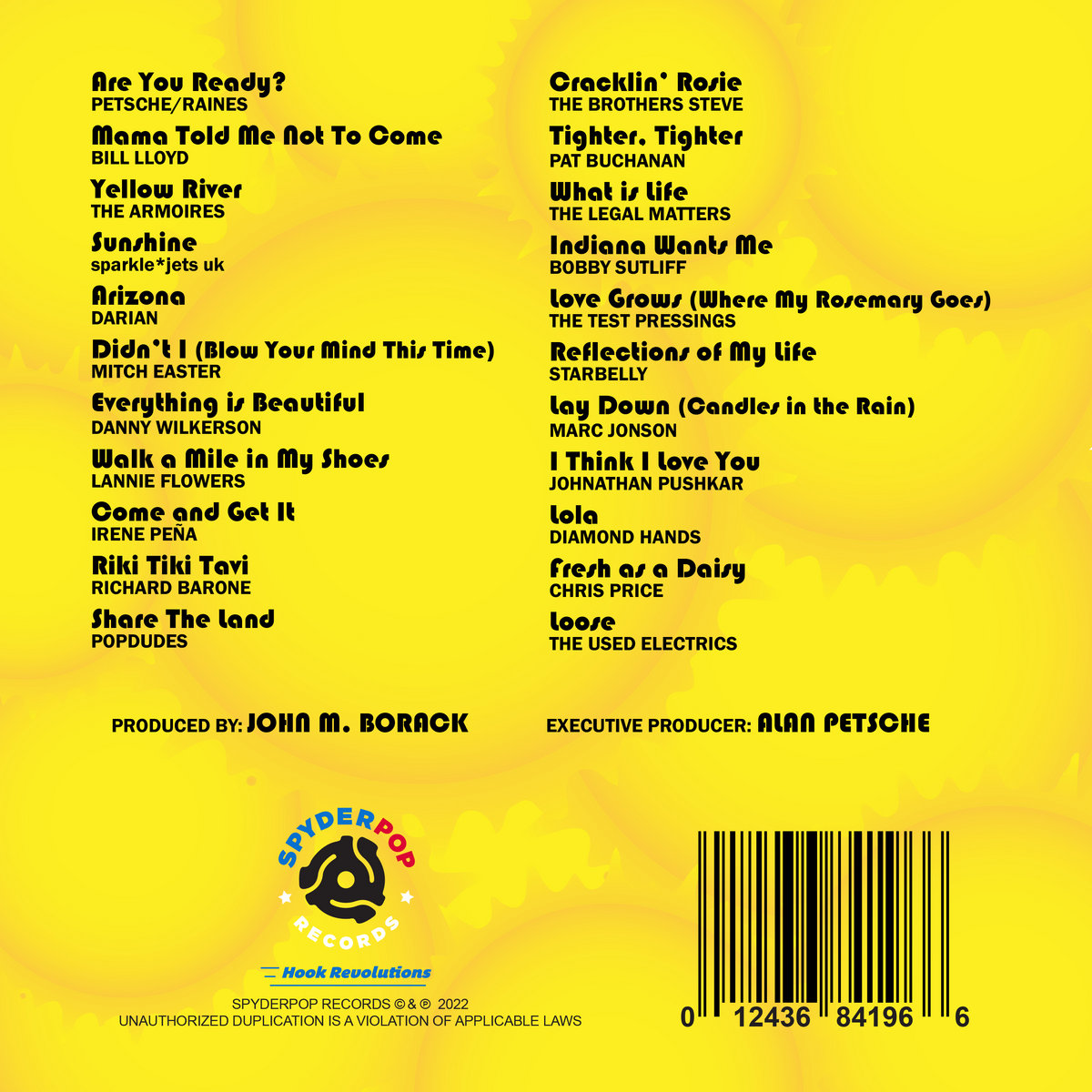
We All Shine On: Celebrating The Music Of 1970 is a Big Stir Records/Spyderpop Records release and will be out on August 26, 2022.

John M. Borack produced this compilation, featuring 22 of the finest current indie pop/rock acts offering their interpretations of the sounds of 1970. Sweet Sweet Music spoke to him about Neil Diamond, a not-so-well-known Donovan tune, Mitch Easter, The Brothers Steve, the vitality and versatility of music, and much more.

Celebrating the musical 70s.  Where do you start!  How did you start this project?

I’ve always been a fan of the music of the ‘70s; it’s the music I grew up listening to and loving, particularly those AM radio hits of the early-to-mid-‘70s. 1970 seemed to be a particularly fruitful year for amazing tunes, so I thought, “Why not pay tribute to the first year of the decade?” From there it was a matter of contacting artists I wanted to have participate and making sure they were paired up with tunes they wanted to record.

And what did you hope it would be when it was finished?

My hope was that each artist would have a blast recording these songs and that their joy would shine through in the final product. In my opinion, that mission was certainly accomplished. Beyond that, I was looking for a group of songs and artists who would be able to express the vitality and versatility of the music of 1970. In that respect, my hopes were exceeded.

Yellow River just seems to be made for The Armoires. What a delicious version it turned out to be.  I think they should cover Mouth and McNeal’s How Do You Do now.  Never mind, how did the song choice come about?

Well, they—or should I say “we,” since I am the Armoires’ drummer—had a blast recording it. When we were looking for songs that might be good fits for certain artists, I recommended that one to Rex and Christina and they agreed. Coincidentally, I later found out that Rex’s father used to cover “Yellow River” back in the day in the band he was in. If you listen at the song’s fadeout, you can hear the elder Mr. Broome singing. As far as that Mouth & MacNeal tune, I love it—Rex and Christina, are you listening?

The playlist could also have been a deejay set.  There would be a lot of smiling faces on the dance floor, don’t you think?

It does sort of play like a really cool DJ set, doesn’t it? There were so many excellent songs released in 1970 that it was difficult to narrow We All Shine On down to just 22 tracks, but I really think all of them are fabulous tunes.

Did people fight over a Neil Diamond song?  And did Jeff Whalen simply have the biggest muscles? (I wish I was there when they did the papapapa-thing.)

There were a few different folks who would have loved to cover one of Neil’s tunes. (Hello, Michael Simmons!) But man, you can practically hear Jeff Whalen smiling as he’s singing “Cracklin’ Rosie,” right? I think the Brothers Steve nailed it.

An ode to the 1970s could also have included Punk, Springsteen or Journey.  Did you consciously not do that?

The comp covers the year 1970 only, not the entire decade. But hey, there is one punk song—or maybe it’s more of a proto-punk song—on the comp: the Used Electrics do a pretty kickass version of the Stooges’ “Loose.” Punk as hell, it is.

If you could put together a super 70s band with musicians from the past what would that band look like?  Mine: Steve Perry sings, Berton Averre plays guitar, Max Weinberg drums, Elton John on keys and Mike Procaro on bass.

Wow, that’s tough, but lemme see…completely off the top of my head…Lindsey Buckingham on guitar, Paul McCartney on bass, Bruce Gary (The Knack) on drums, and Pete Ham (Badfinger) on vocals.

It is deliberately not a Power Pop album?

It’s really not deliberately any sort of album. The artists had free rein to do whatever they wanted to do with the songs they chose and what you hear are the results. If Mitch Easter wants to do a soul number and Richard Barone wants to record a not-so-well-known Donovan tune, who am I to argue? They’re both great.

This could easily be the start of a whole series, I think.  What do you think should happen?

I could definitely see this evolving into future releases spotlighting more songs from different years of the 1970s, so please encourage your readers to buy multiple copies of this one to help make my dreams come true!

sparkle*jets U.K. sounds like the best band in the world. What happened?

They’re pretty wonderful, aren’t they? Their version of the Archies’ “Sunshine” is one of my favorite tracks on the comp, and Michael Simmons, Susan West and Jamie Knight are all super people and supremely talented instrumentalists and vocalists. They’ve been busy over the past several years with their day jobs and other projects, but the word on the street is that you might be hearing more from them in the not-too-distant future. I’m proud to call Simmons my best friend and I’m not overstating things when I say he is hands down the most talented and versatile musician I’ve ever been fortunate enough to know.

The John Sally Ride – Now Is Not A Great Time (Q&A)

The John Sally Ride has delivered a great record. I have played ‘Now Is Not A Great Time’ a lot, and because John Dunbar’s lyrics and melodies keep revealing new surprises, the record is getting more and more interesting eight months after its release. And there aren’t many of those, are there?.

The band was on fire during the recording, that’s for sure. How did you capture that?

We couldn’t put the AC on in the studio while recording, so that could be it. But It could also be that we were all in the same room looking each other in the eye, no headphones, hearing the music in the room, and picking up each other’s vibe while cutting the tracks. It’s not an album recorded by email. Nice that you noticed. Thank you.

I Never Understood (Where I Stood With You) is a song that deserves to be covered by a Nashville hotshot. Do you ever think about that when you write?

Not at all. But I would love surely love for something like that to happen. I get told I have a unique way of writing songs, especially my subject matters and turns of phrase. I’m not sure it’s meant as a compliment. That’s not usually the formula for people wanting to cover your songs. It’s a shame because it’s a fantasy of mine. There’s no greater compliment than someone who wanted to do a version of one of your songs.

My favorite part of I Never Understood is towards the end of the song. You have to listen to Sal Maida’s bass playing. He manages to play classic Motown riff after classic Motown riff,  all while holding down the bottom end. I watched him figure that out in front of me and was blown away. I still don’t know how he did it.

Now Is Not a Great Time, the title track. I consider that a typical you song. Does that make sense?

Haha, I think it does, and that kind of explains the theory in my previous answer. The curator of the John Sally Ride is the drummer, Sal Nunziato. He’s the poor soul to whom I send all my voice and guitar/ piano demos. When he gives the thumbs up, they become John Sally Ride songs. Whatever he rejects, I record for other projects.

He singled out Now Is Not A Great Time early on. I didn’t think he would choose this one, but I’m glad he did. It became of my favorites on the album; hell, it became the name of the album. Sal is a respected music journalist besides a fantastic drummer. When he says a song is good, I pay attention and almost believe him.

Was getting that crystal clear guitar sound a purpose in itself, or is that just how you do it?

That is all Joe Pampel. We expanded to a quartet for this album, adding Joe on guitar. As a matter of fact, Patrick, you are responsible for Joe joining the gang. You interviewed me for a previous John Sally Ride album, and one of the questions you asked was for me to name my ideal band. I honestly told you I wouldn’t want to play with anyone else but the two Sals, but I mentioned a desire to play with Joe Pampel again.

We played together in A Confederacy Of Dunces years back. He saw the interview and reached out to me. He played a gig with us, and it was instant chemistry. Bass player, Sal Maida, who has played with some of the greatest greats, asked me after playing with him, “Where did you get this guy? Wow!!!.”  I think Joe is the star of this album. Not only his incredible guitar playing, but he arranged and sings those Beach Boy-eque harmonies on the bridge of Is It Over Already? He’s been working on a solo album, and I keep pushing him to finish it.

The record was released late last year. I can imagine it still makes you proud?

I feel more lucky than proud. To have these amazing musicians, and great friends, bring these silly songs I write to life is not something a lot of songwriters get to experience. I haven’t listened to the album in a while. After talking about it with you now, I feel like hearing it again. I hope it sounds good.


The John Sally Ride:

Sal Maida- Bass
Joe Pampel- Lead guitar, background vocals
Sal Nunziato- Drums, percussion, background vocals
John Dunbar- Vocals, guitar, keyboards, percussion, background vocals.


Richard Turgeon – Rough Around The Edges (Q&A)

If you decide to listen to just one song today, let that be ‘I Never Loved You’, a mega hit where I’m hanging out.

Richard Turgeon has released one great record after another in recent years, and his new ep ‘Rough Around The Edges‘ is even better.

You release quite a lot of music, all of high quality. Companies have an entire Quality Control department for this. How do you do that?

I really appreciate that, thanks. I’ve been at this a long time, so I think a big part of it comes down to just putting in those 10,000 hours, and many more—especially these past 5–6 years or so. I’ve learned a lot over the years as a live performer and have been producing and mixing my own records since the late ‘90s. About six years ago, I just started recording pretty much all of the instruments myself* Dave Grohl-style to have the kind of efficiency and quality control I wanted, while keeping things affordable, too. 

I basically record live drums, vocals and some live guitars a few times a month, then mix and do some guitars at home throughout the week. That kind of repetition and consistency in focusing on writing and recording without the band politics has helped me make the kind of records I want to hear, and turn out the way I want them to. I wouldn’t recommend this approach for everyone, though, because it’s hard enough to get good at mixing, let alone playing guitar. There’s always someone out there better than me at specific things, so I just try to do me the best I can in various areas, from my drumming to how I master and even design my records.

*I would like to give a shout-out to a few of my collaborators, namely Ron Guensche, who plays a lot of bass on my material and provides invaluable feedback on mixes. I’ve also been working with a wonderful musician, Eric Salk, formerly of the Union Trade in San Francisco. Eric wrote two tracks I produced on RATE.

A sports hall filled to the brim where “I Never Loved You” is sung along by everyone; I can imagine that, can you?

Well thank you again. Yes, I can imagine that for sure haha. I write rock songs with hooks, for the most part. That’s what I like to listen to, that’s what I grew up on, that’s what I’m hooked on as a musician and as a listener. I like real drums, harmonies, and guitars, and a nice production polish on top of it all. I wish there was more music out there today that I liked in general. I make records that I’d like to hear, basically.

I’m too old to dream of playing stadiums at this point, but of course I always want more listeners in general. At the risk of sounding immodest, I’d like to be better known than I am for sure. I often get compared to acts who are way better known than I am, which is a compliment but also sometimes frustrating. I’m a songwriter and musician and I need to write and make music regardless of money and fame or any of that. Any self-respecting, ambitious artist wouldn’t shy away from either, but that’s not why I do what I do. I don’t really want to be running a band and touring at this stage of life, but I would love to get on a label with a big press machine and my songs in films and TV soundtracks for more exposure. Who wouldn’t?

At the end of the day, I love connecting with people who still love rock music. I think it’s important for people to keep in mind that I don’t have a marketing department—that’s on me. That’s why reviews, airplay and interviews with power pop press and DJs like you is still my single best way for new listeners to hear my music, and I appreciate the support I’ve gotten since putting out In Between the Spaces in 2017. The best thing people can do to help my music is to follow me on Bandcamp and join my email list. You can do all of that from my website at www.richardturgeon.com

How did Rough Around The Edges come about?

If you mean conceptually, I usually record a song or so a month, put them out as singles, then package them in the summer as a full EP or LP like this. I see each one of my records as time capsules of sorts. So they are very much artifacts or memories of my life. That’s what I love about recording a song a month or so, versus an entire batch of ten in a few weeks. They each reflect my attitude and sound at that time.

What I like about RATE is that I really wanted to make a record that felt more cohesive to me as a collection, and more representative of the sound I’ve been working toward for many years now. That’s why the LP is split into an EP of six tracks—the core songs—and four bonus tracks. I love the bonus tracks, too (they are not filler), but they’re also outliers of sorts. So they will appear on Bandcamp and the CD from Kool Kat Musik only (you can order both at my website, hint hint). The EP only will hit all the major streaming services like iTunes and Spotify soon. Again the best way to hear about this stuff when it happens is to join my email list and give a follow on Bandcamp.

You position yourself as ‘a suburban dad who writes, performs, and produces original rock songs’. I was curious why you do that; call yourself a suburban dad first and foremost?

It’s very coincidental that you ask me that. Just a few weeks ago, my good friend and fellow musician Pete asked me the same thing. We both work in advertising as our day jobs, so he wondered why I positioned myself that way. He basically said you might not want to do that—you’re a legit artist with a following and all that.

I started using that suburban dad thing as a kind of tongue and cheek kind of press angle, but I’m not going to do that anymore. I’m a rock musician first and foremost, living in California—which I love and directly influences my sound and music. Me being a suburban dad is a huge part of my life, and my wife and kids are my heart. My family experiences as a husband and parent absolutely influence my music, and where I’m at in life. But I’ve always been an artist and take my work and developing my craft very seriously. So moving forward when I talk about my music, that’s who I am first—a legit musician that makes rock records.

I can imagine it’s nice that Kool Kat takes care of the release?

Ray from Kool Kat reached out to me soon after I put out In Between the Spaces and basically said, hey let me put out your CDs, no strings attached. We’ve put out six records together since then, and I consider him a mentor and a friend. I actually love the fact that I get to put out a CD version of my records with Ray’s support each year, because I still believe there is something to having that physical artifact for sale. He’s got good taste, curates great records, and cares about his artists. I’m no big shot in the music business, but I do know it’s full of shady people, and Ray is the opposite. He’s one of the good guys.

I will add that I’m still a fan of CDs myself. I just like to pop it open, see the album art, and play an actual record when everything is digital and intangible these days.

Richard, thank you so much for the interview. We wish Rough Around the Edges huge success.

Thank you, Patrick, it’s been an honor and a pleasure.

Pick up Rich’s new record and see him live in San Francisco Friday, August 19. Details at his website.

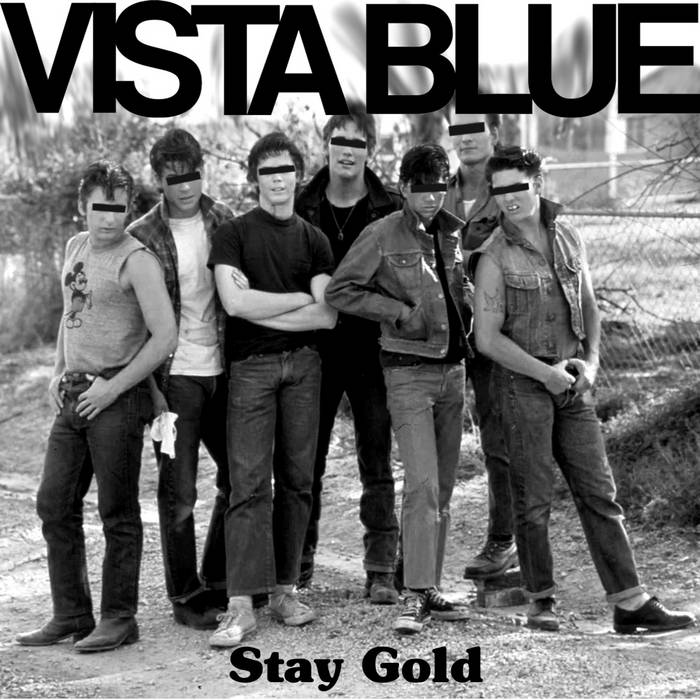
Vista Blue – Stay Gold

‘This entire album is based on The Outsiders. It’s a book that was written by a teenager (S.E. Hinton) in 1967 and has been a classic in American schools since the ’70s, and then there was a movie in 1983 with lots of young stars (Tom Cruise, Rob Lowe, Patrick Swayze, etc.) that has become a standard for many people as well.’, explains Mike Patton to a Dutch guy, who saw the film a long time ago and now wants to read the book but who especially enjoys listening to Vista Blue’s Stay Gold.

Friday Night has a lovely doo wop part. I can imagine that it is quite complicated to fit that into a song?

Those doo wop lines are lifted straight from “We Go Together” in Grease! I liked the idea of including a tribute to Grease on an album full of songs about greasers, and I thought it fit best in this song about going to the drive-in. In “We Go Together,” of course, they’re singing a bunch of different lines separately, but I thought it would be fun to combine some all at once, sort of showing characters each having their own lines.

We Turn In Up is big and solid. Is it easy to summon that energy that seems necessary to me to create such a drive?

A lot of what I do these days is try to write from someone else’s point of view. On this album, it’s mostly the greasers. The greasers are kind of rowdy, and in the book, it explains how Darry taught the boys gymnastics, so they’ll do back flips and stuff (which we barely get to see in the movie). But I just wanted a song to show the greasers being able to get a little wild, and I thought that if they were around today, they’d probably listen to music that’s a little louder than Vista Blue.

In the book, Ponyboy says that they love Elvis. Early on I thought an amped up song about liking Elvis would be funny. So I had the idea for this song pretty quickly, but I didn’t know if I was going to actually use it. I had probably 25 song ideas that I liked, and I was cutting that down to 10.

But then I realized this one could be a lot of fun if we had our drummer Reese sing it. He has a great voice, and I love to get him involved when I can. Once we got Reese’s vocals, we had our friend Chris record the lead guitars. They both knocked it out of the park. I love this track now.

Greasers or Socs?

I don’t think this answer is so black or white, which is really the whole point of the book/movie. I think going in, we’re supposed to pick a side, but we quickly learn that “things are rough all over.”

I think it’s pretty clear that a band like ours, our scene, our shows, will all cater to greasers and their lifestyle more than Socs. But have we seen “Socs” at DIY punk shows? Sure.

And when Ponyboy says the greasers like Elvis, he also points out that the Socs like the Beatles. So if you take a band like Vista Blue, we’re sort of influenced from both directions (maybe not so much Elvis in particular, but definitely some of the music the greasers would’ve liked). And the Beatles themselves were partially inspired by Elvis, right?

So the easy answer might be greasers, and I tried to make this whole album represent their side. In this story, things might be rough all over, but it’s definitely rougher for the greasers. I tried not to show any sympathy for the Socs. The song “So Tuff” does show the greasers admitting that the Socs’ cars are really cool. But that’s all we give them here.

Maybe one day we’ll do a set of songs from the Socs’ point of view. Ha!

You release a lot of music, how do you keep the standard so high?

I just try to constantly create. In addition to the music, I also have three podcasts and do two zines. One day I’ll stop, but until I do, I just want to do as much as I can do. I don’t want to look back someday and wish I’d done more, you know? And I’m really lucky to have a great family and some awesome friends who support me through all for this.

As for the standard, I guess that’s really up to the audience. I personally just try to only release songs that I would want to listen to myself. I’m constantly recording demos and ideas, and then when I sit down to start a new project, I grab the ideas that I like the best. As I said, for Stay Gold, I had probably 25 ideas. I narrowed it down to the 10 that I liked the best, and I worked on getting the lyrics and arrangements “right” for those.

This process involves a lot of re-writing sometimes. For example, “Paul Newman and a Ride Home” was completely re-written. I love the original version I wrote, but it didn’t feel like a good opener, which I wanted this song to be. So I wrote a song that I liked as an opener and just shifted the lyrics over to the new version. But later I’ll probably recycle that original version for something else. Similarly, “Cherry” had three versions!

Again, I just try to get the song to a place where I would listen to it myself if another band had written/recorded it.

Are pop culture and sports still the main sources of inspiration?

Yeah, that’s what I’m doing now. My life is all about things like baseball, horror movies, Christmas movies, etc. So it’s so easy for me to write about that stuff. I can’t sit here at my age in 2022 and write some random song about a boy and a girl. I mean, I could, I guess, but it wouldn’t come easily. On the other hand, I can definitely use characters from a movie or TV show that I like as inspiration and write a song about them.

Ultimately, the songs I write are just things that appeal to me and maybe some friends. It’s stuff that I think is fun, and I think some of my friends might think it’s fun too. Then if anyone else listens to it and digs it, that’s really cool too. But I don’t ever really think about writing songs for other people.

We have an EP that we’re going to record (as soon as we can get to it) with songs about little league sports, and Mark wrote a really fun soccer song for it, which is something I could never do.

But yeah, we’ll keep writing songs about sports, movies, books, and stuff like that. I currently have zero interest in doing it any other way.