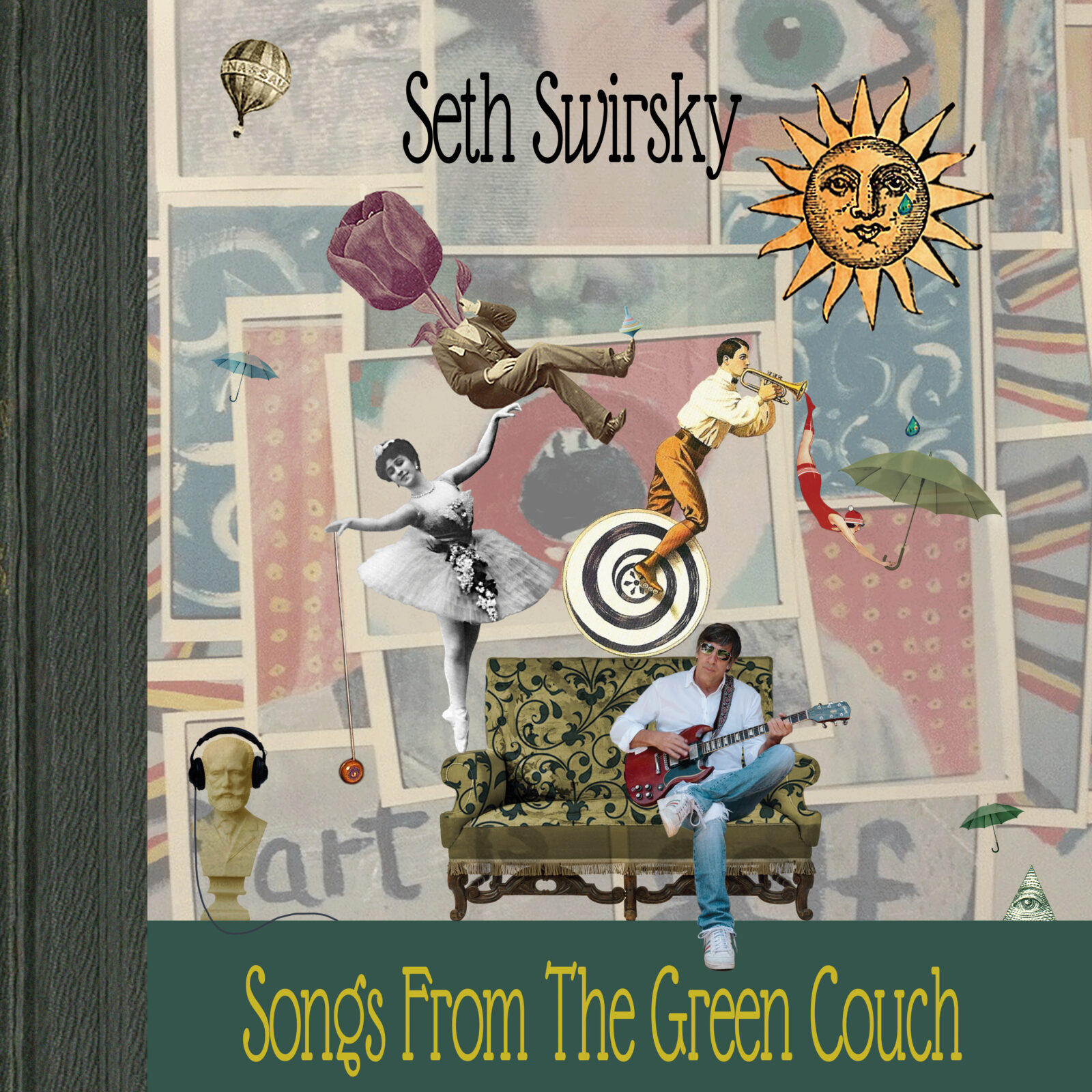
Seth Swirsky is a very sophisticated songwriter. He wrote hits for Taylor Dayne, Celine Dion, Olivia Newton John, and Al Green, among others. For the SweetSweetMusicblog Podcast I talked to him about his new record but the conversation quickly evolved into a songwriter’s masterclass. Enjoy the podcast, enjoy Seth Swirksy’s music!
Peter Watts succeeds in creating his own world with Spygenius. That world is not only populated by a cartload of beautiful melodies and lyrics but also decorated with beautiful art.
Let’s talk about that.
Both your lyrics and your melodies are very rich. Do they arise at the same time or are the stories leading during the writing process?
Ah, the mysteries of song writing! To be honest, it varies a bit from song to song, but for myself, I suppose what I do in general is constantly tinker with bits and pieces of stuff that might end up being in a song one day… so I have this kind of imaginary box of song bric-a-brac – musical and lyrical fragments that I keep lying around for whenever… and then from time to time a song will sort of emerge – or more accurately the idea of what a new song could be will galvanize in my head – a sort of light bulb moment – and that key idea could be around a lyric or a rhyme or a theme or a specific groove – and once that’s happened I’ll dig around in the junk box to see what I’ve got that’s usable or adaptable, see what I need to make from scratch etc. But I do try to wait for those light-bulb moments because I think the songs come out better that way than when I sit down to write to order.
I Dig Your New Robes, Pierre!, Mandy Rice-Davies Applies are just two example of song titles that immediately make it clear that you seem to get your inspiration from different places than most others. Do you feel that way too?
Well I don’t know, because I don’t really know where other people get their inspiration from! But for me it goes back to those ‘light-bulb’ moments – I try to stay open all the time in everyday non-musical life to the possibility of encountering something – anything really – that might trigger a song. And I’m also acutely aware that I’m a middle aged man working in a somewhat anachronistic medium which was originally a vehicle for expressing teenage angst, and which is riven with clichés – so there’s always a danger of sounding hackneyed or down right creepy – I mean unintentionally creepy!
So I feel like I have to go sideways a bit to find the right words, and I draw on stuff that maybe isn’t the usual fare of pop-rock-psych or whatever it is that we do. I don’t know. I don’t think I’m the only person taking this sort of approach – but I often draw on stuff I’ve read – books, plays, histories, contemporary news, whatever – and on conversations I’ve had, stuff I overhear, stuff I mishear, titles of paintings (pinched that idea from the Bonzos!), instructions on the packaging of takeaway food, a chance encounter with a penetrating metaphor or a terrible pun… all that kind of stuff.
If you look in that other place, will you come across Ray Davies there? Or are there other sources of inspiration?
Well the Kinks are just part of my musical fabric from way back! Love them! But Ray Davies is really good at something that I don’t think I can do so well, which is writing really keen, concise observational vignettes. I think I trend more surreal than that… but what we certainly do share is a wry sense of humour – which may be a particularly British sense of humour, I don’t know – and a sense of how humour can be used in music to make serious points (although sometimes whimsy for the sake of whimsy is just fine) – a dash of humour can open up a lyric and let you say perspicacious things which you might not be able to say so well if you were really earnest about it – and I think that approach crops up a lot in the artists who’ve influenced me lyrically.
You see it in a lot of the British sixties groups – not just the famous wit of the Beatles, but groups like the Small Faces or even the Who would crack a funny from time to time. Then in later generations we’ve had Ian Dury of course, and Squeeze, and Pat Fish, and the Divine Comedy, and I swear I’ve even heard some gags in Elvis Costello songs… and then there’s that thing of writing something that sounds really earnest but is actually kind of taking the p*ss… Lydon did that with the Pistols, I think, and you can’t tell me that the Cure don’t giggle at their own output. In the 80s I thought that Morrissey took the same approach but now I’m not so sure… I mean I love other lyrical styles too – where the focus is on the form and sound of the words, as much as or more than their meaning, in order create something evocative – think early REM, Throwing Muses, Pixies (I recall reading an interview with Charles where he talked about searching for ‘eargasm’ – great coinage!) – but I can’t write like that without starting to laugh at myself, I have to throw in a gag… oh, and the theme from Goldfinger should get a mention… gave me an unhealthy fondness for inside-rhymes…
The specific lyrics, the song structures, but also the cover art ensure that you create a whole world of your own. Is that a goal in itself or did it arise?
It arose, by chance, but we fostered it because it was good. We’ve been working with Champniss since a little before we released ‘Pacéphale (our fourth album and the first on Big Stir). We met him because Ruth had been googling my old band from the 80s (the Murrumbidgee Whalers) who never really achieved all that much apart from releasing one track which still crops up on Discogs from time to time. We still play the song to this day. Anyway, Ruth discovered that someone had tweeted the lyrics of that song and so sent a message to say hi – and a couple of weeks later some unsolicited artwork turned up, with Spygenius rendered in cartoon form – and we loved it! But it was followed not long after by an entire animated video to one of our songs – which was just amazing, and that really clinched it for us that we needed to get to know and hopefully work with this person…
So there followed a sort of courtship, I suppose, between the band (mostly me) and Champniss, where we got to know each other, how we think and how we might work together, through a series of increasingly bizarre conversations on Facebook Messenger – and again, it was our sense of humour that drew us together, I think, as well as a mutual love of the same music. We bonded over the Bonzo Dog Band and the Rutles. We experimented with communicating only through the medium of Deryck Guyler, which proved to be an entertaining dead end. So we conspired to produce a book of illustrated lyrics, but not tell anyone where it could be bought. (It exists: it’s called the Spygenius Book of Forbidden Fruit Cocktails.) And then we discussed an imaginary full length animated feature film about Spygenius, but with animal characters – kind of a cross between Fritz the Cat and Dogtanian and the Three Muskehounds – which is where Satchmo paNDa came from, and I guess also the whole ‘realm of Spygenius’ thing, too.
You have been very productive in recent years and you deliver consistent quality. How on earth is it possible that you are now delivering a record with songs that are even better?
Well that’s very kind of you to say so! I guess because the actual gestation period for all those songs was a lot longer than the release schedule! ‘Pacéphale and Man On The Sea were actually recorded in one long sprawling set of sessions over several years where we worked through a backlog of material that we’d built up, as well as on new songs that came along during that period – but once we’d put Man On The Sea to bed, we just sort of hit a purple patch where a lot of new songs came together pretty well pretty quickly – if they hadn’t we wouldn’t have put them out so soon – we don’t like to release stuff until it’s ready. I think that 2020/21 was such an intense time for us personally, that it kind of speeded things up. We’ll probably take things easier for the next couple of years…
And what is it like to read all those rave reviews?
It’s wonderful! Exceedingly pleasing! Most agreeable! Deeply gratifying!
Spygenius’s original mission was to write, record and perform original music to as good a standard as we could muster, to our own satisfaction, for as long we could get away with it, without really caring about what the world at large thought. But there’s this lovely rhyming couplet by Neil Hannon – “The writer writes for himself, not for you – a song is not a song until it’s listened to” – and what I take from that is that when you’re in the creative zone you have to follow your muse and not worry about – not even think about, really – what others’ are going to make of it… but at the same time, the creative process isn’t really done until someone who isn’t you hears what you’ve made and goes ‘yes!’… it doesn’t have to be a lot of people, you just have to connect with someone… but we’re getting a lot more of those ‘yesses’ now than ever before, and that is marvelous.
And we really have to give a bit thank you to Christina and Rex for this change in fortunes – before we joined Big Stir we’d released three albums (which are all really good, folks, and are still very much available!!!) but we were terrible at promoting ourselves – that’s all been transformed by the amazing efforts of the Big Stir team, they really get the message out there. Kudos to everyone!
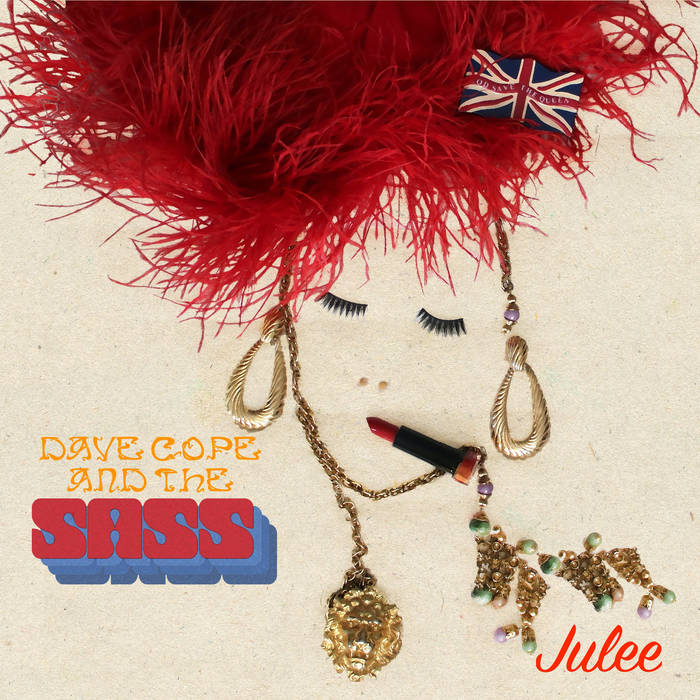
Julee, the latest album from Dave Cope and The Sass, contains nine songs that originated between 2007 and 2010.
When you read the stories behind the songs, it’s hard to imagine that they must have been lying around undusted for a while.
Dave Cope shares how Julee came about.
Watching Over Me is a beautiful, what seems to be a very personal ballad. I can imagine this is a harder one to record. Or am I hearing things that are not there?
This song was written in memory of my father, Gerald Cope, who passed away during the early stages of the making of the original incarnation of the album. We were short a couple of songs for a full length. I remember the producer, Mark Owen, suggesting that I try and channel all the emotions I was feeling regarding my father’s death into a song for the record. Moments later, I was sitting at the piano writing.
The song came very quickly, and we recorded the piano part you hear on the album and a scratch vocal in the span of an hour, maybe less. I later re-recorded the vocals at the home studio of my friend and colleague in sound, Andres Villamil. The song came from such a deep, real place; the process was not belabored. In truth, I remember thinking, “this one came so easily; is it really any good?” But it’s turned out that this song has gotten some of the most positive feedback of any on the album. It shows what I know. 🙂
Julee is a ‘banger,’ as my kids, who know Big Star and The Kinks would say. How did it come about?
I had formed a band with some good friends. We were called Fantasy Square Garden and played heavily in the Philadelphia area from 2008 to 2010. Julee was one of the first songs I wrote for the band. I don’t exactly recall how it all came about. I do remember my bandmate Claire Wadsworth and I working out some “kinks” in the song – pun intended. It was Claire’s idea to sing the name “Julee” more like “Julay” so that the voice could really open up on that part of the melody.
As for the rest of the process of its creation, I can say that I was young, full of energy, and looking to connect with audiences in a dynamic way. The riff has a bit of the early Ray Davies vibe, but the song takes quite a turn in the bridge, almost going into Brian Wilson territory in terms of the harmonies.
I was listening to a lot of music from that era but also some sounds from the 90s, like the Vaselines, referenced in the song’s first line. The story within the song reflects a compendium of experiences I had had with love, some thrilling, some harrowing. I think the combination of the dark lyrics regarding betrayal and heartache coupled with the exuberant music reflects the desires of a young person to take romantic risks, suffer the consequences and find the energy within themselves to transpose the pain into some kind of raw, fiery energy of creation.
The nine songs are such a powerful whole. Still, it’s a collection of songs you didn’t record as an album?
The songs on the record were conceived and composed during the same time period, roughly between 2007 and 2010. However, some were recorded at different times and locations with different producers. The majority were recorded and mixed by Mark Owen with a band we called The English Breakfast. This group consisted of Ethan Rider on bass, Steve Fulton on drums, and Bart Michael on guitars. Julee was also mixed by Owen but was recorded by Tony Catastrophe (the drummer for Fantasy Square Garden) and myself.
I Got Your Letter was recorded at Edison Studios in New York City. Edison was Owned and operated by Henry Hirsch (producer and engineer famous for his work with Lenny Kravitz). Henry recorded and mixed the initial song and also played bass. I was joined by Gabriel Garzon Montano on drums and Soren Christensen on lead guitar. But despite the variation in the performers, recording studios and engineers, and producers employed in the production, the songwriting conveys a common stylistic thread that runs through the entirety of this version of the album.
You get a lot of appreciation for your 70s sound. Does that sound come naturally when you start writing, or do you have to consciously look for it in the studio?
It comes pretty naturally. The music of the 60s and the 70s informed my sensibilities from a very early age. The Beatles, The Kinks, David Bowie, T. Rex, and The Move are all swimming around in my brain. But I enjoy listening to and making a wide variety of music from all over the map. I’m currently finishing up a new wave synth-pop record and debating whether or not I should put it out under the name Dave Cope and the Sass since that moniker seems to be more and more associated with power pop.
On A Day Like Today, also a special one, I suppose? What is it about?
It’s about the separation of two young lovers and the consolation they find in the simple things and the memories of times they spent together. In my younger days, I studied music from South India with a master musician named Tanjore Viswanathan. That music is filled with such wonderful ornate melodies.
Years after I had studied the music I awoke one morning and turned on the T.V. There was a film from India on, and upon hearing the music for the film, I was taken back to that time so vividly. In fact, I was so motivated by the desire to explore those beautiful types of melodies that I turned off the T.V. and wrote the song right then. I can’t even recall the name of the movie. I’m not even sure if I ever knew. In a way, the song also takes its inspiration from walks in the woods around where I used to live in Philadelphia. It’s also got something of a British folk music vibe as well, British folk music being another major love of mine. With acoustic folk songs, my goal is often to evoke the green and brown of trees, forests, leaves, and streams glimmering in the sunlight. I guess that’s just the hippie in me.
Phil Angotti doesn’t have much to prove as a songwriter, performer, and singer. He has made so many beautiful things and has been doing so for a long time. Still, I think that during the COVID period, he wrote and recorded some of his most beautiful songs, which can be found on Once Around Again.
How did this record come together?
I had just finished and released a solo acoustic album (Still Life) and had extra songs I had written during the pandemic.
A drummer friend of mine named Blair Holmes has a studio, and we’ve worked on a few things before; he suggested we start recording some songs. The first thing we did was a song off of Still Life called “Masked Men and April Fools” that Blair liked, and he wanted to add some things to it- and then we put down drums and rhythm guitar to a brand new song called “Shy Violet’’.
Our mutual friend in LA, JK Harrison wanted to produce the album, so we started sending him tracks. little by little, we sent new songs, and soon we had enough for a whole album.
How great is the urge to stay creative? To keep writing songs and lyrics?
For me, it’s like breathing. I write a lot. I have recorded 14 albums over the past 25 years.
During the covid era, I wrote a ton of new songs.
I will take a break now, but it won’t last long …. lol.
As an artist, you choose to show your emotions to the world. Is it always comfortable to do so?
No, it is not, but it’s a huge part of the writing process. I don’t always write about myself; I like to find different themes and subject matter,
but on my last solo album, “Still Life’ it was impossible not to write about what we were going through- there are a lot of personal songs on that album.
What’s the gig you will never forget? And why?
The first show I did with Material Reissue, in Chicago at a sold-out IPO show – I was so nervous and worried about how people would react to me taking Jim Ellison’s place in the band; he was a local legend, and I admired his songwriting and singing a lot, so I really wanted to do a great job.
It turned out to be a great show and a huge success, but I was really nervous that night!
Playing music in front of a crowd. What’s all the fun about?
The energy you take from a big enthusiastic crowd is the best.
I love it. And I play better to a bigger crowd; instead of getting nervous and making mistakes, I actually play better.
You can’t control the way people ‘hear’ your music. But if you could make them aware of certain aspects, you think, set your songs apart. What would they be?
I think the thing I hope comes across with my music is the singing, as I strive to be the best at that.
Suppose you were to introduce your music to new listeners through three songs. Which songs would those be and why?
Too Late Tomorrow (the version on my vinyl LP), Still Life (title song), and Eye For an Eye (new cd)
If you could tour the world with two other bands, who would you ask, and why?
The Zombies, because I’m a HUGE fan, and I think my stuff would go well with their set; and The Shins.
What compliment you once received will you never forget?
Several years ago, I sang with a band called New Candy Store Prophets; we were a Monkees cover band. We played a theatre in Chicago for the premiere of the Boyce and Hart movie (The Guys Who Wrote ’em) in 2014- Bobby Hart was actually there, and he heard our set (we played in the lobby before they showed the film), and he later came up to me and said I sang the Micky songs just like Micky!!!
The record is done, and the music is out. Is the best fun done now, or is it just beginning?
Although it was great fun recording the new album, I enjoy going out and playing the songs live. It’s my favorite part!!
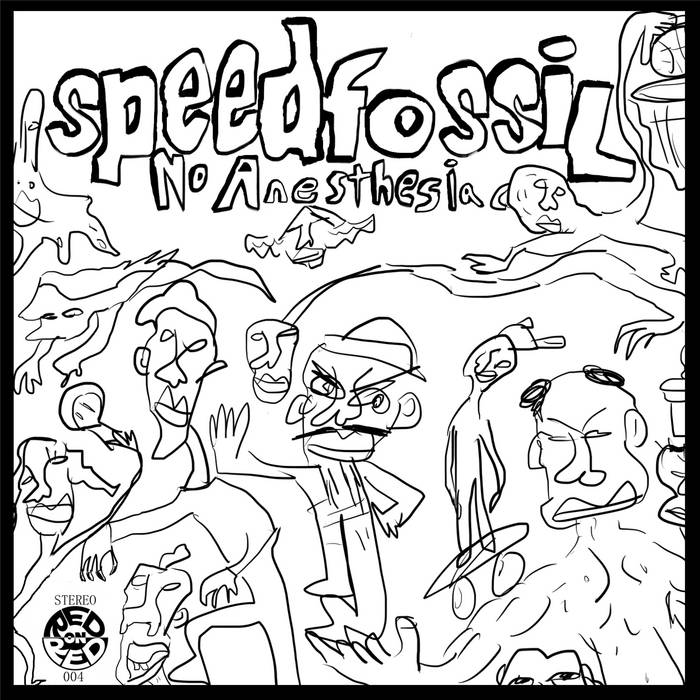
Sit down and listen attentively. NO ANESTHESIA gets better if you pay attention. Thoughtful, delicate, but also joyful and fun.
Sweet Sweet Music blog talked to Speedfossil’s Garret Vandermolen about how the record came about.
You seem to have no problem writing and singing about heavier subjects. It won’t always be comfortable, will it?
I think the heavier subjects are a big part of the shared experience when you’re writing a song. Everybody goes through uncomfortable parts of life, even those who seemingly “have it all”.
I think it’s actually, at least for me, on some level, slightly comforting J to write about those types of things because you are getting it out, and not keeping it bottled up inside – you’re starting a dialogue to help you process it. Also, sometimes writing and singling about heavier subjects means reaching into your past and putting it out there, so I think I’ll be able to keep doing it.
What was the moment you knew you were on to something?
I’ve been trying to start a band, in some way or another, since I was about 14 years old. I’ve been fortunate enough in life to play with some great friends and really good people, and have had some degrees of moderate success along the way. But I have to say that this group that worked with me on NO ANESTHESIA was special, and it felt different this time. After coming back to making records in 2014, after a 12 year hiatus, Speedfossil went through a bunch of personnel changes. Toward the end of 2018, early 2019, this current line- up of me, Mike, Dan, and Hector, solidified. When we started doing the first recording for NO ANESTHESIA, I sensed that this record would be different, in a very positive way.
How did this record come together?
This record, for me, is a special one in the Speedfossil discography, because it’s the first true “band” record. As I mentioned earlier, Speedfossil went through a bunch of line-up changes. At first, it was only 2 people, really, but we needed to put a band together to play the songs that were on the first album, 2014’s LIGHT OF DAY.
I am REALLY lucky that, somehow, Mike, Hector, Dan and me all ended up “finding” each other and becoming the band that is Speedfossil. We were playing songs together for live shows from the first two albums, and I wrote “You Got A Lot of Nerve”.
It was the first track we recorded together as a band (along with a B-side cover of Squeeze’s “Is That Love”), that was the start of the idea for NO ANESTHESIA – an album of songs recorded without any digital manipulation or editing, and mostly first or un-edited tracks.
When did you decide to start asking for opinions on the new songs?
I’m very open to input from all of the guys-I think I’ve surrounded myself with a group of musicians that, on a technical level, are better players than I am. If they don’t like something, or have an arrangement or modification to a song, we work it out. It’s a very ego free group in that we are all contributing ideas and energy in an effort to make the song great. If an idea doesn’t work, we move onto something else. “You Got a Lot of Nerve” is a great example, that instrumental bridge before the third verse got bumped up to a spot to open the song because Mike said, “Hey, that’s a hook, we should put that out there right off the bat, it’s catchy and would be a great way to start”. He was right!
The meaning of success has changed over the years. What would success look like for the new record?
From a critical perspective, NO ANESTHESIA has already been a success on many levels. Lots of great reviews and some great radio airplay – we’ve also been playing out more as band. I think for me, the meaning of success would be to keep that going until the next record AND, hopefully, selling some records!
How great is the urge to stay creative? To keep writing songs and lyrics?
I’m what you call a “lifer”! I’ve realized that writing songs and making records is a big part of who I am – it’s something that I have an undying passion for and it truly makes me happy. I love the whole process of recording and finishing a song, and then presenting it as a finished work as part of an album (and vinyl is the preferred medium!)
As an artist, you choose to show your emotions to the world. Is it always comfortable to do so?
I think so – I’m already a “tell like it is” kind of person, so doing it in the form a song is just an extension of that personality.
You can pick 3 co-writers to write new songs with. Who? … and Why?
Chris Difford and Glenn Tillbrook are two of the three. I am a HUGE Squeeze fan, and the songwriting, both lyrically (Difford) and musically (Tillbrook) are, to me, absolutely brilliant. I could learn from two of the best!
I also think Britt Daniel from Spoon. His songwriting is also a style that I relate to and, in many cases , want to emulate. Great melodies, succinct and smart lyrics over cool rhythms. What’s not to like?
What’s the gig you will always remember? And why?
We had to do a Speedfossil show at this little divey bar/pub called the Tavern at The End of the World back in 2019. I had just gotten the line-up of me, Mike, Dan, and Hector together for Speedfossil, and it was going to be our 2nd or 3rd gig together as a band. Dan ended up having a rather serious hearing issue and had to stop playing rock music for a month or so – and we had this gig booked. We decided to do it as a 3-piece, and I had to “learn” the lead guitar parts. I remember rehearsing for it and just not feeling great about not having Dan there – it was terrible rehearsal for me and I was feeling pretty dejected. Hector, who had just joined the band, said “hey man, you wrote these songs, don’t worry about playing what Dan plays, just work out what makes sense for you and we’ll do the songs that way, it will be fine”. The next night, before the gig, I stayed up super late just working on everything and making sure I was ready. When we played the Tavern, it was just one of those shows, where, even though we were down a man, everything was clicking. I could feel the energy in the room and it was a really great performance. There was some guy in the front, who was just really enjoying what we were doing – applauding, shouting, smiling, egging us on. At the end of our set, he came up to me and said “You guys were great”, shook my hand, and pressed a $20 bill into my hand! I’ve never had that happen and will always remember it!
Lyrics are too often taken for granted. What is the line of text or are the lines of text that you hope listeners will remember? And why?
That’s a great question, and there are many lyrics where I like to use word play, and write a lyric that could be interpreted in a few different ways, like on “Count Me Out” when I say “I suffer from my point of view”. Is my “point of view” an ailment or of detriment to me, or am I just suffering, as I see it? From a story telling perspective, I think “The Devil You Know” has the most complex lyrics on NO ANESTHESIA.
When was the last time you thought ‘I just wrote a hit!’?
Ha! Of course, it’s for the songs on the next Speedfossil album that we started working on! As far as NO ANESTHESIA goes, I do think “Luckiest Man In the World” has the elements of a good pop hit. It’s short and sweet, upbeat, and has some fun musical sounds on it (rock and roll guitars, synth, and a vocoder).
Cassettes are back. Which 5 five songs would make your first mixtape?
Junior Wells – “Snatch It Back and Hold It”
Spoon – “Fitted Shirt”
Speedfossil (got to have one of mine!) – “The Verge”
Squeeze – “Someone Else’s Heart”
The Beatles – “Within You Without You/Tomorrow Never Knows” from the Love album
Playing music in front of a crowd. What’s all the fun about?
It’s just an amazing feeling. You are all in it together when it’s happening and everyone is enjoying the music!
You can’t control the way people ‘hear’ your music. But if you could make them aware of certain aspects, you think, set your songs apart. What would they be?
For the recordings and albums, I think we try to craft well written pop songs, and then record them with a degree of “honesty”. What I mean by that is we’re not using technological tricks to edit the performances – it’s a very human presentation, if that makes any sense. Real analogue instruments and amplifiers, and not digital modeling and effects. We all use some pretty classic vintage instruments and amps and treat the recording interface like a tape machine. For me, listening to Speedfossil on a vinyl album is the way to go. We aren’t really a “singles” band – I want you to listen to side A, in its entirety, and then flip it over and listen to side B. If you are streaming, we try to make that the best possible. I’ve got a great mastering engineer that specifically “tweaks” the tracks to sound great streaming, we also master them specifically for Apple, too.
Suppose you were to introduce your music to new listeners through three songs. Which songs would those be and why?
“Luckiest Man In the World” – I think this showcases the best of what Speedfossil can do – tight harmonies, great melody, engaging instrumentation and arrangement, all in less than 3 minutes.
“Livin’ The Dream” – I like to do a few songs on piano, and when we play live, it’s a part of our set that really gets a great response. Also, this track has a really fun horn arrangement and some interesting musical twists and turns.
“The Verge” – this song is Speedfossil in full out rock mode – turn it up and rock out!
If you could tour the world with two other bands, who would you ask, and why?
If we’re excluding major artists that are already out there doing it, I would ask our label mates, The Chelsea Curve. They are just a great band that totally rocks. The songwriting is fantastic and fun and they deliver the goods live.
I’d also ask another Boston band called Francine that did several records for the Q Division label. Clayton Scoble does all the songwriting for that band and the songs are just absolutely brilliant – lyrically and musically. I’m a super fan of that band!
What compliment you once received will you never forget?
There is a writer for a Boston based publication that told me after NO ANESTHESIA came out that he really loves what we are doing and hopes that we keep doing it (as in: don’t give up!)because it’s great. It meant a lot to me, because we only know each other through email and phone calls and have never met face to face. He has always been there to help support us and get the word out. I knew he liked us, but when he told me in a phone call after an interview, it was just so heartfelt and it really meant a lot to me.
Those magical moments when you’re working in the studio. Which moment was the most magical?
It is magical when all the parts start coming together on a track and you start to hear the fully formed realization of the song you’re working on. “Rag Doll” is a really great example of that magic. Mike, Hector and I had cut all the basic tracks pre-pandemic and they just sat for a long time (like, almost a year!), because we just weren’t sure about it. One night during the heart of the worldwide COVID-19 isolation, I decided to work on it, and basically stayed up till 3 or 4 in the morning and finished the track. The parts just seemed to come out of nowhere: vocals, harmonica, Wurlitzer, and really good lead guitar solo. I don’t know why it came together that night, but it did.
What place do you occupy in the music industry?
Ha! I think we are still trying to figure that out! We are no longer in the Spring of our youth, but I think we are still putting out some really good pop songs – and we often perform with more energy than bands half our age. I do believe that good music finds its audience, and I’m hoping that we will be able to perform more as a band and start going to some places we haven’t been to, yet, to perform.
If you could pick three singers to sing harmony vocals on your next record, who would you ask?
From Boston, Jill McCracken-she’s just a great vocalist and I’m hoping she’ll actually be on a future Speedfossil track.
Also, another Boston singer, Kevin Condon. As my bass player Mike would say, “he has the voice of an angel”.
And, from the fantasy team, Jeffrey Foskett – he did all the high harmonies for the Beach Boys, I’ve kinda got a thing for that!
The record is done, the music is out. Is the best fun done now or is it just beginning?
Bob Burger, who is also a member of The Weeklings as a solo artist, has made a great Power Pop record.
Power Pop like Tom Petty, Willie Nile, Elvis Costello, and Marshall Crenshaw make Power Pop.
Again, Burger proves not only to be a great songsmith but also a great singer, a GREAT singer.
I’ll still be playing The Domino Effect three years from now. I know. It’s that good.
How did this record come together?
I wrote some of the songs, and started rudimentary recording soon after I completed my previous album, “The Day After”, in 2012. But then I joined The Weeklings and shifted my priorities totally toward that project. In 2020, the pandemic slowed everything down and I found that I had time to reboot and complete “The Domino Effect.” With an aim toward keeping my solo work separate from The Weeklings, I enlisted the help of Jimmy Leahey on lead guitars, Jerry Gaskill on drums, Lisa Sherman on background vocals, and Arne Wendt on keyboards.
The meaning of success has changed over the years. What would success look like for the new record?
I think I achieved my goal of coming up with something distinct from The Weeklings, but still very much in the pop/R&R vein. With that and a lot of positive reviews, I feel the album is artistically successful. Commercial success these days is more elusive than ever! Even if you create something that is very popular, the monetary rewards are minimal. But having lots of people hear and like your music, is great for boosting live performances. So success for me will simply be measured by how many sets of ears I can reach.
How great is the urge to stay creative? To keep writing songs and lyrics?
I never stop writing songs and have never experienced writer’s block. So I guess the urge is pretty strong. I have a number of songs in the backlog for both The Weeklings and for my next solo project.
As an artist, you choose to show your emotions to the world. Is it always comfortable to do so?
Yes, because I only expose what I choose to! There are some songs I will never release for that reason. The other trick as a writer is to make minor changes to mask personal thoughts. I have read that Elvis Costello does that by changing gender, timeframes and other techniques. Makes a lot of sense to me.
What’s the gig you will always remember? And why?
The party I played for Jon Bonjovi at his house in the Hamptons, where I got to meet and play with Paul McCartney, Billy Joel, Roger Waters and Jimmy Buffet (and of course Jon). Other standout gigs include a number of private events I played with Bruce Springsteen, and the Max Weinberg show at City Field (Shea Stadium) in 15-degree weather!
Playing music in front of a crowd. What’s all the fun about?
There is nothing like it. It is a form of communication that is unique and totally rewarding. Assuming of course that the crowd is with you! Playing in front of a dead crowd is not all that great, right?
You can’t control the way people ‘hear’ your music. But if you could make them aware of certain aspects, you think, set your songs apart. What would they be?
I hope my songs bear repeated listening. I think people will find some deeper layers if they listen a few times. I hope the musical production and lyrics both hold up to set the songs apart.
Those magical moments when you’re working in the studio. Which moment was the most magical?
For this record, some of the sessions with Jimmy Leahey were magical. Jimmy is a fountain of ideas and we work together pretty effortlessly. His guitar parts are a huge part of the sound of the album. I also love the mixing process in general and it’s always magical for me. Plink Giglio is fantastic at helping me to achieve the sounds I hear in my head.
The record is done, the music is out. Is the best fun done now or is it just beginning?
I love making records. The promotion and business aspects after the record is done are less fun. I think most artists feel that way. Of course, it will be great fun to play the songs live. But the real fun that is just beginning, is the work on the next record!
‘… there’s a strong current of 90’s Halifax scene pop running through this album, the combination of Sonic-Youth-ey noise guitar and Beatlesque pop reminding me keenly of Peppermint EP era Sloan, but there’s also a vibe reminiscent of old-school 70’s East Coast bands, particularly the Mass Ave power pop of Boston groups such as The Neighborhoods (“Shitty Confidential”), as well as some of the low-fi sensibilities of early Guided By Voices (“Titanic” especially feels like it could have been pulled from Vampire on Titus) and shades of the early 2000’s garage rock revival. So, basically all kinds of good shit for people that like no frills, catchy tunes full of great guitar hooks wrapped in a scrappy, lo-fi aesthetic.’, writes Cups & Cakes.
I don’t have much to add to that but DAVE, Jiffy and Emily have.
What was the moment you knew you were on to something?
DAVE: The very first song I sent to Jiffy was the music for Shitty Confidential – and as soon as I heard him sing, “I wanted to be a poet…”, I knew something very cool was going on.
Jiffy: Ya, I’m not sure why this one is different from the other five bands Dave and I have been in together but it is for some reason. Maybe maturity mixed with a kick-ass drummer?
The meaning of success has changed over the years. What would success look like for the new record?
DAVE: Success is a difficult thing to define – not only is it subjective, but we work in an industry where a major form of payment comes in the form of cultural capital. That said, we’ve been fortunate enough to have had some great reviews – and, truly, there are few better feelings than hearing someone tell you that they sincerely love the songs you poured yourself into – so, continuing in that direction would suit me fine. But I don’t think any of us would complain if ‘success’ included a little bit of regular capital, as well 😉
How great is the urge to stay creative? To keep writing songs and lyrics?
Jiffy: Definitely an uncontrollable urge!
DAVE: Since starting the band, it’s not so much an urge as trying to control the beast! I hadn’t really written any songs for years and once the floodgates opened, I couldn’t stop them from coming out – they were waking me up in the middle of the night! Now we have almost too many songs and not enough time to refine and record them…not a bad problem to have, really, but sometimes you have to get IN creativity’s way in order to clear the backlog of previous creativity!
As an artist, you choose to show your emotions to the world. Is it always comfortable to do so?
Emily: One of the biggest compliments for me is when someone tells me I’m believable on stage. On two different occasions I have found out a friend passed away within an hour or two before a gig and have had no choice but to mourn publically. I am comfortable with the spectacle of emotion, I find it compelling and one of the things that enriches the human experience.
Jiffy: Too old to give a fuck! We’re emo, deal with it.
You can pick 3 co-writers to write new songs with. Who? … and Why?
Jiffy: Three is too many, let’s just go with John Reis. Why? Because he’s Speedo, nuff said, but we did just recently learn/realize he produced Superchunk’s On the Mouth which seems like a sign? Like if we were to ever work with an outside producer that puts him at the top of the list, maybe the only person on the list!?
What’s the gig you will always remember? And why?
DAVE: Our first gig at Leeside skate park last summer was amazing. It was the first time any of us had been at a show since the OG covid lockdowns, and Emily had only been in the band for like a month, and she fucking destroyed it! At that moment it was clear that we were meant to make beautiful rock together.
Lyrics are too often taken for granted. What is the line of text or are the lines of text that you hope listeners will remember? And why?
DAVE: I’m more a student of the Mutt Lange/Max Martin school of thought that is more concerned with the way the words sound over a melody than the words themselves, so you won’t hear me gushing over anything I wrote. But Jiffy’s a different story – writing clever lyrics for Fractions, about his wife being too clever, was very clever, indeed! I would also highlight Johnnny Rocket – it’s a true stroy about a coworker Jiffy and I had at a (locally) famous car wash in Calgary and Jiffy’s lyrics capture the scene perfectly.
Jiffy: Only a deep Night Court fan will get this reference but we laughed pretty long and hard about “megalomanic narcissistic doctors”!
When was the last time you thought ‘I just wrote a hit!’?
DAVE: What’s the last song we wrote? Just kidding/good joke!!! Sometimes people (generously) tell us ‘Song X is a hit!’ but Song X is always different…so maybe we’re doing a good job of covering the spread? I remember thinking Brighten the Corner might sound TOO radio hit-y but then we recorded it and now it sounds nicely shitty!
Playing music in front of a crowd. What’s all the fun about?
Emily: Sweat. It’s about embracing sweat.
You can’t control the way people ‘hear’ your music. But if you could make them aware of certain aspects, you think, set your songs apart. What would they be?
DAVE: One of our axioms for writing and recording is to not be “too precious” with the songs – we try to get out of their way and let them speak for themselves in as few takes as possible. That said, we do sometimes spend a lot of time on specific details that we believe are important to the song’s final form…it could be a single snare hit or the repetition (or non-repetition) of a hook.
Obviously, all bands do this in some way or another, but Night Court, in my experience, has the weirdest (in a cool way) disparity between “good enough” and “let’s get it right” of any bands I’ve been in.
What compliment you once received will you never forget?
Emily: Gibby Haynes after a few too many screwdrivers telling me I rocked after a show in Victoria years ago.
What place do you occupy in the music industry?
Emily: A waiting area by the elevators.
Jiffy: Oh, that’s pretty good! I was gonna say we’re the people who collect other people’s empties.
If you could pick three singers to sing harmony vocals on your next record, who would you ask?
Emily: Neko Case
The record is done, the music is out. Is the best fun done now or is it just beginning?
DAVE: Fun is both the fuel and the finished product for this band so plenty more to come!
Emily: I’m a total road dog. I love being on tour. Playing live has always been my motivator. Needless to say, I’m hungry after the last few years!
There are 12 songs on Happy Ever After, which are all equally amazing. Dave sounds like Elvis Costello and Nick Lowe back when those two wrote their best songs. You won’t believe that, yet it’s true.
02 Young Guv – Guv III
You wanted the best; you got the best, the hottest band in the world! They really should have Young Guv tour with Weezer. Who would sell the most t-shirts then?
03 Extra Arms – What is Even Happening Right Now?
And with every record Ryan Allen and his friends make, we write that it’s their best, and it’s true every time. What is Even Happening Right Now? is chock full of pointed, flawless, sharp Power Pop of the finest kind.
04 Tom Curless – Person of Interest
Almost Ready for the Future was one of my favorite records of 2020. Its follow-up, Person of Interest, released early 2022, is even better. The songs Tom Curless writes gain in strength, power, and expressiveness with every release. Take “Something for Nothing”, Bob Mould or Rick Springfield would be king if such a melody came to them. But it didn’t. It blew to Tom Curless and, trust me, that’s no coincidence.
05 The Summer Holiday – Acqua
The Summer Holiday is a great band, and Acqua is a masterpiece. If fun. (the band) would have been a Power Pop band; their records would have been half as good as the ones Michael Collins releases.
06 Cheap Star – Wish I Could See
Rémi Vaissiere and his star cast. Wish I Could See offers a master class in writing sophisticated Power Pop songs but is perhaps even more of a master class in how to perform those sophisticated songs. Impeccable!
07 Freezing Hands – It Was A Good Run
Fourteen of the greatest (Garage/Power) pop songs!
08 Buzzard Buzzard Buzzard – Backhand Deals
If this is what Britpop sounds like these days, then I like contemporary Britpop.
09 Seth Swirsky – Songs from the Green Couch
Seth Swirsky writes sophisticated pop songs, and he sings them in a soft, pleasant voice. Delicate but very strong.
10 Trevor Blendour – Falling In Love
On Falling In Love, Trevor Treiber sounds like Buddy Holly backed by a surf-punk band. How catchy do you want pop music to be?
11 Ex Norwegian – Spook de Jour
With every Ex Norwegian release, and Spook du Jour is already the 13th, there are two certainties, namely that (1) you as a listener will hear something different than you expect and (2) that all songs are rock (or: pop) solid. What a gem!
12 Jeremy & The Harlequins – ABRA CaDaBRA
Buddy Holly is often credited as the origin of the Power Pop. Jeremy & The Harlequins have a direct line with this origin. Cool as freak.
13 Nick Piunti – Heart Inside Your Head
Don’t take the fact that Nick Piunti always delivers quality for granted. It’s an incredible achievement to make so many classy songs. There are ten more on Heart Inside Your Head. Incredibly good.
14 Rolling Blackouts Coastal Fever – Endless Rooms
I am a fan of Albert Hammond Jr.’s solo records. And that’s why I’m also a fan of Rolling Blackouts Coastal Fever because they have the same sound. At least it kinda looks like it.
15 Lannie Flowers – Flavor of the Month
FLAVOR OF THE MONTH is both a completely new collection and the long-awaited physical media debut for the songs that made up Lannie Flowers’ celebrated March To Home Singles Series in 2019 all newly remixed by Lannie, the King of Southern Spiced Quality Pop, himself.
16 Lund Bros – Across State Lines
Chris and Sean Lund have released another excellent record with Across State Lines. Immaculate Heavy Power Pop.
17 Goodman – How Close Are You to the Ground
He should be the talk of Power Pop Town but he isn’t and I don’t get that. Like all his others, this record showcases what our beloved genre sounds like when a new generation takes a spin on it. Beautiful, challenging, critical and with both feet in the present tense.
18 Afterpartees – Familiy Names
No-Nonsense Power Pop from the lowlands.
19 The Toms – Stereo
Tommy Marolda sounds like a young god on Stereo. He continues to surprise with a fresh sound and a cartload of good songs. You Move Like Sex should be banned, by the way; Bon Jovi-esque kitsch, but the other eleven songs are great.
20 Tamar Berk – Start at the End
Tamar Berk delivered a very personal record on which she sings about how she copes with the loss of her father. ‘Honor’ your father by writing thirteen overwhelmingly beautiful songs. That is beautiful.
21 Chris Church – Darling Please
Darling Please didn’t seem good enough when Chris Church recorded the songs over a decade ago. Fortunately, last year he took the time to polish and refine the ten songs, and the new result, released early 2022 by Big Stir records, is great. GREAT!
22 Speedfossil – No Anesthesia
Sit down and listen attentively. This record gets better if you pay attention. Thoughtful, delicate, but also joyful and fun.
23 The Bye Bye Blackbirds – August Lightning Complex
Bradley Skaught, frontman of The Bye Bye Blackbirds, wrote the songs for August Lightning Complex during some of the darkest and most anxious times of the past couple of years. Gloomy lyrics and rich, full, beautifully developed pop melodies.
24 Deadlights – Eleven Step Intervention
Deadlights is Jeff Shelton’s non-Power Pop band. Eleven Step Intervention is an excellent Power Pop record. BAM!
25 Emperor Penguin – Sunday Carvery
EMPEROR PENGUIN comes out of the lockdown with their best record. SUNDAY CARVERY is British through and through, like The Kinks, Elvis Costello, or XTC, but don’t expect a retro sound; the band is firmly rooted in the present tense.
26 SPINN – Outside of the Blue
Sweet Sweet Jangle Pop from Liverpool. Again. Sweet Sweet Jangle Pop from Liverpool. That’s all you can ask for, can’t you?
27 Hoodoo Gurus – Chariot of the Gods
And that in the ‘end’ you suddenly come up with an outstanding record again. How is that possible? And why don’t more old heroes do that?
28 Anton Barbeau – Power Pop!!!
Power Pop songs are often made with the same template; deviating from it hurts many enthusiasts. Anton is not such a fan of such a straitjacket. He fights against it in the only possible way, namely by making beautiful songs that have nothing to do with Power Pop but are very popular with the fans who don’t always feel like listening to the same song.
29 Eytan Mirsky – Lord, Have Mirsky!
Eytan Mirsky chooses on Lord, Have Mirsky! deliberately for a richer, more extensive sound palette. As a result, his music starts to show more and more similarities with the songs of Nick Lowe.
30 Romero – Turn It On!
Gosh, I’d like to see Romero opening for Blondie. I wonder who will sell the most t-shirts afterwards.
31 Night Court – Nervous Birds! Too
What a lovely energy. Night Courts consists of three musicians, and you can hear them having fun. If you want to call it Punk, you call it Punk, and if you want to call it Power Pop, you call it Power Pop. Do not confuse the pleasure you hear with superficiality. It’s not Punk Pop.
Mike Kinane and his band, Power on Pilot, have released some outstanding singles over the past few months. Time for a closer acquaintance.
What was the moment you knew you were on to something?
I had been writing songs for years and recording them first on GarageBand, then on Logic Pro, just little demos that were full of mistakes. I’d send some to family and friends to get feedback; everyone was super supportive and encouraging. In late 2021, I finally decided to start putting out some of these songs under the Power on Pilot banner, beginning with Rocketship. I was blown away by the response.
The meaning of success has changed over the years. What would success look like for the new record?
I find it amazing that I can record a little song in my bedroom, and one week later, someone in France, Spain, or Japan is listening to it.
It’s truly incredible and my definition of success.
Lyrics are too often taken for granted. What is the line of text, or are the lines that you hope listeners will remember? And why?
I’m not a great lyricist, but on ‘Spinning On’, I tried to write a love song to my wife, Lisa, using as many power pop references as I could stuff into the tune. I kind of dig this verse, calling out the Buzzcocks, Nick Lowe, Elvis Costello, and Squeeze:
You’re number one with a bullet baby
Racing up my charts
You got my singles going steady now
A long-player in my heart
Will you be my critic’s darling?
My little Labour of Lust?
Another East Side Story? This Year’s Model or Trust?
When was the last time you thought, ‘I just wrote a hit!’?
I never think my songs are good enough to be a ‘hit’! The last song we released – Look to the Sky – was something that was just a Beatle-y piano chord progression I’d been monkeying with for over a year.
I never write on piano, so this was a bit out of my comfort zone. I finally decided to finish it with a melody in April. The lyrics are very non-sensical because I was trying to channel Noel Gallagher. You know – ‘slowly walking down the hall, faster than a cannonball’ type lyrics that make zero sense but sound pretty damn good. So I didn’t so much write as steal from the professionals. John Giard came in with a great bass line, and Kevin Killen nailed the drums/guitars/production/mixing/mastering.
Playing music in front of a crowd. What’s all the fun about?
It isn’t for me. I don’t like playing live. It’s terrifying. Power on Pilot is taking the XTC approach – just record, don’t tour.
What compliment you once received will you never forget?
I’m not sure if it’s a compliment, but I received a message from someone to whom I was pitching a Power on Pilot release, and the response was ‘we’ve heard of you’. I guess that can be construed as a compliment?
What place do you occupy in the music industry?
Is there something lower than the bottom rung? If not, then the bottom rung.
If you could pick three singers to sing harmony vocals on your next record, who would you ask?
Kate/Cindy from the B-52s – I mean, come on, they are phenomenal.
All the guys from the Lickerish Quartet/Jellyfish – soooo good.
I guess that’s 5 singers – sorry.
The record is done, the music is out. Is the best fun done now or is it just beginning?
With every Ex Norwegian release, and Spook du Jour is already the 13th, there are two certainties, namely that (1) you as a listener will hear something different than you expect and (2) that all songs are rock (or: pop) solid.
The person responsible for all this, Roger Houdaille, explains how this is possible.
It seems like you manage to reinvent Ex Norwegian on every record. Or do you think that’s a bit exaggerated?
This is a fair assessment, but it has never been planned that way. Inspirations and musicians come and go. That’s just part of keeping things running despite whatever happens. It was the unprecedented lockdown that led to the collaborative tribute album for unsung Liverpool singer-songwriter Jimmy Campbell. The record we did with singer Lucia Perez called “Wasted Lines” really altered our sound, but it was also unintentional. Ultimately, there is something that makes an Ex Norwegian record an Ex Norwegian record. In one case, I was unable to release a finished album under the name because it just didn’t pass the test.
Did you have to record Spook du Jour differently due to the lockdown situation?
Not 100%. Sure, I would have liked more people to be on Spook Du Jour, but lockdown did make that complicated. But all the recent albums were recorded at home, even before lockdown. It’s mostly a budget issue. Additionally, here in Florida, things were pretty open when the work on this one began. Then there is Fernando Perdomo who helps me out with drumming on it and he’s out in Cali. We’ve been working remotely like that for a long time actually.
The visual aspect also seems important with Ex Norwegian. The cover art is quite different from previous records. What’s the story behind that?
Yes, I agree, it’s very different approach to our other covers. On the previous few albums, illustrators worked on them, and I thought they came out pretty well, but I didn’t see it happening for Spook Du Jour. At the same time, I didn’t have an exact idea, except that I wanted something abstract. I ended up creating the composite cover myself, layering a couple of personal vacation photos. Among them is a spliced up picture of me riding a camel!
There are quite a few style differences between, for example, the opening track Teen Bakery and the album’s closing track Center Mario. Was making an album with an evolving sound a goal in itself or did it just happen?
Originally, the goal was to make an album that was cohesive and accessible, but Spook Du Jour failed to meet this objective! The album took a long time to come together, at least by Ex Norwegian standards. Working on several different ideas at once, I eventually ran out of time, money and patience. The odd songs recorded were originally intended for a deluxe edition or maybe even a totally different project. But soon they outnumbered the poppier material. Then I had a bunch of covers, some intended for a collaborative record. Putting the breaks on, I created a tracklisting from the music that was mixed and ready for use. This resulted in that evolving sound, with one side being more accessible and the other side being more of the tracks I considered the “odd tunes”.
You’ve released quite a few records in the meantime. Is it still important for you to know what people think about it?
Of course. But I’m still very shy about it. When I find out that people are listening to my records it makes me happy. But I don’t really make records with the idea in my head that they’ll actually be listened to. And while I realize it’s not everyone’s cup of tea, I still think the band should have a wider audience. But so far, Ex Norwegian has remained an underground thing. Not a lot of people know about it. When it comes to reading reviews and comments, it’s helpful because, most of the time, it lets me understand the music. I usually work too fast to realize what I’m doing. Until the album is out there in the world, I haven’t listened to it properly. Generally, I am pleased with the results. However, you can imagine how nerve wracking it is putting on the final retail ready record. I usually don’t remember half of what I did!











 Sweet Sweet Music Blog