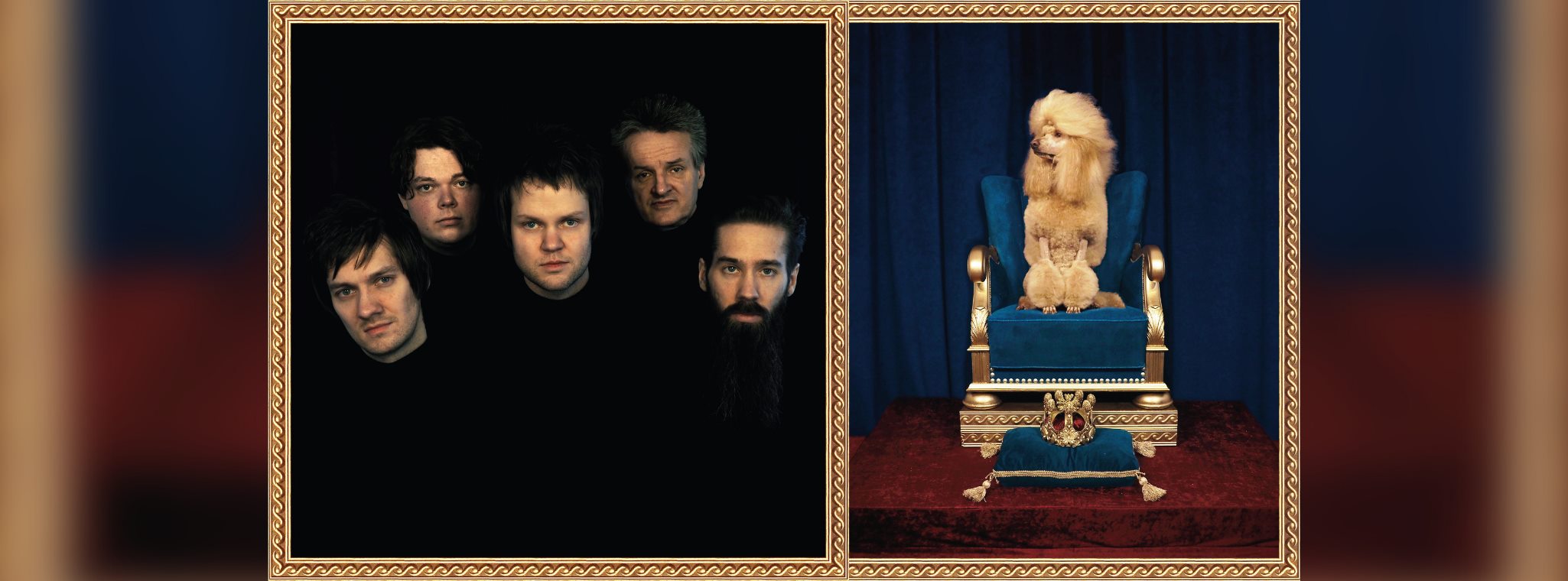
Caper Clowns has a great new record out. Sweet Sweet Music spoke with Rick Kingo about the creation of Abdicate the Throne, Danish National Radio, The Cavern Club, and being present in the moment.
What was the moment you knew you were on to something?
I have always felt like I was on to something. Since I wrote my first song at 15. Looking back now I know that I was not, and I’m very happy we didn’t start releasing music till much later, but at the time I thought it was absolutely brilliant.
How did this record come together?
I think we started working on it in late 2018, right after releasing A Salty Taste To The Lake. The five of us all write songs, so we just did a lot of songs, and then we picked which ones seemed to fit together. Originally, we intended to release the album in May 2020, but the pandemic made us decide to postpone it, redo some stuff, add two new songs to it (CAPS LOCK ON and I’d Be Me), and change the order of the songs, which I think made the album quite a lot more complete.
The meaning of success has changed over the years. What would success look like for the new record?
I think we would be happy to get some airplay, and some positive reviews, which luckily, we already have. Three of the singles have been on Danish National Radio, as well as multiple international indie stations, and so far, all reviews have been very positive. Our next goal is to get more and bigger gigs, and hopefully the positive reception of the new album can help us get there. It’s certainly starting to look that way, even though we’re of course still slowed down by the pandemic.
How great is the urge to stay creative? To keep writing songs and lyrics?
I think that’s inevitable for me at this point. Even if I had absolutely no audience whatsoever, I would still write. I would probably not spend years working on recording the songs, but the basic song writing, me and my guitar or a piano, that is just what I do.
As an artist, you chose to show your emotions to the world. Is it always comfortable to do so?
No, not at all. Letting people, especially people close to me, hear the more personal songs is definitely very uncomfortable and even scary. But there isn’t really any way around it, and after three albums now it is getting slightly easier to deal with, but I doubt I will ever feel comfortable doing it.
What’s the gig you will always remember? And why?
Our first time at The Cavern Club, as part of the International Pop Overthrow Festival. I had wanted to play there for years, but I never actually thought we would. So, it was huge to get invited, and to finally stand on that stage. The weird thing is I have no memory of playing that night, but I remember other little things, like repeatedly bumping my head into the ceiling, and being taught a new cool way to do a high five by a Scottish guy we met backstage.
When was the last time you thought ‘I just wrote a hit!’?
I think it must have been when I wrote the music to Kissing Daylight, from our second album, A Salty Taste To The Lake. It did get a bit of airplay, but it was by no means the most successful song on that album. By contrast The Way I Dream from the same album got a lot of airplay (still does), on national radio in Denmark, but I would probably not even have continued working on it, if my dad hadn’t heard me playing it through the wall, and walked in to inform me it was good, and I had to finish it. I ended up not really finishing it, but luckily, he and our bass player were able to do that.
Is recording a record easier than getting it heard nowadays?
I think both are quite difficult. Getting it heard takes hard work and a great deal of luck. Recording it takes less luck, but even more work, especially if you’re producing it yourselves, like we do.
Recording music. What’s all the fun about?
For me it’s the creative process. I just enjoy creating music.
Playing music in front of a crowd. What’s all the fun about?
It’s just being present in the moment, with a bunch of people all focused on the same thing. It’s brilliant.
They expect ‘the roaring 20s v2.0’. What kind of party are you looking for?
I think at this point, I’m looking for anything big and loud with proper music. After over a year of mostly just seeing the same ten people, it felt good to see a lot more people at our release party last week.
Richie Mayer’s new record, The Inn of Temporary Happiness, sounds like an ode to the music Mayer feels connected to. He uses many different styles without the record becoming a hotchpotch. You can hear the influences of The Beatles, The Beach Boys, The Cars, and Glenn Campbell, just so you are aware there is a country song included as well :). Mayer takes you on a musical journey but you may have expected that when you saw the album cover.
Sweet Sweet Music spoke to Richie about songs that were waiting to be sung, health insurance and, his former Power Pop band, Loose Lips.
How did this record come together?
The album came together of its own free will really; I was just dragged into it….
Actually, the Covid lockdown restrictions became a kind of freedom as I retreated to my home studio, and to my surprise, songs were waiting to be sung where I thought there were none. I wrote thirteen of the new songs on the album in six weeks, a world record for me. Then the hard work began as I was, essentially, “the band.” I sang all the vocals, played all the instruments, recorded and produced the tracks. I mixed remotely using Audiomovers software with studios in Chicago, Austin, and Omaha, another new experience.
When did you decide to start asking for opinions on the new songs?
Truth be told, when I saw how varied the final selection of songs would be I thought it best to just put it out there and let it tell its own story.
The meaning of success has changed over the years. What would success look like for the new record?
Health insurance?
How great is the urge to stay creative? To keep writing songs and lyrics?
For some of us, it’s not even a choice; it’s the air we breathe, really. The mystery of songwriting for me is that you never know where or when or how inspiration will manifest itself, but you damm well better be there to open the door when The Muse knocks.
What’s the gig you will always remember? And why?
My Power Pop group at the time, Loose Lips, was playing the Chicagofest/Rock Around The Dock concert at Navy Pier, and at the last minute, our band was switched from the pop stage to the heavy metal stage. Throughout the set people were giving us the finger, throwing objects at us with one guy spitting on me. Our fans found us and a melee broke out.
At the end of the show, I was on full boil and was going to jump from the barge to the dock and clock the spitting f**ker with my guitar. Our road manager was looking at me with wild eyes shaking his head no so I turned, unplugged my guitar, and with a running start hurled my ’66 Fender Stratocaster into Lake Michigan.
Almost instantly, some young kid dove into the lake to get it and security people had to throw a rope at him to pull him and the guitar back in. The events’ Chicago city manager threatened to sue me as they pulled the kid out of the drink with water pouring out of the input jack. He tried to give it back to me but I let him keep it after he, of course, asked me to sign the guitar.
But it wasn’t all for naught though; the next day we had a front-page Chicago Tribune entertainment section headline – “Headliner Cheap Trick Heats Up Crowd; Crowd Heats Up Loose Lips” with the writer giving us one of our better reviews.
Is recording a record easier than getting it heard nowadays?
Yes, but it’s harder to get someone to actually buy it as opposed to ”Like” it.
You can’t control the way people ‘hear’ your music. But if you could make them aware of certain aspects, what would they be?
That each song on my album is a short story. And that the backing vocals and instrumental tracks on that song all color the story, create the mood, give you a key to another room at The Inn of Temporary Happiness.
Indie Rock, Classic Rock, Power Pop. Musical genres with different characteristics, but if you take the right elements and put them together, you get something beautiful. Ruby Bones has delivered a beautiful record with Laser Tooth Tiger.
Sweet Sweet Music spoke to Chris Fox about the cornucopia, Julian Casablancas, and new spins on timeless things.
How did this record come together?
Laser Tooth Tiger was born from the idea that our first record was a bit dark and we wanted to do something brighter and sunnier. Once the first few songs came together, the theme of being nostalgic about the past came shining through in the lyrics. So while there ended up being a light story of one relationship ending and another starting, it’s more about finding yourself in your early 20s and navigating how to take the world in stride.
The meaning of success has changed over the years. What would success look like for the new record?
We would love a small devoted group of people who know all the words to the songs and come to all of our shows, that would be the purest success in my eyes. Past that, we always want to reach more people, but we want them to be invested in the songs. So many acts come and go, but Ruby Bones would like to be in it for the long run making sweet records that people get behind, even if we change sounds and genres a bit across them.
You can pick 3 co-writers to write new songs with. Who? … and Why?
Oh, this is a fun one! I’d say the first is Julian Casablancas because of the way his mind works (The Voidz are next level in terms of songwriting and music theory).
Second would be John Darnielle of The Mountain Goats. Just to take a glimpse at how he crafts his stories and characters would probably be eye-opening. Plus he writes a lot of songs that he puts together thematically, Beat the Champ being my favorite record. I even run a Facebook group about it!
Third I’d pick all of the Walkmen (cheating, I know) to help flesh out the sound of a record. At the end of the day, there are only so many chord progressions in a writer’s book, but the way they were able to create such lush songs that conjured and captured emotion is legendary, at least to me.
How great is the urge to stay creative? To keep writing songs and lyrics?
The urge is great, my newest friend. Lots of songwriters go through phases of writing and not writing, but most seem to stick with it their whole lives. I can see it getting more challenging as time goes on, what with all songs being about life, love, and death, but for right now I feel the cornucopia is plentiful. Over the last few years, I’ve found pulling a few songs along a similar theme and crafting a full record around said theme can yield great results. I’d recommend that to anyone stuck in a rut. You have to have an idea of what you want to say before you can say it, then edit it, then say it better.
Lyrics are too often taken for granted. What are some lyrics on Laser Tooth Tiger that you hope listeners will remember and why?
I personally love putting wordplay into songs; just interesting turns of phrase and new spins on saying old, timeless things. But this record is all about living life to the fullest, so those are the sentiments I hope will stick with people.
you were more than drunk, you were wasted
always waiting for your luck to come around
well it all comes around
Just pushing a positive message in a way that’s not nauseatingly cheesy pop music. Sure, pop music has a time and place, but we wanted to make anthems for the boys in the song “The Boys are Back in Town.”
well talk is cheap when you’re talking to me
oh opportunity, it’s always knocking
back on the beat, you better believe
that your only enemy is doing nothing
Lest we linger on the loss of alliteration, I definitely had fun playing around with internal rhyme schemes and phrasings. I view songwriting as little puzzles waiting to be solved, but you also have to make all the pieces interesting. It’s easy to accidentally make something boring if you aren’t careful.
but don’t it just feel like
turning black and white
wasting time all on
finer wines
hold it closer now
let me figure out
how to make it right
turn back time
and press rewind
For me, the last lyric of the last song sums up the whole experience Laser Tooth Tiger is trying to convey. It’s easy to waste your energy chasing luxurious and grand dreams, but just finding moments to keep dear to you is good enough. There’s a lot to be said for crystallized memories, and they can go a long way in defining who you are to yourself, but it’s also important to not dwell so often in the past that you aren’t living in the future. There’s life to live, so live it.
Italian Jangle Pop with hints of Post Punk and Power Pop.
Meet ‘Smile’.
Sweet Sweet Music spoke to Hamilton Santià abouteveryday life alienation, ‘less is more’, arpeggio, and, looking the ones willing to listen straight in the eye.
What was the moment you knew you were on to something?
It all happened in those two concerts we were able to play before the whole pandemic shit overthrew everything. After the first one, the moment we stepped out of the stage, some folks run into us telling «Hey, you really are a band!». After the second one, a famous musician from our hometown (Turin, Italy) put us aside and told us «You already have a sound and a stage presence!».
It was really something to be perceived as credible and meaningful, that is not as easy as it might seem.
Unfortunately, the live power momentum has been brutally interrupted by the pandemic! But the awareness, we were building something, drove us in these long months allowing us to work on the record, on new songs, with a new focus.
How did this record come together?
“The Name Of This Band Is Smile” is a collection of songs tied together by the sound pattern of jangle-pop meets post-punk, and the lyrics about everyday life alienation and a sense of disarmament. We are not that young anymore and we are not interested in writing about imaginary things, nostalgia, or “our own private Eden”. We want to be as real and urgent as we can be as a band with guitars.
The record was written starting from a lot of guitar ideas: little fragments we built on shaping the sound. One of our key concepts is “less is more”: once the structure is done, we start removing everything that is not necessary. We want to suggest our nervous feelings through these frantic melodies. Once we hit the eight songs format we looked at ourselves and stated the record was done. Nothing more than necessary. No fillers. Ready and go.
How great is the urge to stay creative? To keep writing songs and lyrics?
It’s the spark underneath it all. It was part of our everyday life before the pandemic happened. Since then it slowed a little but we’re getting back on track by the minute. It’s a hunger, a second language that comes in handy when all the others fail: there’s something in an arpeggio/melody/rhythm that words just can’t contain, and at the end of the day your fingers reach naturally for the guitar/bass/sticks, your voice needs to come out after being silenced for too long.
Recording music. What’s all the fun about?
We think songs are ever-changing organisms. They bend and twist and choose different shapes every time you play them. The fun part is racing along with them until you can say “this is your final form”. Then you enter the studio and try to finally capture them, just to find out they will change once more. It’s an endless, exhilarating struggle we can’t get enough of. One of our goals in the studio is to capture the “live” essence of our music, we believe the studio is a space of freedom and experiment. We play three minutes songs, but we won’t limit ourselves to the possibilities those three minutes open.
Playing music in front of a crowd. What’s all the fun about?
The stage is probably our natural element: the place where our frantic music can sparkle out. There’s nothing like receiving the energy you’re throwing out from the people you’re connecting with. You could apply these words to various aspects of our existence, but for us none of them can compare to the thrill of saying what we want to say, the way we want to say it, looking the ones willing to listen straight in the eye. We think there is a pact between the performer and the audience, something electric and deeply mysterious. Moreover, the stage is the place where we celebrate the rebirth of each song: everything is new again when you play it live.
Sandy McKnight explains how he and Fernando Perdomo made ‘San Fernando Blitz’, an EP with 6 wonderful new songs and the follow-up to ‘San Fernando Beat’.
What was the moment you knew you were on to something?
Am I?
How did this record come together?
‘San Fernando Blitz‘ is the follow-up to Fernando Perdomo and my earlier EP ‘San Fernando Beat’. We met at a session in 2019 and decided to see what would happen if we put our heads together. It clicked right off, and during the pandemic we had fun recording long-distance, he in L.A., me in Massachusetts. I send him my song demos. He does the guitars, drums, and keys, and I add the bass and vocals and oversee the mixing and mastering. It works well!
When did you decide to start asking for opinions on the new songs?
I like to record first, ask questions later. It’s one of the perks of having been writing and recording for a long time. I hear the record in my head when I write the song. Of course, once the record is completed I care what people think, though I try not to take criticism too hard.
The meaning of success has changed over the years. What would success look like for the new record?
I make a few bucks from licensing songs to TV and films. Haven’t had a song in an advert yet…that’d be fun! Success at this point is just making recordings I can be proud of.
How great is the urge to stay creative? To keep writing songs and lyrics?
It’s actually gotten a bit annoying. I write songs involuntarily now. A song idea pops into my head and haunts me until I can get it on my phone’s voice app. ‘Living on the West Side’ was floating around in my head a few years before I could get around to recording it. Melodies follow me around. My brain is tired. Help.
As an artist, you chose to show your emotions to the world. Is it always comfortable to do so?
The world doesn’t care. When they listen, it becomes their emotions, not mine. My job is to tap into feelings and situations that are universal and find new ways to convey them.
You can pick 3 co-writers to write new songs with. Who? … and Why?
Easy. Paul McCartney, because of Paul. Pete Townshend, because he was an early inspiration and invented Power Pop. Third is hard…maybe Burt Bacharach, because I love his melodies.
What’s the gig you will always remember? And why?
I think it would be playing CBGBs in 1979. What amazing energy!
Lyrics are too often taken for granted. What is the line of text or are the lines of text that you hope listeners will remember? And why?
I love the wordplay aspect of lyric writing. Everyone has their own favorite lines, although sometimes I’m surprised at what people think is good. I don’t have too many ‘message’ songs. I just put it out there, take your pick.
When was the last time you thought ‘I just wrote a hit!’?
Almost every song, at first. No one knows for sure. And how does one define a hit at this point in the music world?
Is recording a record easier than getting it heard nowadays?
Always. I love writing and recording. I hate networking, schmoozing, promoting, and all that stuff. That’s my secret to remaining unknown!
Cassettes are back. Which 5 five songs would make your first mixtape?
Only 5? OK, how about ‘So Sad About Us’, ‘King Midas in Reverse’, ‘It’s Different for Girls’, Tim Moore’s ‘Second Avenue’, and ‘Let’s Pretend’. So many others, but those were the ones I thought of first.
Recording music. What’s all the fun about?
As I said earlier, I hear the record in my head when I write the song. Working with someone like Fernando is great because we’re on the same wavelength. The real fun is building the track and adding the little touches that make people want to hear it over and over again.
Playing music in front of a crowd. What’s all the fun about?
Not my fave thing, but it can be fun when you have a ‘listening’, appreciative audience.
You can’t control the way people ‘hear’ your music. But if you could make them aware of certain aspects, you think, set your songs apart. What would they be?
I try to keep the chord changes surprising and original, the melodies singable and clever, and the lyrics unlike any other songs. I hope people hear that stuff in my work.
They expect ‘the roaring 20s v2.0’. What kind of party are you looking for?
The 1920s and the 1960s have a lot in common. Stretching the limitations of society, creating new visions for the future, and of course, the abolition of fear, hunger, and war is my idea of a party.
Jeremy Porter &The Tucos is an original Rock band from Detroit. Part power-pop-rock (like Cheap Trick, Hüsker Dü and X). Part whiskey-soaked twang (like Uncle Tupelo, Gram Parsons and Waylon Jennings).
Sweet Sweet Music spoke to Jeremy about how Candy Coated Cannonball, the new record, came about.
What was the moment you knew you were on to something?
Man, that’s a tough question. I guess the first time would be in my first band The Regulars back in high school up in the UP of Michigan when we were just starting to introduce our own songs into the mix. We did all covers for a while, punk, 60s, garage stuff. Then, with our own songs, it was the realization that…. ”yeah – we can do this!” Of course, our songs were derivative and immature, but that didn’t matter at that age. It was empowering and fulfilling. Doing what we saw the bands we loved do was within reach.
How did Candy Coated Cannonball come together?
It was very deliberate and planned out, as most things Tucos are. When Patty left the band at the end of 2018, the plan was to bring Bob in, spend a year writing the record and playing shows, breaking him in, and then record right off the road. I had a bunch of songs ready and wrote the rest over that year. We demoed over the summer, toured in the fall, and started recording on January 2, 2020. It was nauseatingly calculated.
When did you decide to start asking for opinions on the new songs?
Well, that’s an ongoing process in the basement with the boys. Other than that, I don’t think I asked for any opinions. I seldom share the demos. Ya know, I did send them to my friend Ian Trumbull (from the band Ypsitucky) out in California – I think we trust each other with those things and pretty much no one else outside of our bands. I’ll hear about it from my wife upstairs after practice in the basement sometimes – “What was that song you played 85 times tonight? Yeah…needs some work.” She hears `em first ya know, and she’s brutally honest.
The meaning of success has changed over the years. What would success look like for the new record?
It sure has. At this point, success for me is just still doing it. Still putting out music that I’m proud of, playing shows, touring, writing songs that I think were worth writing. The other stuff is gravy. We were happy to get played on Little Steven’s channel on SiriusXM recently, it’s always nice to get good press, sell records, have your friends and strangers sing your praises – stuff like that, but I’d still do it without all that. At this age and point in my musical career, keeping on keeping on is success.
How great is the urge to stay creative? To keep writing songs and lyrics?
It comes and goes, and always has for me. It’s been very difficult over the pandemic, to be honest. Part of that was the focus on mixing, mastering, and release of the album, but I just didn’t have the gumption to put pen to paper much. I’ve always been streaky – I’ll write a lot, then not much, then a lot again, but it’s been pretty dry. In October I rented a house on the Mississippi River in Wisconsin alone for a week and took a stack of half-written songs to finish. I came out with a bunch of songs but failed to keep the momentum going when I got home. Something snapped a few weeks ago and I’ve been writing again, so that’s encouraging. Maybe the optimism of getting back out in front of people again.
As an artist, you chose to show your emotions to the world. Is it always comfortable to do so?
Absolutely not. It’s a weird thing. I think a lot of songwriters are introverts. I know I am. I think it’s our way to get what we want to say out there, without being in an awkward conversation at a dinner party or something. Then there are cases where something is about someone specific, and it’s in the back of your mind what they’ll think, and that can’t help but creep in there sometimes. But you gotta get it out, and you can’t worry about it. One way or another there’s some anxiety involved.
What’s the gig you will always remember? And why?
There are a few that stand out. We had a couple of shows in England a couple of years ago that I’ll remember very fondly – amazing nights. Today I’ll say a show we played at The Brass Rail in Fort Wayne, Indiana with Raelyn Nelson (Willie’s Granddaughter). It’s been difficult for us to get in there, the place was packed, and it was rowdy as hell. Playing with Lydia Loveless, Beach Slang, Sponge and so many other great bands has been memorable as well.
Lyrics are too often taken for granted. What is the line of text or are the lines of text that you hope listeners will remember? And why?
Hmmm… it’s hard to look at your own work that way. On the new record, there are a few lines that resonate with me personally, but I think once it’s out there, listeners will consume it their own way and make their own attachments, and I’m perfectly fine with that. I like when someone latches onto something that I never considered anything special. Once in a while, I’ll come up with something that I think really “nails it” but it feels a bit weird to toot my own horn that way. There’s a line in “Dead Ringer” that goes “Must be my lazy eye or my wasted friends, the lack of means to all my ends, or the way I almost die when she’s around” and that pretty much sums up my teenage years in a few short words.
When was the last time you thought ‘I just wrote a hit!’?
Haha! Man…what’s a hit? I write a lot of songs. Most of them are throwaways that I never show the band and never play. Occasionally I’ll come up with something that I can tell early on will make the record. “Dead Ringer,” mentioned above, was one of those – the demo stuck with me, the lyrics and hook were good, I knew it would make the record before we ever played it.
Is recording a record easier than getting it heard nowadays?
Getting your music heard is exhaustive, endlessly frustrating, and most often thankless. The rejection and, worse yet, ambivalence are crippling. Good people like yourself who help mean so much to the musicians. I’m so thankful for every pair of ears, every podcast play, every download purchased, every blog mention… anyone who cares enough to give it a minute.
Recording an album is a shit-ton of work. I’m not sure it’s easier, but at least it’s in your control, it’s up to you what you put into it and get out of it. Getting it heard is much less controllable.
Recording music. What’s all the fun about?
I approach it very much like work. We’ve got a job to do; we’re spending a lot of money, time, and energy on it, and we have a responsibility (to ourselves, mostly, I guess) to make it as good as it can be. It’s long hours, heavy work, and, as we talked about above, the potential returns can be…prohibitive, if that’s your motivation. All that said, it’s incredibly fun to have an arsenal of gear and sounds at your fingertips, great musicians in the room making your songs come to life, and hearing a playback of something that’s better than you ever knew it could be – it’s all easily worth it. The camaraderie of a few people working on something for the pure sake of the love of the work is a big part of it too, and there are some laughs along the way. But it’s work first, for me at least, and a lot of it.
Playing music in front of a crowd. What’s all the fun about?
Well, that’s a different monster, isn’t it? That’s something special on a couple of different levels. It’s the culmination of all the work we’ve been talking about – all that writing, demoing, recording… Going after the press and radio. It’s the moment you’re up there and you remember coming up with that riff, or the time in the basement that Gabriel said we should do the chorus twice there, or that line that always makes the girls smile. It’s the payoff for the press you got in that city that week from the kid at the college paper who’s at the show with her parents, the table in the corner that read a blog that said you sound like The Smithereens, who maybe you do or don’t, but they love The Smithereens so it’s totally cool! The friends who surprised you in Kentucky or upstate New York by driving in from Cleveland to see you. The sweat and ringing ears and torn up fingernails. It’s the payoff for all the work. Nothing beats that – there’s nothing better.
You can’t control the way people ‘hear’ your music. But if you could make them aware of certain aspects, you think, set your songs apart. What would they be?
I agree that you can’t control how your music is consumed. I’ve been part of that exact conversation a couple of times recently. I guess for that reason I wouldn’t focus in on what sets my songs apart, but with every song we do, we try to deliver the best “product” that we can. I say that because it’s not just the song – it’s the parts, the lyrics, the tones, the mix, the cover art. Painstaking effort goes into all that – and the most efficient, economical arrangement is key – nothing wasted, nothing indulgent. Editing arrangements is something we work incredibly hard at – it’s a part of the process that I think is very important. It’s so hard to get your song to someone’s ears that when it gets there it has to be as easy to consume as possible. Getting a song to that point is the culmination of the artistic process. Once it lands, it’s all up to the listener.
They expect ‘the roaring 20s v2.0’. What kind of party are you looking for?
I sure do hope we can get back to live music, eating in restaurants, and taking in a Detroit Tigers’ game soon! I’ll be happy to walk up to a stage knowing Cheap Trick will be breaking into “Hello there ladies and gentlemen! Are you ready to rock? Are you ready to rock?” any minute. I’ll also be happy when I can grab a booth at the back of a dark bar with a friend or 2 and a great jukebox and argue about the nuances of rock and roll over drinks for a couple of hours. I don’t need a big party – any sense of normalcy will be welcome!
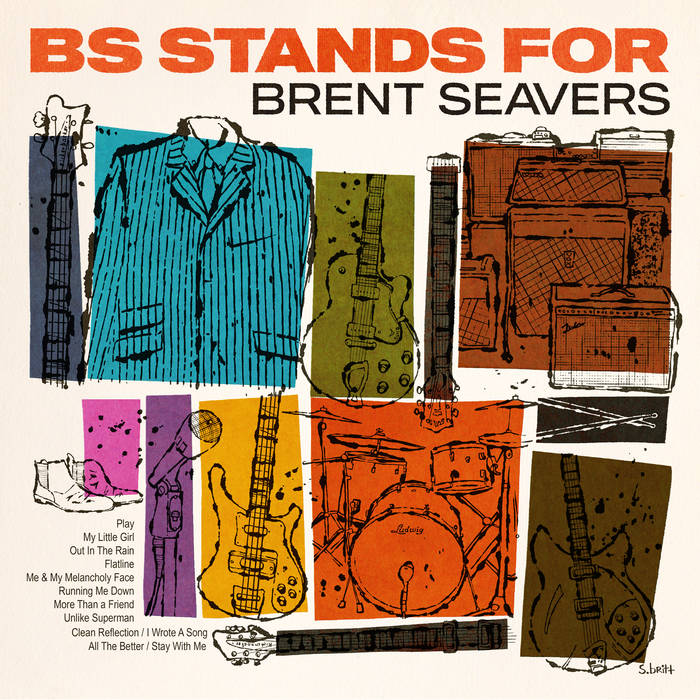
Catchy songs. Classic Power Pop. Some of the songs on ‘BS Stands For’ sound like The Beat or The Nerves. BAM. Yes, Brent Seavers, from The Decibels, has made a wonderful solo album.
And he explains to Sweet Sweet Music how it came about.
How did this record come together?
My band (The Decibels from Sacramento, CA) was about halfway through recording a new album when the pandemic started. Like many of us, I had a lot of time on my hands while practicing social distancing. Just for fun, I started recording covers of different songs and filmed the process – uploading my music videos to social media. After recording about 20 cover tunes, I figured I should record some of my original songs. They were received pretty well, so I kept going. Before I knew it, I had an album’s worth of songs recorded. These tunes were a mix of songs I had written over my entire time with The Decibels, ranging from a few songs I had written in my early teens (like Me and My Melancholy Face and All the Better) to newer songs (like Flatline and Play) that were contenders for the latest Decibels’ album. Mostly out of pandemic-fueled necessity, I played and sang everything on this album – except for a few handclaps reluctantly contributed by my children whom I’d occasionally recruit to help out. The digital release of “BS Stands For” in March generated enough interest that we’ll be releasing the LP on Screaming Apple Records in Germany – hopefully by summer.
How great is the urge to stay creative? To keep writing songs and lyrics?
This may sound odd, but for me, the desire or urge to be creative isn’t something I can shut off. It’s so deeply a part of me that it feels more like instinct. My brain is always playing music if the turntable isn’t. Like the artist that doodles on everything, I have to keep a digital recorder with me always as the songs and lyrics always flow. Some of them are laughably horrible, but you keep moving forward and hope for the best. As long as I continue to write music that’s honest and is something I want to listen to, I’m content.
As an artist, you chose to show your emotions to the world. Is it always comfortable to do so?
It’s a very vulnerable process to put yourself out there for the world to peek into your soul. It’s raw, honest, sophomoric at times, and full of flaws. When I sing, “every bruise is black and my heart is blue” in Flatline – I’m sharing with the whole world a deep personal failure and what it’s like to live, love, and come out with some scars. At the same time, you’ll hear the awkward innocence of new-found hope in Play – “So I take a chance and play this game, embracing the uncertainly of letting go of my defenses.” I am also a weird kid who daydreams about having superpowers and writes songs about writing songs. Silly humor is how I cope with just about everything life throws my way. To not include my humor seemed dishonest. Whichever bit of my mind someone hears, I just hope that some part of it is relatable and the music resonates.
Is recording a record easier than getting it heard nowadays?
There is so much good music out there in the world. There’s a fair amount of garbage as well. We don’t have a system where the best music floats to the top and is easy to find – and since what makes music “good” is subjective, we never will. It takes a responsible listener a fair amount of effort to go find the music that they personally enjoy. Sometimes that effort burns me out. It’s why I appreciate and rely on blogs and social media to offer suggestions. Recording a record is easy. Recording a good record is tough. Getting heard, when you’re competing with so much noise, can be difficult. If you’re a musician, just do what makes you happy. Be honest with your work. If you enjoy the process, chances are someone else will as well.
Recording music. What’s all the fun about?
I finally get to hear the song that’s been playing nonstop in my head! I like music. Very much. It’s my favorite thing to put in my ears! When I get to record something I wrote, it’s fun because I get to share the music that I’ve only ever heard in my mind – for better or for worse. Either way, I get a kick out of it.
Rooftop Screamers is the name of the studio project for Portland-based drummer and songwriter Mike Collins.
The latest record is called Next Level and on this, a variety of musicians and singers participate, such as Ken Stringfellow, Tim Smith, Dan Reed, Earl Slick and Keith Slettedahl.
Mike explains to Sweet Sweet Music how Next Level came about.
You work every song with, for example, a different singer. How do you determine who to do which number with?
I’ve been asked in the past if I have a certain singer in mind when I’m first writing and recording a song, or if I set out to purposely write a song for a particular voice.
I would have to say no. I usually don’t determine who’s going to sing the song until the song starts to take shape in the studio. That’s when I start to ask myself the question of who’s voice do I hear for this particular track. Whether it seems more suited for a male or female voice. Or, whether the song calls for a singer with a deeper voice, maybe a whiskey tenor with a little bit of rasp to their voice, or a cleaner-sounding voice. Once I determine the style of voice that would be best for the song is when I start to think about who that person might be. Does someone in my inner musical circle fit the bill, or perhaps a singer I’m a fan of but have never worked with.
One example would be the song “Shifting Tides”. To me, that song has an 80’s or 90’s new romantic/British vibe. Especially the melodies. Bands like Tears for Fears, Simple Minds, The Fixx, etc. I had seen an interview with Cy Curnin (of The Fixx) on YouTube. As I was watching the interview, I had an aha moment and thought to myself, he would be perfect! We are Facebook friends, so I reached out to him, told him about myself and Rooftop Screamers. And as luck would have it, he said yes! He said something to the effect that he loved the energy behind the song.
Another example is the song “Tearin’ It Down”. That song has a very bluesy vibe to it. So I knew it needed some soul and some grit. And in my mind, I heard a female voice in the style of Janis Joplin or Beth Hart. Luckily, I knew someone that fit that style and in my opinion, is every bit as good as Janis or Beth, and that was Dilana. I’ve played drums for Dilana off and on for several years and have wanted to have her on a Rooftop Screamers song ever since I started the project. “Tearin’ It Down” was the perfect song for her bluesy, soulful, and passionate vocals. It’s worth mentioning that that song also features Earl Slick (who I also used to play with) on guitar, keyboardist Danny Peyronel from the legendary British rock band UFO and Kelly LeMieux (Paul Gilbert/ BuckCherry) on bass. A dream team if you will. 🙂
And is there a fixed method by which the songs are created?
From their inception, the songs typically begin with me sitting on the couch strumming my guitar and usually, by accident, coming up with an interesting chord progression. That automatically inspires a melody and maybe a few words. From there I start to craft the idea into a song by figuring out where the song wants to go. Once I have a decent skeleton of the song, I take it into my little home studio and start to record a basic guitar part, followed by drums, bass, and keyboards.
I tend to write lyrics last, so to get a template for the vocal part, I record myself singing syllables with nonsensical words and/or vocal sounds. Once I get a decent demo of the song, I take it into a much more professional studio and use the demo as a guide to record a new drum track. Since I’m a novice on the other instruments, I then have other musicians that I know come in to record guitar, bass, keyboards, and so on. Sometimes my keyboard or guitar parts make the final recording if there’s a certain vibe to them. And a lot of times, the other musicians and singers are in a different part of the country or in another country altogether. So that’s when we do file sharing back n forth. I will give some basic direction on how I hear the instrumentation, but ultimately let the musician or singer put their stamp on it.
“Next Level” is your new record. The title probably also has a figurative meaning?
With the “Rooftop” being the highest point of a building, I thought Next Level was a humorous and metaphorical way of saying; but wait, there’s more! And I truly feel like this album is a step up in terms of the songs and the production from the previous one. More focused.
I think “Buckle Up” is great. When do you know you have something special in your hands?
Thank you! Yeah, Buckle Up is a stand-out track to me. And that song was written fairly quickly. I tend to think the best songs are written with the least amount of effort. Not to say that you don’t craft and refine it along the way. But songs that take a while and are labored over tend to lose their original spark. On the flip side of that, I’ve had songs that I started years ago that I finished years later and they end up being some of my favorites. An example would be having an idea for a verse, but the chorus doesn’t come to me right away. Sometimes those go on the shelf until the day inspiration hits and the rest of the song reveals itself. It’s a strange process and I try to get out of the way of it and just let the song intuitively guide me where it wants to go. And I gotta say that Tim Smith did an incredible job singing the song. His voice was perfect for it.
There is a very nice video clip for “Buckle Up”. You make beautiful clips more often. How important are the video clips?
I think in this day and age, having a visual representation of a song is important. Especially during the last year during the pandemic when there hasn’t been an opportunity to see bands play live. Videos offer some entertainment and fill that void. In the case of Rooftop Screamers, it isn’t an actual band and there isn’t a core group of musicians that comprise the project to do a performance style videos with. Therefore, I and a couple of people I’ve hired have created some lyric videos and some narrative style videos using animation and stock footage. Video editing is something I’ve played around with over the years and during the pandemic I’ve had more time to get creative and dig a little deeper into that process. In the case of Buckle Up, I found an amazing video and animation artist from Italy named Lapo Terelli. He did an awesome job creating the video which has a strong influence from the abstract cut-out artwork of Terry Gilliam.
Will “Next Level” also be released on CD or vinyl?
Vinyl, no. CDs, yes.
With Rooftop Screamers not being a band, making CDs (or vinyl) isn’t that economical as the opportunity to sell them at shows doesn’t exist. And, these days, most people are buying their music digitally online. However, there’s something to be said about having physical products and in many cases, new releases aren’t reviewed by bloggers and critics unless you have a physical product. So I’m doing a short run of a hundred or so CDs for that purpose. And to give to friends. Plus it’s cool to display the artwork and liner notes on CD/vinyl.
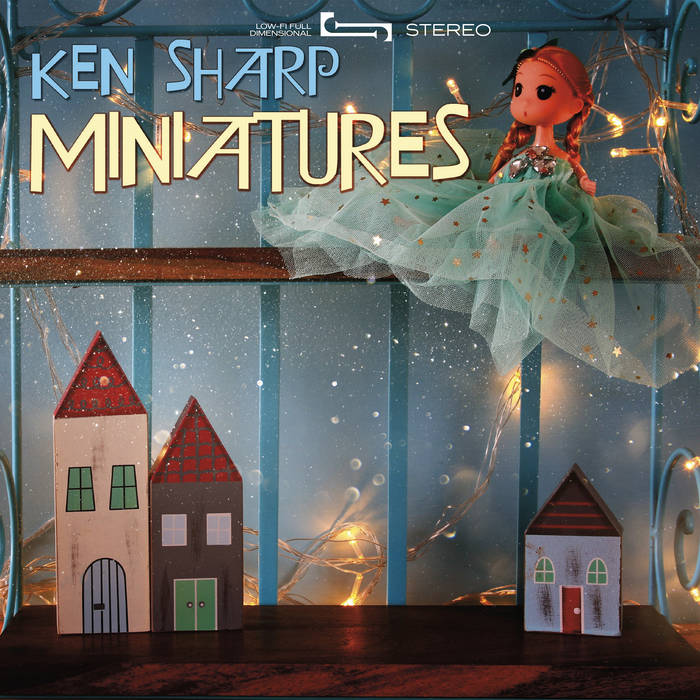
Ken Sharp’s new record is called ‘Miniatures’, with 32 short songs and musical impressions. If you asked David Sylvian or Neil Hannon (The Divine Comedy) to make a Power Pop record they might come up with a record that sounds like ‘Miniatures’, which feels like purple velvet and smells like turquoise satin. We’re not going to ask them, Ken Sharp has already made the record. I also don’t think they will make it to the standard that Sharp sets here.
Sweet Sweet Music spoke to Ken Sharp about unique magic, beauty, and a songwriting tear.
32 songs that together last 41 minutes. How did the idea come about to make a record like Miniatures?
During the pandemic, I have been very productive songwriting/recording-wise, thankfully. My writing has been all over the place, not stuck in one style: pure pop, soul, glam rock, ‘60s Beatlesque songs, jazzy things, acoustic flavored material, etc. Sometimes I’d send one of these song “miniatures” as I call them to a friend of mine who design my albums and he has always responded very favorably saying he wishes I would do an album filled with these songs.
About two months back, I sent him another of the ones I’ve written/recorded during this time and he said the same thing, and this time I really took it to heart. So I looked to see the number of song “miniatures” had written/recorded during the pandemic and it was 20 of these song “miniatures.” That wasn’t enough material for a full-length album so I was lucky enough to fly on some inspiration to go on a songwriting tear and write an additional 12 songs. After I listened to them in one sitting, I felt the album captured a unique magic and beauty that made it worthy to release as an album.
By the way, I composed and recorded all the songs at home using the GarageBand app on my iPhone, singing, playing acoustic guitars, tambourine, maracas, bell tree, into the built-in microphone and using an interface, plugging in a cord and adding electric guitars, piano, organ, etc. some tracks are filled completely with up to 32 tracks. Writing these song “miniatures” is pretty similar to writing a full-length song. The key is to ensure that all the parts fit and that the story is told in the song successfully, I felt all these “miniatures” were just long enough to not overstay their welcome.
When I listen to Miniatures it sometimes seems as if I read a diary. Without me explaining it further. Could that be a compliment?
Yes, in a way my new album “Miniatures” could be viewed as a musical diary or sketchbook. I tried to write songs filled with emotion and passion and filled with lots of musical embroidery as well. Most importantly, I wanted them to be short and not overstay their welcome while still telling a complete story.
If you have recorded 32 songs then I can imagine that there is a temptation to record numbers 33 and 34 as well. How did you decide the record was ready to be released?
32 songs equaled a little over 40 minutes of music. I am putting “Miniatures” out on vinyl and 40 minutes is the maximum suggested length for an album so that was good enough for me to stop with 32 songs plus the album felt complete to me with that collective of specific songs.
Your songs, the arrangements, the production, the artwork, everything is done with such care. Is it easy to say you are super proud?
Yes, I am super proud of the record, It’s a bit of a departure for me as an artist but it’s good to take some chances and risks. but I think it’s a cool little magical record filled with some beautiful songs. The favorable response I’ve received from folks thus far has been very rewarding with a few saying they think it’s my best album.
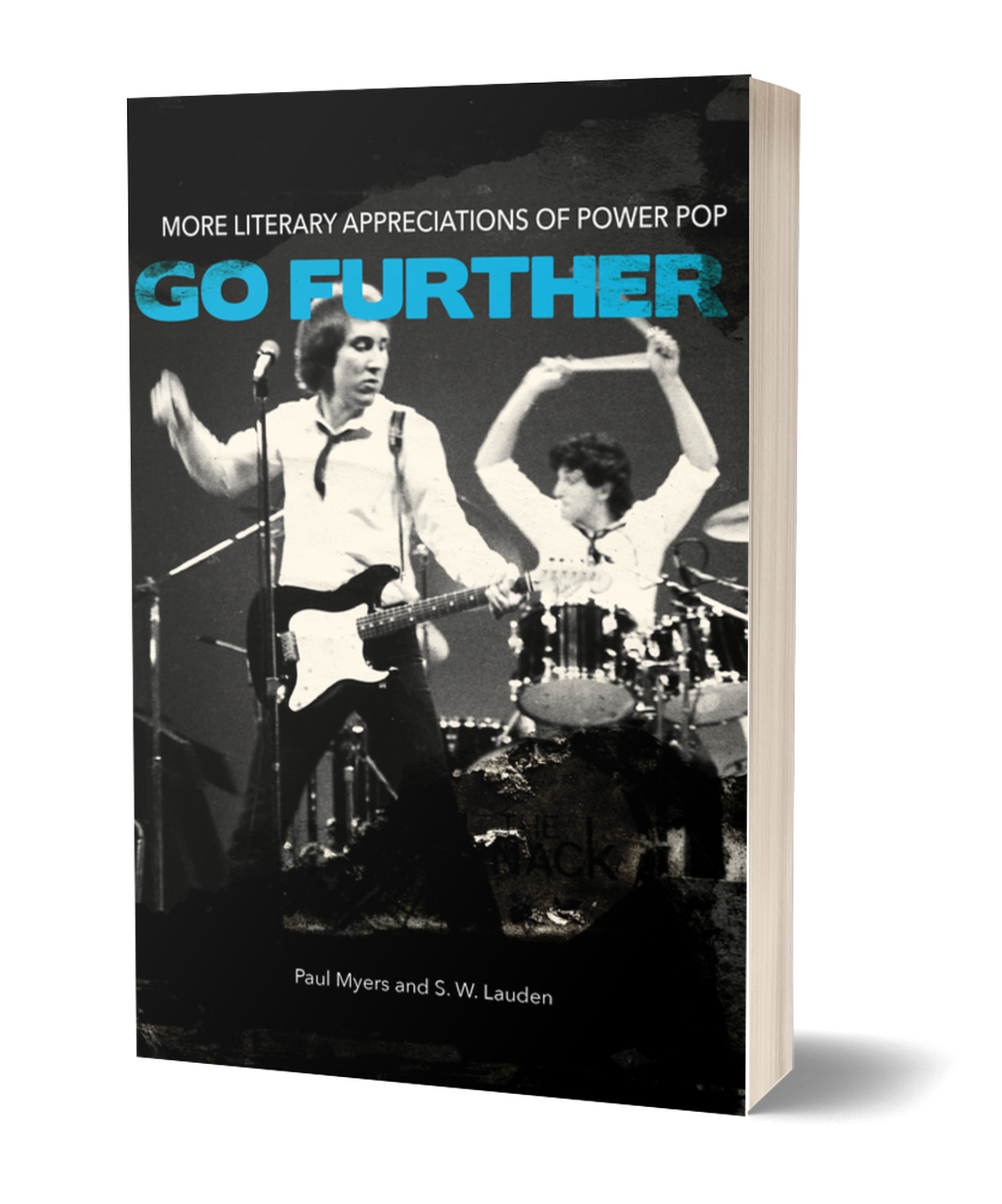
There aren’t that many books about Power Pop. The ones out there are usually written or compiled with great care and love for the genre. That also applies to Go Further: More Literary Appreciations of Power Pop the logical sequel to Go All the Way: A Literary Appreciation of Power Pop.
Go Further is, like Go All The Way, edited by Paul Myers and S.W. Lauden, both of whom also provided a story. Lauden writes an ode to the band 20/20 and Myers tells about the Power Pop scene in Los Angeles.
Other contributions include John Borack (on the Shivvers), Butch Walker (on Marvelous 3), Rex Broome (Ode on a Rickenbacker), Jordan Oakes (on Power Pop’s first fanzine, Yellow Pills), and Brian Vander Ark who recounts his writing session with Andy Partridge (XTC).
After ‘Go All The Way’ did writers start to share their stories or ideas for stories with you?
SWL: Paul and I definitely heard from a few writers after the first book was published. This is such a passionate, dedicated and knowledgeable music community that a lot of writers had opinions they wanted to contribute when/if we did a second book. Unfortunately, space is very limited so we were only able to invite a few of them into Go Further. That part of co-editing a collection like this can be stressful. Time will tell if there’s a third volume in this series.
PM: There were a few notable oversights in the first book, I personally think it was because, at first, we were backing away from people who would typically write strictly journalistically about this music, like Michael Chabon in volume one, but after that was done we thought we’d loosen up the rules a bit to invite a few of our favorite writers to join in.
Ira Robbins writes “(…) putting a pedal to the melody”. That says it all for me. Someday I will have that sentence tattooed on my body. Which phrases would look great on your back?
SWL: I love that line from Ira’s essay, but I honestly hadn’t considered getting it—or any other lines from the book—tattooed onto my back! If I did, it would be my first tattoo ever. If you’re asking what a few of my favorite lines are—there are too many to choose from. I love them all equally!
PM: No ink needed but Chabon had a great line in his Big Star essay, “Power Pop is a prayer offered by atheists to a god who exists but doesn’t hear. Keep an Eye on the Sky is a worthy temple of this bittersweet faith.”
A book in which a group like 20/20 gets such a beautiful article, isn’t that the best possible definition of a parallel world?
SWL: Thanks! I’m glad you liked my 20/20 essay. I really love the band and wanted to do their early origin story justice. I found it fascinating that two of the founding members, Steve Allen and Ron Flynt, have known each other and played together since elementary school. That backstory, coupled with all of the Oklahoma connections, added up to something pretty special in my eyes. But like I said, I’m already a fan.
As the co-editor of the collection, it has been interesting to see how each contributor takes a different approach to writing about power pop. As a writer, I get most excited about leaning into my journalism background. Both my Fountains of Wayne essay from Go All The Way, and the 20/20 essay from Go Further were built from extensive interviews with band members. So, although my opinions are woven throughout, I’m really trying to let them tell the story of the band from an insider’s perspective. Hopefully that comes across.
PM: You know, there’s that old expression “Hindsight is 20/20” so it’s funny that it took us to the second volume to get such great coverage of the band 20/20 but I think we more than made up for it by having not only Steve’s fantastic essay, but one from Jordan Oakes who has been writing about this music as early as I can remember and even named one of the very first power pop fanzines that ever existed, Yellow Pills.
SWL: Jordan’s essay is fantastic.
Humor and writing about Power Pop don’t often go together. Jeff Whalen’s article in ‘Go All The Way’ was a breath of fresh air. This time Brian Vander Ark steals the show with his article about XTC. Are we not taking ourselves too seriously?
SWL: Jeff is, obviously, somebody I have known for a long time (since we’ve played in Tsar and the Brothers Steve together). So, I already knew going in what to expect from his writing and his always interesting perspective. With Brian Vander Ark, he’s somebody I was introduced to (via email) by a mutual friend. I certainly knew some of the Verve Pipe’s music, but I wasn’t sure what kind of writer he would be. So it was a wonderful surprise to see that he’s a total natural. And I agree that both he and Jeff are funny in totally unique ways.
As for taking ourselves too seriously—I think that’s a trap that a lot of music fans run the risk of falling into. From my personal perspective, if you can’t occasional laugh about music, or at yourself, you might be doing it wrong. But, really, that’s just another opinion for somebody else to disagree with. The cycle never ends!
PM: I agree with Steve on this one, since the irony of Don Quixote-like aspiration meeting commercial failure is kind of baked into the fabric of this music, only a fool would take it seriously. That said, a lot of fools have written the best bittersweet anthems.
Jim Lindberg writes “In my opinion, good power pop is ‘Saturday Night’ by the Bay City Rollers, ‘What I Like About You’ by the Romantics, and ‘My Sharona’ by the Knack (definitely all in the Beatles tradition). Great power pop is ‘Hold My Life’ by the Replacements, ‘Bittersweet’ by the Hoodoo Gurus, and ‘Surrender’ by Cheap Trick (in the Rolling Stones tradition).” As a co-editor, how do you view such a sentence?
SWL: That’s an interesting question! I guess my first response would be that this is an essay collection that asks writers and musicians to show their personal appreciation of power pop, however they define it. Paul and I have tried to be clear that neither of these collections are meant to be definitive historical text books. Everything included in both volumes is meant to provide (hopefully) interesting personal perspectives from a variety of different people.
That said, Go Further also includes power pop experts like Jordan Oakes and John Borack, and we have essays about bands like Shoes, 20/20 and Material Issue. So hopefully there’s something for everybody, regardless of their definition of power pop. I’m personally glad Paul and I pushed the boundaries to include essays about Puffy AmiYumi, Michel Pagliaro, the Ramones/the Archies and the Replacements. I love all the essays in this collection.
PM: The emphasis on personal essay and, at times, memoir, frees us up from any pressure for this to be a definitive journalistic textbook. That said, I think our broad survey approach offered us a chance to have so many, often contradictory, takes that, taken as a whole, you get a sense of clearer snapshot. It’s like those half-toned photographs, when you look up close it’s actually comprised of a million tiny dots, but your eye just takes it in as one scene.
What about Gene Simmons showing up more than once?
SWL: Is it even possible to publish a power pop book that doesn’t include Gene Simmons?!
PM: Personally, these books have made me have a whole new respect for Paul Stanley.
Butch Walker was already a renaissance man, and now he turns out to be a gifted essay writer too. Did you know?
SWL: My band Tsar was very lucky to do a couple tours with Butch’s band, Marvelous 3, in the early 2000s. I was constantly blown away by him and his band back then, so I’m never surprised by his many talents and his many successes since then. Which is a long way of saying that I’m not surprised he’s a good writer too.
Butch is a good dude. I love having his Marvelous 3 essay in this collection.
PM: I’m a big fan of Butch Walker but I’ve never met the man. Someday, I hope! And yeah, turns out he’s a genius at everything he touches. The bastard!







 Sweet Sweet Music Blog