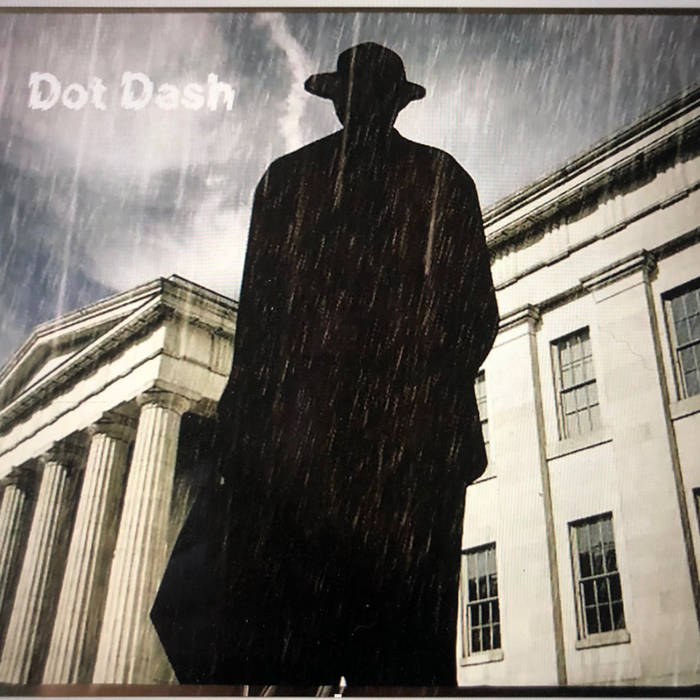
The jangly guitar on Saints/Pharaohs, the exuberance of Tense & Nervous, and the title track’s lyrics are just three highlights of a rock-solid album. Dot Dash’s latest is their best, and Terry Banks explains why and how Madman in the Rain came to be.
Madman in the Rain is great. I imagine you realized that somewhere during the creation or is that too easy?
Thank you! Yes, we felt the songs were really good and we were happy to get them recorded. We think it’s our best record — but bands always say that.
There are four years between the release of Madman in the Rain and Proto Retro. The world has completely changed in those four years. How did that affect the creation of Madman in the Rain?
We planned to record this record in Spring 2020, just as Covid was descending. At first (as everyone did back then), we thought the shutdown would last just a month or two, but then it kept going … and going.
Nearly all the songs on the new album were ones we were already playing live, “pre-pandemic.” A couple were written during it — “Airwaves” and maybe one or two others — I’ve lost track of time!
When ‘Tense and Nervous’ was done, did you know you had the closing for the gigs to come?
Hah! Thank you. It’s a two-minute, zero-second stomper, for sure.
‘Tried to join a ping pong club. But the sign on the door said ‘All full up’. How great is the feeling when you find the right words?
True, it’s a good feeling … even if the words come from somewhere else … Those lyrics actually come from a Clash song (‘What’s My Name?’) — every once in a great while, a “borrowed” lyric just fits the mood and the meter, so why not use it… In the past, on some of our previous records, there are a couple of Velvet Underground lyrics scattered about, too.
Somehow I make Everything = Dust a song with a positive message. We could also worry a lot less about everything by looking at the world this way, but I bet you wanted to say something else.
That’s an interesting take. I really like your interpretation. To be honest, I’m not sure what I meant by the song — the words just ‘arrived’ — but I like your idea on it a lot.
Madman in the Rain is out now on The Beautiful Music. Digipak CD comes w/free Bandcamp download of the album.
WASHINGTON POST: “Everything we’ve ever read about Dot Dash plays up the group’s collective resume: Singer/guitarist Terry Banks was in St. Christopher and the Saturday People before teaming up with bassist Hunter Bennett in acclaimed indie-rock band Julie Ocean and drummer Danny Ingram co-founded harDCore band Youth Brigade. Very impressive. But we’re more interested in the music, a retro cocktail that recalls the yearning indie-pop of Sarah Records; the ’80s neo-Byrds jangle of R.E.M., Orange Juice and other seminal college radio artists, and tight, throbbing basslines and slashing guitars that evoke the Jam and the Clash.”
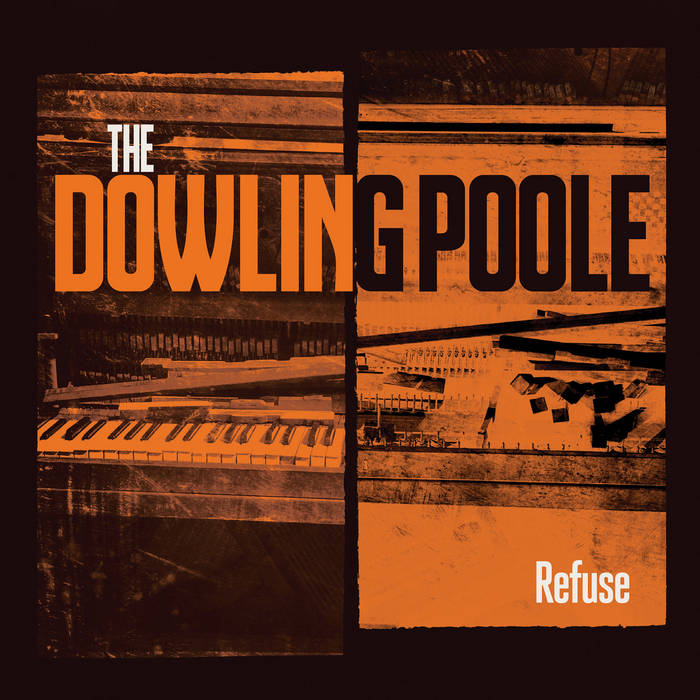
The Dowling Poole’s Refuse is chock full of beautiful pop songs with slightly complex structures and strong lyrics, as beautiful as the best moments of XTC, Sparks or 10CC.
Willie Dowling and Jon Poole talk about saveloy, toxic masculinity, shades of Jellyfish, and the ‘runt of the litter’ .
I played Refuse all weekend. There is so much to experience that I keep wanting to go back. Was it a goal in itself to make such an album, or does it just happen when the two of you start making music?
Willie Dowling: “Except for the last two tracks, REFUSE (I think of it pronounced as ‘refuse’ as in ‘refuse to do as one is told to do’, whereas for Jon, it’s ‘refuse’ meaning ‘objects of no further use’ and since he came up with the title I guess we should go with that) is a collection of songs that were left-overs from other albums, largely because although we really liked them, they didn’t seem to fit with the construction of the album we were working on at the time. Some were recorded during album sessions but didn’t fit with the other songs’ flow, and a couple (I think ‘Fuck You Goodbye’ is one example) were recorded between albums.
So it’s just good fortune if they hang together for you and I’m really pleased you would think so. But if you haven’t heard them, I’d politely encourage you and your readers to listen to any of our other albums – our last album ‘See You See Me’ would be a good place to start – and hear how it sounds when we make an album with an intentional beginning and end.”
Jon Poole: “We are both rubbish at playing football so there is never a goal in sight although Willie is quite good at doing ‘headers’. This particular album is a compilation of forgotten tracks that never made it onto albums so there really is no concept as such. I’d like to stress, it’s not that these songs didn’t make it on to albums because they were substandard but because each of them may have been viewed as sounding ‘out of place stylistically’ with the other songs on the albums they were recorded for. I wouldn’t say that each song was the ‘runt of the litter’ but I am delighted that they have finally found a home to inhabit together. This was an album I was very eager to see come out in physical form so I’m very happy with this release. One thing I enjoy about it is that the songs run chronically by year and spookily it hangs together as a good solid album and sounds like it was painstakingly compiled in a pleasing order which it really wasn’t.”
Refuse has such a rich sound. Was it a joy to dress up the songs so beautifully?
Willie Dowling: “I’m really flattered that you should think so. Jon and I don’t tend to think too hard about it. From our beginnings we recognised something in each other that might work well in combination, and we set about trying to capture what that might be. For my part – I’ve always written and recorded songs in much the same way, but I think working with Jon gave me something I’d not had before, which was a fellow friend and songwriter whom I wanted to impress, so I think I might have been inclined to work a little harder and not take a few short cuts that I might have done had I worked alone as usual. But it’s difficult to say with any objectivity. We do what we do instinctively and we both seem to enjoy it, and thats good enough!”
Jon Poole: “It’s hard to say because the way we work is to simply get our heads down and get on with it. It’s pretty intense because we live in separate countries so the time we do get together is extremely precious and we try to cram as much work in as is possible within the constraints of time. You’ll get the odd joyous moment, usually when stumbling on something by accident but more often than not it’s usually not until we’ve put the stuff out then a year or two passes then I’ll hear one of our songs and think ‘Wow, look what we done!’”
To my Dutch ears, The Dowling Poole sounds as English as it gets. That’s a compliment, do you agree or is my hearing too limited?
Jon Poole: “I do agree and I would say we have very little choice in the matter as that’s just the way we write and the way we sound. I remember when we put our first album out, we felt that it was a little like a celebration of 50 years of classic British pop music. Personally, every thing I’ve ever written from the age of 11 onwards has sounded quintessentially English. It’s not that I don’t listen to American music…I listen to loads and I love it..but I am drawn to Englishness or Britishness in music and I’ve always had a very English sensibility in both music and life, to the point of having friends from all over the world actually laugh at how English I am.”
Willie Dowling: “This is going to sound awful but I rarely listen to music so although I think I know what you mean, I couldn’t say with any degree of authority. I mean I think there are elements of Beach Boys harmony and shades of Jellyfish perhaps, that would dispute the ‘strictly English’ claim, but since the only other bands I know much of anything about are largely English, I wouldn’t be surprised if you were correct.”
The meaning of success has changed over the years. What would success look like for the new record?
Jon Poole: “Well it would be nice to sell a few copies! I genuinely think we have something both classic and unique to share with the world and I just wish we could reach more people. We’ve tried various methods of raising ‘Dowling Poole awareness’ and it’s always an uphill struggle. A week or so ago, a friend of mine put a comment under one of my Facebook posts saying ‘I had no idea The Dowling Poole were SO good!’ I’ve been posting about our stuff for 10 years and he’s only just hearing us for the first time….and he’s a mate?! And that’s not even an isolated case. That’s the mere tip of the iceberg of what we’re up against on a daily basis.”
Willie Dowling: “The world has changed completely for music by virtue of the huge impact of the internet and its knock on effect on many other components. For years, I held the idea of ‘success’ to be measured in terms of record sales and fame. These days I consciously try hard not to think about those things. What matters more is that I can pass hours and days and weeks in my studio and come out each day feeling fulfilled and happy. It might mean that we’re never well known or made wealthy by our efforts – and its tempting to believe that we might deserve that kind of validation – but it seems to be another way of measuring ‘success’ that mostly works – for me at least.”
How do the two of you cooperate? How do the songs come about?
Jon Poole: “One of us will individually demo an idea then bring it to the table at which point the other will pull it apart, make suggestions and maybe rewrite bits then we’ll both arrange as we go.Once the idea has been fed into the Dowling Poole machine it will eventually come out the other end as a fully-formed song. It can only be classed as a Dowling Poole song once it has gone through that process.”
Willie Dowling: “Mostly we write individually and then throw ideas and arrangements into the other persons songs. Although on ‘REFUSE’ we have our first real co-write with the song ‘The Hand Moved’. I’d come up with the basic song but I don’t think either of us were happy with the chorus and as I recall, Jon came up with a great new chorus idea, which I then tinkered with at the edges lyrically and a little musically.”
Fuck You Goodbye is what my kids would call a banger. Made to make a full house scream along?
Jon Poole: “I’d call it a saveloy.”
Willie Dowling: “It’s a song I wrote, I think between albums, about what they might now call ‘toxic masculinity’, coupled with an increasing frustration with the way supposedly democratic politics in the UK and US was beginning to play out, and the glaring weaknesses in the US and UK’s sacrosanct, but extraordinarily loose definition of what constitutes ‘democracy’ was being revealed. Of course it has only gotten far worse since then and I despair of what is happening at the moment, particularly in the UK. The sooner the fuckers that created the mess in the UK are told; ‘Fuck You, Goodbye’, the better, in my view.”
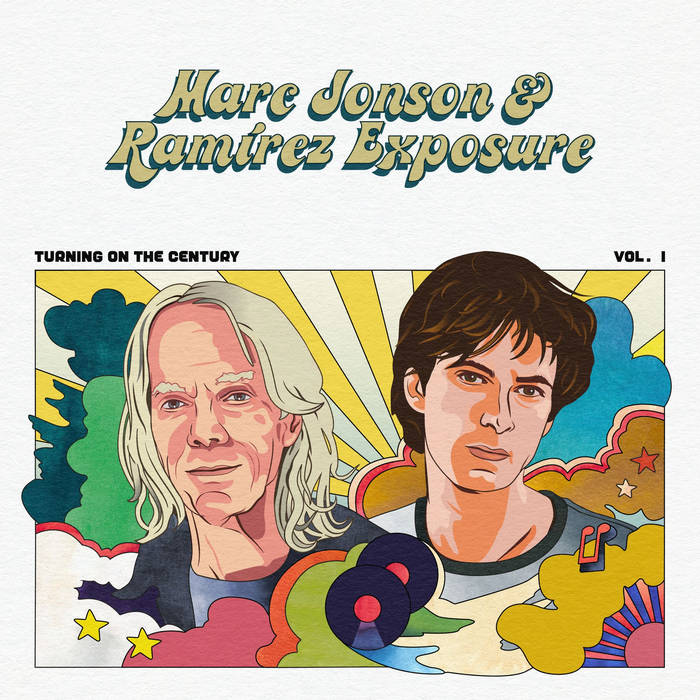
Marc Jonson answers a few questions about TURNING ON THE CENTURY, a record he and Ramirez Exposures made.
How did Turning on The Century Vol 1 come about?
Victor Ramirez heard of me via Spanish radio. He took a liking to a song of mine called SUDDENLY SUNSHINE which he then recorded himself with Ken Stringfellow from the Posies … this led to me producing an album for Ramirez Exposure called YOUNG IS THE NEW OLD. Since then, we have toured Spain together twice, the second time Richard Lloyd was with us. It seemed like a good idea to make an album together and contribute to each other’s songs, adding harmonies and whatnot … it’s inspiring to work with another talent in this way.
Victor and you make beautiful songs. At what moments does the collaboration blossom for you?
Once we have found a mix we both like and we call it finished, we move on to the next song … one at a time … a musical narrative begins to appear between both our efforts…
When you’ve written so many beautiful songs, how and when do you know you’ve got one good enough to record or release?
That’s the secret, all right … when we hear each other’s latest new song it provides a necessary inspiration … you want the entire album to be as good as it can be and it keeps us on our toes to be sharp …
Success is a strange concept. When would Turning on the Century be a success for you?
It’s a success when we have decided it’s complicated… that’s one hump … then if reviewers and the fans respond favorably and can see your vision that’s another hump … if the album get’s talked about in music circles as being a good record, then I for one feel grateful.
Those magic moments in the studio. Which moment of this production will stay with you the most?
When you get the right vibe for each song … it’s trying lots of ideas and then slowly one by one eliminating them to make room for the song to breath … the strongest hooks stay and the clutter is eliminated …
Rise of the Mythical Creatures gets rave reviews. That’s not surprising because Greg Pope’s latest contains ten perfect songs. Power Pop with a little bit of Prog, to keep things exciting.
Rise of the Mythical Creatures gets a lot of positive reviews. It won’t surprise you because you must have noticed somewhere during the creative process that you were fabricating something special, or is that assumption too easy?
I’m very grateful when a good review pops up, but I never assume anything. There have been plenty of times when I worked really hard on something, and then no one seemed to care about it that much (except me, haha). I try not to worry too much about what anyone will think of what I’m working on. I don’t think that’s good for any creative endeavor. I just try to make stuff that I want to hear and hope others will want to listen to it too.
The title suggests that it is a concept album, correct?
Actually no. Album artwork and album titles never seem to come easy for me, and this one was no exception. I probably had 10 or 12 album titles and designs, all suggested by the songs and lyrics. But none of them felt right. One night my two young sons and I sat down to watch 20,000 Leagues Under the Sea (1954), and shortly after, I came up with the title and artwork.
I’ve always been intrigued by mysterious creatures like the giant squid. And I love old etchings and illustrations like the ones on the cover, some of which are by French painter Alphonse de Neuville for the 1869 serialized version of 20,000 Leagues. I thought the title sounded like an old fantasy novel, so I tried to give the artwork the vibe of a book cover.
The world has changed between the release of your previous album, Wishing on a Dark Star in 2020, and Rise of the Mythical Creatures. Did that affect the way the new album came about?
This album came about pretty much the same way they all do. This past Spring, I had a few songs that I felt might be worthy of putting out there, so I started kicking around the idea of releasing something in the Fall. I started recording it in May and just worked on it here and there over the Summer.
My past few albums have featured some playing and co-writing with my older kids, but this time, it didn’t work out that way for whatever reason. I run a fairly busy freelance business, so I had less time to focus on music. So I found it more efficient to just play and sing everything myself whenever I had a few hours to spare.
The Spotify algorithm decides to play Tommy Keene’s Places That Are Gone for me when Rise of the Mythical Creatures is over. Pretty cool, right?
Totally cool!! Though I might have preferred Songs From the Film because “I Don’t Feel Right At All” is on it, which is my fav song by Tommy Keene.
When I hear Words No One Can Say, I regularly take my Iron Maiden pose. I wouldn’t be surprised if you also like to listen to Metal?
To be honest, I’m more drawn to blues-based hard rock than Metal, though I have a healthy respect for that genre. I have pretty eclectic tastes. I grew up listening to a lot of 70s radio pop. Then I went through a pretty intense progressive rock phase. Then moved on to more singer-songwriter and guitar-driven stuff. These days I’m kind of all over the place as far as what I like to listen to. But my favorite band of all time is still The Police. When I put on Outlandos D’amour, the energy I felt listening to those songs as a 14-year-old kid is still very much there.
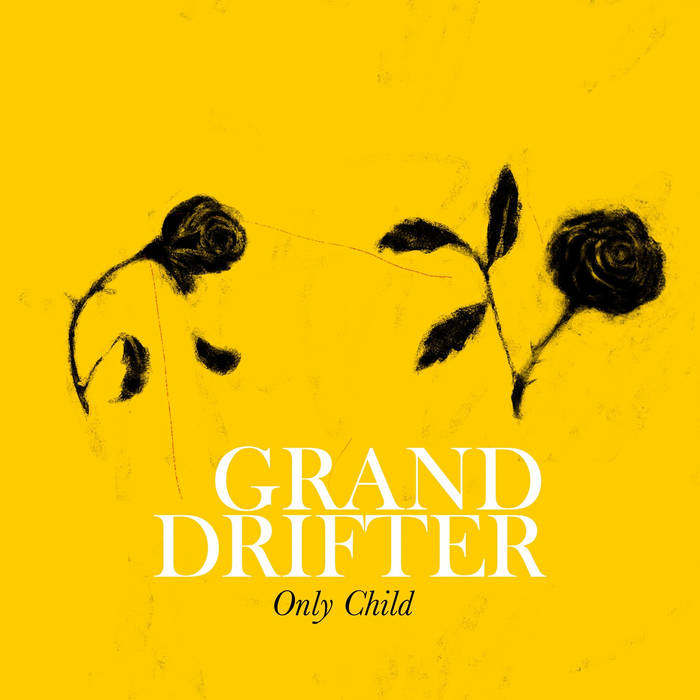
‘I feel comfortable showing my emotions. I transpose my emotions into any of my songs. They’re the key to a melody.’, says Andrea Calvo. You immediately feel what he means when you listen to ‘Only Child’, Grand Drifter’s latest release. You hear ten sweet jangly tunes without any fuss, words, and melodies; nowhere to hide, soft and brave.
How did this record come together?
I immediately thought of “Only Child” as a different chapter from my first album, “Lost Spring Songs” (2018), of which I chose to focus on some aspects, moving toward playing electric, getting a sound perhaps more immediate, and Pop. Compared to the first album -a spurious collection of songs- the big difference is that “Only Child” revolves more around the idea of making a precise sequence of songs, which was defined right from the start. Another choice was playing everything like a full band would; just one song is my guitar and voice alone. The recording sessions began in the late Spring of 2020 and proceeded quickly, but the pandemic slowed everything down. Not an easy time. For this record, I had the honor of having many friends featured, such as the band Yo Yo Mundi in its full line-up or Michele Sarda and Hamilton Santià of Smile (now The Wends). We both have been released on Subjangle (UK / South Africa).
The meaning of success has changed over the years. What would success look like for the new record?
I always think that “success” must be related to one’s life purposes, wishes, and attitudes. My point of view is quite simple. Real success is when I can compose music, put together an album, and release it at my own pace. It’s a huge strive, therefore a great goal to achieve. This is a success. Then when my music gets some recognition is a big success. And if people buy the album I’m at the top of the success. From this perspective of endless personal improvement making music still has a lot to say. It’s the little-big footprint you leave on this planet. The new album “Only Child” got some extremely excellent reviews, from all over the world, and a lot of positive feedback. Things in the music business have changed a lot, even in the last 3 or 4 years. Physical copies seem to be so old-fashioned nowadays but the CD edition sold out in a few days, while the vinyl has sold more than 4/5 of the 150 copies available. So, it’s been successful. I’m extremely grateful for that and I couldn’t ask for more.
How great is the urge to stay creative? To keep writing songs and lyrics?
Bob Dylan once said that the world is full of great songs, so why write more? I agree, even if many of those songs turn out to be him’s. I chose to write only if it is pretty necessary for me. Anyway, it is always something so challenging and worth striving for.
Simply, the best things come out if you feel you have something to say. Sometimes you have it, sometimes or most of the time no. It happens often and you do not have to worry about it, just take a break and do something else. You have a whole life to live. When you’re at peace with the world you can redirect your soul to an idea of music, then to a melody. And then you find out a word, a phrase, and some lyrics happen then. And you have a new song. It’s a matter of balance of feelings. I just do everything at my own pace. Now I have around 8-9 new songs ready on my notebooks. When I feel ready I’ll start doing some acceptable demos, then I’ll think about releasing a third album.
As an artist, you choose to show your emotions to the world. Is it always comfortable to do so?
Probably showing feelings is also the only way I know to write a song, I write music to express emotions. I’m not able to write narrative lyrics or a protest song, to say. So, even if I consider myself introverted, I feel comfortable showing my emotions. I transpose my emotions into any of my songs. They’re the key to a melody.
Suppose you were to introduce your music to new listeners through three songs. Which songs would those be and why?
“The Balloon’s Boy” (from “Lost Spring Songs, 2018). This is the album’s opening track and I consider it the most harmonically complex song I’ve ever written. I wanted to open the album gently, thinking that kindness could resonate more than opening a door with a kick. There’s a kind of classical music feel to the chord progression, that took me a lot of hard work to get finalized. It’s my own little “Strawberry Fields Forever”. Very proud of it.
“A Deal with the Rain” (from “Only Child”, 2021). Another opening track. That song marks a new chapter in my songwriting. The music is in C major, with a kind of Blueboy and Sarah Records feeling in it. It’s about making peace with the things we experienced but have no control over. I finally made my deal with the rain, as everyone should do.
“Diary of Sorts” (from “Only Child”, 2021). This song came out when the recording sessions were almost over. I wrote it quickly, having some Belle and Sebastian and maybe The Smiths in mind. Then we went to record it. Few take, then the song was ready. I like a lot this song: G major, few chords, evocative lyrics, and a simple 12-string Rickenbacker riff. Always been my favorite.
What compliment you once received will you never forget?
I admit I received much positive feedback I didn’t expect, and my cheeks still terribly blush anytime that one quotes some artists I regard as masters, such as the Go-Betweens or Paul Simon to say. But the biggest compliment you can get is when people write you telling you about what a song means to them, opening their hearts to you. And I discover things in my music I didn’t realize before. A friend once told me that being able to share your music with the world is a blessing. I agree.
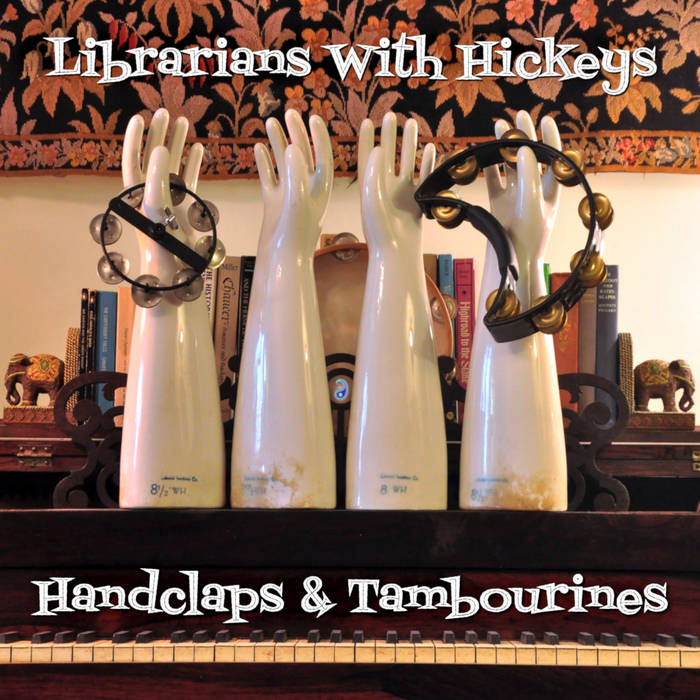
LIBRARIANS WITH HICKEYS themselves call HANDCLAPS & TAMBOURINES ‘the perfect album for your next rock-and-roll book club meeting’, even though I didn’t specifically ask RAY CARMEN and MIKE CROOKER what they meant by this, I understood at the end of the interview.
Release date: October 14, 2022
NOWADAYS, SO MANY SONGS ARE VACUUMED BY SUPERFLUOUS PRODUCTION WORK. WAS IT A CONSCIOUS CHOICE TO LEAVE SOME AIR BETWEEN NOTES?
RAY CARMEN: It depends on the song. There is a lot of space in songs like I See You and When We Were Young, whereas a song like Lady Overdrive is all about the noise–wah wah guitars, feedback, and Stonesy-sounding backing vocals…!
MIKE CROOKER: From a production standpoint, we were already dealing with recording four guys in separate home studios. It’s my job in mixing to make it all sound cohesive, and much of that is finding space within songs so you can hear every instrument, backing vocal, handclap and yes, tambourine. Part of that remit is building a “universe” that each song lives & breathes within. To echo what Ray said though, the approach does depends on the song and what we’re trying to put across. I’m a big fan of layering things that you might not hear the first four or five times around, but eventually it may become your favorite little bit within the song.
THE CREATIVE PROCESS THAT LED TO THE RELEASE OF HANDCLAPS AND TAMBOURINES UNDOUBTEDLY STARTED DURING THE COVID PERIOD. IF SO, DID THAT AFFECT THE CREATION?
RAY: It affected my lyric writing for sure. Our single from last year, I Can’t Stop Thinking About You b/w Stumbling Down Memory Lane, was directly influenced by the pandemic. I Can’t Stop is, underneath the surface, ultimately about the possibility of losing touch with family, friends, and bandmates for long periods of time. Stumbling is about the passing of people like Prince and David Bowie, and about getting older in a troubled world. There’s also a little bit of my daughter going off to college in there, as well.
MIKE: You can’t escape the elephant in the room, and as I said, it definitely affected how we did things with all the recording done apart from each other. We started right after LONG OVERDUE finished its run around October 2020 and made pretty good progress, but we ended up taking a step back in the middle of the process and re-evaluated some of the 30 or so songs that were under consideration. In the end, the 12 that ended up on HANDCLAPS & TAMBOURINES are not the same group of tracks that would have come out had we finished in 2021. The good news is there’s plenty of material to work on that will surface in the future!
I CAN EASILY HEAR THE INFLUENCE OF THE BRITISH INVASION BANDS, BUT I CAN’T INTEPRET THE MODERN INFLUENCES AS WELL WHILE THEY ARE VERY AUDIBLE. WHAT INLFUENCES GAVE RISE TO THE LIBRARAINS WITH HICKEYS SOUND?
RAY: Well, we each have our own influences. My influences are bands like the Beatles and the Monkees, which is pretty obvious. I also love Martin Newell, who we’ve covered, and R. Stevie Moore, who I’ve worked with. Mike and I also love Queen, and bands like the Church, who we often get compared to–which is OK with us! Mike and Rob Crossley, our drummer, both love early industrial bands, and Drew Wilco, our bassist, loves bands like Rush and the Police. But we all love three minute pop songs with catchy choruses, great harmonies, and guitar riffs. As for modern influences, Drew sent me a YouTube link to a song by beabadoobee a while back, and we’ve both been huge fans of hers ever since. She’s just a great songwriter.
MIKE: That’s a great point – many reviewers haven’t really pinpointed much in the way about modern influences – I mean, there must be, we don’t live in a vacuum – but the four of us have deep record collections We’re all students of music in many different forms, as Ray mentioned, and eventually some of that seeps into what we’re doing, whether it’s a guitar chord voicing from a Church song, or a rhythm pattern from The Pretenders or a lyric fragment nicked from psychologist William James, somehow, inexplicably, it all comes out sounding like a power pop band from Akron!
THE QUALITY OF THE SONGS IS SO HIGH THAT YOU MUST HAVE OFTEN LOOKED AT EACH OTHER HAPPY, OR DID NOT REALIZE HOW GOOD IT IS DURING THE RECORDINGS?
RAY: We realized the songs were good early on. It was just a matter of getting a satisfactory recording and mix for each song. Mike and I both co-produced the album, but Mike does the mixing, because he will notice things in the mix that I don’t. I told him the other day that our songs sound both modern and from the past–like AM radio, but in stereo!
MIKE: Sometimes, you can tell early on that you’ve got a good one, and the trick is to not mess it up! Once we figured out what direction the album was headed in, the songs really took care of themselves, we just need to capture that essence. That’s the happy fun part, but easier said than done! There were nights sitting in bed falling asleep with headphones on and listening to whatever song we were working on a loop,. I’d wake up at 3:30am and finally hear the thing that needed fixing – usually subtracting – to tighten the song up. There’s really no wasted action in any of these songs – get in, hit the hook, get out and hopefully end up with a great song between 3:02 and 3:30.
There’s enough little weird time signatures (much to our drummer Rob’s frustration) that make things interesting. I’m not saying it’s like Rush or even Burt Bacharach time signatures, but somewhere in between to keep us all on our toes! 😉
STUMBLING DOWN MEMORY LANE, LAST DAYS OF SUMMER, WHEN WE WERE YOUNG, ME AND MY BIG MOUTH ARE MORE MELONCHOLIC AND NOSTALGIC. IS IT A CONSCIOUS CHOUCE TO MAKE THEM THE LAST FOUR SONGS OF THE RECORD?
RAY: Not really. When Mike and I were putting the track list in order, we had two different ways of looking at it. Mike looked at it as if it was a set list for a live gig. I looked at it as if it was a vinyl record: side one and side two. It just seemed to make sense to put those four songs last. Initially I thought the album should end with When We Were Young, and Mike thought it should end with Over You. Mike decided to move Over You up into more or less the middle of the album, and I thought it would be nice to end it with Me And My Big Mouth, which is musically more upbeat.
Mike made a comment to me the other day that Handclaps And Tambourines is very nostalgic-sounding–and he’s right, it is. A pandemic-induced lockdown will do that. Plus, at our age, you inevitably start looking back at some point. But the thing is, you can’t spend too much time doing that, or you’ll get stuck in rewind. The next album will be more forward-looking.
MIKE: The whole album has a nostalgic flavor, but it doesn’t live there full time. We did move Over You up to follow I See You & I Can’t Stop Thinking About You as sort of a trilogy of “You” songs. That meant the end of the record naturally gears down a bit before sticking the landing with Me And My Big Mouth.
CLICK THE IMAGE and LISTEN to this SweetSweetMusicblog Podcast.
Emerald Street is an LA band, you will hear about how they look at playing the Viper Room, translating raw emotions into lyrics and their place in the LA entertainment business. And you will hear 5 beautiful songs of their new record Torrid Bliss.
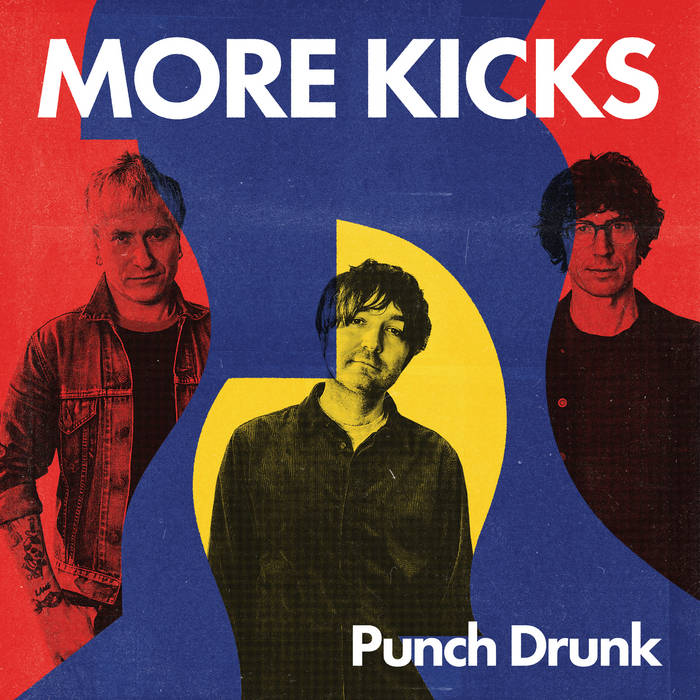
Punch Drunk’ is the second album from London-based trio More Kicks on Dirtnap Records (USA) and Stardumb Records (EU), and it’s easily one of the best Power Pop records of the year. Everything is right; the melodies are powerful, the hooks sharp, the lyrics effective, and the performance outstanding.
James Sullivan explains that there was no grand master plan behind this masterpiece.
I like to believe that there was a moment during the creative creation of Punch Drunk when you must have thought, ‘Okay, we’re that good. This is the new level.’. Or don’t things like that happen?
Thanks! That’s a very nice thing to say. But sadly, I don’t think I had that thought at any time. I knew I liked the songs but the distance between me writing a little song in my bedroom and the three of us actually recording the ‘finished’ version is really quite large. Not in time, necessarily, but if you heard my crappy demos, you’d see how hard it is for me to imagine how it will all sound in the end. So many variables are involved in how the songs evolve to the point when they’re released into the world, so it’s hard to have the bigger picture in mind.
I will say that I was always excited to hear what Kris and Paolo would bring to the songs. And then, once we’d rehearsed and changed things, I was always excited to hear how it would be once we’d recorded. And then, once we’d recorded, I was always excited to hear how it would be after we’d mixed it, and after we’d mastered it, and then how it worked in combination with the other tunes on the album. But, yeah, that all feels a VERY long way away at the start of the process.
You just never know. There have been times where we’ve been in the practice space playing a song that we think is great, and we work really hard to make it as good as it can be… but then, in the end, with a bit of objectivity, we decide it’s not good enough – and then it’s gone, and we move on. I can never really tell which songs that will happen with.
The world has changed since the release of your 2019 debut. Has that affected the way you produced the new record?
It stopped us from touring and playing live, a very large part of how songs evolved. We had to practice much more and in a much more focused way to get to the point when they felt ready to record. Playing a new song in a gig is equivalent to playing it for probably ten practices. Things sounding good is much quicker when you can try things out on stage.
The recording process was more or less the same though. We recorded it on tape at the same studio as the first album. Playing live in a room and recording on to 2″ tape. Just trying to get a good take that captured some kind of energy, even if some of the playing wasn’t perfect. There are a couple of extremely dodgy guitar takes on the album but in context with the rest of the instruments it works so that’s more important than any kind of perfection in technique.
I love recording on tape. It’s not for everyone but I like that there’s nowhere to hide. To me, the record sounds alive. I can hear moments of hesitation, or how the bass slips under the kick drum at points, or how the vocal struggles to keep up with the tempo in other places. It sounds exactly like us playing and I love that.
When I try to interpret Punch Drunk, I hear a multitude of different styles that you bring together in a natural way. Was that a goal in itself, or did it come naturally?
Pretty naturally, I would say. Although I was really determined to make this record as extreme as possible. That might sound strange because it sounds like a poppy rock and roll album. But the loud bits are louder, the quiet bits quieter. I didn’t want any two songs to be similar in any way – either in chords or in atmosphere. There were a couple of good ones that didn’t make it on to the record because it felt like we had that base covered already. “We already have the mid-tempo, harmonized chorus, doomed love song covered – let’s put the slow, existential nursery rhyme drum machine song on instead.”
Clearly, much thought has gone into the lyrics and how they are sung. It remains a challenge to get people to really listen?
Again, thanks! There actually wasn’t much thought into how they are sung. It’s just about capturing a good take. I usually sing the song twice and use the second one. I really like using full vocal takes instead of cutting anything up – it’s more fun to record and as long as you can sing in tune, it almost always results in a more compelling take. It’s fun to hear a singer struggling for breath occasionally.
I do tend to write lyrics quite quickly as well. I often write backward – starting with the chorus. I think at this point, I know when I’m on to something good and I can edit myself quite well. I have an ego about many things but I have no ego about dropping lyrics or ideas for lyrical themes that aren’t working. I can tell when is working and then I try to do it as quickly as possible to capture that thought.
But yeah it’s a challenge to get people to listen, haha! I guess we’re playing the long game here.
When did you know that this record was going to be very special?
Well, I’m glad that you think that. I wasn’t sure if we had pulled it off until it was totally finished and mixed. Having an objective view is almost impossible until you’re out of it. We had three days to record and then we mixed in 1.5 days. During those days, there was no sense of it being good or bad or anything – it was just about making the thing as good as we could in that moment. Then once it’s done and you can actually listen with something approaching fresh ears, you might start to think: ‘Okay, we did it and I like it.”
Again, that’s the beauty of recording and mixing on tape. You have to make decisions in that second, in that room. And then that’s it. You have to trust your instinct.
Terminal Love is my favorite. Can you share a bit about how that song came about?
I like that one too. It was written just after the first album came out. So it’s an old-new song, kind of. I wrote it in my old flat one evening just before Christmas. I didn’t realize it, but the relationship I was in at the time was about to end. It’s weird to think that because I was literally writing a song called ‘Terminal Love’ so clearly, my subconscious knew it was about to end, but my consciousness hadn’t faced up to it yet.
It’s a simple song in structure. I like starting and ending with the ringing, open chords but having that concise section in the middle. The lyrics are sometimes petty and bitter, sometimes just a bit wistful and romantic. It feels like one person having a conversation with themselves and not agreeing.
Scruff Myers’ Superhands is a great catchy Powerpop Punk-ish record , lots of great hooks! LOTS OF GREAT HOOKS!
How did this record come together?
This is something I have wanted to do for a long time. I wanted total control of how the music I heard in my head was recorded. I did it to please myself; it would be a bonus if others enjoyed it too.
Being busy touring with The Adicts meant I never had a long enough spell of downtime to record it. When my partner needed an operation, I missed a couple of tours while she recovered. It was this time that enabled me to finally get it done.
The meaning of success has changed over the years. What would success look like for the new record?
Neil Young once said that if you stay true to your original idea and do it, nothing is a failure; it is only a failure if you don’t.
I made the record because I had to. I had to give something back to the bands and artists that made my life so much happier over the years. If Superhands music makes like-minded people happy, that is success to me.
As an artist, you choose to show your emotions to the world. Is it always comfortable to do so?
I think I write whatever comes out of my head, and most of the time, it sticks. As long as a line is not cheesy, I’m OK with most things.
I like to put a couple of meaningful/emotional lines followed by a throwaway or humorous one. It may be honest or profound, but it doesn’t give everything away.
You can pick three co-writers to write new songs with. Who? … and Why?
My all-time two favorite songwriters are Tom Petty and Paul Westerberg. Tom has sadly gone, so one has to be Paul. His slacker-style songs have always felt relatable and musically a bit more achievable (guitar, bass, and drums).
Robert Pollard (Guided By Voices), what can I say? The guy is a songwriting machine. The older I get, the more I understand that his way is the right way. His DIY Lo-Fi approach is something that is a big influence on me.
Robert Forster (Go-Betweens). To me, he has a Lou Reed feel, a songwriter who manages to combine poetry, humor, and music so well. He also seems to be such a nice all-around nice guy.
With all 3, I would just like to meet them, really.
Those magical moments when you’re working in the studio. Which moment was the most magical?
When Randall, our drummer, heard my demo recordings, he insisted that we work with George Perks (Producer) as he knew he was the right man for the job, which he was in every way. Randall, George, Craig (Engineer), and I had such an amazing bonding period during our first recording session. It was one of the most amazing times of my life.
The record is done, and the music is out. Is the best fun done now, or is it just beginning?
My original plan for Superhands was to try to release an album a year for the first five years. Then Covid happened soon after the first couple of gigs. I always try to be busy and constantly want to be doing something creative. Lockdown put that on hold from the performing side of things, so I wanted to keep myself busy in other ways. I managed to put out a couple of DIY online efforts. These compiled older, unreleased, pre-Superhands recordings that I like to refer to as “clearing out the ashtrays”. A third is now in the pipeline.
The fun is just beginning; the new shiny vinyl is the starting point. From here comes the opportunity to play the songs live; if that isn’t enough, the next release is already being written!
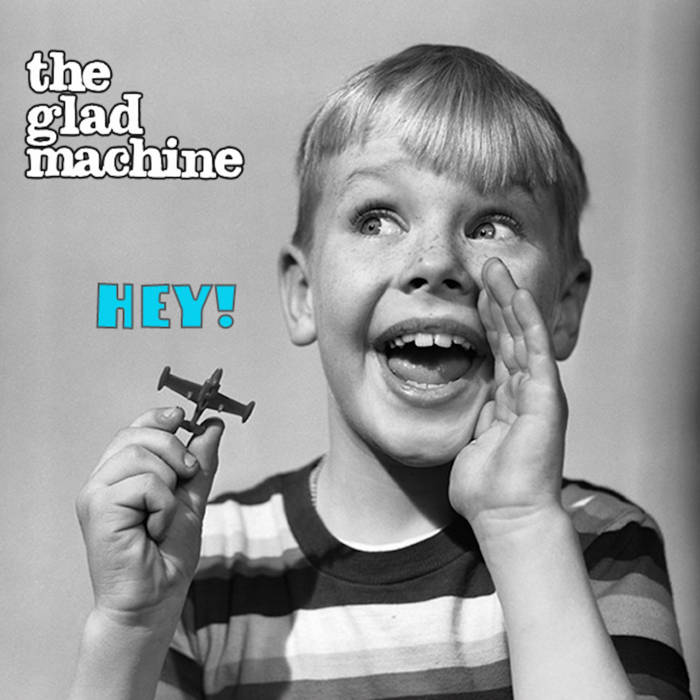
The Glad Machine’s new release “Hey!” contains eight wonderful, very personal hard rockin’ Power Pop songs.
Sweet Sweet Music spoke to Brad Thayer about how the new record came about.
Slow Motion July is such a beautifully melancholic anthem. Did it feel like a special song when you were writing it?
It summed up for us how early COVID felt. The line “you’re weighed down, but your way downtown” really nailed how we were feeling at the time .. the world was scary now. Nothing felt safe. Blocks away. Densely populated places were dangerous territory… glad that’s changing.
‘Somewhere between The Knack and The Outfield,’ I answered to my son when he asked where you were. Would you take that as a compliment? (And ‘yes’, my kids know both The Knack and The Outfield ).
The Knack Is a great example of a band that wrote great pop songs, but also appealed to a more discerning listener, so we’ll take it! And who doesn’t like that Outfield tune, right !?
If I could make songs like you, I’d dream about playing them in a packed stadium. Do you recognize that dream?
Stadiums … huh .. we definitely swing for the fences when we write, and at one point in my life, I imagined it daily, in my room, with my air microphone. Now, the thought of packing a large club with great sound is the ideal situation.
The world has changed since The Glad machine came out in 2017. Was ‘Hey!’ created differently than the previously published music?
It was a different process. Covid didn’t allow us to be in the same room, so most songs were written and recorded remotely. Mike Franklin and I did the lion’s share of the writing, and Mike did most of the heavy lifting with the recording. We produced it together, but he’d get it really close and send me mixes, which I would then send him notes, and we’d go back and forth like that for a bit. He worked his ass off on this!
How much fun is it to write a Christmas song?
Days Gone By … inspired by my best friend Gary Comstock . He lost his mother at 12, and could have easily given the holidays the old middle finger. But he didn’t . For the last 15 years, this NYC artist/writer / chef would post the most sentimental, beautiful, childlike yearnings for the season. His untarnished glee of the season inspired the song. Unfortunately, Gary died July 4, 2021, so the song means so much more to me now.
The record is dedicated to the memories of Gary Comstock, Chris Carr, Adam Schlesinger, Joshua Stoddard, Amber Reeves, and Ross Haberen. All people we lost, during the recording of the record, which absolutely directly affected and molded the end result.





 Sweet Sweet Music Blog