The Well Wishers – Spare Parts (Q&A)
‘Eventually every band or artist reaches that point in their careers where they have an album’s worth of spare parts, scraps and orphaned tracks that never seemed to have a proper home. It took 17 years, but we finally got there!. The 11 tracks herein are assorted of outtakes, demos, and previously unreleased songs that finally found their way off the cutting room floor.”, writes Jeff Shelton on The Well Wishers’ Bandcamp page.

Spare Parts is the umpteenth proof we get this year that there are hidden treasures in many attics. Fortunately, treasure hunting turned out to be an essential new activity for many in 2021.

2021 is the year where many lost songs have been found, dusted, and released. Do you see Spare Parts as part of that ‘trend,’ or is the story different?

I didn’t think I was jumping on a trend necessarily….although I did feel I needed to release some new material this year since it had been over a year since the last Well Wishers album (2020’s “Shelf Life” LP). I began to realize I had all these assorted songs laying around. They were all mostly finished, so I felt they needed some kind of release.

I wonder how it is possible that Call It A Day never got a spot on any of your records before; what a lovely song! What’s the story?

Haha! Thank you! Yes, it’s a very bouncy and catchy little tune. I think the subversive lyrics just kept me from putting it on any proper record. It seemed so tongue & cheek and out of place for some reason. “You bring the wine….I’ll bring the strychnine.” Weird stuff. However, I do like the interplay between sweet pop and morose lyrics. Undoubtedly inspired by The Smiths, I think!

On, for example, Growing Old and Let’s Drive (All Better Now), the guitar sounds a bit more ragged and rough. I like that a lot, but maybe I hear things that aren’t there?

All the songs are finished … at least to my satisfaction; I almost always have more ragged songs and “rock” sounding than others. It’s part of that power pop spectrum I enjoy. I’ve always enjoyed and appreciated the Beach Boys as much as Black Sabbath.

Did you have to do a lot of fine-tuning to make a whole from all the separate parts? It does sound like a whole, but maybe that wasn’t a goal in itself?

Not a lot of fine-tuning at all; as I mentioned, most of these songs were essentially finished, although with “Call it a Day,” I did add some solo and textural guitar shortly before this release. If the whole thing sounds at all cohesive, it’s purely coincidental. The beauty of a random compilation like this is just throwing it out there for people to enjoy. There’s no real theme or desired cohesion whatsoever, hence “Spare Parts.”

I can imagine Love and Science is not a left-over; more you wanted to play around with new ideas and a different sound?

Love and Science was indeed part of a 3-song experiment from 2010 … where I made strictly electronic music. It was the best of the bunch, but you can check out two other songs here.

It’s Karma It’s Cool –  Homesick for our Future Destinations (Q&A)

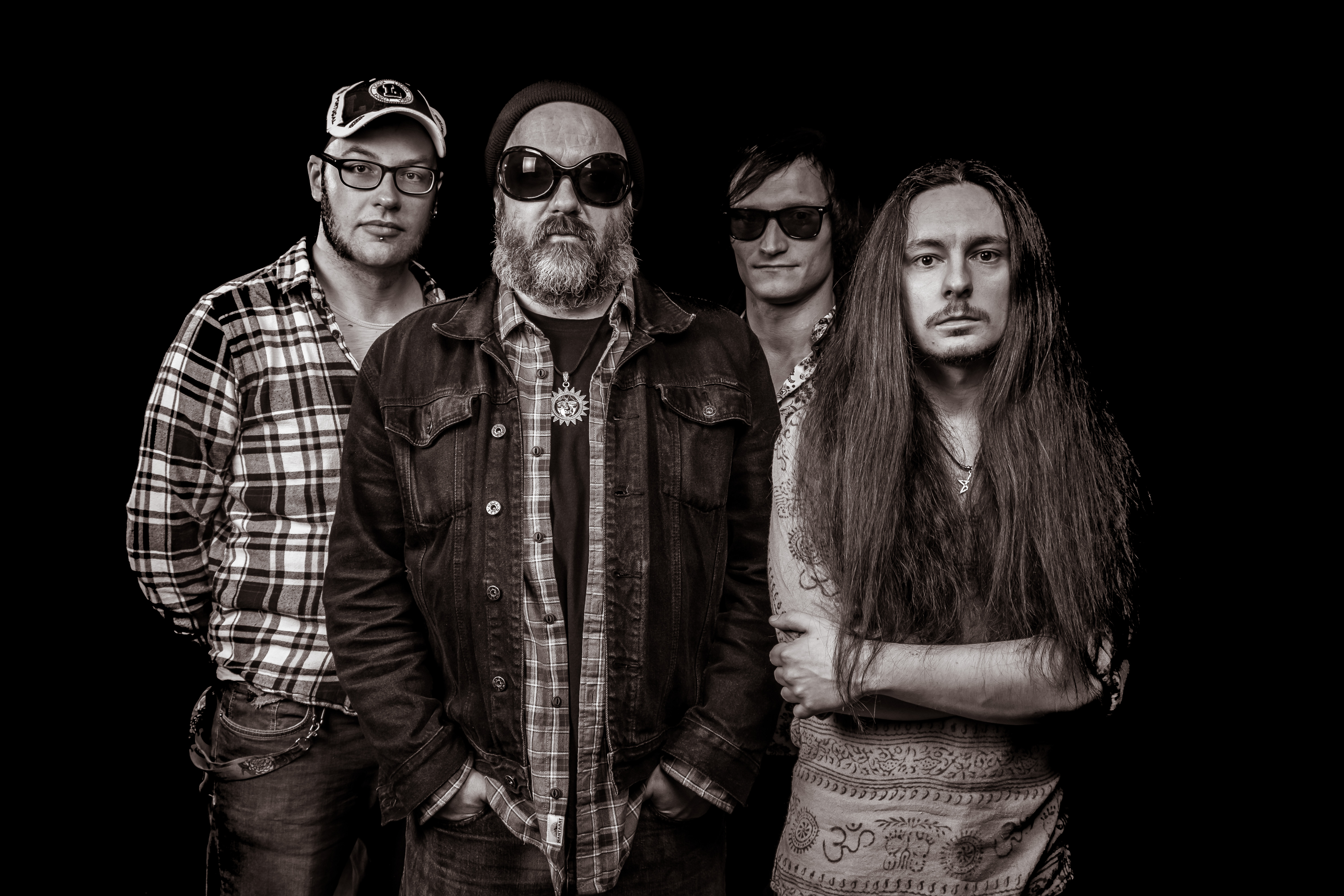
Homesick for our Future Destinations is the third release of It’s Karma It’s Cool and sounds slightly different from the two predecessors. James Styring explains, ‘it was time to show our faces,’ and that’s what they do, not just on the cover. Nice!

It seems that, on the new record, you are so much more comfortable with the chosen It’s Karma It’s Cool sound. It sounds so natural, played so confidently. Is that so, or am I hearing something that isn’t there? 

No, you’re right, Patrick. I guess writing and playing together over a period of time brings you closer as a band and more focused with where you want to go. That’s not to say we won’t write any 3-minute pop songs again, but this album just seemed to have a little more purpose and drive behind it. 

And then suddenly, you are depicted as a band on the cover instead of a drawn image. That also says something, or do I see things that aren’t there? 

We thought it was time to show our faces; we’d hidden behind the artwork long enough. Our friend, Mick Dillingham, did a great job with the artwork for our first two records (Hipsters and Aeroplanes and Woke Up In Hollywood), but we just wanted to shake it up and surprise people. We were fortunate to get the great Steve Stanley on board for this one.

How did Homesick for Our Future Destinations come about? 

It was just the natural follow-up to our previous album, ‘Woke Up In Hollywood’. The writing process never stops, so it was kind of ongoing, really. We didn’t change the way we do things; we write the songs, demo them, then record the final versions. However, early on, we knew that these new songs were perhaps a little darker or deeper than previous material. It’s not a concept album, but there are definite themes running through the album. We went with it and allowed the ideas and sounds to develop.

 When in your career did you realize that you can really sing and that your voice is very distinctive? 

I just do what I do and hope that people enjoy it. I always think of myself as one-quarter of the band, not the frontman, or most important, we’re a team, and each has a role and a job to do. Having said that, I’m always very grateful if someone says they like my voice; I don’t try to sound like anyone else or copy any particular style; I just sing and lose myself to the music. 


Scott Gagner – BloodMoon

Scott Gagner blends power-pop, synth-pop, psychedelia, alt-country, rock, and heartfelt balladry into a cohesive whole.

Sweet Sweet Music talked to him about the Talking Heads, an African Tongue Drum, moving back to live in Minnesota, the yearly wildfires, and the complicated world we live in. And about how he made BloodMoon, his fourth, and most personal, release.

You use many different musical styles. “Twice in a Lifetime” even made me think of Yello. Does the song dictate the style, or do you consciously work in a particular style when you start a song?

I’m not too familiar with Yello, but you’re in the right decade! “Twice in a Lifetime” has a slight tip of the hat to Talking Heads, one of my all-time favorites. But I digress. I’d say that the song dictates the style as it evolves organically.

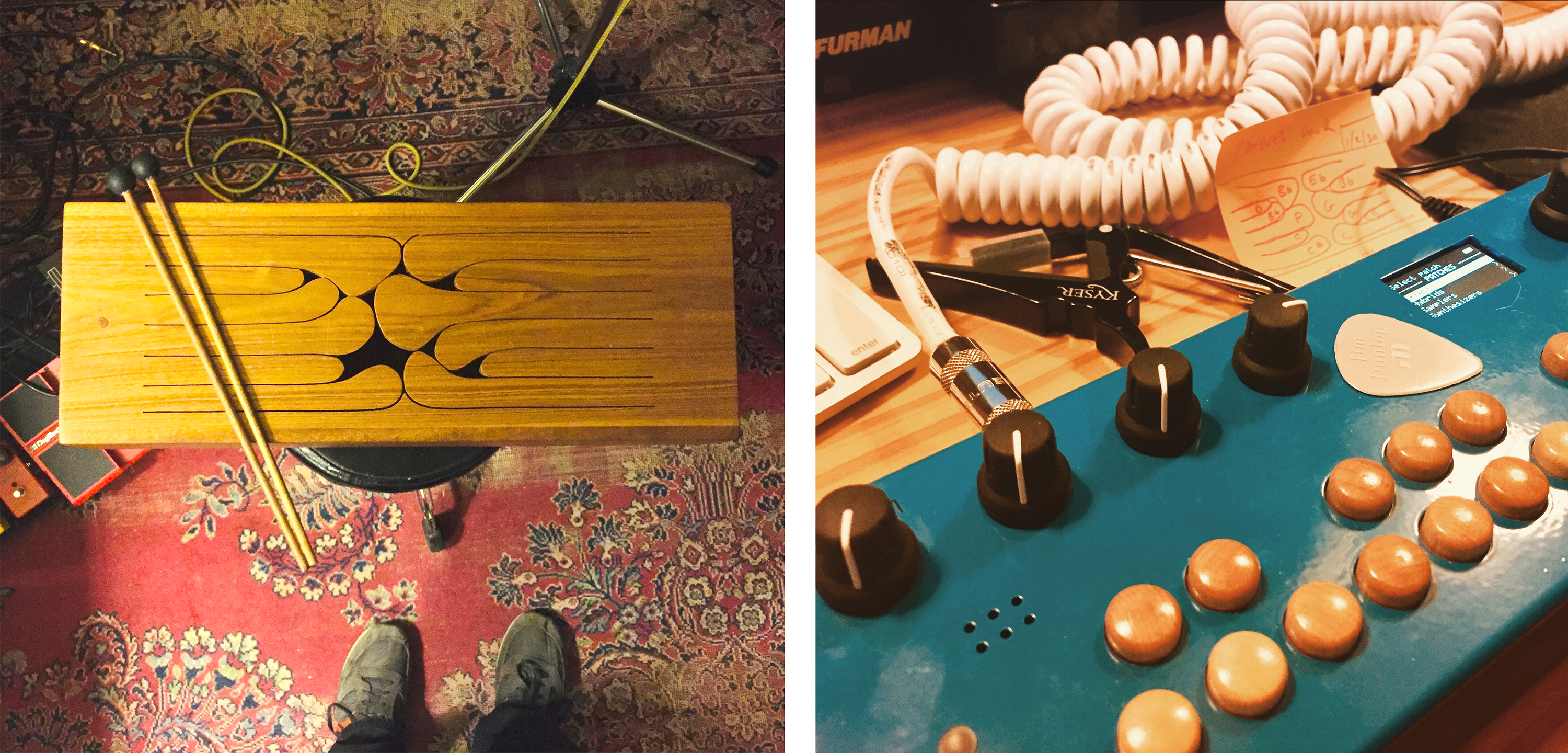
Using that song as an example, it all started because I spotted an African Tongue Drum at my friend Haris’ house. I picked up the accompanying mallets and immediately played the pattern that you hear on the recording. It grew from there, adding drums, bass, Organelle pocket synthesizer, kitchen knives, etcetera.

It sat as a polished demo for a long time, as I struggled to find ways to sing over the odd 11/4 time signature dictated by the layout of the Tongue Drum. Frustrated, and with the album mix deadline only one week away, I tried the “spoken word” approach, having never done it before. We were in the middle of trying to buy a house in Minnesota (see below), so I tried reciting a “wish list” of everything I wanted in our new location. I called it “Twice in a Lifetime” for two reasons: in honor of the Talking Heads classic “Once in a Lifetime,” and because the song is about moving back to live in Minnesota for the second time in my life.

Orion is a tour de force. How did you find the suitable form here (textually and musically) to convey your message?

Thank you. Well, given that the song has three distinct sections, I’m not sure that I succeeded in finding a suitable form. But I did narrow it down to three! And if you count “Orion (Reprise),” then there are actually five sections (ahem).

Musically, I knew that I wanted the song to be built upon the descending piano motif (I was playing lots of piano during the writing of this record). Acoustic pianos are naturally very grounded and earthy, so I needed something to keep us aloft in space to fit the concept; hence the buzzing, growling vintage synthesizers that add a generous dose of “Bladerunner” retro-futurism to the mix. The violins — played beautifully by Alisa Rose — seemed to glue the two extremes together.

As for the lyrics, the concept came to me during the darkest days of the Trump administration. I was standing on my back deck one night, gazing at the stars, and I began fantasizing about Orion descending down to Earth and, well, drawing his sword on all the craven, oil-thirsty, pig-men who were busy tearing the world apart. Perhaps writing a seven-minute Celestial-Greek-Mythology-Revenge-Fantasy is not the healthiest human impulse I’ve ever had? But hey, I was feeling desperate.

BloodMoon has become a highly personal work. Was your creativity driven by personal circumstances or by your view of earthly matters? Reading back on the question, I can also imagine that many of us couldn’t separate the two in the past year.

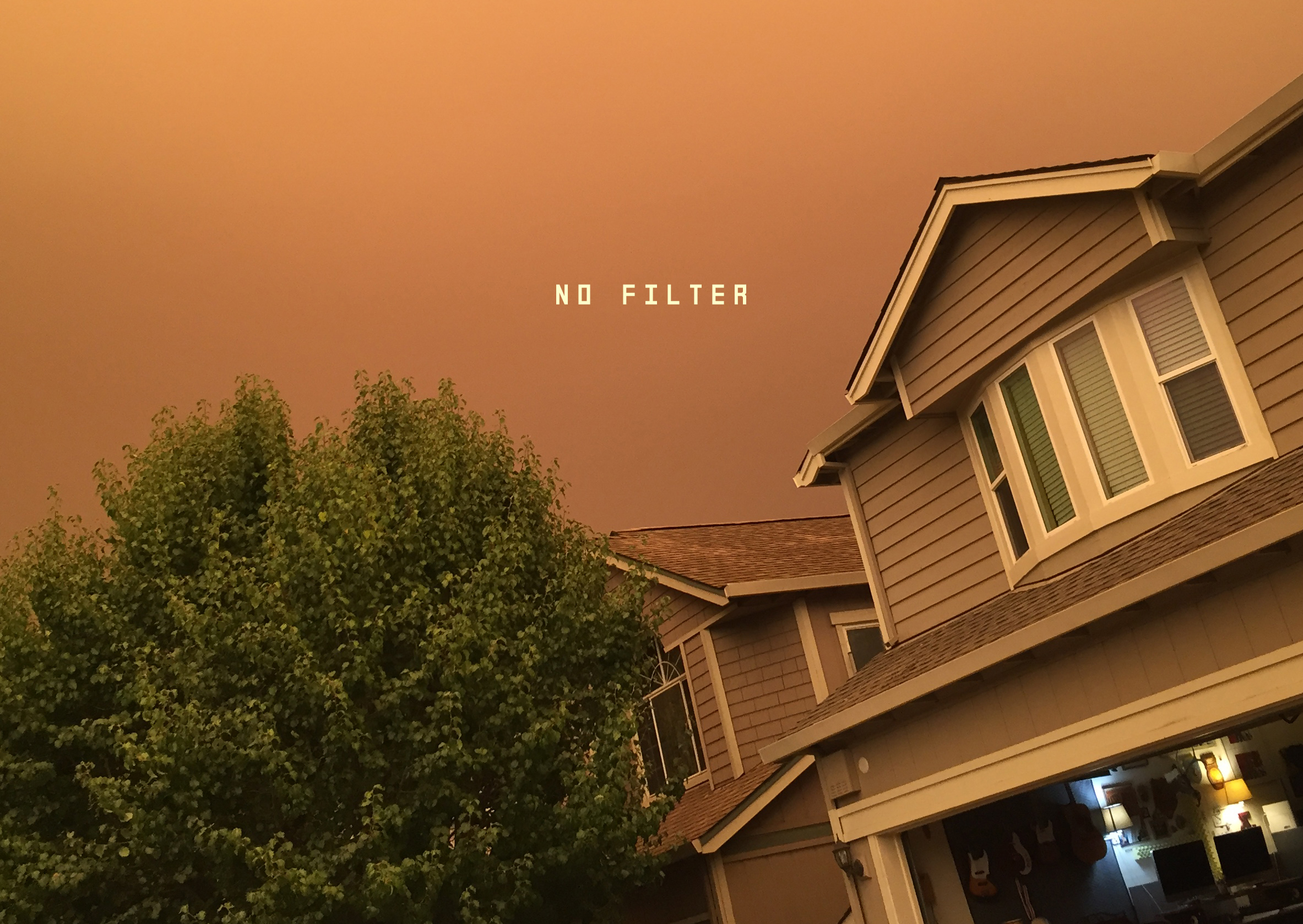
Excellent question. For my family and me, the “earthly matters” became highly personal. Our specific location in California was close enough to the yearly wildfires that we knew we needed to make a significant change. The breaking point came on September 9, 2020, when most of us Californians woke to an ominous pink-orange sky, choked with smoke, completely blotting out the sun.


I started evaluating our options in much more primal, caveman-like terms. “Fire bad. Get family away from fire.” We sold our house in California and bought one in my native Minnesota without being able to see it in person (thanks, COVID!). Now, even though we miss our California friends terribly, we are close to my immediate family, and our lives are much less stressful overall. I’ve even stopped grunting like a caveman and carrying a femur bone as a makeshift weapon. Evolution!

And then the release is there, and people are going to like it, or not. That doesn’t seem very easy to me. How do you hope this record can be an inspiration to others?

Once you release a record, you have to be prepared for people to love it, hate it, be indifferent, or, most likely, never hear it. Aside from doing your best to get the word out, it’s largely out of your control, and therefore, not worth stressing about too much.

I write songs and make records for myself, first and foremost. I am compelled to do so whether anyone is listening or not. I do it because A) I’m in love with all aspects of the process, B) I want to grow as an artist and as a human being, and C) connecting with people through music is extremely gratifying.

As for inspiration, my goals are more modest — I just want people to hear the songs. If someone is inspired in any way after listening, that would just be icing on the cake.

We live in a complicated world. Trying to make sense of it, for ourselves and the ones we love, that, to me, is what your new record is about. Would you agree?

Complicated feels like the perfect word. Our ancestors have obviously lived through more difficult chapters in history, but those chapters may not have been more complicated. BloodMoon was only written to reflect my personal journey over these past few years. Which, though highly complicated on a personal level, was never intended as a way to untangle the “ball of snakes” that is this moment in history. It is likely true, however, that I write songs to make sense of my world. I think most artists do that to some degree.

Even – Reverse Light Years (Q&A)

“The Melbourne band’s eighth album is their best yet – a musical cornucopia of glam stompers, magnificent power-pop and epics”, headlines The Guardian.

Reviewer Andrew Stafford writes, “Well, if it turns out, more is more. Reverse Light Years sounds imposing: 17 songs in 80 minutes. EVEN have always been consistent, but this is by far their most impressive album, a cornucopia of musical delights where everything singer-guitarist Ashley Naylor, bass player Wally Kempton, and drummer Matt Cotter try comes off.”.

You won’t hear a better guitar record this year than Reverse Light Years. That’s my opinion.

Ashley Naylor explains how the new records came about.

When did you realize you were making something exceptional?

It’s hard to know how songs are turning out until you live with them for a while. I’d never be so smug to assume we were making something special, but the quest is to create an album you hope to be proud of. 

How did Reverse Light Years come about?

Looking back to 2019, when I started writing songs for the album, I made a pledge to have an album out within a few years of 

‘Satin Returns’ as the gap between that LP and ‘In Another Time’ was seven years. The most complete track from 2019 was ‘Mark The Day’s which we recorded one afternoon in Brisbane before a show in May 2019.

The album really took shape when all my touring commitments in 2020 were canceled. This led me to record at home again, something I had not done much of in recent years.

The Covid lockdown has destroyed a lot, but fantastic records are being released this year. Is that the ultimate confirmation that creativity is a force of nature?

As many musicians can attest to, creativity can be very fleeting. One might say that the work and domestic circumstances created by the pandemic gave me more time to entertain creative thought and refine guitar parts at home as I was not bound to the normal itinerant lifestyle of a touring, working musician.

So in effect, yes, creativity can be considered a force of nature if we also refer to creativity as a by-product of circumstance. 

The fern on the album cover is a reminder to me that nature was also a big part of maintaining mental balance in the last eighteen months.

The meaning of success has changed over the years. What would success look like for the new record?

At the risk of sounding disingenuous, the idea of success for me now is very different from what success may have meant to me in 1995. Success for me now is primarily based on how I feel about an album I have made, not about how many physical copies we sell or streams we accumulate. Of course, there is a logistic consideration as we operate independently and manufacture our own CDs and vinyl albums. Still, on a creative level, if the songs resonate with the band first and subsequently our audience, then that is success.

The guitar solos make me very happy.  It will probably never be like in the 60s/70s and 80s, but I have hope that more songs will be cut in half by a howling solo in the coming years.  Or is that not necessary?

It’s very rewarding to hear the guitar solos make you happy. Quite honestly, it is my favorite part of the recording process, the icing on the cake.

I am a strong advocate for as many guitar solos in a song as humanly possible! That said, not all the songs I write require one.

I understand it is not to every listener’s taste to have a long guitar solo in a track. Still, I felt inspired to let loose on this album as I was often working in solitude with no clock on the wall and no record executive bankrolling the album. 

Listening to lots of Hendrix also inspired me to open up and not hold back. One must feel free to make good music, and his music encourages that feeling of freedom. 

Also, being a double album, there is space for myself, Matthew, and Wally to stretch out certain tracks and not be constricted by any commercial expectations.

Just – Deep Cycles (Q&A)

Deep Cycles is beautiful and melancholic.

Music that makes the leaves turn red.

Just debuts with eight very personal songs and a sound that has been compared to that of David Sylvian, Power Of Dreams, Tears For Fears, The Sound, Simple Minds, Red House Painters, and Talk Talk.

As an artist, you choose to show your emotions to the world. Is it always comfortable to do so?

It is very uncomfortable. But I have learned that that’s a good thing. It’s like a compass. When I’m starting to feel nervous and uncomfortable, it means I’m onto something meaningful and true. Something I would preferably keep to myself because it’s embarrassing or painful. But the whole reason why I make music is to confess my insecurities to you as a listener. Honesty is the only thing I’m interested in. And that has to start by me being honest first.

You can pick 3 co-writers to write new songs with. Who? … and Why?

Mark Hollis
Ben Howard
Shawn Colvin

These three songwriters would challenge me to cut away all the unnecessary bells and whistles and get to the core of what I’m trying to say. It would be brutal and terrifying, but I would totally subject myself to their regime because they are totally transparent and honest about their own flaws as humans.

Suppose you were to introduce your music to new listeners through three songs. Which songs would those be and why?

Desperate Play
Eye Of The Storm
Dark Days

These three songs tell the tale of my experience with anxiety.

Desperate Play is a dialogue between me and my inner demon, who is always trying to scare me into thinking something really bad will happen.

Eye of The Storm is my bumpy journey from the dark to the light. From being pretty depressed to finding a new way of dealing with sadness and loss. With all the setbacks that came with it.

Dark Days is me confessing that I used to be somebody who pushed away all the bad experiences and acted as if nothing was wrong. Every day needed a silver lining. Now I’ve learned that you have to sit with your fears, doubts, and sadness. To let them run through you. Only then will they eventually subside.

What compliment you once received will you never forget?

That my music comforts people.

The record is done, the music is out.  Is the best fun done now, or is it just beginning?

It’s is just the beginning. I’ve found my voice. I love to connect with people that look at the world in the same way as I do. It took 50 years to get me started; I’m not stopping now 🙂

Buy at Bandcamp or here

Orbis Max – The Covid Collaborations 2020 – 2021

Orbis Max is an Internet recording collective with members located in San Diego CA, Dallas TX, Liverpool UK, and Vass North Carolina. The Covid Collaborations 2020 – 2021 is a compilation of the 13 singles released in the last few months.

Craig Carlstrom explains how the collective works.

Let us go where the music takes us. I think every time I listen to The Covid Collaborations 2020-2021. How did this compilation come about?

As you may remember, Patrick, from the last time we spoke a few years ago, we have recorded all of our material remotely via file sharing from the get-go. We’ve always brought in guest singers and musicians to appear on our songs with us. So by the time the pandemic hit, we had this method of recording down pat.

This album, The Covid Collaborations, is a compilation of all the singles we recorded from late 2019 thru 2021. Each song was released individually. Most of the songs did well on internet radio, reaching #1 and the top 10 on various indie charts. After doing 15 singles, we figured these would make a great album, a historical record of the Covid experience. Put them all together in one package—kind of a best-of album. As singles, they got airplay and were soon forgotten. So it made sense to package them all together.

Those magical moments when you’re working in the studio. Which moment was the most magical, and how did you create them as an Internet Recording Collective?

There were many magical moments. Like when we reached out to Lisa Mychols. I emailed her and sent her the backing track to record her vocals. She immediately responded that she liked the song and would love to sing it. That song is Be With You. When she returned her vocals, she said, ” I hope you don’t mind, but I rewrite the words and melodies. It was initially called Talk To Me. Those lyrics got new music and were passed on to Emperor Penguin. Lol. We were gobsmacked by what Lisa had done. She had stacked all of these dreamy harmonies, wonderful stuff.

Another was reconnecting with an earlier collaborator, Ed Ryan. We asked him for a song, and he sent us Everyone Wonders. He sent us a demo, and we re-recorded the music. The singer we had lined up backed out. We asked Ed if he’d sing it and add some guitar. It went to #1, much to everyone’s surprise.

We’ve worked with Ed now more than any other artist. Be it co-writing a song, or providing lyrics, or guitar parts. It’s been a very fruitful relationship. His latest efforts have been providing orchestration to two of our songs. Icarus (a song Paul Trip Ryan of Super 8 sent us) and our latest single from the new album, With A Girl. Absolutely gorgeous orchestral scores.

Every song is like that. It’s magical. We provide the artist with a blueprint and encourage them to do their thing. You get the track back, and it’s always a pleasant surprise hearing what they come up with. We aren’t bullies; we encourage them to follow their instincts. We haven’t been disappointed yet.

It seems pretty complicated to me to create a whole from all the bits and pieces that are exchanged via the internet?

The process isn’t that complicated. We send the artist our backing track. Include a click track to drop in next to it, so their tracks sync up with ours. They send us their individual tracks, and we drop them into our mix. It’s pretty common these days. But we’ve been doing this way all along. So we had a leg up on everybody. So when the pandemic hit, everyone had to learn how to do it out of necessity. Now everyone does it.

Suppose you were to introduce your music to new listeners through three songs. Which songs would those be and why?

Choose three songs that represent Orbis Max. Hmmm, that’s hard cause we’re so eclectic. We’ve never been tied down to one genre. It could be anything from all-out ’60s-’70s rocker to an R&B song with horns or a stone-cold blues.

So I’ll pick four from the new album. You Sold Tomorrow a 60’s psych-rock thing. On The Radio, an R&B song with horns. Lonesome Journey, a blues number with horns. And my current favorite, because it’s so new, is the single from the album, With A Girl. It has a Dear Prudence vibe to it and beautiful orchestration. Those four are quite representative of the Orbis Max sound.

Which songwriters and musicians would you like to collaborate with and why?

What songwriters or artists would we like to work with. I’d have to think about that. We’ve already worked with so many of our faves. LOL. I guess Peter Horvath from The Anderson Council. I think he’s a brilliant power pop writer, great singer—Chris Church, for the same reasons.

We’re working on new material now with our in-house people. Take a break from working with prominent online artists. Lest people think we’re riding on all those people’s coattails. LOL. We’ll continue doing what we do—writing and recording singles. Once we have a bunch, we’ll put them together on another compilation.

I just listened to the new album and what struck me was, this is like listening to the radio. Different vocalists and genres of songs. A lot of variety like back in the day.

Orbis Max:
Dick Winter: drums
Don Baake: guitars, bass
Bruce Walker: keyboards
Jonny Viau: sax
Craig Carlstrom: bass, slide guitar
Dennis George: vocals
Rod Bennett: vocals, guitars, keyboards

Guest Artists:
Ed Ryan
Danny Wilkerson and Lannie Flowers
Neil Christie and Nigel Winfield
Paul “Trip” Ryan
Giovanni Blanco
Debbie Hennessey
Martin Holt
Bill Seward and Will Seward
Lisa Mychols
Rich Staples
Derek Choice

Nick Frater – Earworms (Q&A)

Nick Frater is very productive, and that raises the quality of his songs even further. He explains to Sweet Sweet Music how he does it.

Earworms is an ode to 70s AM rock and will be released by Big Stir Records on November 19, 2021.

The love for 70s AM rock, or even Soft Rock, is increasingly cited as an inspiration. What do you find attractive about that music, and what bands do inspire you the most?

There’s no denying that I have a massive love of music from before I was born, particularly from around 1965-1975 (give or take). But within that time, there is a noticeable shift in melodic, harmonic, and songwriting techniques that tell your ear that you hear a song from either the 60s or the 70s.

The last album, Fast & Loose, lent a bit more towards the 60s garage/The Band vibe – or at least that was where my head was at when writing. The songs on Earworms all seemed to lend themselves firmly into the 70s feel, so I chose to embrace it and try and make an album that would feel right if you put it on in between albums of that era.

The most audible influences on this record are probably Cheap Trick, Steely Dan, and Todd Rundgren. However, there are a few deliberate musical quotes buried in there too. It’s All Rumours was written with a sample from Jellyfish’s All Is Forgiven, which I’d pitch-shifted into the right key. I make music on the tiniest of shoestring budgets, so I didn’t have the means to clear samples from Virgin Records, so I wondered if Roger Joseph Manning might be up for recreating it, and he was, and worked up some incredible harmony parts for the rest of the track too!

But for fans of ludicrous musical references, Not Born Again features a bass drum quote from ELP’s Trilogy. If you’re not familiar, I thoroughly recommend checking out the Endless Enigma opening suite on that album, absolutely excellent! Hopefully, you’ll recognize the drum quote and think, “how did they do that!?” probably followed by “why did they do that!?” – the answer is that music is fun and should be enjoyed! Even if writing and recording is a pretty downbeat ballad, which I love to do often, there is still a huge emotional surge in making that kind of music, similar to making upbeat tunes. 

It seems that the songs came about in a fit of creativity, or do I hear something that isn’t there and was it just hard work?

You’re absolutely right; I seem to be going through an unexpected purple patch! It’s kind of weird to have written so much material over the last few years – it’s probably too soon to talk about it, but since finishing Earworms, I’ve got about three albums in the can already. The CDs are already printed for one of them. If anyone out there is looking for songs, give me a call!

Songwriting is quite a strange thing to do. It feels easier the more I do it, that sometimes, particularly when writing a first or second album, that everything needs to be the greatest song ever made;  slaving over every note and word. However, I’ve found the opposite to be most enjoyed by other people. My phone is filled with little doodle melodies and lyrics that pop into my head when doing all the mundane things of life – and when worked up into songs quickly, and lyrics committed to early on, going with that first idea, they somehow turn out the best.

I’ve lost count, but I think there are well over 100 tracks under my name currently on Spotify, and at least the same where I’ve contributed to other peoples’ songs too. I’m not sure practice makes songwriting perfect, but it does make it more natural and enjoyable. There’s a kind of half-hearing, a bit like when you see things in your peripheral vision, that is the ideal state to be in to capture songs from the ether. Don’t focus on them because they’ll drift off, but allow them to land in your voice and fingers, probably similar to how dreams form, and they arrive….but a bit of more focused thinking once they have obviously helps turn that little idea into something you’d ever consider pressing to vinyl!

When did you decide the record would be called Earworms?

When you sell as few records as I do, I think a little bit of misplaced confidence goes a long way!

But in seriousness, there was a different approach to songwriting on this album, with pretty much everything written from the voice and starting from the melodic line, rather than how some of my earlier songs, which were worked up at the piano from complex and dense chord structures. 

This change feels like it’s given these songs, and the ones on the three albums a bit more melodic immediacy, and hopefully capture your ear and your heart. I can’t recall exactly when the album title was chosen, but it was pretty early on. That strive for classic pop/rock melodies and sounds was there from the start of this album.

The guitar solos of Lucky Strike and Star-Crossed will make me smile for the rest of the day. Do you recognize that feeling?

I’m so glad to hear you enjoy the guitar solos! As a pianist/bassist, my guitar playing tends to be very ‘un-guitaristy’. Thankfully I know some great guitar players, such as Mike Randle, who can do the flashy playing, while I do the weird ‘piano player doing strange shapes on the guitar’ routine. 

However, both Lucky Strike and Star-Crossed solos were played by me, again coming from singing melodic phrases and finding those notes on the guitar. Lucky Strike is a tune from one of my old bands, and Tom Shotton (drums on some of the album) helped to write that solo, but Star-Crossed was me going all out to make the most 70s thing I possibly could. I love how that one turned out, particularly the high synth/organ sounds that sparkle like a satellite towards the end of the track over the top of the solo. 

You knew you had a lead-off track when you recorded It’s All Rumors?

It’s All Rumours definitely had a’ side a, track 1’ feel to it when I wrote it at the piano. Hopefully, there are many music moments to enjoy on Earworms, but this song kicks off with some filthly double-stop guitar notes over a fun piano riff. On the face of it, the chords are just G/C/D – however, every single time they happen, everything is in a different inversion, with different bass notes and a different rhythm. So, on the one hand, totally meat & potatoes rock music, but also surprisingly complex!

For fans of musical moments, there’s a cheeky bar of 7/8 as it leads into the bridge too. We were talking about musical references earlier; the cheeky bar of 7/8 before the bridge is a nod to Roy Wood, who liked to do that in his big Christmas tune!

The Lunar Laugh – Nighthawks! (Q&A)

NIGHTHAWKS! is an an exciting collection of never-before-released live recordings spanning the group’s full career, along with a pair of exclusive studio tracks. Released on Big Stir Records.

The Lunar Laugh is a great live band; it turns out. I like a lot of their songs, but I think the live performances of those songs are all even better, mainly because the singing and the instrumentation are so beautiful. Jared and Connor talk about Nighthawks!.

How did this record come together?

Jared: Since we had started playing live, we had several shows that we had recorded for posterity because we wanted to be able to have a listen to them at some later date. We planned on doing some sort of live album whenever we felt like we had the time to devote to it. As it turned out, the pandemic hit in 2020, and we had to cancel several gigs and, somewhat ironically, that’s what really freed up the time we needed to devote to listening to the shows that we had recorded and then figuring out what we would use and polishing it off.

Connor: We had all of these past live recordings and some extra time on our hands in 2020.

How great is the urge to stay creative? To keep writing songs and lyrics?

Jared: The urge arrives more easily some days than others. I sometimes feel a little overwhelmed with some of my material that has yet to see the light of day because there’s so much, and I want to get it all out there. Every time I write, I have that little thought in the back of my mind that says, “you’re just adding to the pile”. But you have to follow the muse when it arrives. Creating music is what keeps me grounded and satisfied.

You can pick three co-writers to write new songs with. Who? … and Why?

Jared: I’m lucky enough to have two excellent co-writers alongside me for the ride already. But I would love to sit and write with Carole King because I feel like her gift for melody would make coming up with lyrics easy and challenging. Also, she’s Carole King, and she’s awesome.

Connor: Tom DeLonge, because who doesn’t want to write about aliens?! Brandon Flowers and Kacey Musgraves because they write some of the sweetest melodies. It’d be fun to bounce around ideas with them.

Cassettes are back. Which 3 five songs would make your first mixtape?

Jared: They never went away for me. Since I’ve been alive, I don’t think I’ve ever not owned a cassette player. But if the 3 of us made a joint mixtape, I’d be tempted to put on something a little obscure that I thought was beautiful or moving and something really funny. So I’d choose “It’s Cookie Time” from the movie Troop Beverly Hills and “What Have You Got Planned Tonight Diana” by Merle Haggard.

Connor: I’d probably throw in the Space Jam theme song for the collective mixtape.

Playing music in front of a crowd. What’s all the fun about?

Jared: The interaction with the audience makes it spontaneous. It’s like walking a tightrope without a net. There’s that kind of a thrill-seeking aspect to playing live. You feed off of the crowd, and they are feeding off of you.

Kai Danzberg Talks About His New Single TURN IT UP!

What is the story behind the creation of the new single?

The song has a long history. In early 2019 I wrote the first version, which I also recorded back then. That was right after I released “Not Only Sunshine”.

Turn It Up was initially titled “Turn Up The Music”, and it should be, and will be, the opening song of my next record. The title of that record is in the lyrics. Can you spot it? 

While recording Turn It Up, I listened to ELO a lot, and I think you can hear that. The song itself has over 160 layers of stuff happening. How about that, Jeff Lynne?

It was not a very easy song to record; I kept making adjustments because the result was always not what I wanted. I didn’t make it easy for myself either because I really wanted to incorporate samples of classical music into the song; if you listen carefully, you can hear Bach. Finding the right balance between pop/rock and classical music was a nerve-wracking process, and I only got it right after the 20th mix.

At first, I played all instruments on my own. Then I decided to get help from a few of my friend-musicians such as JK Harrison and Marcos De La Cruz.

The lyrics are very self-explaining, I think. It’s me telling the people to turn up their radio 😊!

Due to Covid-19, the new record wasn’t released in 2020. Anyway, I still hope to finish the new album sometime in 2022.  


And then you asked Roger to sing on your song. How came that about?

That is a very unspectacular story. Well, since I discovered Jellyfish and Roger’s solo stuff, I always loved his vocals. When I wrote Turn It Up in 2019, I already felt like, “Damn, I wanna have Roger on it “. 

Roger is a very busy man. He is very involved in working with Beck and his new project called “The Lickerish Quartet “.

I was very lucky to be able to hire him. The vocals he recorded blew my mind. He nailed the “Bach” harmonies at the end. And those harmonies have given me sleepless nights because I couldn’t manage to sing them.

He said “Love it!” when the work was done, which made me very happy and proud.

LOLAS – ALL RISE (Q&A)

All Rise is Lolas’ new record, which will be released on CD by Kool Kat Musik in early 2022. Until then, you can listen to the thirteen great new songs on Bandcamp.

Tim Boykin talks to Sweet Sweet Music about Hegel, the Negation of the Negation, and the raw emotion and sadness behind the new songs.

In previous interviews, we already talked about the stories behind Me and Barbara Stanwyck (from Doctor Apache) and Louise Michel, which is on All Rise. There are particular stories behind these songs. Do you always need such a story or inspiration to write, or do you also succeed if you start without an idea with a blank sheet in front of you?

It’s very common for me to just have a few sung notes, and then I’ll develop chords and lyrics around the melody. Also, the lyrical outcome can sometimes be determined by whether a word “sings” or not, often with unintended but favorable results.

In the song General Assembly, I wanted the lyric in the second verse to say “Cumberland County” which is a place I lived in North Carolina, which I was very fond of, but that just did not sing well at all. It wasn’t going to work, so I sort of grudgingly changed it to “Walker County,” which is truthfully not a place I care to travel to, but it sang perfectly, and it’s honest enough; I have a lot of family and history there, in Walker and Winston County AL.

So that drove that song quickly to a satisfying completion. Walker County became the Negation of the Negation, so to speak.

To borrow directly from Hegel – the static (or habitual) (or favored idea, in my case) becomes discarded or dissolved, made fluid and adaptable, and recovers its eagerness to push on towards “the whole”.

How did you make All Rise?

All Rise was recorded and mixed in North Birmingham, Alabama, Fall 2020 – Fall 2021.

Tim Boykin – Vocals, Guitars, Keys

Valis Procházka – Bass, Vocals

Jabari Henderson – Drums, Percussion, Vocals

Basic tracks were recorded onto a Zoom R16 in a shut down Mexican restaurant and then flown into my DAW at my home (Bushido Sound), where I was able to spend quite a bit of time tinkering and experimenting with different sounds and approaches to mixing, particularly during the lockdown phase of the pandemic.

Many of the tracks, particularly guitars and vocals were recorded and then re-recorded, in some cases quite a number of times, until I was happy enough with them. All my vocals were done with a $50 used MXL condenser mic, and most of the guitar tracks are a G&L Doheny through a Vox AC15. Keys are mostly an Akai MPK Mini MKII and an EMU Vintage Keys.

All Rise is ready, and then you want as many people as possible to enjoy your songs. How much effort do you put into reaching the largest possible audience? And can you give an impression of what is involved?

Myself, I do not have much in the way of resources to promote a new Lolas album. I try to use social media. But I get a lot of push from Ray Gianchetti at the Kool Kat label. He’s absolutely great. He distributes and promotes, and the rest is support from the fans and good people like yourself.

You also play other styles of music. When you write for Lolas, do you put on your Power Pop cap? Or do you write songs, and the song ultimately determines the style in which it is performed? I also ask because I can well imagine a metal version of Dirtbag on the Run.

I think the thing about All Rise is that there is probably more raw emotion and sadness behind those songs. On Bulletproof, I felt very optimistic. I think that’s reflected in a lot of the songs. There’s a bit of humor and snark, but mostly sincere optimism. That was in 2019.

I knew there would be a struggle and challenging times ahead, but you know, I HAD NO IDEA how tough things were about to get. In 2020 and 2021, we had a global catastrophe. I experienced some major stuff, personal loss, like so many of us. My father died, I lost friends, lost work. I experienced crippling depression, something I struggle with anyway. But these were rough times. I feel like that’s reflected in a lot of the songs on All Rise. But that usually makes for good power pop, right?

In 2016, a guy in Okayama, Japan, asked me, “what are Lolas songs about?” I told him, “well, most of them are about heartbreak.” He was absolutely flummoxed. He couldn’t fathom it, which amused me.

He liked Britpop like Oasis, who I’ll admit I don’t know much about, but I mean, Champagne Supernova? That’s just kind of about being awesome, isn’t it? Not exactly Badfinger or Bram Tchaikovsky or Wreckless Eric. Lol.

The funny thing about Dirtbag, and to some extent Messages From Home, is that at the time, I was listening to a lot of No Wave, that kind of 1978 era NYC noise rock, like Von LMO, which can be fast and aggro, and can have elements of speed metal, bet really has a very different aesthetic from someone like Michael Schenker, who I of course love.

So I was listening to a lot of Von LMO, Chrome, and in particular Jim Skafish, original punk and new wave progenitor from Chicago, who I’m a massive fan of. I LOVE Skafish. And his music is quite proficient and accurate and aggressive as often as it’s noisy and dissonant. Jim Skafish can flat out burn up a guitar fretboard when he’s not ruling on piano or singing amazingly. But there we come full circle because I found out about Skafish because of Rick Nielsen.

Somehow, it all makes sense!