Modern Marriage: Power Pop, Pacemakers and IKEA Flatpacks.
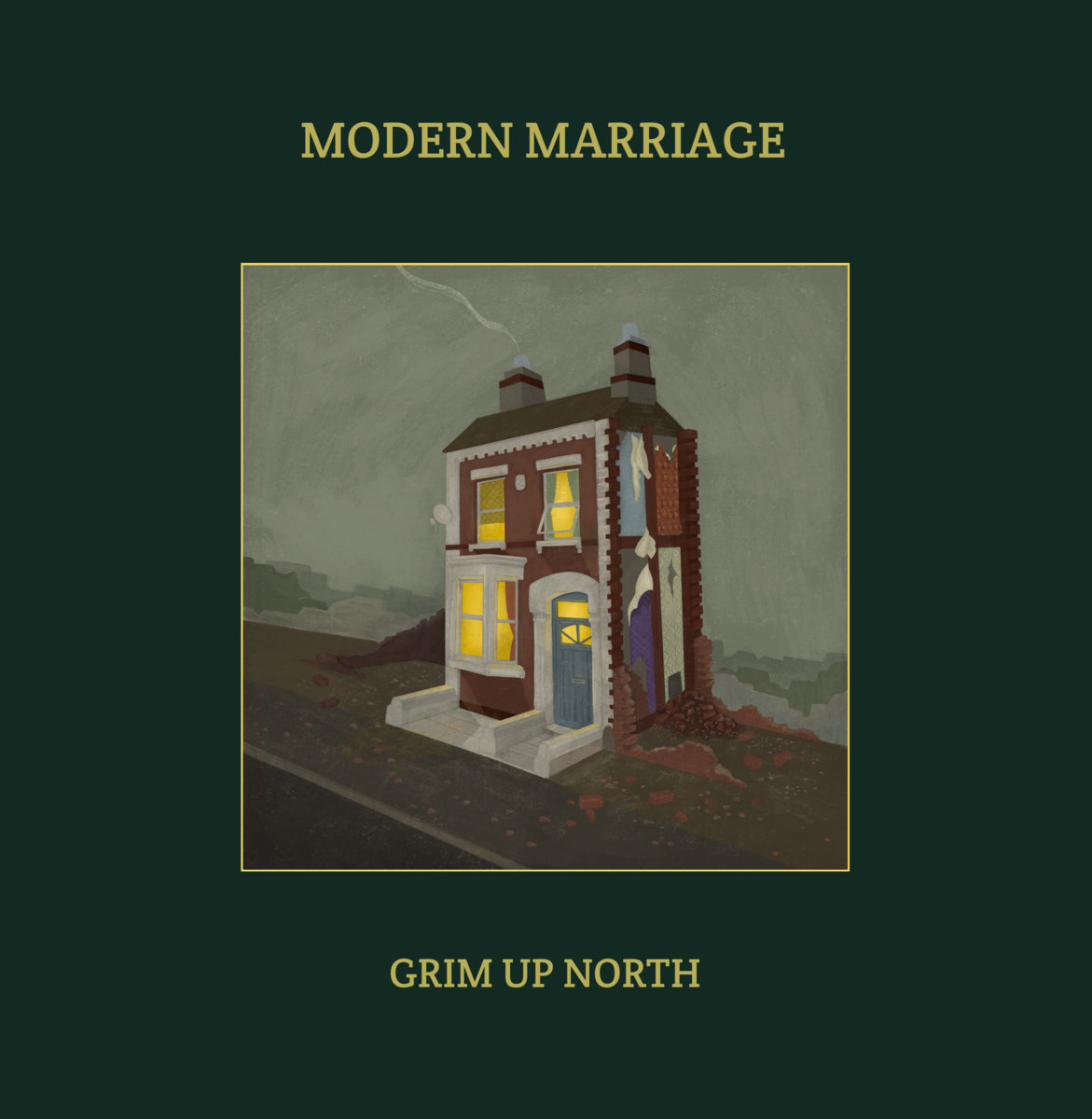
On their new record Grim Up North, Modern Marriage wrap darkly funny stories, oddball characters and sharp observations in irresistible power pop. We spoke to Ben Savage about Merseyside, melody and the peculiar everyday moments that find their way into the band’s songs.
There’s something very English about Modern Marriage — rough, melodic, witty and slightly awkward. Where does that come from?
Our ‘Englishness’ is potentially just a reflection of who we are and the result of growing up in Merseyside. The songs are predominantly about everyday life and the strange characters encountered along the way, and it wouldn’t make sense to present them any other way. The three of us consider ourselves very genuine people and what you see is pretty much what you get. Merseyside is full of oddball characters, and Scousers have an idiosyncratic sense of humour, which hopefully comes across in the songs. I do of course love very ‘English’ bands, from the Kinks and the Who through to TV Personalities and Half Man Half Biscuit, who have always been fairly insular from outside influences.
Your songs are wordy, but the melodies never get lost. How do you balance storytelling with melody?
The storytelling aspect comes fairly naturally – for further reading, feel free to check out the ‘Customer of the Day’ series on the ‘Skeleton Records’ Facebook page, which is me living my day job. The melody is a bit of a non-starter, and I wouldn’t take a song to the band unless I feel the melody is adequately strong enough in the first place. We’re often told that the songs are “catchy,” or “earworms that stay in your head for days, whether you want them to or not.”
I hear The Jam, Buzzcocks, Squire and The Real Kids, but Grim Up North never feels nostalgic. How do you make those influences your own?
I personally feel the songs live in their own detached state of time, where the sensibilities of the 1977 music explosion are applied to growing up in 21st Century Liverpool. They’re never truly modern nor truly nostalgic – they’re all somewhere in between, and I like that. As for influences, we’re all music geeks and we’d be here all night giving the full list. To oversimplify, I’m a proud mod/power pop fan, Eloise likes the obscurest music in the history of the world, and Danny has an encyclopaedic knowledge of Tenacious D that confounds all but his closest friends and family.
Your songs are full of specific people, places and situations. What comes first — the story, the melody or the character?
The songs tend to start from one idea, usually a title or key phrase that stimulates my curiosity, and then I go away and pretty much write the whole thing in one go. I’ve got a leftfield imagination, so the smallest of ideas usually ends up a long way away from where might be expected. For example, ‘Terry’s Last Fag’ was a piece of graffiti on the wall of a rehearsal studio, which turned into the story of a man working the night shift at his local supermarket, getting caught shoplifting and needlessly drinking bleach to evade the long arm of the law. ‘Gerry and His Pacemaker’ is about an octogenarian banjo player and ‘IKEA Flatpack’ a jealous lover, who kills her ex and disposes of his body in the titular item of Swedish household furniture. ‘Blue, Red and Yellow… Maybe’ was a deliberate attempt to write a very dark song from the point of view of a stalker, but dress it up as giddily happy power pop, to reflect his contentment stalking his crush around B&Q, “humorously whistling Husker Du.”
The album feels deeply rooted in Northern England. Could these songs have been written anywhere else?
Probably not. The North of England famously doesn’t take itself too seriously and we’re quite a self-aware bunch up here. Merseyside in particular has a warped sense of humour and identity even for Northern standards. We also have a disproportionately high number of local eccentrics, and I couldn’t have dreamed the song scenarios up in the first place without being acutely conscious of our local environment.

