Rediscovering Mark Bacino: A Journey Through ‘Top of the World’

Rolling Stone once described the music of New York-based singer/songwriter Mark Bacino as “steeped in the sparkly, head-bobbing melodicism of classic mid-’60s pop.” He stays true to this style on ‘Top of the World,’ offering ten excellent songs that occasionally evoke a pleasant melancholy. Much has changed since the release of ‘Pop Job…the Long Player!,’ the Marc Bacino album I play most often. It’s time to catch up.


You can find ‘Kaylee Hughes’ showcased on the Best Power Pop of 2024 Spotify Playlist.


Could you share the journey of bringing this record to life? How did all the pieces come together to create the final product?

The journey of bringing “Top of the World” to life was a long one. As with all my records before, a process filled with a combination of joy, hard work and heartache. Although this one took an especially long time to make and was crafted in fits and starts. Family and work responsibilities played a part in slowing the process, as did, of course, the Covid crisis. I’m always a bit of a perfectionist when it comes to making these things as well, so that never helps move things along. Also, the nature of how the album was recorded probably added to the lengthiness of the process. This go-around I worked with two different co-producers (Ron Zabrocki & Jay Sherman-Godfrey) in their studios as well as my own. We also did a lot of remote collaborations with many talented musicians, far and wide, via a lot of files floating around the interwebs. It all added up to being a bit of a complex production process, but in the end we got it done and ultimately all that stuff melts away when the record makes its way into the world, takes on its own life and folks begin to enjoy it. And really that’s the way it should be.

Within this collection, do you feel that the best song you’ve ever written finds its home? If not, what distinguishes this record’s essence from your prior work?

I always like to think the latest tunes I’ve written are my best but it’s really impossible for me to judge. And, ultimately, I’m not sure it’s my place to do so anyway. It’s always been kind of the same with every album I’ve made; you craft a record, a collection of songs, release it and those songs are really no longer yours, they belong to everyone that listens. Each person will have their own personal favorites and not-so favorites and each song will mean something slightly different to every listener. Some folks have kindly said that “Top of the World” holds my best songwriting to date. I’m flattered, but again, there’s really no way for me to judge, I’m too close to it all. I suppose if I had to choose one song that I’m most proud of from this new collection, I’d probably pick the tune “Shaky Hand.” Weird title and probably a weird little song, but I feel like I struck a good balance, lyrically speaking, on that one between the hyper-personal and the universal.

Defining a song’s completion can be elusive. How do you determine when a composition has reached its final, ready-to-record form?

Truth be told, I’m probably not a very laid back person, but in terms of songwriting I would describe myself as such. I really don’t sweat or force the process. I try to let the songs form as naturally as possible and come when they want to come. That may mean that a song idea might sit around, geminating, for years or it may mean that a tune may materialize in half an hour. It’s hard to say exactly when a composition is complete but somehow I just know and I tend to trust that feeling. A combination of experience and instinct, I guess.

Striking a balance between experimental artistry and commercial appeal is a challenge. How do you navigate this dynamic within your music?

I can’t say I’ve ever really worried too much about striking that balance – probably much to my financial detriment – but I’ve always been a big music fan first and foremost, so as such, when creating music I’ve always operated from the position that if I like the music I’m making, someone out there will probably enjoy it as well. My musical tastes are not that odd or left-of-center. I also think that chasing the commercial dragon is a slippery slope. As a songwriter, at the end of the day, you can only really be you and it’s best to remain as such. It’s ultimately what makes your work unique and special anyway. You can try and shoehorn your creations into some sort of “commercial” box but I think that end-result just always comes across as forced or inauthentic. In my opinion, Taylor Swift writes commercially successful songs not because she’s trying to, but because her personal brand of songwriting just happens to currently align with the zeitgeist.

Success can take on different meanings as time goes on. When envisioning success for this new record, what does that picture look like now?

I think when I was a younger artist around the time of my first commercial release (“Pop Job,” 1998) I was most definitely looking to swing for the fences in terms of success and my definition of that word at the time. The world and the music business was very different then. The goals for me and many of my contemporaries in that moment were to get a indie label record deal and a manager, which, in turn, would lead to a major label deal which was supposed to lead to fame, fortune and a life of musical happiness. I was lucky enough to achieve some of the aforementioned, but I still felt like “success,” as I defined it at the time, eluded me. A few years beyond that, I think my idea of success morphed into the thought that if I could just do nothing but make music, not necessarily my own, and pay the bills, that would be my new definition of success. After launching a freelance music production business that basically allowed me to make music for a living, I soon realized that the grass is not always greener. Everything comes with a price. These days, with some age and some experience under the belt, I realize success is – and it might sound corny – really about being happy and healthy and having people around you that you love. I very much enjoy having the opportunity and privilege to make my art and offer it to folks out in the world to enjoy, that’s a real gift, and of course I’d like the music to reach as many people as possible, but that’s kind of secondary in terms of my definition of “success” these days.

Introducing Dream Pony: The Irresistible Sound of Neo Glam

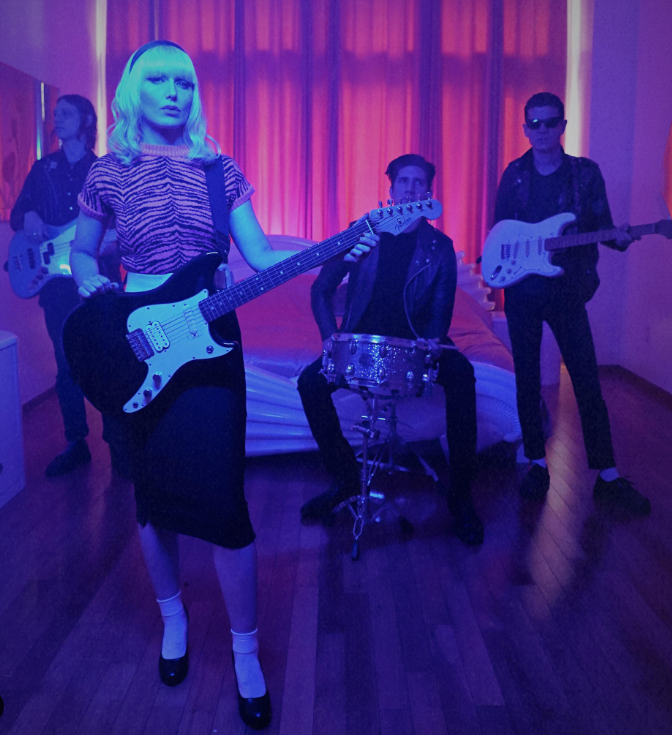
Dream Pony draws inspiration from the Ramones, The Velvet Underground, and The Strokes, crafting a unique sound they call Neo Glam. Their music could also be perfectly described as New York Pop. This debut album is simply irresistible.


You can find ‘TONIGHT’ showcased on the Best Power Pop of 2024 Spotify Playlist.


Sweet Sweet Music talked to Jordan D’Arsie.

Defining a song’s completion can be elusive. How do you determine when a composition has reached its final, ready-to-record form?

I think there’s a line to be walked between some part of looseness and some form of structure. We usually have parts and things semi-worked out and understood, but a lot happens when the song is finally being put onto tape.

Usually, we kick it around a bit in the room until we are somewhat satisfied, and then we add things to it as we go. I think the thing is you’re chasing something, but you also need to be open to accept things that come along. Often, these elements present themselves, and when they do, you make the decision.

Striking a balance between experimental artistry and commercial appeal is a challenge. How do you navigate this dynamic within your music?

It’s not something I really think about while writing a song. I feel a good song is a good song, and whether it has commercial viability or not is not really a factor. There are so many amazing unknown songs, important songs to us that, for one reason or another, never really broke through to a commercial market. I think the exercise of writing a song needs to remain separate from any predetermined outcome, and that way, it’s able to form itself the way it wants to.

Lyrics often carry profound meaning. Are there particular lines you hope listeners will always remember from your songs? If so, what’s the significance?

There are a few messages throughout the record. Different things hit you at different times, and also, people receive things in certain ways and have distinct takeaways. I guess that’s the pleasure of writing and reading.

There are a few lines scattered through the album that are hopeful, and I think in general, they are trying to convey to people to stay true to yourself and follow your heart. Lines like in “Sunday Suits,” “some people like to save all their money, some people like to favor their dreams” and “Suspicion Today,” “Do you remember that love, oh what it would feel like, I want you to know”.

Things like that, I just wanted to share some hope and convey that imagination can set you free amongst some of the darker themes that are throughout this album.

Imagine you could collaborate with three co-writers of your choice for new songs. Who would you select, and what qualities or dynamics draw you to them?

That’s a tough one, there are so many! If I had to pick three, it would be John Felice from Real Kids; I just love his songs, energy, and everything about the band’s spirit. They really lift me up. Patti Smith would be another I’d love to have the opportunity to collaborate with. I’d love to see how her process of writing a song unfolds, and I don’t know what I could offer haha, but I’d love to be in the room and see what happens. My third would be Tim Rogers from You Am I; I’ve always been a big fan of his songwriting, and I’d love to see what unfolds. All of this being said, I’d probably be way too shy to be able to do it. I would certainly freeze up and likely say something really silly haha.

In the digital age, visual elements are intertwined with music. How did you approach the album’s visual aesthetics, such as album art and accompanying visuals? How do they complement the sonic experience you’ve crafted?

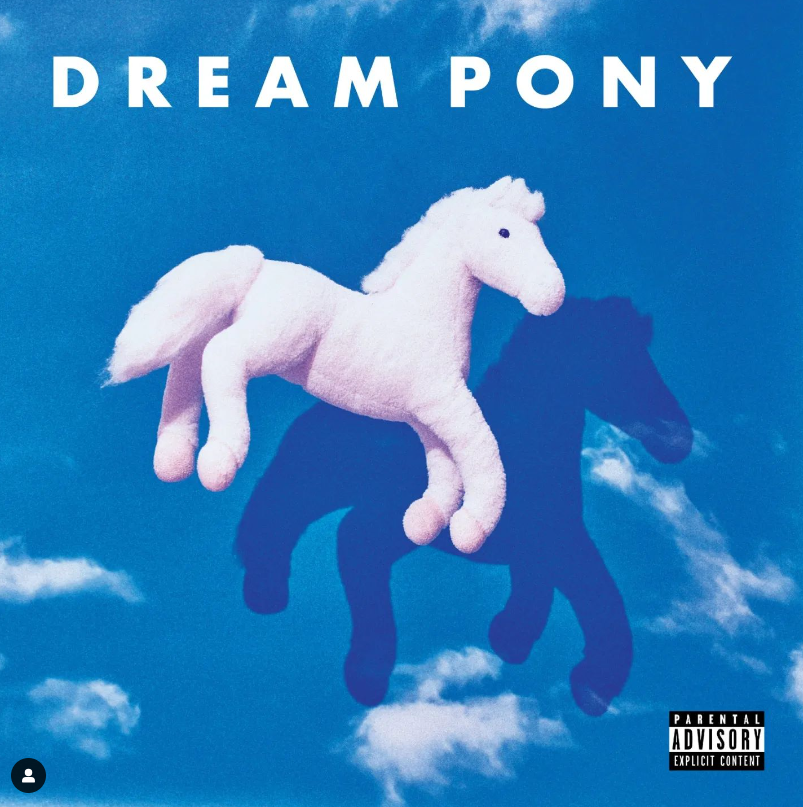
Being our debut album for Dream Pony, we wanted to create something that reflected the album title Suspicion Today but also Dream Pony as a concept. I wanted to create a dreamlike space for the songs to exist within. I had this concept of something floating around like the bridge in our song “Sunday Suits” and the ethereal being out there, however, casting a shadow below so in some ways it floats but still touches something. We purposefully wanted it to cast that shadow and reflect some kind of tangible illusion. We sourced several objects and various horse statues that we workshopped until we came upon the cloud background and pony plush toy, which we named Tony the pony. The artwork was captured by our great friend and super-talented photographer Ryan Slack at Mediumplex studio in Brooklyn.

The Cynz – Little Miss Lost

Cyndi Dawson and Henry Seiz, fronting The Cynz, collaborate with Jem Records to unveil their latest album, “Little Miss Lost,” produced by Kurt Reil, hitting shelves on March 29th. This release emerges as a potent and deeply personal narrative, chronicling Dawson’s journey to maturity through her poignant lyrics and Seiz’s infectious melodies.

In an interview with Sweet Sweet Music blog, Cyndi Dawson delves into the genesis of “Little Miss Lost.”


You can discover ‘Crow-Haired Boys’ featured on the Best Power Pop of 2024 Spotify Playlist.


Could you share the journey of bringing this record to life? How did all the pieces come together to create the final product?

Like all our albums, it was a journey of exploring where Henry and I were at in time as individuals and as writing partners. We don’t have a game plan- we allow things to come together organically. As a long-time friend, he is aware of where I want to go and explore, and as a musician, I also follow his own exploration and weave my words accordingly.

Was there a particular moment or experience that struck you, signaling that you were onto something special with this project?

For myself, once I wrote ‘When We Were in Love,’ I knew we were going to have something special with where our new record would go. The music evolved from an acoustic demo into a song that had a more rocking longing that fit our style.

The decision to seek opinions on your new songs is intriguing. When did you realize that external perspectives could contribute to your creative process?

They don’t. I don’t create music for others. I write because I feel a sense of urgency to do so. Henry and I write songs we would like to listen to. Of course, we want others to like them too, but it isn’t our motivation. Art is a compulsion. We create art because we have to. Success can take on different meanings as time goes on.

When envisioning success for this new record, what does that picture look like now?

We are successful now. Because we created work we respect ourselves. That’s fulfilling. In terms of financial success? If you expect that in music, you will be immensely disappointed. I see a value artists should get financially but until we respect ourselves and demand that from clubs and music sources we aren’t going to get that.

Within this collection, do you feel that the best song you’ve ever written finds its home? If not, what distinguishes this record’s essence from your prior work?

The best song we have ever written will never be written. If we have written it already, what motivation would we have to continue on?!

That elusive best song is always one song away.

As an artist, the act of baring your emotions to the world is profound. Does this vulnerability come naturally to you, or is it a constant journey of finding comfort?

I think that when you have experienced severe trauma in childhood, you either deconstruct as an adult or you find an outlet that helps heal you. I chose the arts in many forms- as a poet, a dancer, a model for artists and photographers, and as a front woman. It was no longer okay to stay silent. And I’ve learned that I don’t have to always focus on my own story. I can create characters that are me but can combine elements of others I’ve observed.

Imagine you could collaborate with three co-writers of your choice for new songs. Who would you select, and what qualities or dynamics draw you to them?

I honestly only want to write with Henry. Of course, I am asked to write with others time to time, but I always go back to thinking, if I’m going to write a great song then I want it for The Cynz.

Among the gigs you’ve performed, which one holds an indelible place in your memory and why does it stand out?

90% stand out. N/A lol

Lyrics often carry profound meaning. Are there particular lines you hope listeners will always remember from your songs? If so, what’s the significance?

I write parts of my life and parts of others. Sometimes I just write a sassy song. People will take what they need from my words. This is also why I don’t include lyrics. How many times have you thought a line in a song was one thing only to find out it was something very different? I think that can change the song’s significance to you and what you needed and got from it.

Can you recall the last instance when you felt the immediate certainty of having penned a hit song?

‘Crow Haired Boys.’

If I am singing it in the shower, then I know others will!

With the resurgence of cassettes, imagine curating your inaugural mixtape. Which five songs would be must-adds and why?

1- Patti Smith Gloria

2-MC5-Kick Out the Jams

3-The Struts-Pretty Viscous

4-(The Greg Provost version) Chesterfield Kings- Up And Down

5-Rolling Stones- Stray Cat Blues

Performing music before an audience holds a unique allure. What aspects of this experience contribute to the excitement and enjoyment for you?

The energy exchange between the audience and us. When they are bouncing and singing along it’s magic.

If tasked with introducing your music through three songs, which ones would you choose and what story do they collectively convey to new listeners?

We have five albums out now. I would find that very difficult to do- pick just three songs. Every album was a particular time and vibe our collective minds were in.

In a hypothetical scenario where you could tour with two other bands, who would be your ideal companions and what synergies do you envision?

Toughest question ever. There are so many! Currently, we vibe completely with Slamdinista. I think a tour with them and Palmyra Delran and/or Cocktail Slippets would have the right energy balance. But see? I could name ten others.

Among the compliments you’ve received, is there one that remains etched in your memory? If so, what made it particularly unforgettable?

Women especially come up to me and tell me they feel I’ve spoken to them with my words. They say they wish they had my strength but my strength is on stage. Not everyone gets that space or platform.

Studio moments often hold a touch of magic. Could you recount an instance that stands out as the most enchanting during your creative process?

Hah- the next secret project that Jem is putting out- I was completely into the moment recording it. But I cannot say at this time what the track is. With my own songs, I would say one that stands out is Little Miss Lost.

Where do you see yourself situated within the broader landscape of the music industry? How do you perceive your unique role and contribution?

I’m not sure what music industry there is currently- particularly for an original rock and roll band. Europe is way ahead of us in that regard. But like anyone pursuing a career doing what they love, I just want the songs to get out. I want these babies to leave the proverbial nest and start making friends with others.

With the record completed and the music released, do you believe the pinnacle of enjoyment has been reached, or is this just the beginning of an exciting phase?

I’ll be honest, speaking for myself. I am very uncomfortable in the ‘after’ phase. The recording process is full-on commitment to the idea that you are exposing your guts and soul. I know I do. If the record should flop it’s not that I’m worried about approval- it’s that I failed at communicating well. What if no one gets it? I’m giving you all my heart. Do you want that? I’m giving everything I have. Do I deserve to be in this position? My insecurities can often cripple me that way. But there’s a strong part of me that realizes I did the best record I could … WE could. Put it out there and let it live its own life.

Looking ahead to the next couple of months, what exciting plans or projects are on the horizon for you?

We are traveling a lot this year so the next couple of months are shows and travel. Shorter road trips are very much my favorite way of touring. I really love my home life and garden and don’t like being away too long.

How would you describe the evolution of your sound in this new album compared to your previous works? Were there intentional shifts in style or themes?

We don’t have intentional shifts in style, but I did want to continue the exploration of my past from age 17-present. I used my own experience (with artistic license) to come to terms with who I am today as opposed to Little Miss Lost from the past. But that also meant revisiting love and heartbreak not only I experienced but what I caused others as well.

Albums often involve collaboration with various musicians and producers. Could you shed light on how these collaborations contributed to shaping the album’s identity?

This album had a few producers and outside contributors, but ultimately the majority of the work was done at House of Vibes with Kurt Reil from The Gripweeds. I very much have a say in how songs end up, as does Henry, but for this album, I was open to let go of some of my control I have in the past.

In the digital age, visual elements are intertwined with music. How did you approach the album’s visual aesthetics, such as album art and accompanying visuals? How do they complement the sonic experience you’ve crafted?

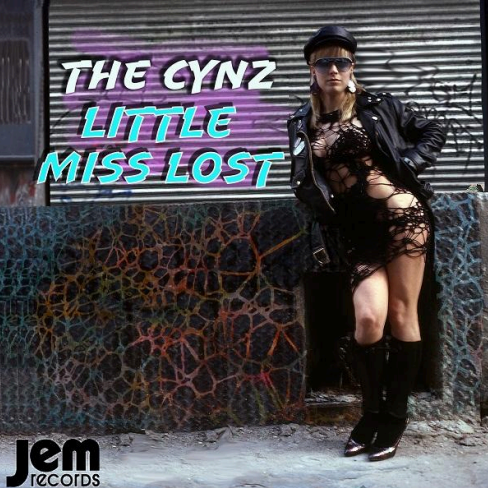
The cover art was created by the artist Rene Moncada and his wife Joann. It is a photograph of myself at 17 modeling a string dress sculpture on Wooster St. in Soho, in front of his loft and gallery. They create most of our covers and my poetry book covers. I was his model at 17, and I always have him involved in creative and artistic parts of our finished products.

The back cover is a current photograph of me by the terrific photographer Sherry Rubel.

It’s past to present. The inside are photographs by Sherry and Johan Vipper.

All of it represents the sonic experience of the album and its themes.

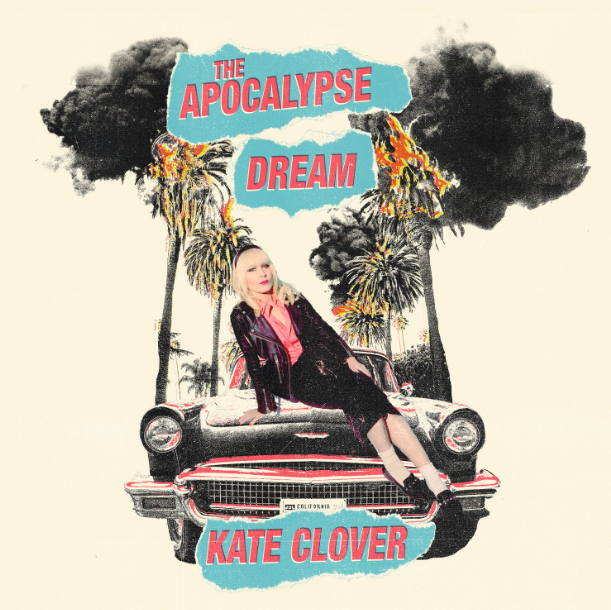
Kate Clover – The Apocalypse Dream

Kate Clover’s highly anticipated album, “The Apocalypse Dream,” is slated for release on April 5th, 2024. With the hauntingly beautiful and powerful single “Damage Control” already making waves, this record promises to captivate listeners.

Kate Clover shared how she discovered her artistic voice while crafting her second album, enabling her to create music that resonates deeply with her vision, free from the constraints of external opinions.


You can discover ‘Damage Control’ featured on the Best Power Pop of 2024 Spotify Playlist.


Was there a particular moment or experience that struck you, signaling that you were onto something special with this project?

The moment I stopped caring what other people thought and was myself. I had to find myself a bit while starting this project. I didn’t know yet ,so I through myself out into the world to see what I was made of. I found my voice.

The decision to seek opinions on your new songs is intriguing. When did you realize that external perspectives could contribute to your creative process?

I write for myself, I feel that’s how you have to work if you’re making honest art. You can’t chose what people like about you or what resonates. It just happens. I like to eliminate that control and let people I trust or who’s taste I regard tell me what they like. By that point, it’s good to hear the feedback. Success, outwardly in the music business is a popularity contest decided by other people. So why not start from the beginning. Before anything is out.

Success can take on different meanings as time goes on. When envisioning success for this new record, what does that picture look like now?

I like this question because people project their own expectations onto artists a lot. Success to me, is waking up and loving what you do. Being able to play music and create songs that resonate with others. I’m not doing this to be graded, make money (although a nice perk) or fulfill my ego. It’s something that feels natural and I want to be able to share it with others. Truly, connecting to other people is success to me.

As an artist, the act of baring your emotions to the world is profound. Does this vulnerability come naturally to you, or is it a constant journey of finding comfort?

You’d think that would be the case but I’ve found that it’s the easiest way to bare your soul. You can say how you are feeling in anyway you’d like. A poetic phrase could have a deeper meaning to you that no one else would understand. Of course feeling vulnerable can be uncomfortable but you got to stand behind it if it’s honest. I trust that. You have to at a certain point because if your self conscious you’re not being an artist. Art is communicating what’s unspoken. So if you feel it, say it. Express it. That’s the point to me. If you’re being honest you shouldn’t be afraid.

Imagine you could collaborate with three co-writers of your choice for new songs. Who would you select, and what qualities or dynamics draw you to them?

Ric Ocasek, he was a master at writing pop songs. I loved the arrangements of his work as well. Minimal yet melodic. Too bad he has passed, it would’ve been great to hear more music from him.

Pete Shelly, again what a songwriter. He could write hooks in the most angular of chord progressions.

Ray Davies, he can write any type of song masterfully.

4th one, Joe Strummer. Oh man, for so many reasons hahaha.