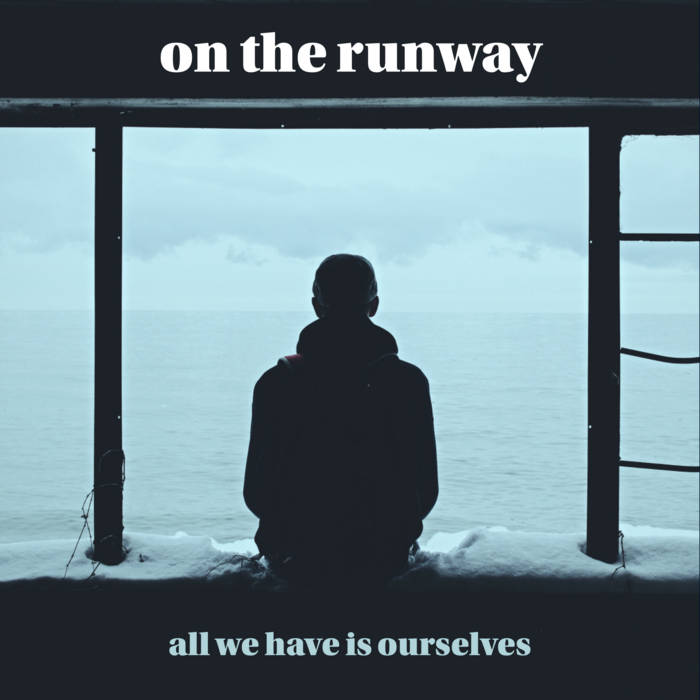
Dave Norris and John “Boz” Boswell have been making music together for a long time. Around the turn of the century, they made some beautiful records with Crash Into June full of classy Indie Power Pop songs, and they are doing it again now, as On The Runway.
On All We Have Is Ourselves, the are five songs that are bursting with quality.
What was the moment you knew you were on to something?
BOZ: When Dave played the demo for “This Charade.” The sound was there, and I knew it was going to be a great record. A continuation of a musical partnership that we’ve had for the last 23 years or so…
How did this record come together?
BOZ: I was talking with Dave about recording some new music together. He said he’d been working on some stuff, and he sent the ideas to me. We agreed that working with Neilson Hubbard as a producer again would be the way to go. We also wanted to go to Nashville and record.
The meaning of success has changed over the years. What would success look like for the new record?
BOZ: Obviously, we want as many people to hear it as possible and would love for a song or two to end up in a movie, tv-show, etc…but ultimately, it’s how it makes you (artist) feel. Because at the end of the day, we’re really just doing it for ourselves.
How great is the urge to stay creative? To keep writing songs and lyrics?
DAVE: Very great! I always have Voice Memos on my phone ready for any ideas that pop into my head; words, melodies, etc.… The process is ongoing and ever-present. Of course, ideas come in the car, taking the dog out, on the treadmill, etc., so I can’t ever be without the trusty smartphone. Of course, it sounds cliche, but writing songs can be very cathartic and a form of therapy, if you will.
You can pick three co-writers to write new songs with. Who? … and Why?
DAVE:
Gerard Love (Teenage Fanclub) – Such a keen sense of melody and masterful ability to turn a hook.
Adam Schlesinger (Fountains of Wayne, Ivy, etc.) – Gone way, way too soon. A true genius with words and melodies. Irreplaceable.
Gary Lightbody (Snow Patrol) – Such a vivid lyricist, creates atmosphere and mood on tunes so perfectly.
BOZ:
I love how each of these artists write. The lyrics mean a lot to me too. To be able to play or collaborate musically would be great.
Mark Hollis (Talk Talk)
Richard Ashcroft
Tommy O’ Dell (DMAs)
What’s the gig you will never forget? And why?
DAVE:
Both of these bands and gigs speak for themselves – seminal artists in their prime. No substitutes!
Oasis, February, 95 at The New Daisy, Memphis, TN. I’d been into them already and couldn’t believe I was going to see them in a small club in Memphis. They still felt like one of those bands that only a few of us knew about. Of course, they were huge in England.
The other is when our band Crash Into June had our record release party for our first album back in ‘99 at a club here called Newby’s. The place was packed, and I’d never played in front of that many people. It was electric and epic. I’ll never forget that.
When was the last time you thought, ‘I just wrote a hit!’?
DAVE: I always felt great about “This Charade” when working it out on the acoustic guitar many months back. And the touches Neilson and Will brought to it just elevated it even more. So after we put it all together in the session, I was highly pleased with how it came out. I felt the same way about the song “Breakthrough” from our band Crash Into June as well.
Is recording a record easier than getting it heard nowadays?
DAVE: Absolutely, yes. Getting your stuff heard, especially promoting on your own, is a real challenge and requires hard work and a bit of luck.
Cassettes are back. Which 5 five songs would make your first mixtape?
DAVE:
Such a hard call, but I’ll go with these:
Sparky’s Dream – Teenage Fanclub
Bye Bye Badman – The Stone Roses
She Came On – Super Deluxe
The Big Lie – Gigolo Aunts
Slide Away – Oasis
Recording music. What’s all the fun about?
DAVE: Of course, bringing the demos you have made to life is so satisfying. I think the best and most fun parts are the surprises, the parts you didn’t plan that really bring a song together.
Playing music in front of a crowd. What’s all the fun about?
DAVE: Just the feeling and vibe you get hearing your tunes rocked out. The positive feedback from the audience and that validation can be a rush too, no doubt.
Bryan Estepa has once been labeled one of ‘Sydney’s best-kept secrets’. It is indeed difficult to understand why the masses do not celebrate his uber accessible pop songs.
‘Back To The Middle’ also contains six very beautifully designed songs. Go hear it!
What was the moment you knew you were on to something?
I think I knew that something exciting was happening during my first session with Josh Pyke recording the first single –‘Admit now, Pay later’. I came into this session with no set ideas on the sound I wanted for this song, but my gut told me that Josh was going to be the right guy for this approach. There was a moment in the guitar tracking where he added an odd XTC-like riff, which I would not have thought of doing. It worked perfectly in context, and it just lifted the song to another level in my mind. That’s when I knew we were on to something good!
How did this record come together?
This record probably would not have happened if not for COVID locking down the live music scene in Sydney. Josh Pyke & I first got together during one of the first few weeks when Sydney was relieved from our first lockdown in mid-2020. I was restless and needed to scratch a niggling creative itch. I was dying to get out of my house and connect with humans again on a musical level. It all kind of blossomed from there.
Lyrics are too often taken for granted. What is the line of text, or are the lines of text that you hope listeners will remember? And why?
Lyrically, I’m probably the proudest of my work on ‘Trick of the light’. It was a very cathartic song for me to write, and any fear I had of being open and vulnerable disappeared when I finished writing the song. It contains the line ‘Letting go is hard, even if we pull down our guard’. A line that I hope connects to people’s fear of moving forward and letting go but also embracing the strength involved in doing so.
When was the last time you thought, ‘I just wrote a hit!’?
Well, in my head, every song I write will be a hit, but then reality hits, and I’m usually just back repeating myself or writing gibberish. But I remember finishing tracking ‘I’m not ready for this’ and on hearing the playback thought –‘My god, I think this could be my first hit!’. It was very catchy, and I knew I could keep listening to it without getting sick of it. It wasn’t a hit in terms of commercial charts, but if you look at the streaming side of things, I guess this is as close as I can to having a ‘hit’ song.
Cassettes are back. Which 5 five songs would make your first mixtape?
Well, firstly, this mixtape will have a theme (it’s a rule, right?!). So, cos Australia is heading towards Summer; This will be my Welcome to Summer mixtape – Side A:
Ward White describes himself as an art-rock crooner. An accurate description, I would say. On The Tender Age, Ward reminds me of David Bowie and Parthenon Huxley. Quality for gourmets. What an overwhelmingly beautiful record.
++ Sweet Sweet Music Song premiere ++
Easy Meat is the second single from The Tender Age!
Ward White talks about cinematic incidental music, unexpected layers, the instant-gratification itch, and the creation of his new record.
Lyrics are too often taken for granted. What is the line of text, or are the lines of text that you hope listeners will remember? And why?
Lyrics come to me as snippets of dialogue, often as a fully-formed opening line. There’s very little in the way of first-person confessional in my writing these days. I rarely know what’s happening in these songs; I’m dropped in the middle just like the listener. I try to shepherd things in a reasonable direction, but I never look to foist a resolution on any of them – I prefer the mystery. I suppose there’s an element of cut-up technique at play, as well. I would hope that listeners formulate their own backstories for these characters and their odd conversations, with the arrangements serving as cinematic incidental music.
Recording music. What’s all the fun about?
I’ve been enamored with the recording process since I first laid hands on a Tascam Porta One. There’s a challenge to chasing down a sound you have in your head, layering elements until it comes as close as possible to the ideal; conversely, as a track develops, it often exposes unexpected layers to the song, sending you in a completely different direction. Some of my favorite moments have come from subtractive mixing – stripping away recorded components of the arrangement to reveal a whole new palette. You can gain a lot by being brave enough to throw things away.
Is recording a record easier than getting it heard nowadays?
High-quality recording is certainly more accessible now, and technology has made the process infinitely mutable. You still have to do the grunt work, but it allows for a level of immediacy that was impossible in the past. That immediacy extends to distribution of the finished product – you can hit ‘export’ on your final mix and have it for sale on Bandcamp five minutes later. While it certainly scratches the instant-gratification itch, it contributes to a flooded marketplace, wherein it’s nearly impossible to parse the onslaught of content. This is hardly unique to the music business, just a symptom of our internet-addled culture. For all its flaws (and there were MANY), the old record label system did serve as a filter; if they were going to push a record, you were going to hear it. You can spin a million hypothetical arguments around whether iconic artists of the past would have equal success in the current climate. Randy Newman once said to me, “I don’t know how you guys do it now. I’d never have a chance today!”
How great is the urge to stay creative? To keep writing songs and lyrics?
There’s a fine line between urge and compulsion, I suppose. At a certain point, the process automates itself to a degree; I’ve managed to put out a record every year or so for more than a decade. The funny thing is, they never begin with any deliberate intent to create. It’s really just a waiting game, and without realizing it, I’m knee-deep in the muck again. As exhausting as the mantra of “write/record/promote” can be, I always come back to it, so I’d classify it as semi masochistic. The trick is to never let yourself get too precious about what you’re working on – every record is just the one after the last and before the next.
How did this record come together?
As with my last few records, I wrote, produced, and provided vocals, guitars, and bass. I worked with my usual co-conspirators, drummer Mark Stepro, keyboardist Tyler Chester, and engineer/mixer John Spiker. I’m always thrilled to reconvene with these guys, especially given their schedules; Tyler, who is as gifted a bassist as he is a keyboardist, produced and co-wrote Madison Cunningham’s Grammy-nominated debut album Who Are You Now. I was able to grab Mark just as he wrapped up tracking drums on The Wallflowers’ Exit Wounds, and John is always busy as bassist, engineer, and producer for Tenacious D (as seen and heard in The D’s viral YouTube cover of Time Warp for Rock The Vote.) We tracked drums, and basic guitars at Spiker’s studio, keyboards at Tyler’s place, and I did all my parts at home. We came back to John’s to mix, and I was happy to have my old friend, Joe Lambert, master it.
Cassettes are back. Which 5 five songs would make your first mixtape?
“Bridge and Tunnel”, The Junior League’s new record, will be out October 1st on Kool Kat Musik and via the digital streaming services. Joe Adragna tells how a few songs grew into a full-fledged record.
There seems to be so much confidence in the performance of the new songs that you must have known very early in the writing process that you were writing some great tunes?
I knew that I liked the songs, but I’m not sure if I felt confident or not. When I played some of the songs in progress to some of my friends, their responses spurred me on. Sometimes I like stuff, but I truly don’t know if anyone else will. I’m terrible at figuring that out. Luckily for me, ultimately, when I’m doing stuff, I’m doing it for myself anyway, so if I like it, it just becomes a matter of if I’m willing to subject other people to it! Hahahaha
On Not My Time, I think you sound like Joe Jackson. Do you consider that a compliment?
Absolutely a compliment. What a nice thing to say, thank you! Obviously, it has a late 60s Intruders type thing happening–I didn’t think about Joe Jackson, but I’m certainly happy to accept that.
The song was initially on a soundtrack that my friend Casey McAllister had done for a film called “Bloody Nose, Empty Pockets”. It’s a fantastic soundtrack, by the way, you should check it out! Anyway, he had a song on there that was like a minute long, and I fell in love with it. I asked him if I could use it and that I had some vocal melodies and lyrics I’d like to put with it. He agreed, and I sent him an idea of what I wanted to do– taking his version and extending it, as well as adding my vocals to it.
He then recut the track to fit my vocals, and I put my drums and vocals on his new version, and voila! Casey is playing everything on that track but the drums! He’s a super talented guy. We’ve known each other for a long time–and we’ve played together in a few groups.
How did this record come together?
I was recording at my home recording space, as usual. I initially thought I was going to do an EP. I figured I’d make a four-song EP back a year or so ago, centered around the song “54”. I had that one, maybe Hart Island and Woodlawn Avenue as well, but I kept writing songs.
I had about six, and I hit a bit of a wall. My friend Jay, who had heard the songs, knew that many had some New York connection to them. He suggested I keep trying to write about New York; maybe use that as a common thread.
Then I saw that picture that my friend Linda took, which is the cover, and that was it. I wrote Library Bar after that, and then maybe the lyrics for LIRR…..I can’t remember. Not all of the songs have an obvious New York connection–but it is there. As far as the recording, I had all of the basic tracks done. As on most of the other Junior League records, my incredibly gifted friend Scott McCaughey mixed a bunch of the songs and added amazing keyboard, guitars, and vocals all over the place. He was very encouraging and made me much more confident because he’s fantastic–I mean, he is, in my opinion, one of the best –if he likes the songs, they must be all right!
In addition, my very talented friend Mike Giblin had also been acting as a sounding board and was super encouraging. He also really made me feel much more confident about the songs. He mixed three songs off the record, including Not My Time.
I also had Deni Bonet adding her gorgeous strings on “54” and “Woodlawn Avenue”. I also had outstanding contributions from my friends JJ Murphy, Peter Searcy, and Liam Catchings. I guess it started out moving quickly, I hit a bit of a wall, but then a lot happened at the end!
When you recorded The Sunshine Saves Everyone, you probably knew right away that it had to be the lead-off track?
For the longest time, the lead-off track was going to be “Not My Time”. But yeah, once I wrote “Sunshine”, I figured that had to be it. I think Scott suggested that it should be upfront too, and he was right.
How easy or difficult is it nowadays to promote the record by performing live? You could almost say these songs demand a stage.
I don’t know. I’d certainly like to play them live; at some point, I might do some shows, even if acoustic. But it’s so hard to say. I even thought about doing something online, but I don’t know if anyone would watch?
I’ve watched some of my friends’ live streams and have enjoyed them a ton. I am hoping to do some shows maybe next year. I hope to, anyway. I have a lot of stuff between this record and the Sadabouts EP that Casey Neill and I put out. I think it isn’t easy to get your stuff noticed because there is so much out there, and so many people are being creative and putting things out. I’m just appreciative of those who carve out a little time for my stuff. And I appreciate you asking me about it!
Already on the first listen, Lost on Purpose reminded me of Welcome Interstate Managers. Not only in terms of sound but also in terms of theme and size. And in quality! What a load of good songs Brian Jones has written.
The comparison with Fountains of Wayne is no coincidence at all. Brian Jones himself explains why.
How did this record come together?
After our last full-length release, I planned to take a long break from writing & recording my songs to focus on other projects. Then when Covid hit in Spring 2020, and we were in quarantine, I found that time to write music was all I had. That, combined with the passing of Adam Schlesinger of Fountains of Wayne, I felt that time was now available but not guaranteed. A few months later, I started making demos for what would become a 22 song album.
How great is the urge to stay creative? To keep writing songs and lyrics?
Songwriters know that it’s just inside you, and you can’t escape it. Like I said before, even when I tried to stop, the songs wouldn’t. I find that the melodies just come to me without really trying, but once they arrive, the urge to make them better each time helps you develop a catalog of songs that change and mature with you.
You want to develop “your sound” but not get stuck there doing the same thing on each album. Like Paul McCartney from “I want to hold your hand” to “Yesterday” to “Back in the USSR” and finally “Let it Be.” The same guy, same “sound,”..but with time, each song develops and adds a new dynamic.
You can pick three co-writers to write new songs with. Who? … and Why?
I love so many songwriters, but 3 I would love to write with would have to be; Mike Viola: My favorite writer, and I would love to write a movie soundtrack with him.
Elvis Costello: He would bring out sounds in me that I’ve always loved but never been able to write like New Wave and Electronic.
Ben Folds would be amazing to write with as he would bring out a “grand meet personal sound” that I’ve always admired.
Combing piano ballads, rock licks with complex harmonies with the occasional orchestral part. On our new album “Lost On Purpose“, we were thrilled to have four different guest artists add vocals and/or keys, which was something we’ve never done before. Daniel Brummel (Ozma), Bill McShane (Ultimate Fakebook), Brendan Lyons (Toledo), and Sam Black (Modern Amusement, helped to make these songs even better than we could’ve imagined.
Lyrics are too often taken for granted. What is the line of text, or are the lines of text that you hope listeners will remember? And why?
In the spirit of taking risks and developing each new song into something different, I really tried to write more “stories” and develop characters without allowing myself to be the focal point of each song like I have done in the past.
When you’re writing from a character perspective that challenges you to say what they are thinking, the song “Mississippi” chorus repeats “I don’t know what you’re going through” over and over again. This deals with someone in their profession, expected to have all the answers but really doesn’t.
The song “Beach Singer Man” says, “He doesn’t mind if you’re not kind and just talk over him cause there will be a day when his ship will come in.” This is sung from the struggling musician’s perspective. “Fast Ones” says, “I want one sad refrain. We all have one past mistake we keep repeating. Flowers need the rain and I need it eighty eight beats per minute”.
There, of course, are many lyrics from my perspective like “Get Lost On Purpose, you might find that you’re home”, from the track “Learning To Drive,” which is about taking risks and failing to find the right path hopefully.
You can’t control the way people ‘hear’ your music. But if you could make them aware of certain aspects, you think, set your songs apart. What would they be?
I’ve always enjoyed songs that are timeless and real. I hope listeners relate to the lyrics and find themselves instantly hooked by the melodies and can appreciate the songwriting craft as I do. We even released the new album on Vinyl so listeners could sit down and enjoy it without the impulse to shuffle. Take it all in. Get Lost on Purpose!
Scott Warren has made a fantastic new record. Ten pop songs, which all differ slightly in taste, make me want to play Shadow Bands repeatedly.
Scott explains how the record came about.
How did this record come together?
The record came together like most—a collection of songs that sound like they might make for a cohesive record. Most completed except for some lyrical holes.
I then got together with drummer Brian Young to get that going. His rhythm partner in The Jesus and Mary Chain, Mark Crozer, laid down the bass and then I got to work on the guitars.
I ended up keeping quite a bit of my scratch vocals as they seemed to fit the vibe I was going for: slightly raw and loose.
I definitely doubled some things up later on, though, and added backgrounds. Called in a couple of favors for some string arrangements and a few other elements and mixed from there. There were times when I took breaks to get perspective, so it ended up a couple of years from record start to mix finish. Songs range from five years old to the last tune, “Mountainside,” being written right at the end.
When was the last time you thought, ‘I just wrote a hit!’?
Haha. Well, when I finished “Left Out On The Joke” from the new record, it sounded like a hit to me. LOL. It seems to resonate the most with people that have heard the record, so that’s definitely “the single,” if you will.
You can pick three co-writers to write new songs with. Who? … and Why?
I’m going with Paul McCartney, Ray Davies and Keith Richards Paul for melody, Ray for wit and Keith for the riff. I guess that leaves me with??
How great is the urge to stay creative? To keep writing songs and lyrics?
It’s essential for me. Regardless of whether I end up recording and releasing a given tune, it’s just something that I’m driven to do. There’s something fulfilling about creating something from nothing for me and getting the melody, progression, and structure dialed in. Making all the words fit and feel “right” for the song. It can be magical.
Cassettes are back. Which 5 five songs would make your first mixtape?
Ok, let’s go with some influences for this record and one of mine.
Such greats have influenced Dusty Edinger’s songwriting as Joe Walsh, Gerry Rafferty, and, of course, The Beatles. However, the Power Pop Rock Neo Soul also reminds me of Maroon 5, without all the affectation.
Sweet Sweet Music spoke with Dusty about the Keukenhof, cooking, relationships, motocross, standardized testing, Grease 2, his old band Star Collector, and how Missing Links and Kitchen Sinks came about.
What was the moment you knew you were on to something?
When they switched Darrins on “Bewitched” and I was the only one who noticed.
How did this record come together?
Just like everybody, I was stuck at home during Covid. I wrote the record and recorded demos over about a twelve-week period. I called my friend Gary Stone at Dream Antenna studios and sent him some demos. Soon we were off and running. I set out to write 4-5 songs. But that turned into 18. And then 18 turned back into the 13 you hear on the record. 5 didn’t make the cut. So I sold them to Rammstein. Now I drive a pink polka dot Lamborghini.
When did you decide to start asking for opinions on the new songs?
When it was done, I guess? I don’t know if I ever decided. I guess I just made the record and hoped someone would acknowledge the hard work. It was hard.
The meaning of success has changed over the years. What would success look like for the new record?
For me, I would like to make a living making original music. That’s a pretty lofty goal nowadays. Streaming has eliminated any real sales revenue(Thanks for trying, Lars). So that only leaves live performance. The original music scene in Atlanta is basically non-existent unless you are into metal.
And with these songs, in particular, it would take a pretty large band. I think “Sleeping with the Enemy” has 10 or 12 vocal tracks on it? I’m scouring local orphanages for talent.
How great is the urge to stay creative? To keep writing songs and lyrics?
For me it’s big. I need an outlet for sure. And my interpretive dance classes aren’t going as well as I had hoped. I already have the next record written. Do they let live bands play at the Keukenhof?
As an artist, you choose to show your emotions to the world. Is it always comfortable to do so?
Nope. But hey, all you young budding songwriters, I can tell you it gets easier. You have to write a bunch of trite, unrelatable, terrible lyrics before you can write better ones. It’s the same with, say…cooking, relationships, motocross, standardized testing, or karate. There’s a reason black belts are hard to get. Keep writing, and you will get there. And the more music and art you expose yourself to, the easier it is to tell junk from the good stuff. The more life you live, the more interesting things you have to say. You have to keep going.
You can pick three co-writers to write new songs with. Who? … and Why?
I have never been able to write with other people. I don’t think I ever would be able to. Songwriting to me is like making something out of clay. It pretty much looks like shit right up until the very end. I don’t want anyone else to see it until then.
…but maybe Shel Silverstein, Paul Simon, and Paula Abdul.
What’s the gig you will never forget? And why?
Gigs of mine? I love all of them equally. I can’t choose. They are all my children. 3,000 children. I’m the Wilt Chamberlain of unknown musicians.
Gigs of other people? U2 Joshua Tree tour. I wasn’t even a massive fan at the time. Changed my life. I saw Jellyfish on the last night of the Spilt Milk tour. Changed my life. I was offered a free front-row ticket to see Prince one time. Changed my life. I was offered a free ticket to see Peter Gabriel and didn’t go. I suspect this was the huge mistake of my concert-going career. All I can tell you is the next day; my life was exactly the same.
Lyrics are too often taken for granted. What is the line of text, or are the lines of text that you hope listeners will remember? And why?
“Sometimes I think it might be all in my mind
but I can’t be the only one
who’ll die trying to reconcile
all of the automatic weapons everybody becomes.”
Also, all of “Caught Red Handed”. Because lock the door, people.
When was the last time you thought, ‘I just wrote a hit!’?
Well, that word means different things to different people. But I remember being pretty excited the night I wrote “The Joyous Dinosaur Song”. It hit me so hard that I decided to make it the only song on the record that kept the demo title. That’s why the title makes no sense. All my songs start with a working demo title like “the Jaws 2 song” or “the song that sounds Britney Spears-ey” or “the terrible song”. Otherwise, “Joyous Dinosaur” would have been called “Dreaming Wide Awake”. But I found it absurd and, therefore, more satisfying to do it this way. I never thought I might be called out by a new music magnate in The Netherlands, or I would have thought it through more.
…That said, I expect “Infatuation” and “I Still Love You Anyway” will likely soon be racing up the Dutch charts.
Is recording a record easier than getting it heard nowadays?
Recording is way easier. Anybody can do it. Getting it heard is IMPOSSIBLE. I was talking to a friend of mine about putting this record on Apple Music. He told me they get 65,000 submissions a day. Every single day. It’s tough to get noticed with those numbers.
Cassettes are back. Which 5 five songs would make your first mixtape?
1) 10cc-The Things we do for Love
2) Queen-Seaside Rendezvous
3) Led Zeppelin-In the Light
4) Crosby Still and Nash-Suite Judy Blue Eyes
5) The Theme from “The Rockford Files”
Recording music. What’s all the fun about?
Well, in my case, specifically with this record, it was the first time it was only me and not a band. Bands are great, but that means every person gets an equal say on everything. Everyone wins except the listener(and the engineer). Ugh. This right here is why the tambourine ends up on every chorus of every song ever recorded. Pick your moments, tambourine people! I feel like the cowbell people have shown monumental restraint.
Playing music in front of a crowd. What’s all the fun about?
I can still remember the first time I looked out and saw a room full of people singing back to me words that I had written—pretty good stuff. Looking back, I wish the song hadn’t been about the Teapot Dome scandal.
You can’t control the way people ‘hear’ your music. But if you could make them aware of certain aspects, you think, set your songs apart. What would they be?
I don’t try to reinvent the wheel. One of my favorite things about songwriting is the rules and how great songwriters work within the parameters of those rules—and even knowing when rules should be bent or broken. Also, I am an album person. I want to listen to a record in its entirety. So I try to write that way. Even something as simple as song order can change the entire experience. We live in this instant gratification world now; it’s very tempting just to download the single and move on. If you do that, you are likely missing the larger point the artist was trying to make. I like the journey. “Missing Links and Kitchen Sinks” is serious. It’s silly. And it’s everything in between. But I like to think it takes you someplace, however briefly. Back to your original question…
I like vocal harmonies. And I’m a fat trimmer. I agonize over the most minor details. It’s something I learned in my old band, Star Collector. Everything should be there for a reason. If there isn’t a good reason for something, I generally cut it. Get to the point. “Roll to Me” by Del Amitri is a perfect example of this. One of the best pop songs ever written at 2 minutes, 14 seconds. Also, don’t put dumb stuff in songs, like Lawrence Welk. Don’t do it.
They expect ‘the roaring 20s v2.0’. What kind of party are you looking for?
It would pretty much be the “Cool Rider” bowling alley scene from Grease 2.
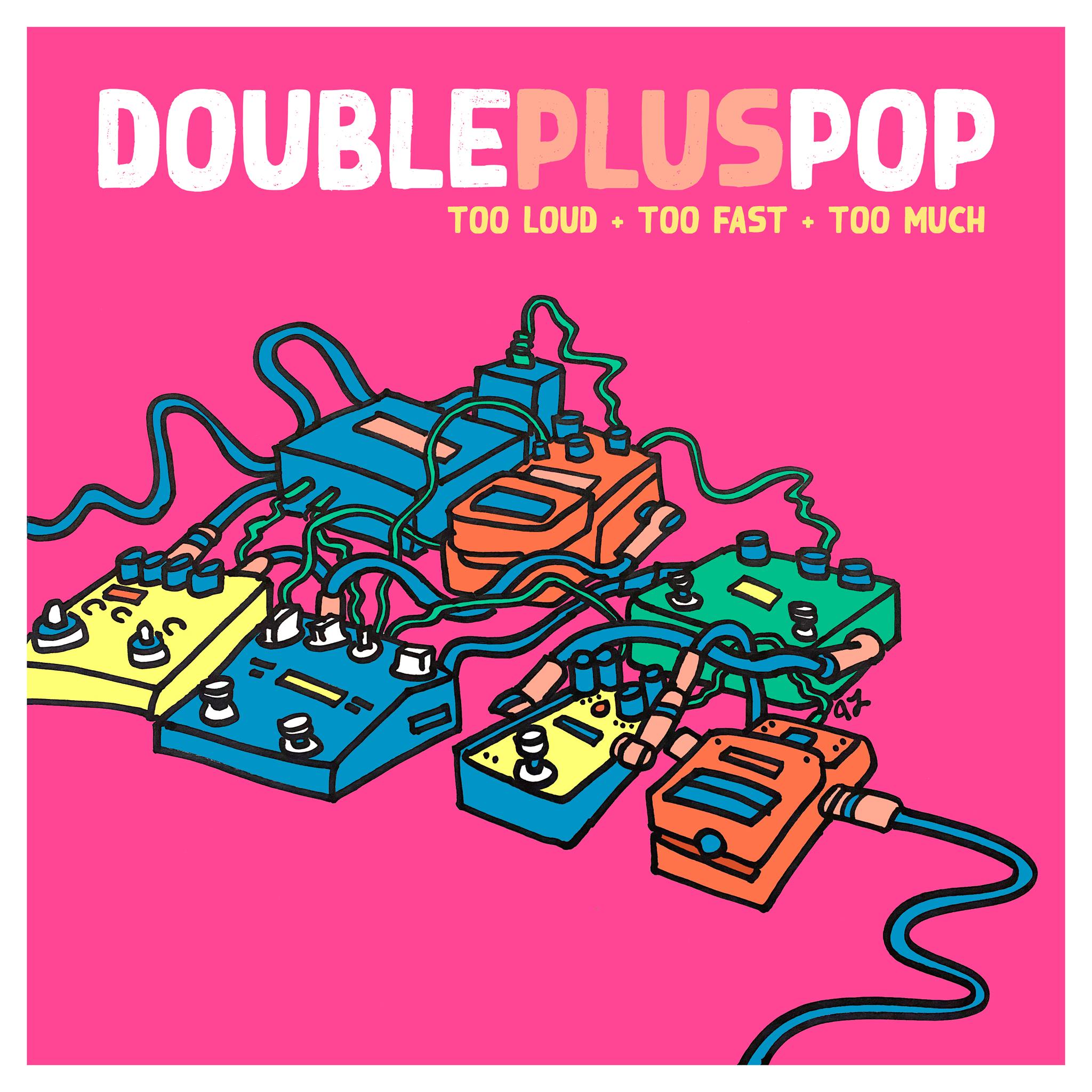
Doublepluspop revisited a project that was supposed to be their debut album, a collection of tracks that has been sitting in a vault since 2002. Wanting to create a power pop band, frontman Paul Averitt formed Doublepluspop sometime between the late 90’s/early 00’s.
Last year there was a digital release of Too Loud + Too Fast + Too Much and now Kool Kat Musik is releasing the CD.
Sweet Sweet Music spoke to Paul Averitt about the challenge of getting the right take, the right feel, and the right (or at least interesting) arrangement.
What was the moment you knew you were on to something?
Am I?
Recorded 20 years ago, released in 2020, CD release in 2021. What’s the story?
Lack of funding, general interest, and enthusiasm. Life gets busy when you’re not watching. Our sound engineer friend Coy Green had acquired a pair of Alesis digital recorders and wanted to get them spinning, so we set them up in the corner of our rehearsal space and did some live takes with overdubs after the fact. Things got less busy on the band front, and the project kind of lapsed.
When Covid-19 hit the planet like reverse-Beatlemania, Coy pulled the now antique recorders out of storage, and fortunately, the tapes still worked. He transferred the tracks into a format he could mix them in. He did a board mix of sorts, and there it is.
How did this record come together?
Slowly. Painfully. As all births.
When did you decide to start asking for opinions on the new songs?
That’s quite an assumption you’ve got there, sonny.
The meaning of success has changed over the years. What would success look like for the new record?
If someone hears it, or even a part of it, that’s success for me. I’m not concerned if they like it, hate it, indifferent, whatever. I’ve done the part I enjoy; writing, recording, and performing them. If someone hears the songs, that’s the most I can hope for lately. The “success” was getting the thing out at all.
Overcoming the odds of any of our music getting through the avalanche of music accessible via the internet now, it’s incredible anyone finds out about any particular album lately, much less ours.
How great is the urge to stay creative? To keep writing songs and lyrics?
Different for different people, but I am and have always been naturally drawn to and focused on the writing of a pop song. There are general rules to the power pop genre, and they make for an exciting challenge. You can’t just free-form it and hope it goes well. It takes thought. It’s an intellectual process just as much as an emotional one.
As an artist, you choose to show your emotions to the world. Is it always comfortable to do so?
It is never comfortable to do so. I’m a very private person, and I always bristle when my lyrics are too revealing. Unfortunately, this is often, especially in my early work, such as this album. Some lines make me cringe. Some because it could’ve been more artfully put from a composition point-of-view, but others for the emoting going down. I should’ve known better.
You can pick three co-writers to write new songs with. Who? … and Why?
I don’t compose well with others. I tried it a few times, and it didn’t really take. Not that some good things didn’t result; it’s just difficult for me. The Leo in me always wants to be in charge, get final edits, etc.
But if I COULD do so with any three? I’m at this moment going to go with John Davis of Superdrag, Steve Carter of Little Jack Melody (who produced our 1999 single), and Andy Partridge of XTC.
I’ve met all three of them, and that sways me a bit because I can see us getting along as writers, though I’m liable to be bowing to their whims in many ways.
But just as I’ve listed them, I feel bad that I didn’t mention Ron Sexsmith or Aimee Mann or Matthew Sweet or Andy Sturmer or a Beatle. But I take it their feelings won’t get hurt.
What’s the gig you will never forget? And why?
A Doublepluspop gig? There was one Thursday night in Dallas where it poured down rain all night, and not one person showed up. That was the only time that ever happened, thank God.
Lyrics are too often taken for granted. What is the line of text, or are the lines of text that you hope listeners will remember? And why?
I tend not to draw attention to certain lyrics so the listener can draw to the lyrics that resonate with them naturally.
I always did, however, like the bridge to “You Can’t Be Serious”:
You’ve been seen causing riots
All over the town
And though the mobs do the damage
You seem so proud that your words sound so faithful
To so many folk
I guess they just don’t get the joke
When was the last time you thought, ‘I just wrote a hit!’?
There hasn’t been a FIRST time. Not going for “hits.” Going for things I like.
Is recording a record easier than getting it heard nowadays?
Heavens yes. Do you have any idea how much music is “released” onto an unsuspecting internet every day? It is impossible to comprehend.
When the recording and manufacturing of music were more “cost-prohibitive,” you had an economic buffer that kept the glut of sub-standard products from the marketplace, more or less.
With the advent of CD manufacturing followed by digital music distribution and a recording studio in everyone’s laptop, we’re awash, nay, DROWNING in a melodramatic backwash. I’m not even discounting MYSELF in that. How’s that for self-reflection?
Cassettes are back. Which 5 five songs would make your first mixtape?
Hm. It would likely start with something peppy like an OK GO song followed close behind with a driving tune from OK GO. Then we’d slow things down with a little OK GO mid-tempo thing. Let’s bring it back up with a funky OK GO song and finish strong with some band covering another band’s classic song, say, OK GO doing “This Will Be Our Year.”
Recording music. What’s all the fun about?
It’s a challenge to get the right take, the right feel, the right (or at least interesting) arrangement. Getting a recording with a unique vibe is always the goal. Most music nowadays seems focused on getting the best “sounding” recording sonically. That is boring to me because it usually isn’t in service to the song; likely the reverse.
Some of the best recordings that I can think of have tracks that are what would be thought of as sub-standard or unusable by today’s standards.
Sorry, we were talking about ‘fun.” It is fun to try different recording techniques, sonic timbres, creative arrangements, or even old standard templates that serve the composition within their framework that might seem pointless in a “standard” reading. The possibilities are endless. How does it all fit together in a successful combination? It’s an adventure.
Playing music in front of a crowd. What’s all the fun about?
Playing music with people you love and respect is a rare thing and should be treated as such. It’s also about the connection between a receptive band and a receptive audience. See Pete Townshend for better words than mine on this subject. But yeah, when it works, there’s no drug better than that. You never get enough.
You can’t control the way people ‘hear’ your music. But if you could make them aware of certain aspects, you think, set your songs apart. What would they be?
I wouldn’t. Let the songs stand in the listener’s ear however they will, all naked and trembling. It’s not up to me to assign categorization. That would be a disservice to the listener.
They expect ‘the roaring 20s v2.0’. What kind of party are you looking for?
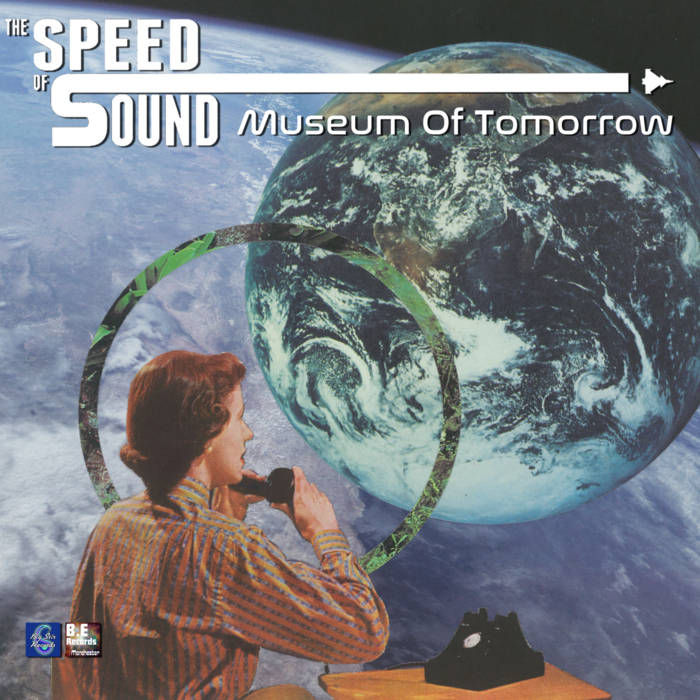
Something Else writes about The Speed of Sounds’ Museum of Tomorrow: Released by Big Stir Records, this 13-track collection centers on science-fiction concepts, where the past meets the future, the future meets the past, the present is questionable, and the line is blurred between fantasy and reality.
Sweet Sweet Music spoke to John Armstrong about a notebook for storing snatches of phrases, connected songs, an 8/10 review in Vive Le Rock, and misquoting JFK.
What was the moment you knew you were on to something?
There have been several with this album; among the biggest were:
After adding the keyboard linking parts between the tracks, the first listen through to the whole thing as a single piece and hearing the vinyl test pressing.
“Oh yes! That is EXACTLY what it is meant to sound like.” is a very good thought to have.
How did this record come together?
I write in batches; I have a notebook for storing snatches of phrases and titles while the ideas brew subconsciously and are ready to pour out when I get mental space and time. The lyrics are an essential part of The Speed Of Sound songs, so they are always the starting point. The music comes afterward to match the feel of the words. I think most people do it the other way around, but I’ve tried it, and that doesn’t work for me.
I knew there were many connected songs brewing, and from the very beginning of the batch, I knew this would be a thematically connected album. I also knew it would be released on vinyl, so I was very conscious of the physical time constraints which forced each piece to be tight and compact, purely to get it to fit with so many songs.
While the songs are taking shape internally, I was also thinking of the album as a whole; its dynamic feel and overall architectural shape, plus how we would link it all together – which in itself tied in the title. So rather than just a set of songs, Museum Of Tomorrow was conceived as a single piece, the only gap being to flip it over onto the other side. I like albums.
The meaning of success has changed over the years. What would success look like for the new record?
In ‘normal’ recognized measurable terms, Museum Of Tomorrow already is a success; in that, we’ve been largely ignored or misunderstood for over thirty years and Museum Of Tomorrow went straight in with an 8/10 review in Vive Le Rock a full three weeks before release.
In simpler, broader terms, as with the music itself, I take a longer view on it and still be making new music 32 years from the first release and enjoying doing it is success.
How great is the urge to stay creative? To keep writing songs and lyrics?
It is big. I don’t think there is such a thing as writers’ block, but there is ‘not being in the right place.’ I find that to write new stuff, you’ve got to have no distractions and uncluttered headspace. When that lines up, they pour out. I know there’s plenty more in there, and the process of getting them out and knocking the right bits off the raw block to get at the shapes hidden in there is fascinating and a lot of pleasure, despite also being pretty damn hard work.
The process itself: experimenting with the sounds and textures of songs is very fulfilling. Most music never gets recorded at all, so the feeling of having piloted through the creative process and ‘landed’ a new album and preparing for release is addictively exciting.
As an artist, you chose to show your emotions to the world. Is it always comfortable to do so?
No. It is not comfortable, but to misquote JFK: “We don’t do these things because they are comfortable.” I find it way more interesting to write something that means something personally than go with Moon/June rhymes about nothing. It is all very serious subject matter and pretty dark thematically, but the music is uplifting and optimistic.
Gloomy, but we’re not a bunch of misery-guts about it. There is a natural playfulness there that hopefully is engaging. Not exactly a sugar coating and not exactly by way of protective body armor. Music should involve emotional experience, so that is what we do if/when other people connect; that is fabulous.
You can pick three co-writers to write new songs with. Who? … and Why?
Anna Calvi, Kate Bush, and Joni Mitchell. All three of them are explorers making their own rules and setting their standards. Each have their own Sound™, and each is very different. The idea of trying new stuff is exciting, and all three of those personal soundscapes are directions I would like to travel.
What’s the gig you will never forget? And why?
We’ve played many gigs, and they were all different and memorable, but probably the most unique was playing in the drawing-room of Victorian novelist Elizabeth Gaskell. It was a tiny intimate gig with so much history in the house and in that particular room. It felt like time travel and playing a gig in 1854. That was the first time we played Charlotte in public – which was only written about a week earlier, a song about fellow novelist Charlotte Bronte suffering an anxiety attack brought on by a doorbell ringing while she was visiting Mrs. Gaskell and hiding behind a curtain until the other guest had gone. It was Ms. Bronte’s 200th Birthday, and both hers and Mrs. Gaskell’s portraits were watching us from the wall next to the curtained window Charlotte had hidden in. It felt like she was there. Cool. But also very spooky.
Lyrics are too often taken for granted. What is the line of text, or are the lines of text that you hope listeners will remember? And why?
Yes, most people probably don’t listen to lyrics other than a chorus hook, or, if they do listen, they probably mishear them anyway, which is a shame because there are an awful lot of good lyrics out there despite the general cultural dumbing-down we’ve had and the vocabulary contraction.
With Museum Of Tomorrow, the first line of ‘Tomorrow’s World’ is etched into the vinyl near the run-off groove: “We were offered Star Trek but they fed us Soylent Green.” It announces the whole album and sums up the way the 21st Century has been ‘a bit disappointing’* (*British Understatement) compared to what we were told we’d have 40-50 years ago.
There is meaning in all of the songs, plenty to dig for and carry away. We have been called a ‘thinking person’s band’ quite a few times. The vinyl issue has a printed 16-page booklet with the album lyrics in it, and that is also a PDF with the download (and the album streaming also includes the lyrics now), so there is more opportunity to hear them as they are. However, as soon as you release a song into the wild, even the people that listen to the lyrics will hear it in the context of their own experience, and it will mean something different to them.
Is recording a record easier than getting it heard nowadays?
It is possible to record an entire album and add an orchestral score all from a computer keyboard in your bedroom. Getting people to listen to it is hard. The internet is a blizzard of information blowing straight in your face, so naturally, people shut their eyes.
Countless people are shouting, “Hey, listen to my band.” It is challenging to be found amongst all that, even if people are actively looking for you. I also have a radio show (Tuning Up on Mad Wasp Radio), and the amount of submissions I get is enormous; it simply isn’t possible to listen to all of it. Time is a limited resource, and if people choose to spend it listening to you, that is an immense gift. Independent music physically IS that metaphorical/metaphysical tree falling when no one is there to hear it.
Cassettes are back. Which 5 five songs would make your first mixtape?
Only five? Whoa. That’s hard. Am I allowed to say listen to all the Tuning Up shows on Mixcloud? There’s close to nine continuous days (and nights) worth of mixtape on there!
Recording music. What’s all the fun about?
Pushing buttons! AND sliding sliders! Recording is about exploring what you can do with the sound you’ve got and deciding when you have got enough of it. Thinking of new ways of doing things while trying to keep it as spontaneous as possible, planning things out in advance, and watching them all come together. It is sculpting shapes and structures from thin air. It is magical.
Playing music in front of a crowd. What’s all the fun about?
Live performance is where music comes alive. I’m an improviser, and in a live situation, that is pure excitement. The Speed Of Sound has never played the same set twice; there is always something different. We have a back catalog that is far too big to fit into a single gig, and although we are better at playing our own stuff than other people’s music, we do occasionally play a cover live too. Music has to evolve to stay alive. You can’t play something the same way for 30+ years; it has to stay fresh.
You can’t control the way people ‘hear’ your music. But if you could make them aware of certain aspects, you think, set your songs apart. What would they be?
We make pretty forceful crunchy music, but it floats at the same time. To get the most out of ANY music, you have to meet it halfway to start with. Our music is not background music; it is immersive. Dive in with an open mind and let it grab you. Relax into it.
They expect ‘the roaring 20s v2.0’. What kind of party are you looking for?
I like the long game, so it is a slow-burning fuse for me. I want to keep going, doing what the rest of the band and I are doing for as long as possible. Music is my drug of choice. So the so-called ‘glamorous’ matter/anti-matter type annihilation that people see as the Rock’n’Roll-Life-Style isn’t a choice I’d go for. However, for me, wherever there is a guitar, that IS a party.
Multi-instrumentalist Stephen Chopek introduces his innovative EP, Dweller, a six-track collection of tasty power-pop music. Dweller’s genesis occurred when Chopek came home from touring with Mike Doughty, the former frontman of Soul Coughing.
Sweet Sweet Music spoke to Stephen about an unheard New Wave song from the 80s, the creative muscle and the making of Dweller.
What was the moment you knew you were on to something?
I felt good about the songs as I was recording them in Memphis during 2020, but it wasn’t until mixing earlier this year in Atlanta that the music really came alive. The first song that I started to mix was “Empty Hands”, which set the tone for the rest of the EP. I was experimenting with drum sounds, and after a few calculated guesses, I arrived at a vibe that grabbed me. Specifically, I liked how the synthesizers worked with the rhythm section. It felt like a New Wave song from the 80s that I hadn’t heard before. That groove informed the direction of the other instruments and how the vocals sit in the mix. This was my eureka moment that guided me through the other songs.
How did this record come together?
Dweller started coming together in 2020, shortly after the pandemic forced everyone to isolate themselves from the outside world. I had just returned home to Memphis after a US tour in February, playing drums with Mike Doughty from Soul Coughing. I quickly realized that I was going to be inside for a while, so I shifted my focus from performing to recording. I had a lot of musical sketches and lyric ideas that were ready to be turned into songs. The fragments with the most promise were picked out and put through the paces. I spent a few weeks on each song, chipping away at them every day. Having the luxury of time on my side, I was able to approach the music with patience. Listening with fresh ears at the beginning of each session gave me the advantage of perspective. I allowed the songs to guide me along the writing process and see where they would take me.
How great is the urge to stay creative? To keep writing songs and lyrics?
The creative muscle needs to be exercised every day, so I always have a few projects going on at once. Practice routines are important, but so are designated times for uninhibited exploration. This can be applied to any number of creative endeavors. I’m always trying out new drum beats, guitar riffs, keyboard leads, chord progressions, vocal harmonies, etc., but there are other artistic avenues that I travel on. Photography is a big part of my life, as well as video art. I take lots of pictures and make my own music videos. Even though these are varied disciplines with different languages, they’re all part of the creative process, and they each inform the other’s development.
Lyrics are too often taken for granted. What is the line of text, or are the lines of text that you hope listeners will remember? And why?
The chorus of “Start Over” repeats the phrase “hold on, it’s not too late, we can start over”. Within the song’s context, the lyrics tell the story of a couple beginning again when things seem like they’re falling apart. On another level, those words are also about not giving up and starting new every day. Two important ingredients for a fulfilling life are persistence and patience. Balancing those two can be a challenge, but it definitely keeps things interesting.
Is recording a record easier than getting it heard nowadays?
These days, recording songs is easier than getting them heard. You don’t need a lot of gear to record music, and technological advancements are always making more user-friendly, affordable, and compact tools. You can set up your laptop or phone anywhere and just go for it. Whatever limitations you experience can be used to your advantage by finding interesting ways to work around them. Getting the music heard is another story. There are indeed more outlets than ever to share your songs online, but there are also many things out there competing for people’s attention. You have to really love the whole process and not get discouraged when others don’t think your music is as amazing as you do. Keep going and improving and sharing. Your songs will get better, and people will start to notice.
Recording music. What’s all the fun about?
My favorite aspect of recording music is making something out of nothing. That’s the part of the creative process that I find endlessly fascinating. You plant a seed and watch it grow. Of course, you need to take the initiative to get started and the motivation to continue, but there’s also a dance that goes on where you alternate taking the lead. Sometimes you guide the song, and sometimes the song guides you. This approach will take you in different directions than you originally planned and lead you to places better than you could have expected at the beginning of your journey.






 Sweet Sweet Music Blog