Rob Carroll has recently produced an incredible tune that truly resonates with me, evoking strong echoes of “That Thing You Do!” It exudes the same vibrant energy and freshness. Both tracks are undeniably catchy, embedding themselves in your mind for days on end. Prepare to be enchanted and unable to shake it off – you’ll simply adore it.
You can discover ‘just about had it!!!’ featured on the Best Power Pop of 2024 Spotify Playlist.
Could you share the journey of bringing this record to life? How did all the pieces come together to create the final product?
So this song “just about had it!!!” is the first release from my new EP. I have been sitting on 50-100 songs I’ve written over the last few years and finally decided to start putting as many as possible out into the world. I wrote these songs myself, as well as played all of the instruments and recorded and mixed everything. It is a very satisfying process to do all the work myself, but it is time consuming and hard to remain objective.
The decision to seek opinions on your new songs is intriguing. When did you realize that external perspectives could contribute to your creative process?
As much as I love pop music and hope to reach as many people as possible with my music, I rarely write with external perspectives in mind. I take into consideration things that might make a song more streamlined (length, chords, density, etc) but rarely write from a place where others are guiding the decisions. That being said, I definitely rely on friends and peers for feedback and take their critiques to heart. I may not always agree, or even follow their advice, but I always listen to it. Wearing all of these hats can make you lose objectivity. Even if I feel their idea is not right for the current song, there have been many instances where I’ve implemented their advice and ideas into new songs I write.
Success can take on different meanings as time goes on. When envisioning success for this new record, what does that picture look like now?
I’m a professional musician full-time. I already make a living from music and in many ways have found certain forms of success. For that reason, the meaning of success for my original music comes in the form of its completion. Having a finished product that I am proud of is what I look forward to most when creating. If streams and followers are gained along the way that’s amazing, but reaching the finish line each time (in a better, more efficient way) is what I strive for.
Defining a song’s completion can be elusive. How do you determine when a composition has reached its final, ready-to-record form?
The ready-to-record stage is actually the easy part for me. When I write I typically try to get “the bones” of a song out first. This means at least a verse and chorus with a melody. If I can get a bridge by this stage as well, that’s awesome. The music tends to be easier and quicker for me, so I will often hunker down and force out some form of lyrics at this point as well. Lyrics have gotten easier over time, but I need to have them in place. If I don’t, the song will sit in my voice memos and often be forgotten. Having lyrics, melody and form for a song complete will ensure that I know that song is ready and find the time to record it. Once I start recording, that’s typically where the infinity of decisions can bog me down. I tend to move fast, but if I’m not careful the arrangement stage can really slow me down.
Lyrics often carry profound meaning. Are there particular lines you hope listeners will always remember from your songs? If so, what’s the significance?
It’s funny because, as a listener, I really don’t care about lyrics. They can’t be egregiously bad, but most of the time I’m not listening to them. As a writer however, I do tend to obsess over my words, meter, rhymes, etc. I want to be proud of what I’m writing, but I also want listeners to be moved as well. It would be nice if listeners enjoyed my lyrics, or thought they were well written, but what is more important to me is that they can relate to the ideas and emotions. If they can make a connection to my music through the words then I’ve done my job.
Performing music before an audience holds a unique allure. What aspects of this experience contribute to the excitement and enjoyment for you?
Being a performer for a living, I get many chances to connect with audiences and thrive off of this feeling every week. It’s even more amazing when you are playing for an audience of people that are interested specifically in you and your music. So often music is relegated to a background role at bars, restaurants and parties. When you get the chance to lock in with a crowd and perform your own music… there is really nothing quite like that.
While you can’t dictate how people interpret your music, are there specific elements you wish to highlight that set your songs apart?
I love awesome harmony, pop music and good songwriting. If people associate those things with my music I’d be incredibly happy.
With the record completed and the music released, do you believe the pinnacle of enjoyment has been reached, or is this just the beginning of an exciting phase?
As I mentioned before, it is definitely the culmination of a lot of hard work. To be able to look back on a finished release is a great feeling. It’s also the start of two different phases. One is trying to build a connection between your audience and this new batch of music. The other is building momentum and energy to start this whole process again from the ground up. Every time you go to record it feels like the first time. Sure, you’ve learned so many things and have gotten better and faster but staring at the blank project session I always seem to think, “can i do this again? Do I still have the ability?” It’s always intimidating but there’s no better feeling than pushing through that and creating more music.
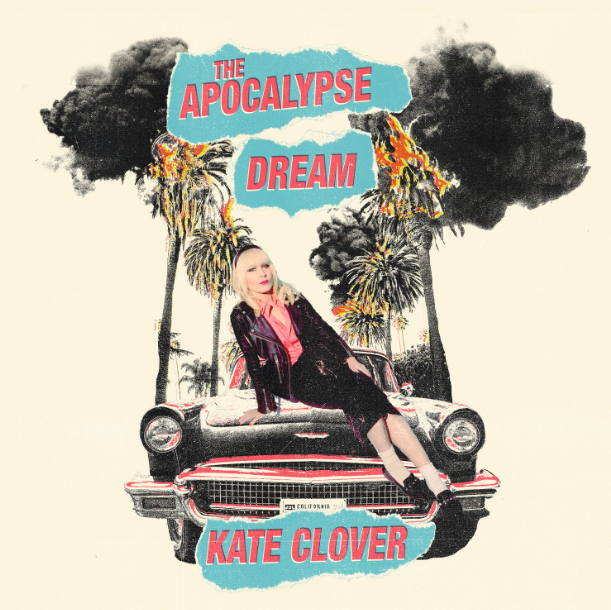
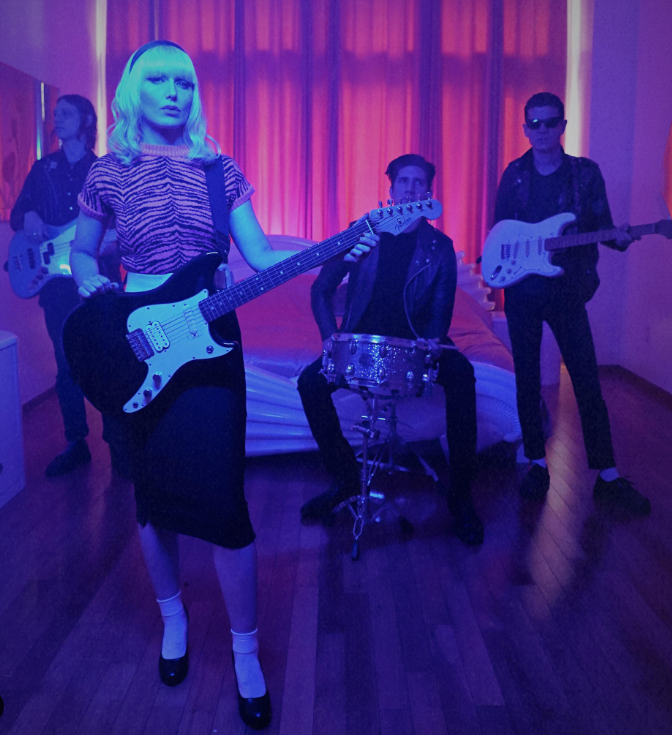
Kate Clover’s highly anticipated album, “The Apocalypse Dream,” is slated for release on April 5th, 2024. With the hauntingly beautiful and powerful single “Damage Control” already making waves, this record promises to captivate listeners.
Kate Clover shared how she discovered her artistic voice while crafting her second album, enabling her to create music that resonates deeply with her vision, free from the constraints of external opinions.
You can discover ‘Damage Control’ featured on the Best Power Pop of 2024 Spotify Playlist.
Was there a particular moment or experience that struck you, signaling that you were onto something special with this project?
The moment I stopped caring what other people thought and was myself. I had to find myself a bit while starting this project. I didn’t know yet ,so I through myself out into the world to see what I was made of. I found my voice.
The decision to seek opinions on your new songs is intriguing. When did you realize that external perspectives could contribute to your creative process?
I write for myself, I feel that’s how you have to work if you’re making honest art. You can’t chose what people like about you or what resonates. It just happens. I like to eliminate that control and let people I trust or who’s taste I regard tell me what they like. By that point, it’s good to hear the feedback. Success, outwardly in the music business is a popularity contest decided by other people. So why not start from the beginning. Before anything is out.
Success can take on different meanings as time goes on. When envisioning success for this new record, what does that picture look like now?
I like this question because people project their own expectations onto artists a lot. Success to me, is waking up and loving what you do. Being able to play music and create songs that resonate with others. I’m not doing this to be graded, make money (although a nice perk) or fulfill my ego. It’s something that feels natural and I want to be able to share it with others. Truly, connecting to other people is success to me.
As an artist, the act of baring your emotions to the world is profound. Does this vulnerability come naturally to you, or is it a constant journey of finding comfort?
You’d think that would be the case but I’ve found that it’s the easiest way to bare your soul. You can say how you are feeling in anyway you’d like. A poetic phrase could have a deeper meaning to you that no one else would understand. Of course feeling vulnerable can be uncomfortable but you got to stand behind it if it’s honest. I trust that. You have to at a certain point because if your self conscious you’re not being an artist. Art is communicating what’s unspoken. So if you feel it, say it. Express it. That’s the point to me. If you’re being honest you shouldn’t be afraid.
Imagine you could collaborate with three co-writers of your choice for new songs. Who would you select, and what qualities or dynamics draw you to them?
Ric Ocasek, he was a master at writing pop songs. I loved the arrangements of his work as well. Minimal yet melodic. Too bad he has passed, it would’ve been great to hear more music from him.
Pete Shelly, again what a songwriter. He could write hooks in the most angular of chord progressions.
Ray Davies, he can write any type of song masterfully.
4th one, Joe Strummer. Oh man, for so many reasons hahaha.
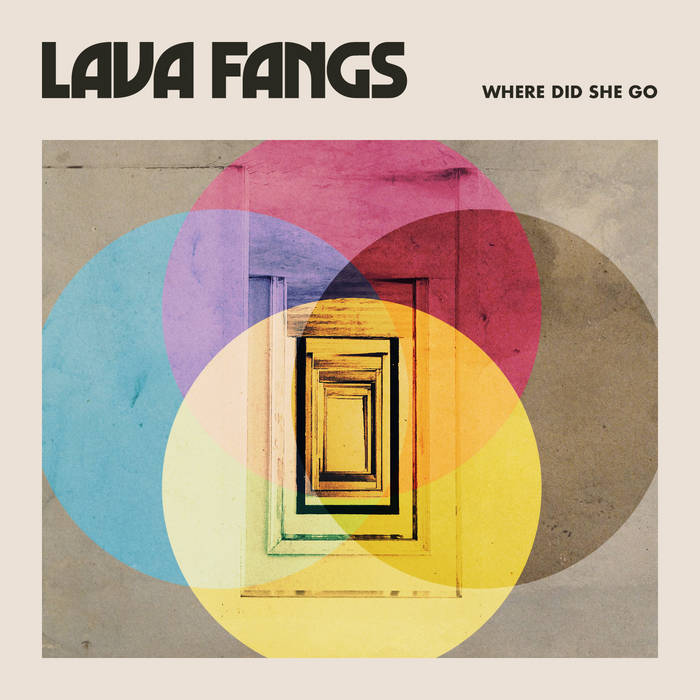
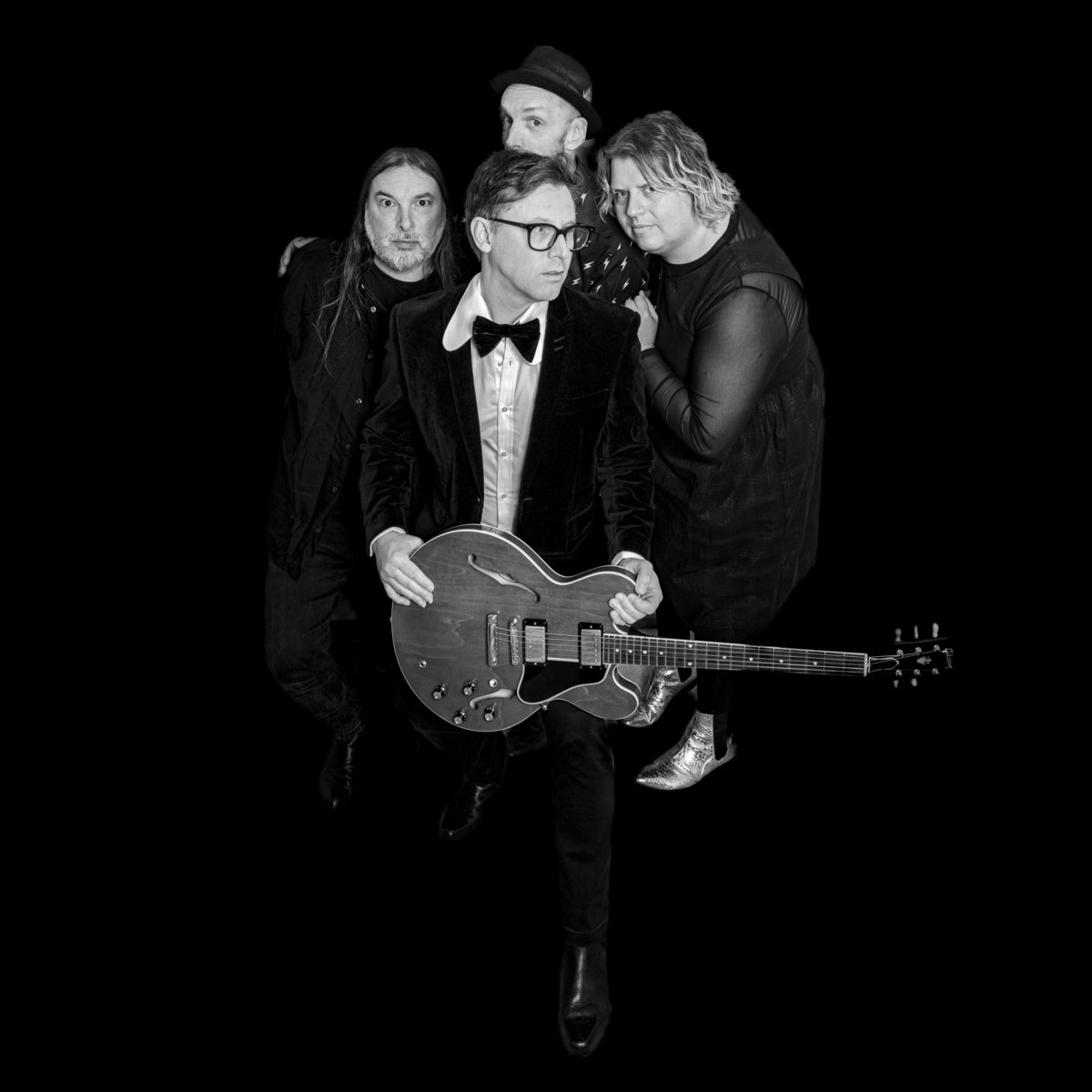
Lava Fangs’ forthcoming album, “Sub Auroram,” is introduced by the irresistibly catchy single “Where Did She Go.” Jamie Coghill and Andrew Horne delve into their experiences crafting what they describe as the challenging process of creating their sophomore record.
You can discover ‘Where Did She Go’ featured on the Best Power Pop of 2024 Spotify Playlist.
Could you share the journey of bringing this record to life? How did all the pieces come together to create the final product?
Jamie – “Where Did She Go” is the lead single from our “difficult second album” … It’s an expression I’ve heard many times since becoming a fan of music as a kid. For the most part I pooh-poohed such a silly expression; How can a second album be difficult? As a fan of music I can think of many bands whose second album is an all time favourite. As a musician, being allowed the opportunity to make ANY album is a privilege and should be immune to such trivialities as being difficult!
As a middle aged musician at the dusty end of several careers in bands who *almost* got somewhere, I can now look on that expression with the road-worn experience of having been involved in a few “difficult second albums” myself. It’s remarkable and lucky really for any band to be around long enough to make it to the second album. The first album is full of excitement and the momentum of being a fresh new band and having a backlog of songs you’re eager to get out into the world and establish your sound with. The follow up album feels the pressure of having to live up to that effortless enthusiasm and momentum the first album had. The first album comes together instinctively, almost as if by accident. The second album has to be planned and meticulously thought out – yet it’s still supposed to somehow sound “fresh”.
The Lava Fangs “difficult second album”, Sub Auroram didn’t start out difficult. In fact we had almost all of the songs written and demoed within a year of releasing our debut. But then the world hit a speed bump that no bands have had to endure in the past – a bloody global pandemic! By the time we were finally able to get together and begin recording it had been a difficult couple of years and we’d all had COVID. I was still getting over it when we went into the studio with Paul Maybury (Rocket Science/The Pink Tiles) to track guitars, bass and drums to 24 track tape. We then spent the next year overdubbing and mixing it ourselves whenever our schedules allowed.
Listening to “Where Did She Go” now, I’m thankful that none of that “difficulty” comes through. It’s just as fresh and exciting as if it were from our debut record. Having four contributing songwriters gives Lava Fangs a fairly unique and diverse sound that only a handful of other bands share (readers of this blog are no doubt aware of Canada’s Sloan … can you think of any others?). For the most part Lava Fangs write songs individually then bring them to the band to add our combined flavour with arrangements, lyric and backing vocal suggestions, but “Where Did She Go” is one of our rare collaborations. Drew (guitar/vocals) brought us a song that we all loved but something was missing so I wrote some lyrics, a vocal melody and a pre chorus to tie all Drew’s bits up into a finished sounding song. I’m very proud of it as a group effort.
Was there a particular moment or experience that struck you, signaling that you were onto something special with this project?
Andrew – when I start to write a song, my process is stumbling across a few chords or melodies that I think sound cool. For “Where Did She Go” the initial verse chord progression sounded great to my ears. Then I tinkered with it till it was ready to present to the band.
From there, the band decides if the song has merit to continue. Jamie added a pre chorus and vocal melody so I guess it had legs!
Sometimes when you are deep in the process with a song it’s difficult to see outside of what you are doing. You have to shut out your inner critic and appreciate what you have created. For me, I find that once the band has given the song a thumbs up I can sit back and be proud of what we have done. The separation of time certainly helps too.
The decision to seek opinions on your new songs is intriguing. When did you realize that external perspectives could contribute to your creative process?
Jamie – Sweet sweet validation!! We all crave it don’t we? Especially on an artistic level. Is it really art if nobody appreciates it? Actually yes, but validation is also nice. As far as other people’s opinions contributing to my own creative process, I think it’s an intangible influence. I don’t write a song thinking about what people might say or think about it, I prefer the creative spark to come naturally and take shape instinctively and then decide whether or not I think it’s worth sharing with the world. Other people’s opinions only serve to encourage me and give me the confidence to keep making music – which is important and helpful, but not essential.
Andrew – I concur with Jamie on this one, validation spurns us (me) to continue on with creative pursuits. With any creative venture self-doubt rears its head constantly. Any positive words from respected peers/friends goes a long way. This affirms that what you are doing is worth pursuing and to trust in your instincts.
Success can take on different meanings as time goes on. When envisioning success for this new record, what does that picture look like now?
Jamie – This is so very true and a great observation! My measure of success when I was in my twenties is very different from how I feel today. For me, this album is already a big success even before it’s released! The fact that Wally and Jo from Cheersquad Records and Tapes were willing and enthusiastic to work with us to release it on their label is a success Lava Fangs haven’t achieved before. Having the opportunity to release 2 digital singles leading up to our second full length album on vinyl is a huge achievement for us. If people like it once it comes out in May (and maybe buy a few copies of the LP), it will just be icing on the cake. A big delicious success cake!
Andrew – At this stage in my/our musical journey, respect from my peers is how I’d like measure success. Having Cheersquad Records and Tapes deeming Lava Fangs worthy of release feels pretty successful to me.
Within this collection, do you feel that the best song you’ve ever written finds its home? If not, what distinguishes this record’s essence from your prior work?
Jamie – Our coming Album, Sub Auroram, feels like a more mature and thoughtful collection of songs to me. It’s definitely our best album as a whole. Personally it’s going to be hard to top “Line Up For A Broken Heart” and “I’m No Good For You” from our debut LP. Those songs came to me unexpectedly from out of nowhere and I’m very proud of them and may never write anything better than those two. Sub Auroram and its songs may not feel like it has the one-two punch of our exciting and energetic debut LP but it definitely has way more musical depth and is arguably a much stronger collection of songs. [See my solo project The Jimmy C and the movie soundtrack for Brides Of Satan for the best song I think I’ve ever written: “Learning To Live To Death”!]
Speaking for the rest of the band though, I’d say probably YES! Wesley’s “Lost For Words” is an excellent song for our newest/youngest songwriter (they haven’t been writing songs as long as the rest of us) and I expect even better songs are in their future. Drew’s “Photograph” is a stunningly mature song and I wish I’d written it. Stu’s songs on this album are also very very strong but my favourite of his songs is “Spitting Nails” from Sons Of Lee Marvin’s Minimum Underdrag LP from a few years ago. Look it up, you won’t be disappointed.
As an artist, the act of baring your emotions to the world is profound. Does this vulnerability come naturally to you, or is it a constant journey of finding comfort?
Andrew – Feeling inadequate is a rich vein to mine for lyrical themes. Hiding your true meaning behind metaphor, double speak and just plain lyrical nonsense says I’m not all that comfortable wearing my heart on my sleeve…just yet.
Imagine you could collaborate with three co-writers of your choice for new songs. Who would you select, and what qualities or dynamics draw you to them?
Jamie – I’m pretty lucky to already have three top shelf collaborators in Lava Fangs, but my three fantasy favourites would be:
1) Andy Partridge. He’s easily THE BEST songwriter in music history. XTC are a sorely underrated band and Andy’s humour mixed with emotional depth and massive talent are just incredible. His angular approach to guitar is amazing too.
2) Jeff Lynne. The immensity of Jeff Lynne’s genius will never be appreciated because ELO got too popular. People dismiss ELO as mainstream disco fodder (less so in recent years) but it’s clear why he got to work with the remaining Beatles in the 90s and all those legends in the 80s. If I could be transported to 1970 and replace Bev Bevan in the late era Move/fledgling ELO with him and Roy Wood, I’d be in creative heaven! Such a creative time and Jeff’s vocal harmonies and arranging are pop perfection!
3) There’s so many others but I think I’ll pick Roland Orzabal. Pop genius and Tears For Fears’ “Everybody Loves A Happy Ending” album is a proper masterpiece. He’s often very sincere in his music and not afraid to risk it all artistically.
And I’ll kick myself for not choosing Gruff Rhys, Lee Hazlewood, Andy Sturmer (Jellyfish), Jay and Chris from Sloan (and Pat and Andrew), and Max Comaskey from Dirty Fences – how much fun that would be!!!!
Andrew – Again I find myself concurring with Jamie about being spoilt with 3 excellent collaborators. Each time one of the ‘Fangs’ presents a new song or idea I’m excited to see what they’ve come up with. That’s a pretty cool place to be! And, knowing that my band mates will interpret my ideas in a particular way influences the way I write. Absolutely!
However, in no particular order these folks would be cool to pen a tune with –
• Kim Salmon & Spencer P Jones I’m cheating and making them a package deal. At the top of their game both could write songs with interesting & unique musical content and lyrics. Their songs have great depth & humour all in one go. Both absolute treasures in the Australian music alumni.
• Harry Vander & George Young. I could add them to this list for the Easybeats alone however they went on to churn out great songs in any style you liked (as long it was rock, pop or disco) for decades.
• Lee Hazlewood. Do I need to elaborate? [Jamie – HELL YEAH LEE HAZLEWOOD!!!!]
Honourable mentions of Gene Clark, Alex Chilton, Beck, Dolly Parton, T Swift (I think you’d get a bang-up working lunch with T Swiz is all)
Among the gigs you’ve performed, which one holds an indelible place in your memory and why does it stand out?
Andrew – The one we are about to perform in a drainage ditch at a rouge ‘generator’ skateboard party I think will be pretty memorable.
Or, that time I played support to Arthur Lee. What made that special? Arthur Lee!!
Jamie – In bands other than Lava Fangs, I got to drum in front of thousands of people at Melbourne’s Arts Centre forecourt playing AC/DC songs for an exhibition opening … that was pretty cool … but not as cool as the time I was playing at a tiny pub in Adelaide and threw my drum sticks above my head and walked off stage when a guy grabbed my arm and pointed to the dart board behind the drum kit with my sticks balancing perfectly on the ledge above! One in a million chance.
Defining a song’s completion can be elusive. How do you determine when a composition has reached its final, ready-to-record form?
Jamie – I feel like I’m pretty good at this, but it’s not necessarily a skill. It’s pure instinct for me. It’s finished when I can’t hear anything wrong or missing. It helps also to be time poor, both with Lava Fangs and my solo music as The Jimmy C, it’s about getting the most out of limited time. It’s actually an advantage to have kids and work stopping you from spending days and days on one song and never feeling fully satisfied because it won’t meet your expectations. If you have a set amount of time to get it done, it’s done when the time runs out!
Striking a balance between experimental artistry and commercial appeal is a challenge. How do you navigate this dynamic within your music?
Jamie – Commercial appeal? Never heard of it! Be true to your art – but pick a lane. Write the best kind of song you can within the parameters of your chosen style or genre. I’ve never had commercial appeal but I do try to write accessible songs. I respect the craft of songwriting and so don’t get too experimental within a song itself, but I really enjoy experimenting with genres and the structure of an album as a whole.
Andrew – Never tried. Making stupid noises with a memory man is more fun than being appealing commercially.
Lyrics often carry profound meaning. Are there particular lines you hope listeners will always remember from your songs? If so, what’s the significance?
Jamie – See “She’s So Cool” from our Unclarity EP from last December. Some of my most profoundly silly lyrics. I’m very proud to have the word “precipitation” feature in the chorus backing vocals.
I think Stu probably has the greatest gift for turn of phrase and cleverness in his lyrics within the Lava Fangs band. Go check out some Stu songs in our back catalogue.
Can you recall the last instance when you felt the immediate certainty of having penned a hit song?
Jamie – I have never, and will never write a “hit”, but I have written a few songs that I think can stand up along side the music I love as a music fan – and it’s an incredible feeling when you’re rising to that level. It’s always a surprise to me when I finish writing or recording a song that doesn’t sound shit! If I can write a song as good as the worst song by my favourite bands then I know I’m achieving something very rare.
Andrew – I write shit songs all the time…oh right you said hit song. I’ll let you know.
With the resurgence of cassettes, imagine curating your inaugural mixtape. Which five songs would be must-adds and why?
Jamie – I sure do love curating a good mixtape/CD/playlist! I’m surrounded by cassettes all day every day so they’re still a very familiar medium for me.:
• The Last Plimsoll by Stackridge – a pop opera masterpiece! Complex, richly musical and a tune you can whistle!
• Cybele’s Reverie by Stereolab – It’s vintage Yéyé pop with 90s indie cred … cracking track!
• Harold Faltermeyer’s theme from Fletch – just to catch the listener off guard! It’s so 80s and synthy and arguably way better than Axel F.
• Fade Away by Sloan – Jay Ferguson’s Action Pact album closer. It’s a real hidden gem in the Sloan catalogue and it hits me right in the feels.
• And lastly; More Than He’ll Have To Give by John D. Loudermilk – Just a beautiful gentle simple song about never being better than others but being the right person for someone. Could be swapped with Waiting For Someone by The Tokens from their incredible concept album Intercourse.
And all the songs I haven’t mentioned are causing me great pain … Homefront Cameo by Cotton Mather, Change For The World by Charles Bradley, King Kong by The Jimmy Castor Bunch, Ladybird by Tears For Fears … ouch! Let me dub you a 10 tape collection on C-90s!
Andrew – Ahhhh the mixed tape. The romantic calling card of yesteryear!
I’d have to include songs by The Stooges (Ashetons only please!) ok ok I’d pick Dirt from Funhouse. Nancy Sinatra would deffo feature! But what song? Sugar Town for a subtle drug reference, ‘Boots’ is way too obvious; Summer Wine I think would be a great choice but then again Bang Bang is bloody ace! Can we get a cheer from the back for Billy Strange and his arrangement of that song??
Big Star has always a place on such tapes, and I’d wager lots of people first heard Big Star in this format. Thirteen would be a great addition if your intent was to woo.
What’s that three? Two more to go.
Always a big fan of Australian 80’s indie music I’d have to include the Beasts of Bourbon or Scientists (don’t ask me to pick a song) and before you flip that tape over lets hear from Redd Kross – I saw them steal the show (over the Hoodoo Gurus) with a rendition of ‘Jimmy’s Fantasy’ so that one!
While you can’t dictate how people interpret your music, are there specific elements you wish to highlight that set your songs apart?
Jamie – Definitely the fact that we four Fangs all contribute songs and arrangements and ideas to each other’s songs. Many bands have a dominant songwriter and other members who are just happy to play their part. With us you get four different flavours and sets of influences which I think diversifies us thematically and stylistically from most other bands.
If tasked with introducing your music through three songs, which ones would you choose and what story do they collectively convey to new listeners?
Jamie – Ouch, yet another “Sophie’s Choice” … I have to mention “Line Up For A Broken Heart” because I wrote it and I’m very proud of it. It’s the main track that makes people consider us a power pop band. The other side of Lava Fangs is our “garage surf rock” side. A good example of this is a song you’ll have to wait until May to hear when our new album comes out; “Dancing For Satan” – a song that shows our silly side co-written by Wesley (bass/vocals) and Stu Manchu (guitar/vocals). My third and difficult final choice is “Where Did She Go”, our current single. Those three should be enough to convince anyone that we’re worth listening to and then people can look deeper into some of Stu’s garage punk tracks or Drew’s melodic 70s rock, Wesley’s indie pop … and our more moody and contemplative moments … and there’s so much more coming in May with our Sub Auroram LP!
In a hypothetical scenario where you could tour with two other bands, who would be your ideal companions and what synergies do you envision?
Jamie – I’d love to share a stage with Dirty Fences from New York. Their energy and antics would make for such a fun night. I’d also love to play with Canada’s Sloan even though they’d make me feel completely inadequate because they’re so amazing musically … If this were a time travelling fantasy I’d play with Jellyfish in 1993 and look even more inadequate. But what a story I’d have to tell!!
Andrew – Mudhoney & Mudhoney. Call it a life ambition.
Studio moments often hold a touch of magic. Could you recount an instance that stands out as the most enchanting during your creative process?
Andrew – I could not tell you of one instance of a creative stand out, we have many.
Creative epiphanies keep you coming back to the practice room when your regular life leaves you beat. It’s those times working on a great song or someone comes up with a cool part that is immediately apparent; that’s the magic that keeps you coming back time and time again.
Jamie – We giggle a lot in the studio. It’s lucky we handle most of our production and recording ourselves or we’d thoroughly piss people off.
How would you describe the evolution of your sound in this new album compared to your previous works? Were there intentional shifts in style or themes?
Jamie – Our first EP, 2017’s Black Rain, was a very noisy DIY garage affair, but still has a few hints of melodic evolution to come. Our Debut LP added the power pop flavours to the garage and punk and also introduced more thought to the production and arrangements with more vocal harmonies and musical textures. Our new album sounds more mature still in production and song writing. We still capture some frantic garage energy in places but we’ve evolved to give the concept of melody a little more respect. Our next project will probably rebel from this thoughtfulness and devolve into noise rock chaos … onwards and sideways!!
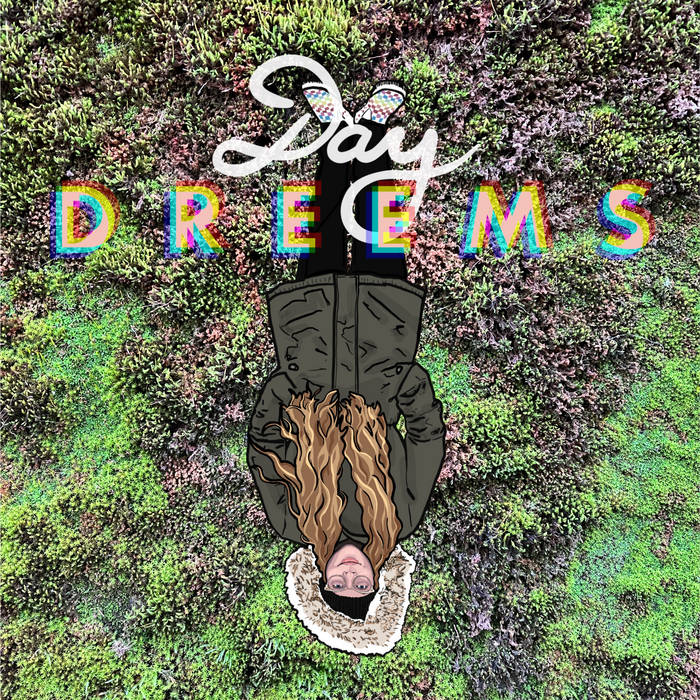
In jest, Day affectionately dubs this self-named compilation of 10 irresistibly catchy pop tunes as the ‘Me Me Me’ album. Each lyric delves into deeply personal territory, with melodies that linger long after they’ve played. While one might initially be captivated by the infectious tunes, there’s more beneath the surface awaiting discovery. This album is a treasure trove for those willing to dive deeper.
You can discover ‘Fountain Of Truth’ featured on the Best Power Pop of 2024 Spotify Playlist.
Could you share the journey of bringing this record to life? How did all the pieces come together to create the final product?
I played my last show with The Zags in early two thousand twenty, right before SARS-CoV-2 changed the world. March two thousand twenty brought illness, disorientation, and an extended interruption of my creative flow. It wasn’t until December of two thousand twenty-one that the artistic impulse started to return to me. I discovered how easy it was to use virtual instruments to create musical sketches on my tablet computer, and I dove into writing new music. Within about a week, I had the arrangements for half the songs on this record sketched out.
In two thousand twenty-two, I began releasing a combination of works-in-progress, older demos, and live tracks each month, which I’m still doing to this day. (I think there are now forty-something tracks available for my subscribers on Bandcamp and Patreon!) I spent two thousand twenty-two and two thousand twenty-three writing lyrics and recording parts, one song at a time, along with drawing artwork for each. Then I decided to release the new songs as an album, and started making stereo mixes and an album cover design. I’m not the most organized or timely person (see my song “Brain Drain”), so getting the release ready has been a real challenge!
As an artist, the act of baring your emotions to the world is profound. Does this vulnerability come naturally to you, or is it a constant journey of finding comfort?
In past work, I’ve bared my emotions very little. I tend to write with some emotional distance, either about impersonal topics like historical understandings of the planet Venus, or from the perspective of a character who is not that similar to me. I do have a couple of older songs that reflect my struggles with depression, but I’ve mostly drawn a pretty hard line between my personal life and my songwriting.
My approach has changed with this record. With the exception of Lady Beetle, which is literally just some musings about lady beetles, all the songs on “Day Dreems” flow very directly from my personal experiences and concerns. It’s definitely uncomfortable for me — vulnerability is scary! But it also feels good to make such a personal record. I hope my feelings and perspectives resonate with some listeners, so that we might all feel a bit less alone.
Imagine you could collaborate with three co-writers of your choice for new songs. Who would you select, and what qualities or dynamics draw you to them?
My ideal collaborator would be someone to ask me probing questions that help me write lyrics. And someone to cheer me on and give me a sense of urgency about finishing work. And someone who is well-organized and good at talking to strangers to help me get the music out there and connect with my audience. So maybe like a therapist, a coach, and a PR expert? Or just Paul McCartney? I think he might have all those skills, plus, you know, some musical and lyrical abilities, too.
My most successful co-writing experiences have been where we would literally trade off lines or verses, not really working together so much as working in dialogue with each other. I’d enjoy trying that with some more people. If I limit my choices to active artists, I might include Shannon Shaw, Mo Troper, Palehound, Kevin Barnes, Mary Timony, Euros Childs, Mitski, and Norman Blake. I think they all have enough in common with my tastes to mesh well, while bringing enough different influences to generate something that is different from what I’d make alone.
Lyrics often carry profound meaning. Are there particular lines you hope listeners will always remember from your songs? If so, what’s the significance?
I’m not sure whether many of the lyrics on this record need much explanation, but I think they’re powerful if not necessarily profound.
“The Bad Old Days” paints a pretty clear picture of the growing fascist minority in the U.S.A. If they had their way, only white cisgender heterosexual Christian non-disabled people would be recognized as having basic rights, and the women within that group would be subject to the will of the men. “They say their enemies are weak but also strong. They say it’s obvious which people should belong. And the rest of us can serve them if we just behave, and thank them for the crumbs they gave. But if being who you are is likely to disrupt, get ready to be rounded up!” The scary thing is that I’m not creating a straw man; they talk about removing civil rights and about punishing their political enemies! I hope we can get those folks to at least stuff their supremacist attitudes back into the closet, if they can’t figure out why they ought to care about other people in a plural society.
I also hope that “F Natural” might help some people give up on the notion that natural = good. “It’s natural to be dying of disease,” after all. And if people want to use medical interventions to prevent or end pregnancy, or to change their secondary sex characteristics, that should be their right as well — bodily autonomy! “Your body’s made for you, not a temple or taboo. Go ahead and change the things you want to! They may say it’s a facade, or that you are playing god. You’ll live inside their heads and pay no rent. But nature’s just an accident..”
Albums often involve collaboration with various musicians and producers. Could you shed light on how these collaborations contributed to shaping the album’s identity?
In this case, the album’s identity was shaped powerfully by the absence of collaboration. I’ve been writing and recording pop songs for decades now, but I’ve always done it in the context of bands. I’ve hardly ever even been the sole songwriter in a band! Working all alone had its downsides — no one else was there to help when I got stuck in the mud — but it also meant that I could be guiltlessly brutal in my judgments and edits. When I’m working in a group, I assume everyone is there because they get to express themselves, and I’m quite cautious about asking for changes or trying to overrule my bandmates. With no collaborators, I can embody my inner control freak! One consequence is that this record is probably more polished and consistent than anything I’ve made previously. Hopefully not to the point of sterility!
In the digital age, visual elements are intertwined with music. How did you approach the album’s visual aesthetics, such as album art and accompanying visuals? How do they complement the sonic experience you’ve crafted?
Like the rest of the album’s production (songwriting, arranging, performance, recording, mixing, mastering), the visual elements were all created by me. They also all include depictions (drawings or photos) of me. So I suppose that reflects the higher degree of personal expression and vulnerability that I’ve allowed myself with this album. Me, me, me, me, me! Lol.
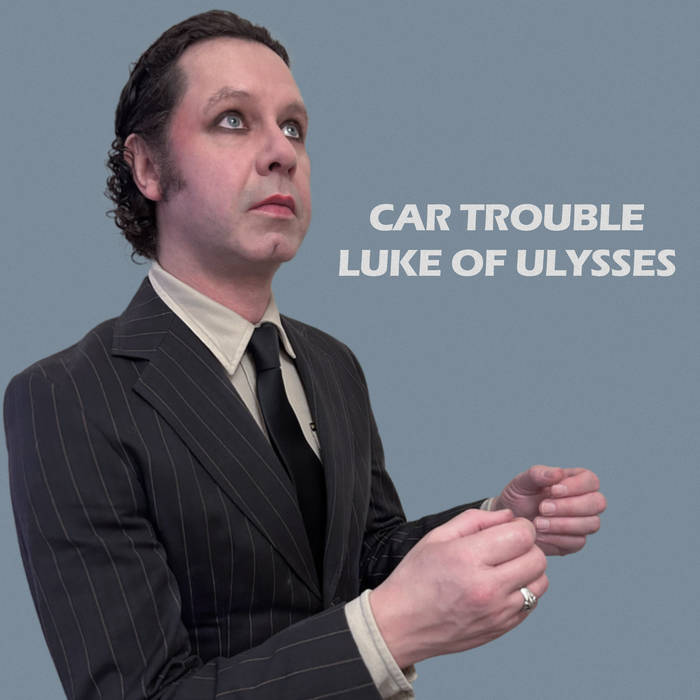
Luke, celebrated for his role in Ulysses, introduces a mesmerizing solo track titled ‘Car Trouble‘, evoking the essence of The Cars, Weezer, or Jellyfish throughout, with an exceptional guitar solo adding an additional touch of allure and excellence.
Could you share the journey of bringing this record to life? How did all the pieces come together to create the final product?
Myself and Tom have been friends for years but never actually worked together, then recently I did some session work for him and he offered to do one song with me to get off my arse (I hadn’t been particularly motivated to finish / put out new music etc. I kind of wrote a song to order and demoed it roughly at home, then we did a couple of days at Tom’s place where we remade it from the ground back up, much better of course, with the bits I didn’t like improved / changed and lots of great ideas from Tom arrangement and sounds-wise.
Was there a particular moment or experience that struck you, signalling that you were onto something special with this project?
As soon as the backing track started coming together at Tom’s, also when I did my first main vocal (which we used) when I did the ‘whoo-ooh-ooh’ bit at the end.
The decision to seek opinions on your new songs is intriguing. When did you realise that external perspectives could contribute to your creative process?
It’s very hard to do everything on your own, the right people to work with creatively help to spark great moments and help to give you an overview of what you are doing. The end result of music for me is to create a song or a moment that you didn’t know was going to happen – it’s magic.
Success can take on different meanings as time goes on. When envisioning success for this new record, what does that picture look like now?
I’m just happy that all the old Ulysses fans are enjoying it! (As far as I’m aware).
As an artist, the act of baring your emotions to the world is profound. Does this vulnerability come naturally to you, or is it a constant journey of finding comfort?
It comes naturally to me but I try not to think about it to be honest!
Imagine you could collaborate with three co-writers of your choice for new songs. Who would you select, and what qualities or dynamics draw you to them?
Jonathan Wilson producing, Ariel Pink even though he’s a Trump-loon, and Paul McCartney on drums. Something good would come out, probably!
Defining a song’s completion can be elusive. How do you determine when a composition has reached its final, ready-to-record form?
Sometimes you just know from the feeling, that’s it’s finished, sometimes you just have to stop when you’ve done the best that you can do.
Lyrics often carry profound meaning. Are there particular lines you hope listeners will always remember from your songs? If so, what’s the significance?
I work hard on making the lyrics as good as I can do them. I always like to have some black comedy in there and some kind of human truth in a line or two somewhere.
Can you recall the last instance when you felt the immediate certainty of having penned a hit song?
This one.
With the resurgence of cassettes, imagine curating your inaugural mixtape. Which five songs would be must-adds and why?
Air ‘Ce matin-là’, James Gang ‘Take a Look Around’, Ariel Pink ‘Mature Themes’, Bobby Conn & The Glass Gypsies ‘Relax’, and Dave Dee Dozy Beaky Mick & Tich ‘Save Me’. Why? Because they are all Godlike.
Performing music before an audience holds a unique allure. What aspects of this experience contribute to the excitement and enjoyment for you?
When people truly lose themselves in the moment, it’s the best.
In a hypothetical scenario where you could tour with two other bands, who would be your ideal companions and what synergies do you envision?
The Black Crowes, so I can guest on some guitar with them, and Weezer so I can guest on some singing with them.
Where do you see yourself situated within the broader landscape of the music industry? How do you perceive your unique role and contribution?
I see myself very near the bottom, along with many other good people (and bad). This is the new Independent situation.
With the record completed and the music released, do you believe the pinnacle of enjoyment has been reached, or is this just the beginning of an exciting phase?
There’s nothing quite like that moment when you first finish recording the definitive version of a great new song.
Looking ahead to the next couple of months, what exciting plans or projects are on the horizon for you?
Recording more new songs, making more new videos, also playing bits and bobs with lots of other people such as Nick Frater, Hector, Bingo Wings, Captain Francisco – lots!
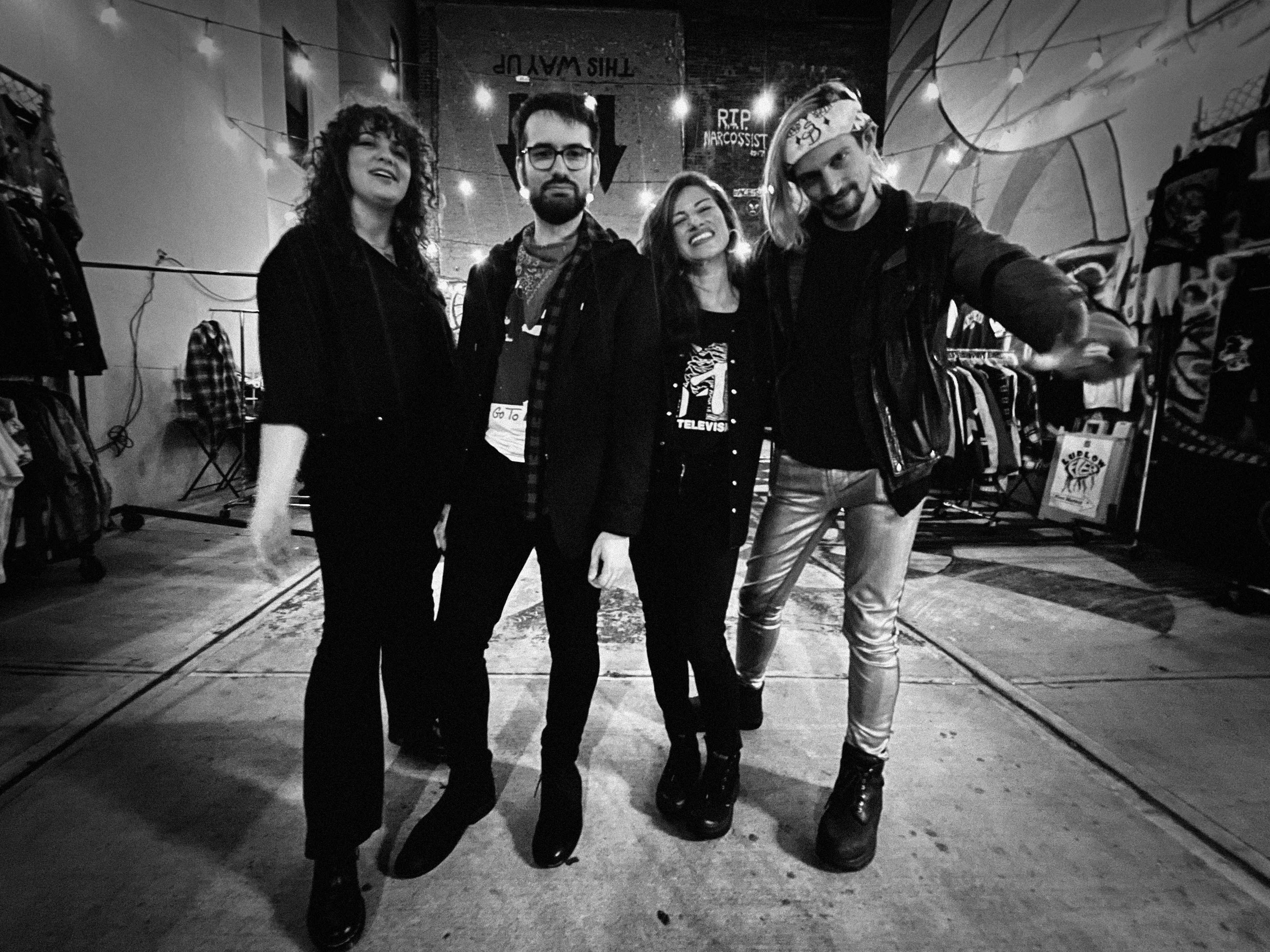
“(…) stuff with hooky memorable riffs, big vocal melodies, jangly guitars, busy rhythm sections, and a lot of energy,” is how Steve Bailey describes the sound of Sorry Darling. In this interview, he and Liz Wagner introduce the band from Brooklyn, NY, and take us through the making of ‘See This Through‘, the beautiful EP recently released.
You can discover ‘Sorry Darling’ featured on the Best Power Pop of 2024 Spotify Playlist.
Could you share the journey of bringing this record to life? How did all the pieces come together to create the final product?
Steve – The majority of the songs on the EP had been gestating for about 5 years across a few different iterations of the band. Initially Liz and I had started Sorry Darling as sort of a stylistic diversion from our respective bands at times (shoutout to The Sharp Shadows, Wild Yawp, the Significant Looks, and Blaze Pascal!) It was meant to be primarily acoustic but as it became clear that we really liked writing together and that we simply wanted to rock more, the lineups got bigger and the songs got louder. The definitive lineup of Sorry Darling came together a year or so ago and by then we were itching to get into the studio, so once the songs had been learned we wasted no time getting in there.
Stylistically I feel like ‘See This Through’ is sort of a greatest hits of what we love in pop and rock music – stuff with hooky memorable riffs, big vocal melodies, jangly guitars, busy rhythm sections, and a lot of energy. I think the artists we individually like are all over the map but together make a really compelling mix sonically.
Was there a particular moment or experience that struck you, signaling that you were onto something special with this project?
Steve – I think it was early in the recording process at Studio G when we first heard ‘In Theory’ on the big studio monitors and realized that we rocked harder than we had initially thought we did! It’s one thing to learn the songs and play them together in a small room, but another entirely to work with a great engineer like Jeff Berner and hear yourself sounding as big and awesome as your favorite records do. If you can have that out of body experience of listening to yourself and forget it’s you, then you’re going places.
The decision to seek opinions on your new songs is intriguing. When did you realize that external perspectives could contribute to your creative process?
Steve – I think it’s useful when you are working on them in the studio. Personally I like to keep those processes internal save for a few trusted musical compatriots because I don’t want to second-guess my own artistic intent. I think too much committee can take away what’s unique about your music.
Liz – I think it mattered most to me to see which song of the 6 hit who and why. It was validating and exciting to share with our closest musical allies and friends and hear that all 6 got a chance to be somebody’s favorite.
As an artist, the act of baring your emotions to the world is profound. Does this vulnerability come naturally to you, or is it a constant journey of finding comfort?
Steve – An interesting question. For me personally I think part of writing pop music is less about my own personal vulnerability and more about reflecting situations that evoke that for people writ large. All of the songs originate from real experiences, but I am less interested in what people think Steve Bailey Himself™ gets up to and more interested in how they can relate these feelings to people and situations from their own lives. I think when that happens you get a real conversation going.
Liz – Agreed, a very interesting question. I hope that my Liz Wagner Biro Herself™ stories resonate and evoke memories and feelings for listeners as Steve said but I’d be lying if I didn’t say these two songs especially weren’t deeply personal! Writing vulnerably, playing vulnerably, singing vulnerably, etc. absolutely come naturally because I am a heart-on-my-sleeve kinda gal but woof, the post-show/post-release vulnerability/visibility hangover is real… That part is less natural. I have a complicated relationship to being perceived.
Imagine you could collaborate with three co-writers of your choice for new songs. Who would you select, and what qualities or dynamics draw you to them?
Steve – Chrissie Hynde for her way with words and attitude. Stuart Adamson (RIP) for his gorgeous melancholy and otherworldly guitar wizardry. Jessica Dobson of Deep Sea Diver for someone newer and closer to home for both of the above. She’s incredible and has such a personal musical language that still feels familiar and inviting.
Liz – Wow what a question… I am deeply moved and see myself in the lyrics of Katie Gavin of MUNA, Fiona Apple, and Jenny Lewis and right now the poetry of it all is what has me most captured.
Striking a balance between experimental artistry and commercial appeal is a challenge. How do you navigate this dynamic within your music?
Steve – I’ll be the first to say that I’m not a terribly experimental person when it comes to music. Weirdly I think the internet now is divided between people aggressively dedicated to niche artistry and people who want the most bone-headed hooks ever. I seek to exist between those two worlds in the way I feel the best bands always were – using interesting ideas in service of really memorable material.
Liz – I am similarly unsure of where to strike that balance in a particularly conscious way. I think, or at least I hope, we toe the line of the expected and the unexpected. I love throwing something just a little weird behind the more “bone-headed hooks”, as Steve defined them. I think because our personal influences are so diverse the art ends up being harder to put your finger on than any of us knew when we first brought in a song or a riff or whatever.
Lyrics often carry profound meaning. Are there particular lines you hope listeners will always remember from your songs? If so, what’s the significance?
Liz – Honestly, I want them to remember all the words always and sing along at shows cause that’s just so fun when it happens!
With the resurgence of cassettes, imagine curating your inaugural mixtape. Which five songs would be must-adds and why?
Steve – “In a Big Country” by Big Country, “Baba O’Riley” by the Who, “Brass in Pocket” by the Pretenders, “Material Girl” by Madonna, and “Shadow of a Doubt” by Sonic Youth. All of them live in my brain eternally, so might as well try and trap them on this cassette tape.
Liz – Ohhhh shit what a question… since Steve went retro I’ll stay (mostly) current – “The Wire” by Haim, “Best Left” by The Beths, “Honey” by Maggie Rogers, “Loudspeaker” by MUNA, and “When You’re Gone” by the Cranberries.
While you can’t dictate how people interpret your music, are there specific elements you wish to highlight that set your songs apart?
Steve – I think the level of craft we bring to the table makes us special. Bands these days either tend to be one-note fuzzy riff lords or navel-gazing indie/emo and we’re neither. I don’t think you should have to veer that far to either extreme to be heavy or to share a feeling. The best bands did it all and did it with style. I think we’re formed in that tradition.
Liz – I’d agree we’re trying to do it all, and I think again that’s a place where our diverse tastes and backgrounds converge really beautifully. I want our music to be equally enjoyed by you, your toddler, and your boomer mom and feedback thus far is that we’ve done that!
In a hypothetical scenario where you could tour with two other bands, who would be your ideal companions and what synergies do you envision?
Steve – The Beths and Charly Bliss would be super fun. I think all three of us value big hooks and on songcraft, so I think it’d be a match made in heaven.
Liz – I second The Beths, no question. It’s the one band all four of us passionately agree on! And I’d love to tour with Jenny Lewis, I think our songwriting is compatible and we’ve always said we’re for fans of Rilo Kiley.
Among the compliments you’ve received, is there one that remains etched in your memory? If so, what made it particularly unforgettable?
Steve – A friend of mine told me that my guitar style was instantly recognizable and that felt like a real accomplishment. Guitars may be back on the rise but I don’t know that song-focused guitar playing totally is just yet. I think we have a lot of enthusiastic strummers out there, but I don’t know that Millenials/Zoomers have too many guitar heroes that aren’t TikTok or YouTube people. I’m not an insane shredder but I do think I have certain musical tics that combined give me a sound that isn’t really in step with what most people seem to do lately.
Liz – One of my moments is actually something Steve said to me once after I expressed some self-conciousness about a particular vocal performance – he said something along the lines of “lots of people have voices that are nice to listen to but not everyone has a voice that makes them feel the way that you can.” I’ve really dined out on that feedback for a while now, so thanks buddy.
Where do you see yourself situated within the broader landscape of the music industry? How do you perceive your unique role and contribution?
Steve – Our generation has spent its entire adult life being talked down to. I think a lot of our generation’s music shows the hallmarks of being browbeaten, or suffering from arrested development (i.e. emo). With Sorry Darling I think we deal with a lot of the same feelings and situations but we’re not writing downer music that sounds like surrender. There’s some attitude there, there’s some ‘fuck you’ in the joyful energy, and there’s some maturity to how we handle the subject matter. I think that’s really important and I hope that inspires others to do the same.
Liz – Well said. I hope our songs help people feel less alone, that’s my biggest hope within art in general.
Envision recruiting three singers to provide harmony vocals on your next record. Who would you invite, and what qualities do they possess that resonate with you?
Steve – HAIM. Because they are HAIM.
Liz – Haha I am cool with that.
With the record completed and the music released, do you believe the pinnacle of enjoyment has been reached, or is this just the beginning of an exciting phase?
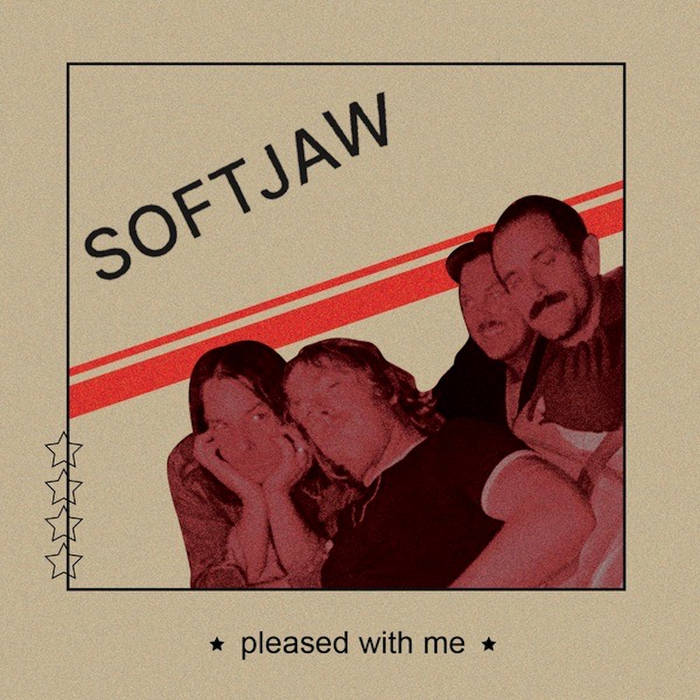
“Pleased With Me” stands as the irresistibly catchy debut single by SOFTJAW, hailing from Long Beach, California. Serving as a vibrant ode to the golden era of Power Pop, the track channels the spirit of influential bands like The Nerves and Cheap Trick.
In a musical landscape where acts such as Young Guv, The Whiffs, and The Prize pay homage to these iconic predecessors, SOFTJAW joins the ranks, affirming that the genre is indeed very much alive and thriving.
Sweet Sweet Music blog graciously provides a platform for the band to introduce themselves.
You can discover ‘Pleased With Me’ featured on the Best Power Pop of 2024 Spotify Playlist.
Could you share the journey of bringing this record to life? How did all the pieces come together to create the final product?
Dustin: Once Tanner and I got together for this project, the songs started taking shape right away. A few weeks later, we recruited Vinny and Dan, played a few shows, and hit the studio. It happened really quickly.
Tanner: I met Dustin at the local bar, and he dead ass came up to me and said he wanted to start a power pop band, and he wanted me in it because I rock so goddamn hard, and something along the lines of “you’re too badass to not be in a band with me,” and I was all, “you’re right”… Just kidding, I was wearing a Big Star shirt, and he asked if I liked The Nerves. I said, “that’s like a top-five favorite of all time.” Everything just got easier when Vin and Dan hopped on; it felt like they really made it a heavy-hitting group, and I’m so stoked to rock with these fellas.
Was there a particular moment or experience that struck you, signaling that you were onto something special with this project?
Dustin: The fact that we sounded pretty good right off the bat was it for me.
Tanner: It was probably when Dustin and I started singing together the first time we practiced; it’s not easy to find other rockers who wanna sing their ass off and harmonize like we do, and it was pretty instant that I knew this was gonna be fun.
Vinny: I knew when I heard the demos the songs were great, but hearing how good they sound live is pretty wild. I’m mostly talking about the harmonies. It’s always pretty amazing. The guys are pop freaks.
The decision to seek opinions on your new songs is intriguing. When did you realize that external perspectives could contribute to your creative process?
Tanner: To quote White Reaper, “if it makes the girls dance, the boys will dance with ’em.”
Success can take on different meanings as time goes on. When envisioning success for this new record, what does that picture look like now?
Tanner: To be quite honest, all I want to do is rock and roll; whatever lets me do that more is a success to me.
Dustin: Same; I just want to play rock and roll music.
Vinny: A million bucks (each) in Spotify streaming royalties and performing at the halftime show for Super Bowl XXXXXVII.
Defining a song’s completion can be elusive. How do you determine when a composition has reached its final, ready-to-record form?
Dustin: We don’t really put a ton of thought into it. Once we’ve played the song at a show, it’s alive and ready to be printed.
Vinny: I always try to err on having a song be too short rather than too long. Someone can always repeat a song that’s too short, but if they skip a song halfway through, then you probably overstayed your welcome.
With the resurgence of cassettes, imagine curating your inaugural mixtape. Which five songs would be must-adds and why?
Dustin:
The Nerves – “When You Find Out”
Teenage Fanclub – “Sparky’s Dream”
The Lemon Twigs – “My Golden Years”
Brower – “Where Is The Magic?”
The Gants – “I Wonder”
Vinny:
Pavement – “Gold Soundz”
Pavement – “Harness Your Hopes”
Pavement – “Frontwards”
Pavement – “Kentucky Cocktail”
Pavement – “In the Mouth a Desert”
Tanner:
“On Top of the World” – Cheap Trick
“Starry Eyes” – The Records
“Thorns and Roses” – Exploding Hearts
“No Substitute” – The Shivers
“Somewhere to Fall” – The Uni Boys
These are absolute smash hits that get everyone jumping and moving.
In a hypothetical scenario where you could tour with two other bands, who would be your ideal companions and what synergies do you envision?
Dustin: Slade and XTC would be killer. The Who is up there as well for me.
Vinny: I dunno, I’d love to watch DEVO every night for 4-5 weeks, but I could see them being assholes to the opening band. Tenacious D seemed to have a pretty good vibe when I saw them soundcheck. Maybe them and Guns N’ Roses for intentional and unintentional comedic relief.
Tanner: I’m on a giant Cheap Trick kick, in particular the Heaven Tonight record, so probably them but during that era. I would love to tour with Vacation from Cincinnati; I saw them play when I was on my first U.S. tour, and they are the nicest and most rowdy boys; their songs rip face. Touring Japan with the Uni Boys would be sick too and should totally happen.
Among the compliments you’ve received, is there one that remains etched in your memory? If so, what made it particularly unforgettable?
Dustin: At our last show, someone compared us to MC5, which is insane.
Vinny: “Good set.”
Where do you see yourself situated within the broader landscape of the music industry? How do you perceive your unique role and contribution?
Tanner: SOFTJAW is gonna be the band you can’t get out of your head, big, phat, and catchy! No fooling around with this rock and roll shit; we are taking over the planet, baby, all in the name of rock.
Envision recruiting three singers to provide harmony vocals on your next record. Who would you invite, and what qualities do they possess that resonate with you?
Dustin: John, Paul, and George. I learned all of John’s vocal parts as a kid. That’s how I learned how to harmonize.
Vinny: Man, honestly, Dustin, Tanner, and Dan are all insanely good at harmonies. Why go out for burgers when you’ve got steak at home?
Looking ahead to the next couple of months, what exciting plans or projects are on the horizon for you?
Dustin: Bunch of new songs and recordings. Lots of shows planned.
Vinny: SOFTJAW mini-tour/album, becoming so famous.
Albums often involve collaboration with various musicians and producers. Could you shed light on how these collaborations contributed to shaping the album’s identity?
Tanner: The way I see it, I’m the young gun in the band; everyone has some insane chops, and I have the most respect for the boys, so I always feel like I gotta push to keep up with these dudes. Working with Dustin and writing these tracks has definitely put a fire under my butt. Dustin comes to me with a demo that sounds like a masterpiece, and I send him shitty voice memo demos; the skill and ease that he puts out tracks makes for a healthy competitive energy; I’m always trying to write the next catchy riff or jolly chorus, and that drive keeps me moving. Ala Paul and John or Buzz and Woody.
Dustin: We balance each other out with our songwriting styles for sure. When Tanner picks up a guitar and starts singing, it’s instantly rock and roll, and he writes killer jams. Kid’s got the magic.
In the digital age, visual elements are intertwined with music. How did you approach the album’s visual aesthetics, such as album art and accompanying visuals? How do they complement the sonic experience you’ve crafted?
Tanner: My girlfriend and I designed the single covers; she is a wizard with editing, and I love her very much, and I’m just soaking up ideas from what’s around or what I rock with.
The Second Summer, hailing from Chicago, characterizes their musical style as Hard Power Pop. Their latest release, Undertow, hit the airwaves a few weeks back and is packed with fantastic tracks. Steve Gatland shares with Sweet Sweet Music blog the story behind the album’s creation.
Success can take on different meanings as time goes on. When envisioning success for this new record, what does that picture look like now?
Maybe it’s because where we all are in our lives, but what we really care about is having our music resonate with people in an authentic way. That is success for us. We don’t write cute or super light-hearted material (not that there’s anything wrong with that), but try to write about the feelings, emotions, stories, observations that we experience as we live our lives. We hope listeners can relate to some of what we’re writing about …
The song Invisible has a lot of angles to it, but one is the feeling of being left out, not fitting in, being unseen. The song centers on a relationship that has turned, but the song also ties to a theme we write a lot about, which is growing older. As we get older, we slowly become invisible. When we are young, our light shines brightly and that makes us very visible to the world (sometimes for the better, sometimes for worse, but definitely visible) … as we get older, our light becomes duller and duller, until we are on longer seen.
The song Undefeated is about a person(s) that we likely all know … the person that can’t ever say they’re sorry. The ability to say sorry, apologize, admit you’re wrong, is the single best thing we can do when we screw up. But there are many people, including some of the most powerful people in the world, that simply cannot say “I’m sorry.” And because of this character flaw (because that’s what we think it is), people waste time, money, energy, and emotions running around in circles trying to explain away (often by lying) their actions. And, most importantly, this can and does end up hurting a lot of people … emotionally, physically, financially. All because someone did not have the character to say “I messed this up … I’m sorry … please accept my apology.”
We hope that people can relate to songs like these.
As an artist, the act of baring your emotions to the world is profound. Does this vulnerability come naturally to you, or is it a constant journey of finding comfort?
We are very comfortable expressing our feelings and emotions via our music. Most of our songs are written from the perspective of the triumphs and tragedies (and everything in between) that we all experience as we go through life. We have been around the block – families, jobs, relationships started, relationships ended – and those experiences are a really big part of our material. We don’t write about these things in a sullen or melancholy way, but in what I’d call a sober way.
The other big cloud that we all live under is the cloud of getting older. In a lot of ways, our music, our band name, our outlook stems from this belief that although we’ve done a lot of living and learning the hard way, there is always a chance for a second summer. Whatever that might be for you, we believe that even when youth (summer) has passed you by, there are still many summers left – you just need to chase them.
Can you recall the last instance when you felt the immediate certainty of having penned a hit song?
Just to be clear, we have never written a hit song … maybe someday we will. We’re lucky, I think, in that we’re not really trying to write hit songs per se. As I said earlier, we want to write songs that resonate with folks.
That said, we have some songs that consistently get better reviews, feedback, and attention than others. The song “Something” has been a top attention getter for us with a lot of radio play, and feedback from other artists. Of course, it was also the last song we recorded, and we almost didn’t put it on the release. The old saying that sometimes the best songs come the quickest and most naturally has been true for us. And Something is a good example of that. We knew that it was a really good song in rough form, and felt even more confident that it was when it came out of mixing. But, we can’t say that we ever had certainty it was going to be well received. But we had a feeling!
Among the compliments you’ve received, is there one that remains etched in your memory? If so, what made it particularly unforgettable?
First and foremost, every time someone says they like our songs, we are humbled and grateful. It doesn’t matter if it’s the first time, or the 1,000th time, we are always so thankful. The one memory that jumps out playing our first show in Chicago. We were booked by Emily at Bang-A-Gong to play in late December at Montrose Saloon.
After our set, someone (Corey!) come up to us and said that she loved our sound, that her brother had a radio show, and that she had sent him a video of our performance and suggested he play us … and the next week we were on The Power Pop Shoppe radio program. That memory will always stick with us. It’s been great getting feedback from some great Chicago and Illinois bands like Van Go, Thrift Store Halo, Dreamjacket and Half Catholic.
And it’s been fun hearing feedback from critics and radio folks. We’ve been compared to Teenage Fanclub, The Posies, Buffalo Tom, The Connells, and more. Just being in the same sentence with these bands is crazy! And while we like all those bands, I would not say they were the bands we listened to the most growing up and into adulthood. Many of us were into grungy-90’s rock, punk, prog-rock and even metal, although bands like Material Issue, Nada Surf, and Descendents were definitely in the mix.
Looking ahead to the next couple of months, what exciting plans or projects are on the horizon for you?
We have a busy schedule with gigs through the summer. We’re really excited to be playing the International Pop Overthrow Festival in Chicago, likely on April 27th (the festival runs from April 19-17 at Montrose Saloon in Chicago). This festival has so many great power pop, indie rock bands and more, and we are really looking forward to it.
We’ve been connecting with some really awesome Chicago-area bands, and are working to put together some shows with them. Stay tuned by following our social media pages on Facebook and Instagram.
We have a ton of new songs that are ready, and we’ve been weaving (and will be weaving them) in our sets.
And, we are hoping to release more singles and then a second LP/EP in later 2024 or early 2025.
Studio moments often hold a touch of magic. Could you recount an instance that stands out as the most enchanting during your creative process?
Our songs were tracked in a home studio. The performances were really good, but the recording quality was not superb (we have good amps, guitars, basses … but not good mics, and we definitely were not super knowledgeable about micing techniques). We were really worried that we would have to go back and re-track all of them in a studio … which would take a lot of time and money.
A Chicago studio, Gravity, mixed our songs and we were blown away by how they came to life sonically and dynamically. There is no doubt the tracking would have been better if we had done it at Gravity, but at the same time Gravity was able to squeeze every last ounce of tone and feel out of these tracks, and we were blown away by how awesome they sounded.
We worked together on the mixes, but Gravity really helped us get them to a great place. When we first heard the mixes we were floored by how big and beautiful they sounded. The song “Never Not Forever” really exemplifies this … the tracks were well played and the performances were great, but it was somewhat thin sonically. When it come-out of mixing it had been transformed into a song that was at times spartan, and at times thunderous. There is no way we could have even come close to that without working with a studio.
How would you describe the evolution of your sound in this new album compared to your previous works? Were there intentional shifts in style or themes?
We have always been rooted in what I would call hard power pop, but our earlier stuff leaned a little more in the direction of pop-punk. We’ve brought more harmonies to our new material, added more texture and played some slower tempo tunes, and our lyrics have changed to be more reflective of the lessons we’ve all learned the hard way. None of this was intentional. It was really just where the songwriting went and we didn’t resist it.
Dave Ambrose and Lawrence Grodeska joined forces to create The Real Numbers, a musical fusion blending power pop and geek rock. Drawing inspiration from bands like Weezer, Fountains of Wayne, and possibly even the Barenaked Ladies of Steve Page, their new album, titled “THANK YOU!“, has been in the works for approximately 8 years. Dave Ambrose recently shared the story behind the album’s creation with the Sweet Sweet Music blog.
You can discover ‘Lucy’s in Love’ featured on the Best Power Pop of 2024 Spotify Playlist.
Could you share the journey of bringing this record to life? How did all the pieces come together to create the final product?
This record has been a very, very long time in the making. We released our previous record called “Wonderful” in 2015 and then early the next year we went back into the studio to begin work on some of the songs which would eventually make their way onto “THANK YOU!”. At that time, our good friend and longtime stalwart engineer Andy Freeman was working out of a studio called Coast Recorders in San Francisco. Since we didn’t have a lot of money to record the entire record all at once, we started tracking one song at a time, taking advantage of late nights and off-hours there whenever we could (as well as some sessions at Hyde Studios, not far away), so the recordings came together gradually over the course of many months.
Then, almost a year after we had started, disaster struck: the hard drives (a Drobo device with a multi-drive RAID array) on which all our tracks were stored, died. We did everything we could to try to retrieve the data, to no avail. There were a few incomplete older backups but almost all of the work was lost. To say this was a massive disappointment would be an understatement. We cried a bit, threw ourselves into playing some more shows and writing some more songs, but it felt like a huge blow.
2017 brought a lot of changes. Our lead singer Lawrence Grodeska got married, our bass player Chuck Lindo told us his wife had received an offer for a job back in their home town of St. Louis (many hundreds of miles away) and that were planning on moving. Our drummer Rob Tucker landed a gig playing with Jason Newsted (formerly of the band Metallica). My wife and I adopted our daughter. The band played a few final shows together and although we all remained friends, it really seemed like the chapter of The Real Numbers might be over for good… but we just couldn’t let the songs go. Before Chuck left for Saint Louis, we booked some last-minute sessions at Hyde Street. Then, in early 2018, Rob and I flew out to Andy’s new place, Studio Punch-Up, in Nashville to record more drums. I took those tracks home and worked with them in my basement when I could, usually late at night after my wife and daughter were asleep. Bit by bit, track by track, we slowly started to rebuild what had been lost. More time passed, Lawrence became a father. My wife and I decided to move to Colorado so we could be closer to family.
Then another (this time much, much larger) disaster struck: there was a global pandemic. As many parents of young kids at the time will tell you, COVID made it pretty difficult to find any time to do anything besides keeping your family safe and alive. Since everyone was pretty much stuck at home, we began to reach out to friends and even some of our musical heroes to ask them to play on the record. Having been a huge and longtime fan of the band Jellyfish, I was elated when the opportunity to have keyboardist Roger Joseph Manning Jr. and bassist Tim Smith contribute to the record (Roger can be heard playing some fantastic Chamberlin, piano, and pump organ parts on the song “Lydia Pinkham”, and Tim laid down some absolutely stellar bass lines on the song “Lucy’s In Love”). Our friend Chris Hatfield of the fantastic band Love Axe arranged some beautiful strings. Kelly Atkins of 20 Minute Loop sang some great background vocals. Michael Klooster of SmashMouth laid down some amazing Hammond organ on a couple tunes, and Stewart Killen of the band Orgone played some killer percussion on Smile.
Gradually, the record came into focus. Lawrence and I flew out to Nashville a few more times for some more tracking and mixing. Finally, in late 2023 the record was complete. Drummer Rob Tucker created the beautiful San Francisco backdrop image for the record and we coordinated to release the record in January, almost eight years after the first recording sessions had been started.
We considered naming the album “Finally!” to acknowledge the seemingly Sisyphean task of completing the record, but in the end we decided that the most important thing we wanted to express was our gratitude – to all the other musicians who contributed tracks, to our friends who stood by us, to our fans who encouraged us, to our families who supported us, and to each other for staying the distance. And so the album was christened “THANK YOU!”
Was there a particular moment or experience that struck you, signaling that you were onto something special with this project?
During one of the last sessions we were at Hyde Street Studios before the hard drive crash was a moment I knew that there was something magic happening. Our bass player Chuck had brought in an old Fender amp – I believe it may have been a Concert model – and we were using it to track the song Lydia Pinkham. We had the amp turned up really LOUD, to the point where it was making this incredible sound like it was just on the edge of exploding. We got through about three quarters of the song and then the amp just shut off. A blown fuse. We found a spare, let the amp cool down and then did another take. Just as we got to the very end, it died again, but this time smoke came out of the back. One of the power tubes had completely fried, but we had the take and the sound was glorious. Andy (our engineer) turned to me and said “people are going to ask you ‘how the hell did you get that sound?’”.
Of course, all those tracks disappeared when the hard drives failed. 🤦🏻♂️
The decision to seek opinions on your new songs is intriguing. When did you realize that external perspectives could contribute to your creative process?
When we decided to bring in some additional musicians to contribute to the record I definitely felt some trepidation – especially when sending the incomplete songs to Tim and Roger from Jellyfish. At that point, the songs had been percolating in my basement studio for a couple years and hadn’t been heard by anyone outside the band. Also, as much as I believed in our vision for the songs, I admit there were times when I’d listen to the songs and be convinced they all sounded terrible – like I’d wasted years of my life on a pile of musical spaghetti. So letting anyone (much less two of my musical heroes) hear these half-baked creations was daunting. Fortunately, both Tim and Roger contributed some incredible parts and they were both very kind and complimentary about the songs. It really gave us all a boost of confidence and definitely encouraged me to stick with it.
Success can take on different meanings as time goes on. When envisioning success for this new record, what does that picture look like now?
While The Real Numbers has always been a passion project, we also always try to push ourselves to not settle for just “good enough”. We have no record company executives to please. Our millions of imaginary fans don’t argue about their favorite tracks on Reddit. I’m OK with all that. I’ve been as proud of the music this band has made as I’ve been of anything I’ve ever done and that is success to me.
Within this collection, do you feel that the best song you’ve ever written finds its home? If not, what distinguishes this record’s essence from your prior work?
Our records are a mix of my songs and Lawrence’s (along with a few we’ve written together and the odd cover song). On “THANK YOU!” it felt like there was a bit more contrast between our two writing styles – mine were a bit more loud and frenetic, Lawrence’s were more poignant and straightforward. That said, I think the album holds together well as a connected piece.
My songs to me are like my children and I love them all. However, I do feel like some of the best songs that I’ve ever written are on this record.
Back in 2001, I was living in Los Angeles and heard a story on the radio (NPR) about the real-life Lydia Pinkham, an early female American entrepreneur who sold regenerative “tonics” for women in the mid-1800’s. Something about her colorful name and her story really struck me. The hook of the chorus “and she owes it all to Lydia Pinkham” came to me quickly but the rest of the song was just fragments which then sat around in the back of my mental song closet for a decade and a half before the song was ready to be completed. The collision of all the elements at the end (which sort of mirrors the song’s subject’s descent into dementia) might sound like disastrous cacophony to most listeners, but for me it’s EXACTLY what I set out to achieve. We must have mixed that part twenty times before I felt it was done.
Lucy In Love is the autobiographical story of my experience moving to San Francisco and meeting my now wife. We moved into a top-floor apartment which we nicknamed the Ecstatic Attic – it was a magical time in my life. The way the chorus kicks in still makes me feel super happy when I listen to it.
I’m not sure if he feels the same, but to me Lawrence’s song “Hello World” is one of his best, as well. It’s very genuine. For those who know Lawrence, the almost wide-eyed wonder he expresses is very much who he is.
Defining a song’s completion can be elusive. How do you determine when a composition has reached its final, ready-to-record form?
A friend’s father who was, himself, a painter and a collegiate professor, once shared this aphorism: He said “It takes two artists to complete a painting. One to put the paint onto the canvas, and the other to tell the first when to STOP”.
I personally love big, lush song arrangements and in the age of digital recording and endless tracks, it’s very easy to get carried away layering instruments and vocal parts on ad-infinitum (especially when one takes EIGHT YEARS to track a record). So when it came time to mix the songs, I knew we would have to do some paring-down and stripping away. We were also incredibly fortunate to be working with Andy Freeman as our engineer and mixer – he was able to wrestle some of my worst tendencies into submission and help us get at only what was really necessary for the song.
The Real Numbers: – Lawrence Grodeska – lead vocals, guitar – Dave Ambrose – guitar, keyboards, backing vocals, arrangements – Chuck Lindo – bass, backing vocals – Robert Tucker – drums
with help from our friends: – Roger Joseph Manning Jr. – keyboards on Lydia Pinkham – Tim Smith – bass on Lucy’s In Love – Kelly Atkins – backing vocals on I Love to Sing – Michael Klooster – keyboards on Spin and Souvenirs – Stewart Killen – conga and tambourine on Smile – Chris Hatfield – string arrangement on Souvenirs
The Maureens, hailing from the Netherlands, have introduced a new gem to their discography with ‘Everyone Smiles.’ This album features thirteen bright and lively pop tunes that Dutch critics aptly liken to the finest works of The Posies, Teenage Fanclub, and The Jayhawks. These comparisons are fitting, as, akin to these influences, ‘Everyone Smiles’ not only boasts beautiful melodies but also elevates its offerings to an exceptionally high level through harmonious vocals.
Hendrik-Jan de Wolff provides insights into the creation of ‘Everyone Smiles.’
The initial responses on social media and the initial reviews for “Everyone Smiles” are positive. Did you sense that you were working on something special during the making of the album?
At the time, our focus was primarily on delivering the songs at their best. The journey to recording was extensive, spanning 2.5 years, including the challenging period of the pandemic. We crafted numerous songs and tested them in the rehearsal room before recording began. We were perhaps too close to the material to view it objectively, as the press and listeners do now.
The connection with Frans, our producer, was strong, as was our belief in the songs. However, judging our own “child” is always a challenge. It’s gratifying to receive positive reactions, especially when they capture the essence of what we love to create: songs with substance and clear influences from the Beatles and the 60s.
Frans Hagenaars, your producer, is credited with shaping the sound of Dutch Indie Pop. Did you ever inquire about his influence on the genre?
Absolutely. His work on albums with Johan and Daryll-Ann, among others, consistently features an edge and a vintage feel that aligns well with our music. Frans brings a unique perspective to recordings, emphasizing live performance and avoiding excessive perfection. In our pre-production discussions, his vision aligned seamlessly with our desires.
There is a substantial number of years between the release of ‘Something in the Air’ and ‘Everyone Smiles.’ What are the key moments in the history of the creation of this album?
Due to the Corona period, we could no longer rehearse weekly, leading to a different approach to creating songs. I worked extensively on songs on my own, often in collaboration with Stefan (drummer). However, this made it less of a band process and more fragmented.
During the recording week, several drastic choices were made, giving songs a completely different vibe, as if they had been through the car wash. Frans played a significant role in these decisions, whereas before, we were mainly at the helm ourselves.
This truly was a co-production, resulting in an album that sounds different from our previous records and has more of a live feel.
The harmony vocals stand out more on ‘Everyone Smiles’ than on previous albums. Is singing together a particularly enjoyable aspect for the band?
Absolutely! Harmonizing is a significant element for us, often introduced towards the end of the creative process. I pay careful attention to harmonies, recording vocal parts early on to emphasize their prominence in the song development. When we rehearse the vocals together, it feels like adding the perfect finishing touch. Singing together as a band gives the songs an extra lift, creating a beautiful synergy.
Being a Dutch band on a Spanish label is intriguing. Can you elaborate on that?
In 2018, the Spanish label Meritorio approached us with enthusiasm, showcasing a preference for guitar bands, especially jangle pop. We reached favorable agreements regarding vinyl pressing and promotional activities. Communication is straightforward through Whats App, and the connection with Spain provides additional attention (press) and opportunities for performances, which might not be as apparent otherwise.
What are your plans for the upcoming months?
“Everyone Smiles” is set to release on vinyl on January 26, followed by the album presentation at Tivoli on February 3. We aim to play in as many places as possible to promote the album. Additionally, we hope to schedule shows in Spain and England in May, details of which we’ll share soon. Stay tuned to social media and our website for updates. Meanwhile, we’re already immersed in creating new songs, as we don’t want to wait another five years for the next album.