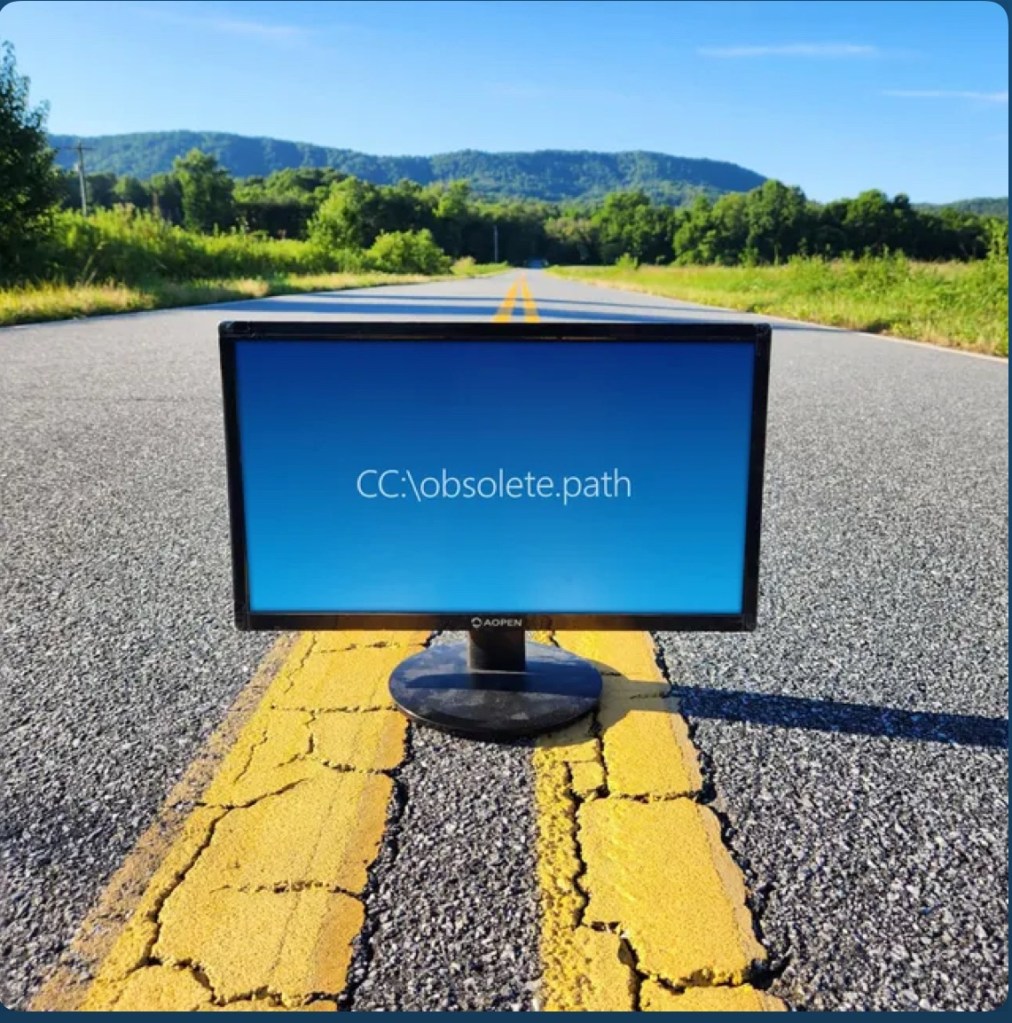
Maybe it’s always been there — probably so — but I hadn’t noticed it before. On Obsolete Path, Chris Church makes a subtle shift in style. The songs feel more spacious, and hints of country, rock, and West Coast influences seep into the pop sound. The raw thematic undercurrent — a signature element — is still very much present on this again excellent album, with its consistently high quality. On early listens, it reminds me more of Chuck Prophet than, say, The Raspberries — just to give some sense of the magnificence on display here.
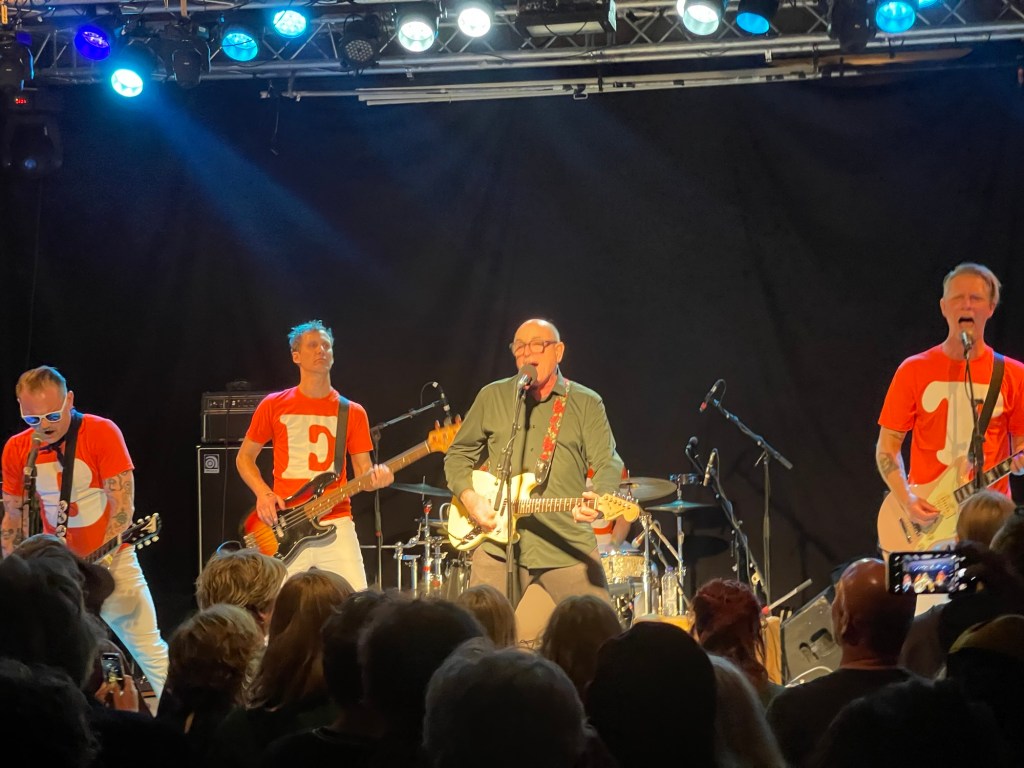
On Sunday, April 6, Paul Collins played at the new dBs here in Utrecht. He had promised “60 minutes of Power Pop” beforehand, and that’s exactly what we got: in a blistering 1-2-3-go rhythm, he blasted through nearly all the classics from the first two The Beat albums, along with a handful of gems from The Nerves. Collins was the undisputed King of Power Pop, pushing his much younger backing band to great heights with the flair of a true James Brown. Next to me, I saw my two sons, 21 and almost 23, watching it all with big smiles. During Hanging on the Telephone, a spontaneous family dance broke out, and for a moment, we found ourselves in Power Pop heaven. What an amazing night!
Mark Oliver Everett created two stunning Smart Pop albums before founding Eels, working alongside Parthenon Huxley. I was reminded of it when I discovered Corkscrew Soul by Sparky Bosque this weekend, and it became my Sunday soundtrack. If you admire the quality of Everett and Huxley’s work, this album is highly recommended.
Sparky Bosque is the alter ego of UK-based singer-songwriter and multi-instrumentalist Mark Peter Woods.
Could you share the journey of bringing this record to life? How did all the pieces come together to create the final product?
This record was pretty straightforward really. I did everything myself. Maybe there’s a correlation there! Not having to involve anyone else meant that I didn’t have to fit into anyone else’s schedule. I didn’t have to wait for someone else to do something. I didn’t have a record label or A&R person turning their nose up at something I’d written. Money didn’t have to change hands. I had the freedom to do whatever I wanted to do. I like having full control of the… errrr… controls.
There are downsides to being a one-man band. Sometimes it would be nice to have someone else make me a cup of tea, or scratch my back and laugh at my jokes, but overall I was pretty content creating Corkscrew Soul by myself.
I didn’t set out to create a particular type of album, or a specific sound really, and I wasn’t trying anything different to what I’d released previously. My official line is that this album is the third part of my amaretto trilogy. But that is really just a bit of a private joke with myself (you see, this is where having someone else to laugh at my jokes would help) because ‘amaretto’ basically means ‘a little bitter’, but it also tastes a bit sweet. Those two things may or may not come across in my lyrics and music. Oh, and it’s also a reference to Simon Pegg’s Cornetto trilogy. So there you go.
I’m not sure how many people have played the whole album from start to finish in one sitting, but I salute you if you have – rest assured I spent a long time (quite possibly too much time) deciding on the running order to help the album flow. But how people ‘consume’ music has changed a lot, so I’m not precious about it. You can listen to it backwards if you like.
I think there are four songs on the album that I’d written several years ago. They’d been sitting around without a home for a while and every now and then I’d feel them nudging me in the ribs and giving me a wink, as if to say ‘Hey, is it my turn yet, eh?’.
One of those songs is Good Together which probably fits quite nicely into the power pop mould. But then another is I Won’t Be Found which would likely be categorised as something else and hopefully shows another side to my songwriting.
Likewise, Gone Before is about Nick Drake and feels quite a long way from the album opener As Much as This which is probably my best impression of Wilko Johnson and Dr. Feelgood so far.
The rest of the album was written and recorded as I went. I thought I had 12 tracks for it. But when it came to mastering the album, I realised I had 13, so I just went with that. Maybe I should’ve called it ‘A Baker’s Dozen’ instead.
Success can take on different meanings as time goes on. When envisioning success for this new record, what does that picture look like now?
I didn’t really have any expectations for the album. I really enjoy creating an LP, EP, single or whatever it might be. But I’m not so keen on the bit that comes after releasing it. I find self-promotion somewhat tortuous and I’m not someone who spends much time on social media.
But for this album, I’ve had the help of 122 Music Management to get more people listening to it. It’s been a good learning curve on how to cast the net a bit wider for the next release. So in that sense, I would already call it a success.
A highlight has been having radio stations in far flung places like Germany and France playing my songs. The kind words and encouragement from the DJs have been really appreciated. And there’s something quite exotic about hearing one’s name in another language. Sehr schön.
Within this collection, do you feel that the best song you’ve ever written finds its home? If not, what distinguishes this record’s essence from your prior work?
This is tricky. It’s a bit like asking a parent to choose their favourite child. But I’d probably say the best song I’ve written is Magic Fur which ends the first LP, A New Low. But as a whole album, Corkscrew Soul might be my best work. Maybe.
Imagine you could collaborate with three co-writers of your choice for new songs. Who would you select, and what qualities or dynamics draw you to them?
I’ve never written a song with someone else. I’m not sure if it would be great or awful. But my default position is to assume the latter. Plus I think most of the songwriters I’d most like to work with are dead which might put a dampener on things.
Striking a balance between experimental artistry and commercial appeal is a challenge. How do you navigate this dynamic within your music?
Thankfully I don’t feel pressure to have commercial appeal, whatever that might mean exactly. I just write songs that I like, and then hope other people will like them too. If I release an album that only 3 people will listen to, that won’t affect my income, nor what I eat nor where I live. And other people don’t depend on my ability to appeal to as many people as possible either. There aren’t really any consequences to it either way. If there were, I’d probably quickly fall out of love with it and shift my focus to becoming the UK bog snorkelling champion.
Before I’ve released a song, and before I’ve recorded it, and before it’s fully formed, and way before it’s even a spark in my imagination, I have to accept that the majority of people on this planet or in this country won’t like it, or at most will be completely indifferent towards it. And I’m okay with that.
Lyrics often carry profound meaning. Are there particular lines you hope listeners will always remember from your songs? If so, what’s the significance?
I’ve never had anyone ask me about any of my lyrics, and I think I prefer it that way. Some lines are throwaway and complete nonsense – but you might attach some significance or meaning to them and I don’t want to spoil that for you.
There are some lyrics that are very personal and will always remain private.
I once had someone tell me that they like a track called Right Direction off my second album, Lying Flat, because of the uptempo energy and vibrance of the track. And musically, I suppose you could describe it as that. But I didn’t have the heart to tell them that the lyrics tell a story of domestic abuse and coercive control.
With the resurgence of cassettes, imagine curating your inaugural mixtape. Which five songs would be must-adds and why?
Right now I’d probably go with this somewhat homogeneous five. But ask me again tomorrow and it would probably be different.
Emitt Rhodes – Somebody Made For Me Harry Nilsson – Gotta Get Up Nick Drake – Poor Boy Elliott Smith – A Passing Feeling Grandpaboy (Paul Westerberg) – Eyes Like Sparks
And then I’d shimmy up into the loft to find my cassette player and a C90.
If tasked with introducing your music through three songs, which ones would you choose and what story do they collectively convey to new listeners?
Let’s have one from each LP. I’m not sure what story they convey. Maybe that all three albums sound quite similar.
Magic Fur Eat the Sun (Decked Out in Blue) Poor Annie
Looking ahead to the next couple of months, what exciting plans or projects are on the horizon for you?
I’m always tinkering. I have a home studio so I can dip in and out when the mood takes me. I’ve got another track and video ready to go actually, so that will probably be released in the next couple of months. That track has a different sound and vibe to what’s on Corkscrew Soul.
I’m also working on a cover version which will likely be stripped back to just vocal and piano. It’s not a particularly well known song, it’s just a track I really like. Piano isn’t my main instrument though, so by the time I manage to record a decent take with no bum notes, we might well be into 2025.
I’ve previously released covers of Ballad of Big Nothing by Elliott Smith and The Busy Girl Buys Beauty by Billy Bragg. I like to try and add my own stamp to them though – I don’t try and mimic the original.
In the digital age, visual elements are intertwined with music. How did you approach the album’s visual aesthetics, such as album art and accompanying visuals? How do they complement the sonic experience you’ve crafted?
I create all the visuals myself, although more recently I’ve been exploring using AI. The artwork for the first two LPs had my face on them, but I thought people might be getting sick of the sight of it, so I tried something a bit different for Corkscrew Soul. I’ve always liked pop art, so that was the vibe I was going for – and I think pop art and power pop blend together quite nicely.
Paul Kelly, the creative force behind The Martial Arts, has been crafting pop music under this moniker since 2003. A former member of BMX Bandits, Kelly recently released the album In There Like Swimwear. This record bridges the adjacent realms of power pop, indie pop, and classic pop, making it a perfect addition to the collections of fans who appreciate the sounds of Daniel Johnston, XTC, Eno, Of Montreal, The Lemon Twigs, or The Apples In Stereo.
Could you share the journey of bringing this record to life? How did all the pieces come together to create the final product?
In 2006 the Swedish label Groover Recordings released The Martial Arts’ debut album ‘Your Sinclair, which was recorded in Stockholm by Shout Out Louds producer Ronald Bood. It was a fantastic opportunity and I even got to record the drums in a gigantic studio, previously owned by Abba’s Benny & Bjorn. Europe even recorded the drums for ‘The Final Countdown’ in the exact same space. I then had the luxury of finishing it in Ronald’s studio with fantastic gear, his production and engineering expertise to hand. I loved the results, but some misfortune saw me lose a bit of confidence in moving forward with The Martial Arts in the years following its release.
I badly wanted to record a second album – I had the songs – circa 2010, but I didn’t have the same facilities to hand by then. The label had also folded. I really didn’t believe I had the recording skills to make it happen alone – I didn’t want it to sound like a collection of demos. I drifted towards being a musician in others’ projects – How To Swim, Carla J Easton, BMX Bandits, The Primary 5, Raveloe – in the years that followed, but it ate away at me that I’d never made that second album. Many years had passed before I finally began trying to learn how to make ‘proper’ studio recordings above demo level of the songs I had stockpiled since. Many of these ended up on the EPs ‘I Used To Be The Martial Arts’ (2019) and ‘Getting Stranger By The Month’ (2021), while I worked on the actual intended second album, by then containing much newer material, in the background.
I recruited various friends to lend their musical skills, mainly drums and backing vocals, to cover what I couldn’t pull off alone. I deliberately took my time, as I didn’t want to release it until I felt I had recorded something that could easily sit next to the debut in terms of production quality. Also, there was no deadline, plus there were interruptions like returning to college, pandemics and a few other tricky life events. I initially wasted a bit of time hiring others to record my vocals for me, as I felt I needed guided through the process of recording them, until I worked out that I was perfectly capable of doing them at home. It’s important to point out I did not spend 18 years making the second album! But I did spent a lot of that time working out what the heck I needed to do. I’m still learning now, but it’s been very satisfying to finally complete and have released by a label worth being on (Wiaiwya).
Success can take on different meanings as time goes on. When envisioning success for this new record, what does that picture look like now?
I have no idea really, I’m just glad there appears to be some people listening to it. I appeared to pick up a number of new listeners in the years following the debut, as I capitalised in the ‘give your album away free’ craze of that era, which looking back is obviously is a bit of a questionable activity in hindsight, but I do admit it worked and quite a number of blogs helped spread the word. My more recent EPs have done a little groundwork for me and some others have stuck around since the days of the first album. Really I would just like to build on the number of people who like and play my stuff, however many that could be. Beyond that I genuinely don’t know.
It might be beyond my wildest dreams, but stadium-like success to me would be being interviewed by Nardwuar The Human Serviette. That would be the Queen at Live Aid moment for someone at my level, I imagine.
In a hypothetical scenario where you could tour with two other bands, who would be your ideal companions and what synergies do you envision?
Redd Kross I have believed to be geniuses since I discovered them in 1998. Tragically, that was the year when they essentially downed tools and went on a hiatus for many years afterwards, and so far I’ve only had the chance to see them for an agonisingly brief 45-minute set, when they came to Glasgow in 2017 as openers for The Melvins.
They were such a huge inspiration to me, they also struck me as the most fun people to walk the Earth, and as the internet was new to me then, I read every single interview I could find by them, which very much pushed me in the direction of learning a lot of useful life skills, like listening more to the early album tracks of The Beatles, knowing who The Flaming Groovies even are, and the knowledge of the existence of The Brady Bunch’s cover of ‘American Pie’, which chooses to begin with the “Helter Skelter in a summer swelter” verse. They’ve definitely changed my consciousness for the better. I thinking touring together could only be a positive thing.
Right now, the other band I have to choose are The Chills. Especially it would mean Martin Phillipps would be back with us. I only began listening to them casually last year, and my excuse is that I always had them conflated with The Clean (also from New Zealand) and The Church (Australian), which in hindsight doesn’t seem that confusing, but there you go. Since he passed a few weeks ago I’ve listened to hardly any other music. The documentary ‘The Triumph And Tragedy Of Martin Phillipps’ is heartbreaking to watch, especially in the light of recent events. He seemed like someone I think I would have liked to be around and of course would have loved to watch each night, something I realise I can never do now.
As an artist, the act of baring your emotions to the world is profound. Does this vulnerability come naturally to you, or is it a constant journey of finding comfort?
When I recorded my first album, I was a bit self-conscious that I had overshared a bit and had given away too much, so was nervous about reviews. Of course, in the end, the gist of all those reviews was just “hey, it’s Power Pop time!” so I guess I’d had greatly overestimated how it would be read. Writing a song is a great way to therapeutically deal with an unfortunate life event like a breakup, or a friend turning nasty – if you set it to a nice enough tune, it’s an acceptable and hopefully entertaining way of expressing your feelings without having to bore anyone with your problems when you are in the pub together.
With the resurgence of cassettes, imagine curating your inaugural mixtape. Which five songs would be must-adds and why?
Redd Kross – Mess Around
To me, this is more or less the perfect song. Released in 1997, it captured the sprit of The Beatles far more succinctly than any of the major bands who were being compared to them at the time. It only has about 4 lines in the entire song – no more were ever necessary. Both verses are just “I don’t want to mess around with anybody else.” I hope someone at their label was given a stern talking to when it didn’t break the top 40.
Kleenex Girl Wonder – Tendency Right Foot Forward
When it comes to writing a book on the criminally overlooked, then Graham Smith deserves at least a few pages. Since he was very young, he’s been prolifically pumping out an impressive number of genius pop albums, and ‘Ponyoak’ was the time he really began to outgrew all those Guided By Voices comparisons he used to get. That (double) album manages the rare feat of containing as many as 25 songs, with all of them being great. Choosing your least favourites would be like trying to say which fingers of toes you’d wave goodbye to. In the years since he’s released a plethora of amazing work – he even tried his hand at rapping for a while. ‘Tendency Right Foot Forward’ is a diamond-hard pop song and should be heard by anyone with an interest in home-recorded pop masterpieces.
Molly Nilsson – Blinded By The Night
I covered this on my ‘Christmas With The Martial Arts’ EP. It otherwise has nothing to do with Christmas. Although released in 2018, it originally appeared on her album ‘2020’, and I recorded my version in that terrible year, having spent most of the year completely alone. It just seemed right for that moment in time. My version is very faithful to the original, which I know some consider a less than worthwhile endeavour, but what can I say… I just wanted a go at singing it myself, and I didn’t want to try and ‘fix’ anything that wasn’t broken.
The dB’s – Moving In Your Sleep
I was aware of Peter Holsapple as the organ guy from REM’s Unplugged show and I knew of The dB’s from being name-dropped in ‘Twisted’ by They Might Be Giants, but I never sought their music out until someone compare my own first album to theirs. ‘Stands For Decibels’ is a masterclass in mixing catchy with frankly quite strange guitar pop. If you want to hear what is essentially Jangle-Prog, then check out the Chris Stamey-written numbers. ‘Moving In Your Sleep’ is the standout for me though, it’s not hard to imagine it being the closing song on Big Star’s ‘Third/Sister Lovers’ album. Ironically, Holsapple briefly worked with Alex Chilton shortly after that album’s recording and they didn’t get on like a house on fire. ‘Nothing Is Wrong’ off the following album is another Big Star-evoking classic.
The Beach Boys – This Whole World
It’s very hard to choose a favourite Beach Boys song, but ‘This Whole World’ I’d say is probably the greatest one that a casual listener has probably not heard. It was never a single, merely a b-side and a track on their classic 1970 album ‘Sunflower’. I think this was probably a mistake – I don’t know if it’s because it doesn’t have a traditional chorus hook, but I believe it could have worked. It’s a rare song written entirely by Brian Wilson, who sings the introduction, before Carl takes over. There isn’t much to say really – it’s easily one of the finest moments of the greatest band of all time.
Tamar Berk’s fourth album in just four years, Good Times for a Change, is set to be released on September 6. For those familiar with her previous work, you know that her songs are deeply personal—so much so that listening can feel like peeking into her diary. This raw intimacy is what makes Tamar’s music so special. With each new release, she consistently raises the bar for herself, and this latest album is no exception. In fact, with the bar already set so high, you can’t help but wonder where it will all lead. Tamar shares that same curiosity, and in this exclusive interview with Sweet Sweet Music blog, she explains how she channels that into her creative process.
Your new album, Good Times for a Change, is your fourth record in just four years! It seems like you’re in an incredible creative flow. Do you feel that way, or is it more about putting in the hard work?
Well, I love the hard work and enjoy being in the studio creating songs and coming up with ideas. But, more so, I tend to judge myself pretty harshly on my art. I always think the last song I wrote is the best I’ll ever be, and this mentality pushes me to prove that I can not only do it again but make it better. Also, it seems that when I sit down and write a song, as I start to examine the lyrics, I find that it feels like it’s part of an underlying theme that’s happening in my life at that time. And then this makes me want to explore this theme and go a little deeper, which eventually turns into an album! Haha.
In your bio, you mention that after releasing Tiny Injuries in 2023, you felt like you were slowly emerging from a dark place. Good Impression has such an upbeat, richly arranged vibe—do you see it as a reflection of that brighter time?
Well, the lyrics are kind of a downer, actually, until the end when I finally say, “maybe I just don’t care,” a little homage to The Who’s lyric line, “why should I care,” which in some ways reflects a less desperate time, if that makes sense. This album explores the idea of hovering somewhere between the past and present and just accepting reality and the present moment for what it is. There’s a bit of an existential quality to it, but it’s more about being present. I’ve been struggling with looking back and being anxious about the future. So, it’s not necessarily about brighter days but more about trying not to worry about things I cannot control.
The photos you’ve chosen for your album covers are so intriguing, and it feels like you prefer showing a more vulnerable side of yourself, even this time around. Is that something you’ve been intentional about?
Yes. This was not going to be the album cover, actually. I was looking for another photo of me from my past, but I was taking these self-portraits and used one as a placeholder for the title Good Times for a Change. The look on my face and the title combined had a sort of sense of irony. I thought that worked, but it was a big decision to use a photo of me that wasn’t vintage or old. However, I thought if I’m going to be true to the album theme, it has to be a photo of me today.
Which new song on this album surprised you the most, either in the way it came together or in how it evolved during the process?
I think “Millennium Park.” This is a song that I’ve been carrying around for years and always dreamed of releasing one day. Every time I listened to the raw demo, I imagined timpani, chimes, cello, and viola. I thought that would be impossible, but I swear, once I put that idea out into the world, I seemed to find just the right people to help me! Ben Moore, who is a producer here in San Diego, hooked me up with Erdis Maxhelaku and Nico Hueso, a cello and viola player, respectively. I sent the song with the string arrangement, and it just so happened that Nico was able to score what I had written just by using my stem tracks of the instruments. This was exciting in and of itself, but when the actual tracks came back, I was over the moon! Then my drummer, Matt Walker, found a school where he could record timpani and chimes, and when he sent those back, I was literally crying! After Sean O’Keefe mixed it, I was pinching myself and so thrilled that I would finally be able to release a song I’d been carrying around since 1994!
You’ve been getting so much positive feedback on your music, and it looks like Good Times for a Change is already getting a lot of praise on social media. Do you ever find yourself dreaming of playing in full stadiums?
I would love for more people to hear my music, but I feel like I would thrive in a club size of 500 or more. I like talking to the fans and getting to know them. And speaking of shows, I’m playing a big celebration on September 28th in Chicago at Lincoln Hall! I’m opening for Material Issue, and I’ll be playing a selection of songs from all four of my solo albums. That’s definitely a bucket list item!
Trademark Issues is a long-distance band composed of Gary Hornseth and Mitch Armbruster. Despite their successful collaboration, they’ve only spoken directly twice. However, they’ve been creating great music together for quite some time. Their fifth album, Change This Face, kicks off with the aptly titled and irresistibly catchy track “Welcome To Album Five,” which is sure to be the funniest opening song you’ll hear this week. The album features eleven clever pop songs that draw comparisons to The Posies and evoke the pleasantly rattling style of The Front Bottoms. As they continue to evolve, their music only gets better. It’s time for a more comprehensive introduction.
Could you share the journey of bringing this record to life? How did all the pieces come together to create the final product?
We’re a long-distance band in every way, living in Minnesota and North Carolina, 1,200 miles apart. We met at an arts event in Boston in 2019 and started collaborating through messaging and file sharing. This led to our first album in 2020, and we’ve since released one album a year, always on the anniversary of the first one — the last Friday in July. We’ve only spoken directly twice — once when we met and once as guests on a podcast.
“Change This Face” came together much like our other albums. Most of our songs start as unfinished fragments that one of us has lying around. Some are recent, while others are many years old. We send these fragments to each other, and the receiver turns the idea into a full song. Sometimes it resembles the original intention, and sometimes it takes off in an entirely new direction. Then we work together on the final steps — trading backing vocals, guitar accents, edits, or mixing suggestions. Sometimes one of us gets stuck trying to come up with a solo or a bass track and just throws it over to the other guy to try.
It’s an unusual way of collaborating, but it always results in something neither of us would have come up with on our own. It’s a 1+1=3 thing.
The decision to seek opinions on your new songs is intriguing. When did you realize that external perspectives could contribute to your creative process?
We suppose every artist at every level has misgivings about sharing their work. We sure do. Our song “Absolute Green” on our new LP is about that — the hesitation, self-doubt, and vulnerability that comes with hitting “send” to ship .wav files and artwork off to the distributor.
But five albums in, we’re so grateful for how supportive and constructive people are out there. The benefits of inviting opinions far outweigh the occasional sting.
Success can take on different meanings as time goes on. When envisioning success for this new record, what does that picture look like now?
For us, every new release feels a little like a ticket to an unknown play. We can never predict what will happen with it, but every time something cool and unexpected seems to pop up.
Our songs have ended up in independent films, we’ve had a song profiled on a talk show on the third largest radio network in Spain, we hear our songs backing social media videos internationally, we sell a few CDs and shirts to people we’ve never met, we get a few nice reviews, and we make new connections and friends around the world. And we get asked by cool people like you to do fun things like this!
Success in terms of big sales and large streaming figures will probably never be our thing, and that’s OK. We like being our version of a band and all the colorful stuff that comes with it. And we like to think that we’re growing and refining our sound with every album.
Lyrics often carry profound meaning. Are there particular lines you hope listeners will always remember from your songs? If so, what’s the significance?
We both write a lot for our day jobs and enjoy the challenge of using words in this different way. We’ve always loved lyricists who delight in wordplay and wit — like Neil Hannon, Paul Heaton, Andy Partridge, Kirsty MacColl, Stephin Merritt, both of the They Might Be Giants guys, the Lucksmiths guys, and many others.
If we write a line that makes someone stop in their tracks for a second, or one that elicits a wry smile, that’s a win in our book. It’s genuinely one of the most rewarding things when someone tells us a lyric has connected with them in some way. It reminds us to tell the same to others.
Among the compliments you’ve received, is there one that remains etched in your memory? If so, what made it particularly unforgettable?
Our favorite compliment is when someone we know is impressed by one of our songs without knowing it’s us and says with surprise, “Wait. This is you?” Family, in particular, can be tough to impress, so tricking them into a compliment can be the best way. :>)
And we love being compared to bands we love. We got a Posies comparison the other day, which will keep us going for the next month.
Studio moments often hold a touch of magic. Could you recount an instance that stands out as the most enchanting during your creative process?
We remind each other to embrace our constraints. You can’t really get more DIY than we are. We record separately in our homes (many of our vocals are recorded in parked cars; we like the sound). Our gear is simple and inexpensive. We’re neither virtuoso players nor especially adept producers. We only communicate through messaging and shared files. So, it helps to be open to welcoming the opportunities that constraints can create.
We love it when a mistake leads to something cool. For example, when we’ve accidentally nudged a harmony track during mixing and it threw it a few milliseconds off, it opened up a new sound for the better. Or when the gain on a vocal track was accidentally way too high and we liked the sound, so we kept it.
We care a lot about our final results and getting them to be the best they can be, but over the course of five albums, we’ve grown pretty comfortable with who we are.
Where do you see yourself situated within the broader landscape of the music industry? How do you perceive your unique role and contribution?
We’re glad and grateful to be a small particle in the big music universe. The wonderful reviewer Janglepophub recently described our records as “gloriously catchy and perfectly obtuse.” If that’s even a little bit true, and if some people enjoy what we do along the way, it’s about the best contribution we could hope to make.
Lollipop Records has been a semi-revolutionary, multi-cultural conglomeration of punk kids, loveless teen dreams, and pop enthusiasts trying to change the world. When you hear Astrologer’s new songs, it’s no surprise that Andy and Candy feel right at home there.
Today, Friday, 8/16, their new single “Lighthouse” is released, with the highly anticipated album Astrologer Fleetwood Sprawl following on 9/3.
In this candid interview, Andrew Cline of Astrologer takes us on a journey through the making of the album. From the spontaneous songwriting process to embracing the raw, unpolished sound of their demos, Andrew delves into the creative process that shaped Astrologer Fleetwood Sprawl.
Could you share the journey of bringing this record to life? How did all the pieces come together to create the final product?
I started writing the songs that ultimately became Astrologer Fleetwood Sprawl while we were mixing our last album, Eternal Friday, in early 2023. I don’t really choose when I write songs; it just happens. I go through phases where I won’t pick up a guitar for months, and then – BOOM – a dozen will come pouring out over the course of a week or so. In this case, the songs just happened to come pouring out. Because I was writing so quickly, we decided it would be smart to make demos; otherwise, I forget stuff.
Our whole band lives in the same apartment complex: the Fleetwoods. Downstairs from Candy and me, our guitarist Blake Garmon has an apartment where he keeps a Tascam 4-track plugged in. We started going down to his place to demo songs as soon as I would finish writing them, just to have them documented. This became a regular thing—hanging around at Blake’s, making demos. Eventually, over the course of several months, we had accrued a lot of material. We were enchanted with the sound of our recordings. Some sounded great, some sounded really loose and dirty, but they all hung together in a homespun, endearing kind of way. Blake said we should just make the demos the final versions of the songs, with some mixing, of course. At that point, I started remembering all the “albums” I made on my four-track growing up, and how I wanted to make an Astrologer album that way.
While we were recording some of the songs at Blake’s apartment, I recorded two in my apartment and struck up a friendship with Jaime Paul Lamb, a musician and astrologer here in Phoenix. He and I started spending evenings recording in the back room of his house as well. I did five songs there.
Was there a particular moment or experience that struck you, signaling that you were onto something special with this project?
What struck me as special about it came gradually over the course of 2023.
When we started looking at the album that seemed to be coming together, Blake pretty much insisted it would have to be a double album. I love double albums, don’t get me wrong. The thing is, when it’s your own music, it doesn’t come off fun and whimsical and complete, like The White Album. All the insecurity, all the mistakes—they’re not fun. I started siding with the critics of the world: “This could be a great single album instead of a mediocre double album.” That’s how I think. Blake brought up the excellent point that this double album is a complete document of how we spent 2023 and the first couple of months of 2024. And he’s right. That made it start to stand out to me.
Once we committed to the double album idea, it started getting wrapped up in my memories of being a kid and growing up in Phoenix. Candy said we should make the album feel like how it was to watch local TV back in the ’80s and ’90s, so I started seeking out old commercials from Phoenix that I remembered from childhood. Then it really started to take on its personality. It is a shambolic album, one that sounds like nighttime in a Phoenix of years past, replete with the sounds and sights of that city.
Within this collection, do you feel that the best song you’ve ever written finds its home? If not, what distinguishes this record’s essence from your prior work?
Yes, there are a few career-best tunes from me here: “Heart of Mine,” “Merry-Go-Round,” and “Lighthouse” are my favorites. I’d be remiss if I didn’t mention that Candy thinks “Never Let You Go” is one of my best songs.
As an artist, the act of baring your emotions to the world is profound. Does this vulnerability come naturally to you, or is it a constant journey of finding comfort?
I am embarrassed by my vulnerability, but I know that it suits me better than preening and leaning into “the act,” so to speak. I am profoundly uncomfortable when I am doing anything that doesn’t feel authentic or sincere. I love bands that can create a succinct image and act; I envy that ability. It’s just not me. I’ve tried, and it doesn’t work. What comes naturally to me is to be how I am, look how I look, write how I write, sing how I sing. Unfortunately, that approach doesn’t command mass audiences, but hey, I always wanted to be a difficult, underappreciated artist, and that’s what I became.
I used to sit back and wonder, “How come they’re getting big and I’m not?” or “I write better than they do; why do they get the glory? What’s wrong with me?” But in all honesty, I’m too entrenched in staying aligned with my own tastes and beliefs to be ambitious on that scale. I looked up to the Paul Westerbergs and Elliott Smiths of the world when I was a kid; it’s only natural that I’m at odds with myself. I want to be respected and recognized, but I don’t particularly want to play any games. In the words of R. Stevie Moore, “I like to stay home.”
Imagine you could collaborate with three co-writers of your choice for new songs. Who would you select, and what qualities or dynamics draw you to them?
Tough question. I don’t really co-write; it’s a personal experience for me. The people I’d love to work with are people I would NEVER deign to think I could equal in talent and skill.
That said, I greatly appreciate and would love to learn from Robyn Hitchcock, Gruff Rhys, Martin Newell, and Kelley Stoltz. The reasons are obvious—just listen to their music.
I’d love to write with Noah Nash and Reza Matin from the Uni Boys. Excellent pop writers, with a laser-focused understanding of their genre, its history, and where it could go.
Vanity Mirror comes to mind too. Brent Randall writes ethereal songs—songs I have an intrinsic feeling for that I couldn’t possibly replicate in composition. I’m much too messy and simple.
Defining a song’s completion can be elusive. How do you determine when a composition has reached its final, ready-to-record form?
That’s always changing. On the last albums (Eternal Friday, Legerdemain L & R), I brought finished songs to the studio after poring over them for a few months. With Astrologer Fleetwood Sprawl, I recorded the lion’s share of the songs immediately after I would feverishly write them. To be honest, there are several songs that will appear on the album that I wouldn’t consider “finished” by any metric. But it is the way it is meant to be presented, and if nothing else, it’s real. The realest thing I’ve done, at least.
Striking a balance between experimental artistry and commercial appeal is a challenge. How do you navigate this dynamic within your music?
We don’t, haha! I make songs that I think are hits but are completely out of step with the world at large. When I write “commercial” songs, I typically do it with a sarcasm that betrays the approach. When I write “experimental” songs, I’m pissed they aren’t catchy or short. So, I suppose I’m still trying to navigate that!
Lyrics often carry profound meaning. Are there particular lines you hope listeners will always remember from your songs?
Yes.
Can you recall the last instance when you felt the immediate certainty of having penned a hit song?
I’ve never written a hit song. My idea of a hit is wildly skewed.
Performing music before an audience holds a unique allure. What aspects of this experience contribute to the excitement and enjoyment for you?
I don’t like performing live, particularly. Especially the more vulnerable songs. I will say, though, recently, we’ve been getting a really moving response to our newer material. We played a bar a few months ago, and a lady cried and came up and told us how much she loved our music and that it really spoke to her. I write music in the hopes that people will react in such a way, so I keep performing live. We really are a testament to building our audience one person at a time. We will play to a room with 50 people, and it will speak to 5 of them. Ours is not an overnight success story.
While you can’t dictate how people interpret your music, are there specific elements you wish to highlight that set your songs apart?
My best songs aren’t singles. I’d implore anyone, especially outsiders, to listen to our albums. I’m an outsider, and I find we relate most to other outsiders.
If tasked with introducing your music through three songs, which ones would you choose and what story do they collectively convey to new listeners?
My inclination is to quote the late John Peel in regard to which Fall albums are essential: “You must get them all.” My music really only paints a picture when you listen to it in totality. If you judge us by our singles, you would probably see us very differently than you would if you listened to our albums, front to back.
Three songs that I think show a different side to us would be “Oblivion” from Legerdemain L, “Détente” from Legerdemain R, and “Lighthouse” from our new album. These are not the three most important songs in our catalog, but
the story I’d like to convey is that we are more eclectic than we seem.
In a hypothetical scenario where you could tour with two other bands, who would be your ideal companions, and what synergies do you envision?
Kelley Stoltz and Uni Boys. I love both their music! I’m fortunate to call Uni Boys acquaintances—we’ve played together several times. I don’t tire of seeing them play, and we get along well.
In Mr. Stoltz’s case, I view him as a kindred spirit to me, and I like to think we’d get along, though I don’t know him at all. I can hear the little cribs he does in his songs; it’s like a secret language. Candy and I saw him and (our hero) Robyn Hitchcock at Zebulon a couple of months ago; his set was great, and that’s saying a lot when you have to go on before someone like Hitchcock, an unimpeachable, singular legend.
Where do you see yourself situated within the broader landscape of the music industry? How do you perceive your unique role and contribution?
Like I said before, I’ve always idolized outsiders—difficult, uncompromising artists who didn’t get their due during their time. I presume that if we ever find a larger audience, which may or may not happen, it will be long after we have any vestige of youth left to give. I wish I’d wake up tomorrow and get sync placements and be a hugely respected songwriter, but I know that, in my heart, I haven’t been striving toward a material goal. I’ve only ever listened to myself and my own whim, at the end of the day. I became the type of artist I wanted to be, and people will hopefully come around to whatever it is I contribute to the world someday.
How would you describe the evolution of your sound in this new album compared to your previous works? Were there intentional shifts in style or themes?
This album is an exercise in non-editing. I am typically compelled to edit and omit things I don’t like from our releases. This time, it simply didn’t happen. We are including everything: the good, the bad, the ugly. Astrologer Fleetwood Sprawl is the sound of a few friends spending time, making songs for different moods. Some are the best we’ve ever done, some aren’t. Hell, there are a couple of glorified karaoke tunes, just for a laugh. It’s a document of how we spent 2023 at the Fleetwood apartments in central Phoenix, Arizona.
The Junior League has just dropped a new EP, Nattering Nabobs, and their latest full-length album, Our Broadcast Day, is set for release on October 4. Joe Adragna has evolved his sound to be “more Gram, less The Knack,” offering a delightful treat for fans of twangy power pop and roots pop.
You released an EP and will release an entire album in October; did the inspiration just keep coming?
I had 15 or 16 songs going. I didn’t want to make the full-length album too long. In the past, I feel like my records have often been two or three songs too long. Sometimes, those extra songs aren’t quite as strong as the others and should have been left off. In this case, I wanted to keep the full length as concise as possible—although it’s still 10 songs!
How did you decide which song went on the album and which went on the EP?
I felt like “Skinny Tie” and “Nattering Nabobs” fit together musically but didn’t blend as well with the other songs on the full-length album, which is called Our Broadcast Day. I had a song I wrote late in the sessions for this called “Kinda Lost” that I liked and that would have fit on Our Broadcast Day. It was a toss-up between that one and “Two Ways To Go” as to what would be on the EP. In the end, I felt like “Two Ways To Go” fit the record better all around and served as a good opening track.
Your sound evolved, didn’t it? More Gram, less The Knack?
Hahaha, yeah—there are still tambourines and jangle elements, but this record is a bit more laid-back than parts of Bridge and Tunnel, or certainly Adventureland. It has more in common with Fall Back, maybe—but I think this is a much better record. Hopefully, I’m getting a little better at this!
“Skinny Tie” will immediately catch the eye of every power pop lover. What’s the story?
Well, I think it’s a funny song. I wrote it with every power pop cliché I could think of! Hahaha. It was inspired by some very “passionate” arguments I had seen or heard online about what is (or isn’t) power pop. I can see how those terms might make people feel boxed in if they let it.
Both releases are so solid. You knew you had a truckload of good songs when you started recording? Thank you for saying that. I felt strong enough about the songs to release both the EP and the full-length. To be honest, though, I never know what I think of anything until it’s all over. I tried to be more selective this time—as I mentioned earlier, I’ve had one or two too many songs on some of my records. I might like a song, but it might not be the best song, if that makes sense. I think these are just right, he said hopefully!
A Talk with Jeb Barry on the Release of The Typicals: The 1980s-90s Power Pop Band’s Final Recording, Released 32 Years After It Was Recorded, Lost, and Then Discovered.
Could you share the journey of bringing this record to life? How did all the pieces come together to create the final product?
The Typicals formed around 1986 as a four-piece band centered around Jeb Barry and Michael O’Neill’s songwriting. They wrote all their songs separately and then brought them to the band to arrange. “I never told anyone what to play when we learned a new song I wrote; we let them create their own parts. Mike did the same,” Barry explains.
Due to musicians moving on to other careers, by 1990, we were a three-piece with a new drummer. Our songs had gotten harder and less powerpop. We decided to record live at CBGBs on DAT tape for a future live album release of all new songs. Unfortunately, the sound engineer only recorded one channel, so it was a waste, although it was fun to play there (we had previously focused on the Boston area for shows).
Since I had a fairly expensive DAT tape, we booked an hour with a local studio where we recorded our first two self-releases (Popscreams and The Poverty Sessions). We recorded it live in one shot, except for one song we did four times but kept the first take.
We ended it all right in the middle of talking to DGC (David Geffen Company), who loved our stuff. But the band was entering their 30s, and the music business at the time was not a great place to be. People thought I was crazy to walk away. LOL
How did DGC get interested?
Before this, we had met and talked to a few major record companies and sent out dozens of copies of our album, but nothing came of it. In 1991, I saw that DGC was a new subsidiary that had signed a band I knew through college radio, Nirvana, for a million-dollar advance. I decided to stop sending out albums and tapes and created a small promo pack of articles and reviews of the band.
Cindy Peters from Gary Gersh’s A&R office at DGC called my house later. She told me to send her a tape of three songs and instructed me to put a special code on the bottom right of the envelope, or else it would be thrown away. I did that, and she called a week or so later, saying they loved it but thought we sounded like a band they had recently released, Nirvana. I had recently gotten the Nirvana CD and didn’t see the comparison, but she pointed out similarities like soft verses and hard choruses. She requested more songs, so I sent some new and some old, including rockers and acoustic ones.
She called again, saying the new songs reminded her of The Posies and requested more. This happened a few more times before I decided I didn’t want to travel around the country in a crappy van playing low-level shows for little money and walked away. I did not return the next few phone calls from Cindy.
Was there a particular moment or experience that struck you, signaling that you were onto something special with this project?
Probably the first time we played as a three-piece. I (Jeb) had to play bass on Mike’s song (except for “This Lonely One,” where I played bass on my own song) and vice versa. It made the songs simpler yet more intense compared to our older material.
The decision to seek opinions on your new songs is intriguing. When did you realize that external perspectives could contribute to your creative process?
I think that happens from the first time you play, especially performing original material. You seek input from others outside the band to gauge the impact of the material.
Success can take on different meanings as time goes on. When envisioning success for this new record, what does that picture look like now?
Our only goal when we recorded this was to give others an idea of how we sounded live as a three-piece and how the band was changing. This had nothing to do with the emerging grunge sound that was starting to become popular. As a three-piece, we needed to play the new songs more aggressively—and louder too.
Within this collection, do you feel that the best song you’ve ever written finds its home? If not, what distinguishes this record’s essence from your prior work?
As a songwriter (currently writing and performing under the name Pawn Shop Saints and doing Americana with some acoustic powerpop added in, e.g., the song “Diane”), I’m still trying to write that perfect song. That’s why I keep writing. But my favorite of this bunch is probably “This Lonely One.” It just stood out to me when I wrote it and when we recorded it.
As an artist, the act of baring your emotions to the world is profound. Does this vulnerability come naturally to you, or is it a constant journey of finding comfort?
Since all my songs are not written with any relation to me, I don’t really bare any emotions. All my songs are like films, where I create plots, scenarios, and characters to play out the song’s theme. Some people think I am writing about myself, or sometimes I’m writing about them, but I don’t do that. It’s all fantasy or fiction.
Imagine you could collaborate with three co-writers of your choice for new songs. Who would you select, and what qualities or dynamics draw you to them?
I have only co-written once, with Jason Isbell via Twitter (that’s another story). But in 1992, it would have been Tommy Keene, Marshall Crenshaw, U2, Elvis Costello, or Springsteen.
Today, it would still be Elvis, Springsteen, Isbell, and Steve Earle. I’d even include Taylor Swift since she writes very differently from me, and I love challenges.
Among the gigs you’ve performed, which one holds an indelible place in your memory and why does it stand out?
CBGB’s was cool, but probably our first show at The Rat in Boston or the frat party we played for hundreds of drunk college kids in the pouring rain. They had a big mud puddle they were jumping in right in front of the stage. It was cold and miserable, but fun.
Defining a song’s completion can be elusive. How do you determine when a composition has reached its final, ready-to-record form?
I guess it’s different for all songwriters, but like most, I just know when something isn’t working and needs to be changed. If it’s a song I think is good, I’ll work on it until it hits that comfort zone. Recording is a different beast. I may have a sound in my head I’m striving for in the studio, but sometimes it just doesn’t work. I’ve scrapped and rerecorded several songs in the studio. Luckily now, I can do that in my own home studio.
Striking a balance between experimental artistry and commercial appeal is a challenge. How do you navigate this dynamic within your music?
Since I don’t have any goals to be commercial and never have, I just do what I like. In 1992, that’s what we did. We didn’t try to sound like anyone, jump on the grunge train, or try to be hip or popular. We just had fun. It’s the same today.
Lyrics often carry profound meaning. Are there particular lines you hope listeners will always remember from your songs? If so, what’s the significance?
Every song could have a line that has meaning to somebody. I’m not sure any of them are profound, but listeners might catch a line or two that they feel speaks directly to them.
Can you recall the last instance when you felt the immediate certainty of having penned a hit song?
I feel I’ve written a lot of catchy songs that few people have heard. As for a hit, I’m not sure. I still think “This Lonely One” is a hit powerpop song. Since I don’t write in one genre and mix it up a lot, there could be hit country, pop, rock, Americana songs in my catalog. I’ve written thousands of songs—most are crap, but there are a handful I could perform every night. Usually, the simpler ones are the best for me, like “She Comes Along,” an unreleased Typicals song, which was always a crowd favorite and the first song of mine another band covered.
With the resurgence of cassettes, imagine curating your inaugural mixtape. Which five songs would be must-adds and why?
For The Typicals, they would be:
“She Comes Along”
“This Lonely One” (Mike’s guitar work/hook really makes the song)
“The Cold Shoulder” (another unreleased Typicals song, slower and groovier)
“I Could Be The One” (Mike’s song from the Popscreams album)
“The 4th Of July” (from The Poverty Sessions cassette)
I’d pick these all for the same reason: they are catchy. Mike, I’m sure, would pick different ones.
Performing music before an audience holds a unique allure. What aspects of this experience contribute to the excitement and enjoyment for you?
Just getting the interaction of the crowd, even if they are just listening. As a songwriter, it’s incredibly rewarding to have people actually listen to your songs, especially when doing a solo show. I did a solo show at the Bluebird in Nashville a few years ago, and there was no talking. Everyone just sat and actually listened.
While you can’t dictate how people interpret your music, are there specific elements you wish to highlight that set your songs apart?
For The Geffen Tapes, it was the hooks of the songs and the energy that we were trying to get across. Anything beyond that was a bonus. Today, it’s more about the lyrics and stories in the songs that I hope listeners pick up on.
If tasked with introducing your music through three songs, which ones would you choose and what story do they collectively convey to new listeners?
In 1992, it would have been “This Lonely One,” “Going Steady Still” (from Popscreams), and “This Lonely One” again since I think they are good, angst-tinged power rock songs.
In a hypothetical scenario where you could tour with two other bands, who would be your ideal companions and what synergies do you envision?
In 1992, it would have been Nirvana and U2 (my favorite band, and they’re Irish, so that’s a plus). I think The Typicals could have added a similar yet different sound to either band as a supporting group, which is actually what you want for a concert. Since we were all around the same age, that wouldn’t hurt either.
Studio moments often hold a touch of magic. Could you recount an instance that stands out as the most enchanting during your creative process?
For The Typicals, we never had much money, and there was no home recording then. If you wanted to record, you had to book time in a real studio, which wasn’t cheap. We recorded at Derek Studios in Dalton, Massachusetts, the only one around (another local, Arlo Guthrie, recorded there too). Since it was expensive, we learned to be well-rehearsed and record quickly. Our first album, Popscreams, was done live in the studio with vocal overdubs. We did it so fast that we had time to record four acoustic songs. The same was true for the second one, the EP The Poverty Sessions (named by Mike because the mixing took twice as long as the recording and was very costly). But the first time you listen to a final mix of your first recorded song and hold that album in your hands is unforgettable.
Where do you see yourself situated within the broader landscape of the music industry? How do you perceive your unique role and contribution?
We came close to something with DGC, but essentially we were a local original band that only did originals (all other local bands were cover bands) and put out our own music. One reason we did an album ourselves was because all the local ‘experts’ said it couldn’t be done and that you needed a record company. But since we had no management or money for promotions or tours, we were pretty restricted to being a Massachusetts band. But we showed a lot of bands that you could put out your own DIY records.
Envision recruiting three singers to provide harmony vocals on your next record. Who would you invite, and what qualities do they possess that resonate with you?
In 1992, it would have to be:
Susanna Hoffs—she has a one-in-a-million voice.
Robin Zander—he still has a powerful voice.
Scott Miller of Game Theory—he has a unique and standout voice.
With the record completed and the music released, do you believe the pinnacle of enjoyment has been reached, or is this just the beginning of an exciting phase?
Since it’s been 32 years after the recording, we don’t expect much at all. It’s hard to stand out in today’s mass-produced music world, but maybe someone will hear it, like it, and promote it to the right person to reach a larger audience. But if not, that’s okay. I really don’t expect to hear us on SiriusXM anytime soon or hear from a label looking to press the songs. We do have some more unreleased Typicals songs, mostly Tascam 4-track recordings, that will see the light of day in the next few months, and maybe some live show songs. It all depends on the quality of the cassette tapes. If they are lo-fi, that’s fine since we love that type of sound.
Looking ahead to the next couple of months, what exciting plans or projects are on the horizon for you?
The homemade album with the songs “She Comes Along,” “Cold Shoulder,” and “Oh Janine” from 1988 should see a digital release by Christmas. Plus, I may record another Pawn Shop Saints album or do a compilation of all the powerpopish songs the Saints have recorded—all for fun!
Can you take us through the creative journey of bringing this album to life? What were the key milestones, challenges, and breakthroughs you experienced along the way?
As described above, the show at CBGBs was a letdown on the recording side, but the live tape came out pretty well. The original DAT tape disappeared, and all I had was a cassette tape I recently found while cleaning out old Typicals cassettes. It’s not the best sound compared to the original tape, but after 32 years, it’s not bad. I tried remastering it, but it actually didn’t need anything, which is a kudos to the recording engineer, Greg Steele. I finally decided to put it out on the internet for free, especially since I don’t have the funds to press a record or CD. But maybe someday.
How would you describe the evolution of your sound in this new album compared to your previous works? Were there intentional shifts in style or themes?
Harder and rougher—not as pretty. Maybe our influence from The Clash or Dinosaur Jr. (who lived less than an hour from us in Massachusetts) was coming through, but who knows? I think we all just wanted a more powerful style, especially as a three-piece.
With this fresh collection of songs, how do you envision connecting with both your existing fanbase and new listeners? Are there specific emotions or messages you hope they’ll resonate with?
Since we’re releasing them 32 years later, most, if not all, of our fanbase is gone. So, we are starting from scratch three decades later. But these songs haven’t been heard outside of DGC, so maybe someone will randomly hear them, like them, and the sound. Or they might get lost in the modern music era.
Back then, if I hadn’t walked away from the business, I’m not sure what would have happened. Perhaps nothing. We might have stayed a regional act making no money and working crappy jobs.
Albums often involve collaboration with various musicians and producers. Could you shed light on how these collaborations contributed to shaping the album’s identity?
Greg Steele (who passed in 2023) usually just produced and left the engineering to others, as was done with our prior albums. This time, for the live recording, he did the engineering so we could get the best sound with no overdubs or fixes. It was all recorded directly to a DAT tape. The results didn’t need to be mastered or changed in any way. There were no other musicians—just myself, Mike, and Sean playing the same set we did at CBGBs a couple of weeks earlier.
In the digital age, visual elements are intertwined with music. How did you approach the album’s visual aesthetics, such as album art and accompanying visuals? How do they complement the sonic experience you’ve crafted?
I have an art degree but still appreciate the DIY look of many of the 1980s-1990s self-releases. Most of our posters and flyers were hand-drawn, and even our first album cover was hand-drawn since we couldn’t afford text paste-ups. For the cover, we went for a simple, time-period-appropriate look: a photo of us outside CBGBs and nothing else. If I had to design an entire album jacket, I’d keep with that theme.
If The Posies are one of your favorite bands, I’m sure you’ll love New York’s Yours & Mine. They’re that good! After releasing an EP in 2017, they’re back with this hit that sounds both fresh and mature. It’s my summer 2024 album! And luckily, there’s plenty of summer left to enjoy it!
Greg talks about how ‘The Shadow You Cast’ came about.
You can find ‘Pushing up Daisies’ showcased on the Best Power Pop of 2024 Spotify Playlist.
Could you share the journey of bringing this record to life? How did all the pieces come together to create the final product?
This record has been a long time in the making. I wrote the majority of these songs between 2014 and 2018. I went through some ups and downs with a significant other during that time (which ultimately ended in breaking up and ending an engagement). Looking back, it’s all water under the bridge, but those songs serve as a well-documented timestamp in my life. I usually write my songs on acoustic guitar. If it sounds good on acoustic, it usually translates nicely to electric and full band arrangements.
As far as crafting the arrangements with the band and recording them, to make a long story short, life sometimes gets in the way (for better or for worse). Just trying to get by financially was probably one of the biggest factors (2018-2021). When you work a 40+ hour week, there’s just not a lot of time left to make music. Then came the pandemic, which pushed a huge pause button in everyone’s life. It really impacted the band because we all moved out of NYC. Kris (bass) moved to North Carolina, Dan (drums) moved to Rockland County, NY, across the Hudson River, and I moved way upstate. Lastly, my family welcomed two amazing children into our lives in 2021 and 2023. All that is to say, there has been a lot going on, and I’ve found pockets of time here and there to slowly chip away at writing and recording this record. We tracked the rhythm section (drums and bass) in 2018, and I soon began tracking the guitars and vocals. The more I tracked, the more frustrated I became with my own takes and sound. It really started to weigh on me… What I envisioned in my mind’s ear was not what I was hearing in the recordings. So I took a break from recording for a while, and that’s when life got busy. I’m thankful that Kris and Dan were supportive of me taking my time. Every now and then, they just gave me a gentle nudge to keep going.
It wasn’t until my wife and I moved to upstate NY in 2021 that I had the opportunity to build my own small recording studio. That’s when I finally had the time and space to reopen the sessions and begin to find the sound I was looking for. It took a few more years before I finally felt good about everything. I sent the sessions over to our bassist, Kris, who then mixed the record over the course of a month or two, then it was off to mastering… and here we are!
Success can take on different meanings as time goes on. When envisioning success for this new record, what does that picture look like now?
I’ve been in bands since I was 14, and my framing of “success” has changed significantly over the years. During my 20s, “success” became a numbers game. How many people bought/streamed our record? How many people came to our shows? How many reviews did we get? Those ‘number’ metrics can really consume you in a negative way. When I started Yours & Mine in 2015, I reframed “success” entirely. I’m lucky that I can make music independently with people that I love. If my only metric for “success” is that we can write, play, record, and distribute music, that’s all I can really ask for. Everything else is icing on the cake. You put your music out into the world and hope that it resonates with people. That’s a simplified answer; of course, there’s an effort put into networking and spreading the word via gigs, conversations, and social media. But at the end of the day, the success is in the music itself.
As an artist, the act of baring your emotions to the world is profound. Does this vulnerability come naturally to you, or is it a constant journey of finding comfort?
It really is a vulnerable process to write and release music. Oftentimes when I write, the lyrics come last. Melody and chords are crafted simultaneously, and I use mumbles as tentative lyrics. But once a particular lyric or phrase stands out, then I’m able to frame what the song will be about. My songs are not always autobiographical. Sometimes a story will emerge with fictional characters. “Wedding Vow” is perhaps the most vulnerable I’ve ever been. Many years ago, I was in a relationship, and we got engaged. As we were planning the wedding, we also happened to be growing apart. Our goals and future seemed to not align. Without going into detail here, we broke up and ended the engagement. I wrote that song while we were still together, and I remember thinking… There’s no way I can ever let this song see the light of day if we stay together. It turns out my instincts were correct, and maybe the songwriting process was a form of therapy for me to see it through and address some of those uncomfortable realizations! I think the sister song to “Wedding Vow” is “The Here & The Now,” which is my version of hoping it could work out (written around the same time). Even in that song, you can sense my uncertainty and doubt.
Defining a song’s completion can be elusive. How do you determine when a composition has reached its final, ready-to-record form?
I think that songs actually blossom in the recording studio! Usually, I think a song is ready once I have lyrics, melody, chords, and we’ve rehearsed the most basic arrangement of it as a band. We’re a trio, so that’s quite simple. Once those basic pieces are recorded (rhythm guitar, bass, drums, voice), that’s when you add the layers of more guitars, harmonies, and percussion. Next to the songwriting itself, I think the arrangement and exploration of layers in the studio is my favorite part of what we do. All that being said, I think when you press playback and listen to what you have recorded and you’re not yearning for anything else, that’s when it’s complete.
Lyrics often carry profound meaning. Are there particular lines you hope listeners will always remember from your songs? If so, what’s the significance?
I have a few favorite lyrics, for sure! Almost all of these songs have the common thread of uncertainty in a relationship and working through it (or out of it). It’s funny because these songs don’t have the same lyrical impact for me now (as someone who has moved on and is happily married with two children), but maybe someone is going through tough times in a relationship (or has before) and these lyrics resonate with them. I particularly like the wordplay in these:
I’m Not Ready to Go: “It’s the time of night that some call day depending who you see It’s about the time I made my way sleep”
Wedding Vow: “Maybe your words are wasted on a wedding vow Maybe those days are numbered for you anyhow You find the loosest lips upon a sinking ship You wanna tell her, but you don’t know how Maybe your words are wasted on a wedding vow”
Shadow: “Tell me what you’ve seen With your eyes of green Is it love, or is it jealousy that’s blind?”
Can you recall the last instance when you felt the immediate certainty of having penned a hit song?
It’s usually the songs that come quickly. I wrote “I’m Not Ready to Go” and “Wedding Vow” in an hour or less! The good ones just come off the top of your head (at least for me, personally).
In a hypothetical scenario where you could tour with two other bands, who would be your ideal companions and what synergies do you envision?
I’m a huge fan of PONY and Extra Arms. I absolutely love how both these bands blend pop, rock, and alternative (each in their own unique way). Both bands are also insanely good at creating hooks and catchy melodies. I haven’t met or interacted with either of them, but I’d love to be ‘band friends’ someday.
With the record completed and the music released, do you believe the pinnacle of enjoyment has been reached, or is this just the beginning of an exciting phase?
For me personally, the record is the timestamp. It’s the most accurate reflection of that collection of songs, so in a way, yes. Once the record is released, it feels like you’ve let it go (almost like a bird leaving the nest for the first time). I have many more songs in the vault, so now I’m already thinking about our next batch of tunes (which will probably come in the form of multiple EPs because consuming bite-sized music collections seems to be preferred in this day and age of streaming). Since the three of us live so far apart, we don’t have the opportunity to play live very often. We do have a string of shows lined up at the end of September that I’m very excited about!