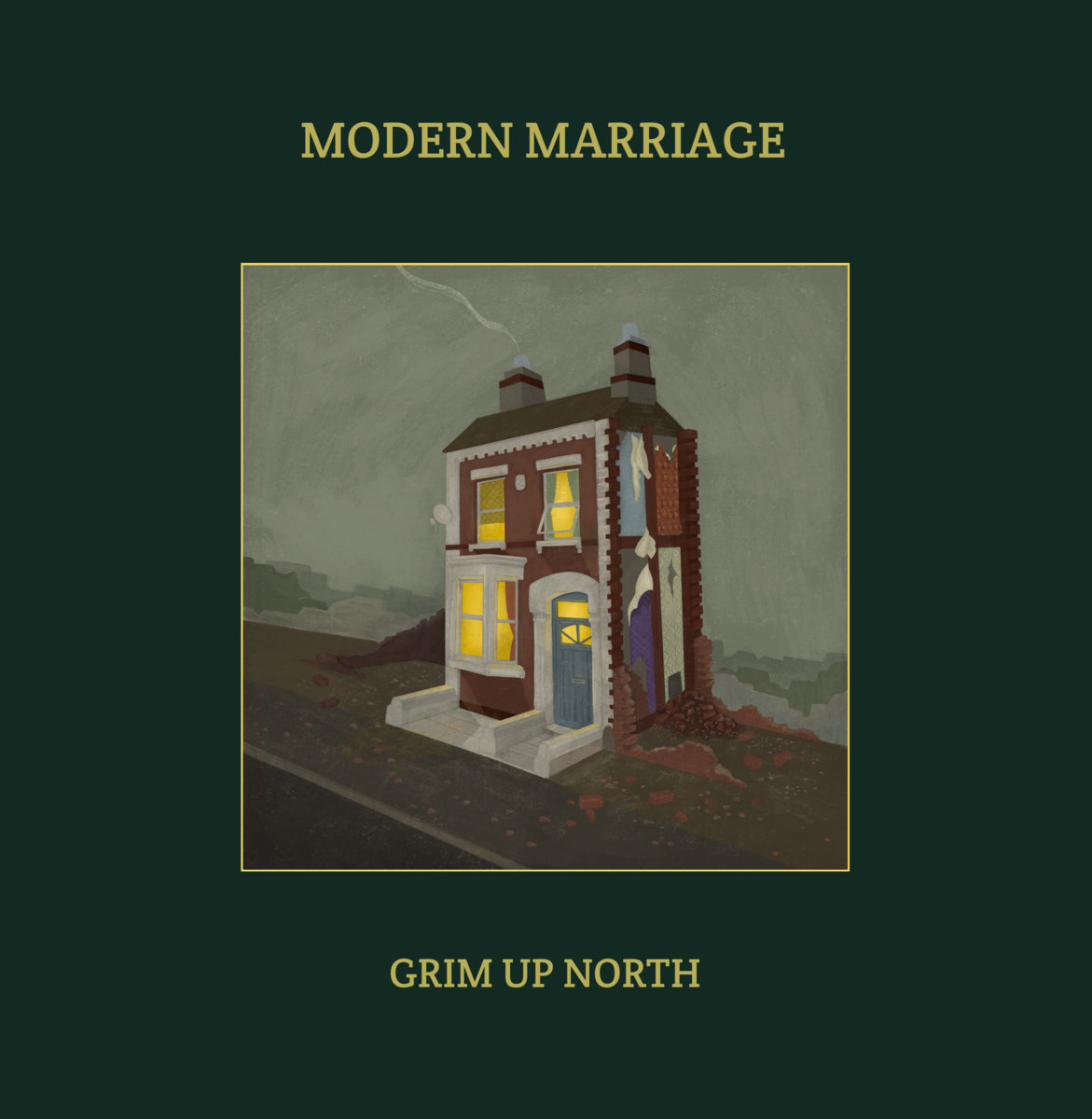
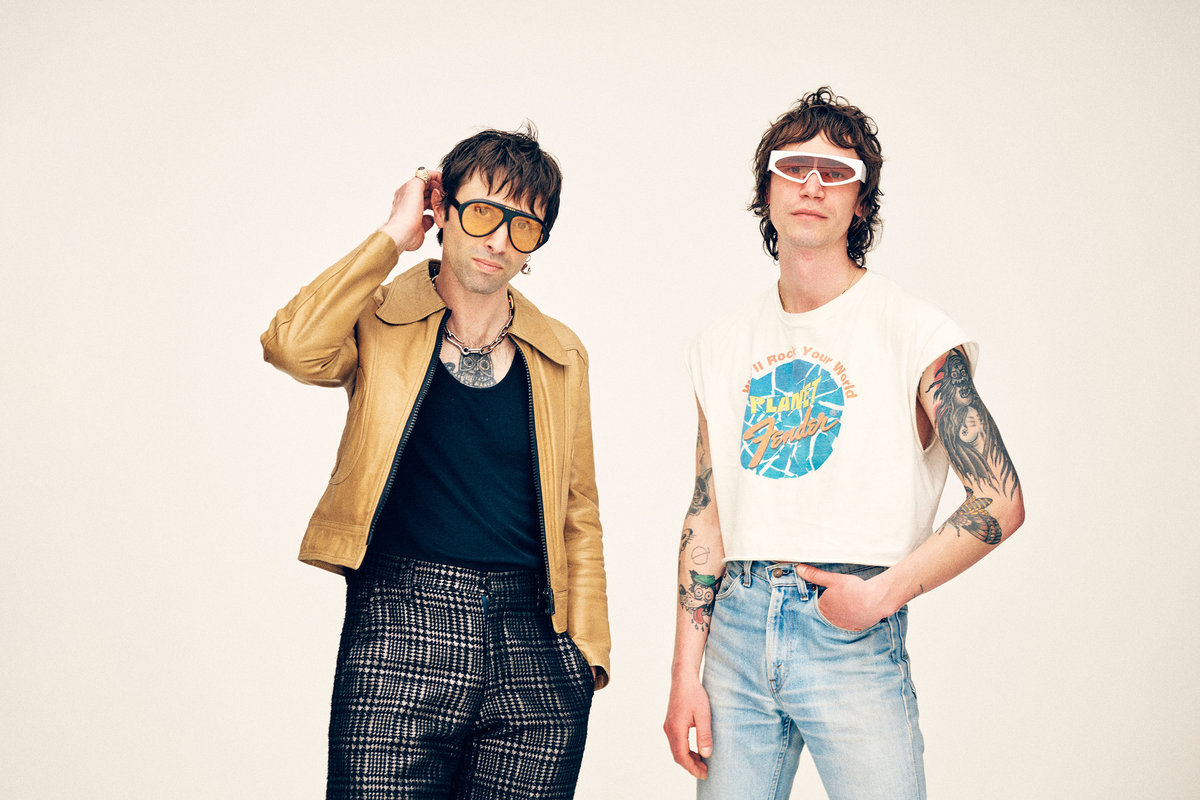
On their new record Grim Up North, Modern Marriage wrap darkly funny stories, oddball characters and sharp observations in irresistible power pop. We spoke to Ben Savage about Merseyside, melody and the peculiar everyday moments that find their way into the band’s songs.
There’s something very English about Modern Marriage — rough, melodic, witty and slightly awkward. Where does that come from?
Our ‘Englishness’ is potentially just a reflection of who we are and the result of growing up in Merseyside. The songs are predominantly about everyday life and the strange characters encountered along the way, and it wouldn’t make sense to present them any other way. The three of us consider ourselves very genuine people and what you see is pretty much what you get. Merseyside is full of oddball characters, and Scousers have an idiosyncratic sense of humour, which hopefully comes across in the songs. I do of course love very ‘English’ bands, from the Kinks and the Who through to TV Personalities and Half Man Half Biscuit, who have always been fairly insular from outside influences.
Your songs are wordy, but the melodies never get lost. How do you balance storytelling with melody?
The storytelling aspect comes fairly naturally – for further reading, feel free to check out the ‘Customer of the Day’ series on the ‘Skeleton Records’ Facebook page, which is me living my day job. The melody is a bit of a non-starter, and I wouldn’t take a song to the band unless I feel the melody is adequately strong enough in the first place. We’re often told that the songs are “catchy,” or “earworms that stay in your head for days, whether you want them to or not.”
I hear The Jam, Buzzcocks, Squire and The Real Kids, but Grim Up North never feels nostalgic. How do you make those influences your own?
I personally feel the songs live in their own detached state of time, where the sensibilities of the 1977 music explosion are applied to growing up in 21st Century Liverpool. They’re never truly modern nor truly nostalgic – they’re all somewhere in between, and I like that. As for influences, we’re all music geeks and we’d be here all night giving the full list. To oversimplify, I’m a proud mod/power pop fan, Eloise likes the obscurest music in the history of the world, and Danny has an encyclopaedic knowledge of Tenacious D that confounds all but his closest friends and family.
Your songs are full of specific people, places and situations. What comes first — the story, the melody or the character?
The songs tend to start from one idea, usually a title or key phrase that stimulates my curiosity, and then I go away and pretty much write the whole thing in one go. I’ve got a leftfield imagination, so the smallest of ideas usually ends up a long way away from where might be expected. For example, ‘Terry’s Last Fag’ was a piece of graffiti on the wall of a rehearsal studio, which turned into the story of a man working the night shift at his local supermarket, getting caught shoplifting and needlessly drinking bleach to evade the long arm of the law. ‘Gerry and His Pacemaker’ is about an octogenarian banjo player and ‘IKEA Flatpack’ a jealous lover, who kills her ex and disposes of his body in the titular item of Swedish household furniture. ‘Blue, Red and Yellow… Maybe’ was a deliberate attempt to write a very dark song from the point of view of a stalker, but dress it up as giddily happy power pop, to reflect his contentment stalking his crush around B&Q, “humorously whistling Husker Du.”
The album feels deeply rooted in Northern England. Could these songs have been written anywhere else?
Probably not. The North of England famously doesn’t take itself too seriously and we’re quite a self-aware bunch up here. Merseyside in particular has a warped sense of humour and identity even for Northern standards. We also have a disproportionately high number of local eccentrics, and I couldn’t have dreamed the song scenarios up in the first place without being acutely conscious of our local environment.
The Hollywood Stars are no longer just a legendary name from the past. After many years of silence, they released “Starstruck” last month, which was promptly voted the best Power Pop album of 2024 so far by Shindig. This accolade is well-deserved, as the eleven new songs are vibrant and high-quality, reflecting the class of a distinguished band.
George Keller, who joined as the lead guitarist in the spring of 2023, shared with the Sweet Sweet Music blog how “Starstruck” came to be.
You can find ‘Can’t Do It Right’ showcased on the Best Power Pop of 2024 Spotify Playlist.
Could you share the journey of bringing this record to life? How did all the pieces come together to create the final product?
It involved a bit of magic and a lot of hard work. I joined the band in early 2023, and at that point, about half of the material for our new ‘Starstruck’ album was in place. Everybody in the band gets a songwriting credit on ‘Starstruck.’ I worked on a track called “Walking With an Angel.” We recorded the album in two marathon sessions, the first in March 2023 and the second in November. We recorded at Kitten Robot Studios in Los Angeles, and the album was produced by the band, our manager Loren Molinare, and longtime L.A. producer/musician Paul Roessler. We’re all very pleased with how it turned out and the reception from press and radio has been great.
Was there a particular moment or experience that struck you, signaling that you were onto something special with this project?
Yes, during the recording of “Shortage of Love.” The track was recorded live and we didn’t have an ending. We played what we thought might be the ending, and then Loren, who also played some guitar on the album, kept playing and we all followed his lead. The song ended up becoming this anthem-like extravaganza that none of us had envisioned.
The decision to seek opinions on your new songs is intriguing. When did you realize that external perspectives could contribute to your creative process?
It’s always good to check the outside “temperature.” 🙂
Success can take on different meanings as time goes on. When envisioning success for this new record, what does that picture look like now?
Our goal is to get as many features and reviews, and on as many radio playlists, as possible. So far, we’re accomplishing that goal. Of course, we would also like to play more shows.
Within this collection, do you feel that the best song you’ve ever written finds its home? If not, what distinguishes this record’s essence from your prior work?
Every new endeavor has its highs, and my song “Walking With an Angel” comes as close to perfection as possible, with a great vocal by Scott Phares and wonderful interplay between the drums and guitar as the song fades.
As an artist, the act of baring your emotions to the world is profound. Does this vulnerability come naturally to you, or is it a constant journey of finding comfort?
Naturally, and as a lead guitarist, I can be a bit of a showoff.
Among the gigs you’ve performed, which one holds an indelible place in your memory and why does it stand out?
It’s in the thousands and spans many years. In June, we played an album release party at The Viper Room in Hollywood. The place was packed and there were many folks that we have known for decades in the audience. That show was very special and stands out to me right now.
Defining a song’s completion can be elusive. How do you determine when a composition has reached its final, ready-to-record form?
You have to stop before the energy dissipates. Three takes should be the maximum in my opinion. If you can’t get it in three takes, then it’s time to move on.
Striking a balance between experimental artistry and commercial appeal is a challenge. How do you navigate this dynamic within your music?
There is a formula but you have to be careful and not become cliched. It’s difficult to define so you have to “trust your feelings.”
Lyrics often carry profound meaning. Are there particular lines you hope listeners will always remember from your songs? If so, what’s the significance?
This question makes me think of our track “Shortage of Love,” which is both a title and a message to listeners.
Performing music before an audience holds a unique allure. What aspects of this experience contribute to the excitement and enjoyment for you?
Seeing the smiles on the audience’s faces and their bodies moving. It’s an immediate sign that the band is doing something right.
Among the compliments you’ve received, is there one that remains etched in your memory? If so, what made it particularly unforgettable?
Yes, a very well-known poet friend of mine said my performance was so captivating, he forgot he knew me.
Studio moments often hold a touch of magic. Could you recount an instance that stands out as the most enchanting during your creative process?
For ‘Starstruck,’ it was playing the lead guitar break to “Revenge” through a Marshall stack that was turned all the way up to the proverbial 11!
Where do you see yourself situated within the broader landscape of the music industry? How do you perceive your unique role and contribution?
The Hollywood Stars create energetic, melodic, and memorable tracks. The band name has been around since the early 1970s so a lot of people have fond memories of this group’s music over the years. In the band’s early days, they were hit by a succession of tough breaks that derailed their career momentum. At this point, decades later, I think that the attention, and having the chance to still be making great rock ‘n’ roll is a wonderful tonic for all of us, but most especially our three members from the 1970s: vocalist Scott Phares, drummer Terry Rae, and bassist Michael Rummans.
In the digital age, visual elements are intertwined with music. How did you approach the album’s visual aesthetics, such as album art and accompanying visuals? How do they complement the sonic experience you’ve crafted?
The cover photo was a happy accident and with a band called “The Hollywood Stars,” the name is synonymous with the film industry. Everything fits together nicely.
Dream Pony draws inspiration from the Ramones, The Velvet Underground, and The Strokes, crafting a unique sound they call Neo Glam. Their music could also be perfectly described as New York Pop. This debut album is simply irresistible.
Defining a song’s completion can be elusive. How do you determine when a composition has reached its final, ready-to-record form?
I think there’s a line to be walked between some part of looseness and some form of structure. We usually have parts and things semi-worked out and understood, but a lot happens when the song is finally being put onto tape.
Usually, we kick it around a bit in the room until we are somewhat satisfied, and then we add things to it as we go. I think the thing is you’re chasing something, but you also need to be open to accept things that come along. Often, these elements present themselves, and when they do, you make the decision.
Striking a balance between experimental artistry and commercial appeal is a challenge. How do you navigate this dynamic within your music?
It’s not something I really think about while writing a song. I feel a good song is a good song, and whether it has commercial viability or not is not really a factor. There are so many amazing unknown songs, important songs to us that, for one reason or another, never really broke through to a commercial market. I think the exercise of writing a song needs to remain separate from any predetermined outcome, and that way, it’s able to form itself the way it wants to.
Lyrics often carry profound meaning. Are there particular lines you hope listeners will always remember from your songs? If so, what’s the significance?
There are a few messages throughout the record. Different things hit you at different times, and also, people receive things in certain ways and have distinct takeaways. I guess that’s the pleasure of writing and reading.
There are a few lines scattered through the album that are hopeful, and I think in general, they are trying to convey to people to stay true to yourself and follow your heart. Lines like in “Sunday Suits,” “some people like to save all their money, some people like to favor their dreams” and “Suspicion Today,” “Do you remember that love, oh what it would feel like, I want you to know”.
Things like that, I just wanted to share some hope and convey that imagination can set you free amongst some of the darker themes that are throughout this album.
Imagine you could collaborate with three co-writers of your choice for new songs. Who would you select, and what qualities or dynamics draw you to them?
That’s a tough one, there are so many! If I had to pick three, it would be John Felice from Real Kids; I just love his songs, energy, and everything about the band’s spirit. They really lift me up. Patti Smith would be another I’d love to have the opportunity to collaborate with. I’d love to see how her process of writing a song unfolds, and I don’t know what I could offer haha, but I’d love to be in the room and see what happens. My third would be Tim Rogers from You Am I; I’ve always been a big fan of his songwriting, and I’d love to see what unfolds. All of this being said, I’d probably be way too shy to be able to do it. I would certainly freeze up and likely say something really silly haha.
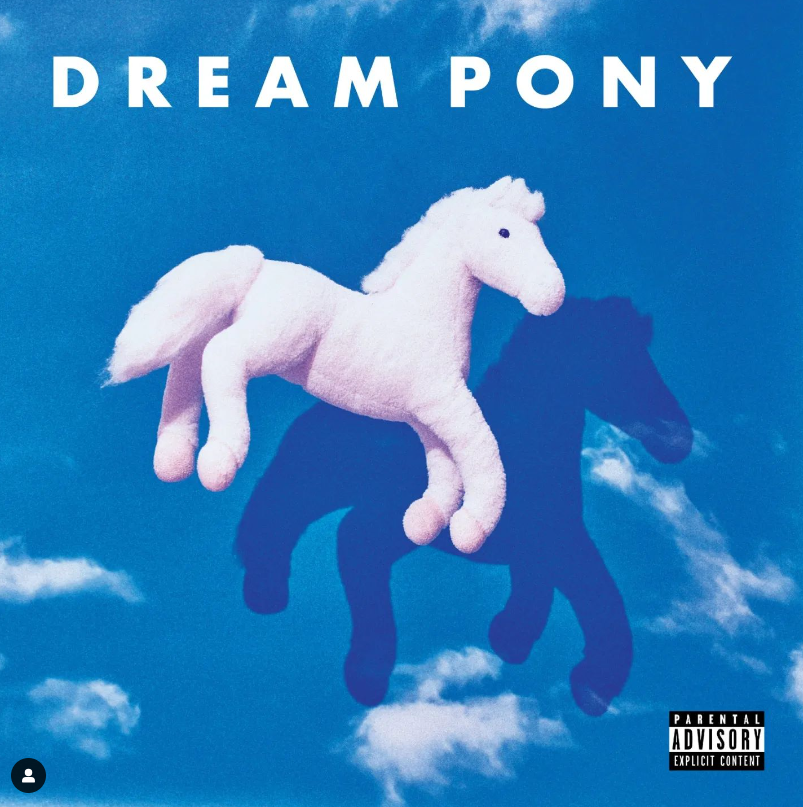
In the digital age, visual elements are intertwined with music. How did you approach the album’s visual aesthetics, such as album art and accompanying visuals? How do they complement the sonic experience you’ve crafted?
Being our debut album for Dream Pony, we wanted to create something that reflected the album title Suspicion Today but also Dream Pony as a concept. I wanted to create a dreamlike space for the songs to exist within. I had this concept of something floating around like the bridge in our song “Sunday Suits” and the ethereal being out there, however, casting a shadow below so in some ways it floats but still touches something. We purposefully wanted it to cast that shadow and reflect some kind of tangible illusion. We sourced several objects and various horse statues that we workshopped until we came upon the cloud background and pony plush toy, which we named Tony the pony. The artwork was captured by our great friend and super-talented photographer Ryan Slack at Mediumplex studio in Brooklyn.
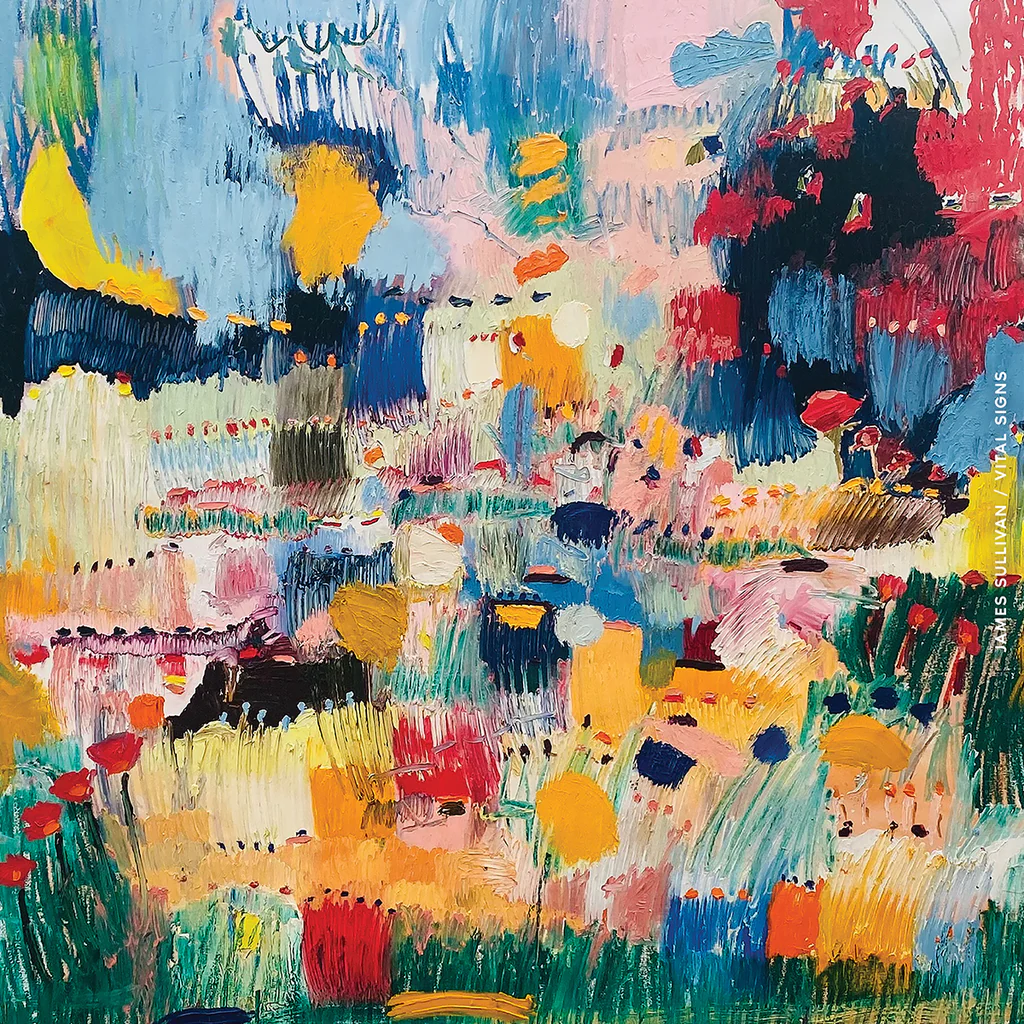
Now that More Kicks is a thing of the past, James Sullivan, with Vital Signs, has delivered an exceptional record. It’s sophisticated, melodic, narrative-driven, and utterly intriguing! Here is a restless writer at the top of the songwriting game.
You can discover ‘Day Late Dollar Short’ featured on the Best Power Pop of 2024 Spotify Playlist.
James, your record is truly beautiful and diverse. Did refining your sound after More Kicks disbanded come naturally?
Thanks! I actually finished this record before More Kicks ended. We’d finished the second record, Punch Drunk, and everything was at the pressing plant with Dirtnap and Stardumb. So we were sort of planning some touring around that release, but it was all 9-12 months in the future. I’d been writing so much for the two years leading up to that point and I didn’t want to stop. I also knew my lease was running out on the little studio space I rent, so I had about three months before I would have to move out of that.
So it was kind of a no-brainer to just keep on writing and recording. Honestly, I was a little worried about my state of mind without new music actively happening and I was quite burned out from writing so much for More Kicks, so making a new record on my own was an easy decision to make. I didn’t necessarily think it would be another album because there is always a chance that it turns out completely shit. Especially without the tasteful filter of Paolo and Kris (bass and drums from More Kicks) being applied to the songs. But as long as I was writing and recording something new, I knew I would feel okay.
Then I finished the ten songs and Punch Drunk was almost ready, so it was time to go and tour that thing. Vital Signs was done and even mastered, but it was just sitting on my computer. Six months later, I realized I didn’t want to do More Kicks anymore and I even had a completed record ready to go, so I finally got my arse in gear to get it released. I sent it to Stefan at Stardumb to see if he’d be interested – god bless him, he was – sorted out the artwork. Then that all takes a little while again, and here we are.
So the sound was just an amalgamation of physical limitations and the freedom of it not needing to be played by three people on a stage. There are so many limitations when making the record like that on my own. I record everything on an 8-track tape machine so I only have eight tracks to play with. Plus my own limited recording capabilities, I can’t play the drums and I suck at piano so that comes into play as well. Tiny cupboard-sized ‘studio’, loads of noise coming from everywhere in the building. In my head, I was going to make a huge orchestral piece, but that is simply not possible in those surroundings haha.
In terms of refining that sound, I just wanted it to have more space than my previous records. Less frenetic, more textures, a broader feel. I often wish I could embrace jam band aesthetics but that is essentially impossible if you’re playing things on your own and it’s all on tape so you can’t edit anything after recording. Plus, I’m quite a brutal editor of my own stuff, so what starts off in my head as ‘this will be a really long and tedious drone instrumental with almost no melody’ ends up becoming quite a concise pop song.
Your lyrics are captivating. Is writing them a smooth process for you?
Ah well thank you! I would say quite smooth, yes. I usually make a little demo of the song while I’m writing and the lyrics come last. I have nonsense placeholders in there while writing and then figure out what they should actually be once the music is at least mostly structured and worked out.
So I’m usually quite tired by the time it comes to writing the words. I like to write them very quickly and usually about 90% of those tired lyrics are there in the final version – just some tweaks here and there for better phrasing etc. Sometimes I think that might be why I often seem quite sad in the words – I’m just a bit tired by that point.
I usually write the chorus first and work backward to fill in the verses. That seems to help with the flow of setting the scene and the theme, and then getting a good payoff with the chorus. So the second verse can often be difficult because I’ve got a narrative that ‘ends’ with a chorus, but I have to continue the story for the second verse somehow. But yeah, I would say once the chorus words are in place, the rest of the words seem to come quite quickly.
I’m intrigued by ‘Guilty as Charged’. Can you share how that song came to be?
I had already started recording and while I was listening back to what I’d done, it all felt quite unambitious and nice. Exactly this idea of expanding the horizon is where I was going with Guilty As Charged, and also the song which precedes it, ‘Dronify’.
I was missing live drums on what I’d recorded. My friend Marco had played drums on Day Late Dollar Short and they sounded really nice. So I looped a few bars of him playing that song and just droned a bass riff over the top for four minutes. At this point, I realized I should essentially abandon structure and just go with the drone – so spoken word would be a good idea. I used that a bit on my first record ‘Light Years’ on the song ‘Lea Bridge’ so I liked the idea of returning to that.
I was reading ‘Nickel Boys’ by Colson Whitehead and he described someone as looking like they were ‘upholstered into their suit’. All disheveled and creased. I loved that. So I thought a character piece about whoever that person is would make for a great vignette. I wrote those words so fucking quickly, I’m not sure where it came from. The whole courtroom scene, the grotesque spectacle of a man getting sucked into thin air from within this horrible green linen suit. It really felt so freeing to write like that. A complete stream of consciousness that was absolutely not related to me or my life at all.
Many times I almost deleted that from the record because it felt thematically separate from everything else. If anyone had said to me ‘Erm, I’m not too sure about Guilty As Charged’, I would have definitely just thought, fuck it, and dropped it. But luckily, nobody heard the record except me until it was all finished. I’m glad it’s there.
Creating Vital Signs as a solo project must have been quite different from working with a band. What was that experience like?
Quick, instinctive, a little worrying because there is really no objective voice in the room at all. There is every chance that everything I’m recording is truly awful and I can’t tell because I’m far too close to the whole thing.
So it feels higher risk in one sense, but also lower risk in the sense that I have zero expectations for anything. Nobody is waiting for a James Sullivan solo record. I’m not even waiting for a James Sullivan solo record. I could quite easily finish a set of songs and then just do nothing with them and carry on with my life – as I almost did with these. But then, the ego in me can’t quite resist sharing them with the world in case other people also get a kick out of them.
Your new sound really showcases your vocal talents. Was this something you consciously aimed for?
Not at all, but I really appreciate that. With the self-recorded, straight to tape thing, I have to sing everything from start to finish in one take because I don’t have long enough arms to punch in the recording from where the microphone is in the room in relation to where the tape machine is. So it’s all in one take, or do the whole thing again. Which is mostly how I do it anyway – but this time it’s the only way I can physically do it.
I can definitely sing in tune; I don’t usually have problems with that. So having that one-take restriction probably adds a certain edge or sense of jeopardy to things. It definitely makes it feel more alive and, yep, more real.
What kind of compliment about Vital Signs would make you especially happy?
Christ, that’s quite difficult. I’m one of those dickheads who claims to not care about reviews but then when I get a nice one, I feel really good about it.
I think if people realize that I’m consciously trying new things, that I’m not scared of alienating listeners, that I am really really keen to not repeat myself, that makes me happy. I will scrap entire songs if they feel slightly too similar to something I’ve written before when it would be much easier to just tweak it slightly and record it. In fact, probably that would be an easier thing for listeners to get their heads around. I could have written More Kicks songs forever but I would have known I was cheating myself.
So I think if somebody told me I was a restless writer, that would make me very happy.
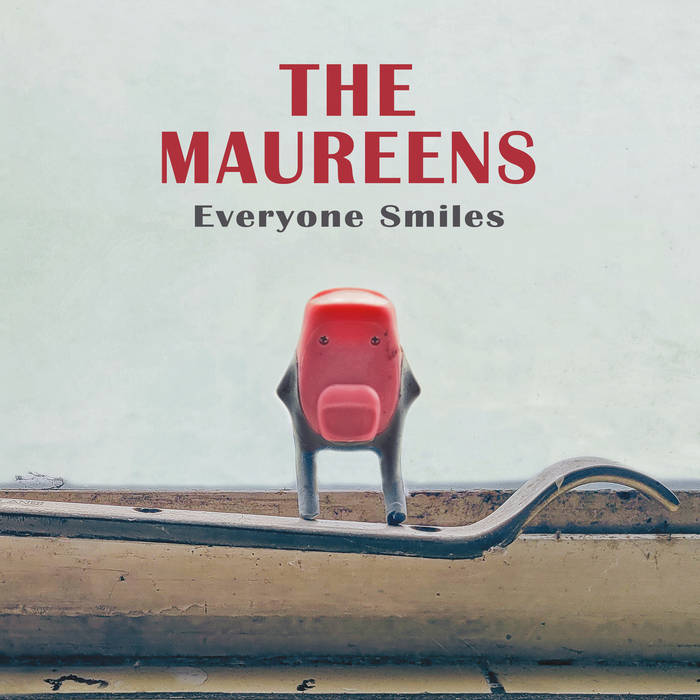
The Maureens, hailing from the Netherlands, have introduced a new gem to their discography with ‘Everyone Smiles.’ This album features thirteen bright and lively pop tunes that Dutch critics aptly liken to the finest works of The Posies, Teenage Fanclub, and The Jayhawks. These comparisons are fitting, as, akin to these influences, ‘Everyone Smiles’ not only boasts beautiful melodies but also elevates its offerings to an exceptionally high level through harmonious vocals.
Hendrik-Jan de Wolff provides insights into the creation of ‘Everyone Smiles.’
The initial responses on social media and the initial reviews for “Everyone Smiles” are positive. Did you sense that you were working on something special during the making of the album?
At the time, our focus was primarily on delivering the songs at their best. The journey to recording was extensive, spanning 2.5 years, including the challenging period of the pandemic. We crafted numerous songs and tested them in the rehearsal room before recording began. We were perhaps too close to the material to view it objectively, as the press and listeners do now.
The connection with Frans, our producer, was strong, as was our belief in the songs. However, judging our own “child” is always a challenge. It’s gratifying to receive positive reactions, especially when they capture the essence of what we love to create: songs with substance and clear influences from the Beatles and the 60s.
Frans Hagenaars, your producer, is credited with shaping the sound of Dutch Indie Pop. Did you ever inquire about his influence on the genre?
Absolutely. His work on albums with Johan and Daryll-Ann, among others, consistently features an edge and a vintage feel that aligns well with our music. Frans brings a unique perspective to recordings, emphasizing live performance and avoiding excessive perfection. In our pre-production discussions, his vision aligned seamlessly with our desires.
There is a substantial number of years between the release of ‘Something in the Air’ and ‘Everyone Smiles.’ What are the key moments in the history of the creation of this album?
Due to the Corona period, we could no longer rehearse weekly, leading to a different approach to creating songs. I worked extensively on songs on my own, often in collaboration with Stefan (drummer). However, this made it less of a band process and more fragmented.
During the recording week, several drastic choices were made, giving songs a completely different vibe, as if they had been through the car wash. Frans played a significant role in these decisions, whereas before, we were mainly at the helm ourselves.
This truly was a co-production, resulting in an album that sounds different from our previous records and has more of a live feel.
The harmony vocals stand out more on ‘Everyone Smiles’ than on previous albums. Is singing together a particularly enjoyable aspect for the band?
Absolutely! Harmonizing is a significant element for us, often introduced towards the end of the creative process. I pay careful attention to harmonies, recording vocal parts early on to emphasize their prominence in the song development. When we rehearse the vocals together, it feels like adding the perfect finishing touch. Singing together as a band gives the songs an extra lift, creating a beautiful synergy.
Being a Dutch band on a Spanish label is intriguing. Can you elaborate on that?
In 2018, the Spanish label Meritorio approached us with enthusiasm, showcasing a preference for guitar bands, especially jangle pop. We reached favorable agreements regarding vinyl pressing and promotional activities. Communication is straightforward through Whats App, and the connection with Spain provides additional attention (press) and opportunities for performances, which might not be as apparent otherwise.
What are your plans for the upcoming months?
“Everyone Smiles” is set to release on vinyl on January 26, followed by the album presentation at Tivoli on February 3. We aim to play in as many places as possible to promote the album. Additionally, we hope to schedule shows in Spain and England in May, details of which we’ll share soon. Stay tuned to social media and our website for updates. Meanwhile, we’re already immersed in creating new songs, as we don’t want to wait another five years for the next album.