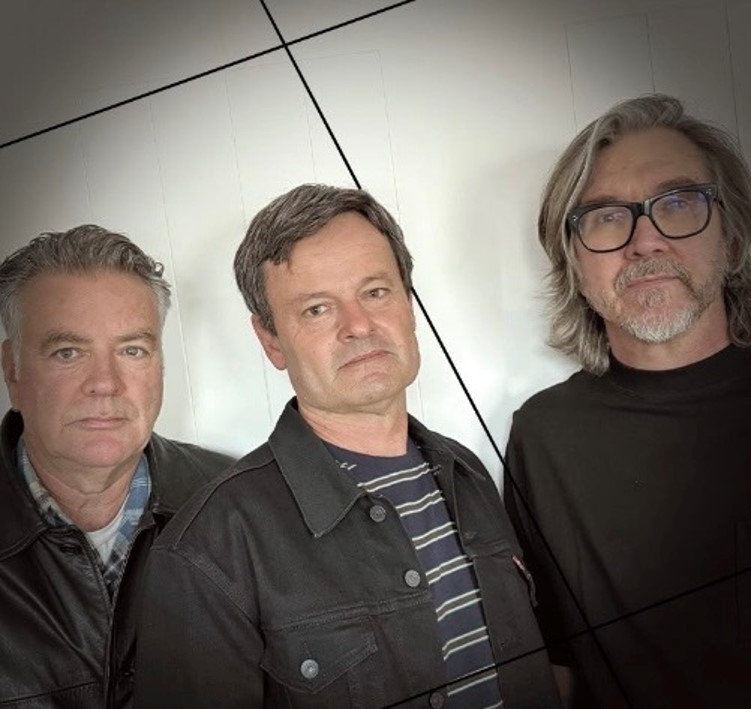
Sydney’s The Low Priorities have arrived with Dice, a debut album bursting with jangling guitars, infectious melodies and classic Power Pop energy. Drawing on decades of friendship and a shared love of guitar-driven pop, the band have turned what began as a modest EP project into a full-length record that’s already attracting attention well beyond Australia. We caught up with Dan Keary to talk about the making of Dice, the band’s musical influences, Sydney’s thriving guitar-pop scene and what might come next.
Dice is your debut album. How did The Low Priorities come together, and how did these songs develop into the record we’re hearing now?
We’re all old friends who have played with one another in different bands on and off over the years.
About a year and a half ago, we had the idea to start a band specifically to play songs with a power pop feel. We thought that if we recorded a few songs as a self-released EP, it might be a good calling card to get some live gigs here in Sydney. While we were making those recordings, Dave wrote another batch of songs so we’d have enough for a live set. We got excited enough about them that we thought we may as well record all the songs and release an album rather than an EP.
So the album was done before we’d actually played any live shows.
There’s a real sense on Dice that you’re drawing on a long tradition of melodic guitar pop while still making it sound like your own. What were the musical touchstones for the band when you were making the record, and how consciously were you thinking about finding your own sound?
You’re absolutely spot on in referring to a long tradition of melodic guitar pop.
We’ve been playing together in bands since the 1990s and have spent many years sharing our love of music and enthusing about hundreds of different artists and records. The common thread of what we love is guitar-based bands with memorable, melodic songs. While making the Dice album we really enjoyed drawing on these inspirations, sometimes several within the same song. We’d often find ourselves talking excitedly all at once about bands like The Who, Blondie, Elvis Costello, The Nerves, Guided By Voice, Badfinger…to name only a few!
We wanted to make a high energy, catchy record that was clearly inspired by these and other great bands, but which still had a sound that was a unique blend of our own voices and playing styles. We weren’t looking to reinvent the wheel, but hopefully to create something with its own identity within the guitar power pop tradition.
There’s clearly a strong guitar-pop and power-pop tradition in Australia, and Dice has already been mentioned alongside that history and the current Sydney scene. Do you feel part of a wider Australian guitar-pop community, and are there bands from that scene — past or present — that you feel particularly connected to?
Yes, we’re certainly fans of a lot of the bands that people would associate with classic Australian power pop, such as The Hoodoo Gurus, Sunnyboys, The Stems, The Someloves etc.
In terms of the current Sydney scene, there’s still plenty of great guitar pop artists and bands like Bryan Estepa, Hoolahan, The Pyramidiacs, and The On and Ons playing regularly and everyone knows each other either directly or indirectly.
We did an album launch gig in Sydney in August and have another Sydney gig in mid December. Next year we’ll be looking at playing some more shows with other like-minded bands both here in Sydney and hopefully down in Melbourne.
The album has been getting some really strong reactions since its release, including the description of Dice as an “exemplary” power-pop record. Has the response surprised you, and have you noticed it bringing new listeners, contacts or opportunities your way?
We’ve been really happy with the response so far. We were confident we’d made a really good record so were always hopeful it would be well received but, yes, we’ve been pleasantly surprised at the airplay and positive reviews its been getting both here in Australia and in the US and Europe.
We’ve made quite a few new connections in different countries and there’s also some opportunities for some overseas shows next year and hopefully we’ll be in a position to confirm these shortly.
Dice is out now, and the songs are no longer really yours — they belong to the listeners. What does it feel like to let your first album go into the world, and is there a particular song you’re especially curious to hear people make their own?
That’s a nice way to put it – that the songs now belong to the listeners. We’d like to think that’s the case because that’s how real music fans perceive the songs they love – as their songs – and hopefully there’s enough people out there who have formed or will form that attachment to our songs.
We wanted to make an album on which every song could stand up on its own and hopefully we achieved that, so that every song could potentially be someone’s favourite.
We’ve been promoting the title track “Dice” as the main track, as we think it best captures some of those classic power pop elements we love – jangle, melody, power etc – but equally, there may be sonic or lyrical elements of other songs that people can relate to.
As long as we know there’s people out there enjoying the album, we’ve achieved what we set out to do.
Fifteen songs, and Jamie Coghill goes just about everywhere with them. On Pretending To Be A Person, The Jimmy C moves from country-tinged pop to seventies rock swagger, quirky sixties psych, garage rock and even flashes of proto-metal, with little concern for stylistic consistency. Somehow, it all hangs together. The constant is Coghill’s instinct for the song itself: whatever clothes it happens to be wearing, the hook comes first.
That restless musical curiosity has been part of The Jimmy C from the beginning. Coghill talks about discovering Nuggets after growing up on grunge, his love of bands that happily jump between genres, and an approach to songwriting that relies more on instinct than intention.
We spoke with Jamie about where those songs come from, the art of sequencing an album in the streaming age, the strange story behind the cover of Pretending To Be A Person, and what happens when you finally let a record go and allow listeners to make it their own.
This album seems to go everywhere musically, and I love that about it. Was that freedom to move between styles something you consciously wanted when you started making the record, or did the songs simply take you in different directions?
It might be the same for all songwriters but I don’t actually understand where my musical ideas come from and I very rarely set out to write in a specific style. I like to say that I try to let a song happen without getting in the way too much! It’s a case of letting the idea just happen organically or by instinct … that sounds pretty artsy-fartsy wanky-douchebaggy but I think part of me doesn’t want to analyse it too closely in case I lose it.
My taste in music probably plays a large part in the varying styles of music I make. I grew up in a country town in the 80s and early 90s and was a full-on grunge kid. Classic cliche 70s rock and grunge were my life and I was incredibly judgemental of all other musical styles. The blinkers came off when I was about 18 and I discovered movie soundtrack music (Goblin, Morricone, John Barry) and most significantly, Rhino’s Nuggets CD box set. Film music was a passion but was far too progressive, jazzy or orchestral for a young drummer to ever imagine playing by himself, but the Nuggets music was incredibly inspiring – 4 CDs of late 60s garage punk and pop! The best song from bands that mostly only ever got to record one single or one album. It was an amazing mix of wild fuzzy garage pop and psych from a hundred different bands but all somehow fit together perfectly in a unified collection. It was an awakening, and a gateway into the amazing music those bands made.
Some of the music was primitive enough that it felt like even I could learn a few guitar chords and write dumb noisy songs like that, but it was also sprinkled with sophisticated proto-power-pop that broadened my thinking of what a song could be. I had been drumming since I was 12 years old and by 2005 I had learned enough guitar from being around guitarists that I was able to start recording primitive garage songs all by myself on my Tascam 4-track recorder. That’s right, the drummer was no longer reliant on the “talent”!
My songwriting has become a little more sophisticated over the 21 years of making music as The Jimmy C but that broad range of styles remains one of my defining characteristics. My favourite bands are ones that jump around the genres too – Ween, Super Furry Animals, Sloan, Jellyfish … it’s great music for people with a short attention span!
There are some pretty extreme contrasts in the tracklist. You can have a hard-rocking song followed by something tiny and introverted, or a full song followed by a 40-second instrumental. Was the sequencing part of the creative process for you? Did you enjoy putting those contrasts next to each other?
Absolutely, yes! I look at albums as an entire piece of art. Concept albums as a genre are usually incredibly pretentious but the idea of unifying a collection of songs as a whole piece is wonderful.
Pretending To Be A Person isn’t a concept album but I always like to approach my albums with a focus on the journey that the songs take the listener on. I like to experiment with how one song flows into the next, sometimes letting it take an emotional breath or exploiting this power to knock the wind out of the listener with a jarring and sudden transition. It’s all part of the fun of making music and I refuse to let it go, even in the age of streaming consumerism where many artists release songs individually with the expectation that they’ll end up in a playlist rather than the running order of an album.
Perhaps it’s naive of me to expect listeners to take in albums as a whole in one sitting or maybe it’s stubbornly retro of me to still care about the track sequence of an album but I’m a total record dork and love albums. All art is storytelling so why shouldn’t the entire album also tell a story?
When you start a new song, how do you decide what kind of song it is going to be? Does the melody tell you, does the lyric suggest a particular sound, or do you sometimes deliberately think, “I want to make a song that sounds like this”?
As I mentioned above, I like to let a song happen without thinking too much about it. My ideas for songs aren’t conscious or deliberate and usually happen when I’m not in a musical headspace at all. It seems to happen while I’m doing something mundane like showering or walking to work. An idea just pops into my head – a little snippet of melody and a few lyrics – on repeat in my head so then I’ll go and hum, sing or strum (if there’s a guitar nearby) the idea into my phone as a voice memo so I don’t forget it and can get on with my day.
These voice memos can sometimes sit around for years without turning into a full song but it’s a good way to catalogue these thoughts and not forget ideas that could turn into a good song one day. I’ve had some song ideas that are so complete I can finish them really fast and have them fully recorded in a few days. Other ideas will lay dormant for years and I’ll listen to it and another section of the song magically pops into my brain and now it’s a song.
I’ve read about Nick Cave and Harry Nilsson going into an office all day and just writing songs. I’d love to try that one day but I just don’t have the time because I’m a 49 year old with kids and a day job. I’ve also read about Andy Partridge from XTC playing around with a new guitar tuning and some kind of synesthesia kicks in and he’s written something completely brilliant like River Of Orchids or Love On A Farmboy’s Wages! But again, that’s only possible with having time to pissfart about in the studio. Normal people don’t have that luxury!
I can only think of one occasion when I’ve written a song after consciously wishing I could write a song like Ever Fallen In Love by The Buzzcocks. I went to bed thinking about it and woke up half an hour later with the idea for I’m No Good For You, which ended up on the first album of my other project Lava Fangs.
Writing music for soundtracks is totally different though. I’ve written and recorded music and songs for 4 movies and 2 web series so far. I’ve done a couple of podcast themes and some video art installations too! I really enjoy doing movie music, it’s challenging and forces me out of my usual routines and comfort zone and gets me writing in genres I normally wouldn’t try. It’s great because there’s a specific reference point like a script or rough cut of a scene and these references help determine the music. With the two soundtracks I’ve done for indie filmmaker Joe Bizarro (Brides Of Satan, shot in California and Curse Of The Baby Eater, shot in Austin TX) he would send me a rough cut of a scene with some placeholder music that they’d never be able to afford the license for and so I would have to write something that captures the essence of someone else’s song without ripping it off or becoming a parody. It’s called Rutling but that’s a very specific reference … look up The Rutles and hear Neil Innes of The Bonzo Dog Doo Dah Band’s incredible Beatles songs that are in many ways better than The Beatles!
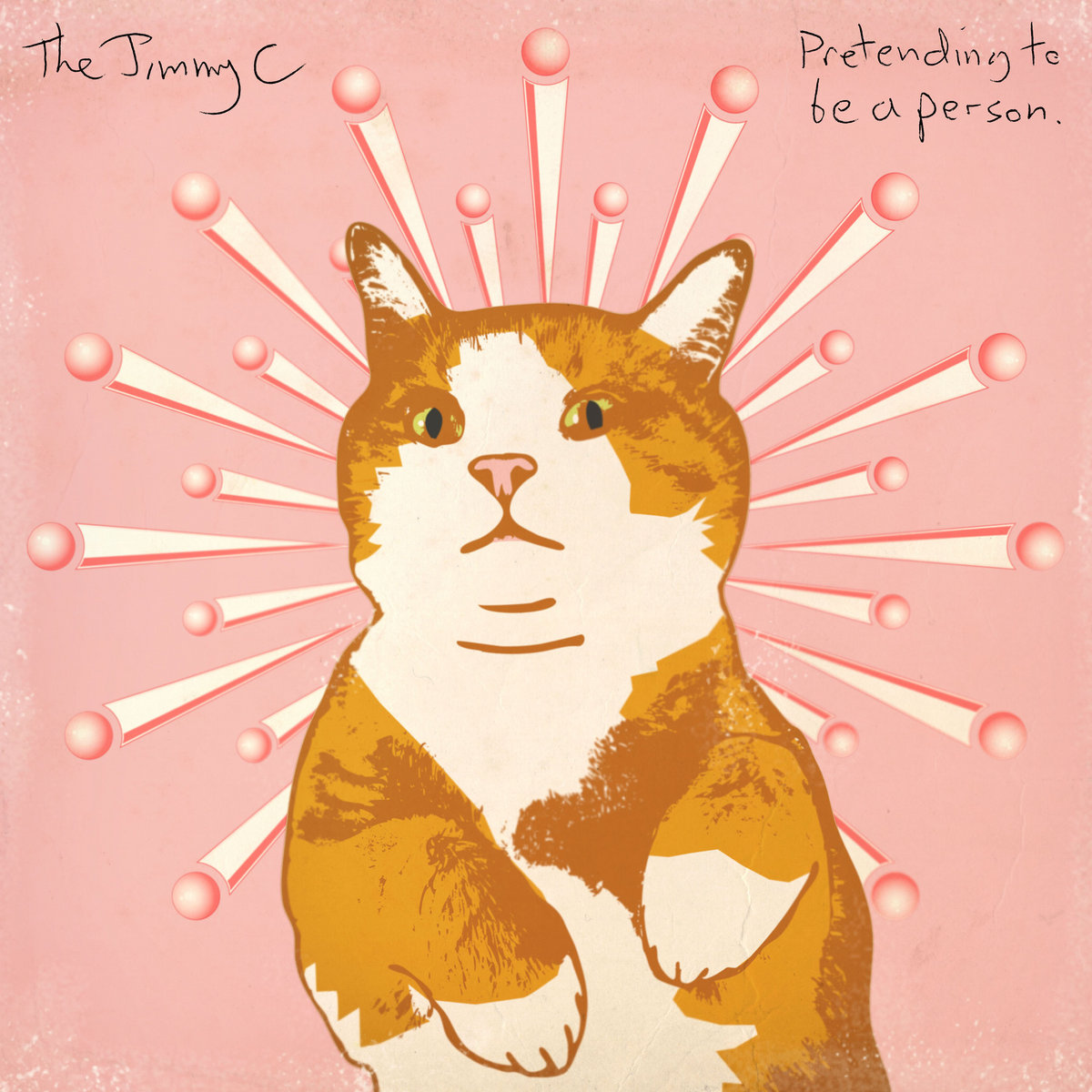
The artwork is very specific and has a slightly strange, almost surreal personality of its own. What was the idea behind it, and how closely is the artwork connected to the music?
I suppose the biggest connection is that it all came out of my head! And my head might be a strange and surreal place … My day job is graphic designer for a CD & DVD company in Melbourne, Australia. I’m always thinking about cover design and in my spare time sometimes just put ideas together with no real purpose. Sometimes it might be something I can use for the freelance design I do for local musicians and the Cheersquad Records & Tapes label. I’ve done designs for Aussie legends like Kim Salmon, Dave Graney, Steve Kilbey, The Meanies, Hard-Ons, The Stems … heaps of stuff …
The cover for Pretending To Be A Person started as a simple geometric design inspired by some of the late 50s/early 60s jazz covers on the Command label, things like Persuasive Percussion, Provocative Percussion and Murder Inc., and at the last second I decided to add a vectorised picture of my cat Diego (aka DooDoo) to it! It softened the formal look of the design and I felt like it fit in more with the title Pretending To Be A Person – though the title isn’t about animals pretending to be people, it’s more about neurodiversity (a subject I’ve dealt with a lot recently with friends and family) and how we mask our differences and feelings. We’re all pretending to be a person on the outside while dealing with all sorts of stuff on the inside. That theme comes up a bit in the music on the album and fit nicely with an illustration of my autistic looking cat!
The songs are out now, and they are no longer entirely yours to interpret. They belong to the listeners to discover, make their own connections with and find their own meaning in. What is it like for you to reach that point with a record?
It’s a relief! Up until this point I’ve been stressing about all the tiny flaws in every aspect of the singing, performance and production. That leaves a lot of room for imposter syndrome to creep in and make me wonder why I bother to do it and weather it’s worth it or even good enough to release! I think most artists go through this to some extent but it feels amplified when it’s just one person responsible for everything. It’s so enjoyable doing the recording and mixing, there’s a real endorphin hit from creating a song out of thin air, but once it’s all finished, the business and marketing stuff takes over and you’re not being creative anymore. It feels like you’re bothering people with your music. Inflicting it on them even!
But at this point I’m free off all the anxiety and I can actually distance myself from it and listen to it as though I’m hearing it at face value like everyone else – and it’s actually pretty good and kind people are telling me so!
I really like hearing people’s interpretations of my songs – mostly I really like knowing that somebody’s even listened to my songs!! It’s so cool that music has a built in ambiguity that lets different people interpret the same music in different ways. I do it to my own music too, part of the release process is writing brief descriptions of the songs for distributers and radio, I often have to listen back to the songs to work out what I’m even singing about! Sometimes the story is clear from the start but even then there may be a deeper interpretation I find hiding in the words, either that or I’m retroactively adding a more clever concept to a song! Both are valid!
The most confronting lyrical theme on the album is Pieces Of Me. The literal idea is a song written from the perspective of a terrorist suicide bomber but on top of that these songs are also pieces of me and by releasing them into the world they’re also “raining down for all to see” through global streaming. The literal meaning is probably just a metaphor for anxiety … the older I get the more anxious I get! It could just be all the heavy things going on in the world these last few years (definitely an influence on parts of this album) or maybe just part of growing old. I never used to think twice about playing drums at festivals and big venues packed full of people but now I’m a nervous wreck for a week before a Sunday afternoon gig to 30 people!
But I’m no expert, I’m just lucky to be here and grateful for the opportunity to talk about my music! Music is so special that you can interpret so many layers even in dumb little ditties like mine!
As published on the Chiming Back blog on December 1st, 2025.
For this interview with Australian power-pop treasures Icecream Hands, all five members — Marcus, Smiley, Doug, Dave, and Charles — joined in, each taking on one question. The result is a warm, funny, thoughtful conversation about songwriting, survival in a shifting music industry, and the stories behind their latest album Giant Fox Pineapple Tree.
Listening to Giant Fox Pineapple Tree feels like stepping into a warm bath — absolutely wonderful. How challenging is it to stay true to that sound and never compromise on the quality of the songs, the very thing that keeps the bathwater at just the right temperature?
MARCUS: To be honest, it’s no challenge at all really, because the song is everything to us. As a band we are remarkably agreeable about what makes a great song, and with the good fortune to have such incredible songwriters as Charles and Doug, we always have a stack of solid material to choose from and work with. Having played together for so many years now, we just naturally work to our strengths as a band. It’s fair to say the songs always come first, and then we build the sound around them. The sounds and details of production are also very important of course, and we do put a lot of time and thought into that part of the process. But there’s not much point in doing that if the songs are second-rate — that would be like lukewarm bathwater.
You’ve seen the music industry transform completely since the early days of the band. What’s the biggest change you’ve had to navigate — and successfully overcome — in recent years?
SMILEY: The biggest change has been the way music is consumed today. There was a time when you could realistically hope to make a living from record sales, and touring was mainly a way to promote your music — a way to get in front of people rather than your primary income stream. But with the arrival of music-sharing platforms and, ultimately, streaming services, the whole dynamic shifted.
Napster landed in 1999 and introduced the idea of getting music for free — or close to it — through MP3 peer-to-peer downloading. That changed consumer behaviour forever. What grew out of that is today’s streaming landscape. Services like Spotify offer little to no return to the artists whose music they rely on; that, and their unethical support of military AI, is why you won’t find Giant Fox Pineapple Tree on Spotify.
These days, if we want to keep making music, we need to sell out our shows and encourage our fans to buy vinyl, CDs, and digital downloads directly from us or through Bandcamp. We also now handle our own distribution, including international releases. The traditional record-store pathway has fallen back onto the artists themselves — it’s become a bit of a cottage industry.
That said, we’ve moved with the times, and the proof is in the pudding: our recent chart success, cracking the ARIA Top 40 Albums and the Top 10 Australian Albums charts. If I’m not mistaken, we were the only truly independent release in there. Sweet as!
“Now I hear the baby crying” in “Do Ya Feel It” is such a powerful line; it pulls you straight into the story. When you first write a line like that, do you immediately know it can carry the narrative, or does it not work that way?
DOUG: Thanks Patrick. Songs always arrive in different ways for me. It’s usually a melody or a chord pattern that comes along first, and I need to try to get a feeling or an idea into the music. I do tend to struggle to find lyrics that I think are good enough to carry a narrative.
I do tend to want to write words that sound good when they fall out of the mouth, and don’t worry too much about what they mean, as long as they can evoke a feeling.
Funnily enough, that particular line was the only real thing I had. It just kinda popped into my head and it felt good, but it kinda begged the question: “Whose baby is this anyway? And why is it crying?”
I often defer to Charles on these things and asked him if it was a dumb line — I didn’t really know what it meant — and he said, “No, it’s the best line in the song!” So it stayed, and I just had to imagine some kind of scenario in which it could make a little bit of sense.
At the end of the day the song is quite nonsensical really — it’s just about finding a bit of light in the struggle and knowing that better days can come.
Giant Fox Pineapple Tree has just been released and the first reactions are coming in. Do listeners still surprise you with the way they receive the songs — or do you surprise yourself when you revisit the record?
DAVE: You know that wide-eyed, joyous expression people get when you say “Here, try this” and they take their first mouthful of something absolutely delicious that you’ve spent a long time in the kitchen preparing? It’s a lot like that!
The reactions I’ve had from friends, fans, and countrymen have all been really positive and enthusiastically wide-eyed and joyous. One always hopes that everybody will enjoy the fruits of one’s labour, so the responses I’ve encountered to Giant Fox Pineapple Tree have been very satisfying indeed.
I can’t exactly say I’m “surprised” when I listen to this remarkable body of work, as I’ve known each of these songs since they were pups. And honestly, even the home demos sounded bloody fantastic to me! Having said that — Icecream Hands always keep the element of surprise up their sleeve. You just never know what’s coming next!!
I think “Don’t Let the Party Fade Out” has a touch of Steve Harley & Cockney Rebel’s “Make Me Smile” — and I mean that as a genuine compliment. Is that kind of comparison easy to accept, or does it get frustrating when journalists try to put you in a box or reference world-famous hits just to show off their own taste?
CHARLES: I love it when journalists talk about me! And you, Patrick, can show off all you want if you mention “Make Me Smile” and a song of ours in the same sentence. I love that Steve Harley song and the recording of it — as a kid that song had such an exciting “quick, drop everything and race to the radio and turn me up” quality about it. The intro, the pauses, the bup bup bup bup backing vocals, the guitar solo, the Dylanesque delivery — so I love the comparison. I think our recording is also exciting — the drumming, the chord progressions, the lyric, the piano and bass parts, the harmony vocals, and then the guitar stings at the very end. So, many thanks for the compliment; keep them coming, please.
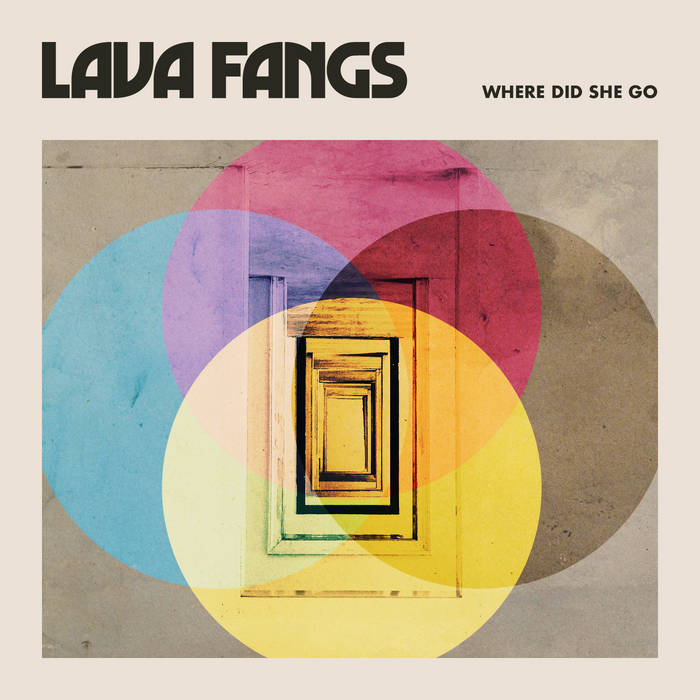
Lava Fangs’ forthcoming album, “Sub Auroram,” is introduced by the irresistibly catchy single “Where Did She Go.” Jamie Coghill and Andrew Horne delve into their experiences crafting what they describe as the challenging process of creating their sophomore record.
You can discover ‘Where Did She Go’ featured on the Best Power Pop of 2024 Spotify Playlist.
Could you share the journey of bringing this record to life? How did all the pieces come together to create the final product?
Jamie – “Where Did She Go” is the lead single from our “difficult second album” … It’s an expression I’ve heard many times since becoming a fan of music as a kid. For the most part I pooh-poohed such a silly expression; How can a second album be difficult? As a fan of music I can think of many bands whose second album is an all time favourite. As a musician, being allowed the opportunity to make ANY album is a privilege and should be immune to such trivialities as being difficult!
As a middle aged musician at the dusty end of several careers in bands who *almost* got somewhere, I can now look on that expression with the road-worn experience of having been involved in a few “difficult second albums” myself. It’s remarkable and lucky really for any band to be around long enough to make it to the second album. The first album is full of excitement and the momentum of being a fresh new band and having a backlog of songs you’re eager to get out into the world and establish your sound with. The follow up album feels the pressure of having to live up to that effortless enthusiasm and momentum the first album had. The first album comes together instinctively, almost as if by accident. The second album has to be planned and meticulously thought out – yet it’s still supposed to somehow sound “fresh”.
The Lava Fangs “difficult second album”, Sub Auroram didn’t start out difficult. In fact we had almost all of the songs written and demoed within a year of releasing our debut. But then the world hit a speed bump that no bands have had to endure in the past – a bloody global pandemic! By the time we were finally able to get together and begin recording it had been a difficult couple of years and we’d all had COVID. I was still getting over it when we went into the studio with Paul Maybury (Rocket Science/The Pink Tiles) to track guitars, bass and drums to 24 track tape. We then spent the next year overdubbing and mixing it ourselves whenever our schedules allowed.
Listening to “Where Did She Go” now, I’m thankful that none of that “difficulty” comes through. It’s just as fresh and exciting as if it were from our debut record. Having four contributing songwriters gives Lava Fangs a fairly unique and diverse sound that only a handful of other bands share (readers of this blog are no doubt aware of Canada’s Sloan … can you think of any others?). For the most part Lava Fangs write songs individually then bring them to the band to add our combined flavour with arrangements, lyric and backing vocal suggestions, but “Where Did She Go” is one of our rare collaborations. Drew (guitar/vocals) brought us a song that we all loved but something was missing so I wrote some lyrics, a vocal melody and a pre chorus to tie all Drew’s bits up into a finished sounding song. I’m very proud of it as a group effort.
Was there a particular moment or experience that struck you, signaling that you were onto something special with this project?
Andrew – when I start to write a song, my process is stumbling across a few chords or melodies that I think sound cool. For “Where Did She Go” the initial verse chord progression sounded great to my ears. Then I tinkered with it till it was ready to present to the band.
From there, the band decides if the song has merit to continue. Jamie added a pre chorus and vocal melody so I guess it had legs!
Sometimes when you are deep in the process with a song it’s difficult to see outside of what you are doing. You have to shut out your inner critic and appreciate what you have created. For me, I find that once the band has given the song a thumbs up I can sit back and be proud of what we have done. The separation of time certainly helps too.
The decision to seek opinions on your new songs is intriguing. When did you realize that external perspectives could contribute to your creative process?
Jamie – Sweet sweet validation!! We all crave it don’t we? Especially on an artistic level. Is it really art if nobody appreciates it? Actually yes, but validation is also nice. As far as other people’s opinions contributing to my own creative process, I think it’s an intangible influence. I don’t write a song thinking about what people might say or think about it, I prefer the creative spark to come naturally and take shape instinctively and then decide whether or not I think it’s worth sharing with the world. Other people’s opinions only serve to encourage me and give me the confidence to keep making music – which is important and helpful, but not essential.
Andrew – I concur with Jamie on this one, validation spurns us (me) to continue on with creative pursuits. With any creative venture self-doubt rears its head constantly. Any positive words from respected peers/friends goes a long way. This affirms that what you are doing is worth pursuing and to trust in your instincts.
Success can take on different meanings as time goes on. When envisioning success for this new record, what does that picture look like now?
Jamie – This is so very true and a great observation! My measure of success when I was in my twenties is very different from how I feel today. For me, this album is already a big success even before it’s released! The fact that Wally and Jo from Cheersquad Records and Tapes were willing and enthusiastic to work with us to release it on their label is a success Lava Fangs haven’t achieved before. Having the opportunity to release 2 digital singles leading up to our second full length album on vinyl is a huge achievement for us. If people like it once it comes out in May (and maybe buy a few copies of the LP), it will just be icing on the cake. A big delicious success cake!
Andrew – At this stage in my/our musical journey, respect from my peers is how I’d like measure success. Having Cheersquad Records and Tapes deeming Lava Fangs worthy of release feels pretty successful to me.
Within this collection, do you feel that the best song you’ve ever written finds its home? If not, what distinguishes this record’s essence from your prior work?
Jamie – Our coming Album, Sub Auroram, feels like a more mature and thoughtful collection of songs to me. It’s definitely our best album as a whole. Personally it’s going to be hard to top “Line Up For A Broken Heart” and “I’m No Good For You” from our debut LP. Those songs came to me unexpectedly from out of nowhere and I’m very proud of them and may never write anything better than those two. Sub Auroram and its songs may not feel like it has the one-two punch of our exciting and energetic debut LP but it definitely has way more musical depth and is arguably a much stronger collection of songs. [See my solo project The Jimmy C and the movie soundtrack for Brides Of Satan for the best song I think I’ve ever written: “Learning To Live To Death”!]
Speaking for the rest of the band though, I’d say probably YES! Wesley’s “Lost For Words” is an excellent song for our newest/youngest songwriter (they haven’t been writing songs as long as the rest of us) and I expect even better songs are in their future. Drew’s “Photograph” is a stunningly mature song and I wish I’d written it. Stu’s songs on this album are also very very strong but my favourite of his songs is “Spitting Nails” from Sons Of Lee Marvin’s Minimum Underdrag LP from a few years ago. Look it up, you won’t be disappointed.
As an artist, the act of baring your emotions to the world is profound. Does this vulnerability come naturally to you, or is it a constant journey of finding comfort?
Andrew – Feeling inadequate is a rich vein to mine for lyrical themes. Hiding your true meaning behind metaphor, double speak and just plain lyrical nonsense says I’m not all that comfortable wearing my heart on my sleeve…just yet.
Imagine you could collaborate with three co-writers of your choice for new songs. Who would you select, and what qualities or dynamics draw you to them?
Jamie – I’m pretty lucky to already have three top shelf collaborators in Lava Fangs, but my three fantasy favourites would be:
1) Andy Partridge. He’s easily THE BEST songwriter in music history. XTC are a sorely underrated band and Andy’s humour mixed with emotional depth and massive talent are just incredible. His angular approach to guitar is amazing too.
2) Jeff Lynne. The immensity of Jeff Lynne’s genius will never be appreciated because ELO got too popular. People dismiss ELO as mainstream disco fodder (less so in recent years) but it’s clear why he got to work with the remaining Beatles in the 90s and all those legends in the 80s. If I could be transported to 1970 and replace Bev Bevan in the late era Move/fledgling ELO with him and Roy Wood, I’d be in creative heaven! Such a creative time and Jeff’s vocal harmonies and arranging are pop perfection!
3) There’s so many others but I think I’ll pick Roland Orzabal. Pop genius and Tears For Fears’ “Everybody Loves A Happy Ending” album is a proper masterpiece. He’s often very sincere in his music and not afraid to risk it all artistically.
And I’ll kick myself for not choosing Gruff Rhys, Lee Hazlewood, Andy Sturmer (Jellyfish), Jay and Chris from Sloan (and Pat and Andrew), and Max Comaskey from Dirty Fences – how much fun that would be!!!!
Andrew – Again I find myself concurring with Jamie about being spoilt with 3 excellent collaborators. Each time one of the ‘Fangs’ presents a new song or idea I’m excited to see what they’ve come up with. That’s a pretty cool place to be! And, knowing that my band mates will interpret my ideas in a particular way influences the way I write. Absolutely!
However, in no particular order these folks would be cool to pen a tune with –
• Kim Salmon & Spencer P Jones I’m cheating and making them a package deal. At the top of their game both could write songs with interesting & unique musical content and lyrics. Their songs have great depth & humour all in one go. Both absolute treasures in the Australian music alumni.
• Harry Vander & George Young. I could add them to this list for the Easybeats alone however they went on to churn out great songs in any style you liked (as long it was rock, pop or disco) for decades.
• Lee Hazlewood. Do I need to elaborate? [Jamie – HELL YEAH LEE HAZLEWOOD!!!!]
Honourable mentions of Gene Clark, Alex Chilton, Beck, Dolly Parton, T Swift (I think you’d get a bang-up working lunch with T Swiz is all)
Among the gigs you’ve performed, which one holds an indelible place in your memory and why does it stand out?
Andrew – The one we are about to perform in a drainage ditch at a rouge ‘generator’ skateboard party I think will be pretty memorable.
Or, that time I played support to Arthur Lee. What made that special? Arthur Lee!!
Jamie – In bands other than Lava Fangs, I got to drum in front of thousands of people at Melbourne’s Arts Centre forecourt playing AC/DC songs for an exhibition opening … that was pretty cool … but not as cool as the time I was playing at a tiny pub in Adelaide and threw my drum sticks above my head and walked off stage when a guy grabbed my arm and pointed to the dart board behind the drum kit with my sticks balancing perfectly on the ledge above! One in a million chance.
Defining a song’s completion can be elusive. How do you determine when a composition has reached its final, ready-to-record form?
Jamie – I feel like I’m pretty good at this, but it’s not necessarily a skill. It’s pure instinct for me. It’s finished when I can’t hear anything wrong or missing. It helps also to be time poor, both with Lava Fangs and my solo music as The Jimmy C, it’s about getting the most out of limited time. It’s actually an advantage to have kids and work stopping you from spending days and days on one song and never feeling fully satisfied because it won’t meet your expectations. If you have a set amount of time to get it done, it’s done when the time runs out!
Striking a balance between experimental artistry and commercial appeal is a challenge. How do you navigate this dynamic within your music?
Jamie – Commercial appeal? Never heard of it! Be true to your art – but pick a lane. Write the best kind of song you can within the parameters of your chosen style or genre. I’ve never had commercial appeal but I do try to write accessible songs. I respect the craft of songwriting and so don’t get too experimental within a song itself, but I really enjoy experimenting with genres and the structure of an album as a whole.
Andrew – Never tried. Making stupid noises with a memory man is more fun than being appealing commercially.
Lyrics often carry profound meaning. Are there particular lines you hope listeners will always remember from your songs? If so, what’s the significance?
Jamie – See “She’s So Cool” from our Unclarity EP from last December. Some of my most profoundly silly lyrics. I’m very proud to have the word “precipitation” feature in the chorus backing vocals.
I think Stu probably has the greatest gift for turn of phrase and cleverness in his lyrics within the Lava Fangs band. Go check out some Stu songs in our back catalogue.
Can you recall the last instance when you felt the immediate certainty of having penned a hit song?
Jamie – I have never, and will never write a “hit”, but I have written a few songs that I think can stand up along side the music I love as a music fan – and it’s an incredible feeling when you’re rising to that level. It’s always a surprise to me when I finish writing or recording a song that doesn’t sound shit! If I can write a song as good as the worst song by my favourite bands then I know I’m achieving something very rare.
Andrew – I write shit songs all the time…oh right you said hit song. I’ll let you know.
With the resurgence of cassettes, imagine curating your inaugural mixtape. Which five songs would be must-adds and why?
Jamie – I sure do love curating a good mixtape/CD/playlist! I’m surrounded by cassettes all day every day so they’re still a very familiar medium for me.:
• The Last Plimsoll by Stackridge – a pop opera masterpiece! Complex, richly musical and a tune you can whistle!
• Cybele’s Reverie by Stereolab – It’s vintage Yéyé pop with 90s indie cred … cracking track!
• Harold Faltermeyer’s theme from Fletch – just to catch the listener off guard! It’s so 80s and synthy and arguably way better than Axel F.
• Fade Away by Sloan – Jay Ferguson’s Action Pact album closer. It’s a real hidden gem in the Sloan catalogue and it hits me right in the feels.
• And lastly; More Than He’ll Have To Give by John D. Loudermilk – Just a beautiful gentle simple song about never being better than others but being the right person for someone. Could be swapped with Waiting For Someone by The Tokens from their incredible concept album Intercourse.
And all the songs I haven’t mentioned are causing me great pain … Homefront Cameo by Cotton Mather, Change For The World by Charles Bradley, King Kong by The Jimmy Castor Bunch, Ladybird by Tears For Fears … ouch! Let me dub you a 10 tape collection on C-90s!
Andrew – Ahhhh the mixed tape. The romantic calling card of yesteryear!
I’d have to include songs by The Stooges (Ashetons only please!) ok ok I’d pick Dirt from Funhouse. Nancy Sinatra would deffo feature! But what song? Sugar Town for a subtle drug reference, ‘Boots’ is way too obvious; Summer Wine I think would be a great choice but then again Bang Bang is bloody ace! Can we get a cheer from the back for Billy Strange and his arrangement of that song??
Big Star has always a place on such tapes, and I’d wager lots of people first heard Big Star in this format. Thirteen would be a great addition if your intent was to woo.
What’s that three? Two more to go.
Always a big fan of Australian 80’s indie music I’d have to include the Beasts of Bourbon or Scientists (don’t ask me to pick a song) and before you flip that tape over lets hear from Redd Kross – I saw them steal the show (over the Hoodoo Gurus) with a rendition of ‘Jimmy’s Fantasy’ so that one!
While you can’t dictate how people interpret your music, are there specific elements you wish to highlight that set your songs apart?
Jamie – Definitely the fact that we four Fangs all contribute songs and arrangements and ideas to each other’s songs. Many bands have a dominant songwriter and other members who are just happy to play their part. With us you get four different flavours and sets of influences which I think diversifies us thematically and stylistically from most other bands.
If tasked with introducing your music through three songs, which ones would you choose and what story do they collectively convey to new listeners?
Jamie – Ouch, yet another “Sophie’s Choice” … I have to mention “Line Up For A Broken Heart” because I wrote it and I’m very proud of it. It’s the main track that makes people consider us a power pop band. The other side of Lava Fangs is our “garage surf rock” side. A good example of this is a song you’ll have to wait until May to hear when our new album comes out; “Dancing For Satan” – a song that shows our silly side co-written by Wesley (bass/vocals) and Stu Manchu (guitar/vocals). My third and difficult final choice is “Where Did She Go”, our current single. Those three should be enough to convince anyone that we’re worth listening to and then people can look deeper into some of Stu’s garage punk tracks or Drew’s melodic 70s rock, Wesley’s indie pop … and our more moody and contemplative moments … and there’s so much more coming in May with our Sub Auroram LP!
In a hypothetical scenario where you could tour with two other bands, who would be your ideal companions and what synergies do you envision?
Jamie – I’d love to share a stage with Dirty Fences from New York. Their energy and antics would make for such a fun night. I’d also love to play with Canada’s Sloan even though they’d make me feel completely inadequate because they’re so amazing musically … If this were a time travelling fantasy I’d play with Jellyfish in 1993 and look even more inadequate. But what a story I’d have to tell!!
Andrew – Mudhoney & Mudhoney. Call it a life ambition.
Studio moments often hold a touch of magic. Could you recount an instance that stands out as the most enchanting during your creative process?
Andrew – I could not tell you of one instance of a creative stand out, we have many.
Creative epiphanies keep you coming back to the practice room when your regular life leaves you beat. It’s those times working on a great song or someone comes up with a cool part that is immediately apparent; that’s the magic that keeps you coming back time and time again.
Jamie – We giggle a lot in the studio. It’s lucky we handle most of our production and recording ourselves or we’d thoroughly piss people off.
How would you describe the evolution of your sound in this new album compared to your previous works? Were there intentional shifts in style or themes?
Jamie – Our first EP, 2017’s Black Rain, was a very noisy DIY garage affair, but still has a few hints of melodic evolution to come. Our Debut LP added the power pop flavours to the garage and punk and also introduced more thought to the production and arrangements with more vocal harmonies and musical textures. Our new album sounds more mature still in production and song writing. We still capture some frantic garage energy in places but we’ve evolved to give the concept of melody a little more respect. Our next project will probably rebel from this thoughtfulness and devolve into noise rock chaos … onwards and sideways!!