Warm Baths & Wide Eyes: Icecream Hands on Songs, Survival, and the Joy of Making Music
As published on the Chiming Back blog on December 1st, 2025.
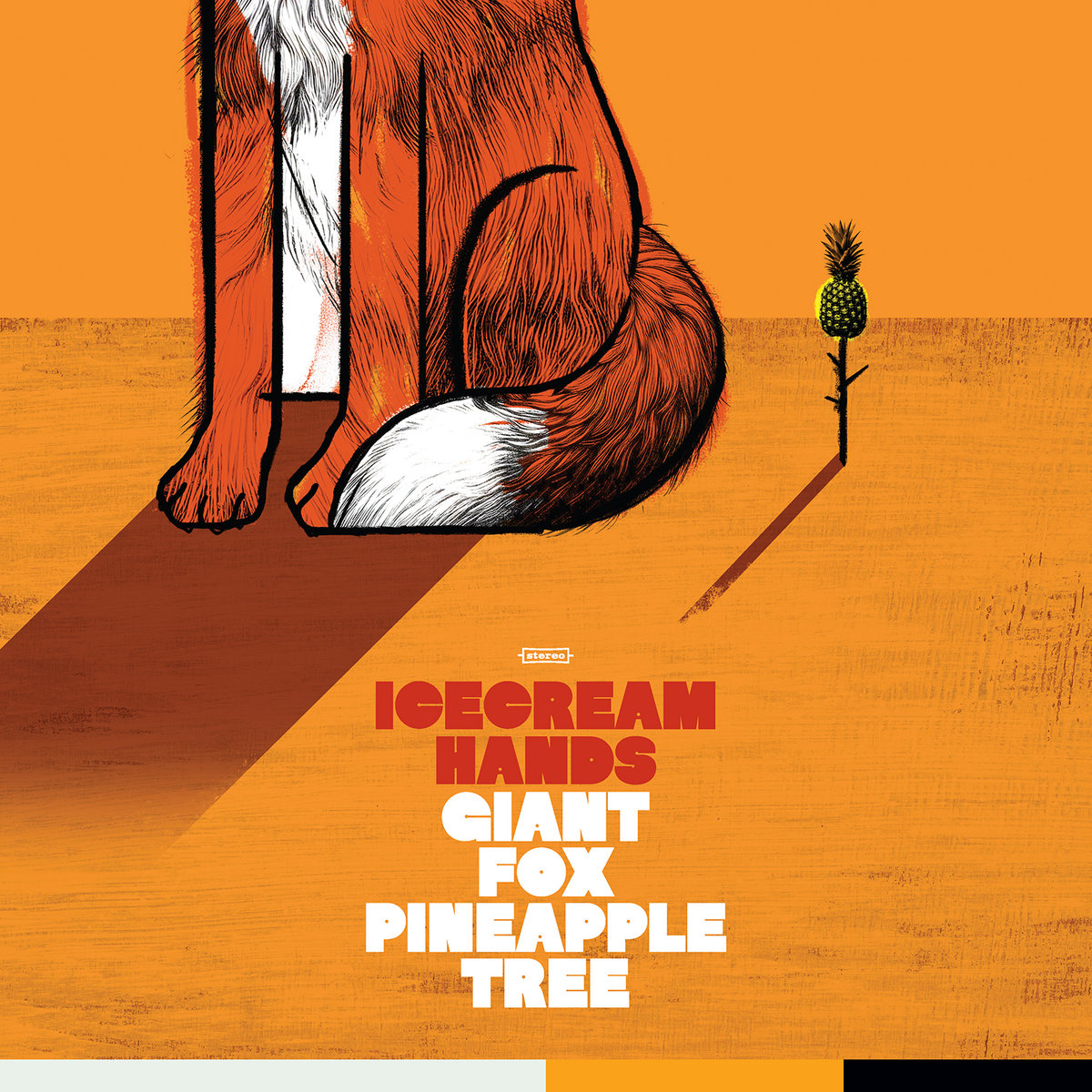
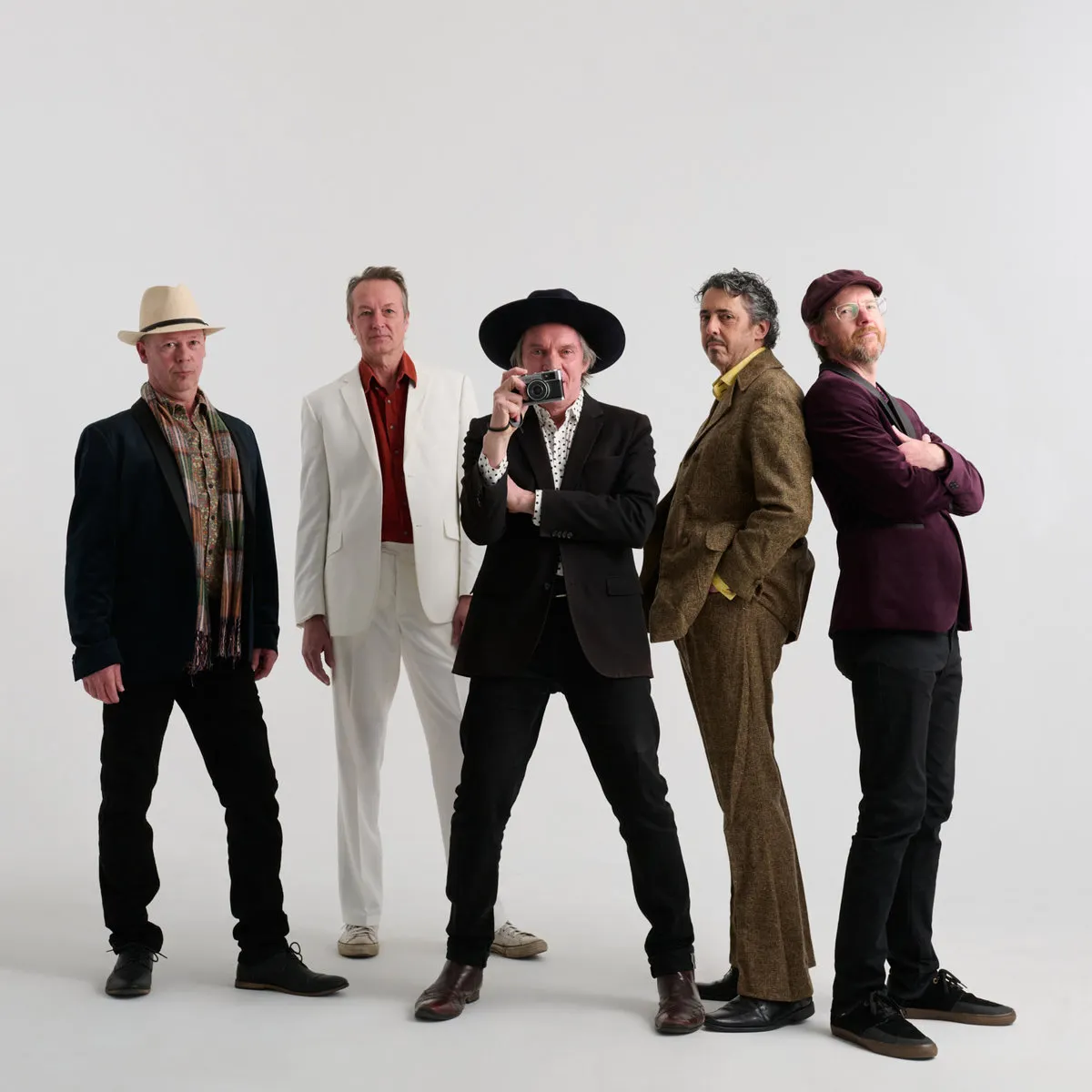
For this interview with Australian power-pop treasures Icecream Hands, all five members — Marcus, Smiley, Doug, Dave, and Charles — joined in, each taking on one question. The result is a warm, funny, thoughtful conversation about songwriting, survival in a shifting music industry, and the stories behind their latest album Giant Fox Pineapple Tree.
Listening to Giant Fox Pineapple Tree feels like stepping into a warm bath — absolutely wonderful. How challenging is it to stay true to that sound and never compromise on the quality of the songs, the very thing that keeps the bathwater at just the right temperature?
MARCUS: To be honest, it’s no challenge at all really, because the song is everything to us. As a band we are remarkably agreeable about what makes a great song, and with the good fortune to have such incredible songwriters as Charles and Doug, we always have a stack of solid material to choose from and work with. Having played together for so many years now, we just naturally work to our strengths as a band. It’s fair to say the songs always come first, and then we build the sound around them. The sounds and details of production are also very important of course, and we do put a lot of time and thought into that part of the process. But there’s not much point in doing that if the songs are second-rate — that would be like lukewarm bathwater.
You’ve seen the music industry transform completely since the early days of the band. What’s the biggest change you’ve had to navigate — and successfully overcome — in recent years?
SMILEY: The biggest change has been the way music is consumed today. There was a time when you could realistically hope to make a living from record sales, and touring was mainly a way to promote your music — a way to get in front of people rather than your primary income stream. But with the arrival of music-sharing platforms and, ultimately, streaming services, the whole dynamic shifted.
Napster landed in 1999 and introduced the idea of getting music for free — or close to it — through MP3 peer-to-peer downloading. That changed consumer behaviour forever. What grew out of that is today’s streaming landscape. Services like Spotify offer little to no return to the artists whose music they rely on; that, and their unethical support of military AI, is why you won’t find Giant Fox Pineapple Tree on Spotify.
These days, if we want to keep making music, we need to sell out our shows and encourage our fans to buy vinyl, CDs, and digital downloads directly from us or through Bandcamp. We also now handle our own distribution, including international releases. The traditional record-store pathway has fallen back onto the artists themselves — it’s become a bit of a cottage industry.
That said, we’ve moved with the times, and the proof is in the pudding: our recent chart success, cracking the ARIA Top 40 Albums and the Top 10 Australian Albums charts. If I’m not mistaken, we were the only truly independent release in there. Sweet as!
“Now I hear the baby crying” in “Do Ya Feel It” is such a powerful line; it pulls you straight into the story. When you first write a line like that, do you immediately know it can carry the narrative, or does it not work that way?
DOUG: Thanks Patrick. Songs always arrive in different ways for me. It’s usually a melody or a chord pattern that comes along first, and I need to try to get a feeling or an idea into the music. I do tend to struggle to find lyrics that I think are good enough to carry a narrative.
I do tend to want to write words that sound good when they fall out of the mouth, and don’t worry too much about what they mean, as long as they can evoke a feeling.
Funnily enough, that particular line was the only real thing I had. It just kinda popped into my head and it felt good, but it kinda begged the question: “Whose baby is this anyway? And why is it crying?”
I often defer to Charles on these things and asked him if it was a dumb line — I didn’t really know what it meant — and he said, “No, it’s the best line in the song!” So it stayed, and I just had to imagine some kind of scenario in which it could make a little bit of sense.
At the end of the day the song is quite nonsensical really — it’s just about finding a bit of light in the struggle and knowing that better days can come.
Giant Fox Pineapple Tree has just been released and the first reactions are coming in. Do listeners still surprise you with the way they receive the songs — or do you surprise yourself when you revisit the record?
DAVE: You know that wide-eyed, joyous expression people get when you say “Here, try this” and they take their first mouthful of something absolutely delicious that you’ve spent a long time in the kitchen preparing? It’s a lot like that!
The reactions I’ve had from friends, fans, and countrymen have all been really positive and enthusiastically wide-eyed and joyous. One always hopes that everybody will enjoy the fruits of one’s labour, so the responses I’ve encountered to Giant Fox Pineapple Tree have been very satisfying indeed.
I can’t exactly say I’m “surprised” when I listen to this remarkable body of work, as I’ve known each of these songs since they were pups. And honestly, even the home demos sounded bloody fantastic to me! Having said that — Icecream Hands always keep the element of surprise up their sleeve. You just never know what’s coming next!!
I think “Don’t Let the Party Fade Out” has a touch of Steve Harley & Cockney Rebel’s “Make Me Smile” — and I mean that as a genuine compliment. Is that kind of comparison easy to accept, or does it get frustrating when journalists try to put you in a box or reference world-famous hits just to show off their own taste?
CHARLES: I love it when journalists talk about me! And you, Patrick, can show off all you want if you mention “Make Me Smile” and a song of ours in the same sentence. I love that Steve Harley song and the recording of it — as a kid that song had such an exciting “quick, drop everything and race to the radio and turn me up” quality about it. The intro, the pauses, the bup bup bup bup backing vocals, the guitar solo, the Dylanesque delivery — so I love the comparison. I think our recording is also exciting — the drumming, the chord progressions, the lyric, the piano and bass parts, the harmony vocals, and then the guitar stings at the very end. So, many thanks for the compliment; keep them coming, please.

