Prize Collect: Even Light Gets Dark
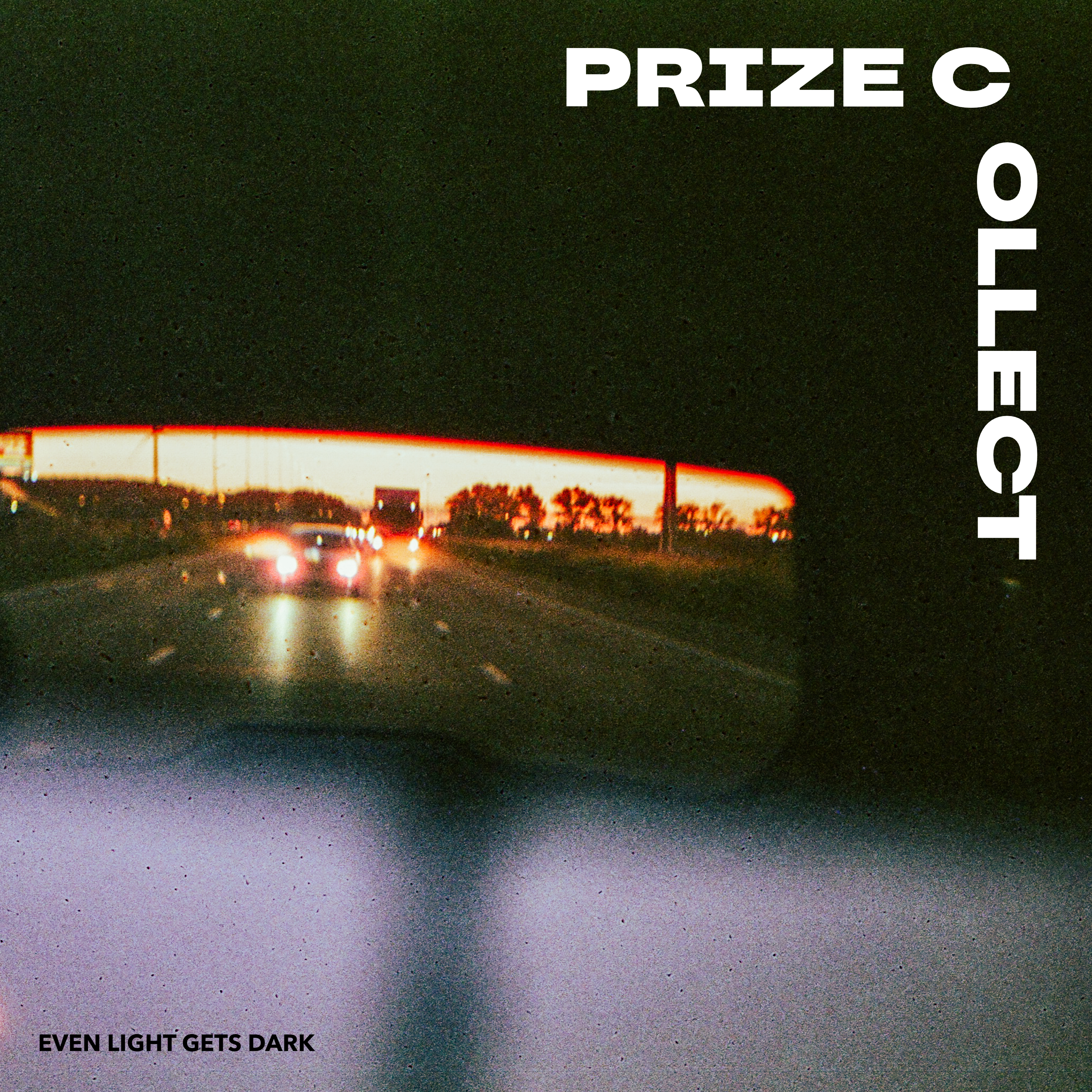
On September 25, Prize Collect returns with Even Light Gets Dark, a new six-track EP from guitarist and songwriter Marzio Scholten. Balancing introspection with moments of widescreen indie rock, the record also points towards what might come next. We spoke with Scholten about unsettling opening lines, cinematic melodies, working with producer Sam van Hoogstraten, and why this EP feels like a prelude to Prize Collect’s next chapter.

The opening lines of “Even Light Gets Dark” have been haunting me. Where did that song begin — and what was happening when you wrote those first lines?

I understand why those lines might have been haunting you; it’s pretty dark. The opening line, “Let me tell you how to suffocate yourself using a pillowcase,” came to me during a summer in France, while listening to a demo of this song. It seemed like such a heavy way to start the song, but I think it works because it puts the listener on the edge of their seat. After that line, the lyrics kind of wrote themselves. I wanted to show the contrast between light and dark, happy and sad. I think it’s kind of my way of saying that even though people seem happy on the outside, they may have dark things going on in their lives. It’s one of my favourite songs on the EP.

“The Last Day” has such a huge, almost cinematic melody. How do you stop yourself from going full U2 when a song starts reaching that big?

First of all, I wish I was as good at writing songs as U2 are, but I do understand what you mean. For me, “The Last Day” actually has a kind of classic Beatles-esque chord sequence and harmony. When I was writing this song, the chords came first and the melody just seemed so natural on top, maybe because it has such a classic feel to it. Anyway, back to your question: while producing, I think there’s always a point where you can choose between going “all out” or staying on a more understated path. It’s a cliché, but the song tells you what to do, in a way. The producer, in this case my friend — and guitarist in the band — Sam van Hoogstraten, was also a huge factor. The nice thing about all of this is that live you can make the choice more organically and in the moment, so during a concert a song that’s understated on the record can go “all out”, and vice versa.

How did Even Light Gets Dark come together? Did these songs grow out of the same period, or did you gradually realise they belonged together?

I’m continuously writing songs and demoing them. After the Prize Collect debut album came out, I already had more than enough for a new album. Sam van Hoogstraten (who I mentioned before) and I got together for dinner and talked about how to move forward. He said that he wanted to produce the next Prize Collect releases, and we came up with the idea of just grabbing a couple of the best songs that I had demoed and starting to work on them without any clear idea of how to release them. First, we thought it might be a few separate singles, but soon we realised that we had six songs that fit together and decided to work towards an EP.
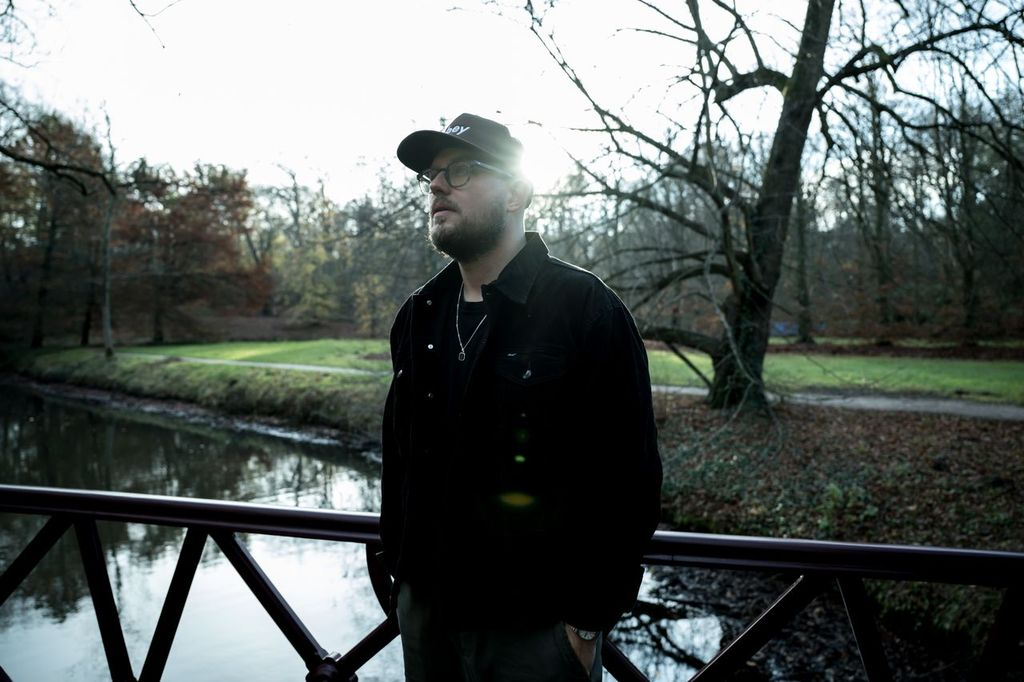
Was there a moment during the making of the EP when you thought: “Yes, this is exactly what Prize Collect should sound like”?

Ehm, no, not really. I mean, I think that writing music is always a work in progress. There are songs on this EP that give me the feeling of exploring that side more, like “Inside Your Soul”, which has this Britpop-ish vibe to it. The nice thing about this being an EP is that it feels like I can still experiment a bit. I feel that the next LP, the follow-up to our debut, should be a very coherent batch of songs that maybe sets the tone for what Prize Collect should sound like. This EP is a prelude to that.

What do the coming months look like for Prize Collect? What’s next after Even Light Gets Dark?

Well, it’s a relatively small release, so we’re not doing a huge tour or anything. To present this music live, I decided to do one bigger show instead of a few small ones. On October 28, we’re playing at dB’s in Utrecht. I invited Coparck to join us on the bill, and they happily agreed. It’s going to be a great evening of indie music. I’m very much looking forward to playing these new songs live. Next year, we’ll do a few more shows. Meanwhile, I’m writing and demoing, and the contours of a new album are already forming.
Nits: The Most European Pop Band There Is

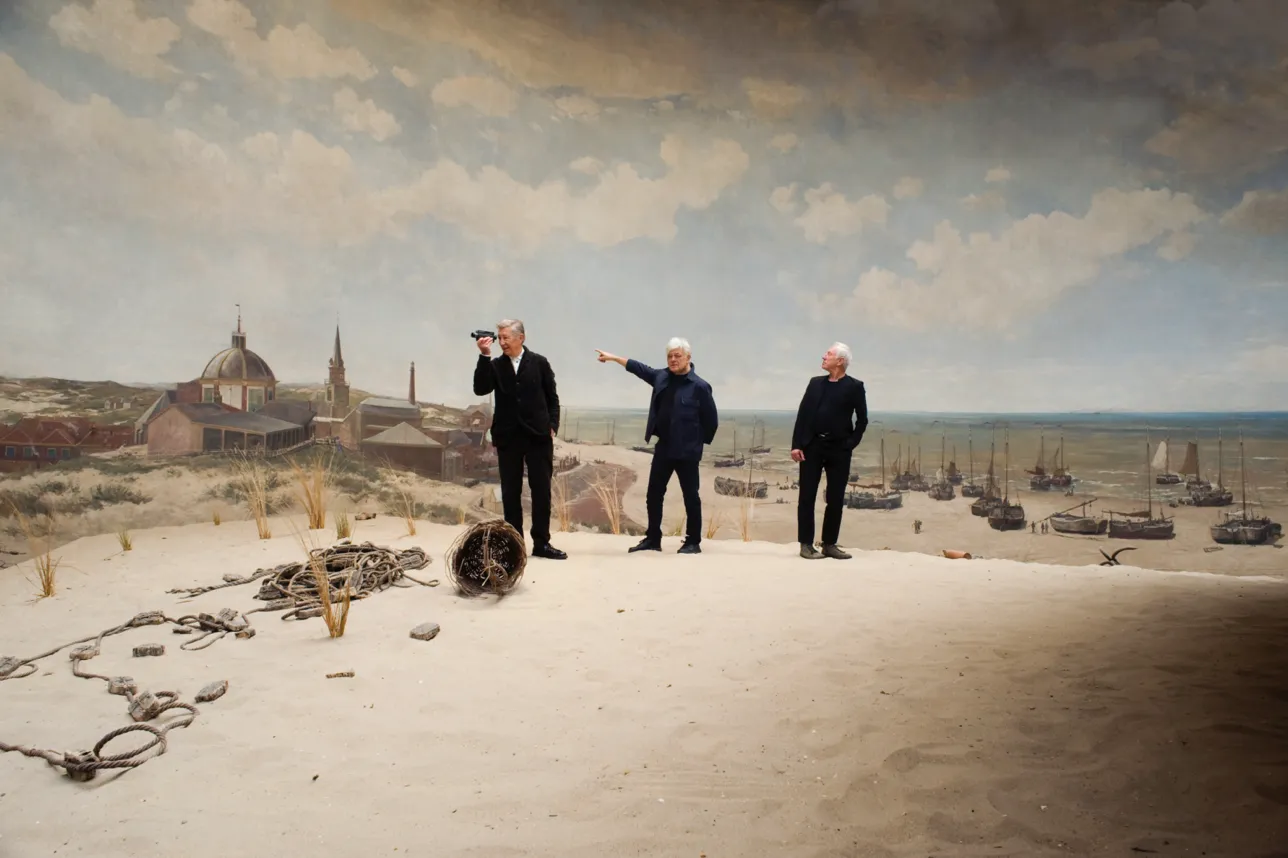
The Nits have been one of the most innovative Dutch pop bands since the late seventies. Innovative not because they have spent nearly five decades chasing novelty, but because they have never stopped reinventing themselves. What began as a sound with strong echoes of Kraftwerk moved through New Wave and Art Pop and has, by now, arrived somewhere in a landscape of ambient storytelling.

In terms of creativity and carefully directed spontaneity, I sometimes think of Talking Heads and David Byrne, only without the funk. There is a similar refusal to settle into a recognizable formula, a similar sense that every album should somehow create its own little world. I could also point to Joe Jackson and his restless drive to explore new musical territory, but comparisons ultimately miss the point. Because what makes Nits so interesting is precisely that they don’t really sound like anybody else.

And perhaps that is because they may be the most European pop band there is.

Their music doesn’t have its roots primarily in American blues, jazz or rock & roll. Its foundations lie just as much in the European avant-garde, classical and art music, and, inevitably, The Beatles and The Kinks are part of the equation too, as they are the inspiration for all good pop bands. But even more than in the music, their European identity reveals itself in the lyrics. Nits songs are populated by people going to a play in Helsinki, taking a train to Switzerland, living behind the Dutch dikes, or discovering that in the Netherlands every little boy is expected to join a football club, including the ones who would rather not.

Those are just a few of the subjects that appear on In the Dutch Mountains, the 1987 album that marked the band’s commercial peak, at least here in the Netherlands, and perhaps its artistic peak as well. Because as much as I love many of their songs, I don’t think they ever made a better one than the album’s title track. Not necessarily because it is their most ambitious or adventurous song, but because everything that makes Nits unique seems to come together in those few minutes: the melody, the melancholy, the strangeness, the humour, the unmistakably European imagery and that peculiar ability to turn something very ordinary into something almost mythical.

This blog isn’t meant to be a complete history of Nits. There are plenty of places to find one, and after almost fifty years there would be far too much ground to cover anyway. I mainly want to share my enthusiasm for a band that, I am convinced, could appeal to a much larger audience than the one that currently knows them.

And I want to do that through three of my favourite Nits albums.

They are not necessarily the three albums I would recommend as an introduction to the band. If you don’t know Nits at all and have become curious, there is the excellent compilation Nits Hits. Better still, there is Urk, their magnificent 1989 live album. Start there and you get something close to a map of the Nits universe as it existed at the end of their most celebrated decade.

But my own route leads somewhere else.

TENT is the 1979 debut, and on it you hear a very different Nits to how they sound today, a band much more inspired by Kraftwerk than by the Sex Pistols. A few years ago, Nits decided to revisit their earliest records and perform the first few albums live in their entirety. During rehearsals they made an amusing discovery: it had seemed like a great idea, until they realised that the songs were considerably more complicated to play than they remembered.

And perhaps that tells you something important about TENT. The New Wave you hear on the surface may sound angular, immediate and relatively simple, but underneath it is music that is surprisingly intricate and layered. Nits were already thinking like arrangers rather than simply like a New Wave band. In that sense, TENT belongs alongside the records by those more ambitious bands that, while the seventies were still coming to an end, were already busy inventing the sound of the eighties.

And then, then comes Ting.

Released in 1992, Ting feels like the moment when Nits decided to remove almost everything that wasn’t absolutely necessary. Even the title sounds like the record. Ting: the sound of a raindrop, perhaps, or a bicycle passing by, but above all the sound of a piano key being struck.

The piano on this album is extraordinarily clear. On a first listen, its sound may occasionally bring to mind Keith Jarrett’s The Köln Concert or Philip Glass’s solo piano music. I don’t mean that Ting resembles either of them musically in any straightforward sense. It is the physical quality of the piano that creates the association: the touch of the keys, the space around the notes, the way every tone seems to exist for a moment on its own before disappearing.

And that space is essential to Ting. Where other bands might have filled it, Nits use it as an instrument. Songs seem to emerge from silence and retreat into it again. Small sounds suddenly matter. A note, a voice, a piece of percussion, a pause: everything has weight precisely because there is so little competing for your attention.

It is a remarkably restrained record made by a band that, by then, had already proved how much it could do. Ting is interesting because Nits chose instead to show how much they could leave out.

dA dA dA, from 1994, is probably Nits’ most solid album. And by solid, I mean solid in the way Crowded House’s songs and albums are solid: always good, always distinctive, seemingly effortless and built to last. If you stretch that comparison a little further, then Whales of Tadoussac is the album’s Don’t Dream It’s Over. But the difference between those two titles already tells you how limited the shelf life of that comparison is. Crowded House may be a useful reference point for the craftsmanship, but Nits remain far too peculiar to stay inside it for long.

That becomes increasingly clear in the album’s second half, where the band’s more adventurous, artistic side gradually takes over. The songs become less straightforward, the atmosphere stranger, and the record starts moving into territory that could only really belong to Nits. It is also here that Day and the Night, my personal favourite, appears, tucked away in the second half of what I consider one of the high points of their entire oeuvre.

For those of you who have somehow remained unaware of Nits until now, I wish you a very happy journey of discovery.
There is almost fifty years of wonderful, strange and unmistakably European music waiting for you.