The Hollywood Stars Shine Again with ‘Starstruck’: A Comeback Story

The Hollywood Stars are no longer just a legendary name from the past. After many years of silence, they released “Starstruck” last month, which was promptly voted the best Power Pop album of 2024 so far by Shindig. This accolade is well-deserved, as the eleven new songs are vibrant and high-quality, reflecting the class of a distinguished band.

George Keller, who joined as the lead guitarist in the spring of 2023, shared with the Sweet Sweet Music blog how “Starstruck” came to be.


You can find ‘Can’t Do It Right’ showcased on the Best Power Pop of 2024 Spotify Playlist.


Could you share the journey of bringing this record to life? How did all the pieces come together to create the final product?

It involved a bit of magic and a lot of hard work. I joined the band in early 2023, and at that point, about half of the material for our new ‘Starstruck’ album was in place. Everybody in the band gets a songwriting credit on ‘Starstruck.’ I worked on a track called “Walking With an Angel.” We recorded the album in two marathon sessions, the first in March 2023 and the second in November. We recorded at Kitten Robot Studios in Los Angeles, and the album was produced by the band, our manager Loren Molinare, and longtime L.A. producer/musician Paul Roessler. We’re all very pleased with how it turned out and the reception from press and radio has been great.

Was there a particular moment or experience that struck you, signaling that you were onto something special with this project?

Yes, during the recording of “Shortage of Love.” The track was recorded live and we didn’t have an ending. We played what we thought might be the ending, and then Loren, who also played some guitar on the album, kept playing and we all followed his lead. The song ended up becoming this anthem-like extravaganza that none of us had envisioned.

The decision to seek opinions on your new songs is intriguing. When did you realize that external perspectives could contribute to your creative process?

It’s always good to check the outside “temperature.” 🙂

Success can take on different meanings as time goes on. When envisioning success for this new record, what does that picture look like now?

Our goal is to get as many features and reviews, and on as many radio playlists, as possible. So far, we’re accomplishing that goal. Of course, we would also like to play more shows.

Within this collection, do you feel that the best song you’ve ever written finds its home? If not, what distinguishes this record’s essence from your prior work?

Every new endeavor has its highs, and my song “Walking With an Angel” comes as close to perfection as possible, with a great vocal by Scott Phares and wonderful interplay between the drums and guitar as the song fades.

As an artist, the act of baring your emotions to the world is profound. Does this vulnerability come naturally to you, or is it a constant journey of finding comfort?

Naturally, and as a lead guitarist, I can be a bit of a showoff.

Among the gigs you’ve performed, which one holds an indelible place in your memory and why does it stand out?

It’s in the thousands and spans many years. In June, we played an album release party at The Viper Room in Hollywood. The place was packed and there were many folks that we have known for decades in the audience. That show was very special and stands out to me right now.

Defining a song’s completion can be elusive. How do you determine when a composition has reached its final, ready-to-record form?

You have to stop before the energy dissipates. Three takes should be the maximum in my opinion. If you can’t get it in three takes, then it’s time to move on.

Striking a balance between experimental artistry and commercial appeal is a challenge. How do you navigate this dynamic within your music?

There is a formula but you have to be careful and not become cliched. It’s difficult to define so you have to “trust your feelings.”

Lyrics often carry profound meaning. Are there particular lines you hope listeners will always remember from your songs? If so, what’s the significance?

This question makes me think of our track “Shortage of Love,” which is both a title and a message to listeners.

Performing music before an audience holds a unique allure. What aspects of this experience contribute to the excitement and enjoyment for you?

Seeing the smiles on the audience’s faces and their bodies moving. It’s an immediate sign that the band is doing something right.

Among the compliments you’ve received, is there one that remains etched in your memory? If so, what made it particularly unforgettable?

Yes, a very well-known poet friend of mine said my performance was so captivating, he forgot he knew me.

Studio moments often hold a touch of magic. Could you recount an instance that stands out as the most enchanting during your creative process?

For ‘Starstruck,’ it was playing the lead guitar break to “Revenge” through a Marshall stack that was turned all the way up to the proverbial 11!

Where do you see yourself situated within the broader landscape of the music industry? How do you perceive your unique role and contribution?

The Hollywood Stars create energetic, melodic, and memorable tracks. The band name has been around since the early 1970s so a lot of people have fond memories of this group’s music over the years. In the band’s early days, they were hit by a succession of tough breaks that derailed their career momentum. At this point, decades later, I think that the attention, and having the chance to still be making great rock ‘n’ roll is a wonderful tonic for all of us, but most especially our three members from the 1970s: vocalist Scott Phares, drummer Terry Rae, and bassist Michael Rummans.

In the digital age, visual elements are intertwined with music. How did you approach the album’s visual aesthetics, such as album art and accompanying visuals? How do they complement the sonic experience you’ve crafted?

The cover photo was a happy accident and with a band called “The Hollywood Stars,” the name is synonymous with the film industry. Everything fits together nicely.

Lo Fi Ho Hum: Power Pop Brilliance in 19 Minutes

Jacob Godbey contacted me, saying, “My name is Jacob, and I’m in a power pop band called Lo Fi Ho Hum.” This succinct introduction mirrors the compactness of their debut album, aptly titled ‘Garage Pop.’ The album features just 7 songs and lasts only 19 minutes. It’s not just short—it’s concise, direct, and wonderfully good.


You can find ‘Never Been In Love’ showcased on the Best Power Pop of 2024 Spotify Playlist.


Could you share the journey of bringing this record to life? How did all the pieces come together to create the final product?

Garage Pop came to life under some very negative circumstances, which is unfortunate because I’m constantly trying to buck the “artists have to be tortured to make good songs” trend. Despite my best efforts, these songs wrote themselves through the isolation of living alone and working from home during a pandemic. I also went through a plethora of relationships, some good and some bad. Many of these are chronicled on the lead single, “Never Been In Love,” as well as the final track, “Maybe.”

Basically, I moved across the U.S. to begin a relationship but chose not to stay there and ended up living at my parents’ house. As luck would have it, my father was just putting the finishing touches on a new garage, so I got to record an album in it before it got filled with vehicles.

Was there a particular moment or experience that struck you, signaling that you were onto something special with this project?

A bandmate from a prior project expressed how much he loved some of these songs in their demo form, so when I found myself essentially at “rock bottom” and living in my childhood hometown, I knew pretty quickly what needed to be done for my mental health. My grandpa kicked in some recording equipment, one of my father’s friends let me borrow a guitar amp, and the rest was recorded through pure gumption.

Success can take on different meanings as time goes on. When envisioning success for this new record, what does that picture look like now?

My definition of success has definitely morphed over my life. I used to perform sketch and improv comedy and had my sights set on SNL or movies someday. I also grew up fantasizing about becoming as omnipresent as bands like Good Charlotte and Blink-182. Success to me now is creating sustainability. I’d love to foster a community of creatives who push each other to greatness and can pay their mortgage with those results, if not their car payment as well.

Failing financial success, it would really mean a lot to me to look out into a crowd and see people singing my words back to me. I’ve never had that yet, and I just know I’m going to cry if it ever happens!

Lyrics often carry profound meaning. Are there particular lines you hope listeners will always remember from your songs? If so, what’s the significance?

In the song “Boundaries,” there’s a line at the end that reads:

Now when I see a friend crumbling/ I scream, “You deserve better than that!”

That’s an important one to me because that song is about being emotionally abused in a relationship. I had SO many friends warn me while I was in it, but I really didn’t listen to any of them. So it’s a shout-out to them but also to everyone. Grab your friends by the shoulders and scream “You deserve better than that!”

If there’s a passage I could choose that encapsulates the album’s entire vibe, it would be the following from “Never Been In Love:”

There was one/ wanted me to tie her to my bed/ but I’m such a pacifist/ that I’ve never been in love

Yes, it’s a true story, yes, it is intended to be funny, and yes, it is tongue-in-cheek. If you can’t relate to that, then Lo Fi Ho Hum might not be for you!

While you can’t dictate how people interpret your music, are there specific elements you wish to highlight that set your songs apart?

If I could befriend every single one of our fans, I would. This music is a call to end loneliness and I think it works best if you know something about me, the person writing the songs and singing. That’s what sets our songs apart. They are entirely honest lyrically and musically. I love pop music, but I also love punk and new wave, and I think that shines through.

Where do you see yourself situated within the broader landscape of the music industry? How do you perceive your unique role and contribution?

I wouldn’t say I’ve ever participated in the music industry, but I hope this release changes that. I’ve always been a consumer, but these songs are already gaining me some entirely unexpected recognition amongst peers, so I’d like to continue that!

I really am obsessed with the creative process and I’d love to help other musicians and creatives find their best work. I’ve been lucky to have friends pull greatness out of me, and I’d love to pay it forward!

With this fresh collection of songs, how do you envision connecting with both your existing fanbase and new listeners? Are there specific emotions or messages you hope they’ll resonate with?

I really hope anyone who listens resonates with the themes of reluctant adulthood, male loneliness, but also not settling. In a world where we have so little control over the situations around us, it is important to take care of yourself and those you care for. Hopefully, that is communicated in the lyrics here! And if you come to a Lo Fi Ho Hum show, you will be taken care of. All are welcome and we like to foster a sense of safety not just for the fans, but also for ourselves.

Mark Ward’s ‘LET ‘ER RIP’: A Power Pop Gem Set to Shine


“LET ‘ER RIP,” the new album by Mark Ward, will be released on June 14. This record is packed with incredibly catchy, classic Power Pop songs. It shines, sounds fantastic, and has even garnered praise from Paul Collins.

Sweet Sweet Music blog sits down with Mark Ward.

Could you share the journey of bringing this record to life? How did all the pieces come together to create the final product?

Having recently relocated from Alaska to Washington State, I left my long-term band, Last Train, behind, along with my valued creative outlet. We had a pretty good run with four albums of edgy Alt-Americana rock and some international airplay. However, arriving in Washington during a pandemic, I found I was really on my own musically. As a guitar player, my songs are admittedly guitar-centric. With that, I can cover most instrumentation and vocals, but I was without a drummer, and my drummer friends in Alaska were busy with their lives. A buddy of mine and fellow collaborator, Chad Reynvaan, suggested I contact Dylan Mandel to play drums. Though he’s in Pennsylvania, we immediately hit it off and started tracking drums remotely. He’s a total pro and, frankly, I could not have finished this project without him.

Was there a particular moment or experience that struck you, signaling that you were onto something special with this project?

Over the years, my songwriting has taken on a much more serious tone, especially with everything that’s going on in the world today. But serious songs can take a toll on both the performer and the listener. While I think it’s important to speak your mind and give voice to a sense of reason, it is equally important to just have some fun. While there are a few serious songs on the record, in this election year, I decided to take a hard departure from that and just write some fun pop songs that don’t necessarily have to mean anything, because that’s also okay. I set out to finish a song I had written a guitar line for some 40 years ago with that sound in mind, and the song “I’ve Been Around” just fell onto the page. It was so refreshing that I decided to write another, and another, and pretty soon I had a pile of power pop songs, because why not? The trick then became how to sequence the album so it didn’t feel disjointed. I think it works, and the album at least leaves you with a sense of hope.

Success can take on different meanings as time goes on. When envisioning success for this new record, what does that picture look like now?

Great question. I’m not a full-time musician and can’t easily play out as I don’t have a band where I live anymore. I’m not really interested in touring as I have a pretty busy, fulfilling life that music is only a part of. In this day and age, there is really no money to be made in the music business unless you’re a mega pop star. So I guess success for me is having my music appreciated, respected, and enjoyed by people who want to hear music that is not force-fed to them by an algorithm. As we used to say in my previous band, if we can sell enough CDs to cover the cost of making the album, it’s a no net loss and therefore a success.

As an artist, the act of baring your emotions to the world is profound. Does this vulnerability come naturally to you, or is it a constant journey of finding comfort?

It comes naturally to me, I suppose. I have always felt lyrics deeply in others’ music and my own. In fact, when you are working on a meaningful song and a line pops into your head that immediately brings you to tears, you know it’s the right line. This happens to me often. The trouble is, it can often be difficult to perform a song like that live. If the lyrics mean something to you and you are feeling the lyrics too much, you can quite literally choke up, which makes it impossible to sing. It’s a fine line, not going too far over the edge.

How would you describe the evolution of your sound in this new album compared to your previous works? Were there intentional shifts in style or themes?

My previous efforts have been tailored to the bands I was in, being mostly Americana, Alt-Country, Cow-Punk, or because there’s a pretty distinct sound of music coming from Alaska, a genre I called “Alaskana.” But my writing has always tended on the more pop side of things. Since my college years, playing in a New Wave band and loving bands like Paul Collins, The Nerves, The Beat, The Heats, 20/20, The Knack, etc., I’ve always had a power pop bent to my writing. With this album, I just decided to go all in for the majority of the songs.

Albums often involve collaboration with various musicians and producers. Could you shed light on how these collaborations contributed to shaping the album’s identity?

My philosophy on making a record is that you just can’t (or shouldn’t) do everything yourself. You need other expertise, ears, and sometimes ideas to make a song worthy of listening to. Dylan Mandel’s drumming gave a cohesive sound to the record. Even though he used three different kits and multiple snares, his drumming is spot on for the sound I was after. I’ve collaborated with my Alaskan buddy Chad Reynvaan, who runs Wattage Studios in Anchorage, on a number of things over the years. He’s been a great resource to bounce things off of as well as add the occasional synthesizer or backup vocal, which he did on this record. The well-respected Anchorage musician and producer, James Glaves, added some tasty keyboard and piano to a couple of songs. The finale of the record includes a list of friends who lent their voices quite literally to the choir on the song “Hope.” The last line still gives me chills. At the recommendation of Paul Collins, I used Justin Perkins at Mystery Room Mastering for the finishing touch. He’s amazing, and I think his efforts provided the final polish the record needed.

Introducing Dream Pony: The Irresistible Sound of Neo Glam

Dream Pony draws inspiration from the Ramones, The Velvet Underground, and The Strokes, crafting a unique sound they call Neo Glam. Their music could also be perfectly described as New York Pop. This debut album is simply irresistible.


You can find ‘TONIGHT’ showcased on the Best Power Pop of 2024 Spotify Playlist.


Sweet Sweet Music talked to Jordan D’Arsie.

Defining a song’s completion can be elusive. How do you determine when a composition has reached its final, ready-to-record form?

I think there’s a line to be walked between some part of looseness and some form of structure. We usually have parts and things semi-worked out and understood, but a lot happens when the song is finally being put onto tape.

Usually, we kick it around a bit in the room until we are somewhat satisfied, and then we add things to it as we go. I think the thing is you’re chasing something, but you also need to be open to accept things that come along. Often, these elements present themselves, and when they do, you make the decision.

Striking a balance between experimental artistry and commercial appeal is a challenge. How do you navigate this dynamic within your music?

It’s not something I really think about while writing a song. I feel a good song is a good song, and whether it has commercial viability or not is not really a factor. There are so many amazing unknown songs, important songs to us that, for one reason or another, never really broke through to a commercial market. I think the exercise of writing a song needs to remain separate from any predetermined outcome, and that way, it’s able to form itself the way it wants to.

Lyrics often carry profound meaning. Are there particular lines you hope listeners will always remember from your songs? If so, what’s the significance?

There are a few messages throughout the record. Different things hit you at different times, and also, people receive things in certain ways and have distinct takeaways. I guess that’s the pleasure of writing and reading.

There are a few lines scattered through the album that are hopeful, and I think in general, they are trying to convey to people to stay true to yourself and follow your heart. Lines like in “Sunday Suits,” “some people like to save all their money, some people like to favor their dreams” and “Suspicion Today,” “Do you remember that love, oh what it would feel like, I want you to know”.

Things like that, I just wanted to share some hope and convey that imagination can set you free amongst some of the darker themes that are throughout this album.

Imagine you could collaborate with three co-writers of your choice for new songs. Who would you select, and what qualities or dynamics draw you to them?

That’s a tough one, there are so many! If I had to pick three, it would be John Felice from Real Kids; I just love his songs, energy, and everything about the band’s spirit. They really lift me up. Patti Smith would be another I’d love to have the opportunity to collaborate with. I’d love to see how her process of writing a song unfolds, and I don’t know what I could offer haha, but I’d love to be in the room and see what happens. My third would be Tim Rogers from You Am I; I’ve always been a big fan of his songwriting, and I’d love to see what unfolds. All of this being said, I’d probably be way too shy to be able to do it. I would certainly freeze up and likely say something really silly haha.

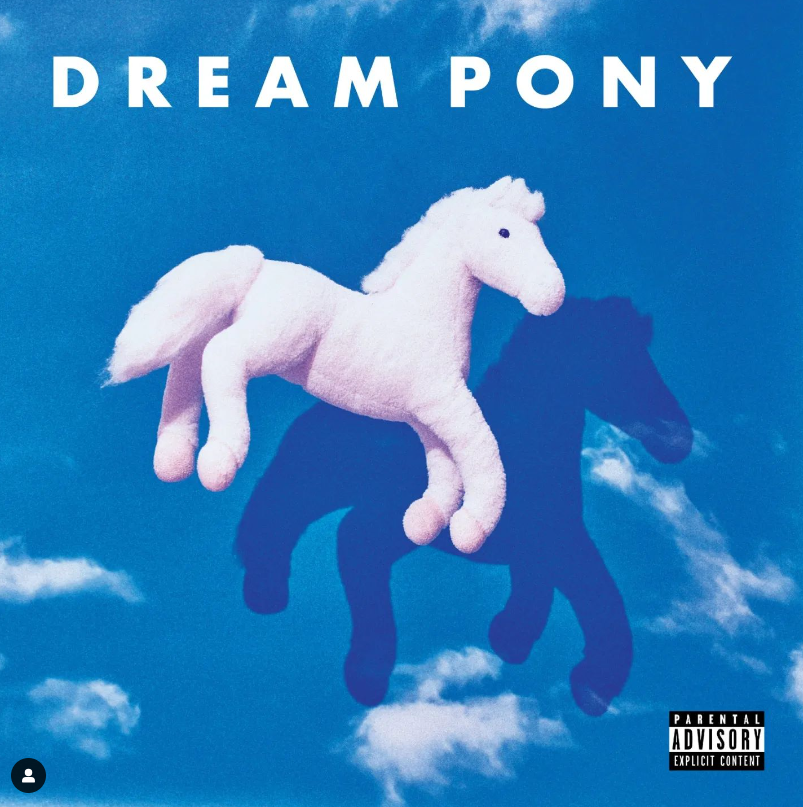
In the digital age, visual elements are intertwined with music. How did you approach the album’s visual aesthetics, such as album art and accompanying visuals? How do they complement the sonic experience you’ve crafted?

Being our debut album for Dream Pony, we wanted to create something that reflected the album title Suspicion Today but also Dream Pony as a concept. I wanted to create a dreamlike space for the songs to exist within. I had this concept of something floating around like the bridge in our song “Sunday Suits” and the ethereal being out there, however, casting a shadow below so in some ways it floats but still touches something. We purposefully wanted it to cast that shadow and reflect some kind of tangible illusion. We sourced several objects and various horse statues that we workshopped until we came upon the cloud background and pony plush toy, which we named Tony the pony. The artwork was captured by our great friend and super-talented photographer Ryan Slack at Mediumplex studio in Brooklyn.