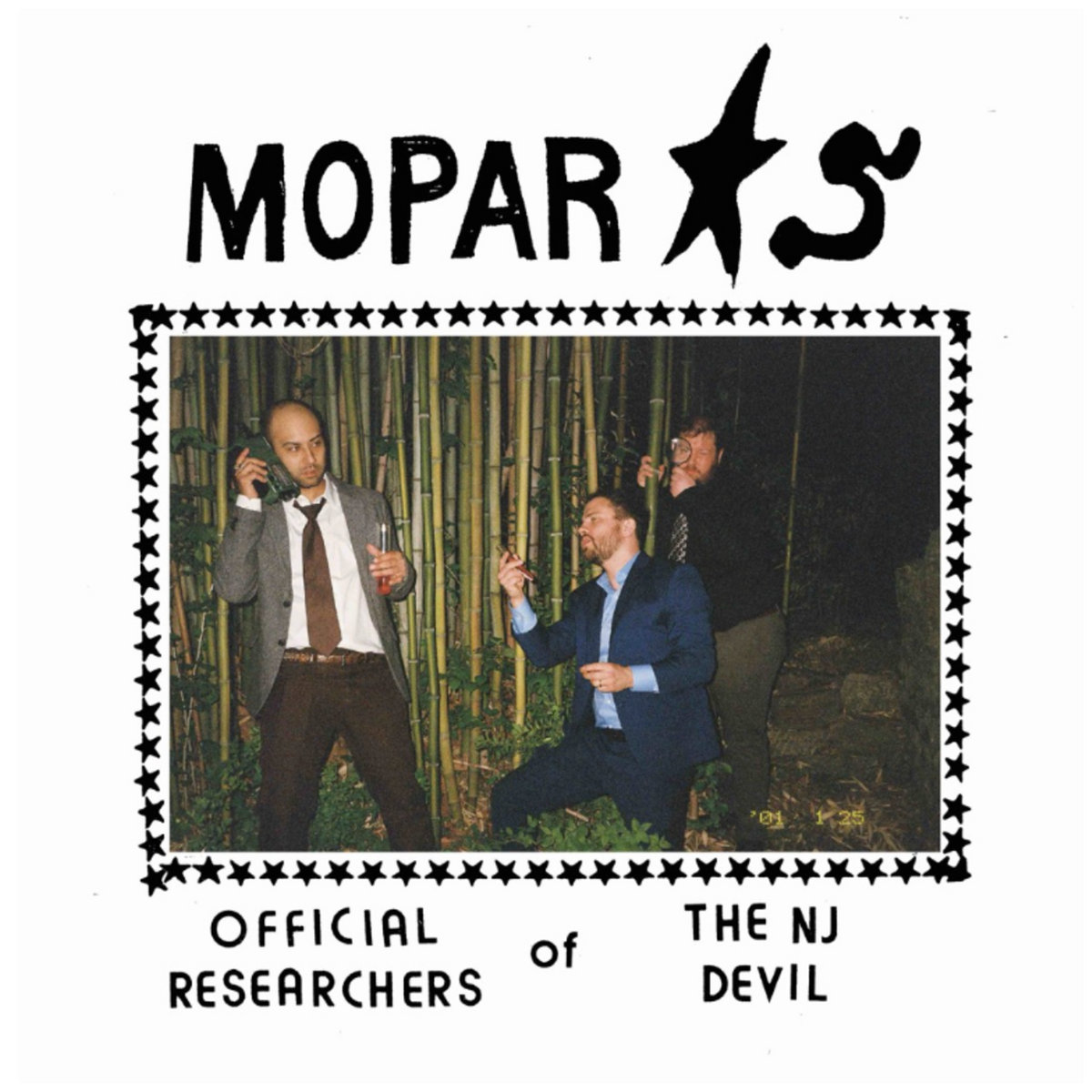
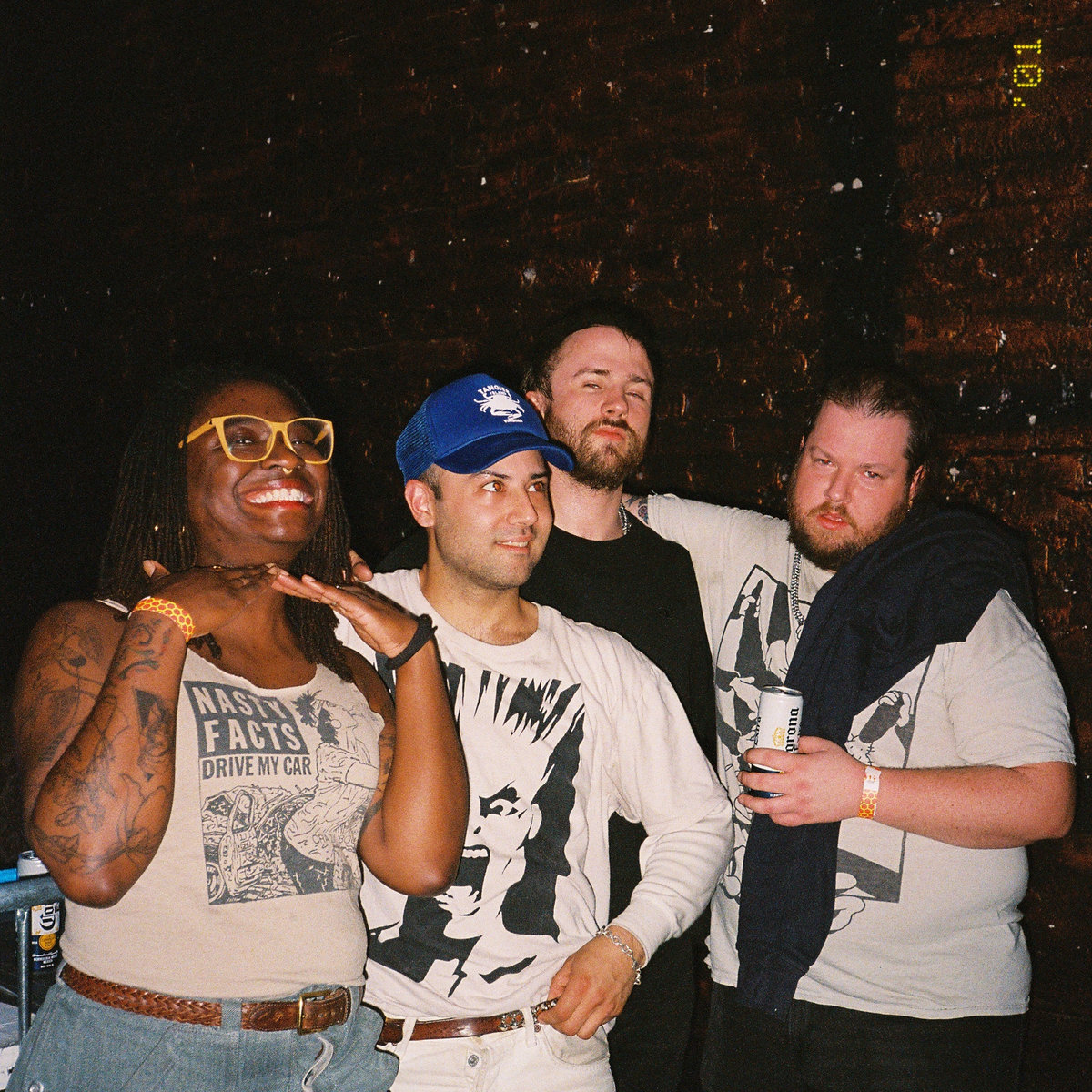
There’s an immediacy to Mopar Stars that doesn’t need much explanation. The songs hit hard, the melodies stick, and underneath the noise there’s a sharp eye for the contradictions of ordinary life: good days and bad ones, optimism and bitterness, getting by and wanting more.
On their new release, Official Researchers Of The NJ Devil, Mopar Stars have taken the raw energy of their earlier recordings and opened it up. The sound is bigger and clearer without losing its edge, giving the hooks, voices and sheer physical force of the band more room to land.
We spoke with N-A-O about making the record, the importance of lyrics, trusting the rest of the band, turning songs into something that hits hard live, and the unexpected response to the album so far.
The sound of Official Researchers Of The NJ Devil feels raw and immediate, but at the same time it is huge, melodic and incredibly catchy. How did you find that particular sound for Mopar Stars, and was it something you were consciously looking for?
I wanted the recording to sound modern and unpretentious. I also wanted the backing vocals to be very clear this time.
Our first two demos were all smashed onto cassette and have this murky, distorted sound. I’m a big fan of that, but for the LP I wanted to record more tracks and have them be immediately discernible and memorable.
As far as the songwriting goes, the melodic and hooky nature of the record is definitely on purpose. I tried to make it catchy, for sure.
There is a darker side to the album hiding inside all those great riffs and hooks. Songs like “Everybody Wants What I Got” and “Only Bar In Town” almost become bitter anthems about work, money, loneliness and the way people try to get by. How important are the lyrics to you, and do you see the songs as being connected by that darker view of everyday life?
I would say no, the songs aren’t connected by a pessimistic outlook. Some of the songs on the record are bright and sunshiny, and some are bitter and dark. As a person, I don’t feel the same every day. I wanted the record to reflect the good and bad qualities we all possess, and the good and bad thoughts we all think.
The lyrics are very important to me, and I take a lot of care when crafting them. The vocal performance and lyrics are the second most important thing that makes a song good, behind the drums!
What is the dynamic within Mopar Stars when you are writing and recording? How do the different personalities and ideas in the band shape the songs, and is there much pushing and pulling before a song becomes what you hear on the record?
There isn’t a lot of pushing and pulling. I write a completed song and teach it to the band.
That being said, the band is really good and we’re very comfortable together. I believe it’s important to let the band make their own parts, mostly. I basically let them do whatever they want, then edit with them. Bill also offers arrangement help and advice.
There is something very physical about these songs. You can almost imagine the room going completely nuts when you play them live. Was making a record that would really come alive on stage one of the goals when you started working on it?
It wasn’t a conscious choice when I wrote the record. I think the live forward quality of the record comes out more when we start playing the songs together in our practice space.
Everyone comes from punk music, so having it be “hard hitting” is something we absolutely consider.
The album is out now, so it has left your hands and people are starting to form their own opinions about it. What has surprised you most about the way people have responded to Official Researchers Of The NJ Devil so far?
I was surprised to sell out the first pressing really quickly. That was nice.
On social media, it was evident that Superdrag was actively making music together again. So, I was surprised when John Davis announced a solo album. The first single, “The Future,” is fantastic—beautiful!
The album, JINX, will be released on September 27 under the Lost In Ohio label. This record stands out from Davis’ other solo work because it was initially intended to be a new Superdrag LP, which would have been the band’s first album in a decade.
Davis explains how this came about in an interview with the Sweet Sweet Music blog.
Could you share the journey of bringing this record to life? How did all the pieces come together to create the final product?
It took quite a while. I started writing this batch of material in January 2021. Superdrag demoed most of the songs at Vibe City with Mike Armstrong, while I recorded some others on a 4-track in my garage with Brandon and Don. We took four of them into the studio, but things didn’t work out. From that point on, I thought of it as a solo record. I ended up making the album in Farragut with Stewart Pack producing, playing bass, and handling backing vocals, with his son Henry Pack engineering, mixing, and playing drums. I think we make a nice trio.
Was there a particular moment or experience that struck you, signaling that you were onto something special with this project?
From the moment we started getting sounds, really. I love the Strat sound. We approached the album as if that was the only guitar we had, except for a handful of Telecaster and 12-string overdubs. The amp blend was pretty much ideal— all Fender, all 10-inch speakers. It’s very “Fendery.”
Success can take on different meanings as time goes on. When envisioning success for this new record, what does that picture look like now?
Success, for me, looks like something self-sustaining that points toward the next project. Something that helps me, helps the label, and reaches more people than I could on my own. That’s why I’m so thankful to have the support of Lost In Ohio, Force Field, and Terrorbird.
Within this collection, do you feel that the best song you’ve ever written finds its home? If not, what distinguishes this record’s essence from your prior work?
That’s not for me to decide. The arrangements on this record are different; we were on a mission to trim any excess and avoid “circling the airport” while waiting for the next idea to happen.
As an artist, the act of baring your emotions to the world is profound. Does this vulnerability come naturally to you, or is it a constant journey of finding comfort?
It’s the only way I really know how to do it.
Among the gigs you’ve performed, which one holds an indelible place in your memory, and why does it stand out?
The night we jammed with Ray Davies from The Kinks at SXSW in 2001. He said we had a lot of good material. We lived on that for a while.
Striking a balance between experimental artistry and commercial appeal is a challenge. How do you navigate this dynamic within your music?
By finishing every idea to see where it leads. The ideas should always be in charge.
Lyrics often carry profound meaning. Are there particular lines you hope listeners will always remember from your songs? If so, what’s the significance?
It’s really up to the listener to decide which lyrics move them or hold significance. I always strive to be honest and say precisely what I feel. I spent more time thinking about these individual songs than ever before, and I might never do it that way again. But as a result, I can honestly say I feel like they’re just right.
Can you recall the last instance when you felt the immediate certainty of having penned a hit song?
I had no idea “Sucked Out” was going to be a hit song. It’s a weird hit. But it’s a great feeling to write a hit song. We’ve been called one-hit wonders, but I guess that’s better than being no-hit wonders. Reaching people is the whole point, you know?
Among the compliments you’ve received, is there one that remains etched in your memory? If so, what made it particularly unforgettable?
The one from Ray Davies stands out, as well as Robert Pollard calling us “good rock performers.”
Where do you see yourself situated within the broader landscape of the music industry? How do you perceive your unique role and contribution?
Hopefully, just in my own lane, always following the ideas.
Envision recruiting three singers to provide harmony vocals on your next record. Who would you invite, and what qualities do they possess that resonate with you?
Brian Wilson, Carl Wilson, and Al Jardine— because they have angelic voices.
With the record completed and the music released, do you believe the pinnacle of enjoyment has been reached, or is this just the beginning of an exciting phase?
Hopefully, the record will resonate with someone immediately and then unfold over time with repeated listening.
Looking ahead to the next couple of months, what exciting plans or projects are on the horizon for you?
I plan to start writing for the 6th Superdrag LP.
Albums often involve collaboration with various musicians and producers. Could you shed light on how these collaborations contributed to shaping the album’s identity?
Having Stewart not only agree to produce but also play bass and Henry on drums provided a steady foundation of interlocking rhythm for each song, plus a good amount of melody from the bass. We spent about an hour on each song, getting the arrangement right before going for the drums.
In the digital age, visual elements are intertwined with music. How did you approach the album’s visual aesthetics, such as album art and accompanying visuals? How do they complement the sonic experience you’ve crafted?
Aaron Draplin of Draplin Design Co. did all the design. He totally crushed it. He listened to our feedback and nailed it. He’s a legend.
Recognizing quality can be straightforward, and Dan Miraldi’s new release, ‘Ulysses‘, is a perfect example. You’ll quickly notice its excellence. With ten tracks that leave you wanting more after just half an hour, it’s a compelling listen. Fortunately, ‘Ulysses’ is the second installment in a garage rock power-pop trilogy that Miraldi is crafting, or so it seems. He delves into this project with Sweet Sweet Music blog, explaining how it all comes together.
You can find ‘Almost Sounds Sincere’ showcased on the Best Power Pop of 2024 Spotify Playlist.
Could you share the journey of bringing this record to life? How did all the pieces come together to create the final product?
I spent most of 2022 focusing on the release of my seventh album, Radio Friendly Darling, so recording for Ulysses did not really commence until January of 2023. A few months prior, I had moved to a new apartment and finally had my home recording setup in place. I had four songs fully written as my starting point. I knew that the title track was supposed to open the record. I also had two song fragments that I managed to complete once production began. Then, as often happens when I am recording, new ones start to come to me and I wrote four additional songs that ended up on the album. I wrote a good number of other songs that will likely be saved for an album next year as well, but I thought these ten songs for Ulysses made for a satisfying listening experience.
Where do you see yourself situated within the broader landscape of the music industry? How do you perceive your unique role and contribution?
I recognize that I am a niche artist. I think my music is accessible and likable, but I have no commercial expectations. The music industry is an abyss. There is no meritocracy. I love rock and roll. I make the records I want to make. My first album came out fifteen years ago. I feel like I have been very consistent at releasing quality music. I have toured and gotten to play shows with some of the big kids, but my greatest musical blessings have been the support of some independent DJs in the Cleveland area as well as SiriusXM. I can get really existential, but for the sake of this interview, I will focus on the positive. I am proud of the records I have made and grateful to anyone who finds their way to my music.
How would you describe the evolution of your sound in this new album compared to your previous works? Were there intentional shifts in style or themes?
This will be a long answer unfortunately. I feel like my career and sound can be broken down into three phases with transitional records in between. My first three albums and four EPs are phase one. I was developing my sound trying to pull my retro rock and roll influences with garage rock revival and elements of punk. I was on the road, traveling in a van with my band, really trying to make things happen. Eventually, it was not turning out commercially the way I was hoping and I had to rethink my career and business model. My third album, Chaos Destruction & Dancing, is a transitional record. It was made when I knew I was moving from my hometown of Cleveland to try new things in NYC. It did not come out until a year after I moved to New York.
In phase two, you get to New York-era records – Love Under Fire and then the big one for me Alphabet City 2 AM. I had a period of creative doubt when I first moved here. I wondered if I had already written my best songs, but then I found my voice and confidence. The new city and the friends I was making inspired me. I wrote so many songs, that it provided material that has found its way on to multiple albums. In this second phase, I also made the acoustic Mood Music records and the proto-punk 15 Minutes of Fury which were important, because I was getting comfortable recording myself at home just as the pandemic hit and throughout it.
Coming out of the pandemic, I feel like this is phase three. I did not plan it this way, but I think I am making a garage rock power-pop trilogy. Radio Friendly Darling was part one. I was trying to make something upbeat and comforting as we all had been through a lot during covid. Now with Ulysses, I feel like it rocks a little harder, but it is still fun. Songs I did not get to during Radio Friendly Darling, provided the starting points for Ulysses. While making Ulysses, I wrote a bunch of new songs. I could have technically made a double album, but did not want to go that route. It is tough to get people’s attention long enough to listen to one new song, let alone a whole record. So I set those other songs aside and hope to finish another collection for next year. I am excited to share Ulysses and excited to know that I have another potential album up my sleeve. I am not delusional. I recognize that I have limitations in reaching an audience in these days of algorithms and the oversaturation of tens of thousands of songs being released daily to streaming services. Most people will never hear about it, but that is not what drives me. If I may be so bold, if people like garage rock and power-pop, I am making something special for them. I am going to throw down the gauntlet with this next record. It’s written and probably 75% recorded.
With the resurgence of cassettes, imagine curating your inaugural mixtape. Which five songs would be must-adds and why?
I am all about the deep cuts.
The Records “I Don’t Remember Your Name.” If you find a copy of the album Crashes by the Records, buy it. It is not available on CD or streaming, but it is great power-pop from the late 70s early 80s. “I Don’t Remember Your Name” has a great Revolver-esque guitar riff, but it has great lyrics about being at a party wanting to go home and not remembering the names of the guests you’ve been introduced to throughout the evening. I identify with it.
Kurt Baker “Anchors Up.” Kurt is a cool guy and I am only beginning to dig into his rich discography. I really enjoyed 2023’s Rock N Roll Club and “Anchors Up” is a highlight. I saw him play it live and it was killer.
Nathan Hedges “Times Are Changing.” Nathan played guitar on two of the Ulysses tracks and is one of my best buds. However, I am including him because he is talented and underrated. He put out his own EP last year in the Americana-rock genre. It’s excellent and “Times Are Changing” is a rockin’ highlight.
The Knack “Can I Borrow A Kiss.” The Knack’s “My Sharona” has my favorite guitar solo in all of rock and roll, but like I said, I like the deep cuts, so I am instead adding “Can I Borrow A Kiss” to the mixtape with the hope that you listen to Knack records beyond their debut. “Can I Borrow a Kiss” is perfect power pop. The song is thoughtfully romantic, but still an infectious listening experience.
Stephen Stills “Singin’ Call.” Stills is my favorite guitarist. I also love his voice. It’s a vulnerable song to be listened to late at night. Kids these days don’t know enough about Stephen Stills. Between 1967 to about 1975, he was on fire as a writer, producer, arrangement and instrumentalist. There are many songs I could point you to, but this has been my go-to over the last couple of years.
Envision recruiting three singers to provide harmony vocals on your next record. Who would you invite, and what qualities do they possess that resonate with you?
I listen to a lot of older rock music, but my favorite singer under the age of 70 is Grace Potter. She is one of the best rock and roll singers out there. I once played a festival she headlined and we shared a golf cart ride together, but I did not have the nerve to ask her to sing harmony.
Graham Nash is one of the greatest harmony singers ever. In his eighties, he is still great. Songs for Beginners is one of the most underrated albums of the 1970s. To sing with Graham would be monumental. I met him when I was 16 and he was very gracious. A few years ago, I reached out to his manager to see if Graham wanted to do a writing session together. The manager politely responded that Graham very solidly booked for the foreseeable future. Maybe I should follow up?
Paul McCartney, because the Beatles are the best and Paul’s work ethic has always inspired me. Assuming I could manage to talk in his presence, singing with him would be an honor. I do not have a Paul story, but I once opened for his son James. It was cool.
Looking ahead to the next couple of months, what exciting plans or projects are on the horizon for you?
I celebrated the album’s release by performing at the International Pop Overthrow festival in Copenhagen a few weeks ago. I plan on doing more shows likely in the New York City area this summer and fall, both solo acoustic and full band. I will also be returning to my hometown of Cleveland for a reunion show of Dan Miraldi & the Albino Winos, my old touring outfit in September. We have not performed together in five years, but that will be fun.
I will also be continuing to record. I have that power-pop record I mentioned earlier as well as a folky collection that I am still developing into a potential EP.
In the digital age, visual elements are intertwined with music. How did you approach the album’s visual aesthetics, such as album art and accompanying visuals? How do they complement the sonic experience you’ve crafted?
The album art was one of the last things that came into place. I record at home and like to make the lighting vibey when recording. I lower the lights and have this “nebula projector” that puts celestial patterns on the ceiling. I was messing around with the projector. I pointed it at myself and then took a selfie. I thought it looked cool and used it for the cover. It was spontaneous, but once it happened, I knew it was right.
The other visuals are coming in the form of videos. My wife, Meaghan, works in film and directed a music video for “Unfollow Me” while we were honeymooning in Barcelona. She is in the process of editing the footage. It is looking cool. The music video is very tongue-in-cheek with the visuals matching the lyrical commentary on social media and how people present themselves. We hope to have it out in the coming weeks.