Kiwi Jr., Without Overthinking It

Four years after Chopper, Kiwi Jr. return with Blowin’ Up, an album that finds the Toronto band moving forward without losing the restless charm that made them so appealing in the first place. Their familiar mix of jangly guitars, scrappy garage pop and sharp-edged rock is still there, but this time the songs feel more open, confident and lived-in.

That change didn’t happen overnight. After years of moving quickly from one record to the next, Kiwi Jr. allowed themselves time to stop, write, discard ideas and eventually rediscover what excited them about making music together. The result is a record shaped by ten years as a band, but also by the willingness to try something different without overthinking it.

Ahead of the August 14 release of Blowin’ Up, we spoke with singer and guitarist Jeremy Gaudet about that four-year gap, getting the band tight before heading to Detroit to record, the evolution of his songwriting, putting Kiwi Jr. themselves on an album cover for the first time, and why sometimes the best way forward is simply to trust what works.

When I saw Kiwi Jr. on the Chopper tour at EKKO in Utrecht, and now looking at the artwork and presentation around Blowin’ Up, I get the feeling that the band is entering a new chapter. Even the choice to feature the band itself on the cover feels like a different statement. Is that something you recognize yourselves, and does it reflect a change in how you see Kiwi Jr. as a band?

It’s been 4 years since our last album and ya some things have changed. With every new album we try to put a slightly different flavor forward. Cooler Returns had a particular garage rock fidelity, Chopper introduced the moog, Blowin’ Up I think provides a freshness and open-air quality that the band hasn’t explored that much in the past. For this album cover, I wanted the band to be photographed on the front cover because all of the great bands have at least one album where they are on the cover. It seemed liked the old school way to do it – photograph the artist for the cover and don’t think about it too much. We tried to approach the recording of the album the same way – get the band tight, hire a good engineer, and don’t over think it.

Listening to Blowin’ Up, it feels like Kiwi Jr. has taken the foundation you built with your previous albums and started exploring it with more confidence and a greater sense of adventure. I hear a change in sound and storytelling, but maybe that is just my impression. Do you recognize that, and if so, where do you think that change comes from?

We are older now and I think that comes across in certain ways. We took a few years between albums and I think we were wary of certain traps we maybe would have fallen into had we tried to make an album immediately after Chopper. We’ve been a band for ten years and we know what works and what doesn’t work. We know each other’s strengths and weaknesses and this allows us to steer the ship with greater confidence. There are some new things we’ve tried to do on this album, with time signatures, and bringing in an outside mixing engineer etc. But overall the process is sort of familiar to us now.

Four years is a long time. During that period, not only can a band change, but your view of the world, yourself, and your place in it can change as well. Has that period influenced the way you write songs? Are there different subjects or ideas that play a role on Blowin’ Up?

I try not to look too closely at my songwriting process and subjects with a lot of scrutiny because creativity is a delicate thing for me. There are times I will go months without writing anything, and other times it comes pouring out. I’m afraid if I start to analyze it, I’ll become too aware of it and fumble it. Like when you’re trying to fall asleep, you can’t think about how you are trying to fall asleep. It will never happen like that. And of course I have to follow what gets me excited and what I’m interested in, otherwise it becomes work.

Every album has its own story behind it. Can you take us back to the beginning of Blowin’ Up? When did you realize that you were creating a new Kiwi Jr. album, and what was the process like from the first ideas to the finished record?

We had been moving very quickly from Football Money through Chopper and I think we just needed to sit down and breath for a bit. Even though Chopper was finished in 2022, I didn’t start to write the songs that ended up on this album until 2024. There were two years of failed attempts and distractions. The first two songs were Blowin Up and World Like Polly. Once we had those two, we essentially were starting work on a new album. We rehearsed a lot and spent a long time getting the arrangements and songs together before going into the studio. Lots of phone recordings, for example. We went to Detroit record the album in March 2025. So the songwriting and arranging process took a complete year pretty much.

When the recordings are finished, Blowin’ Up is still a very personal project of the band. By the time it is released, other people already have expectations about it. Is that a thrilling transition, or does it simply feel like the natural end of the process?

It feels good to release something we’re proud of. As I said, it’s been two years since we started to write the songs. I get a bit of a thrill releasing it now because we’ve been sitting on the songs for so long. I hope people take notice and respond to it. We’re excited to play the songs live too.

With Blowin’ Up being released on August 14, what does the rest of the year look like for Kiwi Jr.?

European/UK tour in November. Some North American dates sprinkled all around. One day at a time!

Distant Collaborations, Close Connections: Exploring Trademark Issues

Trademark Issues is a long-distance band composed of Gary Hornseth and Mitch Armbruster. Despite their successful collaboration, they’ve only spoken directly twice. However, they’ve been creating great music together for quite some time. Their fifth album, Change This Face, kicks off with the aptly titled and irresistibly catchy track “Welcome To Album Five,” which is sure to be the funniest opening song you’ll hear this week. The album features eleven clever pop songs that draw comparisons to The Posies and evoke the pleasantly rattling style of The Front Bottoms. As they continue to evolve, their music only gets better. It’s time for a more comprehensive introduction.


You can find ‘Looking the Other Way’ showcased on the Best Power Pop of 2024 Spotify Playlist.


Could you share the journey of bringing this record to life? How did all the pieces come together to create the final product?

We’re a long-distance band in every way, living in Minnesota and North Carolina, 1,200 miles apart. We met at an arts event in Boston in 2019 and started collaborating through messaging and file sharing. This led to our first album in 2020, and we’ve since released one album a year, always on the anniversary of the first one — the last Friday in July. We’ve only spoken directly twice — once when we met and once as guests on a podcast.

“Change This Face” came together much like our other albums. Most of our songs start as unfinished fragments that one of us has lying around. Some are recent, while others are many years old. We send these fragments to each other, and the receiver turns the idea into a full song. Sometimes it resembles the original intention, and sometimes it takes off in an entirely new direction. Then we work together on the final steps — trading backing vocals, guitar accents, edits, or mixing suggestions. Sometimes one of us gets stuck trying to come up with a solo or a bass track and just throws it over to the other guy to try.

It’s an unusual way of collaborating, but it always results in something neither of us would have come up with on our own. It’s a 1+1=3 thing.

The decision to seek opinions on your new songs is intriguing. When did you realize that external perspectives could contribute to your creative process?

We suppose every artist at every level has misgivings about sharing their work. We sure do. Our song “Absolute Green” on our new LP is about that — the hesitation, self-doubt, and vulnerability that comes with hitting “send” to ship .wav files and artwork off to the distributor.

But five albums in, we’re so grateful for how supportive and constructive people are out there. The benefits of inviting opinions far outweigh the occasional sting.

Success can take on different meanings as time goes on. When envisioning success for this new record, what does that picture look like now?

For us, every new release feels a little like a ticket to an unknown play. We can never predict what will happen with it, but every time something cool and unexpected seems to pop up.

Our songs have ended up in independent films, we’ve had a song profiled on a talk show on the third largest radio network in Spain, we hear our songs backing social media videos internationally, we sell a few CDs and shirts to people we’ve never met, we get a few nice reviews, and we make new connections and friends around the world. And we get asked by cool people like you to do fun things like this!

Success in terms of big sales and large streaming figures will probably never be our thing, and that’s OK. We like being our version of a band and all the colorful stuff that comes with it. And we like to think that we’re growing and refining our sound with every album.

Lyrics often carry profound meaning. Are there particular lines you hope listeners will always remember from your songs? If so, what’s the significance?

We both write a lot for our day jobs and enjoy the challenge of using words in this different way. We’ve always loved lyricists who delight in wordplay and wit — like Neil Hannon, Paul Heaton, Andy Partridge, Kirsty MacColl, Stephin Merritt, both of the They Might Be Giants guys, the Lucksmiths guys, and many others.

If we write a line that makes someone stop in their tracks for a second, or one that elicits a wry smile, that’s a win in our book. It’s genuinely one of the most rewarding things when someone tells us a lyric has connected with them in some way. It reminds us to tell the same to others.

Among the compliments you’ve received, is there one that remains etched in your memory? If so, what made it particularly unforgettable?

Our favorite compliment is when someone we know is impressed by one of our songs without knowing it’s us and says with surprise, “Wait. This is you?” Family, in particular, can be tough to impress, so tricking them into a compliment can be the best way. :>)

And we love being compared to bands we love. We got a Posies comparison the other day, which will keep us going for the next month.

Studio moments often hold a touch of magic. Could you recount an instance that stands out as the most enchanting during your creative process?

We remind each other to embrace our constraints. You can’t really get more DIY than we are. We record separately in our homes (many of our vocals are recorded in parked cars; we like the sound). Our gear is simple and inexpensive. We’re neither virtuoso players nor especially adept producers. We only communicate through messaging and shared files. So, it helps to be open to welcoming the opportunities that constraints can create.

We love it when a mistake leads to something cool. For example, when we’ve accidentally nudged a harmony track during mixing and it threw it a few milliseconds off, it opened up a new sound for the better. Or when the gain on a vocal track was accidentally way too high and we liked the sound, so we kept it.

We care a lot about our final results and getting them to be the best they can be, but over the course of five albums, we’ve grown pretty comfortable with who we are.

Where do you see yourself situated within the broader landscape of the music industry? How do you perceive your unique role and contribution?

We’re glad and grateful to be a small particle in the big music universe. The wonderful reviewer Janglepophub recently described our records as “gloriously catchy and perfectly obtuse.” If that’s even a little bit true, and if some people enjoy what we do along the way, it’s about the best contribution we could hope to make.

Exploring The Black Watch’s Unique Sound: Inspired by The Beatles and Lutheran Hymns

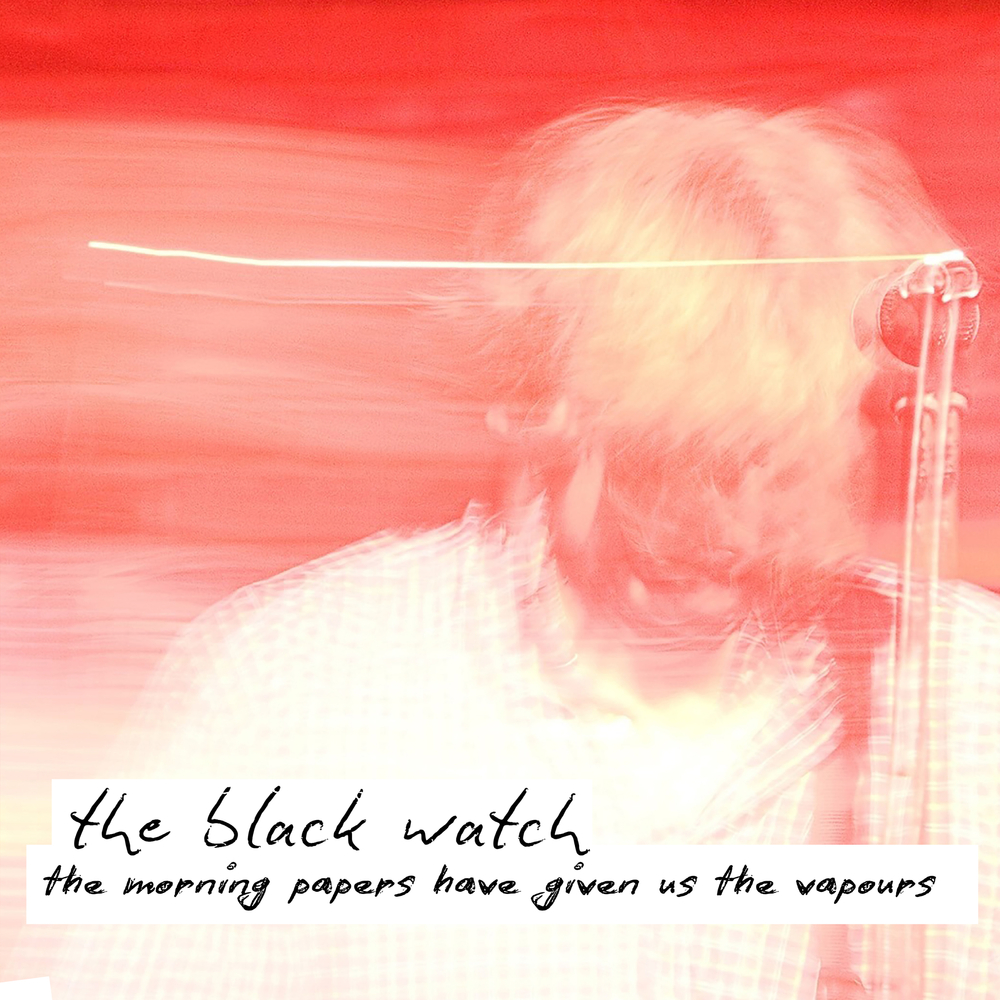
In addition to The Beatles, John Andrew Fredrick indicates that he is inspired by Lutheran hymns. That may explain The Black Watch’s unique sound: jangle pop, which is a bit dark, sometimes eccentric, but never ordinary. “The Morning Papers Have Given Us the Vapours,” which is brand new, is beautiful and intriguing and sounds contemporary. However, the latter does not appear to have been a deliberate goal in itself. We hear more about this in an exclusive interview with Frederick himself.

Are you consciously adjusting your sound to keep your music modern, or is that not a concern for you?

We rarely, if ever, think in terms of “how will this go down with indie fans.” Not that that is an arrogant or oblivious approach: it’s just that I try to please myself first, thinking “I have impeccable taste; so if it makes me jolly and feel moved somehow, then it MUST be good.” Who knows, though? We never ever chase the current sound, as it were. I think that madness lies that way.

“What’s All This Then” is such a fresh and youthful song. Could you tell me what inspired it?

“What’s All This Then” is a sort of send-up of love songs in general and my own in specific. How many times have we uber-romantics said “I’ve never felt like this about ANYONE!” Knowing full well we’re fooling ourselves. Full fools fooling the fools that are US! Haha.

“There and Here” has a Dark Wave/Post Punk vibe. But when I describe it that way, I wonder if it’s just a typical journalistic observation. What are your thoughts on this?

I forgive writers and punters for categorizing music; if that makes things more palatable, there you go. Notwithstanding that, I am really pleased with the guitar sounds the engineer, Kevin Dippold, got on that one. I do not think of us as a “big guitar sound” sort of band; but we LOVE a lot of those—The Chameleons UK, early U2, The Strokes, et alia.

You make creating music sound effortless in a good way. Do the melodies still come naturally to you?

Well, the melodies I often attribute to two influences: the Beatles and Lutheran hymns. I went to church religiously till I was nineteen. Pun! Haha. I admire really twisty melodies like what Mark Hollis did with the immortal Talk Talk, so perhaps a bit of twistedness twists into my stuff. I like catchy stuff—with a twist. (Sorry: couldn’t resist!).

When I listen to your records, I always feel like I’m part of a journey, rather than being shown an endpoint. Quite poetically worded, don’t you think?

A journey or TRIP (term I prefer) really is among the highest compliments that could be paid one. Heroic Roger Waters opined that “in the finished article, the only thing that matter is if the song MOVES you,” so I reckon you could say that that’s an INTERNAL journey!