Bleu: Finding Joy in the Shadow of Loss
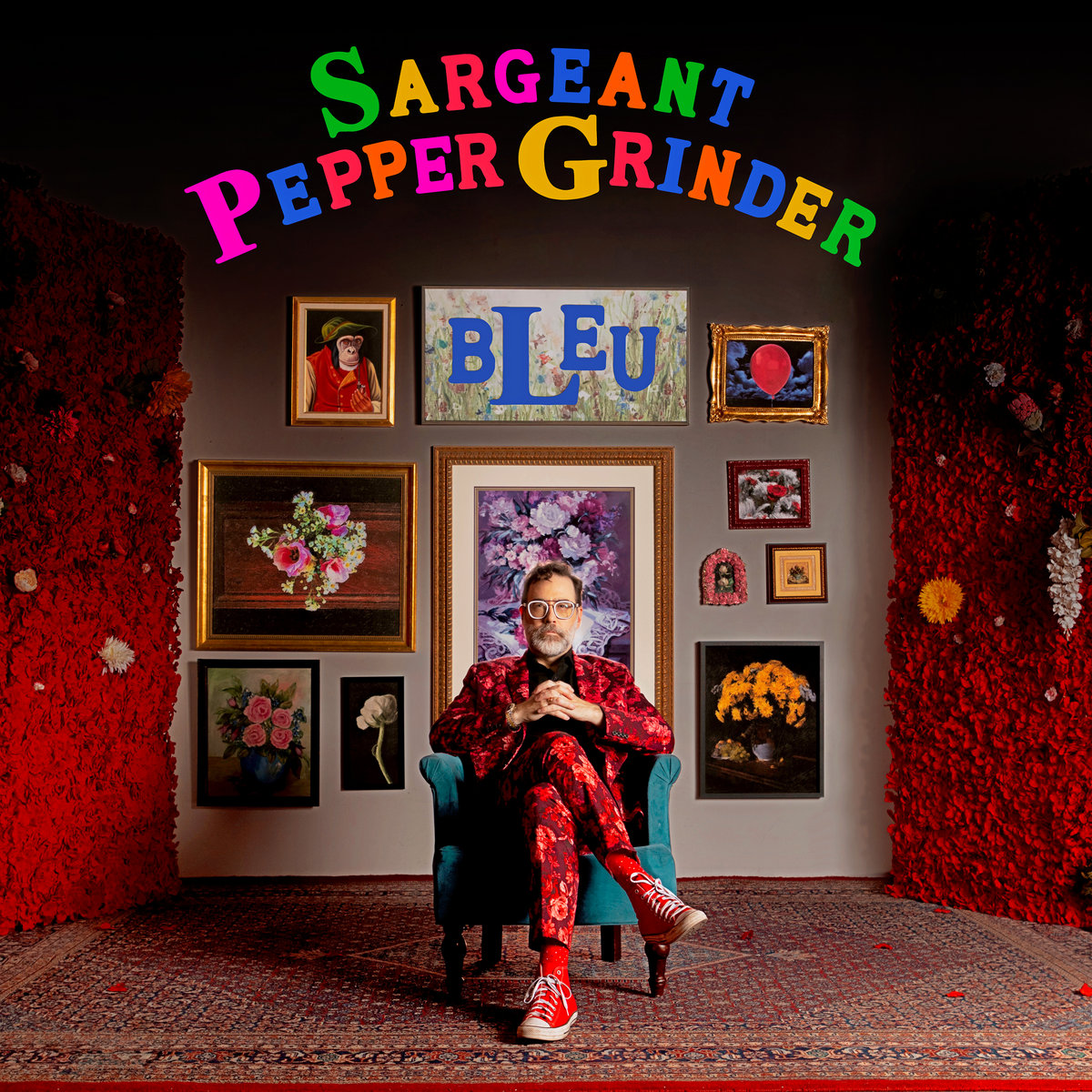
On Sargeant Pepper Grinder, Bleu turns grief into something bright, melodic and deeply human. The album is both a tribute to friends who are no longer here and a celebration of the people, memories and small moments that remain. Wrapped in the kind of irresistible melodies and harmonies that have long defined his songwriting, these are songs that don’t shy away from loss, but refuse to surrender to it either.
We spoke with Bleu about writing through grief, the strange kinship between sadness and power pop, obsessing over songcraft, and why Sargeant Pepper Grinder has ultimately become a memorial to friendship.
Sargeant Pepper Grinder feels like a very personal record. You describe it as an upbeat meditation on death and a celebration of friends who are no longer here. Was making the album a way of dealing with those losses, or did the songs simply become the place where those feelings naturally ended up?
Making this album was definitely a way of “dealing with” (processing, mourning, etc.) several very deep losses. Writing songs for my own artist project has always been a form of therapy for me, but many of these songs were a particularly palpable example of that. The recording process then became a way to commiserate, heal, and deepen connections with my friends who are still here, many of whom were also very close to Ducky and/or Alex “Scootch” Scutro.
Power Pop has always had this wonderful ability to hide sadness inside bright melodies and beautiful harmonies. On this album, though, the emotions feel particularly close to the surface. How do you find the balance between making something musically joyful and allowing the lyrics to be genuinely painful or vulnerable?
That seeming dichotomy is a hallmark of some power-pop that I’ve always loved. Just as humor helps many of us get through painful experiences, exuberant and tuneful music can help lift us from the valleys of crushing loss. I’ve also learned through therapy that two conflicting feelings can legitimately exist at the same time, and I think that juxtaposition brings a deeper meaning to life. But the main reason this album contains so much of that kind of thing is because I wanted to write music that Ducky and Scootch would’ve liked, and neither gravitated to sad-sack songs!
You’ve always been an incredibly melodic songwriter, but on this album the melodies sometimes seem almost deliberately at odds with what you’re singing about. Do you ever start with the emotional weight of a lyric and then look for a melody that gives it some lightness, or does the music usually come first?
When I write for “BLEU” (“me songs”) I almost always start with lyrics, usually a title with a concept, starting with the hook and moving on from there. In the case of this record though, that was obviously in service of conveying some pretty heavy emotions. I think “melodic songwriting” is just part of my DNA, but there’s certainly plenty thought (craft) that goes into melodic shape and in particular melodic-rhythm, and these songs were no exception. Even when I’m writing something heavy and the emotions are flowing, I can’t help but work the songcraft.
You produced and mixed the entire album yourself. Did keeping that process largely in your own hands matter to you, especially with material this personal?
Yes and no. I’m very open to collaboration, and worked with many talented songwriters, musicians, engineers, and Atmos mixers on this album, most of whom I think would agree that they weren’t particularly “over-produced.” But there was no way I wasn’t going to obsess over these songs, and producing and mixing it myself meant I wasn’t unnecessarily bothering other people (haAa!)
Looking across the songs on Sargeant Pepper Grinder, there’s a real sense of finding joy in people, memories and small moments. Did writing these songs change the way you look at those things, or perhaps make you appreciate them differently?
I look at this record now as a memorial. I truly wanted to create a tangible and (hopefully) long lasting tribute to Ducky and Scootch, as well as a heartfelt and healing expression of grief for myself and others. But yes, working on this record was very much a path to creating joy, memories, and small-moments – with my friends and family who are still around.