Some bands spend years trying to find the right chemistry. For Softjaw, it seems to have happened almost instantly. When songwriters Dustin and Tanner joined forces, they discovered a shared love of melody, hooks and all the little details that turn a good pop song into a great one.
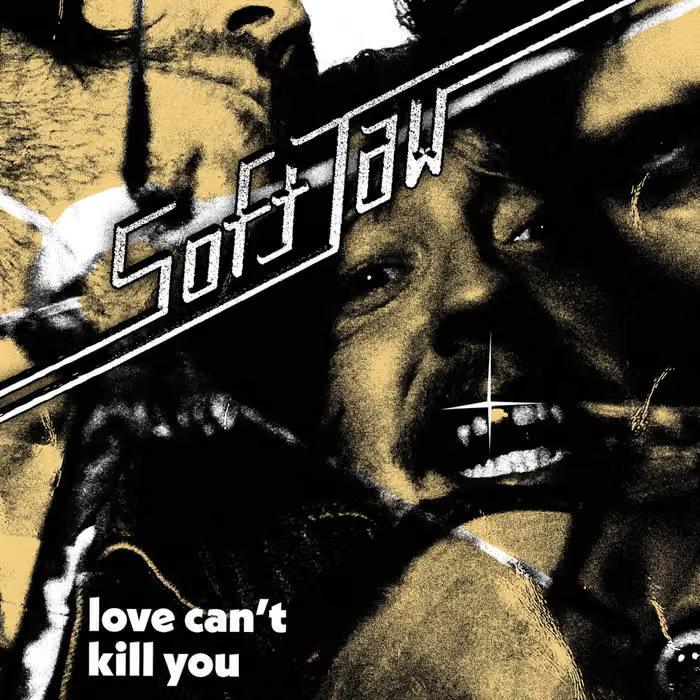
Their new album, Love Can’t Kill You, is packed with the kind of effortlessly catchy, beautifully crafted songs that remind you why power pop is such an irresistible genre in the first place. There are plenty of familiar influences, but Softjaw never sound like they’re simply looking backwards. Instead, they’ve found their own way of making those timeless ingredients sound fresh and exciting.
In fact, Love Can’t Kill You is one of those albums that will help define 2026 as a great year for power pop. We caught up with Dustin and Tanner to talk about songwriting chemistry, the art of making a great song even better, avoiding the nostalgia trap and the joys and frustrations of recording an album themselves.
When did you realise that Softjaw could write genuinely great pop songs? Was there a particular song that made you think you were onto something?
Dustin: I had a couple songs knockin around before I met Tanner. One of them was “Don’t Go Walking Out”. I was definitely leaning in a more power pop direction but didn’t have anyone to hash them out with. Once Tanner came along we both started writing and things just seem to click right away. It’s a rarity to find your musical counterpoint so effortlessly.
Tanner: I met Dustin…that’s about it lol. I’ve kind of always been in a collaboration when it comes to music so when we met and shared influences I got a pretty good idea of what Dustin was going for and that got me super excited to start working that influence into my own songs for the band. The influence is mutual i believe and the combo of our approach seems to be workin out.
With two songwriters in the band, how does a Softjaw song usually come together? Do you bring in finished ideas, or do songs take shape together?
Dustin: It’s happened a few different ways but typically one of us has a song pretty much figured out. Then we all get in a room and give it a spit shine. I think we will attempt to be more collaborative for the next record.
Tanner: Usually Dustin writes an amazing song that breaks my brain and then i try and match it but never really get it, wherever it lands seems to be close tho and we go from there. my favorite times are when we show each other a song and we get telepathic and it falls right out. Thats straight up magic.
How do you make a good song even better? What do you tend to change between the first idea and the finished recording?
Dustin: For me personally it’s the little hidden gems you can sneak in. A special chord, a witty lyric, an unexpected key change, a change in time signature. The trick is doing it without people noticing. Don’t be flashy!
Tanner: I honestly have no clue. refer to Dustin on that one lol. I usually pour out my guts and call it pollok.
Your influences are clear, but Softjaw never feels like an exercise in nostalgia. How do you find your own voice while drawing on music you love?
Dustin: We have a pretty wide collective palette I think. We also try to steer clear of anything being too on the nose. If it’s a carbon copy we might as well be a cover band. The hope is to add some originality. That’s how music evolves.
Tanner: I think you gotta feeeeeel it maaaaaan. I was just trying to rip off the “deface the music” record by utopia… WHERE DOES THE WORLD GO TO HIDE?!
You recorded Love Can’t Kill You yourselves. Did that freedom make it easier to get the songs exactly where you wanted them, or harder to know when to stop?
Dustin: The recording process wasn’t too painful. I tried to mix it and drove myself insane. We eventually brought in Wyatt Blair for mixing. I was able to take a deep breath and see the finish line once he started sending mixes in. He’s got the magic!
Tanner: I don’t have too much experience in a studio so i gotta give it to Dustin on this one. its best to trust the person behind the wheel.
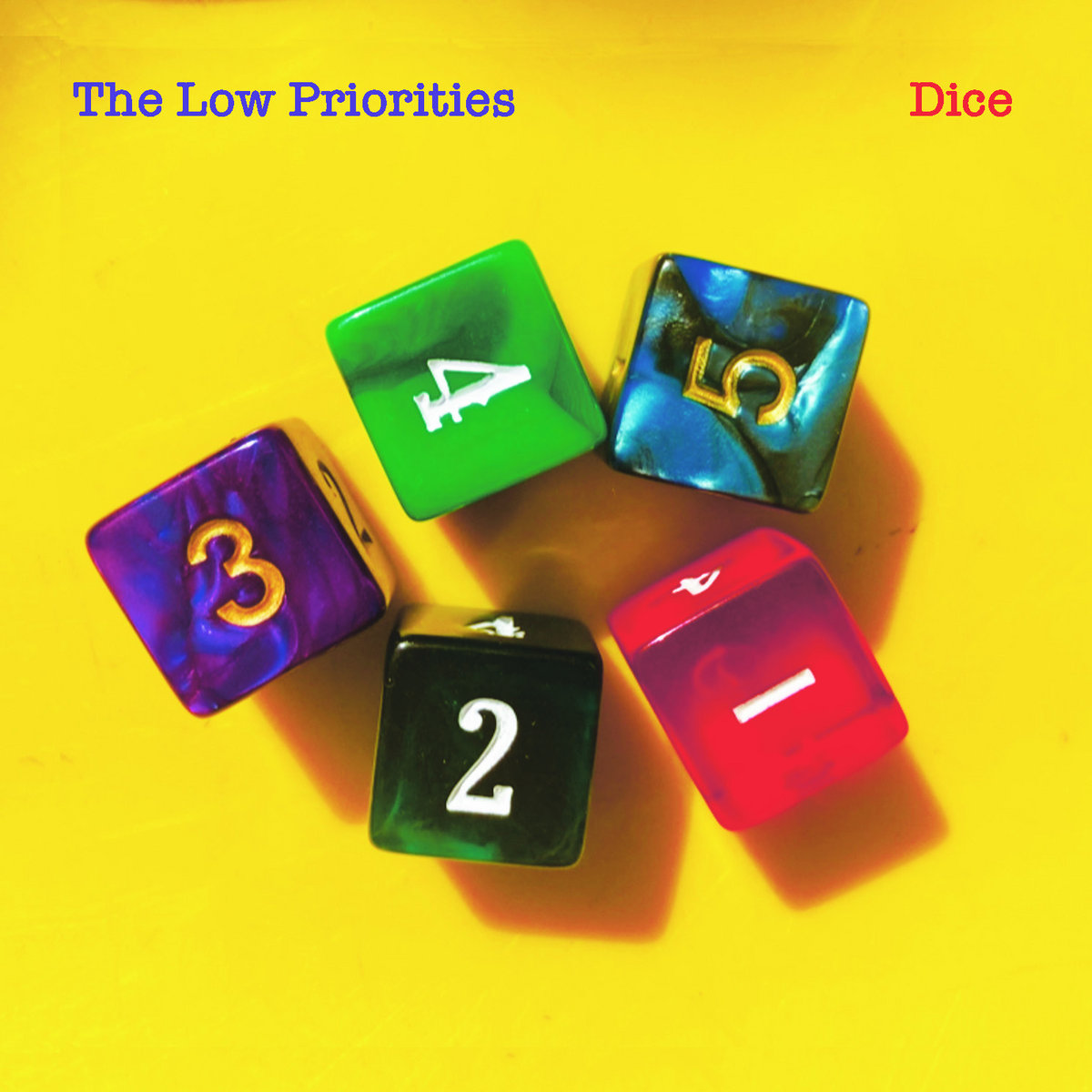
Sydney’s The Low Priorities have arrived with Dice, a debut album bursting with jangling guitars, infectious melodies and classic Power Pop energy. Drawing on decades of friendship and a shared love of guitar-driven pop, the band have turned what began as a modest EP project into a full-length record that’s already attracting attention well beyond Australia. We caught up with Dan Keary to talk about the making of Dice, the band’s musical influences, Sydney’s thriving guitar-pop scene and what might come next.
Dice is your debut album. How did The Low Priorities come together, and how did these songs develop into the record we’re hearing now?
We’re all old friends who have played with one another in different bands on and off over the years.
About a year and a half ago, we had the idea to start a band specifically to play songs with a power pop feel. We thought that if we recorded a few songs as a self-released EP, it might be a good calling card to get some live gigs here in Sydney. While we were making those recordings, Dave wrote another batch of songs so we’d have enough for a live set. We got excited enough about them that we thought we may as well record all the songs and release an album rather than an EP.
So the album was done before we’d actually played any live shows.
There’s a real sense on Dice that you’re drawing on a long tradition of melodic guitar pop while still making it sound like your own. What were the musical touchstones for the band when you were making the record, and how consciously were you thinking about finding your own sound?
You’re absolutely spot on in referring to a long tradition of melodic guitar pop.
We’ve been playing together in bands since the 1990s and have spent many years sharing our love of music and enthusing about hundreds of different artists and records. The common thread of what we love is guitar-based bands with memorable, melodic songs. While making the Dice album we really enjoyed drawing on these inspirations, sometimes several within the same song. We’d often find ourselves talking excitedly all at once about bands like The Who, Blondie, Elvis Costello, The Nerves, Guided By Voice, Badfinger…to name only a few!
We wanted to make a high energy, catchy record that was clearly inspired by these and other great bands, but which still had a sound that was a unique blend of our own voices and playing styles. We weren’t looking to reinvent the wheel, but hopefully to create something with its own identity within the guitar power pop tradition.
There’s clearly a strong guitar-pop and power-pop tradition in Australia, and Dice has already been mentioned alongside that history and the current Sydney scene. Do you feel part of a wider Australian guitar-pop community, and are there bands from that scene — past or present — that you feel particularly connected to?
Yes, we’re certainly fans of a lot of the bands that people would associate with classic Australian power pop, such as The Hoodoo Gurus, Sunnyboys, The Stems, The Someloves etc.
In terms of the current Sydney scene, there’s still plenty of great guitar pop artists and bands like Bryan Estepa, Hoolahan, The Pyramidiacs, and The On and Ons playing regularly and everyone knows each other either directly or indirectly.
We did an album launch gig in Sydney in August and have another Sydney gig in mid December. Next year we’ll be looking at playing some more shows with other like-minded bands both here in Sydney and hopefully down in Melbourne.
The album has been getting some really strong reactions since its release, including the description of Dice as an “exemplary” power-pop record. Has the response surprised you, and have you noticed it bringing new listeners, contacts or opportunities your way?
We’ve been really happy with the response so far. We were confident we’d made a really good record so were always hopeful it would be well received but, yes, we’ve been pleasantly surprised at the airplay and positive reviews its been getting both here in Australia and in the US and Europe.
We’ve made quite a few new connections in different countries and there’s also some opportunities for some overseas shows next year and hopefully we’ll be in a position to confirm these shortly.
Dice is out now, and the songs are no longer really yours — they belong to the listeners. What does it feel like to let your first album go into the world, and is there a particular song you’re especially curious to hear people make their own?
That’s a nice way to put it – that the songs now belong to the listeners. We’d like to think that’s the case because that’s how real music fans perceive the songs they love – as their songs – and hopefully there’s enough people out there who have formed or will form that attachment to our songs.
We wanted to make an album on which every song could stand up on its own and hopefully we achieved that, so that every song could potentially be someone’s favourite.
We’ve been promoting the title track “Dice” as the main track, as we think it best captures some of those classic power pop elements we love – jangle, melody, power etc – but equally, there may be sonic or lyrical elements of other songs that people can relate to.
As long as we know there’s people out there enjoying the album, we’ve achieved what we set out to do.
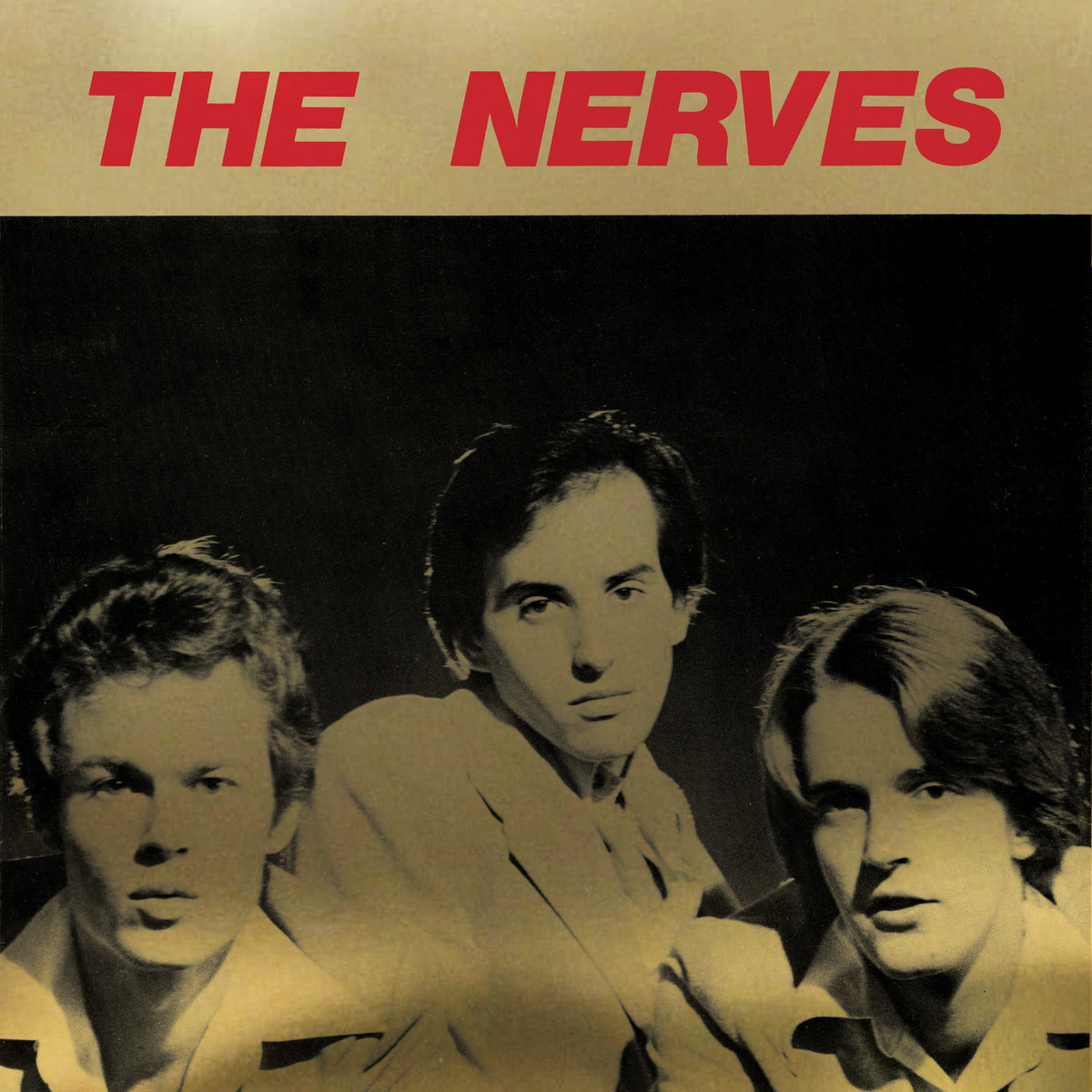
You wanted the best. You got the best. The coolest band in the world. The Nerves.
Fifty years on, The Nerves somehow still sound urgent, sharp and impossibly cool. The Los Angeles trio of Jack Lee, Peter Case and Paul Collins left behind only a small body of officially released music during their original lifetime, but their influence and reputation have only grown with the years.
Now a new release from Third Man Records opens the archives and tells a much bigger story: 29 songs drawn from across the band’s brief but extraordinary existence, assembled from studio recordings, living-room tapes and live performances.
We spoke with Paul Collins about digging through 50-year-old tapes, the small miracles that made the collection possible, working with Third Man Records, and why new generations continue to discover The Nerves.
This is an incredible overview of The Nerves: 29 songs bringing together recordings from different periods of the band. What can we expect from this collection? Are there recordings or versions on it that you’re particularly excited for people to hear?
Yes I’m very excited for people to hear this record. It has the best recordings of the songs that we were working on from the time period of 1974 to 1977. All of these songs would have been a part of a Nerves album had we been lucky enough to make one.
They are all recorded versions either in studios or in living rooms but mixed properly, except for the songs that were recorded Live at The Starwood. The sound quality is just fantastic because we were able to find the source tapes to practically every single song on this record so it’s it’s really the very best of The Nerves.
How did the idea for this particular release come about? Who first had the idea to bring all this material together, and when did Third Man Records become involved?
Well it came about when we realized that it was the 50th anniversary of The Nerves and Jack Lee’s daughter Cynthia was managing his estate after he passed away and she really wanted to do something to commemorate her father’s Legacy.
I do believe that Jack had asked his daughter if she could try to get Third Man Records to put this record out for the 50th anniversary. He knew about the label and about Jack White. Cynthia was really very instrumental in speaking to them and when they heard that there was the possibility of making the record they asked if both Peter Case and myself would be involved and of course we said yes, at which point they said we’d like to hear what you guys want to do. When they heard the material they agreed to put it out and then it just snowballed from there.
They did an absolutely incredible job mastering all the the songs and organizing the archival material and they put together an absolutely stellar package. A double album on red swirl vinyl and it couldn’t be any better for a 50th anniversary release for this band.
It must have been an enormous job to put this collection together. How much searching and digging was involved in finding the original recordings, and were there any discoveries during the process that surprised you?
Yes there were a lot of Small Miracles involved with getting all these tapes for the record. Some of them were in storage bins in Redding, California there were some in Los Angeles there were some here in New York. We would find these boxes of tapes, some of them were marked some of them were unmarked. They have been sitting around for 50 years so we didn’t know whether the tapes would be completely corroded or if they would be usable. When we transferred them we were sitting on the edge of our seats not knowing, and finally when the transfers came back it was amazing the music was in pristine condition and it was just fantastic!
The biggest surprise was when I found a cassette that I had transcribed for a release I did a number of years ago called The Best of The Archives In Another World. On that tape was a live session done in the very beginning of The Nerves on a realistic tape deck of me, Jack and Peter playing I Need Your Love and Paper Dolls and One Way Ticket. You can really hear the band as we were in the beginning, how we worked up all the songs. I was playing drumsticks on a phone book, Peter was on his Hoffner bass and Jack was playing his Rickenbacker. That’s how we worked up the songs. It really gives you a bird’s eye view of how the band formed way back in the beginning. Also a friend of the bands sister had recorded The Nerves at The Starwood. She has the tape recorder in her purse! She left the purse with the recorder in her closet and found it 50 years later!
And then there’s Third Man Records. How did the relationship with Third Man come about? And what does it feel like to see The Nerves’ music given this kind of new life by a label like Third Man?
Like I said Cynthia is really responsible for the initial conversations with Third Man Records. Once they agreed to do it both Peter and I and Cynthia spoke with their head of production Dave Buick in Detroit and Dave orchestrated everything at Third Man and with with their art Department headed up by Roe and the mastering which was done by gentleman called Warren. It’s all in-house at Third Man. Everybody knows what everybody’s doing and there was a lot of excitement about the project. There was a lot of tender loving care put into every aspect of the project. The mastering and the artwork, it was all done with the utmost of care.
After all these years the little band that could, is, and Third Man is taking us to a huge audience. A much bigger audience than we have ever been able to reach. There will be a whole new world out there that will get to hear The Nerves and that is very exciting and very satisfying!
It’s almost incredible that, after all these years, there is still so much interest in The Nerves based on such a relatively small number of released songs. Young generations keep discovering the band. How do you explain that The Nerves have always remained so genuinely cool?
To me personally I think the reason why The Nerves has endured all this time is because we spared absolutely no amount of time or energy in trying to be the absolute best we could be. We aspired to be as good as we could possibly be, and we would not give up until we thought we had achieved that.
I learned so much in that regard, by working with both Jack Lee and Peter Case, and what it takes to try to climb all the way to the top.
The Release Date for Best Collection is October 23, 2026
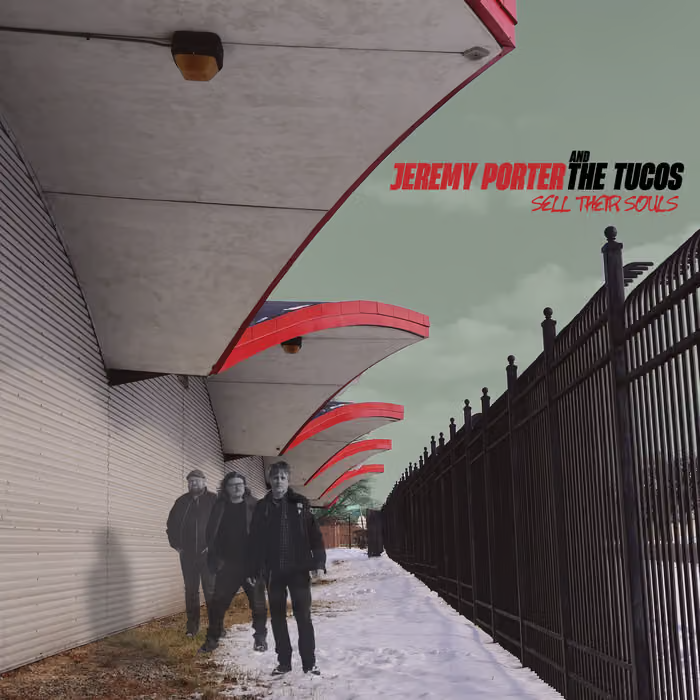
With Sell Their Souls, Jeremy Porter and The Tucos have made what may be their hardest-rocking record yet — but that doesn’t mean they’ve abandoned the hooks, twang and power-pop instincts that have always been part of Porter’s songwriting.
After close to four decades of making music, Porter still seems far more interested in what comes next than in settling comfortably into a particular sound. We caught up with him to talk about the heavier edge of Sell Their Souls, taking unexpected turns in the studio, the songs that proved hardest to crack, and why continuing to move forward remains essential.
Sell Their Souls has a particularly tough and swaggering sound to it. There’s a great mix of power pop, punk, rock and alt-country, but to my ears the balance feels a little heavier and rougher than on some of your earlier work. Was that something you consciously wanted to explore, or did the songs simply take you there?
Hey there – thanks for having me Patrick and thanks for those kind words! Yea this is probably the most “ROCK” album I’ve ever done. I’ve been into metal and hard rock since I was 9 years old, and my love for that stuff has only grown. We listened to a lot of metal and hard rock at my house during the pandemic, and I suppose it was bound to seep in a little deeper than it had before, but it wasn’t calculated.
I write constantly and it’s all over the place, as you sort of allude to, but the focus is on quality of song over genre of song. The feel or vibe – heaviness, twanginess, popiness, mellowness, whatever – that all comes into play when we’re deciding which songs to record, and especially when sequencing the record. That sequencing part is really important to me – that the album flows well from song-to-song and overall. This is when I start to think about things like “ok after these 2 heavy songs we need to take it down for the next track…” or “those two songs sound too similar to be next to each other…” stuff like that. So I guess, to answer your question, it wasn’t calculated, but it was something that’s always in play throughout the project.
Change the Rules really struck me as a tour de force. It moves through different tempos and moods, and the arrangement keeps opening up as the song progresses. How did that song develop, and did you know from the beginning that it was going to become something bigger and more elaborate?
Thanks! Yea that’s one of those harder-rocking songs that starts to get a little proggy, for us at least, and kind of sets this album apart from our previous work. It came together with that intro riff, that I think is sorta Drive-By Truckers-ish, then the hard-rock chunks in the verse, so none of that is a big departure for us, but I’m always looking to do something different, something we’ve never tried, and switching to 6/8 time for that middle section and especially hiring a real string section and composer to do that orchestration is WAY out of our wheelhouse. The idea for the strings came in the demoing stage, might have been Gabe that brought it up. So we did a primitive string arrangement with synthesizers on the demo, which was fun and helped us decide… is this cheezy? Does it rule? Do we care? Just one of those things to make the song stick out, get out of our lane and take new chances in the studio, and see what happens! I’m so glad you dig it!
The Real McCoy is my favorite song on the album. It seems to bring together so much of what I love about The Tucos, while your vocal feels particularly pure and direct. I also love the way the music seems to be all over the place while the relationship in the lyrics seems to be going in much the same direction. What does that song mean to you, and how did it come together?
It’s so fun for me to put out a record and hear what peoples’ favorite songs are. You’re the first one to even mention that song I think! I brought it in and we struggled with the arrangement and the feel of everything except the verse, which fell in very naturally. We had two big issues – it was too long, and the chorus wasn’t enough of a hook. Well, we cut a chorus out and replaced it with the bridge, so it was at a better length. Then at one point before we demoed it we were at The Loft, one of our favorite studios here in Michigan, working on something else and talking to Tim Patalan, the main guy there who’s been a big part of everything we’ve done, and I asked him about the chorus, told him we were struggling with it, and he just knew right off – “you gotta go full-STONES on it!” so we did exactly that, because Tim knows his shit, and it made the whole thing just work. It’s still the longest song on the record, and I get heart palpitations when songs approach 4 minutes, but I like how it turned out. Hope Jagger gets his ears on it!
You’ve been making records and playing in bands for more than three decades, and you’ve moved through punk, alt-country, power pop, solo work and The Tucos without ever seeming particularly interested in staying in one lane. At this point in your career, do you still feel like you’re searching for something, or have you reached a place where you’re simply comfortable being Jeremy Porter and letting the music take whatever shape it wants?
Closer to 4 decades bud! But yeah, that’s a loaded question, isn’t it? I’m always searching for something, always looking at what’s next, how I’m (or we’re) gonna make it different, better, fun, exciting… but I’m also always just me, so it’s gonna have some hooks and it’s gonna have some lyrics that hopefully mean something to or provoke a response from somebody, and it’s gonna be guitar heavy and we’re hopefully gonna get out of the song and off the stage before we wear out our welcome. I don’t think the lane shifts are that drastic, they’re all on the same highway anyhow, though it’s a fairly wide swath of heavy/distorted amps and spacious/acoustic guitars, and all points between, I guess.
Id’ guess that most singer/songwriters and touring musicians aren’t particularly comfortable with their own self-image, in their own skin, or whatever. I’m not much different. Putting myself out there with lyrics, performances, writings, even social media posts – yea, I can’t say I’m comfortable with any of it, except probably the performance part, which, when going well, is where I am at the most peace. Or maybe “peace” isn’t the right word, because rock and roll isn’t supposed to be peaceful, but let’s say content. It’s a difficult line to tread these days, trying to get your stuff out there while presenting yourself the way you want. I’m so far from an expert at it.
You’ve said that Sell Their Souls is your favorite thing you’ve ever done — while also admitting that it’s probably too fresh to know where it will ultimately sit in your catalog. That made me wonder: after all these years of writing, recording and touring, what does a record have to do now to make you feel that you’ve moved forward? What are you hearing in Sell Their Souls that tells you you’re not simply repeating yourself?
Well, context is probably important here, because I’m not sure when or where I said that, but I think it was in the context of…the newest thing is SUPPOSED to be your favorite thing, and if it isn’t then you did something wrong, yea? But yes – these things have to have some time behind them before I and talk about them objectively. But I am proud of it, and I do think it’s good.
I think a lot of what we talked about above speaks to why this record isn’t just a repeat of previous albums, just like I don’t think Dynamite Alley was or Candy Coated Cannonball before that. I remember when we were making Don’t Worry…It’s Not Contagious, our bassist at the time Patty said he felt it was basically Above the Sweet Tea Line part 2 – not a big enough departure, not enough new ground. I don’t necessarily feel that way, but I did take it to heart and put more effort into working harder on doing new and different things from that point on. It started with songs like “Put You On Hold” and “Dead Ringer” from Candy Coated and remains with songs like “Real McCoy” and “Rosencrantz” and “Change the Rules” off the new one.
It’s important to me to keep moving. Existing in this rock and roll world is more or less my life, and doing it for so long now is – in itself – some level of success for me, but without moving forward – new ideas, new directions… it would just turn into work. I could probably make more money and get bigger accolades playing in a tribute band or doing covers gigs, but I’d just as soon wash dishes or work at Taco Bell at this point.
A Chiming Back interview, finding its new home at Sweet Sweet Music Blog.
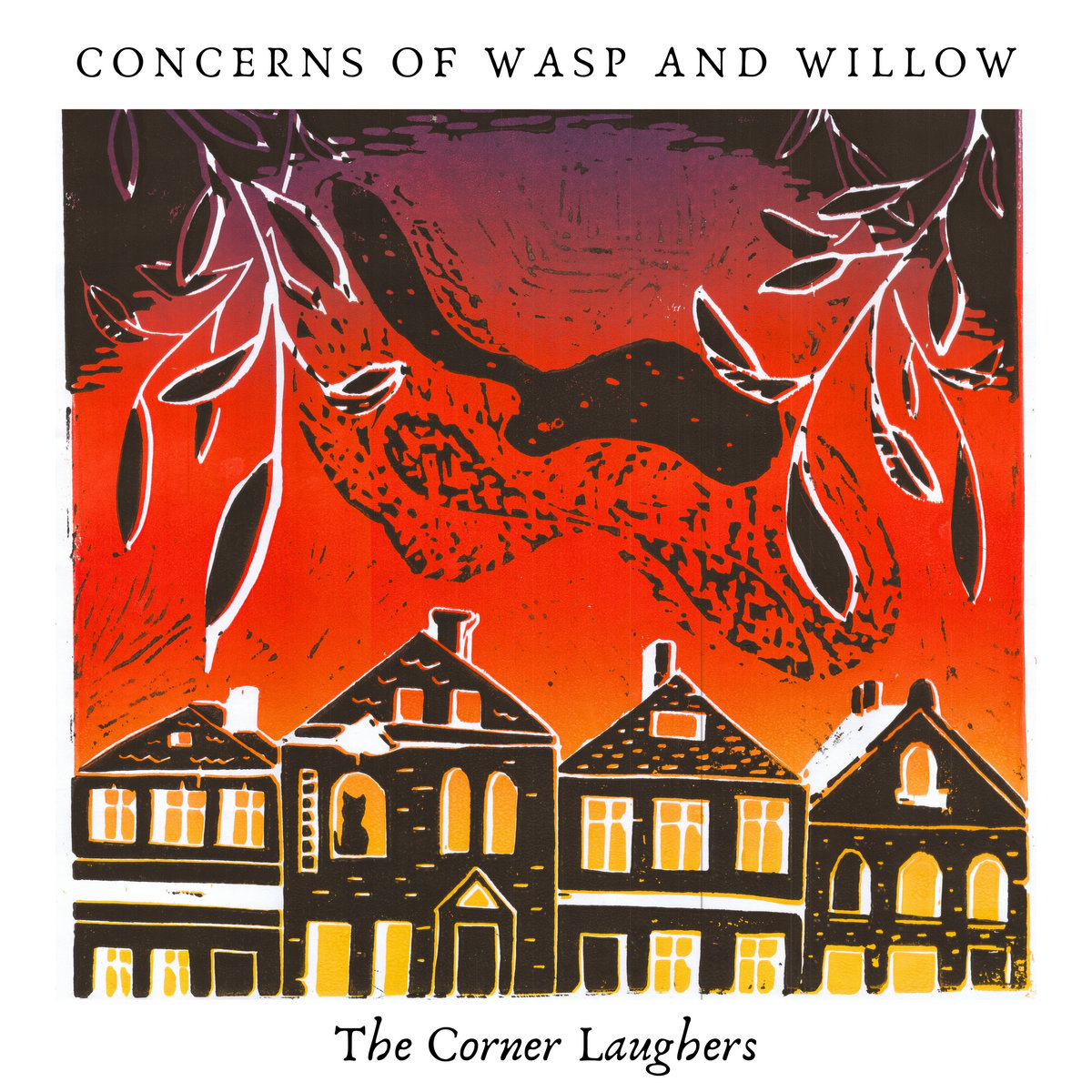
Karla Kane describes her songs as windows. Small ones, carefully made — you look through them and find yourself inside a world that is unmistakably hers: botanical, seasonal, slightly haunted, and shot through with an unexpected warmth. On Concerns of Wasp and Willow, the sixth album by Northern California’s The Corner Laughers, that world feels more fully realized than ever. Released on Big Stir Records on March 27, 2026, it is a record that begins in a small detail and pulls slowly outward — like a camera finding its frame.
The band — Kane (vocals, ukulele), Khoi Huynh (bass, piano, guitars), KC Bowman (guitars, keyboards) and Charlie Crabtree (drums) — have been crafting their literate, handcrafted folk pop together since the early 2000s. Concerns of Wasp and Willow arrives five years after their pandemic-era Temescal Telegraph, and finds them doing something quietly courageous: releasing something tender and precise into a world that seems to reward neither.
We spoke to Karla Kane about windows, details, and what it means to let a record go.
Your songs feel built from very small, precise details — both lyrically and in the instrumentation. Is it a way of writing, or a way of seeing the world?
I suppose songwriting is a reflection of a way of seeing the world — songs are like little windows. Often my songs seem to start from a small detail and then expand outward, like a camera pulling to a wider shot I guess. We definitely do try to put care into the details.
Listening to Concerns of Wasp and Willow while the world around me seems to be getting louder and cruder — I wonder, how does it feel to release something this tender and precise?
With so much going on in the world, and so many important issues, sometimes it feels a bit silly to even spend time on something like this, or to hope it reaches anyone. But on the other hand, in terms of a louder and cruder world, we’re proud to release something more gentle and thoughtful, too. It might not get much attention but we hope those it does reach will feel it is worthwhile.
The artwork has such a distinctive, immediately recognizable language — it feels like it inhabits the same world as the songs. Is that unity between music and image something you consciously pursue? Or is it more that you tend to draw people around you who feel the same things?
The artwork was created by our dear and brilliant friend Jennifer Rae Atkins, who is currently based in the Netherlands, and I’m so glad you see it as inhabiting the same world as the songs.
I called the songs windows earlier on and I think of the album cover as a visual window into the sonic world of the album, absolutely.
It is something we consciously pursue — I shared not only some of the songs themselves with Jennifer as she was working on the art but also some ideas and imagery that I felt were key.
And then she worked her magic to bring it all to visual life!
Your songs feel like glimpses into the way you see the world. And then you bring them to the rest of the band. How does it go from there?
Yes, whichever of us is the songwriter (me in most of the cases on this album, but there is also a song by Khoi written with our friend Helen Luker and one written by KC) has a demo with the music, lyrics and any production ideas.
Once it’s in the studio with the band, it is further refined and evolves into something more, with all of our fingerprints on it.
The first reviews are coming in. Do they still reach you — or does a record feel finished and separate from you by the time it’s out in the world?
They often do reach us. We’re very thankful for the folks who take time to review and share our work and to Big Stir Records for doing so much to build community! It doesn’t feel separate from us at this point — later on we will get some distance from it, perhaps, but for now I feel very closely connected to it.
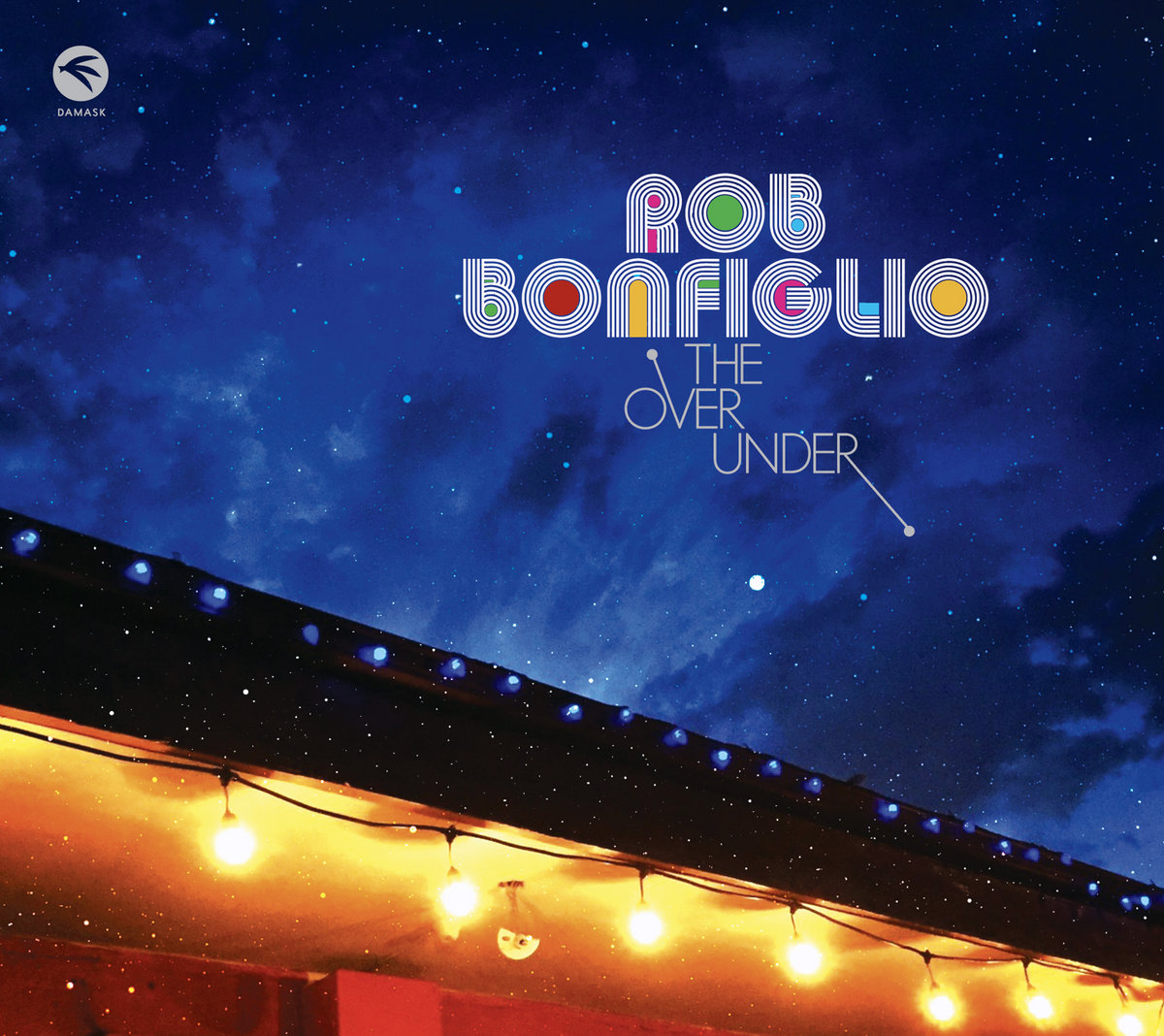
Rob Bonfiglio’s The Over Under has been out for a while now. I liked it immediately, but after listening to it for a few months, it has become one of those go-to records I return to when I need to recalibrate or reset. It’s the kind of album that reveals more of itself with time.
What makes it particularly striking is how personal it feels: Bonfiglio wrote, recorded and mixed the record largely on his own, following the songs that carried the most weight and trusting his instincts along the way. Months after its release, he remains remarkably close to the album and proud of how faithfully it captures what he wanted to say.
We spoke about the vulnerability of “Need You Know,” the sharper edge of “More Pure Than Gold,” the decision to make the record mostly by himself, and why connecting with listeners ultimately matters more than recognition.
How does The Over Under feel to you now that it has been out for a while and you’ve had some distance from making it?
I felt from the beginning that this record reached a lot deeper than my previous releases. I went into the recording process with maybe 20 or so tunes, and it became clear which ones carried the most gravity.
My recording and mixing process happened concurrently. I’d go on a hike or a drive and listen back to a day’s work to determine where to go next. It all added up to literally thousands of listens.
Even after completing the album, I can still listen through from beginning to end and feel a sense of cohesion. I can honestly say there are very few things I’d have done differently with this album. It still rings completely true to me. I’m really proud of the way it turned out.
“Need You Know” feels like the emotional heart of the album to me. It’s a beautiful, very vulnerable song. Do you remember where that song came from, and did you know while writing it that it could become such a special song on the record?
Thank you so much. “Vulnerable” is a great descriptive. My writing cycles happen in waves and usually bear five or six or more songs at a time. This came out of one of those batches. I don’t recall the initial inspiration beyond the riff that repeats throughout, which always had a Fleetwood Mac-ish vibe to me.
I do recall being satisfied with the simplicity of the form. The lyrics happened pretty quickly and seemed to really get to the point of how I was feeling.
“More Pure Than Gold” feels like the musical and lyrical opposite of “Need You Know” — it’s sharp, angry and quite political. What was your state of mind when you wrote that song? Was it something that came more from the heart, or more from the head?
Without expressly saying so, I think the sentiment of this song is pretty obvious. I like to think all good songs come from the heart, with the head to guide them along. Much of the lyrical content of this song came out in a free flow, and much still stands true, unfortunately.
You made The Over Under largely on your own, even though you have friends and family around you who are, to put it mildly, pop royalty and could probably have helped you make the record. What made you want to do this one by yourself?
I’m a textbook introvert. I really considered doing this album with a larger ensemble of players, but one thing led to another and I just ended up doing it all myself. It was easier to get from point A to point B quickly, and things just sort of snowballed from there. All creative decisions started and ended in my head.
That said, I did have a little help from my daughter Lola on “Blame This” and a great pedal steel player named Xandy Chelmis on “Fade Away.”
I’ve read some really nice reactions and reviews of The Over Under, and I’m sure you have too. Recognition must be nice, especially after putting so much of yourself into a record. Or is there something else that matters more to you when you look at how the album has been received?
I’m incredibly grateful for the kind words and genuine reactions to this record. Yes, recognition is important for sure, but maybe less so for the ego nudge and more for the acknowledgement of being able to share something that resonates on a human level.
Four years after Chopper, Kiwi Jr. return with Blowin’ Up, an album that finds the Toronto band moving forward without losing the restless charm that made them so appealing in the first place. Their familiar mix of jangly guitars, scrappy garage pop and sharp-edged rock is still there, but this time the songs feel more open, confident and lived-in.
That change didn’t happen overnight. After years of moving quickly from one record to the next, Kiwi Jr. allowed themselves time to stop, write, discard ideas and eventually rediscover what excited them about making music together. The result is a record shaped by ten years as a band, but also by the willingness to try something different without overthinking it.
Ahead of the August 14 release of Blowin’ Up, we spoke with singer and guitarist Jeremy Gaudet about that four-year gap, getting the band tight before heading to Detroit to record, the evolution of his songwriting, putting Kiwi Jr. themselves on an album cover for the first time, and why sometimes the best way forward is simply to trust what works.
When I saw Kiwi Jr. on the Chopper tour at EKKO in Utrecht, and now looking at the artwork and presentation around Blowin’ Up, I get the feeling that the band is entering a new chapter. Even the choice to feature the band itself on the cover feels like a different statement. Is that something you recognize yourselves, and does it reflect a change in how you see Kiwi Jr. as a band?
It’s been 4 years since our last album and ya some things have changed. With every new album we try to put a slightly different flavor forward. Cooler Returns had a particular garage rock fidelity, Chopper introduced the moog, Blowin’ Up I think provides a freshness and open-air quality that the band hasn’t explored that much in the past. For this album cover, I wanted the band to be photographed on the front cover because all of the great bands have at least one album where they are on the cover. It seemed liked the old school way to do it – photograph the artist for the cover and don’t think about it too much. We tried to approach the recording of the album the same way – get the band tight, hire a good engineer, and don’t over think it.
Listening to Blowin’ Up, it feels like Kiwi Jr. has taken the foundation you built with your previous albums and started exploring it with more confidence and a greater sense of adventure. I hear a change in sound and storytelling, but maybe that is just my impression. Do you recognize that, and if so, where do you think that change comes from?
We are older now and I think that comes across in certain ways. We took a few years between albums and I think we were wary of certain traps we maybe would have fallen into had we tried to make an album immediately after Chopper. We’ve been a band for ten years and we know what works and what doesn’t work. We know each other’s strengths and weaknesses and this allows us to steer the ship with greater confidence. There are some new things we’ve tried to do on this album, with time signatures, and bringing in an outside mixing engineer etc. But overall the process is sort of familiar to us now.
Four years is a long time. During that period, not only can a band change, but your view of the world, yourself, and your place in it can change as well. Has that period influenced the way you write songs? Are there different subjects or ideas that play a role on Blowin’ Up?
I try not to look too closely at my songwriting process and subjects with a lot of scrutiny because creativity is a delicate thing for me. There are times I will go months without writing anything, and other times it comes pouring out. I’m afraid if I start to analyze it, I’ll become too aware of it and fumble it. Like when you’re trying to fall asleep, you can’t think about how you are trying to fall asleep. It will never happen like that. And of course I have to follow what gets me excited and what I’m interested in, otherwise it becomes work.
Every album has its own story behind it. Can you take us back to the beginning of Blowin’ Up? When did you realize that you were creating a new Kiwi Jr. album, and what was the process like from the first ideas to the finished record?
We had been moving very quickly from Football Money through Chopper and I think we just needed to sit down and breath for a bit. Even though Chopper was finished in 2022, I didn’t start to write the songs that ended up on this album until 2024. There were two years of failed attempts and distractions. The first two songs were Blowin Up and World Like Polly. Once we had those two, we essentially were starting work on a new album. We rehearsed a lot and spent a long time getting the arrangements and songs together before going into the studio. Lots of phone recordings, for example. We went to Detroit record the album in March 2025. So the songwriting and arranging process took a complete year pretty much.
When the recordings are finished, Blowin’ Up is still a very personal project of the band. By the time it is released, other people already have expectations about it. Is that a thrilling transition, or does it simply feel like the natural end of the process?
It feels good to release something we’re proud of. As I said, it’s been two years since we started to write the songs. I get a bit of a thrill releasing it now because we’ve been sitting on the songs for so long. I hope people take notice and respond to it. We’re excited to play the songs live too.
With Blowin’ Up being released on August 14, what does the rest of the year look like for Kiwi Jr.?
European/UK tour in November. Some North American dates sprinkled all around. One day at a time!