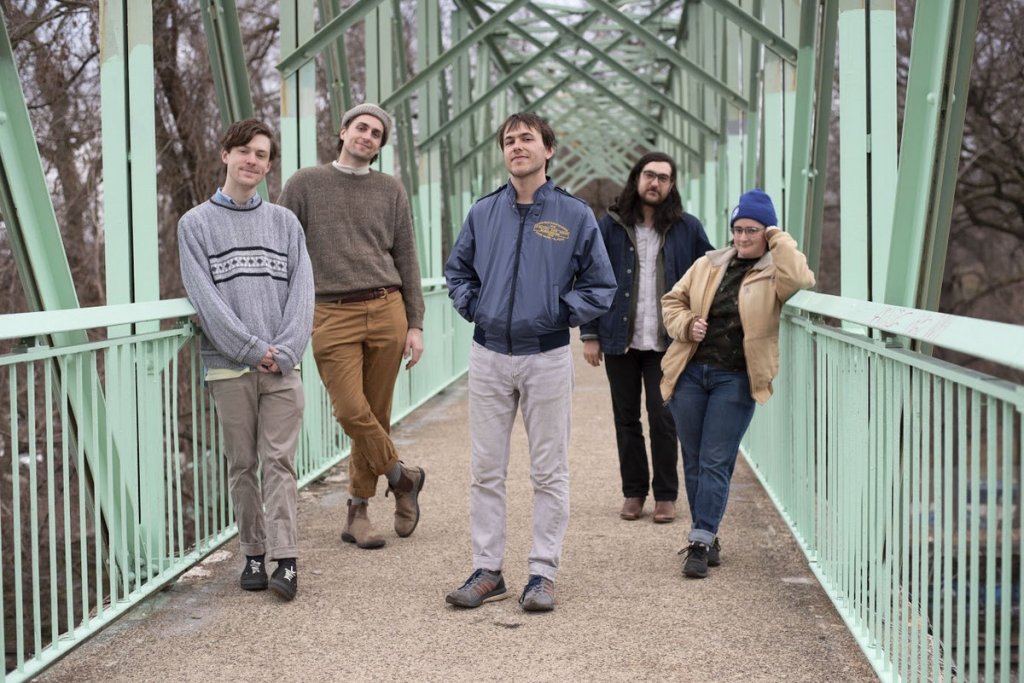
Star Turn: The Morning Line’s Stephen Smith on STARS
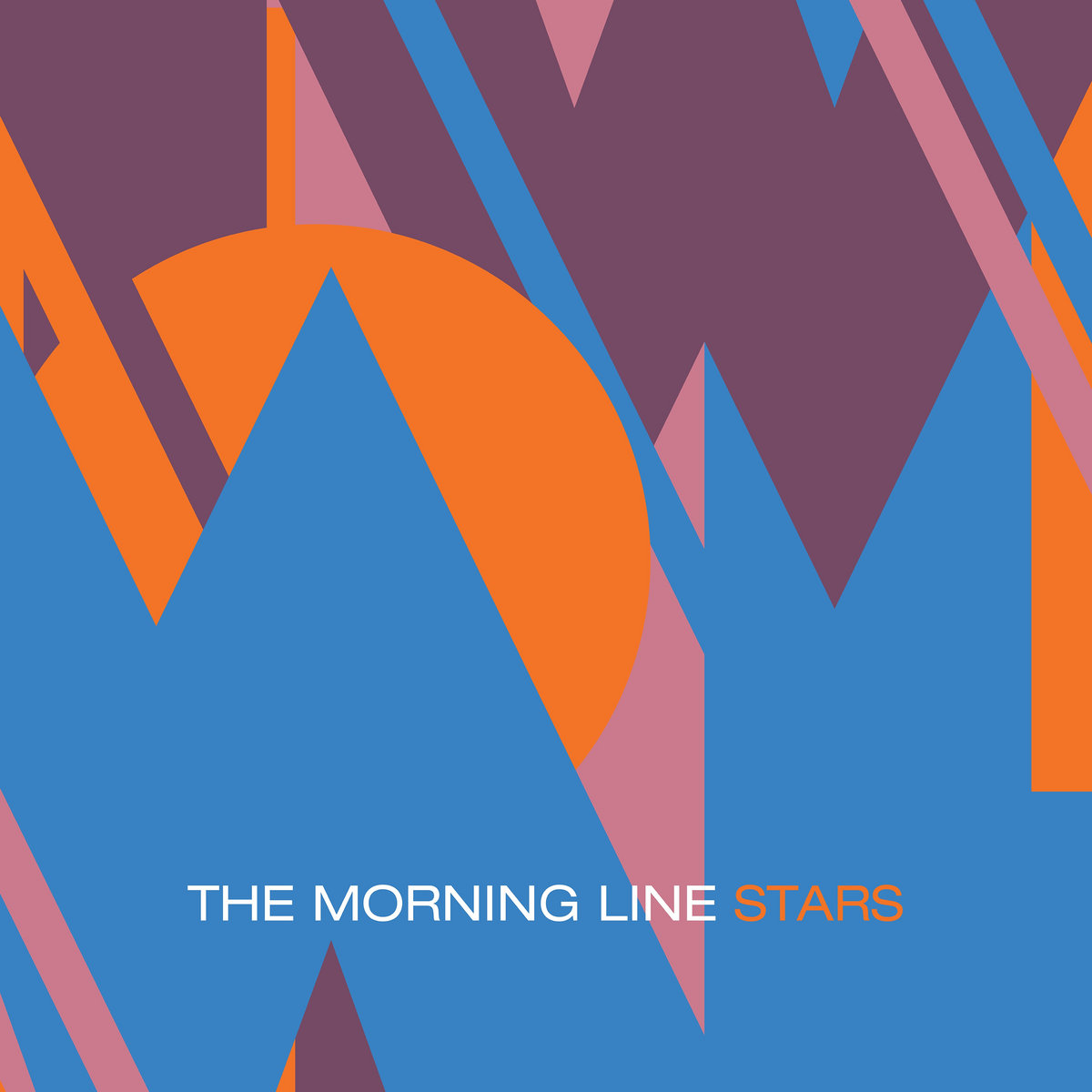
There’s a particular kind of record that only gets made once a band has stopped worrying about what it’s supposed to prove — and that’s the record THE MORNING LINE has made with STARS, out September 18th on Big Stir Records. Twenty-one tracks, twenty-plus years, and a back catalog stretched between a 2007 debut and a 2017 follow-up that a lot of fans never got the chance to connect. Rather than just slap a “greatest hits” sticker on the whole thing and call it a day, the band went back in and remixed the songs they cared about most, added two genuinely new ones (“90s Pickup” and “This Lens”), and rounded it out with the single “Anhedonia” — ending up with something that’s less a victory lap than a re-introduction.
I sat down with Stephen Smith, by his own modest insistence more melody writer than lyricist, to talk about what happens when you go back and remix twenty years of your own songs, what it’s like discovering your old lyrics are “not half-bad,” and why a two-decade-old band still bothers showing up.
A “best of” record usually gets made when a band’s looking backward out of necessity — end of a chapter, lineup change, anniversary. What was the actual trigger for STARS? Was there a specific moment where someone said “we should do this now”?
Gambling debt? No, I wouldn’t say there was necessity here, so much as desire. We wanted to hear the songs at their best, hence the remixing, and we wanted to have a document that collected a lot of disparate material in one place. In terms of sound, every single thing we’ve done has been recorded and mixed by Peter Craft, who also happens to play drums on most of the songs. His studio has evolved over the twenty-plus years he’s been recording, and he thought he could make the songs sound better. So that’s a part of it. Additionally, in some ways, I think of the band as two bands, not so much sonically as temporally. We put out our first record in 2007 and the next in 2017. So it seemed to me we had some fans of the 2007 record who may have been unfamiliar with our more recent material, and fans of the recent material who could be unfamiliar with the 2007 record. It made sense to have a single document to represent us, that the future (should there be one) can build on. It is a summing up, with improvements.
I credit my wife with the album including the new songs “90s Pickup” and “This Lens.” The record was originally envisioned as a purely retrospective collection. She said that we had to put a couple new songs on it to make it more compelling. Poets do this occasionally, releasing books containing “New and Collected” work. I’m glad we included the new ones because I really like them (obviously), and it does add variety.
Remixing old songs is a strange kind of time travel — you’re not just cleaning them up, you’re making new decisions inside old material. Was there a song where the remix changed how you personally feel about it?
This is something only a band member would probably notice, but the song “The Minutes” just seems more vibrant, more alive, than the previous version. It sounds like what I wanted it to be, but we weren’t able to do at the time. So the sound alone has taken me from, “that’s a good song,” to “goddamn, I love that one!” One of the more dramatic remixes is a song called “All Mine.” On our 2017 album, Smoke, we were delighted to have Paul Kolderie mix that song. He’s an all-time great, and he took some structural liberties with the song. We liked them, don’t get me wrong, but the remix revisits the original structure, makes it a bit longer, adds a chorus. So to me it becomes a bit of a new song.
Stephen, your lyrics get called literate and emotive — what’s a line from one of the older songs on STARS that still catches you off guard when you sing it now, for reasons you didn’t intend back when you wrote it?
Geez, Patrick, that’s going to require some thought. Well, let me start by saying I think of myself as more of a melody writer than a lyric writer, but going through this anthology assembly process has made me listen to the songs and think, “you know, some of these lyrics aren’t half-bad.”
This is not perfectly responsive to your question but, to again invoke the song “All Mine” that I just mentioned (which is not my favorite song, really!), it has a line in it, “we pay the cash and watch the gridded land pass by.” I always liked that line, because of the clarity with which I thought watching “gridded land pass by” captured the experience of flying in a plane. Today, however, the part of the line that delights me is the rhythm or cadence of it. So less the image it provides than the feel.

Is there a song on here that means something different to you now than it did when you wrote it — where age or distance changed what it’s actually about?
When I wrote “Spellbound,” I left a lot of space for what it was “about.” Mental illness? Self-harm? And listening to it today, I think, “Oh, maybe that’s just about growing up.” And it struck me as a theme in a lot of these songs. Getting comfortable in the world as an adult. Getting “credit in the straight world,” as Young Marble Giants sang. Yes, I’m an old man now, but I still have never felt like I know how to be a “grown-up.”
If a version of THE MORNING LINE from 2007 heard STARS, what do you think would surprise them most — not about the songs, but about the band that made them?
Well, I think an answer many people would probably give is “you’re still doing it?” But that doesn’t surprise me. We all love music and making music, and we are all close friends. If you love something, you do it, and who better to do it with than friends?
I think what would surprise them is that there are still a few people – not a lot – who care about what we’re doing. That there are at least a few ears that want to hear what we are up to. And I think they would be grateful. I know we are today.
STARS is out September 18, 2026 on Big Stir Records.