Scott Gagner on Sweet Tooth, Pop Music and Finding the Bright Side

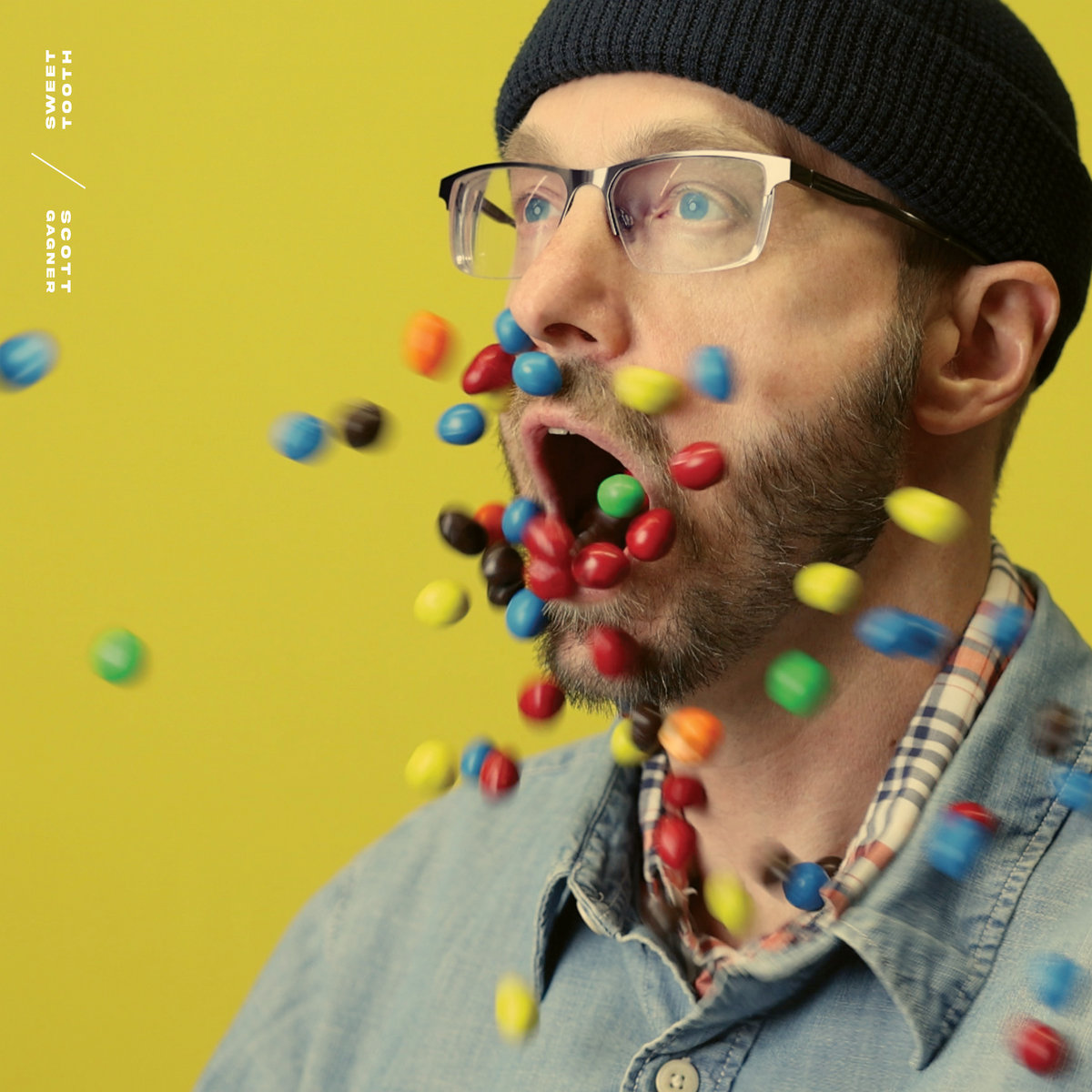
With Sweet Tooth, Minneapolis songwriter Scott Gagner has delivered one of this summer’s most infectious pop albums. Across ten concise songs, he combines sunshine pop, power pop and psychedelia into a collection overflowing with irresistible melodies, rich harmonies and colorful arrangements. But beneath its candy-coated surface lies a clear message: choosing joy can be a powerful response to an increasingly troubled world.

We caught up with Scott to talk about the philosophy behind Sweet Tooth, the artists who inspired the album, how it came together in the studio, and whether, after releasing so many records, making a new album can still surprise him.

On Sweet Tooth, pleasure almost feels like an act of resistance. Do you think making joyful pop music in times like these can be an act of defiance? 

Indeed. Any act of creation is an act of good. If that creation can spread a little joy, positivity, and hope — when all evidence points to the contrary — then you are doing a tiny part to redress the balance. People have been bombarded by more than enough misery these days — we certainly got our share in Minnesota this past January. It somehow felt like the most radical and generous thing I could do was make Sweet Tooth an uplifting, earworm-rich pop record. 

You’ve said it would have been easy to make an album full of sad ballads. Why did you consciously choose not to? Was there a specific moment or event that inspired you to make a record filled with color, energy and hope? 

Truth be told, I love writing sad ballads. Maybe it’s the Ron Sexsmith fan in me. But I wrote so many that they started piling up in one corner of the studio. After a few months, they started to smell funny. Meanwhile, in the opposite corner, a pile of bright, shiny, candy-coated pop songs started piling up. They smelled sweet and delicious. Then I wrote “Sugar Rush.” That song seemed to embody everything that the “pop pile” was going for. In fact, it declared itself so strongly, that I decided to change the title of the album from “Technicolor Eyes” (a phrase from leadoff track “Beyond the Blue”) to “Sweet Tooth.”

Listening to Sweet Tooth, I hear touches of sunshine pop, power pop and psychedelia. Were there specific artists or records that inspired you while writing and recording the album, or did those influences emerge naturally? 

My daughter is a fellow Beatles freak like me, so that’s what we listen to in the car on the way to her swim practices. After witnessing an absolutely incendiary show in Minneapolis, I’ve been on an extended Guided by Voices kick. It certainly helps that they keep putting out incredible records every year. Other recent favorites include Mike Viola, Super Furry Animals (plus solo Gruff Rhys), Father John Misty, and Aimee Mann. For the more synth-based songs (“Purple Heart” and “Where Do We Go From Here”), I was influenced by some Norwegian Disco that my brother turned me on to (Todd Terje, Lindstrom), pre-1982 Devo, and Tubeway Army. I love the juxtaposition of live human drums with robotic synth arpeggios.

Can you walk me through the making of Sweet Tooth? How did you choose the musicians, the studio and the producer, and how much of the album’s sound was already mapped out before you started recording?

All the songs began in my home studio, often originating with a title phrase, and then brought to life while strumming my favorite nylon-string guitar. By the end of the initial writing day, I’ll have a pretty fleshed-out demo, including drums, bass, guitars, piano, synths, and vocals. That exact demo remains the basic foundation for what you hear on the final album, and I simply replace any instruments that need improving along the way. That way I can retain plenty of the initial inspiration and excitement of the demo. In the case of this album, I wanted to use my incredible rhythm section of Tim Zhorne (drums) and Sam Graber (bass) playing together. I also wanted to try a studio in Minneapolis called The Library. The owner/engineer, Matt Patrick, has created an incredible space — all the walls are lined with books for acoustic dampening. We replaced all the drum and bass tracks in one marathon day. I then took an additional studio day to replace some guitars that needed improving. Then I continued to polish at my home studio, overdubbing any final touches, and adding additional players, including Aaron McCabe on trumpet and Rachel Hunter on backing vocals. 


You’ve released quite a few records over the years. Does putting out a new album still bring surprises, either in the reviews or in the reactions from listeners? Were there any responses to Sweet Tooth that really stayed with you?

I’ve been pleased with the reactions thus far. The word “irresistable” has popped up in a few reviews, which is what I was going for. After all the bad news that has swirled around us in recent years, it seems like people were ready for something upbeat, positive, and hopeful. 

Paul Collins on 60 Minutes of Power Pop: From the Stage to the Screen

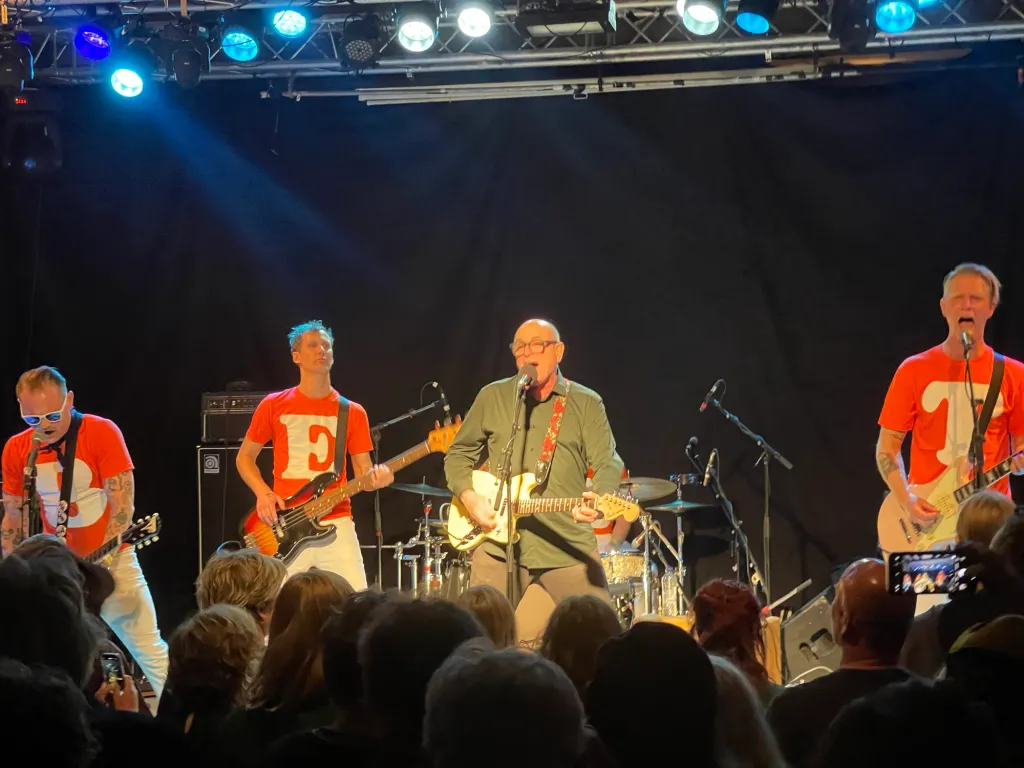
On Sunday, April 6, 2025, Paul Collins played at the new dBs here in Utrecht. He had promised “60 Minutes of Power Pop” beforehand, and that’s exactly what we got: in a blistering one-two-three-go rhythm, he blasted through nearly all the classics from the first two The Beat albums, along with a handful of gems from The Nerves. Collins was the undisputed King of Power Pop, urging his much younger backing band on with infectious energy, never letting the pace drop for a second.

Next to me, I saw my two sons, aged 21 and almost 23, watching it all with big smiles. During “Hanging on the Telephone,” a spontaneous family dance broke out, and for a moment, we found ourselves in Power Pop heaven.

What an amazing night!

That Utrecht show was just one stop on a unique tour in which Collins performed with different backing bands. The entire adventure has now been captured in a wonderful documentary, following the tour from rehearsals to performances around the world.

I spoke with Paul about how the film came together, what it was like working with so many different musicians, and why the project has already been attracting attention from film festivals. He also shared some exciting news about an upcoming release celebrating the 50th anniversary of The Nerves.

How did the idea for the movie come about?

Paul Collins: I was in Mallorca after I did that show for Paco, and one morning I said to myself, “I really want to document this. I want to let everyone know that I did it.”

I thought it was a tremendous undertaking, and I really surprised myself with how well it turned out.

I’d collected clips that people had posted about the different shows, so I thought I would use those as the basis for putting everything together. One of the clips was done by the filmmaker Tom Fleming, and it was of a very high quality. So when I got in touch with him, I thought I’d ask, “Do you want to help me make this into a film?” His immediate answer was yes, and I’m so glad that he did, because I think it turned out great.

60 Minutes of Power Pop is such a great concept. Did the idea come together all at once, or did it evolve over time?

Paul Collins: Yes, it all came together at the same time.

I was thinking about how I could improve the shows, which is something you’re always doing. How can I make it better? How can I get people to come out?

And it just came to me in a flash. Why don’t I just do the best songs by The Beat and The Nerves? There are so many, and that would be non-stop power pop!

Just one great song after another.

So that was the inspiration for everything. Once I had that, everything else just snowballed.

In the film we see you performing with a number of different backing bands, and it all seems to come together effortlessly. I imagine organizing that must have been quite a challenge. How did you make it work?

Paul Collins: I surprised myself with how easily it fell into place, although I knew each time I was taking a tremendous gamble that it might not work out.

I vetted the bands as best I could. Toyozo I knew from Japan, and I knew he was serious about this music. I had total faith that he would come up with two guys of the same caliber, and they were amazing. We really could have done it after one rehearsal. After the first rehearsal, I said, “Wow, it’s done.” But we did the second one just to be on the safe side.

It was more or less the same thing with every band. The Manikins, again, I vetted them. I saw that they were touring, and they were from Switzerland. The Swiss are famous for being very meticulous. Once again, when I showed up, they had everything locked down, and it was really amazing. I gave myself a number of days in their hometown. They put me up in a very nice place, so I got to hang out there. We had a buffer in case there were any problems, but we really didn’t need it.

It just kind of went on like that. The guys in France, The Sutles, were the same way. I did two rehearsals with them, and we were really ready to rock. We were supposed to do more shows, but unfortunately two of them got canceled. One of the clubs closed—those kinds of screw-ups.

I loved playing with them. I was really hoping we could do more shows, and hopefully we will in the future.

The same thing happened with the guys in California. That was another case where a club owner sent me a video of them doing “Working Too Hard,” and I got in touch with them. They immediately said yes, and I went out there. Again, I had a buffer. I think I was there for almost ten days, just hanging out with them.

That was really a lot of fun. I stayed with Dustin and his family, got to know his wife and his kid, and we did it Long Beach style.

We had time to do a couple of rehearsals, but basically I didn’t do more than two rehearsals with any of these bands, including the guys in Mallorca. We’re old friends.

The film is currently being booked for several film festivals, and there already seems to be a lot of enthusiasm from festival programmers. Why do you think it has struck such a chord with them?

Paul Collins: Well, it’s been a real eye-opening experience submitting to festivals because of the way they go about things. You have to submit, and then you have to wait a long time before you find out whether you’re even in.

So far, we’ve been lucky. We’ve been accepted in Los Angeles, Berlin, Paris, and, most recently, Tokyo, and we’re hoping for more.

We’ve also submitted to Barcelona, the Woodstock Festival here in New York, and the Long Beach Festival, so hopefully we’ll get some more acceptances.

To date, the only showing we’ve had in a movie theater was in Los Angeles. A bunch of my friends went, Tom Fleming went, and Softjaw went too. It was great. They saw it on the big screen, and everybody loved it.

That’s the caveat, though, because getting accepted into a festival doesn’t always mean your film gets screened. They can only show a certain number of films.

So the second tier is finding out whether they’re actually going to show your film, and we’re still waiting to hear about that from some of these festivals.

At a certain point, we’ll just turn it over to our own platforms and let everybody see it.

We have a two-year license to do that, and we will.

Looking back at the past few years—the touring, the recording, and now the film—what keeps you inspired and gives you the energy to keep going full throttle?

Paul Collins: That’s the easy part. What keeps me going is that I love it.

This last show, The Best of The Nerves and The Beat, is also coupled with the fact that Third Man Records is releasing the 50th anniversary edition of The Nerves on October 8, which they’ll be announcing soon. It’s a double album with all those great songs.

We included some of the Breakaways songs along with the Nerves songs—everything from the vintage 1974 to 1978 period. We found the source tapes, and most of it is studio material, so the sound is incredible. It’s a great document of the work that Jack Lee, Peter Case, and I did.

So it’s a great impetus to go out there and perform this stuff.

The last show I did here in New York was my best show in New York in many, many years. We played TV Eye, it was sold out, and the audience was just fantastic. There were people like yourself with their kids, people on first dates, young kids, older kids—kids my age. We’re all kids.

So it’s a very nice situation now. The people who follow this kind of music, and the people who follow my music, are great. It’s just wonderful. Without sounding corny, it’s a loving crowd, and I really enjoy it. It gives me a tremendous amount of satisfaction to be able to do it, and I’m happy with the place I’m in now.

I’m able to do what I do, and I have no trouble surviving these days, so it’s all good.