
Vocalist and bass player Timmy Lee and beat-maker Susan Bauer Lee unite as the musical force Bark, bringing a fusion of sound rooted in DIY American indie culture. Currently residing in Water Valley, MS, their genre-defying music draws from garage rock, power pop, and other diverse influences like heartland vibes and the British sonic invasion. Their latest creation, the aptly named album “Loud,” presents ten tracks with catchy tunes, alluring harmonies, and melodies that feel both fresh and strangely familiar from the start—music that easily captures the heart.
Albums often involve collaboration with various musicians and producers. Could you shed light on how these collaborations contributed to shaping the album’s identity?
Tim: In the case of this record, this was the first time we worked with Matt Patton and Bronson Tew at Dial Back Sound. We’d met both of them when they showed up at gigs we played near them, and they’d told us about their studio. They’d made an album for The Great Dying called Bloody Noses and Roses that we’re both big fans of, so I think that’s what led us in their direction.
I’m always interested in seeing what kind of results you can get working with different people, so it just seemed natural to me. When we showed up at the studio, Matt asked if we had any ideas about how we wanted to go about making the record, and we just told him they were in charge. We were there to see what they brought to the table, so it was a lot of fun sitting back and letting someone else steer the ship.
Basically, we recorded the songs live in the studio then Matt and Bronson (and Schaefer Llana, who was an assistant engineer and sang some) came up with most of the overdub ideas. I think Float was the first song we tracked, and once we added the electric sitar, I knew this wasn’t going to sound like the other Bark records.
When I’ve been in the “producer’s chair” for Bark records, I tend to think of overdubs in terms of low tones and darker sounds since we’re essentially a bass guitar and drums band. Matt definitely took things in the direction of higher tones and brighter sounds. To me, that was the biggest difference and part of what makes the results so cool.
Defining a song’s completion can be elusive. How do you determine when a composition has reached its final, ready-to-record form?
Tim: In the past, we usually just banged out the songs in rehearsal and went with whatever arrangement felt natural in the moment, but starting with our last record, Terminal Everything, we spent more time playing the songs for a longer period of time and trying different approaches to the arrangements or lyrics. More often than not, our songs tend to get played live a good bit before we go into the studio, so that really helps you figure out if it’s ready or not.
Could you share the journey of bringing this record to life?
Tim: Our previous record, Terminal Everything, was a very personal album that was written and recorded in the weeks and months after Susan and I both lost a parent (within 10 days of each other) and we lost several good friends, fellow artists, even pets. And in the aftermath of that record, I told somebody that I didn’t know if I’d ever have any more songs in me. I honestly felt completely tapped out.
But, in time, we both started coming up with a few songs here and there. Soon, we found ourselves getting excited about this batch of songs and having fun playing them. Then, the pandemic happened, and all our gigs got canceled.
Since we’re married and have a rehearsal space in our home, we were able to keep writing and playing new songs. Before we knew it, we had enough for an album.
The people we normally would have recorded with weren’t in a position to let people into their home/studio, so we ended up reaching out to Matt about Dial Back and figured out a way for us to come in and treat it like a pod situation.
Was there a particular moment or experience that struck you, signaling that you were onto something special with this project?
Tim: For me, it’s actually been the time since the record has been released and seeing some pretty strong responses from people who’ve heard it. Since we kinda sat on it for a while before releasing it, I think I’d kinda started taking the record for granted. But seeing how folks are reacting to it has been pretty gratifying.
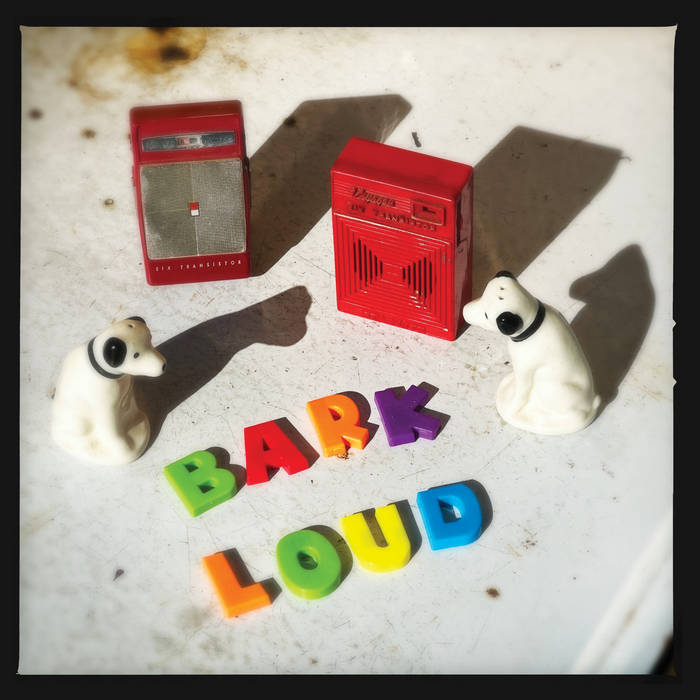
In the digital age, visual elements are intertwined with music. How did you approach the album’s visual aesthetics, such as album art and accompanying visuals? How do they complement the sonic experience you’ve crafted?
Susan: I’ve been in charge of the graphics since the mid-‘90s, starting with a few Tim Lee solo records, through the Tim Lee 3, and to Bark. Honestly, until Terminal Everything (2019), the art had usually been about a cool image and rarely had any connection in an obvious or symbolic way to the songs. The cover for Terminal Everything was 100% connected to the songs in obvious and symbolic ways. The record label, Striped Light, was also a letterpress shop, and we wanted to hand-print the covers. I learned how to cut linoleum and was able to translate a very specific image in my head to paper, to linoleum, to press. With LOUD, I think the cover became more about the two of us, rather than having a connection to the songs… two words, two dogs (salt & pepper shakers), two transistor radios, and two buzzards. Between 2019 and 2022, we had dealt with a pandemic together, recording in an unfamiliar space together, and a giant move back home together.

