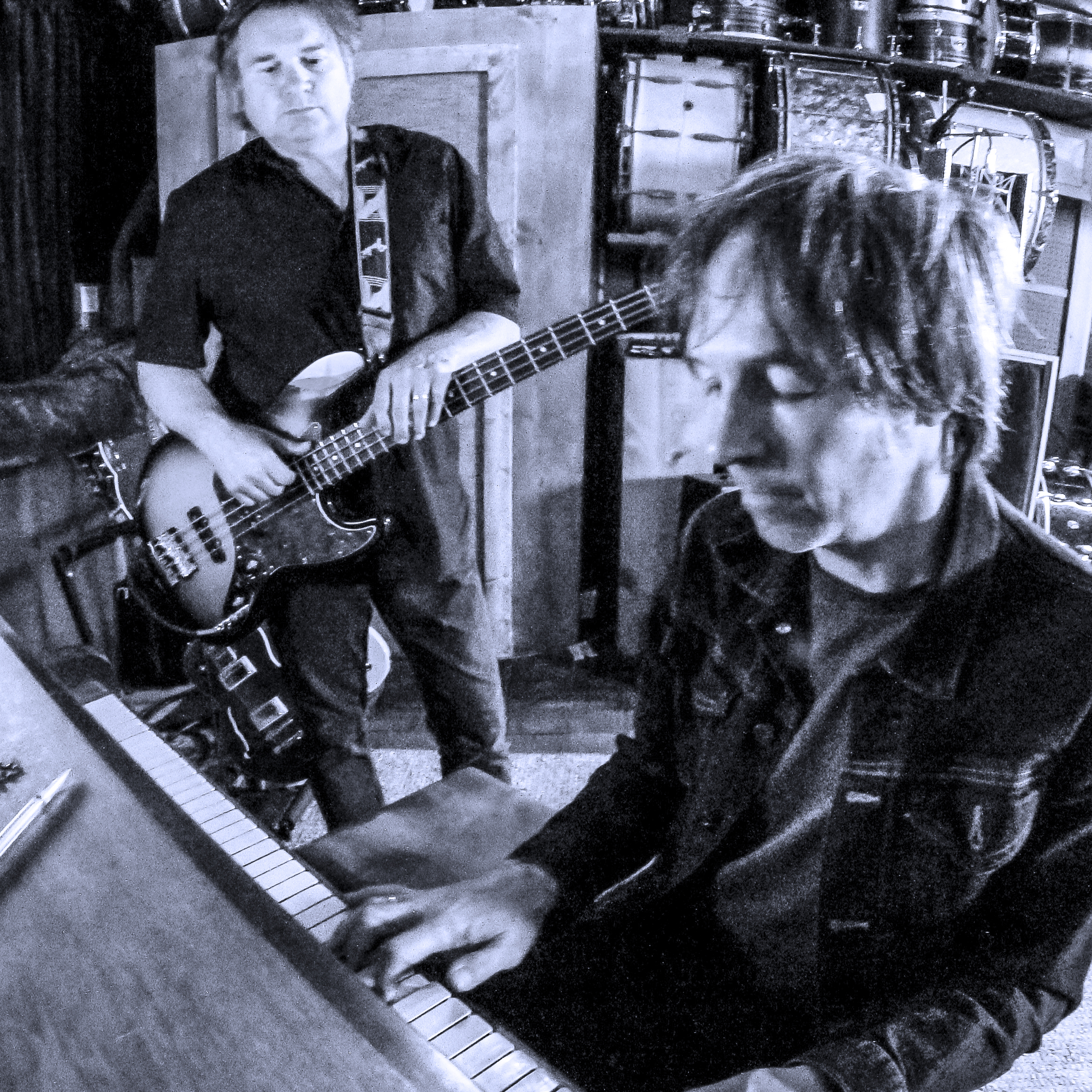
The Small Square is releasing “Ours & Others,” a follow-up to their 2015 self-titled album, on October 31 through Farm to Label Records. The duo, Paul Chastain and John Louis Richardson, recorded the collection at Richardson’s Drum Farm Studio, returning to the same space where they created their debut album.
Paul Chastain, co-founder of Velvet Crush, discusses the unconventional creation of this delightful Power Pop album.
Could you share the journey of bringing this record to life? How did all the pieces come together to create the final product?
“Ours & Others” was put together over several months, partially due to John being in the US and me being in Japan. This has become our usual modus operandi.
When we get together at John’s studio once or twice a year, we select songs to work on, usually from unfinished or completed songs in demo form. Some songs start as just bits one of us has been working on or spontaneous ideas. It happens in all possible ways.
On this record, we did pre-plan, starting a few songs with other musicians in the studio with us. Others were started with just the two of us. The things we start at the studio are almost always finished later on, probably because of how I am and because of time constraints. I like to sit with stuff for a bit and figure out what we have to work with.
The record really didn’t take shape until much later, when the initial recording of most of the songs had happened. Of course, we set out with the idea of making a group of songs that would become an album, but we didn’t really know what it would be. I think I had to slowly find it as I worked on completing the recordings.
The decision to seek opinions on your new songs is intriguing. When did you realize that external perspectives could contribute to your creative process?
It has become almost a hallmark of our process to invite outside contributors to aid and abet us. We find it can give the recordings a different energy or some cool intangible element. These tracks then seem varied (in a good way) from the tracks, with only the two of us performing. Maybe it gives the album a little more width or depth.
This project pushed the envelope of that even further when, at one session, we recorded with and even left some of the writing to an ensemble of great players with whom John had been working at his studio.
Involving the ideas and input of others can crack open some new doors or pull things in directions I may not have thought of going with a given song. An interesting and fun experiment for me, a “band” guy who is used to being part of a specific group of collaborators. It certainly drags one from one’s rut.
As an artist, the act of baring your emotions to the world is profound. Does this vulnerability come naturally to you, or is it a constant journey of finding comfort?
Baring emotions is not very natural for us, I think. In fact, I can’t really think of that when writing. That would likely halt the process. For me to get it down on paper or commit it to recorded media, I have to be immersed in doing it without the thought of what I am doing.
Among the gigs you’ve performed, which one holds an indelible place in your memory and why does it stand out?
With my old band, Velvet Crush, we once performed with Roger McGuinn of The Byrds as his backing band. The Byrds were an extremely influential and inspirational band to me and my band. Singing and playing a set with Mr. McGuinn is a fairly surreal memory for me.
Striking a balance between experimental artistry and commercial appeal is a challenge. How do you navigate this dynamic within your music?
For my part, little or no thought is given to the “commercial appeal” side of things. I try to create the art from the heart, I guess. I really don’t think pandering usually yields the best work, for me, at least.

In the digital age, visual elements are intertwined with music. How did you approach the album’s visual aesthetics, such as album art and accompanying visuals? How do they complement the sonic experience you’ve crafted?
On this project, I really felt that the visuals were an important, integral part. Once much of the music had been at least partially completed, I had a concept for album artwork which became intertwined with the music as I developed it. It took some time, but I put together what became the Digipak art along with a digital booklet, based on laying images on the floor and photographing them. I liked the homey vibe of that and felt that it meshed with the vibe of the music. Once I started putting these visual ideas together, they became part of the project and seemed to me to be inseparable from the music. I tried to also incorporate the same qualities into the video for the song “Twenty-Third”.
I am not sure, though, how the images complement the music, but I feel that they do. And it’s really all about the feel, isn’t it?

