Sometimes the best records are born from the worst circumstances. After a frustrating battle to restore his previous album to streaming platforms following a false accusation of artificial streaming, David Woodard channeled that anger, urgency, and renewed sense of purpose into Skeletons. The result is his rawest and most immediate collection yet—a record where power pop hooks meet punk energy, and where vulnerability is worn as proudly as defiance.
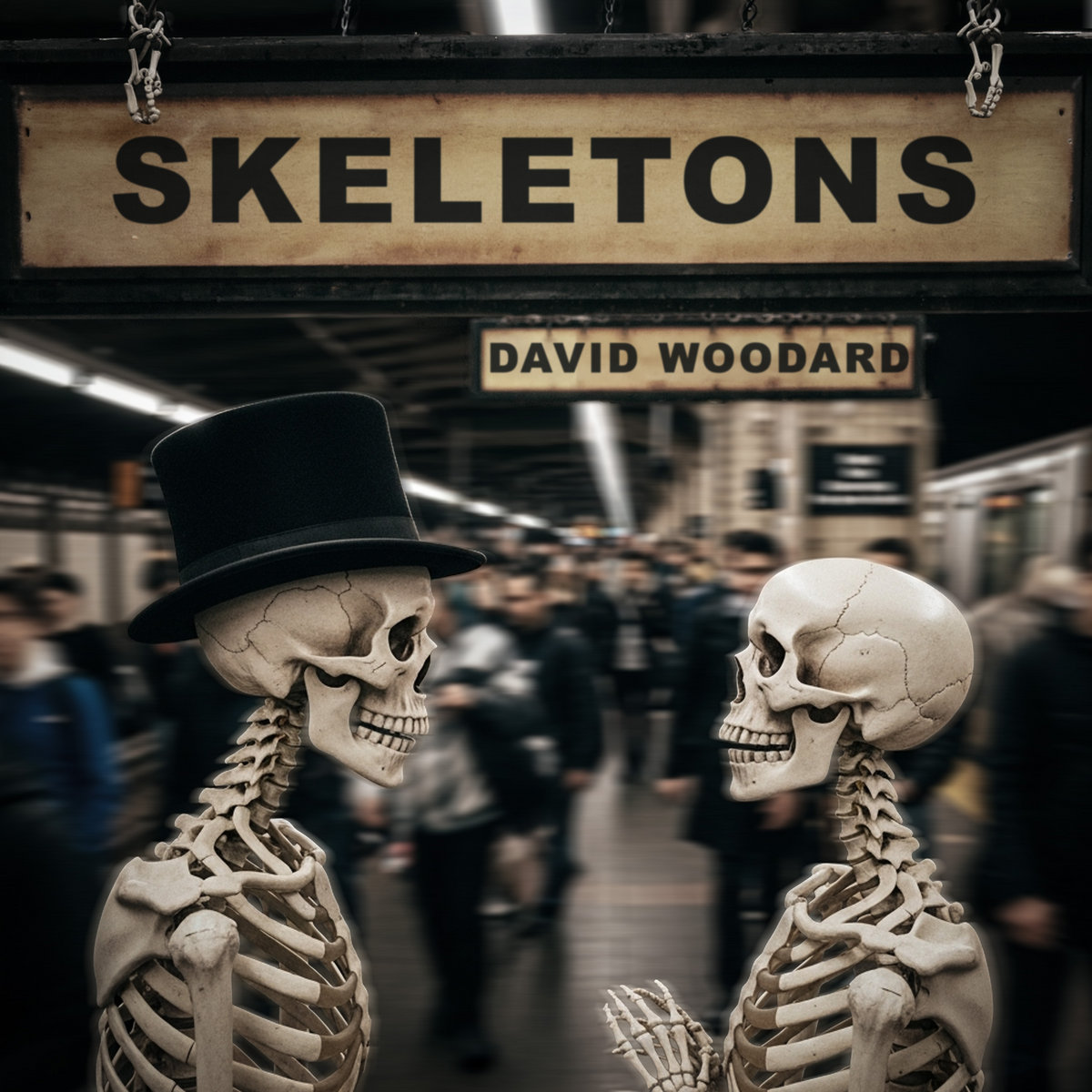
Skeletons has quite an unusual backstory. What happened, and how did you arrive at a sound that leans just a little more toward punk than power pop?
Two months after releasing Everything Belongs, I got an email from CDBaby telling me Apple Music had removed the album for irregular streaming activity. They listed bots, fake accounts, and playlist manipulation as possible infractions. None of which I had done.
CDBaby told me to contact Apple Music directly. Apple Music told me they only deal with distributors. I went back to CDBaby. They ghosted me. For weeks. I tried social media. I filed a BBB complaint. I watched my weekly streams drop to zero. Eventually CDBaby replied, reiterated why the album had been removed, and closed the case.
So I reopened it. Filed another BBB complaint. Kept pushing. A few days before Christmas they agreed to resubmit. The next morning it was back.
I tell this story because the system is designed to make you give up. If this happens to you, don’t. Keep pushing.
As for the sound of Skeletons, that story starts a couple of years earlier. I randomly picked a music documentary one night and landed on Filmage: The Story of Descendents/All. I had never heard of the Descendents. I watched it eight times. Listened to their music constantly. Fell down the rabbit hole of everyone they influenced. Even travelled to Chicago to see them.
I grew up in the suburbs in the late seventies and eighties. Punk was happening but I was too young and too removed to get it. So, I feel like I am living my musical life backwards. Discovering at 57 what I should have found at 17. Skeletons is what that sounds like.
On the title track, you really go for it vocally, making the performance feel incredibly powerful yet also very vulnerable. Was that contrast intentional, or did that tension simply emerge naturally as you were recording it?
I don’t consider myself a vocalist. I spent twenty-five years playing with people who were real vocalists and learned what I could from watching them work.
When I stepped out on my own, I had to make peace with having a limited set of tools. I have some range (I can squeeze out a high A# if I must), and I like what my voice does when I am pushing hard. There is something that comes out under pressure that I find more interesting than anything I produce when I am comfortable.
For the studio-philes, I also switched from a condenser mic to a dynamic mic for vocals. Condenser mics reward control and precision. Dynamic mics reward commitment. For a rawer record it made sense.
The vocal on Thus Far is probably the best example. The inspiration was a YouTube video of a street band in the UK performing U2’s With or Without You. The singer is just singing his guts out on a street corner. Everything he has. Perfectly imperfect. I wanted to chase that feeling.
Whether you call it power pop or punk pop, the music lives and breathes through irresistible hooks and catchy choruses. It must be a wonderful feeling to write a sad song where all those elements come together so perfectly. What does that feel like as a songwriter?
You have to have songs people want to listen to. That’s it. Nothing saves a record full of songs no one wants to hear.
I’m grateful I can do what I do. Modern technology is remarkable. A guy in a room in Nashville makes a record and someone in Sweden finds it and plays it on their radio show. That still gets me.
And when someone tells you a song meant something to them, that’s the whole reason you pick up the guitar in the first place. Every musician reading this knows exactly what I mean.
Given the way this record came together, I imagine there was an even stronger desire to prove yourself and make sure people heard it. Did you feel that, or was it still most important simply to make the record you truly believed in?
The initial impulse was about flipping the script. I had been accused and effectively convicted of something I didn’t do. That is a peculiar kind of shame and embarrassment. The quickest antidote I could think of was to get something new into the world as fast as possible.
The irony is that urgency probably helped the record more than any deliberate artistic intention could have.
Everything Belongs was me trying to be edgier, and I like what I did. But looking back I was reaching for some low hanging fruit of politics to feed a sense of discontentedness.
With Skeletons the urgency and discontentedness was personal. I wasn’t trying to sound productively maladapted. I just was.
David Woodard and the band sound absolutely huge on Skeletons. How did you achieve the sound you had in mind?
Less was more. That’s the honest answer.
Fewer takes. Less processing. More economy in the sonic space. The blueprint is basically two guitars, bass, and drums. The vocal harmonies are sparser with more duets than trios and less stacking. Everything that remains is working harder.
A lot of this was unintentional. Recording fast to flip the script on a bad situation produces its own kind of serendipity. Some of the things I like most about this record I didn’t plan.

