Eclectic Excellence: The Unmistakable Brilliance of sparkle*jets u.k.’s Box of Letters

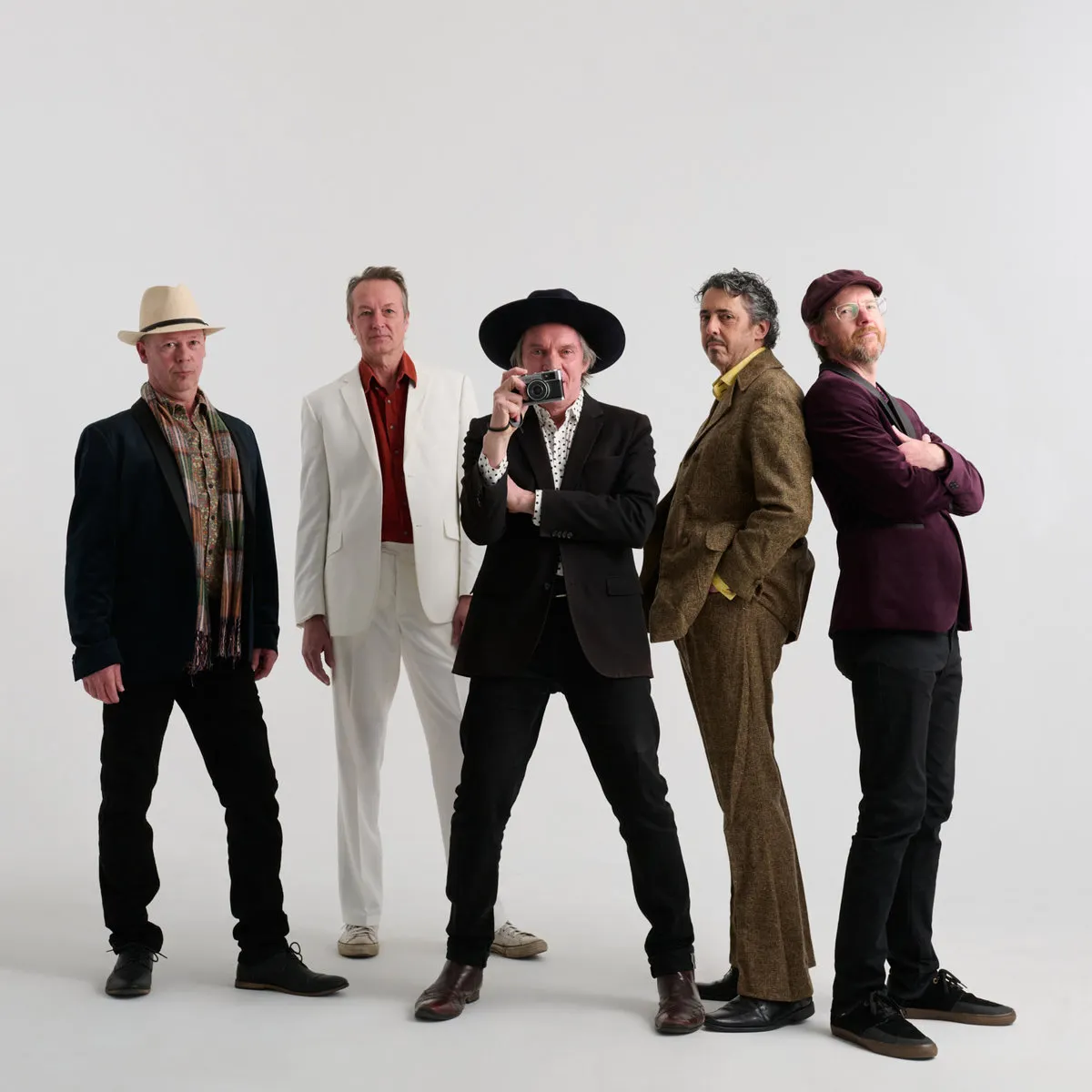
There are times when there’s no room for doubt: Box of Letters is undeniably a great album. sparkle*jets u.k. receives praise not only for the quality of their songs but also for the variety of styles they explore. Michael Simmons explains that the band’s eclectic sound wasn’t a deliberate attempt to showcase pop in various forms, but rather a result of their impatience and desire to work quickly. And, once again, that approach succeeds—big time!


You can find ‘Princess Needy’ showcased on the Best Power Pop of 2024 Spotify Playlist.


Congratulations on the new album. Not being consistent in style has resulted in a wonderfully exciting and powerful album. When did you realize that during the making? Was there a preconceived plan, or did the sound emerge during the recording? Or is the comment about using different styles completely untrue?

Since we have always had the ability to make our recordings on our own, we never really work in the traditional way people expect. We don’t arrive at a studio with a bunch of demos to get ‘made’ into anything; it’s just write a song, record it. For me, often on the same day. I often compose directly into my recording software, writing lyrics in the note field. So, there’s never really an opportunity for ’sameness’ even if we wanted it, stylistically or sonically. I just basically think, ‘What would I like here?’ and try to make it do that thing or sound that way.

I’m also impatient, so if I can’t find just the right sound or don’t think of it in that moment, it doesn’t happen. I often realize, ‘This would have been great with strings,’ or ‘This could have had more production.’ I’d like things to have even more crazy textures and styles, but as I said, I’m too impatient. Songs are often done and waiting for the other band members to add their special signatures.

So, to answer your question, no, there’s never a plan! That’s because we don’t really have a ‘style.’ Sometimes I might steer toward one, but it’s on a song-by-song basis. I wish I had the foresight and patience to really plan something. I really want to do that, but I’m a slave to my impetuousness in that regard. We definitely have a ‘sound,’ though, and that comes from our personalities and specific physicality.

A five-star review in Shindig Magazine. That’s still exciting, I think?

Oh my goodness, yes! It’s a weird time and place we are in for so many reasons. We are achieving things right now that, had we done so 30 or 40 years ago, we might really have made a splash. Of course, we may have not had that chance. Every part of the music business machine is either gone or severely altered right now. And nobody really knows how to game the system in any lasting way. But we are so thankful to the folks at Shindig and people like you who are trying to shine a little light our way.

Anything to break out of our own online echo chamber is a massive gain. It’s been an exciting few weeks thus far!

I think one of your superpowers is that you and Susan sound so young when you sing. Do you hear that often?

I’ve always thought that. If you think we sound young now, listen to the first album! It’s comical to me now, and I was about 25-27 when I did those vocals. I’m much better at it now, and I sing or play only when I need to, which isn’t very often. I haven’t worn out my instrument.

I’m also a classroom teacher, so I’ve had to develop quite a bit of power in my voice over the years. I can silence an entire room with very little effort. Susan, on the other hand, is just gifted with a very special instrument. She grew up loving the Jackson Five, so she can sing like a very soulful pre-pubescent boy, or switch to Ethel Merman, Musical Theatre, or Ann Wilson in an instant.

We both have a pretty broad range, so we usually have no problem doing harmonies and we blend well. On top of that, and this is important, we also have the added bonus of a third voice via the lovely and talented Tisha Boonyawatana. If there is ever a need for a third vocal part, I make sure she does it! She is an indispensable part of our live blend, obviously, and for this record, I made sure that she sang on every single track. Jamie has really been working on his vocal chops too for a high-profile cover band he’s in that demands complex harmonies. So, he’s a secret weapon going forward.

We have a rehearsal tonight to see if we can pull off ‘I Can’t Wait for Summer’ on stage, something we’ve never attempted. Wish us luck!

What song has undergone the biggest transformation from first draft to final product? And how did that come about?

Hmm… I don’t do a lot of ‘drafts’ of my stuff. I write it, I make it, it’s done… but for the other writers, it definitely transpires that way. Songs like ‘Goodbye X3,’ ‘Box of Letters,’ and ‘One Two Tango’ started with Jamie, who comes up with music first. Usually riffs and complicated jazz chords I don’t understand or know how to play. He will write some of the lyrics or have Susan write them. Then he brings it to me, and I try to break it down into something I can do. That usually knocks some of the edges off and adds new ones. He might come to me with a song that sounds like a beautiful horse riding through a meadow in slow motion. I’ll turn that into Godzilla smashing a city. Metaphorically. Susan usually has bits of crazy lyrics, a bit haphazard, and a couple of chords. I filter that through the Beatles songwriting framework, get the lyrics nice and tidy with matching meter, add a few chords or a bridge, and she provides the Godzilla part. To answer your question, if I can, ‘One Two Tango’ and ‘Box of Letters’ changed a lot. They were just riffs, and at that time, we were woodshedding songs as an entire band, quite unusual for us. They just kinda morphed from there. ‘Tango’ had some lyrics that were very nasty and biting, and that song sat unfinished for a very, very long time. When I dusted it off, I added the ‘I’m counting on you’ line because we needed something there. It has nothing at all to do with the rest of the song, lyrically… but because it’s a positive message, it contrasts with the nastiness in the verses. That’s also one of the songs where the last line of the song negates the message of everything before it, so it goes (metaphorically) from a ‘go sleep on the couch’ fight to an offer of make-up sex! You don’t get that in too many songs.

Do you still dream of touring the world to let everyone hear things they may not have noticed before?

Well, yeah. Realistically, even if that were actually on offer, I doubt it could happen. We’ve got mortgages, families, and real jobs. But yeah, any songwriter wants their songs to get heard. I like performing in the moment, but the preparation is torture for me. I hate it. Then the show happens, and everything works out. Then you start thinking, yeah, I could do that again. What if this happened? Oh, that would be good. Then the opportunity comes, and you say yeah, let’s do it. Then you realize… oh no, I have to do this! And it’s hell and anxiety up until the show. It’s a cycle. I’d LOVE to have more frequent opportunities or to get back on the road like the old days… getting into the rhythm of it where it’s second nature and you are sounding great and the work is paying off. Unfortunately, our shows are so infrequent that over the years, every show feels like starting from scratch, and that’s tough.

I’d LOVE to get out and play a month of shows. Don’t know if my body could take it, but that’s really the only way to fly. And I’d love to play the songs we haven’t done before. I have a great many of them that have never had the chance to spread their wings. It’s the hope that keeps you going, and as you know, it’s also the hope that kills you. I’m fine either way.

But really, making records is by far why I learned to play at all. It’s what I’m in it for. And as our streaming numbers go up, it’s a realization of that dream. I wish I was in the room with everyone as they listen, that would be beautiful. Thank you for listening; it means everything, really.

Unleashing Power Pop: Florida’s ‘Metal Detector’ Strikes the Perfect Chord

Billy Summer introduced himself to me by saying, “I think I’m Power Pop all the way through, but the metal and the soft rock keep me hostage.” On “Metal Detector,” the debut album of his band Florida, he proves himself right. Although the influence of metal is more evident in the album’s title than in its sound, I would categorize both the music and the artwork as “uber cool.” And as we all know, Power Pop is the coolest.


You can find ‘Away From The City’ showcased on the Best Power Pop of 2024 Spotify Playlist.


Could you share the journey of bringing this record to life? How did all the pieces come together to create the final product?

Musically, I’ve spent a lot of the past years playing in a 10-piece soul band on the weekends and the rest of the time writing gooey stuff to shop to TV and films. Both of those things bring me joy and satisfaction, but when the songs for this album started to come into my head, I knew I had to write them the way I was hearing them, which was two ripping guitars played spontaneously with some intersecting melody. The songs came out quickly and were recorded over two weekends. I ended up getting sick for a week after that, which allowed me some time to work on my lyrics, sequence the album, and play some solos. I purchased a 1994 green Flying V, which did most of the heavy lifting on this album. My experience playing with the big band, my love of soft rock and heavy metal, and my sense of the place I grew up in totally informed what came out on Metal Detector.

Was there a particular moment or experience that struck you, signaling that you were onto something special with this project?

Sometimes while writing, I’ll hit on songs, or pieces of songs, that just urge me to write them, without judgment, without worrying about what others might think later. A lot of this record was like that. It felt like there was a theme coming through. It was an easy route to vent some long-kept frustrations through music. And it was incredibly fun, easy, and liquid. It just rolled out.

The decision to seek opinions on your new songs is intriguing. When did you realize that external perspectives could contribute to your creative process?

It’s easy to live in a bubble if you don’t solicit feedback. One of my most reliable muses has been toiling away in obscurity far away from any epicenter of cool music or culture. There really is no one here to judge you, and if they do, you don’t care because their opinions don’t matter. I don’t know if I’ve ever relied on outside perspectives to guide what I do, as I don’t expect others to like it the way I do. But to not share it seems counterintuitive to creating it. Even though I made it for me, I still have hope that it resonates in some way with a listener. I used to go to breakfast with my friend J and talk about making art for art’s sake, but then why put it out at all?

Success can take on different meanings as time goes on. When envisioning success for this new record, what does that picture look like now?

My expectations with public response are pretty low, actually. As much as I believe that the spirits will allow me to make more music, I equally believe that I can’t predict that my music will find “success” in any conventional way. Mainly, the success I find is a clear head to write again. Songs seem to torment me until I give them a life. Then they leave me alone and I hardly think of them again. It’s weird.

As an artist, the act of baring your emotions to the world is profound. Does this vulnerability come naturally to you, or is it a constant journey of finding comfort?

It’s totally uncomfortable. I want to be that person who really loves their work so much and goes around reciting their own poetry to anyone that will listen. I definitely know those people. I’m not one. I do find that playing guitar is something I can comfortably share with others in a live setting. I feel very at ease with that. With lyrics, I know the higher concept that I want to convey but get easily muddled by an unquiet mind. I write more music than I have words for, and so many of the same themes recur. And it’s not always from the heart. Sometimes it’s just an act. As life can be.

Defining a song’s completion can be elusive. How do you determine when a composition has reached its final, ready-to-record form?

I’m an incompletist. There are two parts of a song consistently orbiting around my brain. And I’m guilty of calling it done when I should probably just be patient. Songs are journeys, and they end where they end. Some are short trips, some are fart rips. And sometimes they turn into better songs down the line. I love to record and we usually set it up and track stuff, listen back, and grow it from there.

Can you recall the last instance when you felt the immediate certainty of having penned a hit song?

I wrote a power ballad on this album that I thought would have been a hit in 1987. That felt great because I love the sound of 1987. Turns out it doesn’t totally translate in 2024, but when I was recording it, I could feel that it captured a higher concept than just the basic rock song that it was. It’s basic and simple, so it spoke right to me. I write and record a lot of different sounding songs, and they end up in one bucket or another. A good song can have more than one life, for sure.

With the resurgence of cassettes, imagine curating your inaugural mixtape. Which five songs would be must-adds and why?

If you condensed the current record into a ripping mixtape, you could do worse than this here.

Luxury Mane put out a cassette called Isn’t This Great, and I did a solo album on cassette called This Is Number One or something like that. I LOVE cassettes and miss my car with the cassette player so much. I’m into the idea if anyone out there wants to take this further. Here’s my pick for a ripper EP:

  1. Decap
  2. Lens Makes Ruin
  3. Drifted
  4. Sure Enough
  5. Away from the City

Performing music before an audience holds a unique allure. What aspects of this experience contribute to the excitement and enjoyment for you?

When there are people who can share the energy with you, it’s just different. It’s spontaneous and interactive, and the excitement comes from living in the moment, and the enjoyment is all about sharing that moment with a bunch of people.

While you can’t dictate how people interpret your music, are there specific elements you wish to highlight that set your songs apart?

It’s the sounds I heard growing up in Florida. It’s heavy metal and soft rock influenced. I listen to a lot of ambient and synth music, but I play a lot of soul and older RnB with a band I’ve been in for a million years. I get a lot of ideas while I’m playing with them. The band has 10 players, so there’s a lot to listen to besides myself. I love the Budos Band and the Menahan Street Band. I don’t really write that way, so I’m not sure where I’m going with all that. But I wish I wrote like Phil Lynott, Elvis Costello, and Eddie Van Halen. I just write and write. Melodies will just invade my space. I’m not sure if because they invaded my headspace that they come out different than someone else’s. But maybe.

In a hypothetical scenario where you could tour with two other bands, who would be your ideal companions and what synergies do you envision?

White Reaper because they have the most ripping dual guitars, and Mötley Crüe because we each want our own bus.

How would you describe the evolution of your sound in this new album compared to your previous works? Were there intentional shifts in style or themes?

Definitely. This group of songs sits pretty far away from my previous work with Luxury Mane and even my solo stuff. Kyle, the drummer, and I had a band called The Semis some years ago that was similar to this. It almost feels like a continuation of that thread. And the song Decap off this album was a rework of a Semis song of the same name. I’ve always been a fan of harmony guitar solos, but this new record really brings that sound to the forefront without being hokey or ironic. Playing it live with Matt has been insanely rewarding. That guy is a monster on the guitar and just the coolest person, and he makes for a good sparring partner.

In the digital age, visual elements are intertwined with music. How did you approach the album’s visual aesthetics, such as album art and accompanying visuals? How do they complement the sonic experience you’ve crafted?

I started doing digital collage a couple of years ago and had every intention of making record covers out of those. But we have a friend, Mikey Thompson, who approached us about taking some shots for the band. They turned out really great in that they capture four poseurs in a muscle car that looks like they love rock ‘n’ roll, which is really what this album sounds like. He is a wizard with the camera, and he got some really nice shots using the natural light of evening in the warehouse district of St. Pete. It’s a vibe, so we ended up using that as the album cover.

The Hollywood Stars Shine Again with ‘Starstruck’: A Comeback Story

The Hollywood Stars are no longer just a legendary name from the past. After many years of silence, they released “Starstruck” last month, which was promptly voted the best Power Pop album of 2024 so far by Shindig. This accolade is well-deserved, as the eleven new songs are vibrant and high-quality, reflecting the class of a distinguished band.

George Keller, who joined as the lead guitarist in the spring of 2023, shared with the Sweet Sweet Music blog how “Starstruck” came to be.


You can find ‘Can’t Do It Right’ showcased on the Best Power Pop of 2024 Spotify Playlist.


Could you share the journey of bringing this record to life? How did all the pieces come together to create the final product?

It involved a bit of magic and a lot of hard work. I joined the band in early 2023, and at that point, about half of the material for our new ‘Starstruck’ album was in place. Everybody in the band gets a songwriting credit on ‘Starstruck.’ I worked on a track called “Walking With an Angel.” We recorded the album in two marathon sessions, the first in March 2023 and the second in November. We recorded at Kitten Robot Studios in Los Angeles, and the album was produced by the band, our manager Loren Molinare, and longtime L.A. producer/musician Paul Roessler. We’re all very pleased with how it turned out and the reception from press and radio has been great.

Was there a particular moment or experience that struck you, signaling that you were onto something special with this project?

Yes, during the recording of “Shortage of Love.” The track was recorded live and we didn’t have an ending. We played what we thought might be the ending, and then Loren, who also played some guitar on the album, kept playing and we all followed his lead. The song ended up becoming this anthem-like extravaganza that none of us had envisioned.

The decision to seek opinions on your new songs is intriguing. When did you realize that external perspectives could contribute to your creative process?

It’s always good to check the outside “temperature.” 🙂

Success can take on different meanings as time goes on. When envisioning success for this new record, what does that picture look like now?

Our goal is to get as many features and reviews, and on as many radio playlists, as possible. So far, we’re accomplishing that goal. Of course, we would also like to play more shows.

Within this collection, do you feel that the best song you’ve ever written finds its home? If not, what distinguishes this record’s essence from your prior work?

Every new endeavor has its highs, and my song “Walking With an Angel” comes as close to perfection as possible, with a great vocal by Scott Phares and wonderful interplay between the drums and guitar as the song fades.

As an artist, the act of baring your emotions to the world is profound. Does this vulnerability come naturally to you, or is it a constant journey of finding comfort?

Naturally, and as a lead guitarist, I can be a bit of a showoff.

Among the gigs you’ve performed, which one holds an indelible place in your memory and why does it stand out?

It’s in the thousands and spans many years. In June, we played an album release party at The Viper Room in Hollywood. The place was packed and there were many folks that we have known for decades in the audience. That show was very special and stands out to me right now.

Defining a song’s completion can be elusive. How do you determine when a composition has reached its final, ready-to-record form?

You have to stop before the energy dissipates. Three takes should be the maximum in my opinion. If you can’t get it in three takes, then it’s time to move on.

Striking a balance between experimental artistry and commercial appeal is a challenge. How do you navigate this dynamic within your music?

There is a formula but you have to be careful and not become cliched. It’s difficult to define so you have to “trust your feelings.”

Lyrics often carry profound meaning. Are there particular lines you hope listeners will always remember from your songs? If so, what’s the significance?

This question makes me think of our track “Shortage of Love,” which is both a title and a message to listeners.

Performing music before an audience holds a unique allure. What aspects of this experience contribute to the excitement and enjoyment for you?

Seeing the smiles on the audience’s faces and their bodies moving. It’s an immediate sign that the band is doing something right.

Among the compliments you’ve received, is there one that remains etched in your memory? If so, what made it particularly unforgettable?

Yes, a very well-known poet friend of mine said my performance was so captivating, he forgot he knew me.

Studio moments often hold a touch of magic. Could you recount an instance that stands out as the most enchanting during your creative process?

For ‘Starstruck,’ it was playing the lead guitar break to “Revenge” through a Marshall stack that was turned all the way up to the proverbial 11!

Where do you see yourself situated within the broader landscape of the music industry? How do you perceive your unique role and contribution?

The Hollywood Stars create energetic, melodic, and memorable tracks. The band name has been around since the early 1970s so a lot of people have fond memories of this group’s music over the years. In the band’s early days, they were hit by a succession of tough breaks that derailed their career momentum. At this point, decades later, I think that the attention, and having the chance to still be making great rock ‘n’ roll is a wonderful tonic for all of us, but most especially our three members from the 1970s: vocalist Scott Phares, drummer Terry Rae, and bassist Michael Rummans.

In the digital age, visual elements are intertwined with music. How did you approach the album’s visual aesthetics, such as album art and accompanying visuals? How do they complement the sonic experience you’ve crafted?

The cover photo was a happy accident and with a band called “The Hollywood Stars,” the name is synonymous with the film industry. Everything fits together nicely.

Rediscovering Mark Bacino: A Journey Through ‘Top of the World’

Rolling Stone once described the music of New York-based singer/songwriter Mark Bacino as “steeped in the sparkly, head-bobbing melodicism of classic mid-’60s pop.” He stays true to this style on ‘Top of the World,’ offering ten excellent songs that occasionally evoke a pleasant melancholy. Much has changed since the release of ‘Pop Job…the Long Player!,’ the Marc Bacino album I play most often. It’s time to catch up.


You can find ‘Kaylee Hughes’ showcased on the Best Power Pop of 2024 Spotify Playlist.


Could you share the journey of bringing this record to life? How did all the pieces come together to create the final product?

The journey of bringing “Top of the World” to life was a long one. As with all my records before, a process filled with a combination of joy, hard work and heartache. Although this one took an especially long time to make and was crafted in fits and starts. Family and work responsibilities played a part in slowing the process, as did, of course, the Covid crisis. I’m always a bit of a perfectionist when it comes to making these things as well, so that never helps move things along. Also, the nature of how the album was recorded probably added to the lengthiness of the process. This go-around I worked with two different co-producers (Ron Zabrocki & Jay Sherman-Godfrey) in their studios as well as my own. We also did a lot of remote collaborations with many talented musicians, far and wide, via a lot of files floating around the interwebs. It all added up to being a bit of a complex production process, but in the end we got it done and ultimately all that stuff melts away when the record makes its way into the world, takes on its own life and folks begin to enjoy it. And really that’s the way it should be.

Within this collection, do you feel that the best song you’ve ever written finds its home? If not, what distinguishes this record’s essence from your prior work?

I always like to think the latest tunes I’ve written are my best but it’s really impossible for me to judge. And, ultimately, I’m not sure it’s my place to do so anyway. It’s always been kind of the same with every album I’ve made; you craft a record, a collection of songs, release it and those songs are really no longer yours, they belong to everyone that listens. Each person will have their own personal favorites and not-so favorites and each song will mean something slightly different to every listener. Some folks have kindly said that “Top of the World” holds my best songwriting to date. I’m flattered, but again, there’s really no way for me to judge, I’m too close to it all. I suppose if I had to choose one song that I’m most proud of from this new collection, I’d probably pick the tune “Shaky Hand.” Weird title and probably a weird little song, but I feel like I struck a good balance, lyrically speaking, on that one between the hyper-personal and the universal.

Defining a song’s completion can be elusive. How do you determine when a composition has reached its final, ready-to-record form?

Truth be told, I’m probably not a very laid back person, but in terms of songwriting I would describe myself as such. I really don’t sweat or force the process. I try to let the songs form as naturally as possible and come when they want to come. That may mean that a song idea might sit around, geminating, for years or it may mean that a tune may materialize in half an hour. It’s hard to say exactly when a composition is complete but somehow I just know and I tend to trust that feeling. A combination of experience and instinct, I guess.

Striking a balance between experimental artistry and commercial appeal is a challenge. How do you navigate this dynamic within your music?

I can’t say I’ve ever really worried too much about striking that balance – probably much to my financial detriment – but I’ve always been a big music fan first and foremost, so as such, when creating music I’ve always operated from the position that if I like the music I’m making, someone out there will probably enjoy it as well. My musical tastes are not that odd or left-of-center. I also think that chasing the commercial dragon is a slippery slope. As a songwriter, at the end of the day, you can only really be you and it’s best to remain as such. It’s ultimately what makes your work unique and special anyway. You can try and shoehorn your creations into some sort of “commercial” box but I think that end-result just always comes across as forced or inauthentic. In my opinion, Taylor Swift writes commercially successful songs not because she’s trying to, but because her personal brand of songwriting just happens to currently align with the zeitgeist.

Success can take on different meanings as time goes on. When envisioning success for this new record, what does that picture look like now?

I think when I was a younger artist around the time of my first commercial release (“Pop Job,” 1998) I was most definitely looking to swing for the fences in terms of success and my definition of that word at the time. The world and the music business was very different then. The goals for me and many of my contemporaries in that moment were to get a indie label record deal and a manager, which, in turn, would lead to a major label deal which was supposed to lead to fame, fortune and a life of musical happiness. I was lucky enough to achieve some of the aforementioned, but I still felt like “success,” as I defined it at the time, eluded me. A few years beyond that, I think my idea of success morphed into the thought that if I could just do nothing but make music, not necessarily my own, and pay the bills, that would be my new definition of success. After launching a freelance music production business that basically allowed me to make music for a living, I soon realized that the grass is not always greener. Everything comes with a price. These days, with some age and some experience under the belt, I realize success is – and it might sound corny – really about being happy and healthy and having people around you that you love. I very much enjoy having the opportunity and privilege to make my art and offer it to folks out in the world to enjoy, that’s a real gift, and of course I’d like the music to reach as many people as possible, but that’s kind of secondary in terms of my definition of “success” these days.

Lo Fi Ho Hum: Power Pop Brilliance in 19 Minutes

Jacob Godbey contacted me, saying, “My name is Jacob, and I’m in a power pop band called Lo Fi Ho Hum.” This succinct introduction mirrors the compactness of their debut album, aptly titled ‘Garage Pop.’ The album features just 7 songs and lasts only 19 minutes. It’s not just short—it’s concise, direct, and wonderfully good.


You can find ‘Never Been In Love’ showcased on the Best Power Pop of 2024 Spotify Playlist.


Could you share the journey of bringing this record to life? How did all the pieces come together to create the final product?

Garage Pop came to life under some very negative circumstances, which is unfortunate because I’m constantly trying to buck the “artists have to be tortured to make good songs” trend. Despite my best efforts, these songs wrote themselves through the isolation of living alone and working from home during a pandemic. I also went through a plethora of relationships, some good and some bad. Many of these are chronicled on the lead single, “Never Been In Love,” as well as the final track, “Maybe.”

Basically, I moved across the U.S. to begin a relationship but chose not to stay there and ended up living at my parents’ house. As luck would have it, my father was just putting the finishing touches on a new garage, so I got to record an album in it before it got filled with vehicles.

Was there a particular moment or experience that struck you, signaling that you were onto something special with this project?

A bandmate from a prior project expressed how much he loved some of these songs in their demo form, so when I found myself essentially at “rock bottom” and living in my childhood hometown, I knew pretty quickly what needed to be done for my mental health. My grandpa kicked in some recording equipment, one of my father’s friends let me borrow a guitar amp, and the rest was recorded through pure gumption.

Success can take on different meanings as time goes on. When envisioning success for this new record, what does that picture look like now?

My definition of success has definitely morphed over my life. I used to perform sketch and improv comedy and had my sights set on SNL or movies someday. I also grew up fantasizing about becoming as omnipresent as bands like Good Charlotte and Blink-182. Success to me now is creating sustainability. I’d love to foster a community of creatives who push each other to greatness and can pay their mortgage with those results, if not their car payment as well.

Failing financial success, it would really mean a lot to me to look out into a crowd and see people singing my words back to me. I’ve never had that yet, and I just know I’m going to cry if it ever happens!

Lyrics often carry profound meaning. Are there particular lines you hope listeners will always remember from your songs? If so, what’s the significance?

In the song “Boundaries,” there’s a line at the end that reads:

Now when I see a friend crumbling/ I scream, “You deserve better than that!”

That’s an important one to me because that song is about being emotionally abused in a relationship. I had SO many friends warn me while I was in it, but I really didn’t listen to any of them. So it’s a shout-out to them but also to everyone. Grab your friends by the shoulders and scream “You deserve better than that!”

If there’s a passage I could choose that encapsulates the album’s entire vibe, it would be the following from “Never Been In Love:”

There was one/ wanted me to tie her to my bed/ but I’m such a pacifist/ that I’ve never been in love

Yes, it’s a true story, yes, it is intended to be funny, and yes, it is tongue-in-cheek. If you can’t relate to that, then Lo Fi Ho Hum might not be for you!

While you can’t dictate how people interpret your music, are there specific elements you wish to highlight that set your songs apart?

If I could befriend every single one of our fans, I would. This music is a call to end loneliness and I think it works best if you know something about me, the person writing the songs and singing. That’s what sets our songs apart. They are entirely honest lyrically and musically. I love pop music, but I also love punk and new wave, and I think that shines through.

Where do you see yourself situated within the broader landscape of the music industry? How do you perceive your unique role and contribution?

I wouldn’t say I’ve ever participated in the music industry, but I hope this release changes that. I’ve always been a consumer, but these songs are already gaining me some entirely unexpected recognition amongst peers, so I’d like to continue that!

I really am obsessed with the creative process and I’d love to help other musicians and creatives find their best work. I’ve been lucky to have friends pull greatness out of me, and I’d love to pay it forward!

With this fresh collection of songs, how do you envision connecting with both your existing fanbase and new listeners? Are there specific emotions or messages you hope they’ll resonate with?

I really hope anyone who listens resonates with the themes of reluctant adulthood, male loneliness, but also not settling. In a world where we have so little control over the situations around us, it is important to take care of yourself and those you care for. Hopefully, that is communicated in the lyrics here! And if you come to a Lo Fi Ho Hum show, you will be taken care of. All are welcome and we like to foster a sense of safety not just for the fans, but also for ourselves.

Dan Miraldi’s ‘Ulysses’: A Captivating Chapter in His Power-Pop Trilogy

Recognizing quality can be straightforward, and Dan Miraldi’s new release, ‘Ulysses‘, is a perfect example. You’ll quickly notice its excellence. With ten tracks that leave you wanting more after just half an hour, it’s a compelling listen. Fortunately, ‘Ulysses’ is the second installment in a garage rock power-pop trilogy that Miraldi is crafting, or so it seems. He delves into this project with Sweet Sweet Music blog, explaining how it all comes together.


You can find ‘Almost Sounds Sincere’ showcased on the Best Power Pop of 2024 Spotify Playlist.


Could you share the journey of bringing this record to life? How did all the pieces come together to create the final product?

I spent most of 2022 focusing on the release of my seventh album, Radio Friendly Darling, so recording for Ulysses did not really commence until January of 2023. A few months prior, I had moved to a new apartment and finally had my home recording setup in place. I had four songs fully written as my starting point. I knew that the title track was supposed to open the record. I also had two song fragments that I managed to complete once production began. Then, as often happens when I am recording, new ones start to come to me and I wrote four additional songs that ended up on the album. I wrote a good number of other songs that will likely be saved for an album next year as well, but I thought these ten songs for Ulysses made for a satisfying listening experience.

Where do you see yourself situated within the broader landscape of the music industry? How do you perceive your unique role and contribution?

I recognize that I am a niche artist. I think my music is accessible and likable, but I have no commercial expectations. The music industry is an abyss. There is no meritocracy. I love rock and roll. I make the records I want to make. My first album came out fifteen years ago. I feel like I have been very consistent at releasing quality music. I have toured and gotten to play shows with some of the big kids, but my greatest musical blessings have been the support of some independent DJs in the Cleveland area as well as SiriusXM. I can get really existential, but for the sake of this interview, I will focus on the positive. I am proud of the records I have made and grateful to anyone who finds their way to my music.

How would you describe the evolution of your sound in this new album compared to your previous works? Were there intentional shifts in style or themes?

This will be a long answer unfortunately. I feel like my career and sound can be broken down into three phases with transitional records in between. My first three albums and four EPs are phase one. I was developing my sound trying to pull my retro rock and roll influences with garage rock revival and elements of punk. I was on the road, traveling in a van with my band, really trying to make things happen. Eventually, it was not turning out commercially the way I was hoping and I had to rethink my career and business model. My third album, Chaos Destruction & Dancing, is a transitional record. It was made when I knew I was moving from my hometown of Cleveland to try new things in NYC. It did not come out until a year after I moved to New York.

In phase two, you get to New York-era records – Love Under Fire and then the big one for me Alphabet City 2 AM. I had a period of creative doubt when I first moved here. I wondered if I had already written my best songs, but then I found my voice and confidence. The new city and the friends I was making inspired me. I wrote so many songs, that it provided material that has found its way on to multiple albums. In this second phase, I also made the acoustic Mood Music records and the proto-punk 15 Minutes of Fury which were important, because I was getting comfortable recording myself at home just as the pandemic hit and throughout it.

Coming out of the pandemic, I feel like this is phase three. I did not plan it this way, but I think I am making a garage rock power-pop trilogy. Radio Friendly Darling was part one. I was trying to make something upbeat and comforting as we all had been through a lot during covid. Now with Ulysses, I feel like it rocks a little harder, but it is still fun. Songs I did not get to during Radio Friendly Darling, provided the starting points for Ulysses. While making Ulysses, I wrote a bunch of new songs. I could have technically made a double album, but did not want to go that route. It is tough to get people’s attention long enough to listen to one new song, let alone a whole record. So I set those other songs aside and hope to finish another collection for next year. I am excited to share Ulysses and excited to know that I have another potential album up my sleeve. I am not delusional. I recognize that I have limitations in reaching an audience in these days of algorithms and the oversaturation of tens of thousands of songs being released daily to streaming services. Most people will never hear about it, but that is not what drives me. If I may be so bold, if people like garage rock and power-pop, I am making something special for them. I am going to throw down the gauntlet with this next record. It’s written and probably 75% recorded.

With the resurgence of cassettes, imagine curating your inaugural mixtape. Which five songs would be must-adds and why?

I am all about the deep cuts.

The Records “I Don’t Remember Your Name.” If you find a copy of the album Crashes by the Records, buy it. It is not available on CD or streaming, but it is great power-pop from the late 70s early 80s. “I Don’t Remember Your Name” has a great Revolver-esque guitar riff, but it has great lyrics about being at a party wanting to go home and not remembering the names of the guests you’ve been introduced to throughout the evening. I identify with it.

Kurt Baker “Anchors Up.” Kurt is a cool guy and I am only beginning to dig into his rich discography. I really enjoyed 2023’s Rock N Roll Club and “Anchors Up” is a highlight. I saw him play it live and it was killer.

Nathan Hedges “Times Are Changing.” Nathan played guitar on two of the Ulysses tracks and is one of my best buds. However, I am including him because he is talented and underrated. He put out his own EP last year in the Americana-rock genre. It’s excellent and “Times Are Changing” is a rockin’ highlight.

The Knack “Can I Borrow A Kiss.” The Knack’s “My Sharona” has my favorite guitar solo in all of rock and roll, but like I said, I like the deep cuts, so I am instead adding “Can I Borrow A Kiss” to the mixtape with the hope that you listen to Knack records beyond their debut. “Can I Borrow a Kiss” is perfect power pop. The song is thoughtfully romantic, but still an infectious listening experience.

Stephen Stills “Singin’ Call.” Stills is my favorite guitarist. I also love his voice. It’s a vulnerable song to be listened to late at night. Kids these days don’t know enough about Stephen Stills. Between 1967 to about 1975, he was on fire as a writer, producer, arrangement and instrumentalist. There are many songs I could point you to, but this has been my go-to over the last couple of years.

Envision recruiting three singers to provide harmony vocals on your next record. Who would you invite, and what qualities do they possess that resonate with you?

I listen to a lot of older rock music, but my favorite singer under the age of 70 is Grace Potter. She is one of the best rock and roll singers out there. I once played a festival she headlined and we shared a golf cart ride together, but I did not have the nerve to ask her to sing harmony.

Graham Nash is one of the greatest harmony singers ever. In his eighties, he is still great. Songs for Beginners is one of the most underrated albums of the 1970s. To sing with Graham would be monumental. I met him when I was 16 and he was very gracious. A few years ago, I reached out to his manager to see if Graham wanted to do a writing session together. The manager politely responded that Graham very solidly booked for the foreseeable future. Maybe I should follow up?

Paul McCartney, because the Beatles are the best and Paul’s work ethic has always inspired me. Assuming I could manage to talk in his presence, singing with him would be an honor. I do not have a Paul story, but I once opened for his son James. It was cool.

Looking ahead to the next couple of months, what exciting plans or projects are on the horizon for you?

I celebrated the album’s release by performing at the International Pop Overthrow festival in Copenhagen a few weeks ago. I plan on doing more shows likely in the New York City area this summer and fall, both solo acoustic and full band. I will also be returning to my hometown of Cleveland for a reunion show of Dan Miraldi & the Albino Winos, my old touring outfit in September. We have not performed together in five years, but that will be fun.

I will also be continuing to record. I have that power-pop record I mentioned earlier as well as a folky collection that I am still developing into a potential EP.

In the digital age, visual elements are intertwined with music. How did you approach the album’s visual aesthetics, such as album art and accompanying visuals? How do they complement the sonic experience you’ve crafted?

The album art was one of the last things that came into place. I record at home and like to make the lighting vibey when recording. I lower the lights and have this “nebula projector” that puts celestial patterns on the ceiling. I was messing around with the projector. I pointed it at myself and then took a selfie. I thought it looked cool and used it for the cover. It was spontaneous, but once it happened, I knew it was right.

The other visuals are coming in the form of videos. My wife, Meaghan, works in film and directed a music video for “Unfollow Me” while we were honeymooning in Barcelona. She is in the process of editing the footage. It is looking cool. The music video is very tongue-in-cheek with the visuals matching the lyrical commentary on social media and how people present themselves. We hope to have it out in the coming weeks.

Exploring ‘Princess Feedback’: The Dreaded Laramie’s Audacious New Sound

PunkRockTheory writes, ‘The Dreaded Laramie are now ready to show you their whole world; from audacious melodies to unvarnished vulnerability, from artful craft to unbridled energy.’ With their new release, ‘Princess Feedback,’ the band has discovered a bigger sound. Describing that sound as a bouncy version of The Muffs is meant as a high compliment. While this comparison may not fully capture the essence of either band, if you seek outspoken, catchy, hook-laden, and honest Power Pop, The Dreaded Laramie is the perfect choice for you.


You can find ‘Where’s My Crystal Ball?’ showcased on the Best Power Pop of 2024 Spotify Playlist.


Singer/guitarist M.C. Cunningham introduces the new album.

Could you share the journey of bringing this record to life? How did all the pieces come together to create the final product?

    The road to “Princess Feedback” has been long and winding. Some of the songs on the album were written as early as 2016, and the beginning steps of the album itself began in 2021, before our last EP was even released. It was important to me that we do things well, not quickly…but it would’ve been nice if it had happened a little more quickly. We connected with our producer Dave in 2021, demoed and refined songs over the course of 2022, and recorded in the spring of 2023. There was a lot of prep that went into this project!

    How would you describe the evolution of your sound in this new album compared to your previous works? Were there intentional shifts in style or themes?

      I think this album shows a lot of growth from the previous releases. Musically, it is much tighter (and faster!), which I think is a result of us playing together a lot more often. Lyrically, it is a much more honest album. In past releases, my lyrics have been pretty cryptic (if not entirely opaque), but the lyrics on this album are much more straightforward displays of emotion, often frustration and heartbreak. That shift is intentional—with the amount of time, effort, and resources that went into this project, it felt important to me that the songwriting and voice come from an authentic place.

      As an artist, the act of baring your emotions to the world is profound. Does this vulnerability come naturally to you, or is it a constant journey of finding comfort?

        It does not come naturally. It doesn’t come naturally to me in songwriting, in interpersonal relationships, or even in my own intrapersonal reflection/journaling/whatever. There isn’t comfort in it, and I also wouldn’t say that I’m seeking to find comfort in it or trying to get more comfortable with it. And I think that’s fine. I’m also not sure that it’s the act of baring emotions to the world that’s profound—like, when someone gets angry at a barista and slaps them in the face, that’s a kind of baring-your-emotions-to-the-world, but I wouldn’t call that a profound act. I think it’s more self-understanding (of emotion and other things) that is the profound or interesting thing. It’s easy to act unreflectively in a way that betrays some kind of emotion; it’s difficult and profound to look inward and see what is really there, whether you like it or not. To me, that project is more philosophical than artistic. It’s essentially Socrates’s life project. I’m not sure if that’s truly natural to anyone, but it does seem worthwhile.

        Lyrics often carry profound meaning. Are there particular lines you hope listeners will always remember from your songs? If so, what’s the significance?

          I’m not sure this lyric is particularly profound, but I have found it helpful! In “Breakup Songs,” the last line of the song goes, “healing isn’t train tracks / it’s a trapeze.” What I’m getting at here is a pretty basic idea that’s easy to forget and relieving to keep in mind: healing is a nonlinear process. When you feel like you’re doing well and things are looking up, you can get knocked back down, and that doesn’t mean you’ve failed. This is true for grieving of all kinds—grieving relationships, deaths, failures…you name it. It isn’t a process that moves in a straight line. It is a pendulum that swings back and forth.

          Albums often involve collaboration with various musicians and producers. Could you shed light on how these collaborations contributed to shaping the album’s identity?

            It’s difficult to overstate the impact Dave Schiffman (our producer) had on this album. He produced, mixed, and engineered the album, and he had a pretty substantial role in pre-production stuff too (particularly song selection). In our initial talks with Dave back in 2021, he told us that the goal of this album should be to find our sonic footprint, or the thing that makes our recorded music really ours. Everything we did with Dave contributed to finding that unique footprint. In that sense, our collaboration with Dave was key to finding not only the album’s identity but a new sense of the band’s identity.

            Imagine you could collaborate with three co-writers of your choice for new songs. Who would you select, and what qualities or dynamics draw you to them?

              What a fun question! Okay, I would pick:

              1) Matt Thiessen, whose songwriting has had (and continues to have) a huge impact on me. I think his lyrics are brilliant, and his range is incredible. He does both the driving punk thing and the slow/sad/folk-y thing super well.

              2) Rivers Cuomo. Dude knows how to write a melody, and his creativity is prolific and steadfast in a way that is so admirable to me. I’ve taken a few pages out of his songwriting strategy book, and they’ve served me well. I think writing with him would be a blast. and…

              3) Justin Hawkins. He gets guitarmony, power pop, half-mocking-half-adoring big guitar music, and taking the bit to an unrecognizably high level. I often find myself limited by people going “okay that’s maybe a little too over the top,” and I love that with Justin Hawkins “over-the-top” is the goal. I think trying to write something absolutely ridiculous with him would be a blast.

              the dt’s: Capturing the Magic of Live Performance with ‘Live at Lakehouse Studios’

              ‘the dt’s’ is a Power Pop band hailing from New Jersey. Fronted by David Cacciatore and Tom Losito, the group crafts straightforward, irresistibly catchy pop tunes that are perfect for live performances. Fittingly, their latest EP, Live at Lakehouse Studios, captures the energy of their live shows, as the title suggests.


              You can find ‘Tina’ showcased on the Best Power Pop of 2024 Spotify Playlist.


              How do you balance experimentation with commercial appeal in your music?

              We love to experiment in the studio, whether that involves exploring new recording techniques or instrumentation that can add flair to a song. We appreciate songs that are concise and structured with plenty of hooks and melodies, but also those that leave the listener wanting more. Balancing experimentation with memorable melodies is a challenge that we enjoy tackling.

              Lyrics are too often taken for granted. What is the line of text or are the lines of text that you hope listeners will remember? And why?

              Some lines of text that we hope our listeners will remember are the last lines of our single, “Refresh”: “Don’t hit that refresh, ’cause I know I’ll regret seeing what you’ve been up to, seeing the things that you do.” Throughout the song, the narrator wants to “hit that refresh” to see what this person they used to know has been up to. However, in the end, the narrator realizes that this habit of checking up on this person is unhealthy and ultimately decides not to “hit that refresh.” It’s a song that comes full circle for the narrator, showing growth, which we love!

              We also try not to overthink lyrics and prefer having a stream of consciousness for what we are feeling in the moment. We always find ourselves looking to rhyme or finding certain phonetics that make a chorus pop, as the melody is most important to us. We love clever lyricists and wordsmiths like Nick Lowe, Jason Isbell, and John Prine!

              Playing music in front of a crowd. What’s all the fun about?

              We love playing live and we try to leave everything on stage when we are in front of people, whether it is a big show or a small, intimate one. Many times, people mention to us that it looks like we are having the times of our lives on stage. And truthfully, we are! Putting on a show with crowd involvement, good vibes, and full-throttle energy is what we are all about and what we look forward to the most.

              If you could tour the world with two other bands, who would you ask, and why?

              We would love to tour with The Lemon Twigs, Silvertwin, The Brook and The Bluff, or Inhaler (yes, we know that is more than 2!). All of these bands are writing incredible songs and we feel our sound would mix very nicely with them. We’ve been admiring their work and content over the last few years!

              What compliment you once received will you never forget?

              One of our favorite compliments is when people mention that our voices blend nicely together or they love our harmonies. There was one time we were playing an acoustic duo show in South Orange, and a group of choir students from Seton Hall University complimented our vocals and asked if we sang professionally. Neither one of us went to school for music, and we both have limited formal training. So, to hear that from students who are being formally trained in their voices meant a lot to us. Harmonies are something we put a lot of emphasis on and put a lot of practice into, so when people compliment us on that, we are always grateful.

              If you could pick three singers to sing harmony vocals on your next record, who would you ask?

              Tom: For me, I would have to pick Sir Paul McCartney and Don/Phil Everly.

              Dave: Hozier, Noah Kahan, Jon Bon Jovi (Jersey!!).

              What’s up for the next couple of months?

              In the next couple of months, we have a ton of shows lined up both as a duo and with our full band. We have a great show lined up at the Crossroads in Garwood, NJ on July 18th. The bill will feature a ton of talented friends including Kelli Bruno, Gina Royale, and The Extensions!

              We also have a new single coming out on July 5th! We recorded this song a while back with our good friend Joey Papa, and are anxious to finally release it. We think it can become a summer playlist staple! Additionally, we will be focusing on rehearsing some new songs with our band so we can prepare to head back into the studio. Similar to our latest EP, The dt’s Live at Lakehouse Studios, we are excited to get back to the studio to record our new songs and capture the energy of our band!

              Mid-Year Melodies: Sweet Sweet Music’s Best Power Pop of 2024 Playlist

              We’re nearly halfway through 2024, and it’s shaping up to be another fantastic year for Power Pop.

              Did you know that the Sweet Sweet Music blog curates a “Best Power Pop of 2024” playlist on Spotify?

              The playlist now features over 200 songs, with new additions every week.

              Every Friday, the 10 hottest tracks of the week are highlighted at the top of the list.

              If you enjoy it, feel free to follow the playlist. I’d love to see you join in.

              Happy Power Popping!

              Mark Ward’s ‘LET ‘ER RIP’: A Power Pop Gem Set to Shine


              “LET ‘ER RIP,” the new album by Mark Ward, will be released on June 14. This record is packed with incredibly catchy, classic Power Pop songs. It shines, sounds fantastic, and has even garnered praise from Paul Collins.

              Sweet Sweet Music blog sits down with Mark Ward.

              Could you share the journey of bringing this record to life? How did all the pieces come together to create the final product?

              Having recently relocated from Alaska to Washington State, I left my long-term band, Last Train, behind, along with my valued creative outlet. We had a pretty good run with four albums of edgy Alt-Americana rock and some international airplay. However, arriving in Washington during a pandemic, I found I was really on my own musically. As a guitar player, my songs are admittedly guitar-centric. With that, I can cover most instrumentation and vocals, but I was without a drummer, and my drummer friends in Alaska were busy with their lives. A buddy of mine and fellow collaborator, Chad Reynvaan, suggested I contact Dylan Mandel to play drums. Though he’s in Pennsylvania, we immediately hit it off and started tracking drums remotely. He’s a total pro and, frankly, I could not have finished this project without him.

              Was there a particular moment or experience that struck you, signaling that you were onto something special with this project?

              Over the years, my songwriting has taken on a much more serious tone, especially with everything that’s going on in the world today. But serious songs can take a toll on both the performer and the listener. While I think it’s important to speak your mind and give voice to a sense of reason, it is equally important to just have some fun. While there are a few serious songs on the record, in this election year, I decided to take a hard departure from that and just write some fun pop songs that don’t necessarily have to mean anything, because that’s also okay. I set out to finish a song I had written a guitar line for some 40 years ago with that sound in mind, and the song “I’ve Been Around” just fell onto the page. It was so refreshing that I decided to write another, and another, and pretty soon I had a pile of power pop songs, because why not? The trick then became how to sequence the album so it didn’t feel disjointed. I think it works, and the album at least leaves you with a sense of hope.

              Success can take on different meanings as time goes on. When envisioning success for this new record, what does that picture look like now?

              Great question. I’m not a full-time musician and can’t easily play out as I don’t have a band where I live anymore. I’m not really interested in touring as I have a pretty busy, fulfilling life that music is only a part of. In this day and age, there is really no money to be made in the music business unless you’re a mega pop star. So I guess success for me is having my music appreciated, respected, and enjoyed by people who want to hear music that is not force-fed to them by an algorithm. As we used to say in my previous band, if we can sell enough CDs to cover the cost of making the album, it’s a no net loss and therefore a success.

              As an artist, the act of baring your emotions to the world is profound. Does this vulnerability come naturally to you, or is it a constant journey of finding comfort?

              It comes naturally to me, I suppose. I have always felt lyrics deeply in others’ music and my own. In fact, when you are working on a meaningful song and a line pops into your head that immediately brings you to tears, you know it’s the right line. This happens to me often. The trouble is, it can often be difficult to perform a song like that live. If the lyrics mean something to you and you are feeling the lyrics too much, you can quite literally choke up, which makes it impossible to sing. It’s a fine line, not going too far over the edge.

              How would you describe the evolution of your sound in this new album compared to your previous works? Were there intentional shifts in style or themes?

              My previous efforts have been tailored to the bands I was in, being mostly Americana, Alt-Country, Cow-Punk, or because there’s a pretty distinct sound of music coming from Alaska, a genre I called “Alaskana.” But my writing has always tended on the more pop side of things. Since my college years, playing in a New Wave band and loving bands like Paul Collins, The Nerves, The Beat, The Heats, 20/20, The Knack, etc., I’ve always had a power pop bent to my writing. With this album, I just decided to go all in for the majority of the songs.

              Albums often involve collaboration with various musicians and producers. Could you shed light on how these collaborations contributed to shaping the album’s identity?

              My philosophy on making a record is that you just can’t (or shouldn’t) do everything yourself. You need other expertise, ears, and sometimes ideas to make a song worthy of listening to. Dylan Mandel’s drumming gave a cohesive sound to the record. Even though he used three different kits and multiple snares, his drumming is spot on for the sound I was after. I’ve collaborated with my Alaskan buddy Chad Reynvaan, who runs Wattage Studios in Anchorage, on a number of things over the years. He’s been a great resource to bounce things off of as well as add the occasional synthesizer or backup vocal, which he did on this record. The well-respected Anchorage musician and producer, James Glaves, added some tasty keyboard and piano to a couple of songs. The finale of the record includes a list of friends who lent their voices quite literally to the choir on the song “Hope.” The last line still gives me chills. At the recommendation of Paul Collins, I used Justin Perkins at Mystery Room Mastering for the finishing touch. He’s amazing, and I think his efforts provided the final polish the record needed.