From Techies to Tunes: The (Un)likely Journey of Baseball Bat

Baseball Bat, a power pop band from Nashville, has recently released two strong, catchy songs, building anticipation for their upcoming EP set to drop in mid-June.

In an interview with Sweet Sweet Music blog, Brian Fuzzell explains that these songs have a long history.

Could you share the journey of bringing this record to life? How did all the pieces come together to create the final product?

The four of us worked together and became friends at a Nashville technology company. One day, Jerry came in with the idea that he wanted to form a band called Baseball Bat. He had the name before he had a band. So, the four of us got together to try to play some Weezer songs, but we never did. Instead, we wrote some of our own songs—the first was our own type of theme song, called “Baseball Bat.” Years later, we finally played one or two of those old Weezer songs.

But it took a lot to make these songs come to life as recordings. Over the last 12 years, we’ve recorded most of them twice in separate sessions, and both times, we ended up trashing the recordings. We also kind of, sort of, passively broke up for about six years. But like Voltron, we re-formed two years ago with the goal to give this another shot and truly make some recordings we’re proud of. Fortunately, Jeremy Ferguson agreed to produce, mix, and engineer the sessions. He really captured the sound and energy we’d always hoped for. Another amazing thing that happened is our old friend and former coworker, Brian Murphree, got involved and mastered the recordings. He’s become an incredible mastering engineer with his business, Soundporter Audio Mastering, so it felt great to keep things in the family to finish the project.

With the resurgence of cassettes, imagine curating your inaugural mixtape. Which five songs would be must-adds and why?

Harry Nilsson “Gotta Get Up,” The Posies “Daily Mutilation,” The Replacements “Bastards of Young,” Weezer “El Scorcho,” Tom Petty “Honey Bee.” We love these songs, and they get to the heart of what the four of us collectively love about rock music.

If tasked with introducing your music through three songs, which ones would you choose and what story do they collectively convey to new listeners?

“Let Down,” “Brain Dead,” and “Baseball Bat” (the song) are probably the best introduction to what this Baseball Bat thing is all about. Those three represent our blend of slacker garage-y quirkiness very well.

Where do you see yourself situated within the broader landscape of the music industry? How do you perceive your unique role and contribution?

We have absolutely no role in the music industry at all. Ha! Baseball Bat is more like an art project, existing only for the purpose of friends having some laughs and creating together. Our unique contribution to listeners is to provide the soundtrack to make memories, make babies, have some laughs, and repeat.

In the digital age, visual elements are intertwined with music. How did you approach the album’s visual aesthetics, such as album art and accompanying visuals? How do they complement the sonic experience you’ve crafted?

We keep it pretty simple. Baseball Bat is a garage band at the end of the day, and we like taking a straight-ahead approach to our music and visuals. We try not to overthink, much like the punk and garage rock we grew up on, but that doesn’t mean we want to be boring. Our “logo” came from duct tape letters, and most of our imagery is playful, simple, and fun.

We are inspired by the ones that blew our minds with simple, relatable, not-trying-too-hard releases from bands like Superchunk, Pavement, Tom Petty, The Toadies, and Green Day. Our EP cover for “It’s A Let Down” is an actual photograph from our bass player’s house in East Nashville when his basement flooded and all his vintage toys went everywhere. The natural chaos of that image felt just right for the cover and namesake.

These songs are 10-12 years old, and no matter how good we record them, it’s still just us behind them—a bunch of middle-aged dudes from Nashville, TN playing with heart. It kind of is a letdown, so we lean into it and hope that not taking ourselves too seriously is the key ingredient to make an unassuming set of songs that just wanted to get out into the world sound just right, despite the world not asking for them.


What’s coming up?

THURSDAY, JUNE 6: Cassette release show at The 5 Spot, Nashville, TN

6-8 pm early happy hour rock show with The Robe (Soccer Mommy & Features drummer Rollum Haas side project). We’ll sell the limited edition cassette exclusively at this release show – only 50 copies pressed on assorted colors!

FRIDAY, JUNE 7: Worldwide digital release

Digital and streaming release to all major outlets, including Bandcamp.

Introducing Dream Pony: The Irresistible Sound of Neo Glam

Dream Pony draws inspiration from the Ramones, The Velvet Underground, and The Strokes, crafting a unique sound they call Neo Glam. Their music could also be perfectly described as New York Pop. This debut album is simply irresistible.


You can find ‘TONIGHT’ showcased on the Best Power Pop of 2024 Spotify Playlist.


Sweet Sweet Music talked to Jordan D’Arsie.

Defining a song’s completion can be elusive. How do you determine when a composition has reached its final, ready-to-record form?

I think there’s a line to be walked between some part of looseness and some form of structure. We usually have parts and things semi-worked out and understood, but a lot happens when the song is finally being put onto tape.

Usually, we kick it around a bit in the room until we are somewhat satisfied, and then we add things to it as we go. I think the thing is you’re chasing something, but you also need to be open to accept things that come along. Often, these elements present themselves, and when they do, you make the decision.

Striking a balance between experimental artistry and commercial appeal is a challenge. How do you navigate this dynamic within your music?

It’s not something I really think about while writing a song. I feel a good song is a good song, and whether it has commercial viability or not is not really a factor. There are so many amazing unknown songs, important songs to us that, for one reason or another, never really broke through to a commercial market. I think the exercise of writing a song needs to remain separate from any predetermined outcome, and that way, it’s able to form itself the way it wants to.

Lyrics often carry profound meaning. Are there particular lines you hope listeners will always remember from your songs? If so, what’s the significance?

There are a few messages throughout the record. Different things hit you at different times, and also, people receive things in certain ways and have distinct takeaways. I guess that’s the pleasure of writing and reading.

There are a few lines scattered through the album that are hopeful, and I think in general, they are trying to convey to people to stay true to yourself and follow your heart. Lines like in “Sunday Suits,” “some people like to save all their money, some people like to favor their dreams” and “Suspicion Today,” “Do you remember that love, oh what it would feel like, I want you to know”.

Things like that, I just wanted to share some hope and convey that imagination can set you free amongst some of the darker themes that are throughout this album.

Imagine you could collaborate with three co-writers of your choice for new songs. Who would you select, and what qualities or dynamics draw you to them?

That’s a tough one, there are so many! If I had to pick three, it would be John Felice from Real Kids; I just love his songs, energy, and everything about the band’s spirit. They really lift me up. Patti Smith would be another I’d love to have the opportunity to collaborate with. I’d love to see how her process of writing a song unfolds, and I don’t know what I could offer haha, but I’d love to be in the room and see what happens. My third would be Tim Rogers from You Am I; I’ve always been a big fan of his songwriting, and I’d love to see what unfolds. All of this being said, I’d probably be way too shy to be able to do it. I would certainly freeze up and likely say something really silly haha.

In the digital age, visual elements are intertwined with music. How did you approach the album’s visual aesthetics, such as album art and accompanying visuals? How do they complement the sonic experience you’ve crafted?

Being our debut album for Dream Pony, we wanted to create something that reflected the album title Suspicion Today but also Dream Pony as a concept. I wanted to create a dreamlike space for the songs to exist within. I had this concept of something floating around like the bridge in our song “Sunday Suits” and the ethereal being out there, however, casting a shadow below so in some ways it floats but still touches something. We purposefully wanted it to cast that shadow and reflect some kind of tangible illusion. We sourced several objects and various horse statues that we workshopped until we came upon the cloud background and pony plush toy, which we named Tony the pony. The artwork was captured by our great friend and super-talented photographer Ryan Slack at Mediumplex studio in Brooklyn.

Basement Pop: The Wesleys’ Journey to DIY Power Pop Brilliance

The Wesleys hail from Canada, known as a Garage Pop band, or more specifically, Basement Pop. This distinction becomes evident as Pablo Garcia-Rejon Gaubeca elaborates on the creation process of their debut album, featuring nine remarkable DIY Power Pop tracks.


You can find ‘A Lot to Lose’ showcased on the Best Power Pop of 2024 Spotify Playlist.


Reflecting on the journey of creating this album, what were the pivotal moments where inspiration struck or obstacles were overcome?

I think the main pivotal moment was when we decided to record the album ourselves. At first, we were going to do it in a studio, which was quite exciting because I’ve personally never recorded in a “real” studio. But because we felt we might need more time for the songs to gestate or to redo things if they could be better, we decided my basement would be the best place to make it. Then I mixed it, and finally, it was mastered by a professional (Harris Newman at Grey Market in Montreal). I guess the main obstacle to overcome was in believing that people would love the record even if it wasn’t done “professionally” or if the sound quality wasn’t super good. It still ended up being quite good, but the things we used to make the album were very much not the top line of equipment by any stretch of the imagination. We are all quite proud it did end up sounding so good for a DIY album.

If you could collaborate with any three artists, living or deceased, on a future project, who would they be and why?

I’m not sure what the others would answer, but my top 3 would be:

1) Duke Ellington. Because of his obvious genius and also the groove. I very much love music you can groove and dance to. He was so far ahead of his time.

2) The Beatles. Because they are the reason I started playing music, and I think we would get along quite well with them because our band is quite similar in ethos and humor.

3) Daft Punk. Because they are just plain wonderful and awesome. Just to even see the process by which they create would be amazing.

Think back to a live performance that left a lasting impression on you. What made that particular gig memorable, and how did it influence your approach to live music?

I’ve seen a lot of great shows in my life, but the one that marked me most in recent times was seeing PJ Harvey play at Metropolis in Montreal. She had a rather large band and the drums were deconstructed into two parts with one person on each end of the stage. Then at some point in the show, she was singing acapella and I swear she hit a note that made the whole building vibrate. Like a resonant frequency or something. It was magical. As an influence to our own approach, perhaps what we could glean is that a live performance is a bit of theatre as well, and to maybe give people a little vacation from reality, so there would have to be some element of spontaneity or danger. I personally approach a show like an F1 race. I don’t know why. Just a feeling.

Balancing artistic experimentation with commercial appeal can be challenging. How do you stay true to your creative vision while also considering the preferences of your audience?

We feel that if you’re not making music you want to hear, then it’s a waste of everyone’s time. It is much more likely someone will like what you’ve made when you like what you have made. So there is no choice but to stick to your creative vision because the goal is not to please some phantom audience, but to create something you would like to hear that isn’t in the world already.

What aspects of performing live do you find most exhilarating, and how do they inform your approach to crafting your live shows?

The aspect of playing live I find most exhilarating is looking out at the crowd from the drums and seeing people dancing to the music. My drumming style is very groove-oriented and steady, and the music really makes people wanna move, so that is the biggest compliment a drummer could ever get is to see people shakin’ ass. Therefore our live shows are generally quite upbeat and high energy. I’m sure we’ll eventually write some classic 80’s power ballads, but for now it’s dancin’ time.

Exploring The Resonars’ Latest Album: ‘Electricity Plus’

The Resonars reign supreme as the ultimate Garage Pop band on Earth, and ‘Electricity Plus‘ could easily claim the title of their finest masterpiece yet. The enhanced richness of their sound and celestial harmony vocals take you on a sonic journey, but it’s truly the unforgettable songs that steal the spotlight. With 16 irresistible earworms, these tunes are destined to be cherished for a lifetime.

I requested Matt Rendon to reveal his tale behind the new album.


You can find ‘One Nobody Knows’ showcased on the Best Power Pop of 2024 Spotify Playlist.


It appears that you enhanced the sound of The Resonars on ‘Electricity Plus‘, making it richer and more robust. Am I correct in this observation, or am I simply swayed by the electrifying nature of ‘Electricity Plus 1‘, the opening track, which delivers an unexpected surge of energy, unless one considers the title, of course?

Yeah, Johnnie (Rinehart) knocked it out of the park with his synth arrangement on Electricity I and II. He came in with an ARP Odyssey and a Moog, laid the tracks down really fast, then we added a backwards 12-string Rickenbacker. That wild swirl of a beginning really lifts the album off. If the sound is richer and more robust, it should be accredited to better microphones and compressors. We acquired a pair of LA4s and a Neumann U-47 clone made by WARM. And we have a Mellotron now, but we use it sparingly and only in ranges that sound authentic. It’s wonderful because I’ve always wanted strings and horns on Resonars records, but the expense of hiring those musicians is way beyond our budget. Now we have hundreds of musicians from 1963 at my disposal!

Matt, I am eager to proclaim the excellence of this new release. Would you be interested in sharing your own enthusiastic endorsement?

As far as my own enthusiastic endorsement, ha, all I can say about that is by September 2023 I was despondent about the record. I knew I had a handful of good songs but they weren’t working as a unit, no cohesion, no sequence that worked, and I started to really doubt myself. However, in October I spent a month in Europe with no access to those tracks – never thought to upload them to my phone. Upon return, I played the tracks while sitting on my back porch with a sixer and it all sort of clicked. What REALLY brought it together was the addition of Gold to Blue and Little Grey Man, which had previously been released as a single by Hypnotic Bridge. When they were integrated in the sequence the whole thing came alive! So yeah, I’m pretty happy with it!

While harmonious vocals are a trademark of nearly all the records you are involved with, on ‘One Nobody Knows‘ you seem to have reached a pinnacle in my view. Did achieving this level of vocal excellence require immense effort and dedication, or did you thoroughly enjoy the process of recording the vocals?

As to One Nobody Knows – I wrote that while reading an ABBA book called Bright Lights Dark Shadows. An exhaustive biography if there ever was one. I’d listen on headphones and try to discern what made their harmonies so magnificent. One could say the song was written as an exercise to experiment with harmony arrangement. I thoroughly enjoy recording vocal parts, but it’s also the most frustrating because I’m constantly chasing the overtones and the blend, and that’ll dictate whether I sing in falsetto or full throat, loudly or quietly. It’s hard work but man, the payoff is always worth it. The vocals were tripled, the first time I had ever done that, and also, I layed down two rhythm guitars, one at normal tape speed, and one with the tape speed slightly sped up. This was an old ABBA trick from the early days. The guitars sound enormous together,

Did you handle the production of ‘Electricity Plus‘ mostly on your own?

I produced all of the record except for Johnnie’s synth compositions.

Was there a specific song on this album that surprised you with its transformation from the initial concept to the final rendition? What was it about that particular song that caught you off guard?

The song that caught me by surprise was At Journey’s End. Again, a song that was written as an experiment to combine classical themes and a touch of Laura Nyro’s oddball arrangements (mainly California Shoeshine Boys). I didn’t expect it to come out as well as it did but oftentimes if you add a honky-tonk stomp to songs it can really lift them up. The main idea was – what if you wrote a simple pop song about having good friends but then broke up the verses with madrigals? I know this must sound extraordinarily pretentious hehe but I’ll try to get ideas from anything when in a songwriting slump.

Exploring the Fresh Bedroom Jangle Pop sound: A Deep Dive into Prize Collect’s Debut with Marzio Scholten

Prize Collect’s debut album is characterized as “Fresh Bedroom Jangle Pop.” In an interview with SweetSweetMusicblog, Marzio Scholten, the mastermind behind the project, shares insights into the creation process of nine beautifully layered, highly musical, and subtly subdued guitar tracks.


You can find ‘Far From Everything’ showcased on the Dutch Guitar Pop Spotify Playlist.


You’ve crafted an exquisite solid record. Could you share some insights into the journey of creating such a cohesive debut?

Well, after having released the Opera Alaska debut album (the indie band which I lead together with Marien Dorleijn) in 2020, we soon finished writing and recording for our second release. (This album has yet to be released.) For Opera Alaska, we always write together, and since we finished writing for the record, I started writing songs for myself at home. I’ve always written a lot of music for my instrumental solo projects, but all of a sudden, I felt very inspired to write “real songs” with lyrics. This was in the beginning of 2022. All of a sudden, it felt like I had an enormous amount of songs in my head that needed to be made. Without a real purpose, I started demoing them in my home studio and started singing myself. The demos turned out alright, and I started getting some very enthusiastic reactions. This motivated me to keep going on, up to a point that I said to myself: this could actually be a record! And I guess the rest is history now.

Once the record is out and accolades start pouring in, what initial reactions do you anticipate will resonate with you the most over time?

It was pretty scary to put this record out. I have put out quite a few records already, but this really felt like a new starting point, my debut as a singer, and my debut as an indie band leader. I know I can write songs, but how will people respond to this…? But as soon as I shared the music with others, I received nothing but positive vibes, from professionals as well as fans. It gives me encouragement and confirmation that I’m onto something here.

The resurgence of Dutch guitar pop thrives with acts like Elephant, Moss, Johan, The Maureens, and Alamo Race Track producing stunning music. Do you see yourself fitting into this scene both sonically and artistically?

Those are some pretty amazing bands you’re mentioning there. Bands with great track records that go far beyond what I’ve done with Prize Collect, of course. So, I can’t compare myself to those groups, but of course, some of these bands are of great inspiration. And of course, I’d like to be a part of this scene with Prize Collect. But that’s something that takes time and really is not for me to decide. I hope I can reach fans that like those bands, and that way it will come naturally, I suppose. Or not. Haha.

Success is subjective for every artist. For you, when does this record truly feel like a triumph?

This record is a success when I can reach people and move them with this music. I want people to feel happy and energized after listening to this music. So as long as people are listening to the music, it’s a success, as far as I’m concerned.

I’ve noticed the record is intricately layered and subtly refined, revealing new nuances with each listen. Was this intentional?

Everything that’s on the record is intentional or meant to be, I guess. I really wanted to make a layered guitar record, with guitar hooks and melodies. The recording process for these songs was really spontaneous. I just grabbed my guitar and started playing a part that I heard in my head. Then after that part was recorded, I hit record again and filled in the gaps with other parts. So I recorded quite a lot of guitar parts, much more than you hear on the record, actually. During the mixing process, I really started deleting some parts and filtering stuff out, until it got to a point where it felt rich, but not too overwhelming. But hey, in the end, I’m a guitarist… there’s no such thing as too much guitar.

Dolour’s Dynamic Return: Exploring ‘Daylight Upon Magic’ and the Premiere of ‘Judging By The Moon And The Stars'”

Shane Tutmarc, known as Dolour, crafted one of 2023’s most infectious tunes with “Have I Finally Gone Insane.” Now, he unveils a brand-new album titled “Daylight Upon Magic,” brimming with similarly sophisticated, irresistible tracks produced to contemporary standards. Prepare for a dose of hyper-classy power pop melodies.

Dive into the story behind this sonic bliss and stay tuned for the world premiere of the visually captivating video for “Judging By The Moon And The Stars.”


You can find ‘Sun On My Brain’ showcased on the Best Power Pop of 2024 Spotify Playlist.


New record, new opportunities. What were the lessons you learned to make this record even better?

The ultimate lesson is being true to yourself. With every record, I try to be honest with where I am musically and lyrically, but that is always changing and evolving. Being in tune with myself is a daily lesson to be learned. I see a lot of themes in this record about survival and perseverance. Even a song like “Moves Like Miyagi,” which sounds kind of silly at first glance, is really about lessons I’ve learned over the years about survival. It definitely has been hitting me lately how long I’ve been on this artist’s path and trying to understand and communicate better what the purpose of this journey is.

I think an overall lesson I’m always learning is “less is more.” My instinct is usually to pile on more and more ideas on top of ideas, and with this record, I was really conscious of only keeping things that felt necessary. Making sure only things that were adding to the experience were left in.

There were also a lot of technical lessons learned throughout the making of this record. As usual, I played all the instruments and engineered and mixed the album. So there’s always more to learn about all that. I also mastered the album, which was new to me. I’ve never mastered a full album, and it was a lot of work getting to the point where I felt like I had a handle on that. I probably watched more YouTube tutorials in those final weeks than anyone has ever watched. But I’m not sure if I learned much from any of them. Ultimately I just had to accept that, beyond the songs and the musicianship, this record will be a representation of where I am at with my technical skills.

Have you had any reactions from the people around you? Which comment was nice to hear? Why does this record make you proud?

I haven’t shared the finished album with anyone except my wife so far. When I finished the album, I sat her down, and we listened to it together. I hadn’t shared a lot of it with her throughout the making of it, so she was hearing most of it for the first time. She was really enthusiastic, and she can be a pretty tough critic, so it felt good that she dug it. Personally, I found myself becoming overwhelmed with pride for the album during its final weeks of recording and mixing. I feel like it’s an album full of interesting ideas, musically and lyrically. I think I captured a lot of myself on this album. The album brings together so many things I love about music and my feelings about life. There’s a little bit of everything on the album, which is what I like. Variety.

What was the song that took you by surprise?

“Moves Like Miyagi” was a surprise. I started writing it as a funny little song that I was singing to myself, but as it developed, it took on deeper meanings for me. My process with songwriting usually starts with a big burst of creative energy where I almost blackout and can’t remember later how it happened, so they all are little surprise gifts.

When did you know you were going to release an album instead of singles?

An eventual album was always the plan. After making three albums in less than two years with The Royal We (2020), Televangelist (2021), and Origin Story (2021), I knew I wanted to take a little breather. But even though I wanted to take a break, I kept writing. And then around Spring ’22, I got an offer to write a song for a movie, and I wrote “The Comeback Kid” for that. The movie opportunity fell through, but I had a finished song, so I put the song out as a single, thinking that I would soon have an album finished to follow that up with. But then I kept writing. And each time I released another single, I kept writing more, and the new songs kept replacing older songs, and that process continued until I released “Sun On My Brain” last Fall. At that point, I had the track-listing finished for the album, and everything was about 80% done. But unlike the three albums I made during Covid lockdown, this time I had to balance the schedule of my day-to-day life, and it was a lot more challenging to find the time to put in that crucial final 20%. I finally had the opportunity in March and early April to get everything finished up and ended up reworking all the singles I had already released. So even folks who followed my single releases the last couple of years will hear new things in all those songs.

What was the first thing you thought of this morning when your thoughts turned to the new record?

My thoughts are mostly on hoping the songs find the right people. I know how helpful music has been in my life, and I would love for these songs to be helpful in any way to other people’s lives.

Back in Flight: Scotland’s Aerial Returns with ‘Activities of Daily Living’

Scotland’s Aerial has finally unveiled their highly anticipated album after a decade-long hiatus. Following the success of their 2014 standout, ‘Why Don’t They Teach Heartbreak At School?’, which featured the stellar track ‘A Great Teenager’ ranking at number 38 on my ‘The Best 100 Power Pop Songs of this Century (2000-2020)‘ compilation, the band returns with ‘Activities of Daily Living’. Once again, they hit the mark, particularly resonating with fans of Teenage Fanclub and Fountains of Wayne, as Aerial continues to thrive in that musical sphere. This latest release offers a delightful array of cleverly crafted earworms, showcasing the band’s trademark wit and charm.


You can find ‘Bad Tattoo’ showcased on the Best Power Pop of 2024 Spotify Playlist.


Could you share the journey of bringing this record to life? How did all the pieces come together to create the final product?

We started writing the album (Activities of Daily Living) about 3 years ago. Covid afforded us time and boredom. If I remember rightly, Mackie (Mackintosh – the other songwriter in the band) set himself a challenge to write a song a week and deliver a finished demo to me every Monday. I think he told me in order to keep himself honest. I decided to do the same thing and then began a pretty frenetic period of writing and exchanging demos, a bit of one-upmanship and an eventual body of songs that was the basis for the album. In the end we took 14 of them into the studio once lockdown was lifted and over a number of sessions, worked with producers Duncan Cameron and Dave McClean at Riverside Studios in Glasgow to record it.

We have worked with Duncan before (on our debut Back Within Reach). He has produced some of my favourite bands – Teenage Fanclub, BMX Bandits, Trashcan Sinatras – and so we trusted him to bring out the best in the songs. We mixed the album with him too and are really happy with the end result. It’s probably our best sounding record.

Was there a particular moment or experience that struck you, signaling that you were onto something special with this project?

For me personally, I think when I stumbled on the concept of writing a song about wasting time playing video games (Pixelated Youth) – that was one of those moments. It was one of the quickest songs to write for this album. I think I wrote the lyrics in one long, late night session. The theme afforded lots of nostalgic references – power ups on Super Mario, collecting coins on Sonic, game cartridges, dot matrix printers etc. It became a homage to Shigero Miyamoto, the Nintendo programmer who wrote most of those games. I added lots of Game Boy chiptune effects in the final song and I think that fits really well.

The decision to seek opinions on your new songs is intriguing. When did you realize that external perspectives could contribute to your creative process?

Well, I only really seek the views of the rest of the band. We have been doing this long enough and I think have a quiet confidence in what each of us does. And we have strong enough relationships that if something isn’t good enough, it will be called out. For the last album (Why Don’t They Teach Heartbreak At School?) we had a ton of songs to choose from – like about 50 or so. Much of the work there was paring it down and choosing what would form the album. This one was different; we wrote for the album. Each of us has a good enough filter such that if a song makes it to the demo stage, it will probably be a contender. We didn’t throw much away.

In fact, we had so much time and recording tools to hand, that the demos are really well produced. That can be problematic as you can then spend too much time in the studio ‘chasing the demo’. In the end we did use some of those original demos as overdubs.

Success can take on different meanings as time goes on. When envisioning success for this new record, what does that picture look like now?

I am really proud of our previous albums. I think the collection of songs on there really stand up. This is our first one in a few years so I think at the start, success is probably making sure you are not eroding the good work you have done before.

Once you get past that, the concept of success changes. For us, I think success was probably down to two things – getting the songs themselves recorded well and to our satisfaction. And then getting the right label deal. We were quite focused on this one in getting it out on vinyl. And we did that. It is out on Flake Sounds in Japan and we have a limited release of 300 on coloured vinyl – exactly what we were after. The less outcome-focused bit of success for me is getting to spend time as a band in the studio and going on the ride of concept to release. Spending time with your bandmates as you do this is probably the best bit.

Among the gigs you’ve performed, which one holds an indelible place in your memory and why does it stand out?

Oh there are lots of gigs that stand out. For me, when we played T in the Park many years ago – that was really special. It’s the main music festival in Scotland – or it was at the time as it’s moved on and rebranded now – but it’s the one I grew up going to with my friends. To go there as a band and experience backstage, the other bands, the most generous rider we’d ever had – it was great. A real highlight.

Lyrics often carry profound meaning. Are there particular lines you hope listeners will always remember from your songs? If so, what’s the significance?

I still think Why Don’t They Teach Heartbreak At School? is a great song and album title. I can say that because Mackie came up with it, not me. It made promotion for that record very, very easy. Most reviewers had their own reflection on the phrase and were hooked. I think we got a lot of listens as a result.

Arguably, it meant that coming up with the title for this album was trickier, but we all gravitated to Activities of Daily Living pretty early on and I think it works well. It fits in with what we were doing when we wrote it. Like everyone, we were stuck in a cycle of eat, sleep, work, repeat over covid – our activities of daily living. That’s ultimately what the album is about.


Aerial’s new album ‘Activities of Daily Living’ is out now on Flake Sounds.

Released on Eco-Mix Coloured Vinyl. Limited to 300 signed & numbered copies.

Available at: https://aerial.bandcamp.com/album/activities-of-daily-living

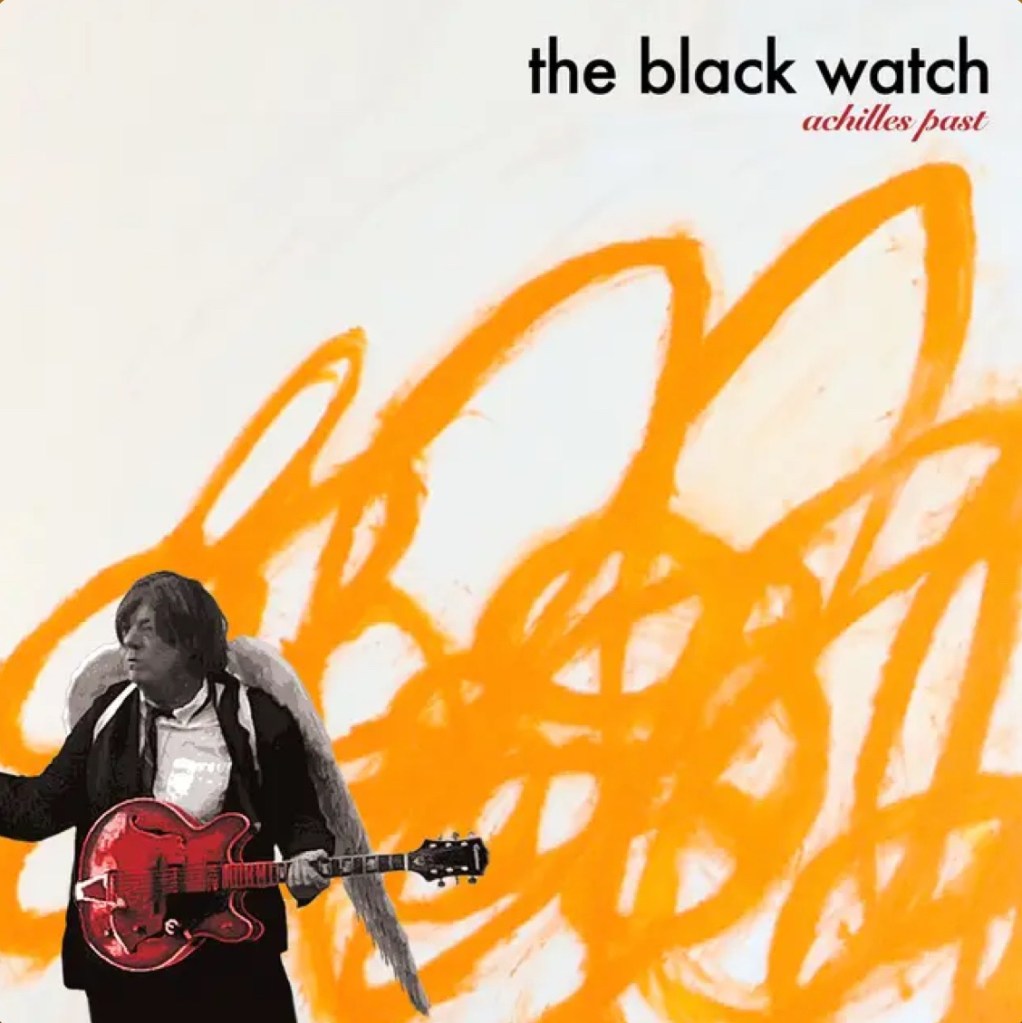
Exploring The Black Watch’s Unique Sound: Inspired by The Beatles and Lutheran Hymns

In addition to The Beatles, John Andrew Fredrick indicates that he is inspired by Lutheran hymns. That may explain The Black Watch’s unique sound: jangle pop, which is a bit dark, sometimes eccentric, but never ordinary. “The Morning Papers Have Given Us the Vapours,” which is brand new, is beautiful and intriguing and sounds contemporary. However, the latter does not appear to have been a deliberate goal in itself. We hear more about this in an exclusive interview with Frederick himself.

Are you consciously adjusting your sound to keep your music modern, or is that not a concern for you?

We rarely, if ever, think in terms of “how will this go down with indie fans.” Not that that is an arrogant or oblivious approach: it’s just that I try to please myself first, thinking “I have impeccable taste; so if it makes me jolly and feel moved somehow, then it MUST be good.” Who knows, though? We never ever chase the current sound, as it were. I think that madness lies that way.

“What’s All This Then” is such a fresh and youthful song. Could you tell me what inspired it?

“What’s All This Then” is a sort of send-up of love songs in general and my own in specific. How many times have we uber-romantics said “I’ve never felt like this about ANYONE!” Knowing full well we’re fooling ourselves. Full fools fooling the fools that are US! Haha.

“There and Here” has a Dark Wave/Post Punk vibe. But when I describe it that way, I wonder if it’s just a typical journalistic observation. What are your thoughts on this?

I forgive writers and punters for categorizing music; if that makes things more palatable, there you go. Notwithstanding that, I am really pleased with the guitar sounds the engineer, Kevin Dippold, got on that one. I do not think of us as a “big guitar sound” sort of band; but we LOVE a lot of those—The Chameleons UK, early U2, The Strokes, et alia.

You make creating music sound effortless in a good way. Do the melodies still come naturally to you?

Well, the melodies I often attribute to two influences: the Beatles and Lutheran hymns. I went to church religiously till I was nineteen. Pun! Haha. I admire really twisty melodies like what Mark Hollis did with the immortal Talk Talk, so perhaps a bit of twistedness twists into my stuff. I like catchy stuff—with a twist. (Sorry: couldn’t resist!).

When I listen to your records, I always feel like I’m part of a journey, rather than being shown an endpoint. Quite poetically worded, don’t you think?

A journey or TRIP (term I prefer) really is among the highest compliments that could be paid one. Heroic Roger Waters opined that “in the finished article, the only thing that matter is if the song MOVES you,” so I reckon you could say that that’s an INTERNAL journey!

Behind Vital Signs: The Journey of a Restless Songwriter

Now that More Kicks is a thing of the past, James Sullivan, with Vital Signs, has delivered an exceptional record. It’s sophisticated, melodic, narrative-driven, and utterly intriguing! Here is a restless writer at the top of the songwriting game.


You can discover ‘Day Late Dollar Short’ featured on the Best Power Pop of 2024 Spotify Playlist.


James, your record is truly beautiful and diverse. Did refining your sound after More Kicks disbanded come naturally?

Thanks! I actually finished this record before More Kicks ended. We’d finished the second record, Punch Drunk, and everything was at the pressing plant with Dirtnap and Stardumb. So we were sort of planning some touring around that release, but it was all 9-12 months in the future. I’d been writing so much for the two years leading up to that point and I didn’t want to stop. I also knew my lease was running out on the little studio space I rent, so I had about three months before I would have to move out of that.

So it was kind of a no-brainer to just keep on writing and recording. Honestly, I was a little worried about my state of mind without new music actively happening and I was quite burned out from writing so much for More Kicks, so making a new record on my own was an easy decision to make. I didn’t necessarily think it would be another album because there is always a chance that it turns out completely shit. Especially without the tasteful filter of Paolo and Kris (bass and drums from More Kicks) being applied to the songs. But as long as I was writing and recording something new, I knew I would feel okay.

Then I finished the ten songs and Punch Drunk was almost ready, so it was time to go and tour that thing. Vital Signs was done and even mastered, but it was just sitting on my computer. Six months later, I realized I didn’t want to do More Kicks anymore and I even had a completed record ready to go, so I finally got my arse in gear to get it released. I sent it to Stefan at Stardumb to see if he’d be interested – god bless him, he was – sorted out the artwork. Then that all takes a little while again, and here we are.

So the sound was just an amalgamation of physical limitations and the freedom of it not needing to be played by three people on a stage. There are so many limitations when making the record like that on my own. I record everything on an 8-track tape machine so I only have eight tracks to play with. Plus my own limited recording capabilities, I can’t play the drums and I suck at piano so that comes into play as well. Tiny cupboard-sized ‘studio’, loads of noise coming from everywhere in the building. In my head, I was going to make a huge orchestral piece, but that is simply not possible in those surroundings haha.

In terms of refining that sound, I just wanted it to have more space than my previous records. Less frenetic, more textures, a broader feel. I often wish I could embrace jam band aesthetics but that is essentially impossible if you’re playing things on your own and it’s all on tape so you can’t edit anything after recording. Plus, I’m quite a brutal editor of my own stuff, so what starts off in my head as ‘this will be a really long and tedious drone instrumental with almost no melody’ ends up becoming quite a concise pop song.

Your lyrics are captivating. Is writing them a smooth process for you?

Ah well thank you! I would say quite smooth, yes. I usually make a little demo of the song while I’m writing and the lyrics come last. I have nonsense placeholders in there while writing and then figure out what they should actually be once the music is at least mostly structured and worked out.

So I’m usually quite tired by the time it comes to writing the words. I like to write them very quickly and usually about 90% of those tired lyrics are there in the final version – just some tweaks here and there for better phrasing etc. Sometimes I think that might be why I often seem quite sad in the words – I’m just a bit tired by that point.

I usually write the chorus first and work backward to fill in the verses. That seems to help with the flow of setting the scene and the theme, and then getting a good payoff with the chorus. So the second verse can often be difficult because I’ve got a narrative that ‘ends’ with a chorus, but I have to continue the story for the second verse somehow. But yeah, I would say once the chorus words are in place, the rest of the words seem to come quite quickly.

I’m intrigued by ‘Guilty as Charged’. Can you share how that song came to be?

I had already started recording and while I was listening back to what I’d done, it all felt quite unambitious and nice. Exactly this idea of expanding the horizon is where I was going with Guilty As Charged, and also the song which precedes it, ‘Dronify’.

I was missing live drums on what I’d recorded. My friend Marco had played drums on Day Late Dollar Short and they sounded really nice. So I looped a few bars of him playing that song and just droned a bass riff over the top for four minutes. At this point, I realized I should essentially abandon structure and just go with the drone – so spoken word would be a good idea. I used that a bit on my first record ‘Light Years’ on the song ‘Lea Bridge’ so I liked the idea of returning to that.

I was reading ‘Nickel Boys’ by Colson Whitehead and he described someone as looking like they were ‘upholstered into their suit’. All disheveled and creased. I loved that. So I thought a character piece about whoever that person is would make for a great vignette. I wrote those words so fucking quickly, I’m not sure where it came from. The whole courtroom scene, the grotesque spectacle of a man getting sucked into thin air from within this horrible green linen suit. It really felt so freeing to write like that. A complete stream of consciousness that was absolutely not related to me or my life at all.

Many times I almost deleted that from the record because it felt thematically separate from everything else. If anyone had said to me ‘Erm, I’m not too sure about Guilty As Charged’, I would have definitely just thought, fuck it, and dropped it. But luckily, nobody heard the record except me until it was all finished. I’m glad it’s there.

Creating Vital Signs as a solo project must have been quite different from working with a band. What was that experience like?

Quick, instinctive, a little worrying because there is really no objective voice in the room at all. There is every chance that everything I’m recording is truly awful and I can’t tell because I’m far too close to the whole thing.

So it feels higher risk in one sense, but also lower risk in the sense that I have zero expectations for anything. Nobody is waiting for a James Sullivan solo record. I’m not even waiting for a James Sullivan solo record. I could quite easily finish a set of songs and then just do nothing with them and carry on with my life – as I almost did with these. But then, the ego in me can’t quite resist sharing them with the world in case other people also get a kick out of them.

Your new sound really showcases your vocal talents. Was this something you consciously aimed for?

Not at all, but I really appreciate that. With the self-recorded, straight to tape thing, I have to sing everything from start to finish in one take because I don’t have long enough arms to punch in the recording from where the microphone is in the room in relation to where the tape machine is. So it’s all in one take, or do the whole thing again. Which is mostly how I do it anyway – but this time it’s the only way I can physically do it.

I can definitely sing in tune; I don’t usually have problems with that. So having that one-take restriction probably adds a certain edge or sense of jeopardy to things. It definitely makes it feel more alive and, yep, more real.

What kind of compliment about Vital Signs would make you especially happy?

Christ, that’s quite difficult. I’m one of those dickheads who claims to not care about reviews but then when I get a nice one, I feel really good about it.

I think if people realize that I’m consciously trying new things, that I’m not scared of alienating listeners, that I am really really keen to not repeat myself, that makes me happy. I will scrap entire songs if they feel slightly too similar to something I’ve written before when it would be much easier to just tweak it slightly and record it. In fact, probably that would be an easier thing for listeners to get their heads around. I could have written More Kicks songs forever but I would have known I was cheating myself.

So I think if somebody told me I was a restless writer, that would make me very happy.