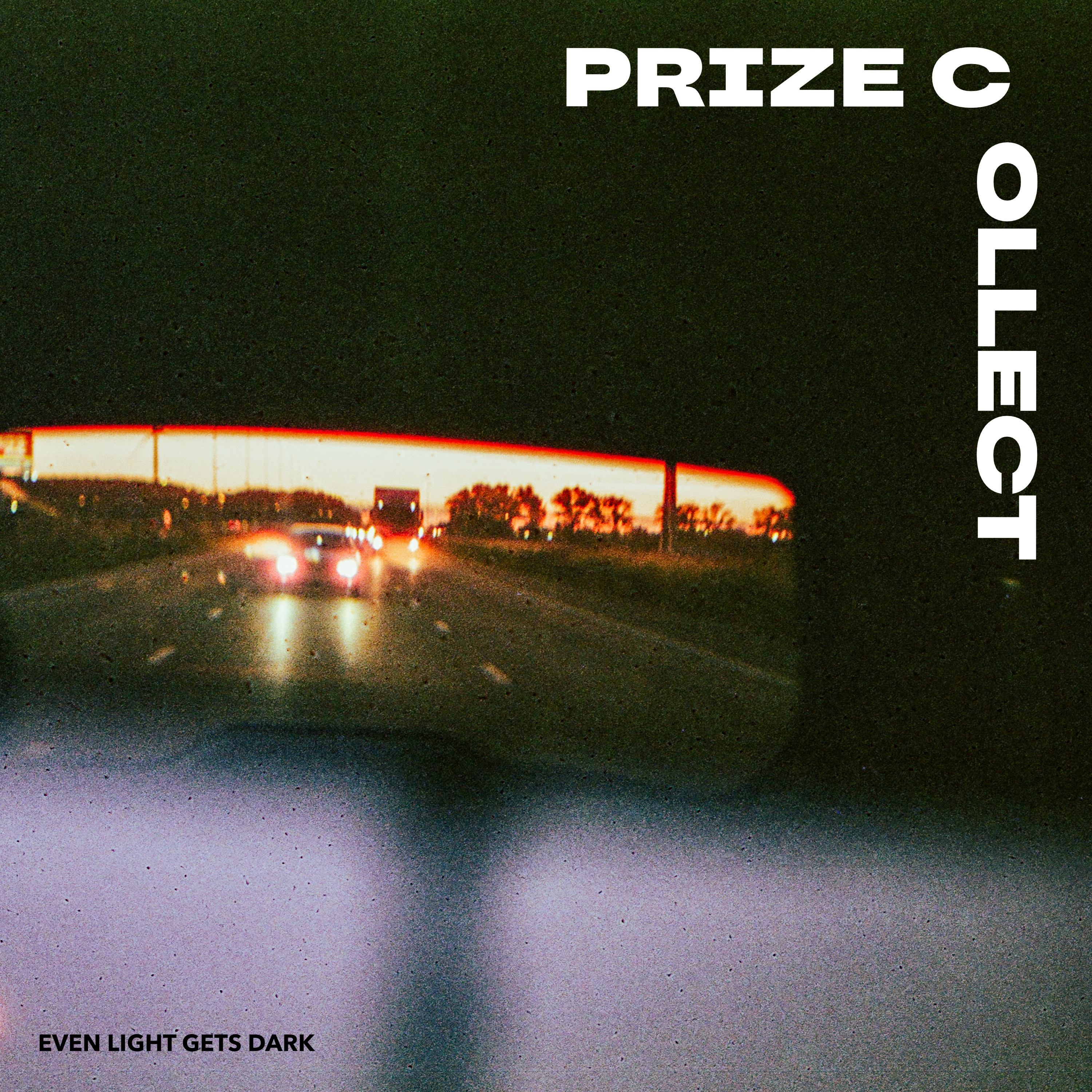
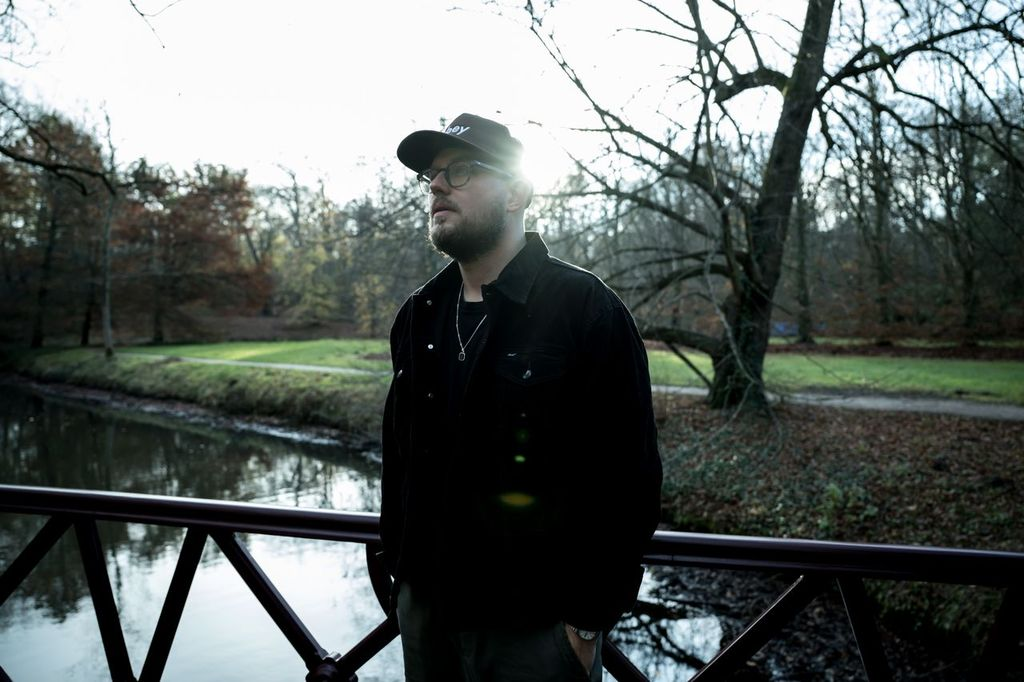
On September 25, Prize Collect returns with Even Light Gets Dark, a new six-track EP from guitarist and songwriter Marzio Scholten. Balancing introspection with moments of widescreen indie rock, the record also points towards what might come next. We spoke with Scholten about unsettling opening lines, cinematic melodies, working with producer Sam van Hoogstraten, and why this EP feels like a prelude to Prize Collect’s next chapter.
The opening lines of “Even Light Gets Dark” have been haunting me. Where did that song begin — and what was happening when you wrote those first lines?
I understand why those lines might have been haunting you; it’s pretty dark. The opening line, “Let me tell you how to suffocate yourself using a pillowcase,” came to me during a summer in France, while listening to a demo of this song. It seemed like such a heavy way to start the song, but I think it works because it puts the listener on the edge of their seat. After that line, the lyrics kind of wrote themselves. I wanted to show the contrast between light and dark, happy and sad. I think it’s kind of my way of saying that even though people seem happy on the outside, they may have dark things going on in their lives. It’s one of my favourite songs on the EP.
“The Last Day” has such a huge, almost cinematic melody. How do you stop yourself from going full U2 when a song starts reaching that big?
First of all, I wish I was as good at writing songs as U2 are, but I do understand what you mean. For me, “The Last Day” actually has a kind of classic Beatles-esque chord sequence and harmony. When I was writing this song, the chords came first and the melody just seemed so natural on top, maybe because it has such a classic feel to it. Anyway, back to your question: while producing, I think there’s always a point where you can choose between going “all out” or staying on a more understated path. It’s a cliché, but the song tells you what to do, in a way. The producer, in this case my friend — and guitarist in the band — Sam van Hoogstraten, was also a huge factor. The nice thing about all of this is that live you can make the choice more organically and in the moment, so during a concert a song that’s understated on the record can go “all out”, and vice versa.
How did Even Light Gets Dark come together? Did these songs grow out of the same period, or did you gradually realise they belonged together?
I’m continuously writing songs and demoing them. After the Prize Collect debut album came out, I already had more than enough for a new album. Sam van Hoogstraten (who I mentioned before) and I got together for dinner and talked about how to move forward. He said that he wanted to produce the next Prize Collect releases, and we came up with the idea of just grabbing a couple of the best songs that I had demoed and starting to work on them without any clear idea of how to release them. First, we thought it might be a few separate singles, but soon we realised that we had six songs that fit together and decided to work towards an EP.
Was there a moment during the making of the EP when you thought: “Yes, this is exactly what Prize Collect should sound like”?
Ehm, no, not really. I mean, I think that writing music is always a work in progress. There are songs on this EP that give me the feeling of exploring that side more, like “Inside Your Soul”, which has this Britpop-ish vibe to it. The nice thing about this being an EP is that it feels like I can still experiment a bit. I feel that the next LP, the follow-up to our debut, should be a very coherent batch of songs that maybe sets the tone for what Prize Collect should sound like. This EP is a prelude to that.
What do the coming months look like for Prize Collect? What’s next after Even Light Gets Dark?
Well, it’s a relatively small release, so we’re not doing a huge tour or anything. To present this music live, I decided to do one bigger show instead of a few small ones. On October 28, we’re playing at dB’s in Utrecht. I invited Coparck to join us on the bill, and they happily agreed. It’s going to be a great evening of indie music. I’m very much looking forward to playing these new songs live. Next year, we’ll do a few more shows. Meanwhile, I’m writing and demoing, and the contours of a new album are already forming.
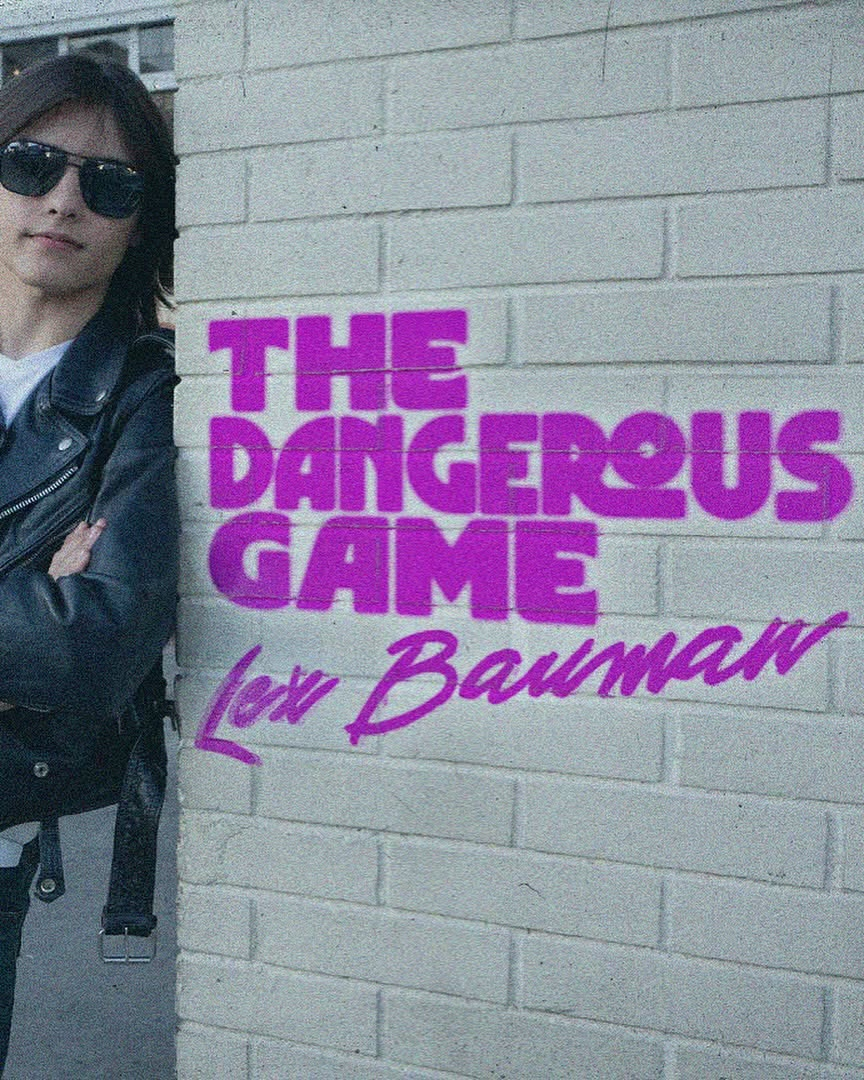
The punch line of Sweet Sweet Music Blog is “Let’s Put the Power Back in Pop.” And if you don’t know what that means, please listen to Lex Bauman’s new album, The Dangerous Game. Better yet: put on the classic debut albums of The Beat and The Romantics, and then The Dangerous Game.
It will take you as high as a Power Pop kite can go.
It took me to a height where, as a 56-year-old, I honestly thought “While We’re Still Young” was about me.
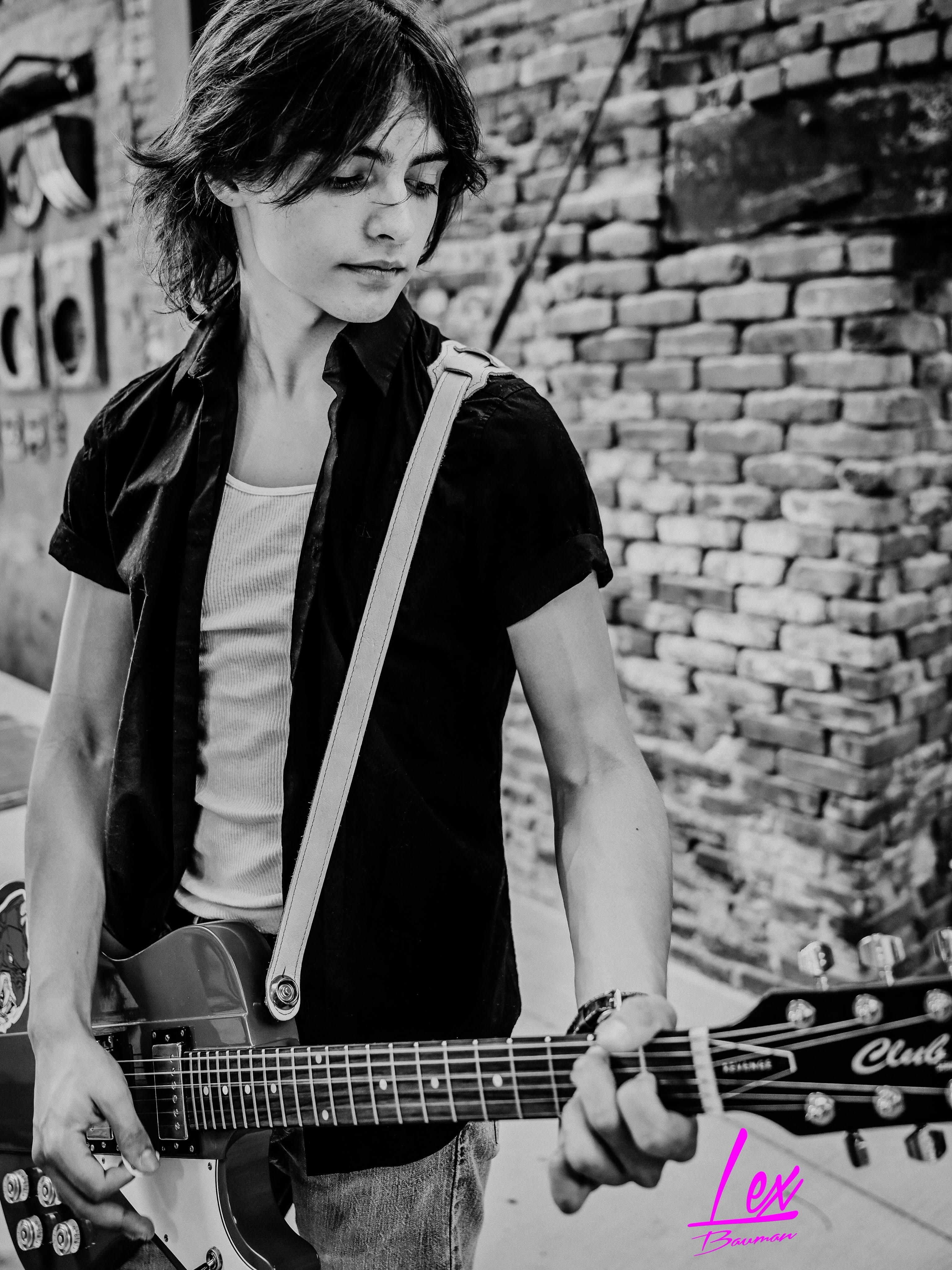
So where does a young artist get a sound like this? Bauman talks to Sweet Sweet Music Blog about hooks, Cheap Trick, Tinted Windows, working with Tuk Smith and finding his own place in the long and glorious power pop tradition.
The Dangerous Game feels like a collection of small anthems — songs that are incredibly catchy without ever feeling overworked. Where does that instinct for melody and hooks come from?
I’ve grown up listening to all sorts of bands: KISS, Marvelous 3, The White Stripes, Sawyer Brown, Cheap Trick, Queen, George Strait, Guns N’ Roses, etc. They are all very different, but they all have very strong melodies and hooks in their songs. That is just the music that I love, so I think when I write a song, that stuff all just seeps in there.
There’s a strong sense of Cheap Trick, Rick Springfield and The Cars running through the album, but The Dangerous Game never feels like a nostalgia exercise. How do you take those influences and make sure the songs still sound unmistakably like Lex Bauman?
You take little bits of inspiration from songs or artists, but never too much from one. We always listen to music while writing. The Cars, Rick Springfield, Cheap Trick — those are all influences, but so are Tom Petty, Springsteen, Katy Perry, Goo Goo Dolls, etc. I just take the best from every genre and era and run it through my own filter.
You’re a young artist making a record that sounds remarkably confident and fully formed. When did you first realize that this was the sound you wanted to pursue? Was there a particular record or moment that made everything click?
It was probably a gradual thing. I started playing when I was 9. I was learning White Stripes and Queen songs. I love all sorts of music: softer, poppy music like Bleachers; soulful music like Otis Redding; heavy music like Mötley Crüe; heartland rock like Bruce Springsteen, etc. When I was around 13, I wanted to make something that sounded like The Killers meets Def Leppard. I got really into the Marvelous 3 around that same time. Then I got turned on to a band called Tinted Windows. That was probably the moment, if there is just one, that really established where I wanted to go musically.
How did you find the sound of The Dangerous Game? Did you go into the studio with a very clear idea of how you wanted the guitars, vocals and production to sound, or did the identity of the record emerge while you were making it?
We demo pretty extensively. Tuk Smith is my co-writer and producer. Our outlook on music is pretty similar, so when we write and demo, it comes out pretty organically. By the time we get to the studio, the songs are probably more than 95% formed.
The songs are out now, and at some point they stop being yours and become the listener’s. What is it like to let people discover these songs and turn them into their own little anthems?
It’s really cool. I just think about writing these songs in a garage, and then you are up on stage and people are singing along to these words with you. It can be mind-blowing. The songs all mean something special to me, but when other people make them a piece of their lives and make them mean something to them, that is a huge honor, and I’m incredibly grateful.
Fifteen songs, and Jamie Coghill goes just about everywhere with them. On Pretending To Be A Person, The Jimmy C moves from country-tinged pop to seventies rock swagger, quirky sixties psych, garage rock and even flashes of proto-metal, with little concern for stylistic consistency. Somehow, it all hangs together. The constant is Coghill’s instinct for the song itself: whatever clothes it happens to be wearing, the hook comes first.
That restless musical curiosity has been part of The Jimmy C from the beginning. Coghill talks about discovering Nuggets after growing up on grunge, his love of bands that happily jump between genres, and an approach to songwriting that relies more on instinct than intention.
We spoke with Jamie about where those songs come from, the art of sequencing an album in the streaming age, the strange story behind the cover of Pretending To Be A Person, and what happens when you finally let a record go and allow listeners to make it their own.
This album seems to go everywhere musically, and I love that about it. Was that freedom to move between styles something you consciously wanted when you started making the record, or did the songs simply take you in different directions?
It might be the same for all songwriters but I don’t actually understand where my musical ideas come from and I very rarely set out to write in a specific style. I like to say that I try to let a song happen without getting in the way too much! It’s a case of letting the idea just happen organically or by instinct … that sounds pretty artsy-fartsy wanky-douchebaggy but I think part of me doesn’t want to analyse it too closely in case I lose it.
My taste in music probably plays a large part in the varying styles of music I make. I grew up in a country town in the 80s and early 90s and was a full-on grunge kid. Classic cliche 70s rock and grunge were my life and I was incredibly judgemental of all other musical styles. The blinkers came off when I was about 18 and I discovered movie soundtrack music (Goblin, Morricone, John Barry) and most significantly, Rhino’s Nuggets CD box set. Film music was a passion but was far too progressive, jazzy or orchestral for a young drummer to ever imagine playing by himself, but the Nuggets music was incredibly inspiring – 4 CDs of late 60s garage punk and pop! The best song from bands that mostly only ever got to record one single or one album. It was an amazing mix of wild fuzzy garage pop and psych from a hundred different bands but all somehow fit together perfectly in a unified collection. It was an awakening, and a gateway into the amazing music those bands made.
Some of the music was primitive enough that it felt like even I could learn a few guitar chords and write dumb noisy songs like that, but it was also sprinkled with sophisticated proto-power-pop that broadened my thinking of what a song could be. I had been drumming since I was 12 years old and by 2005 I had learned enough guitar from being around guitarists that I was able to start recording primitive garage songs all by myself on my Tascam 4-track recorder. That’s right, the drummer was no longer reliant on the “talent”!
My songwriting has become a little more sophisticated over the 21 years of making music as The Jimmy C but that broad range of styles remains one of my defining characteristics. My favourite bands are ones that jump around the genres too – Ween, Super Furry Animals, Sloan, Jellyfish … it’s great music for people with a short attention span!
There are some pretty extreme contrasts in the tracklist. You can have a hard-rocking song followed by something tiny and introverted, or a full song followed by a 40-second instrumental. Was the sequencing part of the creative process for you? Did you enjoy putting those contrasts next to each other?
Absolutely, yes! I look at albums as an entire piece of art. Concept albums as a genre are usually incredibly pretentious but the idea of unifying a collection of songs as a whole piece is wonderful.
Pretending To Be A Person isn’t a concept album but I always like to approach my albums with a focus on the journey that the songs take the listener on. I like to experiment with how one song flows into the next, sometimes letting it take an emotional breath or exploiting this power to knock the wind out of the listener with a jarring and sudden transition. It’s all part of the fun of making music and I refuse to let it go, even in the age of streaming consumerism where many artists release songs individually with the expectation that they’ll end up in a playlist rather than the running order of an album.
Perhaps it’s naive of me to expect listeners to take in albums as a whole in one sitting or maybe it’s stubbornly retro of me to still care about the track sequence of an album but I’m a total record dork and love albums. All art is storytelling so why shouldn’t the entire album also tell a story?
When you start a new song, how do you decide what kind of song it is going to be? Does the melody tell you, does the lyric suggest a particular sound, or do you sometimes deliberately think, “I want to make a song that sounds like this”?
As I mentioned above, I like to let a song happen without thinking too much about it. My ideas for songs aren’t conscious or deliberate and usually happen when I’m not in a musical headspace at all. It seems to happen while I’m doing something mundane like showering or walking to work. An idea just pops into my head – a little snippet of melody and a few lyrics – on repeat in my head so then I’ll go and hum, sing or strum (if there’s a guitar nearby) the idea into my phone as a voice memo so I don’t forget it and can get on with my day.
These voice memos can sometimes sit around for years without turning into a full song but it’s a good way to catalogue these thoughts and not forget ideas that could turn into a good song one day. I’ve had some song ideas that are so complete I can finish them really fast and have them fully recorded in a few days. Other ideas will lay dormant for years and I’ll listen to it and another section of the song magically pops into my brain and now it’s a song.
I’ve read about Nick Cave and Harry Nilsson going into an office all day and just writing songs. I’d love to try that one day but I just don’t have the time because I’m a 49 year old with kids and a day job. I’ve also read about Andy Partridge from XTC playing around with a new guitar tuning and some kind of synesthesia kicks in and he’s written something completely brilliant like River Of Orchids or Love On A Farmboy’s Wages! But again, that’s only possible with having time to pissfart about in the studio. Normal people don’t have that luxury!
I can only think of one occasion when I’ve written a song after consciously wishing I could write a song like Ever Fallen In Love by The Buzzcocks. I went to bed thinking about it and woke up half an hour later with the idea for I’m No Good For You, which ended up on the first album of my other project Lava Fangs.
Writing music for soundtracks is totally different though. I’ve written and recorded music and songs for 4 movies and 2 web series so far. I’ve done a couple of podcast themes and some video art installations too! I really enjoy doing movie music, it’s challenging and forces me out of my usual routines and comfort zone and gets me writing in genres I normally wouldn’t try. It’s great because there’s a specific reference point like a script or rough cut of a scene and these references help determine the music. With the two soundtracks I’ve done for indie filmmaker Joe Bizarro (Brides Of Satan, shot in California and Curse Of The Baby Eater, shot in Austin TX) he would send me a rough cut of a scene with some placeholder music that they’d never be able to afford the license for and so I would have to write something that captures the essence of someone else’s song without ripping it off or becoming a parody. It’s called Rutling but that’s a very specific reference … look up The Rutles and hear Neil Innes of The Bonzo Dog Doo Dah Band’s incredible Beatles songs that are in many ways better than The Beatles!
The artwork is very specific and has a slightly strange, almost surreal personality of its own. What was the idea behind it, and how closely is the artwork connected to the music?
I suppose the biggest connection is that it all came out of my head! And my head might be a strange and surreal place … My day job is graphic designer for a CD & DVD company in Melbourne, Australia. I’m always thinking about cover design and in my spare time sometimes just put ideas together with no real purpose. Sometimes it might be something I can use for the freelance design I do for local musicians and the Cheersquad Records & Tapes label. I’ve done designs for Aussie legends like Kim Salmon, Dave Graney, Steve Kilbey, The Meanies, Hard-Ons, The Stems … heaps of stuff …
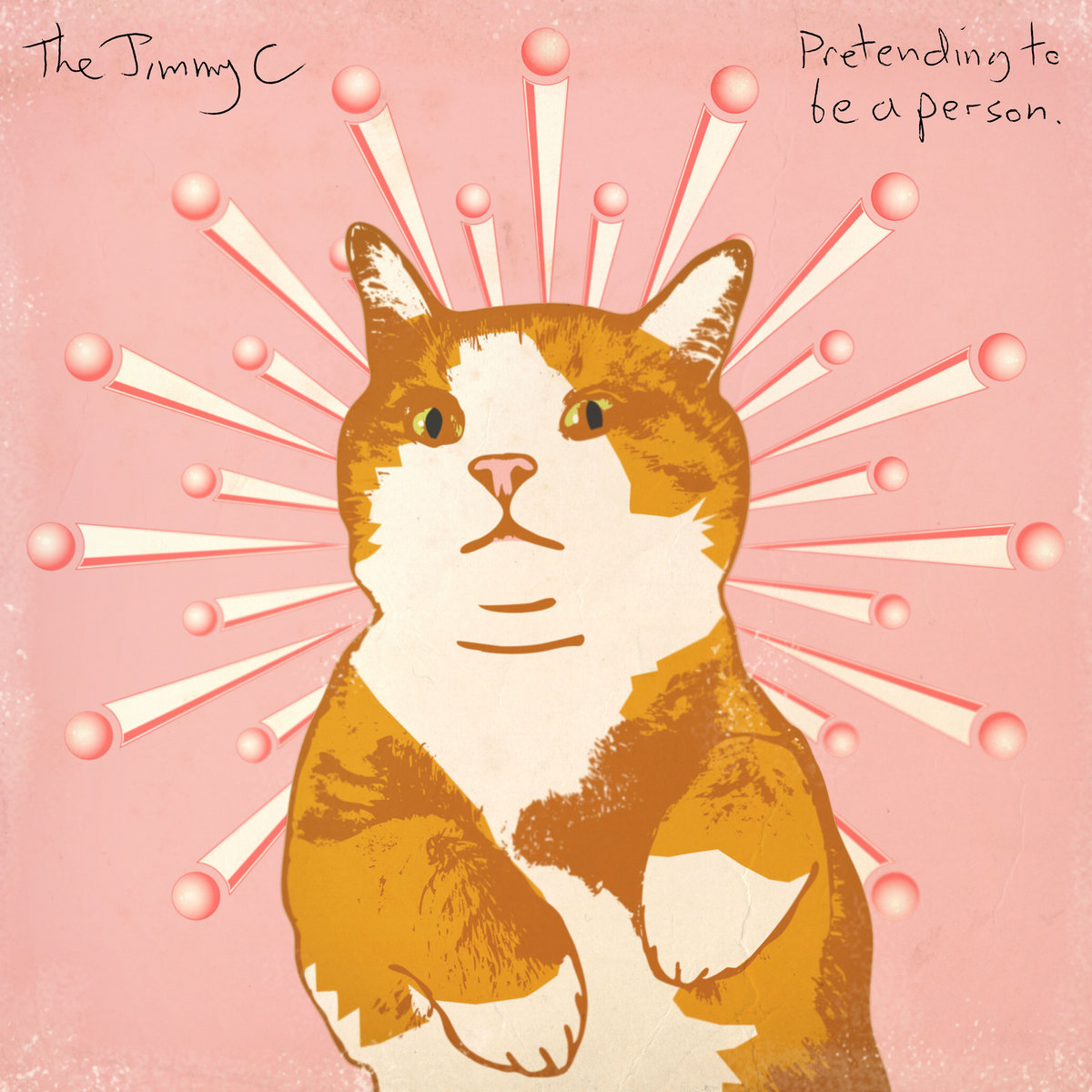
The cover for Pretending To Be A Person started as a simple geometric design inspired by some of the late 50s/early 60s jazz covers on the Command label, things like Persuasive Percussion, Provocative Percussion and Murder Inc., and at the last second I decided to add a vectorised picture of my cat Diego (aka DooDoo) to it! It softened the formal look of the design and I felt like it fit in more with the title Pretending To Be A Person – though the title isn’t about animals pretending to be people, it’s more about neurodiversity (a subject I’ve dealt with a lot recently with friends and family) and how we mask our differences and feelings. We’re all pretending to be a person on the outside while dealing with all sorts of stuff on the inside. That theme comes up a bit in the music on the album and fit nicely with an illustration of my autistic looking cat!
The songs are out now, and they are no longer entirely yours to interpret. They belong to the listeners to discover, make their own connections with and find their own meaning in. What is it like for you to reach that point with a record?
It’s a relief! Up until this point I’ve been stressing about all the tiny flaws in every aspect of the singing, performance and production. That leaves a lot of room for imposter syndrome to creep in and make me wonder why I bother to do it and weather it’s worth it or even good enough to release! I think most artists go through this to some extent but it feels amplified when it’s just one person responsible for everything. It’s so enjoyable doing the recording and mixing, there’s a real endorphin hit from creating a song out of thin air, but once it’s all finished, the business and marketing stuff takes over and you’re not being creative anymore. It feels like you’re bothering people with your music. Inflicting it on them even!
But at this point I’m free off all the anxiety and I can actually distance myself from it and listen to it as though I’m hearing it at face value like everyone else – and it’s actually pretty good and kind people are telling me so!
I really like hearing people’s interpretations of my songs – mostly I really like knowing that somebody’s even listened to my songs!! It’s so cool that music has a built in ambiguity that lets different people interpret the same music in different ways. I do it to my own music too, part of the release process is writing brief descriptions of the songs for distributers and radio, I often have to listen back to the songs to work out what I’m even singing about! Sometimes the story is clear from the start but even then there may be a deeper interpretation I find hiding in the words, either that or I’m retroactively adding a more clever concept to a song! Both are valid!
The most confronting lyrical theme on the album is Pieces Of Me. The literal idea is a song written from the perspective of a terrorist suicide bomber but on top of that these songs are also pieces of me and by releasing them into the world they’re also “raining down for all to see” through global streaming. The literal meaning is probably just a metaphor for anxiety … the older I get the more anxious I get! It could just be all the heavy things going on in the world these last few years (definitely an influence on parts of this album) or maybe just part of growing old. I never used to think twice about playing drums at festivals and big venues packed full of people but now I’m a nervous wreck for a week before a Sunday afternoon gig to 30 people!
But I’m no expert, I’m just lucky to be here and grateful for the opportunity to talk about my music! Music is so special that you can interpret so many layers even in dumb little ditties like mine!
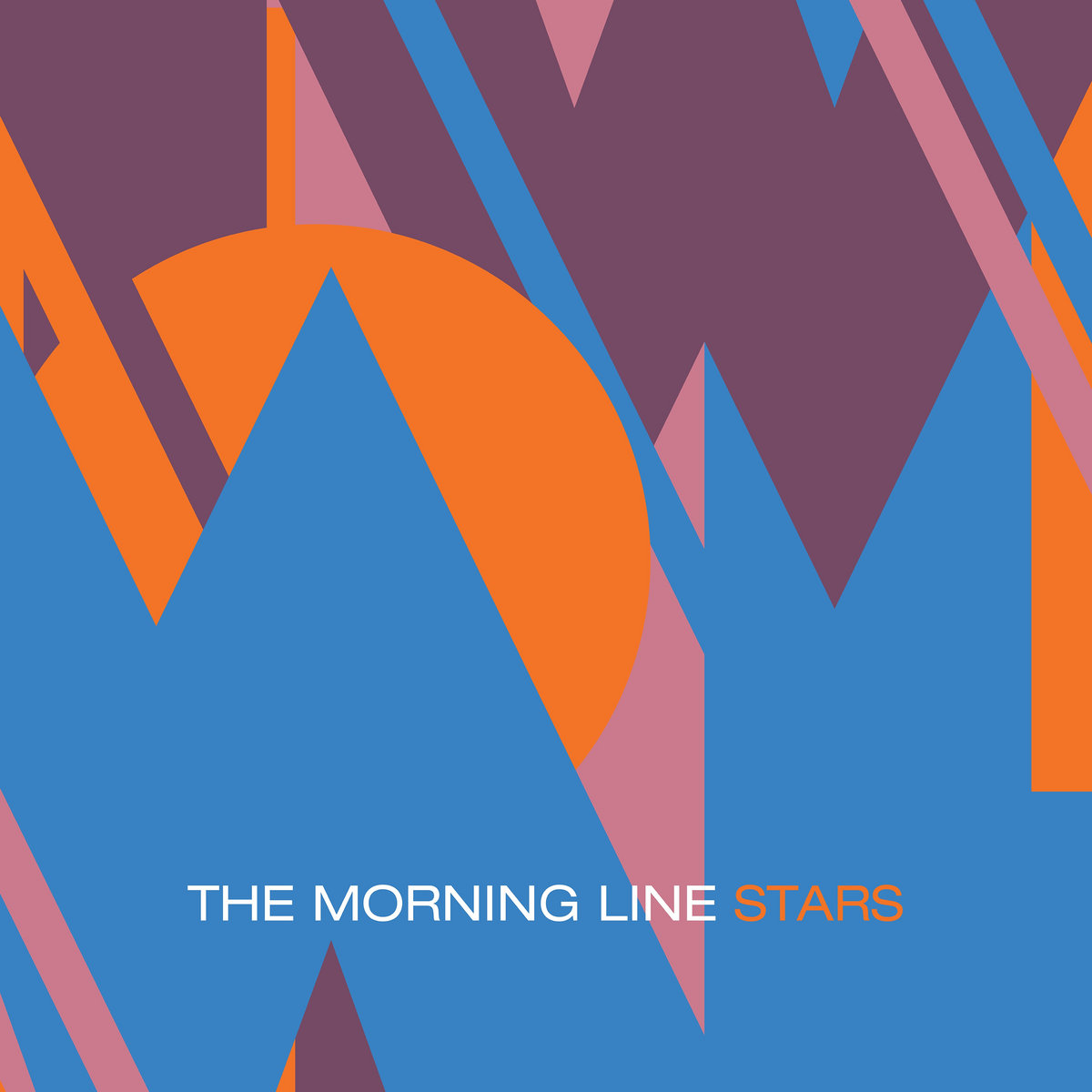
There’s a particular kind of record that only gets made once a band has stopped worrying about what it’s supposed to prove — and that’s the record THE MORNING LINE has made with STARS, out September 18th on Big Stir Records. Twenty-one tracks, twenty-plus years, and a back catalog stretched between a 2007 debut and a 2017 follow-up that a lot of fans never got the chance to connect. Rather than just slap a “greatest hits” sticker on the whole thing and call it a day, the band went back in and remixed the songs they cared about most, added two genuinely new ones (“90s Pickup” and “This Lens”), and rounded it out with the single “Anhedonia” — ending up with something that’s less a victory lap than a re-introduction.
I sat down with Stephen Smith, by his own modest insistence more melody writer than lyricist, to talk about what happens when you go back and remix twenty years of your own songs, what it’s like discovering your old lyrics are “not half-bad,” and why a two-decade-old band still bothers showing up.
A “best of” record usually gets made when a band’s looking backward out of necessity — end of a chapter, lineup change, anniversary. What was the actual trigger for STARS? Was there a specific moment where someone said “we should do this now”?
Gambling debt? No, I wouldn’t say there was necessity here, so much as desire. We wanted to hear the songs at their best, hence the remixing, and we wanted to have a document that collected a lot of disparate material in one place. In terms of sound, every single thing we’ve done has been recorded and mixed by Peter Craft, who also happens to play drums on most of the songs. His studio has evolved over the twenty-plus years he’s been recording, and he thought he could make the songs sound better. So that’s a part of it. Additionally, in some ways, I think of the band as two bands, not so much sonically as temporally. We put out our first record in 2007 and the next in 2017. So it seemed to me we had some fans of the 2007 record who may have been unfamiliar with our more recent material, and fans of the recent material who could be unfamiliar with the 2007 record. It made sense to have a single document to represent us, that the future (should there be one) can build on. It is a summing up, with improvements.
I credit my wife with the album including the new songs “90s Pickup” and “This Lens.” The record was originally envisioned as a purely retrospective collection. She said that we had to put a couple new songs on it to make it more compelling. Poets do this occasionally, releasing books containing “New and Collected” work. I’m glad we included the new ones because I really like them (obviously), and it does add variety.
Remixing old songs is a strange kind of time travel — you’re not just cleaning them up, you’re making new decisions inside old material. Was there a song where the remix changed how you personally feel about it?
This is something only a band member would probably notice, but the song “The Minutes” just seems more vibrant, more alive, than the previous version. It sounds like what I wanted it to be, but we weren’t able to do at the time. So the sound alone has taken me from, “that’s a good song,” to “goddamn, I love that one!” One of the more dramatic remixes is a song called “All Mine.” On our 2017 album, Smoke, we were delighted to have Paul Kolderie mix that song. He’s an all-time great, and he took some structural liberties with the song. We liked them, don’t get me wrong, but the remix revisits the original structure, makes it a bit longer, adds a chorus. So to me it becomes a bit of a new song.
Stephen, your lyrics get called literate and emotive — what’s a line from one of the older songs on STARS that still catches you off guard when you sing it now, for reasons you didn’t intend back when you wrote it?
Geez, Patrick, that’s going to require some thought. Well, let me start by saying I think of myself as more of a melody writer than a lyric writer, but going through this anthology assembly process has made me listen to the songs and think, “you know, some of these lyrics aren’t half-bad.”
This is not perfectly responsive to your question but, to again invoke the song “All Mine” that I just mentioned (which is not my favorite song, really!), it has a line in it, “we pay the cash and watch the gridded land pass by.” I always liked that line, because of the clarity with which I thought watching “gridded land pass by” captured the experience of flying in a plane. Today, however, the part of the line that delights me is the rhythm or cadence of it. So less the image it provides than the feel.
Is there a song on here that means something different to you now than it did when you wrote it — where age or distance changed what it’s actually about?
When I wrote “Spellbound,” I left a lot of space for what it was “about.” Mental illness? Self-harm? And listening to it today, I think, “Oh, maybe that’s just about growing up.” And it struck me as a theme in a lot of these songs. Getting comfortable in the world as an adult. Getting “credit in the straight world,” as Young Marble Giants sang. Yes, I’m an old man now, but I still have never felt like I know how to be a “grown-up.”
If a version of THE MORNING LINE from 2007 heard STARS, what do you think would surprise them most — not about the songs, but about the band that made them?
Well, I think an answer many people would probably give is “you’re still doing it?” But that doesn’t surprise me. We all love music and making music, and we are all close friends. If you love something, you do it, and who better to do it with than friends?
I think what would surprise them is that there are still a few people – not a lot – who care about what we’re doing. That there are at least a few ears that want to hear what we are up to. And I think they would be grateful. I know we are today.
STARS is out September 18, 2026 on Big Stir Records.
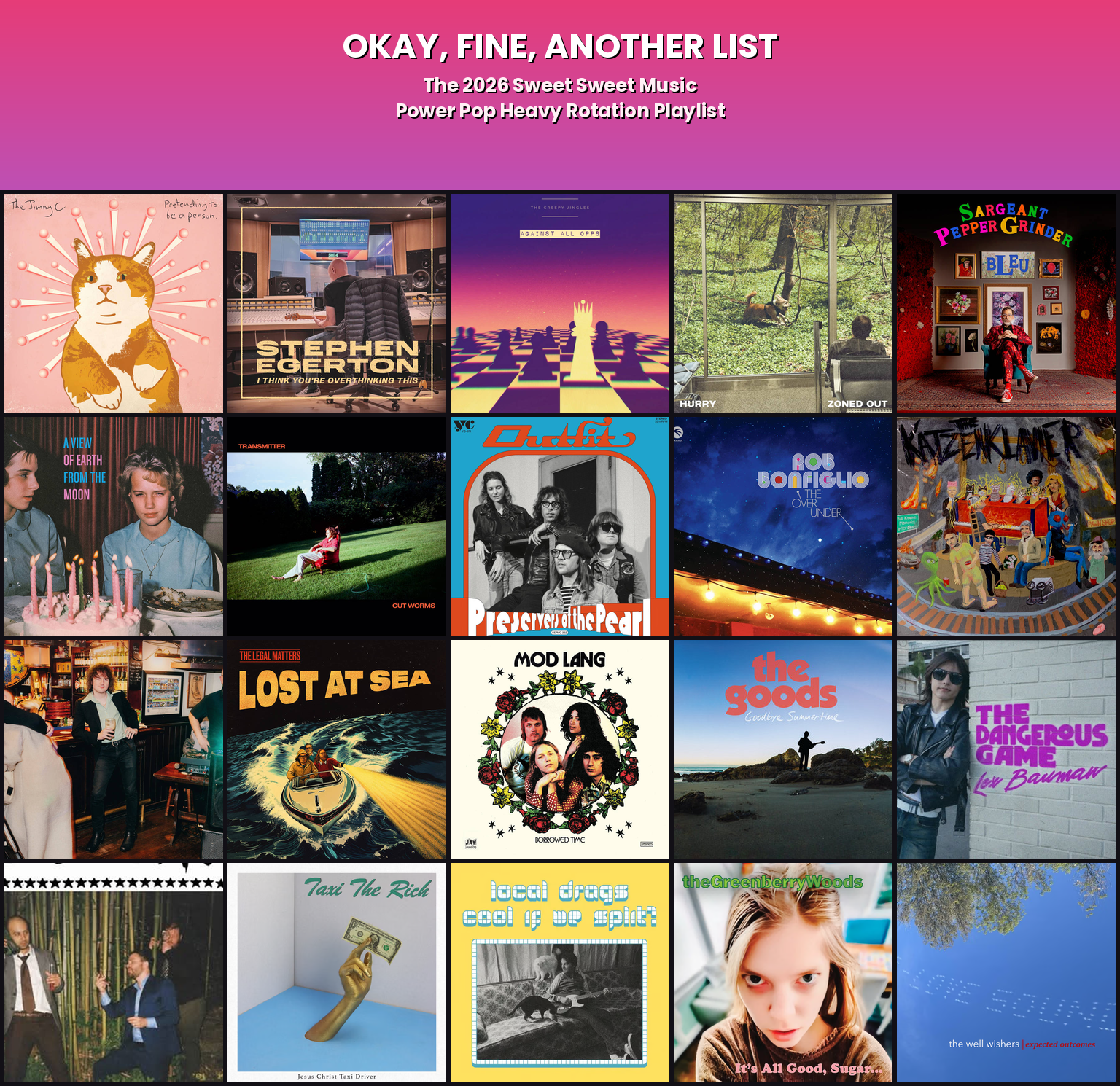
2026 keeps looking more and more like the year of the Power Pop resurrection, Bandcamp is writing about it, Shindig! Magazine is writing about it, and I can’t help myself, I need to list the Power Pop albums I have been listening to the first nine months of the year.
A few of these reviews started life over on Chiming Back, back when that was still where I kept my notes on this stuff. That blog is done, but the records aren’t, so those write-ups found a new home here instead.
So no, this isn’t a ranking, and it’s not trying to be definitive or comprehensive. It’s a batch of albums I genuinely can’t stop playing, offered up for no better reason than that I love this genre and these are the records currently proving why. More than twenty of them now, as it turns out, once I actually sat down and counted.
Make of that what you will. Here they are.
Lex Bauman: The Dangerous Game
The punch line of Sweet Sweet Music Blog is “Let’s Put the Power Back in Pop.” And if you don’t know what that means, please listen to Lex Bauman’s new album, The Dangerous Game. Better yet: put on the classic debut albums of The Beat and The Romantics, and then The Dangerous Game.
It will take you as high as a Power Pop kite can go.
It took me to a height where, as a 56-year-old, I honestly thought “While We’re Still Young” was about me.
Music City: Welcome to Music City
After one listen, “Pretty Feelings” already feels like a song that’s always existed. Not just because the melody slips into place so effortlessly, or because its themes are timeless, but because it carries itself like a hit, in the same way Adam Schmitt, Matthew Sweet, Fountains of Wayne, or Teenage Fanclub made hits in the ’90s. Instantly familiar. Effortlessly melodic. Impossible to resist.
Music City’s immaculate pop sound, strong enough to invite comparisons to The Lemon Twigs or Mod Lang, yet clearly its own, has therefore, perhaps conveniently, been described as part of what Shindig! Magazine calls the revival of the Third Wave of Power Pop. It’s a helpful tag, but Conor Lumsden’s songwriting reaches beyond neat categorization. The Irish-London songwriter draws as much from the shimmering brilliance of ’90s power pop as from its ’70s architects, The Raspberries, Big Star, and the rest of that sacred lineage.
And then something quietly remarkable happens: “Pretty Feelings,” which at first feels like the song, becomes just one great track among eleven others. Welcome to Music City doesn’t lean on one obvious single. It thrills because of its consistency, because of its depth of craft.
If we don’t collectively catch on, this record has all the ingredients of a future cult classic, the kind whispered about in the same breath as Phonograph or 12 in a Room.
Mod Lang: Borrowed Time
Mod Lang are a four-piece out of Detroit who channel the melodic rush of The Raspberries, the aching jangle of Big Star, and the John Lennon side of The Beatles, and somehow make it feel like it belongs firmly in the here and now. There’s nothing self-consciously innovative about what they do. Instead, they chase something far more elusive: the perfect pop song. Not as an exercise in nostalgia, not as museum rock, but as a living, breathing pursuit.
This is retro without kitsch. No wink, no quotation marks, just heart, hooks, and a belief that chiming guitars and skybound choruses still matter.
“What I Can’t Have” and “In Advance,” the opening one-two punch of Borrowed Time, take things to another level entirely. The confidence. The momentum. The sheer exhilaration. These songs don’t just sparkle, they surge. Long live Mod Lang.
The Goods: Goodbye Summertime
Goodbye Summertime is the follow-up to Don’t Spoil The Fun, one of my favorite records of last year, and it builds on everything that made that album so good: instantly gratifying guitar pop with melodies that grab you right away, but an emotional depth that only opens up the closer you listen.
Rob Good’s lyrics are the heart of it, direct, honest, unafraid to sit in vulnerability. The title captures a very specific kind of bittersweetness: change that hurts a little even when it’s leading somewhere better. “Wing” is the rawest moment on the record, written fast and recorded just as fast, in the middle of feeling it. “Ginger Rose” pushes Good into an unexpected falsetto that adds a whole other emotional layer, and “Waiting,” just voice and guitar, proves that a song doesn’t need length to leave a mark. Sometimes the small moments carry as much weight as the big ones.
Bleu: Sargeant Pepper Grinder
On Sargeant Pepper Grinder, Bleu turns grief into something bright, melodic and deeply human. It’s both a tribute to friends who are no longer here and a celebration of the people, memories and small moments that remain, wrapped in the kind of irresistible melodies and harmonies that have always defined his songwriting.
What makes the record so striking is how openly it sits with two conflicting feelings at once, genuine sorrow and real joy, side by side, refusing to cancel each other out. Bleu produced and mixed it himself, obsessing over every detail, and it shows: this is a record built as a lasting, tangible tribute, and it never once slides into sad-sack territory.
Rob Bonfiglio: The Over Under
The Over Under is the kind of album that keeps revealing itself the longer you sit with it. I liked it immediately, but months in, it’s become one of those records I return to when I need to reset. Bonfiglio wrote, recorded and mixed nearly all of it himself, whittling down a batch of some twenty songs to the ones that carried real weight, and the closeness of that process is audible everywhere. “Need You Know” is the emotional core, quietly vulnerable and built around a riff with a Fleetwood Mac-ish pull; “More Pure Than Gold” is its sharper, angrier counterpart, more political and more urgent. Both come from the same instinct: write what actually needs saying, and trust the songs to find their own shape.
A View of Earth From the Moon: Rolled Over Like A Wave
A View of Earth From the Moon is Jonathan Fickes’ band, and ever since 2017 I’ve been endlessly returning to Closer to a Ghost. “One Thousand Miles Apart” and “Distance Runner” still find their way onto nearly every playlist I make. Despite the long gap between releases, Rolled Over Like A Wave delivers exactly what you hope for from a follow-up: razor-sharp yet instantly accessible Power Pop songs filled with vivid reflections on the past, on why those memories can still matter in the present, and sometimes the other way around.
But this is far from a purely melancholic or nostalgic record. “Every For Free” and “Looking Straight Ahead” sound like the voice of someone fighting for change, or simply trying to scrape together fifty bucks. The urgency that drives opener “Emerson and Henry David Thoreau” never fades. These are not songs casually tossed together. They are stories that clearly needed to be told.
Albums like this are what keep Power Pop alive, fresh, and relevant. And if I end up being the only person who prefers Rolled Over Like A Wave over the latest records by The Lemon Twigs or Uni Boys, I’ll gladly stand by that. Power Pop doesn’t need more ’70s soft-rock nostalgia to stay relevant. It needs conviction, edge, and a sense of purpose. Rolled Over Like A Wave has all three.
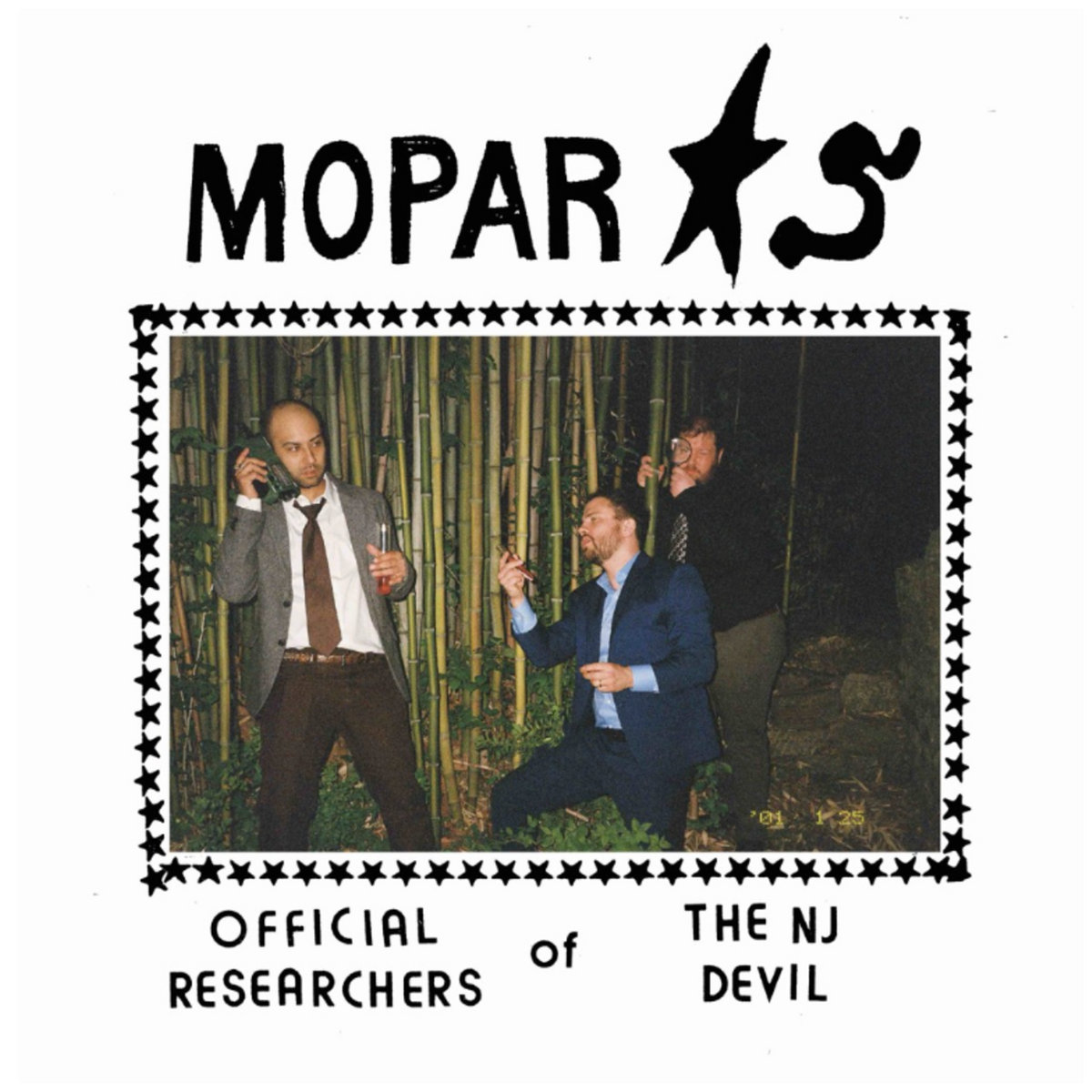
Mopar Stars: Official Researchers Of The NJ Devil
Mopar Stars are built to hit. The songs hit hard and the hooks stick fast, but underneath all that noise sits a genuinely sharp eye for the small contradictions of everyday life, good days next to bad ones, a little optimism curdling into bitterness, just getting by next to wanting more. Where the band’s earliest demos were buried in cassette murk, Official Researchers Of The NJ Devil opens the sound up: bigger, clearer, unpretentious, but still every bit as physical.
Songwriter N-A-O built these tracks to be immediately memorable and let the rest of the band find their own parts around them, and you can hear that trust paying off. This sounds like a band that came up through Hüsker Dü punk and carries that same Replacements-style restlessness, never forgetting how satisfying it is to hit hard. No surprise the first pressing sold out fast.
Stephen Egerton: I Think You’re Overthinking This
The title alone is good advice, and the record follows through on it. Ten songs from the Descendents/ALL guitarist that never once strain for effect. This is craftsmanship with personality, not craftsmanship for its own sake. The flow from one track to the next feels effortless, melodies stick without announcing themselves, and every so often a chorus lands with exactly the punch you didn’t know you were waiting for. Sometimes that’s all you actually need.
The Legal Matters: Lost at Sea
Lost at Sea is The Legal Matters’ fourth album. Keith Klingensmith, Andy Reed, and Chris Richards had already refined their signature sound on 2016’s Conrad. That was the record where I fell for their harmonies, and I haven’t fallen out of love since. Those voices intertwine so naturally, serving songs that carry a distinctly ’70s sensibility, where everything revolves around melody, craft, and the quiet grandeur of the composition itself. No excess. Just the song.
That devotion to the beauty of the song isn’t lost on Lost at Sea. But when you hear the bite, almost the venom, in the guitar on “Everybody Knows,” you immediately sense that something has shifted. There’s an urgency here that wasn’t as pronounced before. The world is boiling, after all, and perhaps a pure L’art pour l’art, a song for the sake of the song, approach no longer feels sufficient.
At least, that’s how it sounds to me.
And strangely, that evolution feels beautiful. Without abandoning their core values, those luminous harmonies, that reverence for melody, The Legal Matters push themselves into different territory. Maybe even more relevant territory. For days like these.
Jesus Christ Taxi Driver: Taxi the Rich
When I first heard “Have It,” the opening track from Taxi the Rich, I couldn’t share it with the Power Pop community on Facebook fast enough. It sounded like a song that could just as easily have come from The Knack as from XTC. Others picked up on echoes of Sloan’s infectious energy and the quirky brilliance of Panorama-era The Cars.
That same creative tension runs through the album’s remaining ten tracks. Along the way, Jesus Christ Taxi Driver also taps into the sharp-edged indie funk sensibilities of bands like Yard Act and Hot Chip, creating a sound that feels both familiar and refreshingly contemporary. It’s a remarkable balancing act, a band that seems to hold the future of Power Pop in their hands, even as they insist on calling themselves a blues band. Or a violent rock band. Don’t let them fool you.
Local Drags: Cool If We Split?
“Hell is in the doorway, blocking light,” sings Lanny Durbin on the highly punchy, melodic “Highbeams,” one of the standout tracks on Cool If We Split?, the new release by Local Drags on the excellent Rotterdam label Stardumb Records. Durbin masters the classic mix of dark lyrics with catchy melodies and sparkling guitars, delivering a power pop masterclass that not only stands out today for its quality, but would have triumphed just as proudly in the 90s, one of the genre’s heyday periods, thanks to its shared sense of urgency and vibe with the most beloved bands of that era.
If you’re a fan of bands like The Shazam and Splitsville, to name just two examples, you’ll recognize that same level of quality when listening to Cool If We Split?. I get the sense that Local Drags is flying under the radar, which is remarkable, because the catalog Durbin is building is outstanding, and Cool If We Split? is a new high point.
Daniel Romano’s Outfit: Preservers Of The Pearl
Like Sloan, Daniel Romano’s Outfit might just be the best band in the world right now, and Preservers Of The Pearl makes that case without breaking a sweat. This is a band completely in tune with itself, forged through countless live performances into something tight, instinctive, and utterly alive. Power Pop songs the way Power Pop songs should sound: to the point, energetic, dangerous, and catchy as hell.
Hurry: Zoned Out
Hurry’s Zoned Out carries that scruffy, hooky warmth that made Nada Surf so easy to love, but the Teenage Fanclub blood runs even closer to the surface, and not just because Gerard Love himself shows up on “Moving After You.” Ten songs in, nothing here is rushed or overworked, just guitars that jangle exactly as much as they need to and melodies that land without straining for it. It’s the kind of record that sounds effortless because the effort went into knowing what to leave out. A quietly excellent addition to the year’s Power Pop pile.
The Greenberry Woods: It’s All Good, Sugar…
Just under a year after Mobtown by Splitsville, the Huseman brothers return with It’s All Good, Sugar…, the latest album from their other band, The Greenberry Woods. It’s an equally pleasant surprise, because twelve good songs in a row is something worth stopping to appreciate, in a world where thirty-second snippets are apparently enough to make a hit.
Not here.
What you get instead is craftsmanship, melody, and a healthy dose of mischief. Pop music has thrived on that combination for as long as it has existed, and The Greenberry Woods make it sound as fresh as ever. It’s All Good, Sugar… could just as easily have been released in the 1990s, and within the world of Power Pop, that happens to be one of the highest compliments imaginable.
Timeless is another. It applies here too.
The Greenberry Woods sound like masters of melodic songwriting, effortless hooks, and the kind of album that reminds you why you fell in love with Power Pop in the first place.
Salieri & The Turnspit Dogs: The Katzenklavier
Corey Landis has built something genuinely singular here. Experiment and melody in a long-distance relationship that works. Wayne Coyne and Mark Oliver Everett are fair reference points, as much as the young Elton John is, but this is its own world, one where the jester holds up a mirror and makes you question what you thought you understood. A tour de force, an artistic and intelligent statement, overwhelming in its beauty and urgency.
Cut Worms: Transmitter
Transmitter is Max Clarke’s fourth full-length album as Cut Worms, produced by Jeff Tweedy of Wilco. I’ve been a fan for a while now, and the reason is simple: Clarke sounds like Paul McCartney paying tribute to Buddy Holly. In my world, that’s about as high as the bar goes. Vulnerability and bravado intertwined so naturally it feels inevitable, like they were never meant to be separated in the first place.
The Well Wishers: Expected Outcomes
“I like a lot of different kinds of music, but the songs I love most are usually torn apart by a guitar after about two and a half minutes.” That used to be my answer whenever someone asked what I was into. I’m not sure it’s still entirely true, and I’m not sure it happens on every track of Expected Outcomes.
What I do know is that the guitars take center stage throughout all eleven songs. The tone, the playing, the power chords, the seemingly endless stream of punchy melodies. It’s absolutely fantastic.
So if someone asks me today what I listen to, my answer would probably be: “I like a lot of different kinds of music, but the songs I love most are usually torn apart by a guitar after about two and a half minutes. And right now, I’m listening to Expected Outcomes by The Well Wishers a lot.”
The Jimmy C: Pretending To Be A Person
Fifteen songs, and Jamie Coghill goes absolutely all over the place with them, country-tinged one minute, seventies rock swagger the next, a stretch of quirky sixties pop, a detour into something almost proto-metal, and none of it apologizes for the whiplash. Diversity wins out over stylistic consistency at every turn, and it should be a mess, but it isn’t, because the one rule that never bends is that the song is king. Whatever genre Coghill is trying on, the hook always comes first. Criminally under-known, and a genuinely fun record to get lost in.
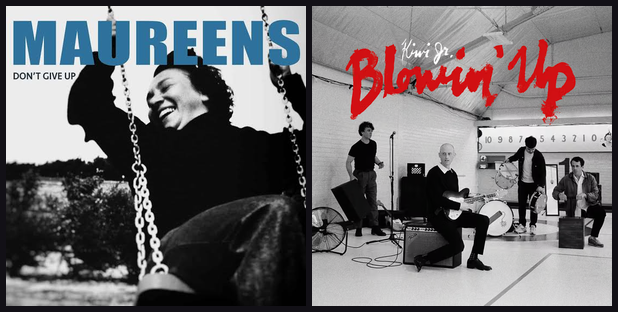
The Maureens: Don’t Give Up
The Dutch live music scene overflows with cover bands, while the airwaves are dominated by party pop sung by fresh-faced young artists celebrating little more than a night at the local pub. The Maureens are the antithesis of all of that. No trend-chasing, no pub anthems, no calculated appeal to radio formats, just classic songcraft, chiming guitars, and melodies rooted in the golden age of guitar pop.
Don’t Give Up contains thirteen tracks, one meticulously crafted gem after another. Handmade, thoughtful, deeply human. No grand statements, just sincere and personal stories told with warmth and precision, melodies that linger long after the album ends. It’s earned them a home on Spain’s Meritorio Records, which makes perfect sense: few places in Europe have championed Power Pop as consistently or as passionately as Spain.
There’s something bittersweet about that for Dutch music fans. The Netherlands has produced brilliant guitar-pop bands, Johan, Daryll-Ann, Moss, and now The Maureens, yet so much of it remains hidden in plain sight. Thankfully, I found them. I hope more listeners will too.
The Creepy Jingles: Against All Opps
Six tracks, no wasted motion, and a title that doubles as a mission statement. Against All Opps comes from a band that clearly couldn’t care less about trending. “You Don’t Trend” says as much right out of the gate, and instead the record spends its short runtime chasing hooks that stick on the first pass. Titles like “Throw Me in Some Rice” and “Funhouse Mirror” hint at a band with a sense of humor that never gets in the way of the songcraft. It’s a small, slightly odd, thoroughly likeable record, hidden in the sweet sweet melodic jangle jungle where it belongs.
Kiwi Jr.: Blowin’ Up
Four years after Chopper, Kiwi Jr. return with Blowin’ Up, and the Toronto band’s restless jangle-and-garage charm hasn’t gone anywhere. It’s just more open, more confident, more lived-in than before. That didn’t happen by accident. After years of moving from record to record without much of a break, the band finally let themselves stop, write, throw things away, and figure out what still excited them about playing together. Ten years in, they know each other’s strengths well enough to steer with more confidence and take a few real risks with arrangements and time signatures, without ever overthinking the process. Putting themselves on the cover for the first time feels like the right, old-school way to mark that shift.
Sixteen albums in, Vinny Peculiar has long since carved out his own peculiar corner of British songwriting, literate, funny, warm-hearted and quietly eccentric, with an eye for the characters, contradictions and absurdities of everyday life. Classic English pop melodies carry the words, the songs always flowing easily even when the ideas take unexpected turns.
His new record, The Curse of You Know Who, finds him as curious as ever, wandering through conspiracy theories, misinformation, alternative realities and modern pop culture, with personal histories inevitably finding their way into the songs.
We spoke to Vinny about the ideas behind the record, how the songs took shape, Katy Perry in space, AI girlfriends and what comes next.
After sixteen albums, the remarkable thing is that the well still seems to be full of stories, characters and strange little worlds. Where did the inspiration for The Curse of You Know Who begin?
Writing in recent years I’ve taken a ‘concept’ and hung stories/ideas on it/them, so with The Curse of VP it was [mostly] conspiracy and misinformation feeding into song titles and angles, so you get alternative beliefs, some of them reimagined and mixed up with my own history. Moon Landing features a former headmaster…and plays with the popular idea of Kubrick’s stage management of the landing. I’m interested in people who flaunt popular wisdom and develop their own realities, ‘Billy Liar’ did a lot of that just to survive. AI Girlfriends work on a similar level of self delusion. Governments are very keen to call out conspiracy theory, there’s always more to it than they’d have you believe…
Your lyrics are obviously a huge part of what makes a Vinny Peculiar song a Vinny Peculiar song. But listening to this album, I’m struck just as much by the melodies and how effortlessly these songs seem to move. When you start a song, what comes first: the story, the words, the melody, or can it be any of those?
Different songs start in different ways, sometimes I’ll have a title and write on acoustic guitar or piano and things happen simultaneously, this was the case with Katy Perry, it started life as a country n western song. The harder edged rock songs are typically developed from riffs beats sounds and such in my home studio. Sometimes I’ll have a title but often I’ll develop the music first, cut it all up to suit. Flat Earth was a bit like that, I recorded several versions….
Katy Perry in Space is a great example. Everyone already has an opinion about Katy Perry going into space, so how do you turn something that is already part of the public conversation into a song that feels like it belongs entirely to you?
Katy Perry well yes, such a bizarre story, and true apparently, I have nothing against her, she’s a great pop writer but I don’t think this was her finest moment. I just tried to gently point out that there’s all this madness and suffering here on planet earth and she’s taking selfies in space on a vanity trip…
The album moves from Katy Perry in Space and AI Girlfriend to Flat Earth, Runcorn Abductions and Moon Landing. There’s clearly a fascination with conspiracy theories and alternative realities running through it. What attracts you to that world?
Its a fascinating world yes, I like to think I’ve retained a certain level of ambiguity in mining these ideas, in part I’m having some fun with it but there is more to it than popularism decrees, that much I do know…
You’ve made enough records now that you presumably know what a Vinny Peculiar album needs to be. Is there actually a formula that you can rely on, or does starting a new album still feel slightly uncertain and unfamiliar?
I’m always looking for ways to deliver albums in a ‘different’ way, I’ll be recording in rural Sweden soon which will spark a whole new ‘vibe’ I like to think. Watch this space, and thanks for having me.
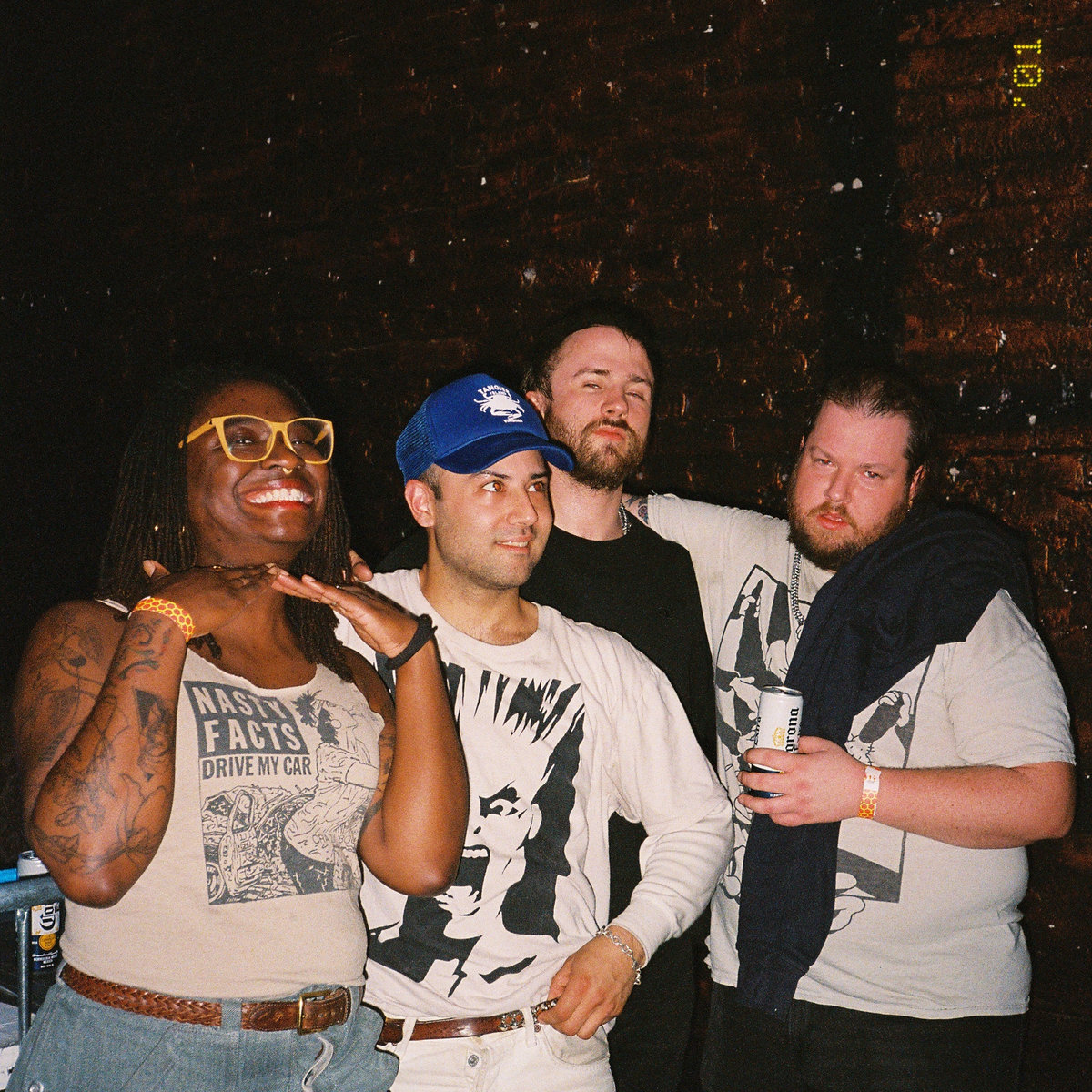
There’s an immediacy to Mopar Stars that doesn’t need much explanation. The songs hit hard, the melodies stick, and underneath the noise there’s a sharp eye for the contradictions of ordinary life: good days and bad ones, optimism and bitterness, getting by and wanting more.
On their new release, Official Researchers Of The NJ Devil, Mopar Stars have taken the raw energy of their earlier recordings and opened it up. The sound is bigger and clearer without losing its edge, giving the hooks, voices and sheer physical force of the band more room to land.
We spoke with N-A-O about making the record, the importance of lyrics, trusting the rest of the band, turning songs into something that hits hard live, and the unexpected response to the album so far.
The sound of Official Researchers Of The NJ Devil feels raw and immediate, but at the same time it is huge, melodic and incredibly catchy. How did you find that particular sound for Mopar Stars, and was it something you were consciously looking for?
I wanted the recording to sound modern and unpretentious. I also wanted the backing vocals to be very clear this time.
Our first two demos were all smashed onto cassette and have this murky, distorted sound. I’m a big fan of that, but for the LP I wanted to record more tracks and have them be immediately discernible and memorable.
As far as the songwriting goes, the melodic and hooky nature of the record is definitely on purpose. I tried to make it catchy, for sure.
There is a darker side to the album hiding inside all those great riffs and hooks. Songs like “Everybody Wants What I Got” and “Only Bar In Town” almost become bitter anthems about work, money, loneliness and the way people try to get by. How important are the lyrics to you, and do you see the songs as being connected by that darker view of everyday life?
I would say no, the songs aren’t connected by a pessimistic outlook. Some of the songs on the record are bright and sunshiny, and some are bitter and dark. As a person, I don’t feel the same every day. I wanted the record to reflect the good and bad qualities we all possess, and the good and bad thoughts we all think.
The lyrics are very important to me, and I take a lot of care when crafting them. The vocal performance and lyrics are the second most important thing that makes a song good, behind the drums!
What is the dynamic within Mopar Stars when you are writing and recording? How do the different personalities and ideas in the band shape the songs, and is there much pushing and pulling before a song becomes what you hear on the record?
There isn’t a lot of pushing and pulling. I write a completed song and teach it to the band.
That being said, the band is really good and we’re very comfortable together. I believe it’s important to let the band make their own parts, mostly. I basically let them do whatever they want, then edit with them. Bill also offers arrangement help and advice.
There is something very physical about these songs. You can almost imagine the room going completely nuts when you play them live. Was making a record that would really come alive on stage one of the goals when you started working on it?
It wasn’t a conscious choice when I wrote the record. I think the live forward quality of the record comes out more when we start playing the songs together in our practice space.
Everyone comes from punk music, so having it be “hard hitting” is something we absolutely consider.
The album is out now, so it has left your hands and people are starting to form their own opinions about it. What has surprised you most about the way people have responded to Official Researchers Of The NJ Devil so far?
I was surprised to sell out the first pressing really quickly. That was nice.
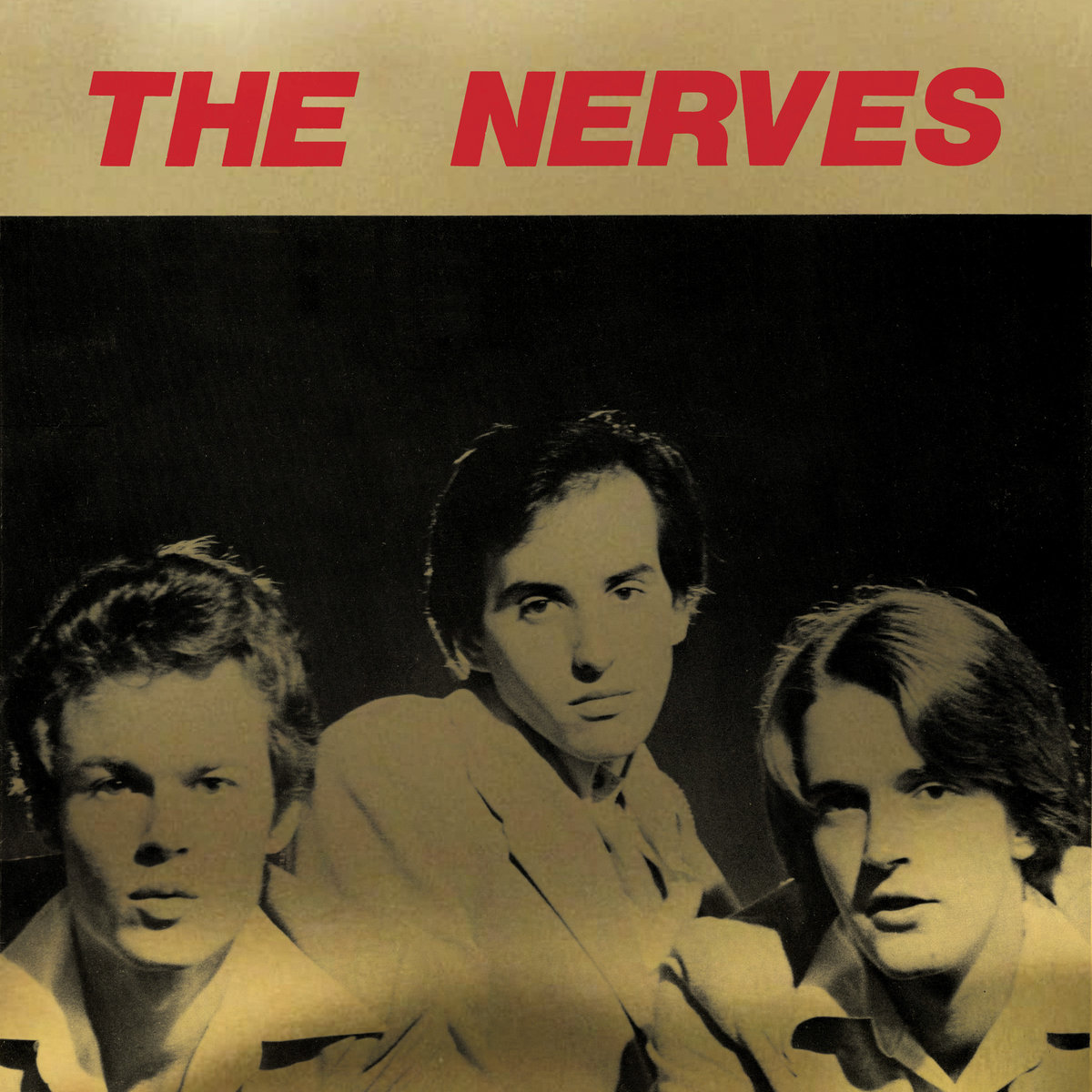
You wanted the best. You got the best. The coolest band in the world. The Nerves.
Fifty years on, The Nerves somehow still sound urgent, sharp and impossibly cool. The Los Angeles trio of Jack Lee, Peter Case and Paul Collins left behind only a small body of officially released music during their original lifetime, but their influence and reputation have only grown with the years.
Now a new release from Third Man Records opens the archives and tells a much bigger story: 29 songs drawn from across the band’s brief but extraordinary existence, assembled from studio recordings, living-room tapes and live performances.
We spoke with Paul Collins about digging through 50-year-old tapes, the small miracles that made the collection possible, working with Third Man Records, and why new generations continue to discover The Nerves.
This is an incredible overview of The Nerves: 29 songs bringing together recordings from different periods of the band. What can we expect from this collection? Are there recordings or versions on it that you’re particularly excited for people to hear?
Yes I’m very excited for people to hear this record. It has the best recordings of the songs that we were working on from the time period of 1974 to 1977. All of these songs would have been a part of a Nerves album had we been lucky enough to make one.
They are all recorded versions either in studios or in living rooms but mixed properly, except for the songs that were recorded Live at The Starwood. The sound quality is just fantastic because we were able to find the source tapes to practically every single song on this record so it’s it’s really the very best of The Nerves.
How did the idea for this particular release come about? Who first had the idea to bring all this material together, and when did Third Man Records become involved?
Well it came about when we realized that it was the 50th anniversary of The Nerves and Jack Lee’s daughter Cynthia was managing his estate after he passed away and she really wanted to do something to commemorate her father’s Legacy.
I do believe that Jack had asked his daughter if she could try to get Third Man Records to put this record out for the 50th anniversary. He knew about the label and about Jack White. Cynthia was really very instrumental in speaking to them and when they heard that there was the possibility of making the record they asked if both Peter Case and myself would be involved and of course we said yes, at which point they said we’d like to hear what you guys want to do. When they heard the material they agreed to put it out and then it just snowballed from there.
They did an absolutely incredible job mastering all the the songs and organizing the archival material and they put together an absolutely stellar package. A double album on red swirl vinyl and it couldn’t be any better for a 50th anniversary release for this band.
It must have been an enormous job to put this collection together. How much searching and digging was involved in finding the original recordings, and were there any discoveries during the process that surprised you?
Yes there were a lot of Small Miracles involved with getting all these tapes for the record. Some of them were in storage bins in Redding, California there were some in Los Angeles there were some here in New York. We would find these boxes of tapes, some of them were marked some of them were unmarked. They have been sitting around for 50 years so we didn’t know whether the tapes would be completely corroded or if they would be usable. When we transferred them we were sitting on the edge of our seats not knowing, and finally when the transfers came back it was amazing the music was in pristine condition and it was just fantastic!
The biggest surprise was when I found a cassette that I had transcribed for a release I did a number of years ago called The Best of The Archives In Another World. On that tape was a live session done in the very beginning of The Nerves on a realistic tape deck of me, Jack and Peter playing I Need Your Love and Paper Dolls and One Way Ticket. You can really hear the band as we were in the beginning, how we worked up all the songs. I was playing drumsticks on a phone book, Peter was on his Hoffner bass and Jack was playing his Rickenbacker. That’s how we worked up the songs. It really gives you a bird’s eye view of how the band formed way back in the beginning. Also a friend of the bands sister had recorded The Nerves at The Starwood. She has the tape recorder in her purse! She left the purse with the recorder in her closet and found it 50 years later!
And then there’s Third Man Records. How did the relationship with Third Man come about? And what does it feel like to see The Nerves’ music given this kind of new life by a label like Third Man?
Like I said Cynthia is really responsible for the initial conversations with Third Man Records. Once they agreed to do it both Peter and I and Cynthia spoke with their head of production Dave Buick in Detroit and Dave orchestrated everything at Third Man and with with their art Department headed up by Roe and the mastering which was done by gentleman called Warren. It’s all in-house at Third Man. Everybody knows what everybody’s doing and there was a lot of excitement about the project. There was a lot of tender loving care put into every aspect of the project. The mastering and the artwork, it was all done with the utmost of care.
After all these years the little band that could, is, and Third Man is taking us to a huge audience. A much bigger audience than we have ever been able to reach. There will be a whole new world out there that will get to hear The Nerves and that is very exciting and very satisfying!
It’s almost incredible that, after all these years, there is still so much interest in The Nerves based on such a relatively small number of released songs. Young generations keep discovering the band. How do you explain that The Nerves have always remained so genuinely cool?
To me personally I think the reason why The Nerves has endured all this time is because we spared absolutely no amount of time or energy in trying to be the absolute best we could be. We aspired to be as good as we could possibly be, and we would not give up until we thought we had achieved that.
I learned so much in that regard, by working with both Jack Lee and Peter Case, and what it takes to try to climb all the way to the top.
The Release Date for Best Collection is October 23, 2026
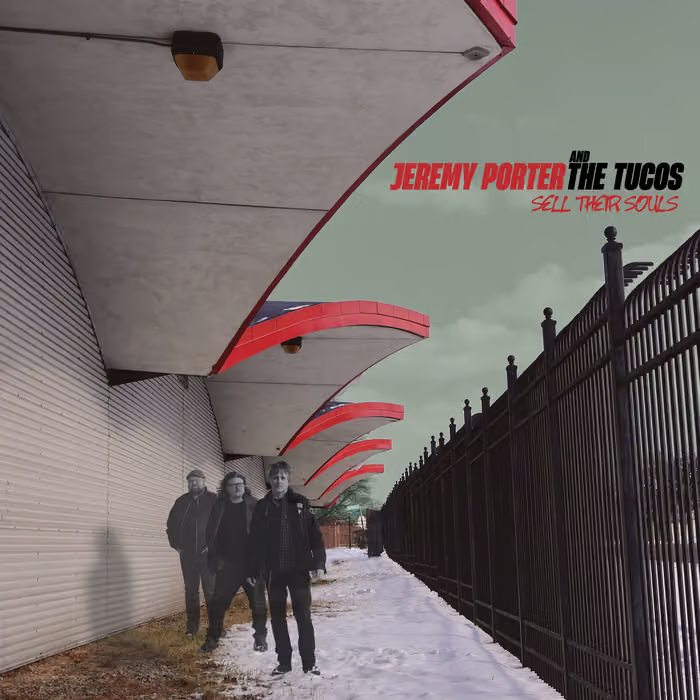
With Sell Their Souls, Jeremy Porter and The Tucos have made what may be their hardest-rocking record yet — but that doesn’t mean they’ve abandoned the hooks, twang and power-pop instincts that have always been part of Porter’s songwriting.
After close to four decades of making music, Porter still seems far more interested in what comes next than in settling comfortably into a particular sound. We caught up with him to talk about the heavier edge of Sell Their Souls, taking unexpected turns in the studio, the songs that proved hardest to crack, and why continuing to move forward remains essential.
Sell Their Souls has a particularly tough and swaggering sound to it. There’s a great mix of power pop, punk, rock and alt-country, but to my ears the balance feels a little heavier and rougher than on some of your earlier work. Was that something you consciously wanted to explore, or did the songs simply take you there?
Hey there – thanks for having me Patrick and thanks for those kind words! Yea this is probably the most “ROCK” album I’ve ever done. I’ve been into metal and hard rock since I was 9 years old, and my love for that stuff has only grown. We listened to a lot of metal and hard rock at my house during the pandemic, and I suppose it was bound to seep in a little deeper than it had before, but it wasn’t calculated.
I write constantly and it’s all over the place, as you sort of allude to, but the focus is on quality of song over genre of song. The feel or vibe – heaviness, twanginess, popiness, mellowness, whatever – that all comes into play when we’re deciding which songs to record, and especially when sequencing the record. That sequencing part is really important to me – that the album flows well from song-to-song and overall. This is when I start to think about things like “ok after these 2 heavy songs we need to take it down for the next track…” or “those two songs sound too similar to be next to each other…” stuff like that. So I guess, to answer your question, it wasn’t calculated, but it was something that’s always in play throughout the project.
Change the Rules really struck me as a tour de force. It moves through different tempos and moods, and the arrangement keeps opening up as the song progresses. How did that song develop, and did you know from the beginning that it was going to become something bigger and more elaborate?
Thanks! Yea that’s one of those harder-rocking songs that starts to get a little proggy, for us at least, and kind of sets this album apart from our previous work. It came together with that intro riff, that I think is sorta Drive-By Truckers-ish, then the hard-rock chunks in the verse, so none of that is a big departure for us, but I’m always looking to do something different, something we’ve never tried, and switching to 6/8 time for that middle section and especially hiring a real string section and composer to do that orchestration is WAY out of our wheelhouse. The idea for the strings came in the demoing stage, might have been Gabe that brought it up. So we did a primitive string arrangement with synthesizers on the demo, which was fun and helped us decide… is this cheezy? Does it rule? Do we care? Just one of those things to make the song stick out, get out of our lane and take new chances in the studio, and see what happens! I’m so glad you dig it!
The Real McCoy is my favorite song on the album. It seems to bring together so much of what I love about The Tucos, while your vocal feels particularly pure and direct. I also love the way the music seems to be all over the place while the relationship in the lyrics seems to be going in much the same direction. What does that song mean to you, and how did it come together?
It’s so fun for me to put out a record and hear what peoples’ favorite songs are. You’re the first one to even mention that song I think! I brought it in and we struggled with the arrangement and the feel of everything except the verse, which fell in very naturally. We had two big issues – it was too long, and the chorus wasn’t enough of a hook. Well, we cut a chorus out and replaced it with the bridge, so it was at a better length. Then at one point before we demoed it we were at The Loft, one of our favorite studios here in Michigan, working on something else and talking to Tim Patalan, the main guy there who’s been a big part of everything we’ve done, and I asked him about the chorus, told him we were struggling with it, and he just knew right off – “you gotta go full-STONES on it!” so we did exactly that, because Tim knows his shit, and it made the whole thing just work. It’s still the longest song on the record, and I get heart palpitations when songs approach 4 minutes, but I like how it turned out. Hope Jagger gets his ears on it!
You’ve been making records and playing in bands for more than three decades, and you’ve moved through punk, alt-country, power pop, solo work and The Tucos without ever seeming particularly interested in staying in one lane. At this point in your career, do you still feel like you’re searching for something, or have you reached a place where you’re simply comfortable being Jeremy Porter and letting the music take whatever shape it wants?
Closer to 4 decades bud! But yeah, that’s a loaded question, isn’t it? I’m always searching for something, always looking at what’s next, how I’m (or we’re) gonna make it different, better, fun, exciting… but I’m also always just me, so it’s gonna have some hooks and it’s gonna have some lyrics that hopefully mean something to or provoke a response from somebody, and it’s gonna be guitar heavy and we’re hopefully gonna get out of the song and off the stage before we wear out our welcome. I don’t think the lane shifts are that drastic, they’re all on the same highway anyhow, though it’s a fairly wide swath of heavy/distorted amps and spacious/acoustic guitars, and all points between, I guess.
Id’ guess that most singer/songwriters and touring musicians aren’t particularly comfortable with their own self-image, in their own skin, or whatever. I’m not much different. Putting myself out there with lyrics, performances, writings, even social media posts – yea, I can’t say I’m comfortable with any of it, except probably the performance part, which, when going well, is where I am at the most peace. Or maybe “peace” isn’t the right word, because rock and roll isn’t supposed to be peaceful, but let’s say content. It’s a difficult line to tread these days, trying to get your stuff out there while presenting yourself the way you want. I’m so far from an expert at it.
You’ve said that Sell Their Souls is your favorite thing you’ve ever done — while also admitting that it’s probably too fresh to know where it will ultimately sit in your catalog. That made me wonder: after all these years of writing, recording and touring, what does a record have to do now to make you feel that you’ve moved forward? What are you hearing in Sell Their Souls that tells you you’re not simply repeating yourself?
Well, context is probably important here, because I’m not sure when or where I said that, but I think it was in the context of…the newest thing is SUPPOSED to be your favorite thing, and if it isn’t then you did something wrong, yea? But yes – these things have to have some time behind them before I and talk about them objectively. But I am proud of it, and I do think it’s good.
I think a lot of what we talked about above speaks to why this record isn’t just a repeat of previous albums, just like I don’t think Dynamite Alley was or Candy Coated Cannonball before that. I remember when we were making Don’t Worry…It’s Not Contagious, our bassist at the time Patty said he felt it was basically Above the Sweet Tea Line part 2 – not a big enough departure, not enough new ground. I don’t necessarily feel that way, but I did take it to heart and put more effort into working harder on doing new and different things from that point on. It started with songs like “Put You On Hold” and “Dead Ringer” from Candy Coated and remains with songs like “Real McCoy” and “Rosencrantz” and “Change the Rules” off the new one.
It’s important to me to keep moving. Existing in this rock and roll world is more or less my life, and doing it for so long now is – in itself – some level of success for me, but without moving forward – new ideas, new directions… it would just turn into work. I could probably make more money and get bigger accolades playing in a tribute band or doing covers gigs, but I’d just as soon wash dishes or work at Taco Bell at this point.
The Nits have been one of the most innovative Dutch pop bands since the late seventies. Innovative not because they have spent nearly five decades chasing novelty, but because they have never stopped reinventing themselves. What began as a sound with strong echoes of Kraftwerk moved through New Wave and Art Pop and has, by now, arrived somewhere in a landscape of ambient storytelling.
In terms of creativity and carefully directed spontaneity, I sometimes think of Talking Heads and David Byrne, only without the funk. There is a similar refusal to settle into a recognizable formula, a similar sense that every album should somehow create its own little world. I could also point to Joe Jackson and his restless drive to explore new musical territory, but comparisons ultimately miss the point. Because what makes Nits so interesting is precisely that they don’t really sound like anybody else.
And perhaps that is because they may be the most European pop band there is.
Their music doesn’t have its roots primarily in American blues, jazz or rock & roll. Its foundations lie just as much in the European avant-garde, classical and art music, and, inevitably, The Beatles and The Kinks are part of the equation too, as they are the inspiration for all good pop bands. But even more than in the music, their European identity reveals itself in the lyrics. Nits songs are populated by people going to a play in Helsinki, taking a train to Switzerland, living behind the Dutch dikes, or discovering that in the Netherlands every little boy is expected to join a football club, including the ones who would rather not.
Those are just a few of the subjects that appear on In the Dutch Mountains, the 1987 album that marked the band’s commercial peak, at least here in the Netherlands, and perhaps its artistic peak as well. Because as much as I love many of their songs, I don’t think they ever made a better one than the album’s title track. Not necessarily because it is their most ambitious or adventurous song, but because everything that makes Nits unique seems to come together in those few minutes: the melody, the melancholy, the strangeness, the humour, the unmistakably European imagery and that peculiar ability to turn something very ordinary into something almost mythical.
This blog isn’t meant to be a complete history of Nits. There are plenty of places to find one, and after almost fifty years there would be far too much ground to cover anyway. I mainly want to share my enthusiasm for a band that, I am convinced, could appeal to a much larger audience than the one that currently knows them.
And I want to do that through three of my favourite Nits albums.
They are not necessarily the three albums I would recommend as an introduction to the band. If you don’t know Nits at all and have become curious, there is the excellent compilation Nits Hits. Better still, there is Urk, their magnificent 1989 live album. Start there and you get something close to a map of the Nits universe as it existed at the end of their most celebrated decade.
But my own route leads somewhere else.
TENT is the 1979 debut, and on it you hear a very different Nits to how they sound today, a band much more inspired by Kraftwerk than by the Sex Pistols. A few years ago, Nits decided to revisit their earliest records and perform the first few albums live in their entirety. During rehearsals they made an amusing discovery: it had seemed like a great idea, until they realised that the songs were considerably more complicated to play than they remembered.
And perhaps that tells you something important about TENT. The New Wave you hear on the surface may sound angular, immediate and relatively simple, but underneath it is music that is surprisingly intricate and layered. Nits were already thinking like arrangers rather than simply like a New Wave band. In that sense, TENT belongs alongside the records by those more ambitious bands that, while the seventies were still coming to an end, were already busy inventing the sound of the eighties.
And then, then comes Ting.
Released in 1992, Ting feels like the moment when Nits decided to remove almost everything that wasn’t absolutely necessary. Even the title sounds like the record. Ting: the sound of a raindrop, perhaps, or a bicycle passing by, but above all the sound of a piano key being struck.
The piano on this album is extraordinarily clear. On a first listen, its sound may occasionally bring to mind Keith Jarrett’s The Köln Concert or Philip Glass’s solo piano music. I don’t mean that Ting resembles either of them musically in any straightforward sense. It is the physical quality of the piano that creates the association: the touch of the keys, the space around the notes, the way every tone seems to exist for a moment on its own before disappearing.
And that space is essential to Ting. Where other bands might have filled it, Nits use it as an instrument. Songs seem to emerge from silence and retreat into it again. Small sounds suddenly matter. A note, a voice, a piece of percussion, a pause: everything has weight precisely because there is so little competing for your attention.
It is a remarkably restrained record made by a band that, by then, had already proved how much it could do. Ting is interesting because Nits chose instead to show how much they could leave out.
dA dA dA, from 1994, is probably Nits’ most solid album. And by solid, I mean solid in the way Crowded House’s songs and albums are solid: always good, always distinctive, seemingly effortless and built to last. If you stretch that comparison a little further, then Whales of Tadoussac is the album’s Don’t Dream It’s Over. But the difference between those two titles already tells you how limited the shelf life of that comparison is. Crowded House may be a useful reference point for the craftsmanship, but Nits remain far too peculiar to stay inside it for long.
That becomes increasingly clear in the album’s second half, where the band’s more adventurous, artistic side gradually takes over. The songs become less straightforward, the atmosphere stranger, and the record starts moving into territory that could only really belong to Nits. It is also here that Day and the Night, my personal favourite, appears, tucked away in the second half of what I consider one of the high points of their entire oeuvre.
For those of you who have somehow remained unaware of Nits until now, I wish you a very happy journey of discovery. There is almost fifty years of wonderful, strange and unmistakably European music waiting for you.