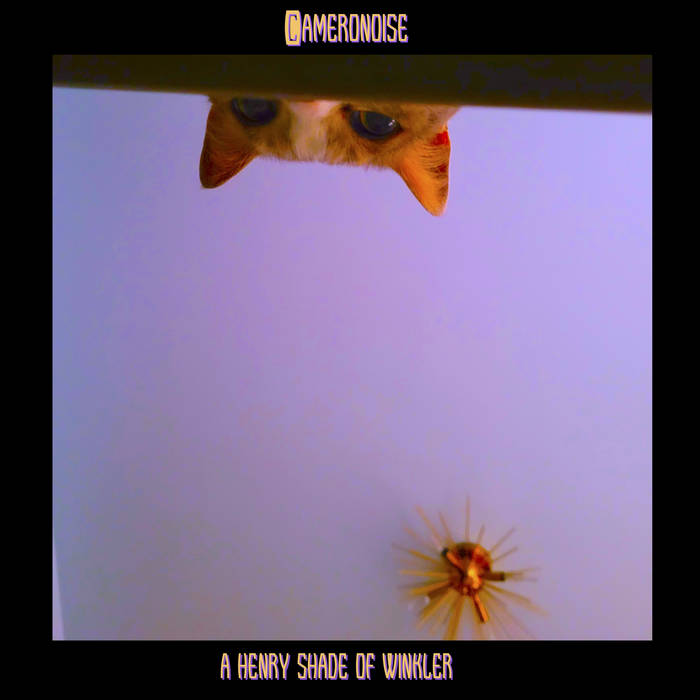
Cameronoise, the band led by Tim Cameron, delivers a captivating blend of instrumental Power Pop. Their music is not only incredibly infectious but also infused with a delightful sense of humor. It might make you ponder whether instrumental music can be funny, but trust me, it definitely can be. Just give a listen to ‘A Henry Shade of Winkler‘ – the very name of which brings a smile to my face and is a testament to their cleverness. It’s impossible to resist getting swept up in the joy of their sound, and before you know it, you’ll find yourself dancing with an ear-to-ear grin.
You can pick 3 co-writers to write new songs with. Who? … and Why?
Andy Partridge, Burt Bacharach and George Gershwin. Had you asked me the same question before the pandemic, I probably would have picked Elvis Costello, Joe Strummer, and Billy Bragg, because I was doing the one-man-punk-band, singer-songwriter thing, and lyrics were a big part of that. But since going with a full instrumental project, I’ve started to pay more attention to melody and chord progressions. Even though I always knew those were a vital part of the songwriting process, I’m really embracing them and focusing on them much more now. The chord progressions and overall song structures used by Partridge, Bacharach, and Gershwin are (or were) incredible, and so much more interesting than the usual three or four “same old same old” chords that are overused in so many pop songs.
What’s the gig you will always remember? And why?
In the 1990s, I was in a “British Invasion” tribute band in Toronto. We played exclusively 1960s songs by The Beatles, Rolling Stones, Yardbirds, Animals, Kinks, The Who, Manfred Mann, etc… One of our regular venues was a pub where the clientele were almost entirely ex-pats from the UK, and were the right age to have been part of the whole Mod-60s-Swinging London thing back home, so they loved us.
One night in late August 1997 we started the first set of the night and everything seemed normal, although near the end of the set I noticed that the televisions at the far end of the bar had switched from the usual football (or soccer as it’s called in North America) to CNN. The volume was turned down on all the televisions since it was a live music night, so we couldn’t hear what was being said, but the words “Princess Diana Injured” kept popping up on the screen. At that time, Diana would make headlines if she caught the flu, so none of us thought anything of it, and after a few minutes our break was over and we returned to the stage for the second set.
By the time we finished the second set about forty minutes later, the words on the screen had changed to “Princess Diana Critically Injured”, and the mood in the bar got very sombre. The volume was turned up on the televisions, and as the details of Diana’s car accident slowly trickled in, the audience began slowly trickling out, probably to get home and call family back in the UK.
Just as we were preparing to start our last set of the night, the words “Princess Diana Dead” filled the screen, and we were left wondering what to do. After a brief discussion with the bar manager it was decided that we should play and try to cheer everybody up. The first song of that set was supposed to be ‘Drive My Car’, but we decided that was a bad choice under the circumstances, so we quickly substituted the next Beatles song from later in the set, which was ‘One After 909’. As I counted the song in for the band I looked out and saw several people sitting at their tables crying. Or at least they were crying until we sang the first few lines of the song which included lyrics like “My baby says she’s driving on the one after 909… Come on baby, don’t be cold as ice…”, at which point we started to get some angry stares. We made it through another couple of songs and then decided that cheering everyone up was a losing battle, so we ended the show there.
The volume was turned back up on the televisions then, and by that point the blame for Diana’s crash was being placed on the paparazzi who’d been chasing her. A few minutes later I was at the bar waiting to get paid for the gig and happened to be standing next to one of the regulars, a fellow named Al. Al had been in the Scots Guards, so his loyalty to the Royal Family was unwavering, and even though he was well into his 60s he was still a physically imposing figure. He immediately started cursing “It was those goddamn pavarottis!”, and suddenly I had a vision of a bunch of opera singers running after Diana’s car. The weirdness of the night finally got to me, and I had to do everything in my power not to start giggling at the absurdity of it all.
A couple of months later I contacted the bar to see about playing there again, but the bar owner said that the drink sales were really poor the last time we played there (the night of Diana’s death), so he’d maybe call us if he had an opening. Which he never did.
How do you balance experimentation with commercial appeal in your music?
I think maybe there are two types of experimentation: one that’s strictly experimentation for the sake of showing off how much one can experiment, and the other that breathes new life into a song by breaking a few cliches and inventing a new idea that becomes a hook or an earworm. I try to throw in experiments that will compliment the song, and catch the listener’s attention and hopefully make them say, “oh that was cool!”.
When was the last time you thought ‘I just wrote a hit!’?
When I was 16. Apparently I was mistaken.
What compliment you once received will you never forget?
“I like your sideburns!”, which doesn’t sound like anything special, but you should have seen the girl who said it.
What’s up for the next couple of months?
I’ll keep plugging ‘A Henry Shade of Winkler’ here and there, and I’ve already started recording the next album, which will probably arrive sometime in January.

