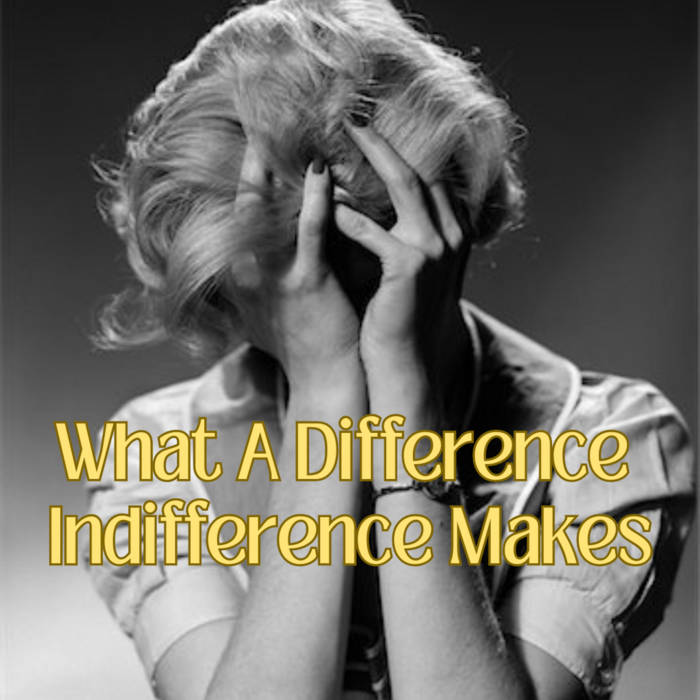
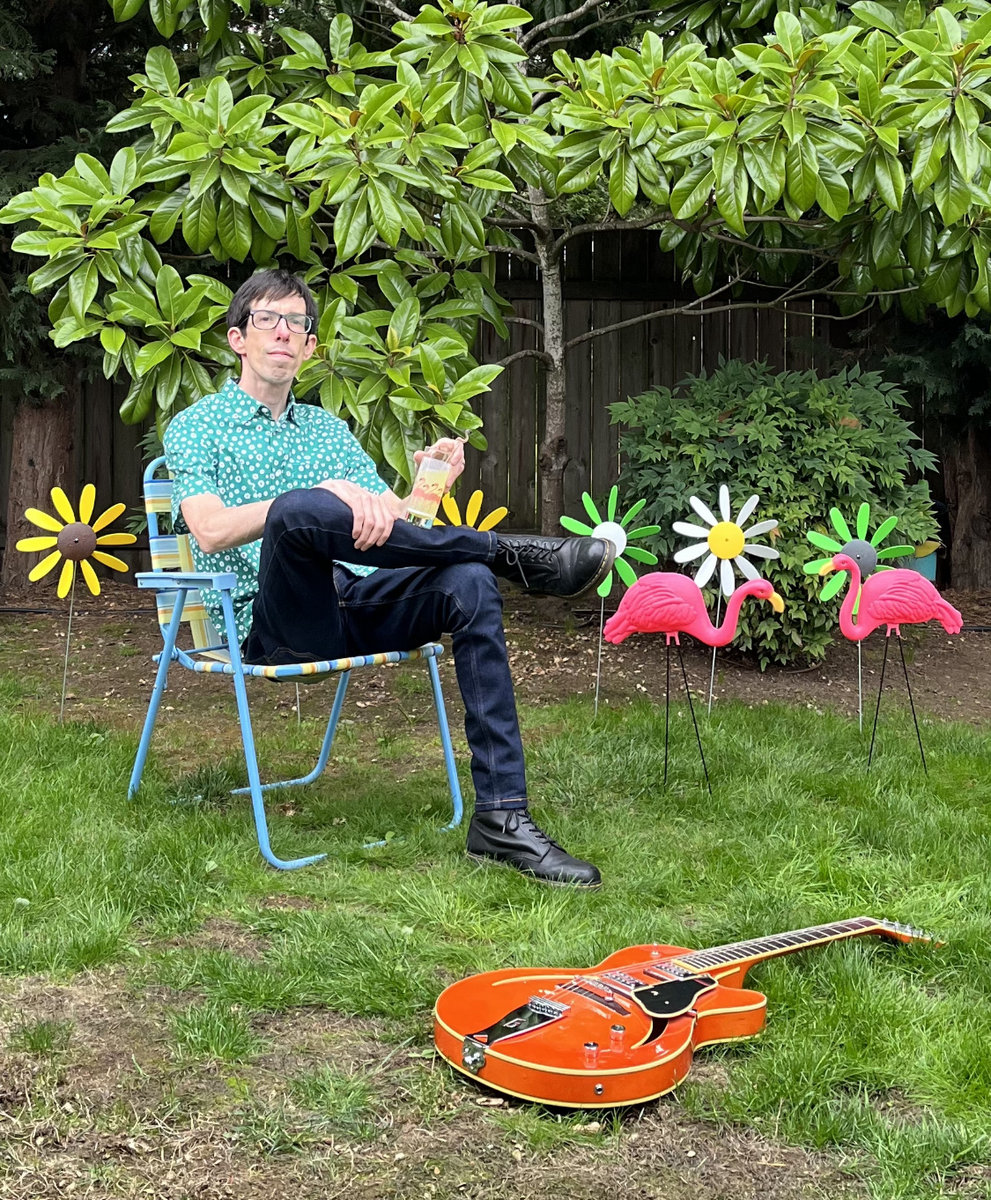
John Dunbar’s creative prowess soars when he sets boundaries. His album ‘What A Difference Indifference Makes‘ was initially planned as a collection of ‘piano songs,’ and it stays true to that vision. However, Dunbar is quick to point out that it won’t offer a reimagined take on well-known piano songs like ‘I’m Still Standing,’ ‘Piano Man,’ or ‘The Way It Is.’ Instead, as Dunbar elaborates in an interview with Sweet Sweet Music Blog, listeners can anticipate something entirely different.
Be sure to catch ‘I Wonder If She Colors Her Hair Now’ featured on the ‘The Best Power Pop of 2023‘ Spotify playlist.
John, the lyrics for the opening track ‘I Wonder If She Colors Her Hair Now’ are just captivating.
“Track her down? No, I wouldn’t dare now To the past I shouldn’t compare now Who’s marching to the beat of her snare now I wonder if she colors her hair now”
That ‘compare’ and ‘snare’ rhyme must have felt like a win besides the title, right?
Most of the time, with me, it all starts with a song title. Once you have a beguiling song title, the song almost writes itself. It can inform the feel of the song, set up the storyline, and finding the catchiest melody to sing that phrase can get the ball rolling.
“I Wonder If She Colors Her Hair Now” lent itself to some fun and meaningful rhyme schemes. I’ve been accused of having too much faith in song titles. When I look at the tracklist of an album and see banal song titles, I think the songs will be even more banal. So, I always try my best to do the opposite. Someone told me that this song was a fresh approach to the one-who-got-away song genre. I’ll take that.
The title hints at how long she’s been gone. I hope it comes across that the character in the song isn’t judging her if she does color her hair. In the bridge, you get the idea that he hopes she doesn’t, since he’s certain she’d be as beautiful as Emmylou Harris if she went totally grey.
The vibe of ‘What A Difference Indifference Makes’ feels so airy, making the songs incredibly approachable. Was that the aim when you began writing?
When I gave myself the challenge of making a piano/keyboard album, I feared it might come across as redundant, boring. I hope it doesn’t. Airy and approachable sounds like a nice description to me. I think what kept it from being repetitive was that they were not all written on piano. “You Really Got Meh” started as a strummy, acoustic guitar song that I wasn’t sure would become a John Sally Ride song or end up on some other project. When I tried it out on piano, it really opened up the song and gave it a completely different feel from the way it was originally written. That seemed to create the method for the rest of the album.
When I heard this was your piano-centric album, I expected hints of Billy Joel, Elton John, Ben Folds, or Bruce Hornsby, but it’s pleasantly different. Can you elaborate on what crafting a ‘piano album’ means to you and who inspired you?
I am thrilled that you said that. I did fear people would think I was pulling an Elton/Ben Folds thing. I think what saved me from not sounding that way was not being a very good piano player. I’m semi-adequate. That kept things simple and direct. I play piano like a guitar player. I voice chords without using my thumbs. We’ve been working on a new John Sally Ride album this year. When Joe Pampel adds his guitar and sends them to me, it’s like Christmas morning. What he adds in riffs, solos, chording never fails to blow me away. He changes songs into something I didn’t expect. When I started working on “What A Difference Indifference Makes,” I felt so inferior as a guitar player compared to what I was hearing on those future John Sally Ride tracks, I thought to myself, maybe I’ll just do the album without guitar. So that became the challenge and theme. It was fun to come up with melodic runs, fills, and riffs on keyboards. I would not have come up with them had I been using a guitar in those sections.
What led you to handle everything independently this time around?
I have way too many ideas and plans for my own good, never mind anyone else’s. I can’t expect everyone to come along with me for every ride. When I come up with these album plans with certain themes, concepts, restrictions, I keep them to myself. Just a slight look from someone that I can interpret as “Are you sure about that?” could be enough for me to abandon the ship. I am easily discouraged, so I don’t say anything until the project is finished. This way, no matter how bad a reaction I get, it’s already done.
There’s an abundance of beautiful songs on the album. Do you sense this is a peak of your creativity?
That is very kind of you to say. Most artists think their newest project or what they’re currently working on is the best thing they’ve ever done. Time usually tells you how wrong you are. I was working on two other projects before finishing up “What A Difference Indifference Makes.” A new John Sally Ride album, that I mentioned earlier, and some truly ridiculous thing that falls under my keep-it-to-myself theory. I was close to finishing that, then I thought it might be just too much. So I decided to focus on this album instead.
It’s funny, the other day I was listening to an old iPod on shuffle. I highly recommend that to everyone. It always surprises; songs you forgot you loved, songs you never knew you put in there, songs you never heard before. A song came on that sounded familiar, but I couldn’t place it. I was digging it. At about the one-minute point, I realized it was ME!!! Then I instantly disliked it and fast-forwarded to the next song.
With your kind response to the album, you are making me believe I made the correct decision by putting this one out first. Thank you for that.
Last year, I compiled a Best of 2022 list by gathering insights from friends in the Power Pop community to highlight their favorite albums. Sloan’s ‘Steady’ claimed the number one spot. The overwhelmingly positive response has motivated me to do it again this year.
If you’d like to take part, please share your top five favorite Power Pop albums of 2023 with me before December 15.
You can send your Top 5 to patrick.donders@protonmail.com
Don’t hesitate to include your own album in your list if you’ve released one :).
Additionally, last year, I included individual entries; if you prefer to ‘vote’ anonymously, please let me know.
Your participation will immensely enrich the overview! Thank you in advance for joining in, and let’s have a blast revisiting the musical journey of 2023.
Make sure you don’t miss out on all the great tracks highlighted in the ‘The Best Power Pop of 2023‘ Spotify playlist.
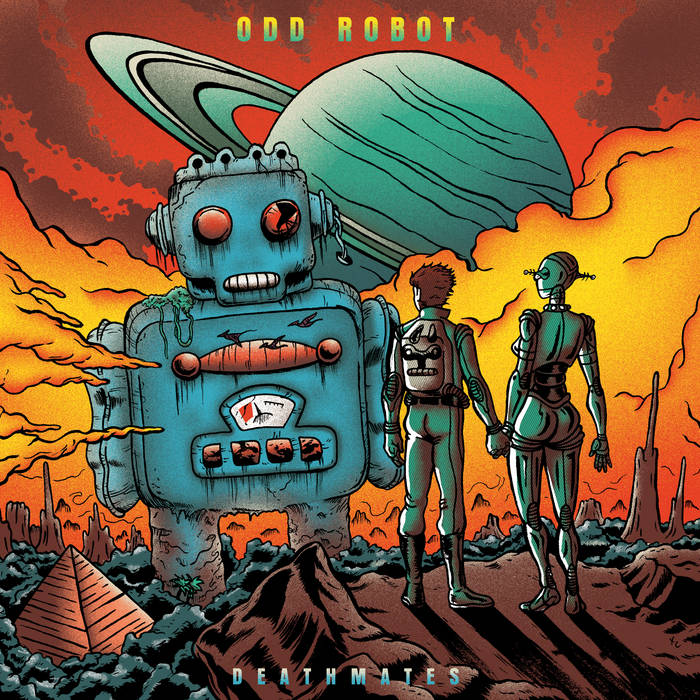
Power Pop Punk enthusiasts have been treated to fantastic releases this year from, among others, Geoff Palmer, Lone Wolf, Local Drags, and Jagger Holly. To ‘complete’ this lineup, DEATHMATES by ODD ROBOT deserves a spot, as songwriter Andrew Burris and his band have crafted a collection of not just a few but 17 (yes, 17!) irresistibly catchy bangers. Dive into Burris’s story below.
Your decision to gather opinions on your new songs is intriguing. When did you realize that external perspectives could contribute significantly to your creative process?
Initially, for our first two records, I predominantly provided the band with demos that were nearly 99% complete. However, this time, I introduced demos at varying stages of completion. Collaborating with the band in our rehearsal space significantly helped in fleshing out the ideas, especially for the tracks where I hit creative roadblocks — like a few songs lacking a chorus or having a great melody but no lyrical direction. With our band evolving from a power trio to a 5-piece over the years, I’ve never lacked input when encountering obstacles!
If you could collaborate with three co-writers for new songs, whom would you choose, and what qualities draw you to them?
My dream songwriting trio would comprise Paul McCartney, Taylor Swift, and Dave Grohl. McCartney’s unmatched sense of melody and incredible bass lines, Swift’s impeccable pop sensibilities, and Grohl’s punk influence that adds an edge to conventional pop music are qualities that I find truly inspiring.
Determining a song’s completion can be elusive. How do you decide when a composition has reached its final, ready-to-record form?
The initial draw for me is an opening lyric and melody that seamlessly fit together and captivate. If a solid verse and chorus emerge, the song progresses. Sometimes, crafting an instrumental hook or intro aids in this process, and my guitarist and keyboardist excel at this. Personally, the toughest part is often penning the lyrics for the second verse; condensing thoughts without redundancy can be a challenge. Given the current trend of shorter attention spans among audiences, I favor succinct songs. Once I’ve formulated a couple of verses and a robust chorus, I structure the song as AB/AB, occasionally adding a bridge or repeat chorus. That’s when I consider it done!
Among the compliments you’ve received, is there one that remains etched in your memory? If so, what made it particularly unforgettable?
Recently, a fan labeled us as “the best powerpop band in the world” in a social media post. The exhilaration I felt upon reading that was indescribable. Despite not extensively touring and having a modest fanbase, knowing that people worldwide connect with our music and consider us among their favorites is beyond words.
Looking forward to the next couple of months, what exciting plans or projects are on the horizon for you?
Following our latest release, we have upcoming local record release shows on Dec 9th in Long Beach and Dec 16th in LA. Additionally, we’re gearing up to introduce new merchandise to support the new record and are initiating plans for shows in 2024, eyeing a potential West Coast tour in the spring or summer!
Poppy Robbie crafts lyrically rich Power Pop reminiscent of the likes of Elvis Costello and Joe Jackson, continuing a tradition they established. Within the album ‘Neighborhood Beautification Commission,’ a track named ‘Robert Pollard Trading Card Collection’ explicitly nods to the influence of Guided by Voices in shaping this collection of twelve superb songs. These tracks are irresistibly catchy, inviting repeated listens as they weave stories that compel me to sing along with their infectious choruses.
Could you share the journey of bringing this record to life? How did all the pieces come together to create the final product?
Initially, this project began as an idea for a short EP containing about 5 or 6 songs I’d been holding onto for some time. Some of these tracks even date back to the mid-2000s. Over the years, while working on various things, I sensed a common narrative thread among some songs. I aimed to eventually release them as a cohesive group.
Later in the year, circumstances started aligning, allowing me to dive into the envisioned project. As I began recording, I decided to expand it into a full-length album. A few additional songs seemed to fit the narrative, and a couple of new ones even emerged.
Defining a song’s completion can be elusive. How do you determine when a composition has reached its final, ready-to-record form?
For me, it boils down to whether I’ve conveyed everything I intended. Does the message come across by the song’s end? As someone who focuses heavily on lyrics, I prioritize connecting with the words. During recording, I discovered that some songs, which I thought were finalized, shifted notably. It was a surprising experience to let go of preconceived notions, ultimately leading to a better outcome. If something doesn’t work during recording, it might be worth trying a different approach.
How would you describe the evolution of your sound in this new album compared to your previous works? Were there intentional shifts in style or themes?
In 2019, I self-released an EP called ‘The Troubled Times of Samuel Heck,’ a raw, lo-fi collection somewhat akin to what I initially envisioned for this project. However, for this album, I sought more freedom to explore diverse sounds without being confined to a specific label or style. These songs have resided within me for quite a while, making this material particularly resonant for me. The album comprises songs from different phases of my life, offering varied perspectives within the same headspace, akin to a neighborhood. It reflects the contradictions and growth we experience in life, a narrative I found intriguing to explore.
As an artist, the act of baring your emotions to the world is profound. Does this vulnerability come naturally to you, or is it a constant journey of finding comfort?
It’s a bit of both. Expressing oneself is a form of free therapy. I strive for direct and honest writing, regardless of the subject’s significance. Balancing being true to oneself while keeping the content engaging for others is the challenge. Listeners these days can easily skip tracks, so the music must captivate.
In the digital age, visual elements are intertwined with music. How did you approach the album’s visual aesthetics, such as album art and accompanying visuals? How do they complement the sonic experience you’ve crafted?
Early on, I had a clear vision for the album cover, incorporating scattered green Monopoly houses. I expanded this aesthetic to the album’s inside art, evoking an American suburban theme – plastic daisies, pink flamingos, and synthetic grass doormats. They reflect an almost-real, manufactured suburban bliss.
Looking ahead to the next couple of months, what exciting plans or projects are on the horizon for you?
I’m hoping for a label to press this album on vinyl! For now, after its recent release, I’m enjoying the responses and feedback. These songs have lingered in my mind for too long; it’s time they found a place outside my head.
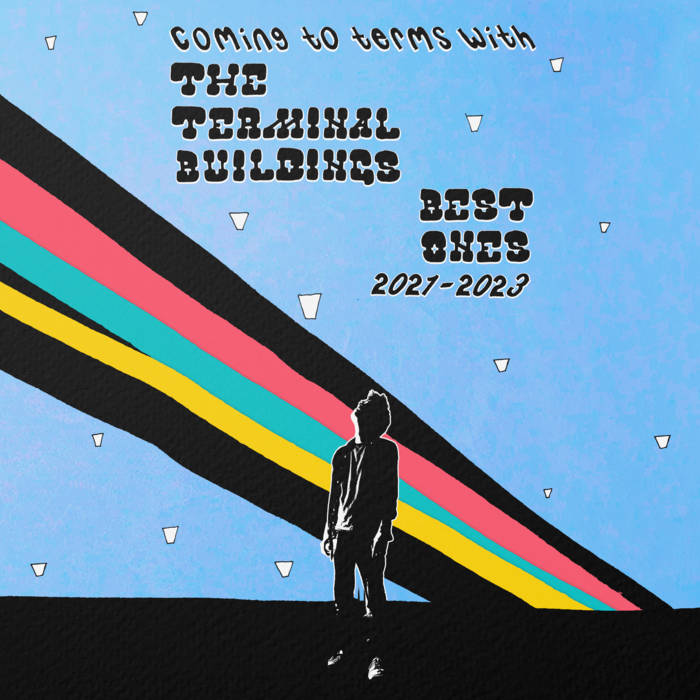
Presenting ‘Coming to Terms With the Terminal Buildings: Best Ones 2021-2023,’ a new ‘best of’ compilation capturing the favorite tracks from the past couple of years. Crafted in a Glasgow flat, these songs draw inspiration from the likes of Mo Troper, Tony Molina, Big Star, Teenage Fanclub, Guided by Voices, and Martin Newell.
Finlay explains to Sweet Sweet Music blog what this compilation is about.
Could you share the journey of bringing this record to life? How did all the pieces come together to create the final product?
Some of these songs were originally written 2 years ago, and some as recently as July, so in that sense, it took a long time to come together, but it wasn’t planned like that. The last time I put a compilation out it covered the period 2018-2020 and felt like it wrapped up the first chapter of the Terminal Buildings. This year, I again came to a point where I’d stopped writing songs for a while, so I thought it would be nice to take a retrospective look at the music I’d made from 2021 until now. Once I’d decided to do it, choosing the songs was quite easy, and it came together quickly. As a kid, I had a lot of ‘greatest hits’ collections on CD, and I still have a soft spot for the compilation format, so it was fun to revisit that.
The decision to seek opinions on your new songs is intriguing. When did you realize that external perspectives could contribute to your creative process?
It’s kind of a cliché at this point, but for the last 5 years or so, I’ve been writing and recording as the Terminal Buildings just for me, and I’ve pretty much kept it to myself. I hit a big birthday recently and thought, why not put some songs out there a bit more? This is what I’ve spent a lot of my free time working on, so it seems weird not to share it.
Success can take on different meanings as time goes on. When envisioning success for this new record, what does that picture look like now?
I just think it is nice for someone to listen and ‘get it’, like “I can tell what you’re trying to do here”. Even if they don’t like it! It’s good to take part and try your best and for other people to recognize that.
Within this collection, do you feel that the best song you’ve ever written finds its home? If not, what distinguishes this record’s essence from your prior work?
There have been a few times when I’ve written something and thought, “This is easily the best thing I’ve ever done”, but I usually change my mind when the next one comes along. I have tried to be quite brutal with the tracklist – normally, I have a pretty lax quality filter because I find it hard to discard a song if I’ve spent any time on it, and I feel like I never know how it’s going to turn out until it’s finished. With a ‘best of’, I have forced myself to be picky!
Defining a song’s completion can be elusive. How do you determine when a composition has reached its final, ready-to-record form?
That’s still a mystery to me, but I like to write short songs, so they tend to reach a natural stopping point quite quickly. I haven’t played any of these live to an audience, but in other bands, I’ve felt parts evolve the more they’re performed and the recording being a snapshot of that, so with the Terminal Buildings, they are often recorded in a relatively juvenile state. Sometimes, it’s a challenge to know when to stop tinkering with a song – although eventually, I’ll start to get bored, and then I just have to make peace with it and let it go.
In putting this collection together, I’ve found my favorites are often the ones that were quickest to write, which is kind of annoying when you’ve sunk more time into a tune, and it doesn’t turn out that good.
Striking a balance between experimental artistry and commercial appeal is a challenge. How do you navigate this dynamic within your music?
I’m usually trying to write very poppy songs, and I don’t think there’s much about them that is particularly original, so anything that sounds experimental is probably a side effect of my recording methods. It’s music that aspires to fit a certain model for a “hit” but has absolutely no commercial appeal whatsoever – this reminds me of Michael Chabon’s “Tragic Magic” article on power pop, which I think suggests that commercial failure is one of the key features of the genre. This is also touched upon in Mo Troper’s article “Power Pop Is Camp“.
Lyrics often carry profound meaning. Are there particular lines you hope listeners will always remember from your songs? If so, what’s the significance?
This is a bit of a cop-out, but no! I’m a big fan of lyrics that are simplistic and silly or that are so earnest as to be a bit corny. A lot of the songs do have personal meaning or genuine sentiment behind them, but most start with a line that I just think is funny or catchy. I’m mostly interested in the lyrics flowing or sounding good, so they don’t always stand up to close interrogation. ‘Struck Me Down’, in particular, has some pretty dodgy grammar.
Studio moments often hold a touch of magic. Could you recount an instance that stands out as the most enchanting during your creative process?
I record almost everything in my flat, so in terms of “studio magic,” it’s slim pickings. Some of my favorite creative decisions have been borne out of laziness. To take ‘Cruel World’ as an example, I recorded two versions of the guitar solo, intending to choose the better one, but in the end, I just left them both in to fight over the top of each other. And now I think that’s an important aspect of the song because it makes up for other songs that don’t even have any guitar solos.
How would you describe the evolution of your sound in this new album compared to your previous works? Were there intentional shifts in style or themes?
Something I like about this collection is that there is a big disparity in fidelity between the songs. You have some of the cleanest recordings that I spent a lot of time on in 2021, recorded with a full drumkit and loads of takes, and then there are some I recorded on my phone or on my old cassette recorder. So it roughly charts when I’ve had more and less time to spend on production, and I guess you can track that through the lyrical themes too. I hope that it gives the whole thing kind of a collage feel.
In the digital age, visual elements are intertwined with music. How did you approach the album’s visual aesthetics, such as album art and accompanying visuals? How do they complement the sonic experience you’ve crafted?
In the last year, for reasons of efficiency and pragmatism, I have cut down my whole music-making process to the point where I’ve recorded songs entirely on my phone, and I’ve been doing the same with the artwork. As with the music, I do all the cover art myself, and I like combining hand-drawn elements with digital collages. That approach has stayed fairly consistent, but for this one, I spent a lot more time on it, and I’m pretty pleased with how it turned out. I took specific inspiration from other album covers (especially ‘Now’ by Kim Jung Mi and the Cribs’ debut album), and I even hand-drew my own fonts, which I really enjoyed doing. I might quit music and just do fonts from now on.
SHPLANG is back with an incredibly catchy new single called ‘Understood,’ heralding the arrival of their upcoming album, “Thank You, Valued Customer,” slated for release on 12/1 via Big Stir Records. SweetSweetMusicblog recently explored the making of this album with Peter Marston.
Could you share the journey of bringing this record to life? How did all the pieces come together to create the final product?
None of the songs on the album had ever been played live by the band, so arrangements were done one instrument at a time. Start with programmed drums, then the main rhythm guitar, then bass, then second and/or third guitar parts, then keyboards, then vocals, then hand percussion (of which there is quite a bit). Live drums are done last. Then mixing, which with the sort of psych-pop we do, is every bit as much a creative enterprise and takes nearly as long!
The decision to seek opinions on your new songs is intriguing. When did you realize that external perspectives could contribute to your creative process?
No one outside of the band hears anything until the record is released. Perhaps we feel we are too easily influenced, or perhaps we have control issues. Either way, it works for us. Songs that are in the middle of our recording process often sound quite inaccessible, and though we know we can get through the thicket, I think outsiders would be quite confused and give us less than useful advice. One of the objectives of Shplang in our creative process is to paint ourselves into a corner—and often the most interesting thing about our records is how we get out!
Success can take on different meanings as time goes on. When envisioning success for this new record, what does that picture look like now?
Success for us at this point (after more than 25 years) is just having new listeners discover us and enjoy what we are doing. We like to confound people’s expectations about pop music (most broadly conceived) and bring a smile to people with our strangeness and humor. There are few things more satisfying than when someone expresses excitement about finding you amid the thousands of new music projects released on the various streaming services monthly. Big thanks to Big Stir Records for helping us find those folks.
Within this collection, do you feel that the best song you’ve ever written finds its home? If not, what distinguishes this record’s essence from your prior work?
Not sure we believe in “best” songs. Everything we do is available for anyone to enjoy. This new album is not so much something new as an integration. Our first album, “Journey to the Center of Mirth,” was extremely experimental and psychedelic. Over the next three albums, we were, I suppose, courting commercial success and lost some of the more “out there” moments. So, on this album, we are trying to be more experimental while maintaining clear pop accessibility. Thankfully, we think we’ve done that.
As an artist, the act of baring your emotions to the world is profound. Does this vulnerability come naturally to you, or is it a constant journey of finding comfort?
Our songs may bare emotions, but they aren’t necessarily ours. We write more from the perspective of imaginary characters than from our own experiences. Only “Everyone Can Change” on the new album could remotely be considered a confessional song.
Defining a song’s completion can be elusive. How do you determine when a composition has reached its final, ready-to-record form?
This is an interesting dilemma. We usually don’t consider a recording completed until we have added two or three parts that don’t work (of course, then deleting them). At that point, we know what we have is, as Goldilocks said, “just right.”
Striking a balance between experimental artistry and commercial appeal is a challenge. How do you navigate this dynamic within your music?
Do we? Hmm.
Among the compliments you’ve received, is there one that remains etched in your memory? If so, what made it particularly unforgettable?
Our favorite compliment is when people tell us our music is fun. It’s also the most common compliment we receive, which is very nice.
With the record completed and the music released, do you believe the pinnacle of enjoyment has been reached, or is this just the beginning of an exciting phase?
Already on to the next project. The enjoyment for us is in the challenge of doing something new. Someone once asked me if I ever listen to my own music. My answer was “never sober,” so that tells you something.
In the digital age, visual elements are intertwined with music. How did you approach the album’s visual aesthetics, such as album art and accompanying visuals? How do they complement the sonic experience you’ve crafted?
Bass player John Krause is a visual artist best known for his work as a designer on The Simpsons for over 25 years. He does all our artwork, and it’s great to have a professional in that role. For this album, he came up with something appropriately thematic, a sort of pastiche of supermarket marketing. Big thumbs up. Thanks, John!
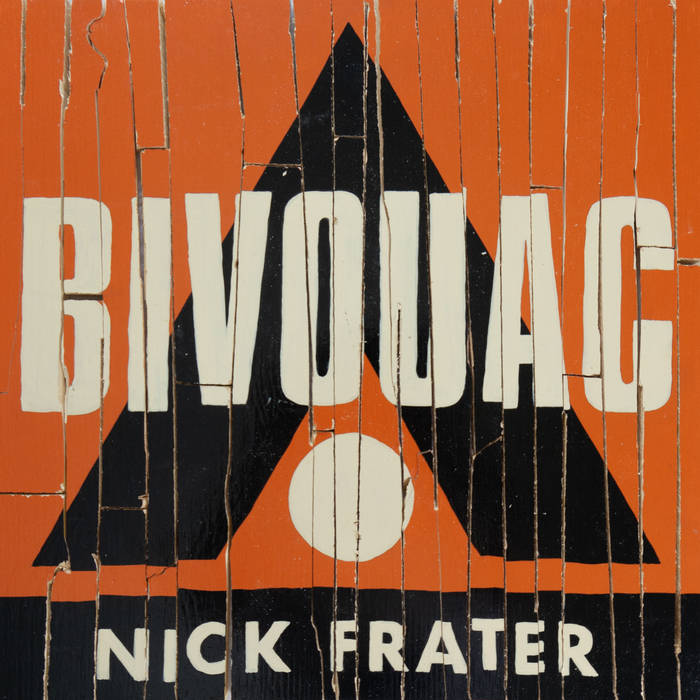
Nick Frater has demonstrated his ability to craft exceptional pop songs over an extended period. Take, for instance, “Aerodrome Motel” (from 2022) or “Earworms” from 2021. His knack for creating not just beautiful melodies but also for prolific songwriting is evident. In his latest release, “Bivouac,” released via Think Like A Key Music, Frater presents 23 new songs, all exuding the delightful essence reminiscent of the styles of Wings, Rundgren, and Lynne.
Frater delves into the creation process behind “Bivouac,” a project that assembled an impressive ensemble of stars.
You mentioned ‘Bivouac’ has a rich history. How did that come about?
The creation of Bivouac was a rather peculiar process. I accidentally reused a musical idea—specifically, the mellotron string section in both “The Town of Opportunities” and “Little Sister Moon.” Additionally, I had multiple approaches swirling in my head for the arrangement of “The Town of Opportunities,” so I decided to explore them all.
One thing led to another, and before I knew it, I had what you hear on the album. Almost every song seamlessly flows into the next. I also revisited some of my classical training, resulting in the record opening in Sonata form, with recurring motifs, ‘hero instruments,’ and structural and harmonic symmetry. Yet, I aimed for it to maintain a rocking quality throughout.
The story behind the lyrics is similar. I initially wrote about fifty verses for “The Town of Opportunities,” intending to craft a concept album around the decline of post-industrial Britain. However, I trimmed it down along the way, turning some songs into instrumentals. There’s a fine line between concept albums and musical theatre, and that’s a line I didn’t want to cross!
Your team is stellar. Did you plan it out or did the team grow naturally?
I’ve been fortunate to meet and collaborate with incredibly talented musicians! (Macca, if you’re reading this, give me a call!)
The sessions for Bivouac were quite adventurous, often involving 5-6 musicians tracking live in the same room, intentionally mimicking the process used in many of my favorite records. However, it requires skill; there’s no “undo” button working that way!
Playing at IPO Liverpool each year was a significant catalyst in forming a somewhat steady band. Meeting numerous great songwriters and musicians in person was fantastic—I even ended up playing nine shows in two days, with five different bands!
The echoes of The Beatles and ELO are unmistakable in your work. Is it freeing to showcase your inspirations so openly?
Part of the joy of making music is translating the sounds from my head into your ears. Given my extensive listening to The Beatles and similar artists, their influence naturally seeps into my work. I particularly admire Jeff Lynne’s productions, like Free As A Bird/Real Love.
In “The Town of Opportunities” (part 2), we actually recorded a Jeff Lynne ‘guitar choir’—his trademark approach to acoustic guitars—where several guitarists strum the same thing at once, double-tracking it. Try it next time with six guitarists in a room… instant ELO!
Moving to Think Like A Key Music for the release of ‘Bivouac’ must feel like a thrilling transition?
I’m still very much a part of the Big Stir family, and there are exciting plans for 2024. I usually create 2-3 albums a year—some self-released, some on a label. With so much happening in the Big Stir calendar, we couldn’t manage a 2023 release. I’m already about four albums ahead of Bivouac!
Interestingly, I had been recording with many artists on Think Like a Key recently, even playing keys for Ex Norwegian at The Cavern this year. It seems chance and fate conspired to bring Bivouac to the world through this route.
I’m thrilled to be label mates with Novelty Island, probably the most exciting band in the U.K. right now, and also with R Stevie Moore, which is mind-blowing! Now THAT is a collaboration I’d love to do.
Completing the backing vocals for ‘Boom and Bust’ must have brought immense joy. How did it feel when it was done?
Haha, that’s probably a question for Roger Manning! He’s an incredible person to work with, very supportive of musicians at all levels. I’ve collaborated with him on several songs in recent years, and he generously shares his expertise, especially on creating those Queen-esque harmonies. Apparently, my songs are more challenging than his big-name session gigs—a compliment I’ll gladly accept!
The landscape of an innovative movement within Modern Power Pop is taking shape with more clarity. Bands are increasingly citing figures like Mo Troper or Tony Molina as their primary inspirations. It’s intriguing to note that their influences lean more towards Chris Bell than The Knack, showcasing the distinctive essence of this movement. This isn’t about straightforward accessibility; these records often take listeners on an exploratory journey rather than providing a comforting familiarity, akin to a plunge into the unknown rather than a cozy bath. Craig Heed from Miracle Sweepstakes also draws inspiration from Todd Rundgren and Brian Wilson, adding further depth to this evolving scene.
Could you share the journey of bringing this record to life? How did all the pieces come together to create the final product?
Ian had a bunch of recording gear his dad left him, and the process of making Last Licks was essentially learning how to use all of it. The irony of our band is that Doug and Justin have both worked professionally as audio engineers, but Ian and I have never really graduated past four-track demos, yet it was Ian and I who recorded the bulk of the basic live tracks. Doug came out a couple times to Ian’s basement in Long Island and showed us how to set things up, and from there, Ian and I would meet up on weekends and try to record his drum tracks.
There were times early on where we’d think we got a really good performance, but when we’d email it to the rest of the band, it’d turn out the mic placement was off, and it’d be back to the drawing board. Justin’s suggestion to use two mics on the snare drum smoothed out most of those issues, though. Once we had the tracks for drums and my guitar, we’d send it to Doug and Justin, who’d add their bass and guitar parts, respectively. Justin got really into adding “bells and whistles,” too – lots of guitar textures, synths, and auxiliary percussion – and when he offered to mix the album, it was kind of a turning point. We were just able to spend so much more time making mix revisions than we would’ve, had we worked with an outside engineer. I think the mixing was really what made the album sound the way it does. On the raw tracks, you could tell we were playing in a basement, or that I recorded my vocals in my bedroom. But the final product sounds like a record.
Was there a particular moment or experience that struck you, signaling that you were onto something special with this project?
My thinking going in was that we probably didn’t have the technical know-how, recording space, or gear to get really good raw sounds, so for this to work, the sound of the record would really have to come together in mixing. So my idea was to finish a pair of songs first, get someone to mix them, and if they came out well, then I’d be confident that we could make a whole album this way.
I chose “Ooh Ahh” because it felt like a single, and “Let Something Happen” because I had a clear plan for how to track it, having Ian play his acoustic kit for the choruses, and this drum loop we sampled from his electronic kit for the verses. Once we finished tracking them both, they were mixed by Michael DiSanto, who came highly rec’d from our friends in the band Gorgeous. I was pretty happy with how they came out, and that’s when it felt pretty attainable to home record the whole album. We put out “Ooh Ahh”/”Let Something Happen” in summer 2022, and spent the next year or so hammering out the rest of the songs in Ian’s basement.
The decision to seek opinions on your new songs is intriguing. When did you realize that external perspectives could contribute to your creative process?
In recent years I haven’t really been sharing my songs with many people mid-process. I’ll show rough ideas to my girlfriend, and her opinion is pretty important to me, but I think I usually just hear what I wanna hear. If a song I didn’t think much of elicits a really positive reaction, I see it in a new light, but if a song I’m excited about gets a tepid response, my attitude is, you just don’t see the full picture yet, and I stubbornly keep working on it. I can think of at least a couple times where the latter has happened and I was vindicated in the end.
I’m a pretty thorough demo-er, I have a maxed out SoundCloud page full of them, and I used to send them around to friends whenever I had a new one I was excited about. But when we were making Turn Heel I noticed everyone was getting “demoitis,” where they were thrown off by the studio versions of songs because they’d grown so used to the demos. So partly because of that, I’ve played things a little closer to the vest.
Success can take on different meanings as time goes on. When envisioning success for this new record, what does that picture look like now?
I think the infrastructure to be a true left field success, like a Clap Your Hands Say Yeah or a Broken Social Scene back in the day, just doesn’t exist anymore. The Pitchforks of the world aren’t looking to pluck The Next Big Thing out of total obscurity, they’re chasing clicks by focusing on established acts. There’s viral fame, but I think most of the artists The Algorithm chooses generally still have more initial momentum than we do. You’ll see someone referred to as being obscure, and they’ve still got magnitudes more streams or followers or whatever than we do. We’re really obscure.
So short of someone with a lot of clout stumbling upon our music, liking it, and setting off some magical chain of events, I think it’s probably pretty difficult to jump from where we’re at now to any level of legitimate success. But I think the process of recording this album ourselves, and not being sure how it’d all turn out, lowered our sights to where it’s just gratifying to have even made something we think is good. So success takes the form of being proud of the music, grateful for whatever positive response our friends have to it, and being able to make another one.
Within this collection, do you feel that the best song you’ve ever written finds its home? If not, what distinguishes this record’s essence from your prior work?
I’d like to think the best song I’ve ever written is still ahead of me, but while it may be more grower than shower, I think “Nor’easter” is a strong candidate for best Miracle Sweepstakes song. I was really into “Before Meaning Comes” by Ian William Craig, and listening to a lot of Les Rallizes Dénudés, and wanted to write something that kind of combined the two, basically an ambient rock song. It’s the longest Miracle Sweepstakes song, and arguably the simplest– the chord progression is probably the most basic and ubiquitous one we’ve ever used. But I think it just works.
To my ears, it’s the one song of ours where if you put it on, it just colors the room. It’s got some of my best guitar tones, and really the first thing resembling a proper solo that I’ve played since “Private Disguise” off our first album. I’m pretty happy with the lyrics as well, they conjure pretty vivid, solitary memories – driving along Shore Parkway in Brooklyn, taking the LIRR – that encapsulate where I was at when I was writing all these songs.
Among the gigs you’ve performed, which one holds an indelible place in your memory and why does it stand out?
I used to work for a company that helped architects and engineers get their licenses, and one of our clients hosted an industry conference in Brooklyn that they wanted live music for. My boss threw our hat in the ring, and so we wound up playing the “cocktail hour” of the event in this big fabrication studio, where we were set up on the mezzanine level playing to the guests below. It felt like what I could imagine playing an Andy Warhol Factory party was like or something, except instead of it being some druggy bohemian loft, it was this corporate party.
We prepared a few covers to play, one of which was “The Killing Moon,” which we wound up recording for Halloween shortly after the gig. Towards the end of the set, we played our song “Bad Bee,” which has an extended noise breakdown that I feared had alienated the attendees. This was compounded by our next and final song, a cover of Radiohead’s “Creep,” during which I think I sang “fucking special” instead of “very special.” I worried we had offended the whole room, but when we came down from the mezzanine, everyone we talked to said they loved it. It was a great one-off experience, and we’ll probably never make that much money from a show ever again.
Striking a balance between experimental artistry and commercial appeal is a challenge. How do you navigate this dynamic within your music?
I wrote a piece for Talkhouse about what I called “the Goldilocks Zone” between accessibility and experimentation, and how I think the most compelling music toes the line between the two. Last Licks is our most experimental album in a literal sense– so many of the songs came out of experimenting with new methods and ideas. But every song has a pretty strong melodic sensibility, and as a songwriter I always try to give some payoff to justify the weirdness. The flipside is that whenever I offer up a killer hook or big chorus, I use it as carte blanche to do some weird self-indulgent stuff right after. One for thee, one for me…
If tasked with introducing your music through three songs, which ones would you choose and what story do they collectively convey to new listeners?
The guy who we were initially recording Turn Heel with wound up ghosting us, but while we were recording “Maker’s Script,” he was like, “you know, I really don’t know who this song sounds like.” He eventually landed on Queen, which was awesome, because it definitely doesn’t sound like Queen. But he was this hotshot Brooklyn producer guy, so he definitely knew a lot of music, and it was cool that we’d made something he thought was truly original. I’ll go with that one, but since it’s a little jarring and abrasive, I’d probably first lead with “Shoot the Blue,” which has been a staple in our sets since I wrote it, and is the one song that randos in the crowd respond to. It’s got one of my best choruses, a cool chord progression and structure, and I really like the production and arrangement.
For track three, I’ll pick “How True” off the new album. It came together so effortlessly despite being such a departure from what we’ve done previously, and I’m really happy with it. I think if someone showed me a band with these three songs, I’d be really excited that a band like this exists. And feeling that way is really all you can ever hope to get out of making music.
Among the compliments you’ve received, is there one that remains etched in your memory? If so, what made it particularly unforgettable?
Around the time Rorschached came out, I met this dude at a party at Justin’s old apartment who asked what band I played in, then busted out his phone and followed us on Instagram right there on the spot. I’d keep seeing him around, and he’d be really friendly but keep saying, “remind me your name again? Right– Miracle Sweepstakes! I follow you guys, been meaning to give it a listen!” It was this funny and illuminating microcosm of how many impressions it takes for someone to actually check something out.
Eventually, I’d see him and he’d be like, “love your guys’ stuff, man!” It all culminated with running into him and his girlfriend at a show at Baby’s All Right in Brooklyn, maybe a couple months before COVID. He introduced me by saying, “you gotta check this guy’s band out– Miracle Sweepstakes. They’re like, the Beatles of New York City! No one is doing what they’re doing!” But before I could blush, he continued, “And the craziest part is, NO ONE knows about them! They have NO fans!” It’s still my favorite thing anyone’s ever said about me and my music.
Studio moments often hold a touch of magic. Could you recount an instance that stands out as the most enchanting during your creative process?
Probably the opposite of enchanting, and this is more Ian’s story to tell than mine, but during the recording process a raccoon broke into Ian’s basement and had babies. She basically just squatter’s rights’d the place, and we couldn’t record for several weeks while her and her kits were down there. Eventually the authorities apprehended them, and took them all to some raccoon sanctuary or something. I just know they had to be taken at least 18 miles away from the house, otherwise they’d find their way back. Luckily, none of our equipment was destroyed.
Where do you see yourself situated within the broader landscape of the music industry? How do you perceive your unique role and contribution?
I wouldn’t consider us a part of the music industry since we don’t make money doing this, but whenever I send our stuff out I feel like we’re in kind of a sonic no man’s land. There are bands that sound like a perfect fit for a certain label, or bill, or that fit cleanly in a certain genre or scene, and we don’t. I’m proud of that on an artistic level, but I do think it makes it harder to connect with people.
Most music listeners are casual listeners– they don’t care how unique or innovative something is, they just want something they can put on and enjoy. So if something sounds familiar or is easy to get into, that resonates with people. The bands I’ve known who’ve gotten some level of success almost always involved people who used to be doing something more interesting, and when those projects didn’t go anywhere, they started new ones that were more on the nose, and those were the ones that connected. In fairness, they’re almost always done very well, so I do think execution matters. But listeners haven’t had to work for music in a long time. There’s no modern equivalent to buying a CD and having to learn to like it, and so I think acquired tastes are less of a thing now. If you can make someone say “this sounds just like Big Star!” that’s good enough for them. There are a million shoegaze or emo or post-punk bands who all sound interchangeable, and they’ve all got more going for them than we do. But there’s only one Miracle Sweepstakes.
With the record completed and the music released, do you believe the pinnacle of enjoyment has been reached, or is this just the beginning of an exciting phase?
I think the dopamine rush you get from an album is probably at its highest right when the music is released, because social media has poisoned our brains and that’s when you’re getting the most likes and whatnot. That stuff fades quicker than ever now, as music is increasingly worthless and disposable to people.
In terms of personal enjoyment of my own music, I think that’s at its highest once there’s some distance. Revisiting past albums with a fresher set of ears, once I’m no longer living and dying on how well I think they came out, I find I can enjoy them for what they are a bit better. The little imperfections or things I could’ve done differently still sting, but that’s life when you’re crazy.
Looking ahead to the next couple of months, what exciting plans or projects are on the horizon for you?
Not sure when this will run, but we’re playing a release show for the album on November 4th at Unruly Collective in Brooklyn, with Street Missile, Pleaser and Jeremy Good Job. Beyond that, we’re working on a video for “Bad Bee” that we’re pretty excited about. We’ll hopefully have more shows in New York, and we were trying to set up a little weekender in Boston.
Justin and I also have a band called Hit with our friends Charles and Cameron, and we’ve got an album in the works for 2024. It’s kind of like noise rock meets the Byrds. I just started working on a new, sort of conceptual Miracle Sweepstakes song project that I haven’t even told the rest of the band about yet.
How would you describe the evolution of your sound in this new album compared to your previous works? Were there intentional shifts in style or themes?
The biggest new element is Justin– he joined just after we finished tracking Rorschached, so while he’s been in the band for years now, this is the first album to feature him. He has so many great parts that I either wouldn’t have thought of or couldn’t have played– the sweep picking at the end of “O-Pine,” the almost neo-classical-meets-country leads on the choruses of “Bad Bee.” Even parts he lifted from my original solo demos are reinterpreted in such a next level way. My demo of “Last Licks” had this spooky, atmospheric overdub on the choruses that Justin took and turned into this mammoth riff that sounds like a dinosaur or something. It’s so huge it spills into the second verse, and it totally makes the choruses pop.
The other big thing was our approach to the drums. For “I Try” on Rorschached, Ian played his sampling pad instead of a traditional kit. We expanded on that for this record, using the pad as well as Ian’s electronic kit, and worked on arrangements where maybe one section of a song would be a sampled loop, and the next would be real drums, or the two would even overlap. “Rectangular Eclipse,” “Let Something Happen,” and “Nor’easter” all feature that approach.
We took things even further on “How True,” where the whole song is built on samples and MIDI tracks– we barely even play on it ourselves. It’s an approach I’d like to explore more on the next thing we do.
With this fresh collection of songs, how do you envision connecting with both your existing fanbase and new listeners? Are there specific emotions or messages you hope they’ll resonate with?
As we were working on the album, I realized there was kind of a linear narrative in the track sequence. It starts with “Last Licks,” which is this urgently pessimistic song, and ends with “All This Way to Come Back Now,” which is triumphant and almost anthemic, and kind of saying, “who cares about now or never?” Musical attention spans are nonexistent at this point, but I hope the album as a whole resonates with listeners because 1) I think it’s a pretty immersive listen taken in full and 2) “All This Way” is probably the catchiest song on the record, and I don’t want it to be completely buried.
In the digital age, visual elements are intertwined with music. How did you approach the album’s visual aesthetics, such as album art and accompanying visuals? How do they complement the sonic experience you’ve crafted?
The visual component to our music is almost as important as the music itself to me, and I spend a lot of time thinking about what the music looks like and how I can capture that. I do all the artwork for the band, and before this record, the through line for most of it was this loose sports team aesthetic, where we had a big MS logo and this tequila sunrise color scheme. My friend Alex Gowing, who’s done the layouts for the physical runs of all three albums, made it based on a sketch I did, and I created all these drawings that were kind of like the Warhol-Basquiat collaborations, where I was basically defacing Alex’s clean graphic design work with all these wild gestures. Turn Heel and all our early singles featured some iteration of that, and while we moved away from it a bit on Rorschached, there’s still the big yellow “M” in the foreground.
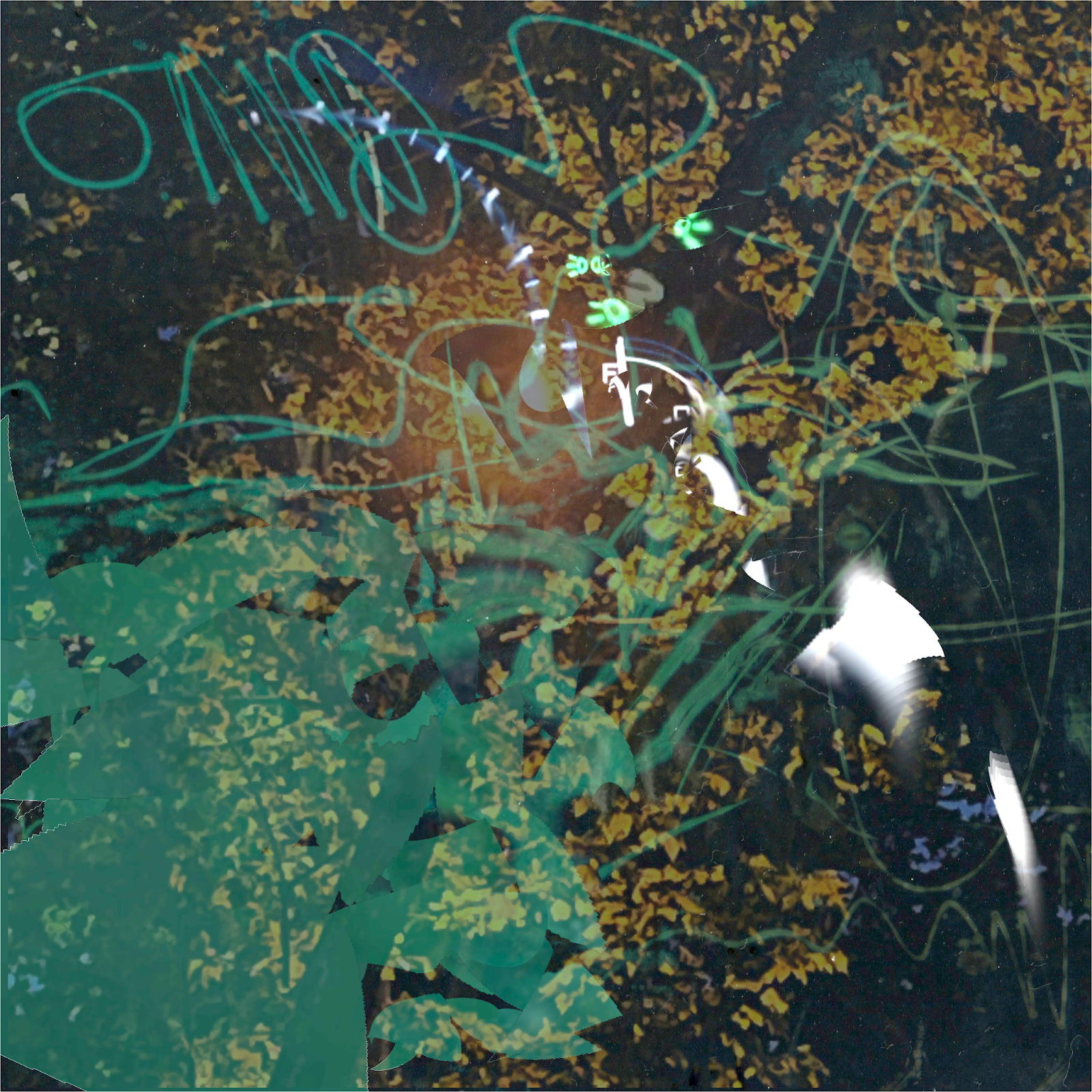
For Last Licks, I wanted to break from all that while still preserving the kind of abstract expressionist aesthetic. I had this weird little neon drawing tablet that had these random scribblings on them, and part of it looked vaguely like the handwritten Miracle Sweepstakes “M.” The colors also matched the darker sounding material we were working on– no yellow. I knew I wanted to overlay that with a screenshot I took from this dumb video I posted on Instagram, which was just of the lit up dashboard of my mom’s minivan while I sheepishly asked people to come to whatever show we were playing. I just thought it was a cool, stark image, and kind of reminded me of Ghost in the Machine by the Police.
I put those together and felt like it was still missing something, so I took some pictures of the street lights illuminating the trees across the street from my apartment, and layered those in as well. I just felt like the record had this dark, autumnal vibe, and even though it was June at the time, the pictures just had the right foreboding, nocturnal quality. I messed with it in Gimp until I felt like I had the definitive version.
I took a similar approach to the visualizer I did for “Rectangular Eclipse,” which was all just footage I got on my phone at Coney Island after a Brooklyn Cyclones game. It’s all double exposures and extreme zooms to get a lot out of a little, but the idea is the same– trying to convey the visual textures and palettes that are intrinsic to the songs.
The Blood Rush Hour is essentially Robert DeStefano and whoever he can persuade, coerce, cajole, or bribe into lending their exceptional talents to his projects. Their most recent release, “Sanity Fare,” distinguishes itself not just from their earlier work but also from the majority of contemporary pop music. Robert himself asserts, “I believe that the distinctive melodies, unexpected musical twists, profound lyrics, intricate arrangements, versatility across various musical styles, and innovative use of background vocals set my music apart.”
If you’re looking for a suitable genre to place their music, consider categorizing it alongside 10cc, ELO, Jellyfish, The Dowling Poole, and XTC.
Could you share the journey of bringing this record to life? How did all the pieces come together to create the final product?
I recall feeling emotionally and creatively spent after the release of ‘Who Folds First’ in 2017. It took 18 months before I was ready to begin a new project. However, just as I was gearing up to start recording again, we ran into the pandemic, which brought everything to a grinding halt for over a year. This caused a real challenge for me because I compose in the studio. I will book, say, four days in a week and will arrive with absolutely nothing written. Tim (engineer/studio owner/bassist/guitarist) starts the DAW recording, and I sit at the MIDI piano and start working things out. Therefore, it takes a bit longer to complete.
As time ticked on, I wanted to get the album completed and released. Unfortunately, Tim was booked solid for months into the future with all the artists who were unable to record during the pandemic. So, I asked Willie Dowling (the Dowling Poole, Jackdaw 4) if he had any time to help me finish. Thankfully, Willie agreed, and I spent a few weeks in France at his home studio, where we completed over half the album. I then returned to Tim’s in July and August of this year to finish the remainder. WHEW!!
Was there a particular moment or experience that struck you, signaling that you were onto something special with this project?
I think that would have been during my first trip to France in October of 2022. You must understand that I am a gigantic fan of Willie and his music. I knew that Willie was a fan of my music because we’d corresponded previously. But he seemed to shy away from any suggestion of working together. It was only after working together that I discovered why.
Willie’s studio is in an outbuilding on the grounds of his home. Willie also lives in a very rural area of Normandie. If I were to work there, Willie and his wife would have to put me up, feed me, etc. for a week. Having never really spent any time with me previously, he was loath to take the risk. Thankfully he did, and it was during that first week that I realized that we were doing something special.
The decision to seek opinions on your new songs is intriguing. When did you realize that external perspectives could contribute to your creative process?
I’d been wanting to work with Willie Dowling for years. When he agreed to produce part of the album, I was delighted. Usually, I am carrying almost all the weight. Tim adds suggestions every now and again, but usually, everyone plays to my direction. When Willie agreed to produce, it was such a relief to simply allow him to make decisions. I’d already recorded a large portion of the songs that he was going to work on, but I gave him permission to do what he wished because I trust his talent and vision. There were only two or three times that I can recall disagreeing with something that he wanted to do. For example, in ‘Fashioned Footsteps,’ Willie and I sang a backing vocal call and answer in the final chorus. Willie didn’t like it much and had originally mixed it out of the final mix. I asked him to put it back in. He was happy to do so.
Success can take on different meanings as time goes on. When envisioning success for this new record, what does that picture look like now?
That is a very interesting question. Like so many artists, I must earn my keep by means other than my art. In my case, I am a full-time psychotherapist. Therefore, I have neither the time nor inclination to devote to marketing and promotion. Still, it would be great if those who would enjoy the album had a chance to hear it.
Within this collection, do you feel that the best song you’ve ever written finds its home? If not, what distinguishes this record’s essence from your prior work?
I think that if you ask most songwriters, “Which is your favorite of your songs,” they would reply, “The last one I wrote.” I believe that there are quite a few songs on this album that are amongst my best. However, this album is a bit darker in tone than previous ones. The melodies tend to be more pleading and longing, and the lyrics tend to reflect the very confusing and frightening times in which we are living. There is a track on the previous album called, ‘I Still See You’ that presages this album in some ways.
As an artist, the act of baring your emotions to the world is profound. Does this vulnerability come naturally to you, or is it a constant journey of finding comfort?
I can appear to be more open than I actually am. If the medium is music, it is a bit easier to shield oneself from that vulnerability. Do I feel hurt when I send the album to, say, BBC Discovery Radio and I don’t hear anything back? Yes, of course I do. Do I feel annoyed? Yes, because I’ve heard what they’d been playing and much of it is, in my opinion, simply not very good.
But I don’t hold those feelings very long. Lyrics, on the other hand, are tougher to disguise. Let me ask you, Patrick, if I did not tell you, would you have guessed that ‘My Invention’ was my attempt to convey what it’s like for me when I feel blocked? Or, would you have guessed that ‘Billy Boy’ is my working through what happened to a relationship that had once been very, very important to me?
Imagine you could collaborate with three co-writers of your choice for new songs. Who would you select, and what qualities or dynamics draw you to them?
Oh, my. When I think of the greatest songwriters of the past 50 years, there are far more than three on my list. How do I whittle it down to three? I’ve already worked with Willie Dowling, one of my favorite songwriters. Elvis Costello would be one. Randy Newman is another. If Pete Ham, Richard Rogers, Cole Porter, Frederic Chopin, or John Lennon were still around, I’d list them, but they aren’t. So, drumroll please, third place must go to Paul McCartney simply because he’s Paul McCartney.
Defining a song’s completion can be elusive. How do you determine when a composition has reached its final, ready-to-record form?
As my compositions begin in the studio, I can revise until I am satisfied with them. This can occur during the entire process. For example, there is a track on the album called ‘Lost Girl.’ The penultimate chord was, originally, a Db7. I wanted it to be discordant, but that semitone between the Db in the harmony and the D Natural in the melody was more jarring than I wanted. So, as we were mixing, I asked Tim to allow me to replace the Db7, which I did with an Ab6 flat 5. I love that song.
Striking a balance between experimental artistry and commercial appeal is a challenge. How do you navigate this dynamic within your music?
LOL!! I obviously don’t. Every once in a while, during the making of my albums, I will have a listen to current Alternative, Indie, Pop, etc., to hear if there is anything happening that could add to my ‘sound.’ No matter how open-mindedly I listen, I rarely hear anything that interests me. These songs are getting a great deal of plays and are playlisted on various formats. It really saddens me because I so want to be excited by new music. I recall when The Dowling Poole’s first album was released. I was ecstatic. FINALLY!! There was a beautiful blend of emotion and intellect, tragedy and wit. But alas, even they did not enjoy the success they deserve.
Lyrics often carry profound meaning. Are there particular lines you hope listeners will always remember from your songs? If so, what’s the significance?
I was recently speaking to someone who does a poetry show on his radio spot. I believe that song lyrics should be able to stand alone as poems. In that way, my lyrics usually make more sense in the context of the song. I wrote a song about my fantastical dream life on the second album called, ‘A Song That Some Sing.’ In it, I wrote that ‘Dawn’s waiting for the (pronounced thee) last version of the story, sated inside the choriambus of the wind sound.’
On the new album, I wrote about hearing a voice within me – “through morass I hear the call – ‘Can you hear me? Are you near me? No one’s there at all.’ In a ‘Song for my Father’ I wrote, ‘Was it love that redesigned the lines between us, times we had. Once I sensed you just behind me. Now I’m small and sad. And I miss you, Dad.’ I think most folks can relate to those.
Can you recall the last instance when you felt the immediate certainty of having penned a hit song?
That’s never happened to me. I’ve had the experience on ‘Sanity Fare’ of writing a song and thinking, “That’s really brilliant.” I’ve also had the experience of weeping after completing a song because I felt so moved by it. (‘I Still See You,’ ‘Lost Girl,’ ‘Run to the Roundhouse’)
While you can’t dictate how people interpret your music, are there specific elements you wish to highlight that set your songs apart?
I think that the melodies, sudden musical left turns, thoughtful lyrics, the complex arrangements, a propensity for writing in a number of different musical styles, and inventive use of backing vocals set my music apart.
A legitimate complaint that I have heard about my music is that a) there is simply too much going on, b) the melodic phrases are far too long, and c) the lyrics are too intellectual. These are legitimate criticisms. But I can only convey who I am in my writing.
If tasked with introducing your music through three songs, which ones would you choose and what story do they collectively convey to new listeners?
Wow! Tough question. Another legitimate complaint about my music is that it doesn’t stick to one style. On the new album, ‘My Invention,’ ‘Watching You Make Love,’ ‘Within This Tragedy,’ and ‘Lost Girl’ are very different in style. So the three songs would have to reflect that. Hmmm. How about, ‘My Invention’ or ‘Billy Boy,’ ‘Gone Where Nobody Can Find Me,’ and ‘I Still See You.’ These would convey versatility, humor, self-reflection, and loss/grief.
In a hypothetical scenario where you could tour with two other bands, who would be your ideal companions and what synergies do you envision?
Can they be acts from any era? The Dowling Poole because we have a lot in common and share values and humor, a love of philosophy, and a love of music. The other band would be the Smothers Brothers of the 1980-90s. No matter how often I see their clips, they still make me laugh.
Among the compliments you’ve received, is there one that remains etched in your memory? If so, what made it particularly unforgettable?
Two of my favorite songwriters, Willie Dowling and Kristian Hoffman have told me repeatedly that I am an amazing songwriter. Michael Bjorn, the music writer, named ‘Who Folds First’ as the best album of 2017. I will never forget that.
Studio moments often hold a touch of magic. Could you recount an instance that stands out as the most enchanting during your creative process?
To be honest, there are so many it is difficult to settle on one or two. During the recording of ‘And Then…The Unthinkable Happened,’ I ran into an old friend, Fran Kowalski. Fran was a great singer and pianist, as well as being a fine songwriter in his own right. I’d not seen Fran for over fifteen years. He’d heard my first album and enjoyed and it, so when I asked if he’d like to sing on the new one, he agreed.
Unfortunately, most of the album was finished by the time Fran got to Wales. Still, he added his glorious voice on backing vocals on ‘I See Something’ and ‘Dancing By Yourself.’ We had a brilliant two days and agreed to work together on the next album. About two months later, Fran passed away while awaiting bypass surgery. Those two days with him in the studio are precious to me.
Where do you see yourself situated within the broader landscape of the music industry? How do you perceive your unique role and contribution?
I see the music industry sitting in a chair, looking around the room, and saying, “Robert who?” and then going back to whatever it was doing before. If I could make a contribution, it would be to demonstrate that it is okay to compose something that requires a bit from the listener – that art is not a one-way communication. Complexity is not frightening.
My goal has been to make the complex sound simple, and I believe that I have accomplished that now and again. I would like the listener to become a participant instead of a consumer of folderol without the need to consider what has just been consumed.
Envision recruiting three singers to provide harmony vocals on your next record. Who would you invite, and what qualities do they possess that resonate with you?
If Harry Nilsson were still alive, he’d be one of them. Andy Sturmer, PP Arnold, Jacob Collier, and Kevin Godley, perhaps? They all have a great range and a beautiful tone to their voice. Additionally, they can hear the interplay of different parts in multi-part backing vocals.
With the record completed and the music released, do you believe the pinnacle of enjoyment has been reached, or is this just the beginning of an exciting phase?
The most stressful part of releasing music is the post-mastering process, when there’s artwork to await and choices to be made about distribution between the lesser of many evils. Then, about two months after the release, I return to the album and listen for the first time. Even during the mastering process, I am listening, deciding the time between songs and cross-fades. So I do not actually hear the completed work for the first time until 45-60 days after release.
In the case of ‘Sanity Fare,’ I listened to it completely for the first time on Friday, November 2nd. That is the wonderful part. If I return to it in a few years, that also feels wonderful. But generally, I feel ready to make more music.
Looking ahead to the next couple of months, what exciting plans or projects are on the horizon for you?
Believe it or not, I am still dealing with Tim’s tremendous popularity! In all fairness, Tim is a remarkable engineer, and his studio is very, very well-kitted out (Sonic One Studio in Wales). Therefore, he is in high demand. I have some time booked in January when I will begin working on album number five. “Time With Tim” would be a great album title, but I fear it’s been used.
Can you take us through the creative journey of bringing this album to life? What were the key milestones, challenges, and breakthroughs you experienced along the way?
There were some issues that made the making of ‘Who Folds First’ quite exhausting for me. As I mentioned, this, plus the pandemic, made getting started rather difficult. It wasn’t until the Autumn of 2021 that I began to see something taking shape. At that time, I was aware that I still needed another two compositions to complete the album. There were two songs that I just wasn’t getting anywhere with, so I dropped them at this time. Over the next eight months, I managed to get some much-needed time with Tim and so finished the composing aspect of the album. The next push came when Willie agreed to work with me.
How would you describe the evolution of your sound in this new album compared to your previous works? Were there intentional shifts in style or themes?
Willie brought a sonic awareness to this album that I don’t think we had on the previous albums. While Willie and I share a taste for similar sounds and instrumentations, Willie likes to create moods with effects and choices of sounds. I can think of two examples from ‘Sanity Fare.’ One is in ‘Fashioned Footsteps’, where Willie took my Wurlitzer piano part and added an effect, a reverb that sounds backward. It brings an eeriness to the song during the first verse, where I sing, “I walk along kicking leftovers from the sands of Southerndown Beach.” Southerndown Beach is at the foot of a cliff that’s about 400 meters high. This is a spot where numerous suicides have taken place over the years, and I use that beach for that reason. The effect on the piano adds to the despair of the verse. The other example is in ‘Billy Boy’ during the second verse where I sing, “Past the wood into the neighborhood, there we are walking, talking, you to me.” This is obviously a memory that I am mentally seeing. Willie added a synth there that brings the feel of looking back through the haze of time front and center.
I also was aware that ‘Who Folds First’ was, in the words of Christian Philips of Sonic Executive Sessions, a “veritable chord-fest.” This caused my brother Jack to drop out of the project, complaining that he couldn’t get a feel for the songs and that they had “too many chords.” Most of the participants on ‘Sanity Fare’ would laugh hysterically if they were told that I tried to make the album less complicated. But I did.
With this fresh collection of songs, how do you envision connecting with both your existing fanbase and new listeners? Are there specific emotions or messages you hope they’ll resonate with?
I honestly wish that I knew how I might connect with new listeners. I get some attention in ‘Power Pop’ circles, but I’m sure that you will agree that I don’t nestle nicely into that bed. Prog has been suggested as another possible genre, but I don’t fit there well either. Add to this my propensity for having songs such as ‘Watching You Make Love,’ ‘Intermezzo,’ and ‘Lost Girl’ on the album, and, well, you see the dilemma. These days, people like to categorize, to place things in containers marked ‘X’ or ‘Y.’
How do I offer a song that gives a good representation of the Blood Rush Hour?
As far as listeners resonating with the album, I believe that there is much to choose from. I think most can resonate with struggling to move forward (‘Within This Tragedy’), self-doubt and self-recrimination (‘Fashioned Footsteps’), finding oneself back in the same or similar circumstances that we thought we’d be well enough to avoid (‘Here We Go Again’), emotionally floored by a change in our partner that we did not see coming (‘(No More) Happy Ending’), or meeting an ex a number of years after a very difficult breakup (‘See You Again’). I suppose these are all human experiences.
In my experience, Patrick, when someone listens to one of my songs, they tend to project their own meaning onto it, which is great. I recall receiving a message from a young woman in Canada after I released the first album. She couldn’t believe it, she said, that I would write a song that would capture her feelings so accurately. She was referring to the song, ‘Delme.’ She went on to tell me that she had a relationship with a man called Delme and that Delme had to return to his home country (the U.K.) and my song captured how she felt about her despair about losing him. I wrote ‘Delme’ about a friend who died unexpectedly while I was on holiday. But my Canadian friend got something completely different out of it. That’s okay by me.
Albums often involve collaboration with various musicians and producers. Could you shed light on how these collaborations contributed to shaping the album’s identity?
I’ve already commented on Willie’s contribution as a producer/engineer. Tim’s contributions are also immense. His engineering and editing skills are beyond belief. In effect, Tim is really my co-producer. With technology, as it is, people can make contributions from anywhere in the world. Unfortunately, circumstances and physical injury prevented Peter Tomlinson from playing or singing on ‘Sanity Fare.’ I was, however, constantly in touch with him during the recording, sending him rough mixes and asking for feedback. Peter is always willing to be honest. But his injuries meant that Tim and Willie did the lion’s share of the guitar work on the album. Todd Shuster (Cherry Fez) played on ‘Billy Boy’ and something else. Brother Jack played on ‘Watching You Make Love’ and another one or two. Most of the instrumentation was played by Willie, Tim, and me.
One difference between Tim’s and Willie’s engineering is that Tim prefers to use sampled percussion, such as wood blocks, tambourines, etc. Willie prefers to have me play them live. This is nowhere more evident than in the middle of ‘Billy Boy’ where I sing, “At the start of June time…” where you can hear the percussion is real. With the drummers, I chose to use Mal Limit again, but Willie wanted to use the drummer he uses, Darby Todd. Both are great, so there is no problem there. You can hear the difference in the snare drum. Darby’s is not as deep as it is tuned a bit higher. ‘Whap!’ Mal’s is a deep snare that produces a real ‘whop!’
I was joking with Scott Evans the other day that it seems as though over the past few years, I have given him the lead vocal job on songs that were the most difficult to sing. He does a brilliant job on both songs, which feature his lead vocal, ‘Here We Go Again’ and ‘Tunnel’s End.’ As an interesting aside, Willie is fairly adept at doing impersonations. When working on ‘Tunnel’s End,’ Willie decided that he really wanted to have a lead vocal harmony. Normally when we do this, we ask whoever sang the lead to sing the harmony with themselves. We tend to blend with ourselves much better than we do with others. But Scott was in New Jersey and Willie was in France, and Willie wanted to finish the song and the mix, so he did his best Scott impersonation for the lead vocal harmony. I think it is wonderful. Joseph J. Tobias, Jr. has a wonderful voice, and he used it to its full capacity in the two songs that he sang, ‘No One’s There (At All)’ and ‘Waves Set in Motion.’ Beautifully done.
I’m fortunate to have access to the services of Andrew Griffiths, the human horn section. Andrew played trumpet, trombone, baritone trombone, alto, tenor, and baritone saxes, and recorder on ‘Sanity Fare.’ I adore his trombone solo in ‘Watching You Make Love.’
In the digital age, visual elements are intertwined with music. How did you approach the album’s visual aesthetics, such as album art and accompanying visuals? How do they complement the sonic experience you’ve crafted?
There aren’t too many accompanying visuals, unfortunately. I wish that I had the time to do that. I hired a small company in Scotland who did the Dowling Poole’s last two videos to do a video for ‘Within This Tragedy.’ It uses the graphics from the CD cover and back cover to create the visual. I think that they did a great job.
The title came to me late in the process. Looking for inspiration, I happened upon the 100 books that everyone should read. This led to a giggle-fest with Willie as we went through the titles, changing them slightly, such as ‘War and Peas and Carrots,’ or ‘Crepes of Wrath,’ ‘Freight Expectations,’ ‘Grime and Furnishment,’ ‘The Sale of Two Titties,’ and suchlike. But then I saw ‘Vanity Fair,’ and the giggles left the room. ‘Sanity Fare,’ the price of trying to stay sane in this crazy world, suddenly began to glow inside my head.
My cover designs have historically been slightly or very humorous, so this was no exception. The crew on the right-hand side of the cover are ensconced in the culture. They watch as this man, naked and desperate, runs and flees his entrapment. The man doesn’t know where he’s going; he knows only that he must get away from where he has been.
Earlier, I mentioned that the melodies and lyrics on this album carry a great deal of longing, a desire to not end up “here again.” Such is the message of the artwork.
The enchanting jangle pop from the German band The Radio Field is a harmonious blend of bittersweet melodies with a subtle, at times, twangy undertone.
Sweet Sweet Music blog recently interviewed Lars Schmidt, delving into his journey of crafting new songs solo, occasionally with his eleven-year-old drumming son’s assistance, and the evolution of The Radio Field from a solo project to a full-fledged band.
Could you share the journey of bringing this record to life? How did all the pieces come together to create the final product?
The Radio Field started as my home recording project during the pandemic. When the first EP came out last year, reactions were amazing, and among other great things that happened, my old friends, Mark and Christoph came up with the idea to form a real band. I had some of the songs for the album already written at the time; the rest was completed in a few days, using ideas I had collected when jamming at home with my youngest son (age 11) on drums. The overall approach to our music is to keep things simple and capture these first, unbiased ideas that jump at us when a song is new. So we started recording Mark’s drums during our second practice; other instruments and vocals were recorded individually in our home studios as we live in different places (Cologne, Berlin, and Düsseldorf), and so were the many guest musicians. Christoph did the mixing in his studio, and my bandmate Kai from Subterfuge did the mastering. I never completed an album faster or simpler.
If tasked with introducing your music through three songs, which ones would you choose and what story do they collectively convey to new listeners?
Clover, our album opener, is what came out of my attempt to write a bittersweet blueprint jangle pop love song to a girl. The Version is storytelling indie pop with a verve to have some fun in between all the melancholia. Love is the grant opulent final of the record, a homage to love in all its shapes and sizes.
Where do you see yourself situated within the broader landscape of the music industry? How do you perceive your unique role and contribution?
Frankly, we do not see ourselves as part of any industry. We do whatever we can ourselves (recording, label, video production, artwork), and almost everyone we collaborate with are DIY people. There are no profits involved for anyone; it’s all for the love of this kind of music and to have some fun in our spare time. The best part is that there is an International alliance of like-minded folks in bands, blogs, venues, and radio stations that keep the ball rolling despite what the zeitgeist may be at any given time.
As an artist, the act of baring your emotions to the world is profound. Does this vulnerability come naturally to you, or is it a constant journey of finding comfort?
Writing music is a great outlet for me; it truly helps to deal with things more easily, write them into a song, and close the chapter. While the music, of course, is passing on a certain mood to the listener, I think it usually does not go much deeper. It’s my impression that hardly anyone gets into the lyrics, which helps to not feel very vulnerable in the end.
Among the compliments you’ve received, is there one that remains etched in your memory? If so, what made it particularly unforgettable?
There was good press for the album, and lots of nice quotes that really meant a lot to us. My favorite ones would be from Visions (one of the largest print magazines for alternative music over here: “Music by The Radio Field is bigger than the sum of its parts”), Rheinische Post (our local daily paper: “Sounds wonderful, just like Teenage Fanclub with members of Slowdive and The Pastels recording for a resurrected Sarah Record”) and Daggerzine Blog (“makes you go to the top of a mountain and scream for joy. It’s that good”).
Envision recruiting three singers to provide harmony vocals on your next record. Who would you invite, and what qualities do they possess that resonate with you?
Recruiting completed. We have quite a few guest vocalists on our album, which was a wonderful experience; we will surely continue with future recordings. It’s always a bit of a gamble when you send away a song for another creative person to sing on it. In our case, it perfectly worked out, and each time the recording came back, it felt like Christmas Eve. Federica of the Phantom Handshakes elevated our song “Other One” with her heavenly, fragile voice; Robert Stadlober (a known German actor and old friend with his band Gary) sang 5 different, spontaneous, very anarchistic backing tracks to choose from for “The Version” and Stephanie Schrank invented a perfect new harmony line for the chorus of “Clover”.
Looking ahead to the next couple of months, what exciting plans or projects are on the horizon for you?
Excitingly, we will be playing in Bologna, Italy still this year. This is our first international gig and actually a premier for me in any of my bands to play in a non-German-speaking country. In January, we will start working on new songs for the next album.