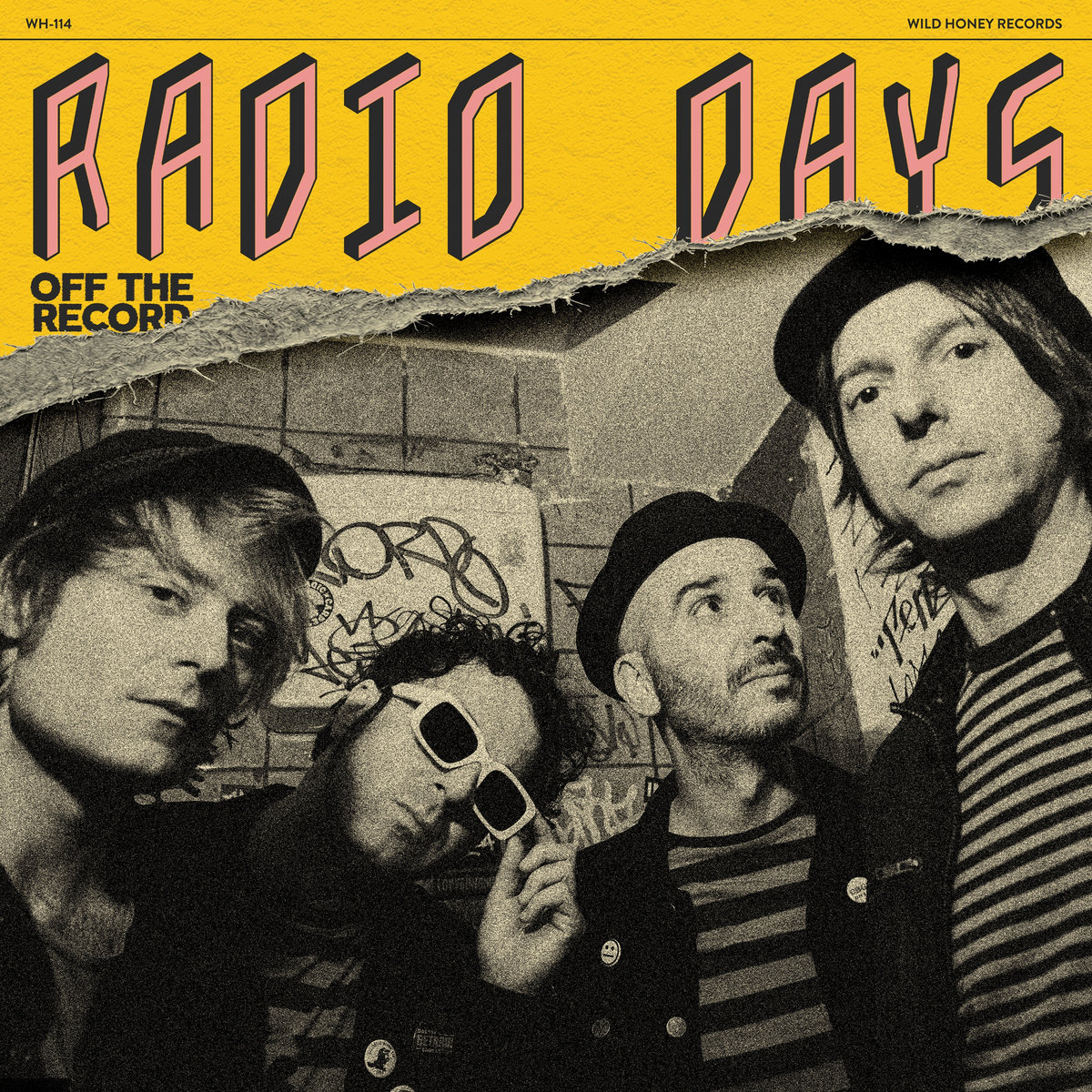
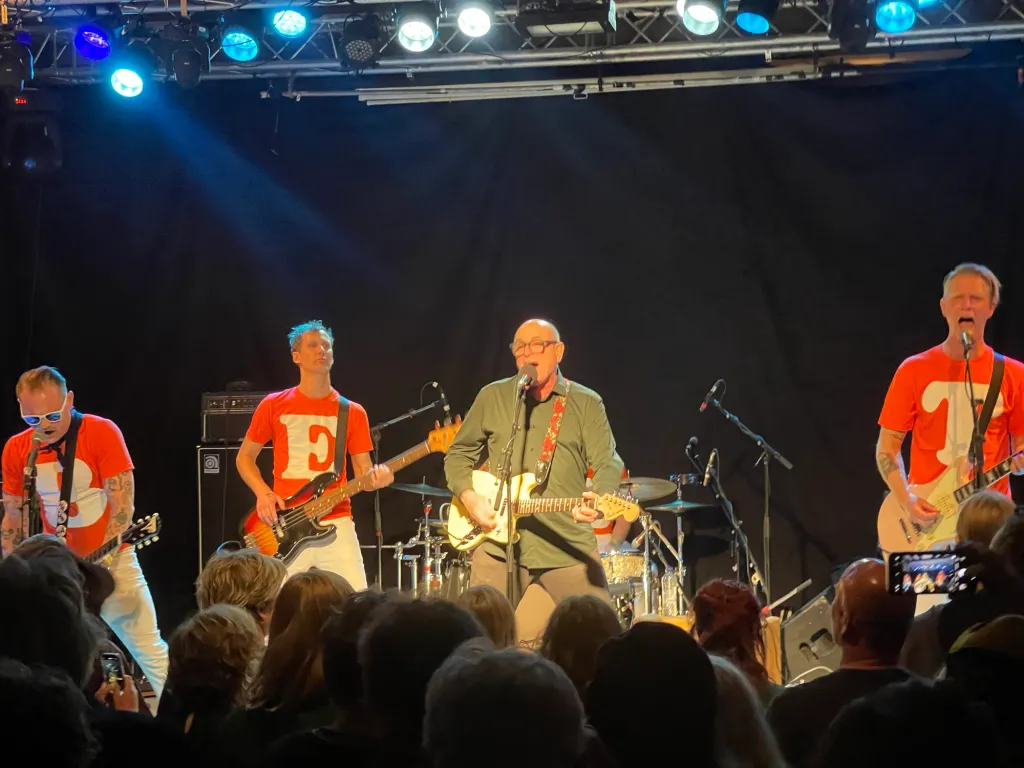
For more than two decades, Milan’s Radio Days have remained devoted to the timeless pleasures of Power Pop: sharp melodies, ringing guitars, big harmonies and choruses that refuse to leave your head. With their fifth album, Off The Record, arriving on September 4, the band sound as energized as ever, connecting their love of ’60s melody and late-’70s Power Pop with the renewed enthusiasm surrounding the genre today.
We caught up with Radio Days singer, guitarist and songwriter Dario Persi to talk about the making of Off The Record, how he knows when a song is really working, the band’s upcoming touring plans and why, after more than twenty years, the search for the perfect Power Pop song continues.
You’ve been making Power Pop for more than two decades now, and the sound you love is rooted very much in the late ’70s and early ’80s. What is it about that particular sound that has kept you inspired for so many years? Has your idea of what makes great Power Pop changed over time?
It’s true, time flies when you’re having fun! Haha!
Joking aside, we’ve always loved this music, and even though there have been some stylistic differences from record to record, we’ve kept playing it because it’s the music we love and the music we would want to listen to ourselves.
I think that, fundamentally, Power Pop is all about the songs. Without great songs, you can’t really go anywhere. So, for us, it’s about having a great, catchy but intelligent melody, some beautiful ’60s-style harmonies, and the energy and attitude of the late ’70s. That combination still feels perfect to us today.
How did Off The Record actually begin? At what point do you realize that you have enough new material to start thinking, “Okay, this is going to be a new Radio Days album”?
It was actually quite a planned and structured process. In mid-2023, we finished the tour for Rave On!, our previous album, and decided to take a break from touring to focus on writing a new record.
It took us about a year and a half, between writing the songs — which I mainly do at home with an acoustic guitar — and arranging them, which we do all together in our rehearsal room.
We wrote around 20 new songs and recorded pre-production demos of all of them. Then we selected 15 to officially record in the studio.
From those 15, we eventually chose the 10 that would make it onto Off The Record. The other five will be B-sides for some of the singles or will be released in the future!
Off The Record is coming out soon. When is the release date, and what are your plans for the rest of the year? Are there concerts, touring or other Radio Days activities we can look forward to?
Yes, we’re almost there! Our final single, “Another Lonely Night,” will be released on August 21st, and then Off The Record will be out on September 4th.
We already have a few shows booked in Italy, and at the end of October and beginning of November we’ll be doing a 10-date tour in Spain. We’ll be announcing those dates in the next few days.
After that, we’re working on a tour of Japan for April/May 2027 — exactly ten years after our first time in the Land of the Rising Sun!
“Flying High” sounds like the ultimate Power Pop song to me — immediate, melodic and incredibly catchy. When you write a song, how do you know when you’ve got something really special? Is there a moment when you realize, “This one is better than the rest”?
Thanks, I’m really glad you like it! It was actually the first song out of the 20 or so that we wrote for Off The Record.
Usually, I can tell pretty quickly if something is working when I come up with a good chorus or a good verse. I record it right away and send it to the others, and if they don’t shoot it down and everyone likes it, then I know we’ve got something!
It’s a strange process. Sometimes I can’t come up with anything for months, and other times I manage to write two or three good songs in a single week. It really depends on my mental state, my mood, my motivation… It’s not easy to figure out!
There seems to be a renewed interest in catchy, melodic guitar Pop at the moment, with bands like The Lemon Twigs, Mod Lang and others attracting a lot of attention. Do you feel that this new enthusiasm for Power Pop and ’70s-inspired Pop has reached Italy as well? And do you feel part of a new wave, or do you see Radio Days as continuing something you’ve been doing all along?
It’s great to see these younger bands getting into the genre. The Lemon Twigs have changed quite a bit compared to their early days and have become more Power Pop and ’60s-influenced, and I absolutely loved that change. Mod Lang have also made a fantastic record.
There has never really been a big scene for this kind of music in Italy, but I’ve definitely noticed more people becoming interested in it over the last few years.
I’d say we’re probably too old to be part of this new wave, haha! But we’re also really happy to see a bit more interest in a genre that we’ve been carrying on for so many years. I think it’s good for everyone.
Four years after Chopper, Kiwi Jr. return with Blowin’ Up, an album that finds the Toronto band moving forward without losing the restless charm that made them so appealing in the first place. Their familiar mix of jangly guitars, scrappy garage pop and sharp-edged rock is still there, but this time the songs feel more open, confident and lived-in.
That change didn’t happen overnight. After years of moving quickly from one record to the next, Kiwi Jr. allowed themselves time to stop, write, discard ideas and eventually rediscover what excited them about making music together. The result is a record shaped by ten years as a band, but also by the willingness to try something different without overthinking it.
Ahead of the August 14 release of Blowin’ Up, we spoke with singer and guitarist Jeremy Gaudet about that four-year gap, getting the band tight before heading to Detroit to record, the evolution of his songwriting, putting Kiwi Jr. themselves on an album cover for the first time, and why sometimes the best way forward is simply to trust what works.
When I saw Kiwi Jr. on the Chopper tour at EKKO in Utrecht, and now looking at the artwork and presentation around Blowin’ Up, I get the feeling that the band is entering a new chapter. Even the choice to feature the band itself on the cover feels like a different statement. Is that something you recognize yourselves, and does it reflect a change in how you see Kiwi Jr. as a band?
It’s been 4 years since our last album and ya some things have changed. With every new album we try to put a slightly different flavor forward. Cooler Returns had a particular garage rock fidelity, Chopper introduced the moog, Blowin’ Up I think provides a freshness and open-air quality that the band hasn’t explored that much in the past. For this album cover, I wanted the band to be photographed on the front cover because all of the great bands have at least one album where they are on the cover. It seemed liked the old school way to do it – photograph the artist for the cover and don’t think about it too much. We tried to approach the recording of the album the same way – get the band tight, hire a good engineer, and don’t over think it.
Listening to Blowin’ Up, it feels like Kiwi Jr. has taken the foundation you built with your previous albums and started exploring it with more confidence and a greater sense of adventure. I hear a change in sound and storytelling, but maybe that is just my impression. Do you recognize that, and if so, where do you think that change comes from?
We are older now and I think that comes across in certain ways. We took a few years between albums and I think we were wary of certain traps we maybe would have fallen into had we tried to make an album immediately after Chopper. We’ve been a band for ten years and we know what works and what doesn’t work. We know each other’s strengths and weaknesses and this allows us to steer the ship with greater confidence. There are some new things we’ve tried to do on this album, with time signatures, and bringing in an outside mixing engineer etc. But overall the process is sort of familiar to us now.
Four years is a long time. During that period, not only can a band change, but your view of the world, yourself, and your place in it can change as well. Has that period influenced the way you write songs? Are there different subjects or ideas that play a role on Blowin’ Up?
I try not to look too closely at my songwriting process and subjects with a lot of scrutiny because creativity is a delicate thing for me. There are times I will go months without writing anything, and other times it comes pouring out. I’m afraid if I start to analyze it, I’ll become too aware of it and fumble it. Like when you’re trying to fall asleep, you can’t think about how you are trying to fall asleep. It will never happen like that. And of course I have to follow what gets me excited and what I’m interested in, otherwise it becomes work.
Every album has its own story behind it. Can you take us back to the beginning of Blowin’ Up? When did you realize that you were creating a new Kiwi Jr. album, and what was the process like from the first ideas to the finished record?
We had been moving very quickly from Football Money through Chopper and I think we just needed to sit down and breath for a bit. Even though Chopper was finished in 2022, I didn’t start to write the songs that ended up on this album until 2024. There were two years of failed attempts and distractions. The first two songs were Blowin Up and World Like Polly. Once we had those two, we essentially were starting work on a new album. We rehearsed a lot and spent a long time getting the arrangements and songs together before going into the studio. Lots of phone recordings, for example. We went to Detroit record the album in March 2025. So the songwriting and arranging process took a complete year pretty much.
When the recordings are finished, Blowin’ Up is still a very personal project of the band. By the time it is released, other people already have expectations about it. Is that a thrilling transition, or does it simply feel like the natural end of the process?
It feels good to release something we’re proud of. As I said, it’s been two years since we started to write the songs. I get a bit of a thrill releasing it now because we’ve been sitting on the songs for so long. I hope people take notice and respond to it. We’re excited to play the songs live too.
With Blowin’ Up being released on August 14, what does the rest of the year look like for Kiwi Jr.?
European/UK tour in November. Some North American dates sprinkled all around. One day at a time!
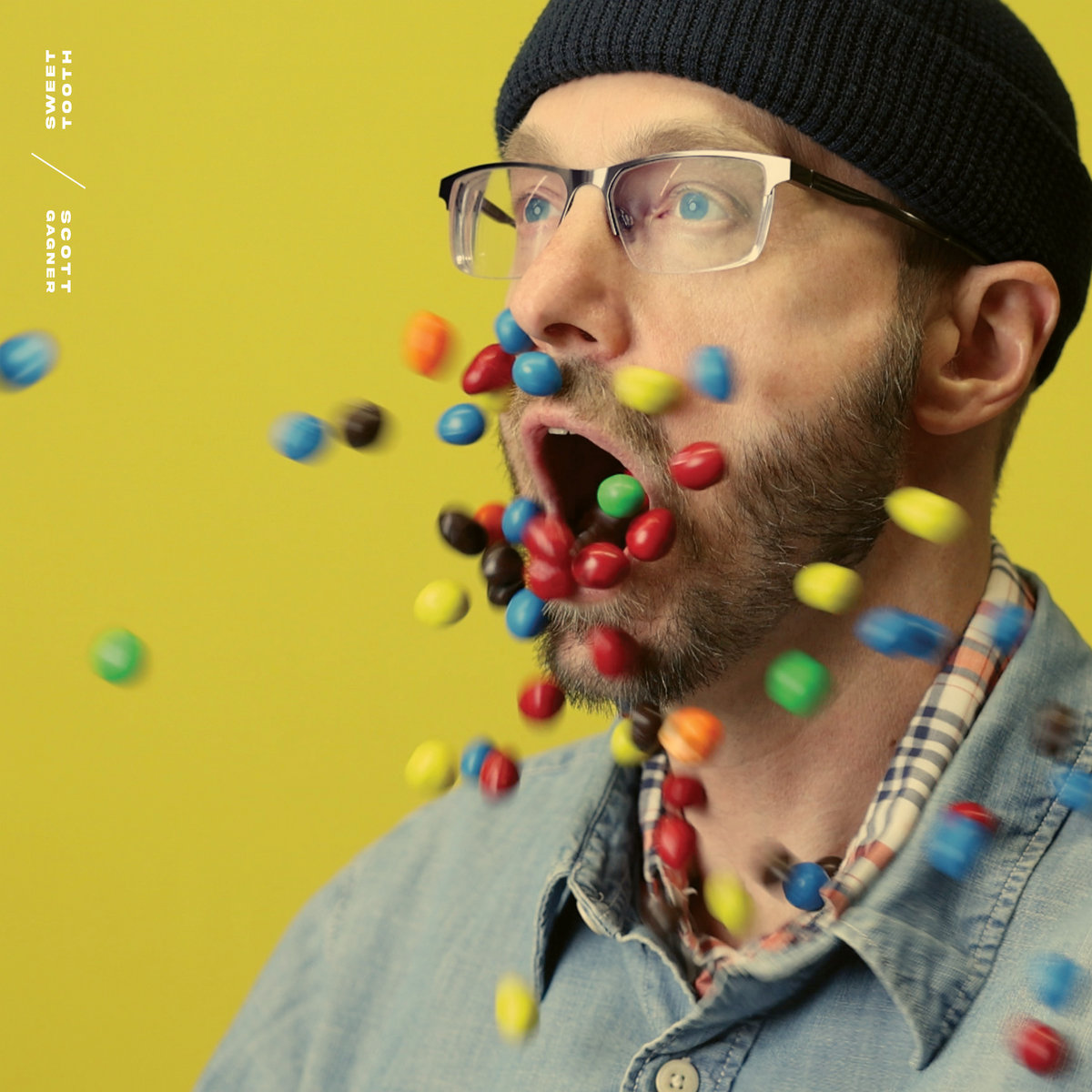
With Sweet Tooth, Minneapolis songwriter Scott Gagner has delivered one of this summer’s most infectious pop albums. Across ten concise songs, he combines sunshine pop, power pop and psychedelia into a collection overflowing with irresistible melodies, rich harmonies and colorful arrangements. But beneath its candy-coated surface lies a clear message: choosing joy can be a powerful response to an increasingly troubled world.
We caught up with Scott to talk about the philosophy behind Sweet Tooth, the artists who inspired the album, how it came together in the studio, and whether, after releasing so many records, making a new album can still surprise him.
On Sweet Tooth, pleasure almost feels like an act of resistance. Do you think making joyful pop music in times like these can be an act of defiance?
Indeed. Any act of creation is an act of good. If that creation can spread a little joy, positivity, and hope — when all evidence points to the contrary — then you are doing a tiny part to redress the balance. People have been bombarded by more than enough misery these days — we certainly got our share in Minnesota this past January. It somehow felt like the most radical and generous thing I could do was make Sweet Tooth an uplifting, earworm-rich pop record.
You’ve said it would have been easy to make an album full of sad ballads. Why did you consciously choose not to? Was there a specific moment or event that inspired you to make a record filled with color, energy and hope?
Truth be told, I love writing sad ballads. Maybe it’s the Ron Sexsmith fan in me. But I wrote so many that they started piling up in one corner of the studio. After a few months, they started to smell funny. Meanwhile, in the opposite corner, a pile of bright, shiny, candy-coated pop songs started piling up. They smelled sweet and delicious. Then I wrote “Sugar Rush.” That song seemed to embody everything that the “pop pile” was going for. In fact, it declared itself so strongly, that I decided to change the title of the album from “Technicolor Eyes” (a phrase from leadoff track “Beyond the Blue”) to “Sweet Tooth.”
Listening to Sweet Tooth, I hear touches of sunshine pop, power pop and psychedelia. Were there specific artists or records that inspired you while writing and recording the album, or did those influences emerge naturally?
My daughter is a fellow Beatles freak like me, so that’s what we listen to in the car on the way to her swim practices. After witnessing an absolutely incendiary show in Minneapolis, I’ve been on an extended Guided by Voices kick. It certainly helps that they keep putting out incredible records every year. Other recent favorites include Mike Viola, Super Furry Animals (plus solo Gruff Rhys), Father John Misty, and Aimee Mann. For the more synth-based songs (“Purple Heart” and “Where Do We Go From Here”), I was influenced by some Norwegian Disco that my brother turned me on to (Todd Terje, Lindstrom), pre-1982 Devo, and Tubeway Army. I love the juxtaposition of live human drums with robotic synth arpeggios.
Can you walk me through the making of Sweet Tooth? How did you choose the musicians, the studio and the producer, and how much of the album’s sound was already mapped out before you started recording?
All the songs began in my home studio, often originating with a title phrase, and then brought to life while strumming my favorite nylon-string guitar. By the end of the initial writing day, I’ll have a pretty fleshed-out demo, including drums, bass, guitars, piano, synths, and vocals. That exact demo remains the basic foundation for what you hear on the final album, and I simply replace any instruments that need improving along the way. That way I can retain plenty of the initial inspiration and excitement of the demo. In the case of this album, I wanted to use my incredible rhythm section of Tim Zhorne (drums) and Sam Graber (bass) playing together. I also wanted to try a studio in Minneapolis called The Library. The owner/engineer, Matt Patrick, has created an incredible space — all the walls are lined with books for acoustic dampening. We replaced all the drum and bass tracks in one marathon day. I then took an additional studio day to replace some guitars that needed improving. Then I continued to polish at my home studio, overdubbing any final touches, and adding additional players, including Aaron McCabe on trumpet and Rachel Hunter on backing vocals.
You’ve released quite a few records over the years. Does putting out a new album still bring surprises, either in the reviews or in the reactions from listeners? Were there any responses to Sweet Tooth that really stayed with you?
I’ve been pleased with the reactions thus far. The word “irresistable” has popped up in a few reviews, which is what I was going for. After all the bad news that has swirled around us in recent years, it seems like people were ready for something upbeat, positive, and hopeful.
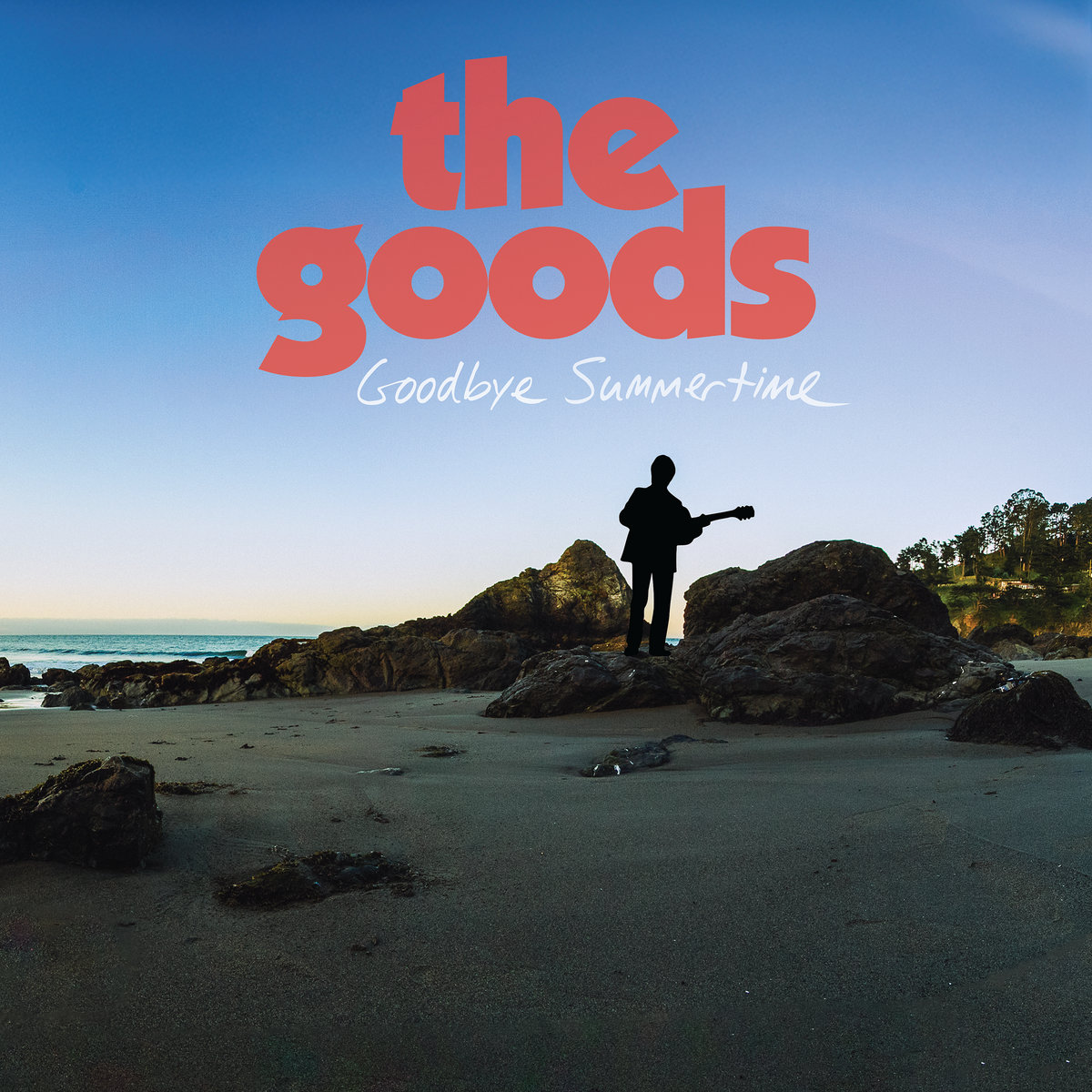
The Goods return this September with Goodbye Summertime, the follow-up to Don’t Spoil The Fun, one of my favorite albums of last year. Released by Dandy Boy Records, the new record builds on everything that made its predecessor so memorable: instantly gratifying guitar pop packed with irresistible melodies, but with an emotional depth that reveals itself the closer you listen. Much of that comes from Rob Good’s lyrics, which are remarkably honest, direct, and unafraid to be vulnerable.
Ahead of the album’s September release, I spoke with Rob Good about the emotions behind Goodbye Summertime, writing some of its most personal songs, and what lies ahead for The Goods.
Goodbye Summertime is such a melancholy album title to me. Was that the state of mind you were in when you wrote these songs, or is it more the atmosphere you wanted to convey?
It’s a melancholy album, really. It does have a lot to do with the state of mind I was in when writing it. A lot of the album is about change, and although change can be good it can also be painful, and you can mourn the loss of what you had to leave behind to get to a better place. But saying “goodbye” to something also means saying “hello” to something new, so it may be tinged with some sadness but there’s optimism in there too. To me, the title Goodbye Summertime captures those bittersweet feelings.
“Wing” is a song I keep coming back to, especially because of the lyrics and the line about asking someone to take you under their wing. It feels very vulnerable. Was that your intention when you wrote it?
“Wing” is definitely me at a vulnerable moment. The lyrics are very direct and honest. Sometimes in my writing I’m just trying to express a feeling that’s difficult to put into words, but in this case I was being more autobiographical. A lot of the songs on this record were written really quickly, in heightened emotional states, and then recorded right away. This is one of those songs. I don’t know about the intention because “Wing” just kind of spilled out – I think I needed to write it at that moment.
On parts of “Ginger Rose” you sing noticeably higher than usual. As a listener, that has a huge emotional impact on me—not just because it sounds beautiful. Were you deliberately trying to add an extra emotional dimension, or did the melody simply lead you there and require you to sing in that higher register?
When I’m writing, I just try to follow the melody where it wants to go. I don’t think I necessarily set out to write a song where I sang in falsetto, but as I was feeling my way through the chords it just seemed to take me there. I can remember around the time of writing “Ginger Rose” I was obsessed with several songs that featured a falsetto vocal – “Here There and Everywhere” is an obvious touchstone, but also “Tell Me Have You Seen Her” by the Chi-Lites and “How Deep Is Your Love” by the Bee Gees – so that influence must have crept in. I do love a falsetto vocal, and it was fun to explore that part of my voice.
“Waiting” feels quite different from the rest of the album. It’s just you and your guitar, I assume. Because it’s so brief, it feels more like a short story than a full novel—to use a slightly clumsy comparison. What made it such an important piece of the album as a whole?
I like that comparison! “Waiting” was just a song-fragment that was rattling around in my head, and that seemed to be all that it wanted to be. I think it’s okay for songs to be short. Sometimes you just have a snippet of a melody and it somehow feels complete – like if it were any longer it would somehow lose something. Tony Molina is obviously the master of this. I also love Pink Flag by Wire and of course “Your Majesty” at the end of Abbey Road. Not that I was explicitly thinking about any of that when I wrote “Waiting,” but I’ve just always found that short songs can be really impactful and beautiful. As far as its importance on the record, over the course of an album I feel like the little moments are just as important as the big swings, and “Waiting” is just one of those little moments.
When is Goodbye Summertime being released, and what do the next few months look like for The Goods?
Goodbye Summertime comes out on September 16, and our record release show is on September 11 at Little Hill in El Cerrito, CA. Then, starting September 24 we’re heading out for a European tour with Joel Cusumano. We’re currently looking at visiting Germany, Spain, France, Belgium, and the UK, and maybe a couple other places too.
On Sunday, April 6, 2025, Paul Collins played at the new dBs here in Utrecht. He had promised “60 Minutes of Power Pop” beforehand, and that’s exactly what we got: in a blistering one-two-three-go rhythm, he blasted through nearly all the classics from the first two The Beat albums, along with a handful of gems from The Nerves. Collins was the undisputed King of Power Pop, urging his much younger backing band on with infectious energy, never letting the pace drop for a second.
Next to me, I saw my two sons, aged 21 and almost 23, watching it all with big smiles. During “Hanging on the Telephone,” a spontaneous family dance broke out, and for a moment, we found ourselves in Power Pop heaven.
What an amazing night!
That Utrecht show was just one stop on a unique tour in which Collins performed with different backing bands. The entire adventure has now been captured in a wonderful documentary, following the tour from rehearsals to performances around the world.
I spoke with Paul about how the film came together, what it was like working with so many different musicians, and why the project has already been attracting attention from film festivals. He also shared some exciting news about an upcoming release celebrating the 50th anniversary of The Nerves.
How did the idea for the movie come about?
Paul Collins: I was in Mallorca after I did that show for Paco, and one morning I said to myself, “I really want to document this. I want to let everyone know that I did it.”
I thought it was a tremendous undertaking, and I really surprised myself with how well it turned out.
I’d collected clips that people had posted about the different shows, so I thought I would use those as the basis for putting everything together. One of the clips was done by the filmmaker Tom Fleming, and it was of a very high quality. So when I got in touch with him, I thought I’d ask, “Do you want to help me make this into a film?” His immediate answer was yes, and I’m so glad that he did, because I think it turned out great.
60 Minutes of Power Pop is such a great concept. Did the idea come together all at once, or did it evolve over time?
Paul Collins: Yes, it all came together at the same time.
I was thinking about how I could improve the shows, which is something you’re always doing. How can I make it better? How can I get people to come out?
And it just came to me in a flash. Why don’t I just do the best songs by The Beat and The Nerves? There are so many, and that would be non-stop power pop!
Just one great song after another.
So that was the inspiration for everything. Once I had that, everything else just snowballed.
In the film we see you performing with a number of different backing bands, and it all seems to come together effortlessly. I imagine organizing that must have been quite a challenge. How did you make it work?
Paul Collins: I surprised myself with how easily it fell into place, although I knew each time I was taking a tremendous gamble that it might not work out.
I vetted the bands as best I could. Toyozo I knew from Japan, and I knew he was serious about this music. I had total faith that he would come up with two guys of the same caliber, and they were amazing. We really could have done it after one rehearsal. After the first rehearsal, I said, “Wow, it’s done.” But we did the second one just to be on the safe side.
It was more or less the same thing with every band. The Manikins, again, I vetted them. I saw that they were touring, and they were from Switzerland. The Swiss are famous for being very meticulous. Once again, when I showed up, they had everything locked down, and it was really amazing. I gave myself a number of days in their hometown. They put me up in a very nice place, so I got to hang out there. We had a buffer in case there were any problems, but we really didn’t need it.
It just kind of went on like that. The guys in France, The Sutles, were the same way. I did two rehearsals with them, and we were really ready to rock. We were supposed to do more shows, but unfortunately two of them got canceled. One of the clubs closed—those kinds of screw-ups.
I loved playing with them. I was really hoping we could do more shows, and hopefully we will in the future.
The same thing happened with the guys in California. That was another case where a club owner sent me a video of them doing “Working Too Hard,” and I got in touch with them. They immediately said yes, and I went out there. Again, I had a buffer. I think I was there for almost ten days, just hanging out with them.
That was really a lot of fun. I stayed with Dustin and his family, got to know his wife and his kid, and we did it Long Beach style.
We had time to do a couple of rehearsals, but basically I didn’t do more than two rehearsals with any of these bands, including the guys in Mallorca. We’re old friends.
The film is currently being booked for several film festivals, and there already seems to be a lot of enthusiasm from festival programmers. Why do you think it has struck such a chord with them?
Paul Collins: Well, it’s been a real eye-opening experience submitting to festivals because of the way they go about things. You have to submit, and then you have to wait a long time before you find out whether you’re even in.
So far, we’ve been lucky. We’ve been accepted in Los Angeles, Berlin, Paris, and, most recently, Tokyo, and we’re hoping for more.
We’ve also submitted to Barcelona, the Woodstock Festival here in New York, and the Long Beach Festival, so hopefully we’ll get some more acceptances.
To date, the only showing we’ve had in a movie theater was in Los Angeles. A bunch of my friends went, Tom Fleming went, and Softjaw went too. It was great. They saw it on the big screen, and everybody loved it.
That’s the caveat, though, because getting accepted into a festival doesn’t always mean your film gets screened. They can only show a certain number of films.
So the second tier is finding out whether they’re actually going to show your film, and we’re still waiting to hear about that from some of these festivals.
At a certain point, we’ll just turn it over to our own platforms and let everybody see it.
We have a two-year license to do that, and we will.
Looking back at the past few years—the touring, the recording, and now the film—what keeps you inspired and gives you the energy to keep going full throttle?
Paul Collins: That’s the easy part. What keeps me going is that I love it.
This last show, The Best of The Nerves and The Beat, is also coupled with the fact that Third Man Records is releasing the 50th anniversary edition of The Nerves on October 8, which they’ll be announcing soon. It’s a double album with all those great songs.
We included some of the Breakaways songs along with the Nerves songs—everything from the vintage 1974 to 1978 period. We found the source tapes, and most of it is studio material, so the sound is incredible. It’s a great document of the work that Jack Lee, Peter Case, and I did.
So it’s a great impetus to go out there and perform this stuff.
The last show I did here in New York was my best show in New York in many, many years. We played TV Eye, it was sold out, and the audience was just fantastic. There were people like yourself with their kids, people on first dates, young kids, older kids—kids my age. We’re all kids.
So it’s a very nice situation now. The people who follow this kind of music, and the people who follow my music, are great. It’s just wonderful. Without sounding corny, it’s a loving crowd, and I really enjoy it. It gives me a tremendous amount of satisfaction to be able to do it, and I’m happy with the place I’m in now.
I’m able to do what I do, and I have no trouble surviving these days, so it’s all good.
Trademark Issues is a long-distance band composed of Gary Hornseth and Mitch Armbruster. Despite their successful collaboration, they’ve only spoken directly twice. However, they’ve been creating great music together for quite some time. Their fifth album, Change This Face, kicks off with the aptly titled and irresistibly catchy track “Welcome To Album Five,” which is sure to be the funniest opening song you’ll hear this week. The album features eleven clever pop songs that draw comparisons to The Posies and evoke the pleasantly rattling style of The Front Bottoms. As they continue to evolve, their music only gets better. It’s time for a more comprehensive introduction.
Could you share the journey of bringing this record to life? How did all the pieces come together to create the final product?
We’re a long-distance band in every way, living in Minnesota and North Carolina, 1,200 miles apart. We met at an arts event in Boston in 2019 and started collaborating through messaging and file sharing. This led to our first album in 2020, and we’ve since released one album a year, always on the anniversary of the first one — the last Friday in July. We’ve only spoken directly twice — once when we met and once as guests on a podcast.
“Change This Face” came together much like our other albums. Most of our songs start as unfinished fragments that one of us has lying around. Some are recent, while others are many years old. We send these fragments to each other, and the receiver turns the idea into a full song. Sometimes it resembles the original intention, and sometimes it takes off in an entirely new direction. Then we work together on the final steps — trading backing vocals, guitar accents, edits, or mixing suggestions. Sometimes one of us gets stuck trying to come up with a solo or a bass track and just throws it over to the other guy to try.
It’s an unusual way of collaborating, but it always results in something neither of us would have come up with on our own. It’s a 1+1=3 thing.
The decision to seek opinions on your new songs is intriguing. When did you realize that external perspectives could contribute to your creative process?
We suppose every artist at every level has misgivings about sharing their work. We sure do. Our song “Absolute Green” on our new LP is about that — the hesitation, self-doubt, and vulnerability that comes with hitting “send” to ship .wav files and artwork off to the distributor.
But five albums in, we’re so grateful for how supportive and constructive people are out there. The benefits of inviting opinions far outweigh the occasional sting.
Success can take on different meanings as time goes on. When envisioning success for this new record, what does that picture look like now?
For us, every new release feels a little like a ticket to an unknown play. We can never predict what will happen with it, but every time something cool and unexpected seems to pop up.
Our songs have ended up in independent films, we’ve had a song profiled on a talk show on the third largest radio network in Spain, we hear our songs backing social media videos internationally, we sell a few CDs and shirts to people we’ve never met, we get a few nice reviews, and we make new connections and friends around the world. And we get asked by cool people like you to do fun things like this!
Success in terms of big sales and large streaming figures will probably never be our thing, and that’s OK. We like being our version of a band and all the colorful stuff that comes with it. And we like to think that we’re growing and refining our sound with every album.
Lyrics often carry profound meaning. Are there particular lines you hope listeners will always remember from your songs? If so, what’s the significance?
We both write a lot for our day jobs and enjoy the challenge of using words in this different way. We’ve always loved lyricists who delight in wordplay and wit — like Neil Hannon, Paul Heaton, Andy Partridge, Kirsty MacColl, Stephin Merritt, both of the They Might Be Giants guys, the Lucksmiths guys, and many others.
If we write a line that makes someone stop in their tracks for a second, or one that elicits a wry smile, that’s a win in our book. It’s genuinely one of the most rewarding things when someone tells us a lyric has connected with them in some way. It reminds us to tell the same to others.
Among the compliments you’ve received, is there one that remains etched in your memory? If so, what made it particularly unforgettable?
Our favorite compliment is when someone we know is impressed by one of our songs without knowing it’s us and says with surprise, “Wait. This is you?” Family, in particular, can be tough to impress, so tricking them into a compliment can be the best way. :>)
And we love being compared to bands we love. We got a Posies comparison the other day, which will keep us going for the next month.
Studio moments often hold a touch of magic. Could you recount an instance that stands out as the most enchanting during your creative process?
We remind each other to embrace our constraints. You can’t really get more DIY than we are. We record separately in our homes (many of our vocals are recorded in parked cars; we like the sound). Our gear is simple and inexpensive. We’re neither virtuoso players nor especially adept producers. We only communicate through messaging and shared files. So, it helps to be open to welcoming the opportunities that constraints can create.
We love it when a mistake leads to something cool. For example, when we’ve accidentally nudged a harmony track during mixing and it threw it a few milliseconds off, it opened up a new sound for the better. Or when the gain on a vocal track was accidentally way too high and we liked the sound, so we kept it.
We care a lot about our final results and getting them to be the best they can be, but over the course of five albums, we’ve grown pretty comfortable with who we are.
Where do you see yourself situated within the broader landscape of the music industry? How do you perceive your unique role and contribution?
We’re glad and grateful to be a small particle in the big music universe. The wonderful reviewer Janglepophub recently described our records as “gloriously catchy and perfectly obtuse.” If that’s even a little bit true, and if some people enjoy what we do along the way, it’s about the best contribution we could hope to make.
The Junior League has just dropped a new EP, Nattering Nabobs, and their latest full-length album, Our Broadcast Day, is set for release on October 4. Joe Adragna has evolved his sound to be “more Gram, less The Knack,” offering a delightful treat for fans of twangy power pop and roots pop.
You released an EP and will release an entire album in October; did the inspiration just keep coming?
I had 15 or 16 songs going. I didn’t want to make the full-length album too long. In the past, I feel like my records have often been two or three songs too long. Sometimes, those extra songs aren’t quite as strong as the others and should have been left off. In this case, I wanted to keep the full length as concise as possible—although it’s still 10 songs!
How did you decide which song went on the album and which went on the EP?
I felt like “Skinny Tie” and “Nattering Nabobs” fit together musically but didn’t blend as well with the other songs on the full-length album, which is called Our Broadcast Day. I had a song I wrote late in the sessions for this called “Kinda Lost” that I liked and that would have fit on Our Broadcast Day. It was a toss-up between that one and “Two Ways To Go” as to what would be on the EP. In the end, I felt like “Two Ways To Go” fit the record better all around and served as a good opening track.
Your sound evolved, didn’t it? More Gram, less The Knack?
Hahaha, yeah—there are still tambourines and jangle elements, but this record is a bit more laid-back than parts of Bridge and Tunnel, or certainly Adventureland. It has more in common with Fall Back, maybe—but I think this is a much better record. Hopefully, I’m getting a little better at this!
“Skinny Tie” will immediately catch the eye of every power pop lover. What’s the story?
Well, I think it’s a funny song. I wrote it with every power pop cliché I could think of! Hahaha. It was inspired by some very “passionate” arguments I had seen or heard online about what is (or isn’t) power pop. I can see how those terms might make people feel boxed in if they let it.
Both releases are so solid. You knew you had a truckload of good songs when you started recording? Thank you for saying that. I felt strong enough about the songs to release both the EP and the full-length. To be honest, though, I never know what I think of anything until it’s all over. I tried to be more selective this time—as I mentioned earlier, I’ve had one or two too many songs on some of my records. I might like a song, but it might not be the best song, if that makes sense. I think these are just right, he said hopefully!
A Talk with Jeb Barry on the Release of The Typicals: The 1980s-90s Power Pop Band’s Final Recording, Released 32 Years After It Was Recorded, Lost, and Then Discovered.
Could you share the journey of bringing this record to life? How did all the pieces come together to create the final product?
The Typicals formed around 1986 as a four-piece band centered around Jeb Barry and Michael O’Neill’s songwriting. They wrote all their songs separately and then brought them to the band to arrange. “I never told anyone what to play when we learned a new song I wrote; we let them create their own parts. Mike did the same,” Barry explains.
Due to musicians moving on to other careers, by 1990, we were a three-piece with a new drummer. Our songs had gotten harder and less powerpop. We decided to record live at CBGBs on DAT tape for a future live album release of all new songs. Unfortunately, the sound engineer only recorded one channel, so it was a waste, although it was fun to play there (we had previously focused on the Boston area for shows).
Since I had a fairly expensive DAT tape, we booked an hour with a local studio where we recorded our first two self-releases (Popscreams and The Poverty Sessions). We recorded it live in one shot, except for one song we did four times but kept the first take.
We ended it all right in the middle of talking to DGC (David Geffen Company), who loved our stuff. But the band was entering their 30s, and the music business at the time was not a great place to be. People thought I was crazy to walk away. LOL
How did DGC get interested?
Before this, we had met and talked to a few major record companies and sent out dozens of copies of our album, but nothing came of it. In 1991, I saw that DGC was a new subsidiary that had signed a band I knew through college radio, Nirvana, for a million-dollar advance. I decided to stop sending out albums and tapes and created a small promo pack of articles and reviews of the band.
Cindy Peters from Gary Gersh’s A&R office at DGC called my house later. She told me to send her a tape of three songs and instructed me to put a special code on the bottom right of the envelope, or else it would be thrown away. I did that, and she called a week or so later, saying they loved it but thought we sounded like a band they had recently released, Nirvana. I had recently gotten the Nirvana CD and didn’t see the comparison, but she pointed out similarities like soft verses and hard choruses. She requested more songs, so I sent some new and some old, including rockers and acoustic ones.
She called again, saying the new songs reminded her of The Posies and requested more. This happened a few more times before I decided I didn’t want to travel around the country in a crappy van playing low-level shows for little money and walked away. I did not return the next few phone calls from Cindy.
Was there a particular moment or experience that struck you, signaling that you were onto something special with this project?
Probably the first time we played as a three-piece. I (Jeb) had to play bass on Mike’s song (except for “This Lonely One,” where I played bass on my own song) and vice versa. It made the songs simpler yet more intense compared to our older material.
The decision to seek opinions on your new songs is intriguing. When did you realize that external perspectives could contribute to your creative process?
I think that happens from the first time you play, especially performing original material. You seek input from others outside the band to gauge the impact of the material.
Success can take on different meanings as time goes on. When envisioning success for this new record, what does that picture look like now?
Our only goal when we recorded this was to give others an idea of how we sounded live as a three-piece and how the band was changing. This had nothing to do with the emerging grunge sound that was starting to become popular. As a three-piece, we needed to play the new songs more aggressively—and louder too.
Within this collection, do you feel that the best song you’ve ever written finds its home? If not, what distinguishes this record’s essence from your prior work?
As a songwriter (currently writing and performing under the name Pawn Shop Saints and doing Americana with some acoustic powerpop added in, e.g., the song “Diane”), I’m still trying to write that perfect song. That’s why I keep writing. But my favorite of this bunch is probably “This Lonely One.” It just stood out to me when I wrote it and when we recorded it.
As an artist, the act of baring your emotions to the world is profound. Does this vulnerability come naturally to you, or is it a constant journey of finding comfort?
Since all my songs are not written with any relation to me, I don’t really bare any emotions. All my songs are like films, where I create plots, scenarios, and characters to play out the song’s theme. Some people think I am writing about myself, or sometimes I’m writing about them, but I don’t do that. It’s all fantasy or fiction.
Imagine you could collaborate with three co-writers of your choice for new songs. Who would you select, and what qualities or dynamics draw you to them?
I have only co-written once, with Jason Isbell via Twitter (that’s another story). But in 1992, it would have been Tommy Keene, Marshall Crenshaw, U2, Elvis Costello, or Springsteen.
Today, it would still be Elvis, Springsteen, Isbell, and Steve Earle. I’d even include Taylor Swift since she writes very differently from me, and I love challenges.
Among the gigs you’ve performed, which one holds an indelible place in your memory and why does it stand out?
CBGB’s was cool, but probably our first show at The Rat in Boston or the frat party we played for hundreds of drunk college kids in the pouring rain. They had a big mud puddle they were jumping in right in front of the stage. It was cold and miserable, but fun.
Defining a song’s completion can be elusive. How do you determine when a composition has reached its final, ready-to-record form?
I guess it’s different for all songwriters, but like most, I just know when something isn’t working and needs to be changed. If it’s a song I think is good, I’ll work on it until it hits that comfort zone. Recording is a different beast. I may have a sound in my head I’m striving for in the studio, but sometimes it just doesn’t work. I’ve scrapped and rerecorded several songs in the studio. Luckily now, I can do that in my own home studio.
Striking a balance between experimental artistry and commercial appeal is a challenge. How do you navigate this dynamic within your music?
Since I don’t have any goals to be commercial and never have, I just do what I like. In 1992, that’s what we did. We didn’t try to sound like anyone, jump on the grunge train, or try to be hip or popular. We just had fun. It’s the same today.
Lyrics often carry profound meaning. Are there particular lines you hope listeners will always remember from your songs? If so, what’s the significance?
Every song could have a line that has meaning to somebody. I’m not sure any of them are profound, but listeners might catch a line or two that they feel speaks directly to them.
Can you recall the last instance when you felt the immediate certainty of having penned a hit song?
I feel I’ve written a lot of catchy songs that few people have heard. As for a hit, I’m not sure. I still think “This Lonely One” is a hit powerpop song. Since I don’t write in one genre and mix it up a lot, there could be hit country, pop, rock, Americana songs in my catalog. I’ve written thousands of songs—most are crap, but there are a handful I could perform every night. Usually, the simpler ones are the best for me, like “She Comes Along,” an unreleased Typicals song, which was always a crowd favorite and the first song of mine another band covered.
With the resurgence of cassettes, imagine curating your inaugural mixtape. Which five songs would be must-adds and why?
For The Typicals, they would be:
“She Comes Along”
“This Lonely One” (Mike’s guitar work/hook really makes the song)
“The Cold Shoulder” (another unreleased Typicals song, slower and groovier)
“I Could Be The One” (Mike’s song from the Popscreams album)
“The 4th Of July” (from The Poverty Sessions cassette)
I’d pick these all for the same reason: they are catchy. Mike, I’m sure, would pick different ones.
Performing music before an audience holds a unique allure. What aspects of this experience contribute to the excitement and enjoyment for you?
Just getting the interaction of the crowd, even if they are just listening. As a songwriter, it’s incredibly rewarding to have people actually listen to your songs, especially when doing a solo show. I did a solo show at the Bluebird in Nashville a few years ago, and there was no talking. Everyone just sat and actually listened.
While you can’t dictate how people interpret your music, are there specific elements you wish to highlight that set your songs apart?
For The Geffen Tapes, it was the hooks of the songs and the energy that we were trying to get across. Anything beyond that was a bonus. Today, it’s more about the lyrics and stories in the songs that I hope listeners pick up on.
If tasked with introducing your music through three songs, which ones would you choose and what story do they collectively convey to new listeners?
In 1992, it would have been “This Lonely One,” “Going Steady Still” (from Popscreams), and “This Lonely One” again since I think they are good, angst-tinged power rock songs.
In a hypothetical scenario where you could tour with two other bands, who would be your ideal companions and what synergies do you envision?
In 1992, it would have been Nirvana and U2 (my favorite band, and they’re Irish, so that’s a plus). I think The Typicals could have added a similar yet different sound to either band as a supporting group, which is actually what you want for a concert. Since we were all around the same age, that wouldn’t hurt either.
Studio moments often hold a touch of magic. Could you recount an instance that stands out as the most enchanting during your creative process?
For The Typicals, we never had much money, and there was no home recording then. If you wanted to record, you had to book time in a real studio, which wasn’t cheap. We recorded at Derek Studios in Dalton, Massachusetts, the only one around (another local, Arlo Guthrie, recorded there too). Since it was expensive, we learned to be well-rehearsed and record quickly. Our first album, Popscreams, was done live in the studio with vocal overdubs. We did it so fast that we had time to record four acoustic songs. The same was true for the second one, the EP The Poverty Sessions (named by Mike because the mixing took twice as long as the recording and was very costly). But the first time you listen to a final mix of your first recorded song and hold that album in your hands is unforgettable.
Where do you see yourself situated within the broader landscape of the music industry? How do you perceive your unique role and contribution?
We came close to something with DGC, but essentially we were a local original band that only did originals (all other local bands were cover bands) and put out our own music. One reason we did an album ourselves was because all the local ‘experts’ said it couldn’t be done and that you needed a record company. But since we had no management or money for promotions or tours, we were pretty restricted to being a Massachusetts band. But we showed a lot of bands that you could put out your own DIY records.
Envision recruiting three singers to provide harmony vocals on your next record. Who would you invite, and what qualities do they possess that resonate with you?
In 1992, it would have to be:
Susanna Hoffs—she has a one-in-a-million voice.
Robin Zander—he still has a powerful voice.
Scott Miller of Game Theory—he has a unique and standout voice.
With the record completed and the music released, do you believe the pinnacle of enjoyment has been reached, or is this just the beginning of an exciting phase?
Since it’s been 32 years after the recording, we don’t expect much at all. It’s hard to stand out in today’s mass-produced music world, but maybe someone will hear it, like it, and promote it to the right person to reach a larger audience. But if not, that’s okay. I really don’t expect to hear us on SiriusXM anytime soon or hear from a label looking to press the songs. We do have some more unreleased Typicals songs, mostly Tascam 4-track recordings, that will see the light of day in the next few months, and maybe some live show songs. It all depends on the quality of the cassette tapes. If they are lo-fi, that’s fine since we love that type of sound.
Looking ahead to the next couple of months, what exciting plans or projects are on the horizon for you?
The homemade album with the songs “She Comes Along,” “Cold Shoulder,” and “Oh Janine” from 1988 should see a digital release by Christmas. Plus, I may record another Pawn Shop Saints album or do a compilation of all the powerpopish songs the Saints have recorded—all for fun!
Can you take us through the creative journey of bringing this album to life? What were the key milestones, challenges, and breakthroughs you experienced along the way?
As described above, the show at CBGBs was a letdown on the recording side, but the live tape came out pretty well. The original DAT tape disappeared, and all I had was a cassette tape I recently found while cleaning out old Typicals cassettes. It’s not the best sound compared to the original tape, but after 32 years, it’s not bad. I tried remastering it, but it actually didn’t need anything, which is a kudos to the recording engineer, Greg Steele. I finally decided to put it out on the internet for free, especially since I don’t have the funds to press a record or CD. But maybe someday.
How would you describe the evolution of your sound in this new album compared to your previous works? Were there intentional shifts in style or themes?
Harder and rougher—not as pretty. Maybe our influence from The Clash or Dinosaur Jr. (who lived less than an hour from us in Massachusetts) was coming through, but who knows? I think we all just wanted a more powerful style, especially as a three-piece.
With this fresh collection of songs, how do you envision connecting with both your existing fanbase and new listeners? Are there specific emotions or messages you hope they’ll resonate with?
Since we’re releasing them 32 years later, most, if not all, of our fanbase is gone. So, we are starting from scratch three decades later. But these songs haven’t been heard outside of DGC, so maybe someone will randomly hear them, like them, and the sound. Or they might get lost in the modern music era.
Back then, if I hadn’t walked away from the business, I’m not sure what would have happened. Perhaps nothing. We might have stayed a regional act making no money and working crappy jobs.
Albums often involve collaboration with various musicians and producers. Could you shed light on how these collaborations contributed to shaping the album’s identity?
Greg Steele (who passed in 2023) usually just produced and left the engineering to others, as was done with our prior albums. This time, for the live recording, he did the engineering so we could get the best sound with no overdubs or fixes. It was all recorded directly to a DAT tape. The results didn’t need to be mastered or changed in any way. There were no other musicians—just myself, Mike, and Sean playing the same set we did at CBGBs a couple of weeks earlier.
In the digital age, visual elements are intertwined with music. How did you approach the album’s visual aesthetics, such as album art and accompanying visuals? How do they complement the sonic experience you’ve crafted?
I have an art degree but still appreciate the DIY look of many of the 1980s-1990s self-releases. Most of our posters and flyers were hand-drawn, and even our first album cover was hand-drawn since we couldn’t afford text paste-ups. For the cover, we went for a simple, time-period-appropriate look: a photo of us outside CBGBs and nothing else. If I had to design an entire album jacket, I’d keep with that theme.
If The Posies are one of your favorite bands, I’m sure you’ll love New York’s Yours & Mine. They’re that good! After releasing an EP in 2017, they’re back with this hit that sounds both fresh and mature. It’s my summer 2024 album! And luckily, there’s plenty of summer left to enjoy it!
Greg talks about how ‘The Shadow You Cast’ came about.
You can find ‘Pushing up Daisies’ showcased on the Best Power Pop of 2024 Spotify Playlist.
Could you share the journey of bringing this record to life? How did all the pieces come together to create the final product?
This record has been a long time in the making. I wrote the majority of these songs between 2014 and 2018. I went through some ups and downs with a significant other during that time (which ultimately ended in breaking up and ending an engagement). Looking back, it’s all water under the bridge, but those songs serve as a well-documented timestamp in my life. I usually write my songs on acoustic guitar. If it sounds good on acoustic, it usually translates nicely to electric and full band arrangements.
As far as crafting the arrangements with the band and recording them, to make a long story short, life sometimes gets in the way (for better or for worse). Just trying to get by financially was probably one of the biggest factors (2018-2021). When you work a 40+ hour week, there’s just not a lot of time left to make music. Then came the pandemic, which pushed a huge pause button in everyone’s life. It really impacted the band because we all moved out of NYC. Kris (bass) moved to North Carolina, Dan (drums) moved to Rockland County, NY, across the Hudson River, and I moved way upstate. Lastly, my family welcomed two amazing children into our lives in 2021 and 2023. All that is to say, there has been a lot going on, and I’ve found pockets of time here and there to slowly chip away at writing and recording this record. We tracked the rhythm section (drums and bass) in 2018, and I soon began tracking the guitars and vocals. The more I tracked, the more frustrated I became with my own takes and sound. It really started to weigh on me… What I envisioned in my mind’s ear was not what I was hearing in the recordings. So I took a break from recording for a while, and that’s when life got busy. I’m thankful that Kris and Dan were supportive of me taking my time. Every now and then, they just gave me a gentle nudge to keep going.
It wasn’t until my wife and I moved to upstate NY in 2021 that I had the opportunity to build my own small recording studio. That’s when I finally had the time and space to reopen the sessions and begin to find the sound I was looking for. It took a few more years before I finally felt good about everything. I sent the sessions over to our bassist, Kris, who then mixed the record over the course of a month or two, then it was off to mastering… and here we are!
Success can take on different meanings as time goes on. When envisioning success for this new record, what does that picture look like now?
I’ve been in bands since I was 14, and my framing of “success” has changed significantly over the years. During my 20s, “success” became a numbers game. How many people bought/streamed our record? How many people came to our shows? How many reviews did we get? Those ‘number’ metrics can really consume you in a negative way. When I started Yours & Mine in 2015, I reframed “success” entirely. I’m lucky that I can make music independently with people that I love. If my only metric for “success” is that we can write, play, record, and distribute music, that’s all I can really ask for. Everything else is icing on the cake. You put your music out into the world and hope that it resonates with people. That’s a simplified answer; of course, there’s an effort put into networking and spreading the word via gigs, conversations, and social media. But at the end of the day, the success is in the music itself.
As an artist, the act of baring your emotions to the world is profound. Does this vulnerability come naturally to you, or is it a constant journey of finding comfort?
It really is a vulnerable process to write and release music. Oftentimes when I write, the lyrics come last. Melody and chords are crafted simultaneously, and I use mumbles as tentative lyrics. But once a particular lyric or phrase stands out, then I’m able to frame what the song will be about. My songs are not always autobiographical. Sometimes a story will emerge with fictional characters. “Wedding Vow” is perhaps the most vulnerable I’ve ever been. Many years ago, I was in a relationship, and we got engaged. As we were planning the wedding, we also happened to be growing apart. Our goals and future seemed to not align. Without going into detail here, we broke up and ended the engagement. I wrote that song while we were still together, and I remember thinking… There’s no way I can ever let this song see the light of day if we stay together. It turns out my instincts were correct, and maybe the songwriting process was a form of therapy for me to see it through and address some of those uncomfortable realizations! I think the sister song to “Wedding Vow” is “The Here & The Now,” which is my version of hoping it could work out (written around the same time). Even in that song, you can sense my uncertainty and doubt.
Defining a song’s completion can be elusive. How do you determine when a composition has reached its final, ready-to-record form?
I think that songs actually blossom in the recording studio! Usually, I think a song is ready once I have lyrics, melody, chords, and we’ve rehearsed the most basic arrangement of it as a band. We’re a trio, so that’s quite simple. Once those basic pieces are recorded (rhythm guitar, bass, drums, voice), that’s when you add the layers of more guitars, harmonies, and percussion. Next to the songwriting itself, I think the arrangement and exploration of layers in the studio is my favorite part of what we do. All that being said, I think when you press playback and listen to what you have recorded and you’re not yearning for anything else, that’s when it’s complete.
Lyrics often carry profound meaning. Are there particular lines you hope listeners will always remember from your songs? If so, what’s the significance?
I have a few favorite lyrics, for sure! Almost all of these songs have the common thread of uncertainty in a relationship and working through it (or out of it). It’s funny because these songs don’t have the same lyrical impact for me now (as someone who has moved on and is happily married with two children), but maybe someone is going through tough times in a relationship (or has before) and these lyrics resonate with them. I particularly like the wordplay in these:
I’m Not Ready to Go: “It’s the time of night that some call day depending who you see It’s about the time I made my way sleep”
Wedding Vow: “Maybe your words are wasted on a wedding vow Maybe those days are numbered for you anyhow You find the loosest lips upon a sinking ship You wanna tell her, but you don’t know how Maybe your words are wasted on a wedding vow”
Shadow: “Tell me what you’ve seen With your eyes of green Is it love, or is it jealousy that’s blind?”
Can you recall the last instance when you felt the immediate certainty of having penned a hit song?
It’s usually the songs that come quickly. I wrote “I’m Not Ready to Go” and “Wedding Vow” in an hour or less! The good ones just come off the top of your head (at least for me, personally).
In a hypothetical scenario where you could tour with two other bands, who would be your ideal companions and what synergies do you envision?
I’m a huge fan of PONY and Extra Arms. I absolutely love how both these bands blend pop, rock, and alternative (each in their own unique way). Both bands are also insanely good at creating hooks and catchy melodies. I haven’t met or interacted with either of them, but I’d love to be ‘band friends’ someday.
With the record completed and the music released, do you believe the pinnacle of enjoyment has been reached, or is this just the beginning of an exciting phase?
For me personally, the record is the timestamp. It’s the most accurate reflection of that collection of songs, so in a way, yes. Once the record is released, it feels like you’ve let it go (almost like a bird leaving the nest for the first time). I have many more songs in the vault, so now I’m already thinking about our next batch of tunes (which will probably come in the form of multiple EPs because consuming bite-sized music collections seems to be preferred in this day and age of streaming). Since the three of us live so far apart, we don’t have the opportunity to play live very often. We do have a string of shows lined up at the end of September that I’m very excited about!
Billy Summer introduced himself to me by saying, “I think I’m Power Pop all the way through, but the metal and the soft rock keep me hostage.” On “Metal Detector,” the debut album of his band Florida, he proves himself right. Although the influence of metal is more evident in the album’s title than in its sound, I would categorize both the music and the artwork as “uber cool.” And as we all know, Power Pop is the coolest.
You can find ‘Away From The City’ showcased on the Best Power Pop of 2024 Spotify Playlist.
Could you share the journey of bringing this record to life? How did all the pieces come together to create the final product?
Musically, I’ve spent a lot of the past years playing in a 10-piece soul band on the weekends and the rest of the time writing gooey stuff to shop to TV and films. Both of those things bring me joy and satisfaction, but when the songs for this album started to come into my head, I knew I had to write them the way I was hearing them, which was two ripping guitars played spontaneously with some intersecting melody. The songs came out quickly and were recorded over two weekends. I ended up getting sick for a week after that, which allowed me some time to work on my lyrics, sequence the album, and play some solos. I purchased a 1994 green Flying V, which did most of the heavy lifting on this album. My experience playing with the big band, my love of soft rock and heavy metal, and my sense of the place I grew up in totally informed what came out on Metal Detector.
Was there a particular moment or experience that struck you, signaling that you were onto something special with this project?
Sometimes while writing, I’ll hit on songs, or pieces of songs, that just urge me to write them, without judgment, without worrying about what others might think later. A lot of this record was like that. It felt like there was a theme coming through. It was an easy route to vent some long-kept frustrations through music. And it was incredibly fun, easy, and liquid. It just rolled out.
The decision to seek opinions on your new songs is intriguing. When did you realize that external perspectives could contribute to your creative process?
It’s easy to live in a bubble if you don’t solicit feedback. One of my most reliable muses has been toiling away in obscurity far away from any epicenter of cool music or culture. There really is no one here to judge you, and if they do, you don’t care because their opinions don’t matter. I don’t know if I’ve ever relied on outside perspectives to guide what I do, as I don’t expect others to like it the way I do. But to not share it seems counterintuitive to creating it. Even though I made it for me, I still have hope that it resonates in some way with a listener. I used to go to breakfast with my friend J and talk about making art for art’s sake, but then why put it out at all?
Success can take on different meanings as time goes on. When envisioning success for this new record, what does that picture look like now?
My expectations with public response are pretty low, actually. As much as I believe that the spirits will allow me to make more music, I equally believe that I can’t predict that my music will find “success” in any conventional way. Mainly, the success I find is a clear head to write again. Songs seem to torment me until I give them a life. Then they leave me alone and I hardly think of them again. It’s weird.
As an artist, the act of baring your emotions to the world is profound. Does this vulnerability come naturally to you, or is it a constant journey of finding comfort?
It’s totally uncomfortable. I want to be that person who really loves their work so much and goes around reciting their own poetry to anyone that will listen. I definitely know those people. I’m not one. I do find that playing guitar is something I can comfortably share with others in a live setting. I feel very at ease with that. With lyrics, I know the higher concept that I want to convey but get easily muddled by an unquiet mind. I write more music than I have words for, and so many of the same themes recur. And it’s not always from the heart. Sometimes it’s just an act. As life can be.
Defining a song’s completion can be elusive. How do you determine when a composition has reached its final, ready-to-record form?
I’m an incompletist. There are two parts of a song consistently orbiting around my brain. And I’m guilty of calling it done when I should probably just be patient. Songs are journeys, and they end where they end. Some are short trips, some are fart rips. And sometimes they turn into better songs down the line. I love to record and we usually set it up and track stuff, listen back, and grow it from there.
Can you recall the last instance when you felt the immediate certainty of having penned a hit song?
I wrote a power ballad on this album that I thought would have been a hit in 1987. That felt great because I love the sound of 1987. Turns out it doesn’t totally translate in 2024, but when I was recording it, I could feel that it captured a higher concept than just the basic rock song that it was. It’s basic and simple, so it spoke right to me. I write and record a lot of different sounding songs, and they end up in one bucket or another. A good song can have more than one life, for sure.
With the resurgence of cassettes, imagine curating your inaugural mixtape. Which five songs would be must-adds and why?
If you condensed the current record into a ripping mixtape, you could do worse than this here.
Luxury Mane put out a cassette called Isn’t This Great, and I did a solo album on cassette called This Is Number One or something like that. I LOVE cassettes and miss my car with the cassette player so much. I’m into the idea if anyone out there wants to take this further. Here’s my pick for a ripper EP:
Decap
Lens Makes Ruin
Drifted
Sure Enough
Away from the City
Performing music before an audience holds a unique allure. What aspects of this experience contribute to the excitement and enjoyment for you?
When there are people who can share the energy with you, it’s just different. It’s spontaneous and interactive, and the excitement comes from living in the moment, and the enjoyment is all about sharing that moment with a bunch of people.
While you can’t dictate how people interpret your music, are there specific elements you wish to highlight that set your songs apart?
It’s the sounds I heard growing up in Florida. It’s heavy metal and soft rock influenced. I listen to a lot of ambient and synth music, but I play a lot of soul and older RnB with a band I’ve been in for a million years. I get a lot of ideas while I’m playing with them. The band has 10 players, so there’s a lot to listen to besides myself. I love the Budos Band and the Menahan Street Band. I don’t really write that way, so I’m not sure where I’m going with all that. But I wish I wrote like Phil Lynott, Elvis Costello, and Eddie Van Halen. I just write and write. Melodies will just invade my space. I’m not sure if because they invaded my headspace that they come out different than someone else’s. But maybe.
In a hypothetical scenario where you could tour with two other bands, who would be your ideal companions and what synergies do you envision?
White Reaper because they have the most ripping dual guitars, and Mötley Crüe because we each want our own bus.
How would you describe the evolution of your sound in this new album compared to your previous works? Were there intentional shifts in style or themes?
Definitely. This group of songs sits pretty far away from my previous work with Luxury Mane and even my solo stuff. Kyle, the drummer, and I had a band called The Semis some years ago that was similar to this. It almost feels like a continuation of that thread. And the song Decap off this album was a rework of a Semis song of the same name. I’ve always been a fan of harmony guitar solos, but this new record really brings that sound to the forefront without being hokey or ironic. Playing it live with Matt has been insanely rewarding. That guy is a monster on the guitar and just the coolest person, and he makes for a good sparring partner.
In the digital age, visual elements are intertwined with music. How did you approach the album’s visual aesthetics, such as album art and accompanying visuals? How do they complement the sonic experience you’ve crafted?
I started doing digital collage a couple of years ago and had every intention of making record covers out of those. But we have a friend, Mikey Thompson, who approached us about taking some shots for the band. They turned out really great in that they capture four poseurs in a muscle car that looks like they love rock ‘n’ roll, which is really what this album sounds like. He is a wizard with the camera, and he got some really nice shots using the natural light of evening in the warehouse district of St. Pete. It’s a vibe, so we ended up using that as the album cover.