The Summertimes – s/t (Q&A)

Out of the blue, The Summertimes emerged with their self-titled debut album, brimming with vibrant, infectious, and lively Power Pop tunes. The entire Power Pop community came together to sing its praises, and rightfully so. While debates about the essence of Power Pop persist, there’s no room for such discussions when it comes to this remarkable Australian gem. This album is destined to find favor among countless enthusiasts and connoisseurs.

In an interview with the SweetSweetMusic blog, David Challenger shares the intriguing origin story of the band.

How did this record come together?

A friend called Paul Hannigan had just launched his new record label (Rank and File Records) and was looking for his first act. He asked me, and after thinking about it, I decided that if it was a 50/50 partnership with David Beniuk, an old friend and former bandmate, then it’d be worth a shot.

David agreed, and we then rounded up a bunch of really impressive Australian musicians like Ash Naylor (The Church), Stephen O’Brien (Tumbleweed), and Steve Bull (Icehouse) to play on the album. And the cherry on top was getting one of the country’s most highly awarded producers, Paul McKercher, to sit behind the desk. We were really flattered and humbled that they liked our songs enough to participate.

Is the best song you ever wrote on this one?

Probably, though the actual track might change depending on what day you ask me! I’ve always thought our current single, “Inside,” was pretty good. And also “My Beautiful Girl Harbour,” which is extra special as it was the first co-write that David Beniuk and I ever did. So probably one of those two.

What’s the gig you will always remember? And why?

There are too many to mention. One that sticks in my mind was a gig I actually played at (with David, in a former band) in our hometown of Wollongong. We were supporting a great Australian act called Weddings, Parties, Anything (WPA). The room was full, and it was a cracking show. But at some point, my bass guitar strap came off in the middle of a song, and I was struggling to keep playing while getting it sorted. Then this rough, dodgy-looking bloke walked on stage and helped me fix it. It wasn’t until WPA started an hour later that I realized, to my eternal shame, the feller who helped me was none other than WPA’s singer, Mick Thomas.

Playing music in front of a crowd. What’s all the fun about?

I’ve always liked the nervous energy that I get when playing to an audience. It’s utterly different from public speaking, which is horrendous and best avoided. It’s a joy to belt out songs live, especially with a Rickenbacker 330 around your neck and a Vox AC30 powering everything behind you, and just being part of a group that’s (hopefully) producing this wonderful noise on stage.

If you could tour the world with two other bands, who would you ask, and why?

Hard to choose just two… I’d certainly be happy with, say, Teenage Fanclub and Paul Weller. It’d be the sort of tour where the best part of the show was when you finished your set and sat sidestage and just listened, close up, to such high-end acts. TFC’s gorgeously melodic chime and harmonies, and Weller’s brilliant artistry that spans from 1977 to now. Magnificent!

Those magical moments when you’re working in the studio. Which moment was the most magical?

There were loads, but just in general, pretty much every time after we did a take of a song was special. And me thinking, I can’t believe how good these guys are. They were just nailing it every single time.

Not sure if it counts as magical, but one of the more interesting moments was when our album was almost ruined by a potentially catastrophic fire. Okay, probably a bit of an exaggeration, but after we’d finished all the rhythm section tracking, and David was doing his vocals a few days later, smoke started pouring from one of the consoles. Our producer Paul McKercher and I were scurrying about looking for fire extinguishers as the smoke thickened. Luckily, it settled down after we shut it off and it cooled. Through all of this, David just kept singing in his booth, oblivious. To be honest, we probably would have let the bastard burn if things really got out of control. Every man for himself!

Half Catholic – Art In Heaven (Q&A)

“Emerging from Rockford, IL, Half Catholic stands as a captivating guitar pop ensemble. While their Spotify bio succinctly captures this essence with ‘Half Catholic is a mid-western guitar pop group,’ my intrigue deepened after immersing myself in their latest EP, ‘Art In Heaven.’ This collection boasts five exquisite tracks reminiscent of Guided By Voices’ style—a true auditory delight. Eager to unveil more layers of their artistry, I had the privilege of engaging in a conversation with John Tallman, the multifaceted talent behind vocals, guitar, and keyboards.”

How did this record come together?

We had planned to record a larger batch of songs than what we ended up with. It didn’t take long to recognize that the five we went with were stronger songs, and we’d be better off just releasing them. Our drummer, Jacob, recorded his drum parts at his house, and I recorded myself (John – guitar and vocals), Dan (bass), and Hayden (lead guitar and backing vocals) at my house little by little over the course of a few months. Eventually, we concluded that we were happy with the results, so we sent it off to Studio 601 in Austin, TX for mixing and then for mastering at Mystery Room Mastering. My twin brother, Joe Tallman, created the artwork, completing the process.

What would success look like for the new record?

We really just want people who may enjoy it to find it and hopefully become fans of our music. There’s a lot of music out there, and so much of it is really good. Just getting someone to actually listen is an accomplishment. If we can break even on CD and cassette sales, I’d consider that a success! Ideally, we’d get more people on board with what we’re doing so that by the time we follow up with another release, they’ll be ready and waiting.

Is the best song you ever wrote on this one?

I think at one point or another, I probably thought every song on the EP was the best I had written up until that point. But part of what keeps me excited about music is always trying to find something even better. It’s hard to be objective about these things, so I’ll probably have to reassess in a few years and see how I feel.

As an artist, you choose to show your emotions to the world. Is it always comfortable to do so?

Vulnerability is a big part of songwriting; you’re really putting yourself out there, even if it isn’t necessarily a personal song. I used to be self-conscious about it and deflect when asked about song meanings, but I’ve come to embrace the vulnerability. It’s important to be open to emotions and feelings while in the early writing phase and then fine-tune later on. It’s not always comfortable, but it comes with the territory.

You can’t control how people ‘hear’ your music. But if you could make them aware of certain aspects you think set your music apart, what would they be?

There’s a lot of time and detail in the arrangements and production. We work and rework parts all the way until we send songs to be mixed. With three-minute pop songs, it can be easy to overlook some of the details, but I would hope that those who appreciate that sort of thing will pick up what we’re putting down. Melody, harmony, and dynamics are what we’re all about.

The record is done, the music is out. Is the fun done now, or is it just the beginning?

We fully plan on continuing to put music out and to play shows all over the place. We’ve been enjoying the shows around the release and being able to celebrate our work. We have some music videos coming out shortly, which will be pretty cool. We’ve already got a batch of songs in various stages of writing, so I think we’ll start the process for what comes next in the new year, but who knows how long it’ll be until we’re actually ready to release something. Hopefully, sooner than later!

Rinehearts – FULL BLOOM (Q&A)

The most recent musical release by the power pop trio hailing from Perth is titled “Could You Would You.” Rinehearts, the talented group behind this single, has set the stage for their upcoming album, “Full Bloom,” which is slated for release later this year. Adding to the excitement, the album has been expertly produced by none other than Dom Mariani – a true maestro known for his skill in crafting the rich, resonant, and rock-steady Power Pop sound.

In a conversation with Benny J Ward, he delves into the creative genesis of “Full Bloom,” detailing his personal journey of growth throughout the recording process. He also provides insight into the remarkable collaboration with the accomplished Mariani.

How did this record come together?

The beginning of this album was really a series of events that kind of rolled into each other. We planned on approaching our second album in the same way we did the first, hang out together, write, play them together, and critique them like most bands do. We had a stack of recordings/ demo’s nearly finalized and ready to go. We thought it was on its way to being finished and was going to be our second album.

However, as fate would have it, we were playing a show with DM3, and after our set, Dom Mariani approached us and said how much he dug the songs. He asked if we would be interested in him doing some producing for us, and of course, we said yes.

From there, we spent time chatting with him about where the songs were at, some were great, some needed work, so we went back to the drawing board and workshopped them in great detail. Once we were all happy with the song structures, we got in the studio together. The recording sessions were unlike anything we’d done before and on another level of detail and effort.

There were equal parts sticking to the plan and leaving room for experimentation, which sometimes brings out those magical parts you didn’t know were going to happen.

Once we had the music recorded, we spent some time down south of WA with our friend James Newhouse who made us the world’s strongest coffee and mixed the album.

It was all an incredible experience and one we won’t forget.

Suppose you were to introduce your music to new listeners through three songs. Which songs would those be and why?

1. Could Your Would You: This has everything in it we love as a band, rich harmonies, catchy melodies, ascending and descending chords, a psych 12-string bridge/solo part, and it just has that uplifting feel to it.

2. Goodness: Garage rock and roll with amazing backing vocals. Stone’s/ Velvet Underground/Jesus and Mary Chain kind of feel with honky tonk piano. So much fun.

3. Falling Down: This, to me, is one of the more classic songs, songwriting wise I feel it’s really strong, and the parts go together perfectly. It’s pure melody, and one of those songs, even if just played on an acoustic guitar, is solid.

Those magical moments when you’re working in the studio. Which moment was the most magical?

For me, it was the very first recording session doing the first takes of drums, just to see the whole thing kicking off, and after all the pre-production, it felt amazing that it was becoming a reality and we were underway, the vibe amongst all of us was huge, and we were so happy to be in it together.

The studio was overlooking the ocean, and I just remember feeling really fortunate to be there and doing it.


That, and the solo in Could You Would You.

This was at a time when I’d been learning so much, watching the engineering/producing part of things. I had started my own studio (Pink House Studio) right around then, and this particular part I recorded myself. I spent so much time trying to get it right. The crossover of watching and then applying the knowledge has been a pivotal moment for me.

The record is done, the music is out. Is the best fun done now or is it just beginning?

Both! It was the best fun, and now we get to get out there and share the record with everyone. We have learned so much. Going forward, we’ve got so many ideas and know exactly how to approach recording. Now is the time we can enjoy the fruits of our labor.

What’s up for the next couple of months?

The next few months are going to be super busy. We have our album launch shows/tours coming up throughout October/November in Australia, and the album comes out on October 13th on our label Cheersquad Records.

We also got about 30 songs partially written that we’re doing pre-production on for our 3rd album. We’re going to self-produce and record this album ourselves, and we’ve already started to lay down some ideas. Exciting times indeed!

Tamar Berk – tiny injuries

Tamar Berk has skillfully crafted a profoundly exquisite masterpiece with her latest release. Her lyrical explorations consistently delve into the deeply personal, while her musical prowess elegantly transcends the confines of any single genre.

The unveiling of her new album ‘tiny injuries,’ on August 18th, offers a mesmerizing blend of styles, from a Julie Cruise-esque ballad to synth-driven pop/rock reminiscent of Belinda Carlisle—just two among the captivating spectrum presented. Each facet radiates with brilliance, wholeheartedly embracing authenticity throughout.

In an exclusive interview gracing SweetSweetMusicblog, Tamar Berk maintains a refreshingly candid sincerity, reflecting the very essence of her artistry.

Did crafting “tiny injuries” lead you to a deeper self-discovery, given your deliberate choice of a less conventional path and your penchant for personal expression in your albums?

Yes. When I write lyrics, I let the pencil take over and go deep into my subconscious, just finding rhythm in the words and letting my mind and heart lead. When I look back at the lyrics, I’m often shocked at how wise and honest my unconscious mind is. It’s painfully truthful and hard to digest, but I decided not to edit myself.

When I was younger, I was more deliberate and planned with my lyrics, I think because I was self-conscious. But now, I just let it out, and afterward, I end up learning so much about what’s really going on in my head, and I believe the listener can feel this and connect more.

The eclectic fusion of music styles in “tiny injuries” contributes significantly to its excellence. Was the absence of self-imposed constraints a deliberate artistic decision on your part?

I wanted to have more fun layering and adding more synths and keyboards. Since I am a pianist first, I tend to find the coolest riffs and parts on my synths, and this time around, I didn’t want to hold back. If I wanted to hear an 80s synth in a song…I just let it be!

I think, at times, some songs really presented some dilemmas because I had so many little hooks on synth, piano, and guitar that the process of picking and choosing which ones served the song felt painful! I always want EVERYTHING in the song, and that doesn’t always work.

Haha. But, yes! I felt less constraints on this album!

Each cover photo you select seems to carry a purpose. Could you share the significance behind your choice of a school photo for this album?

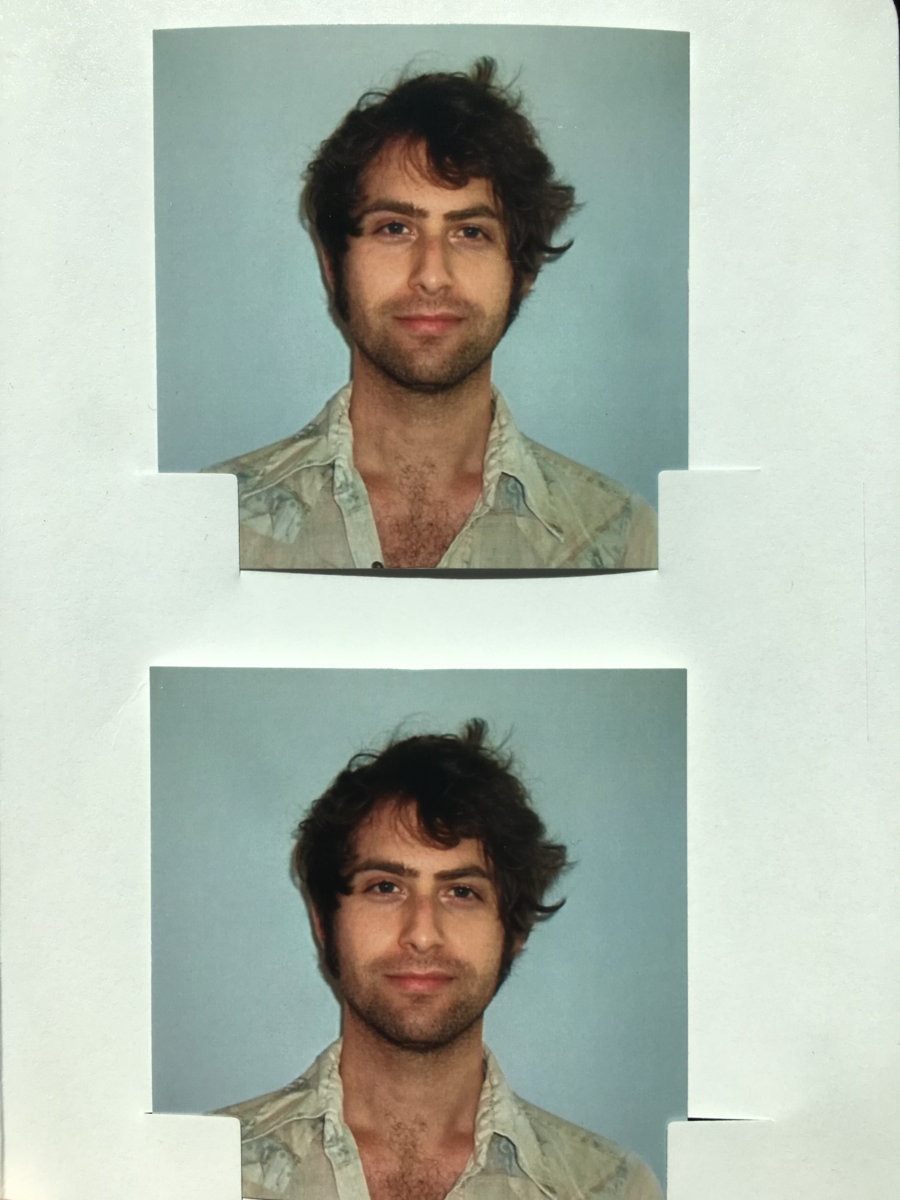
There is a lot of significance to that photo. To begin, it was taken the same year as my journal entry that appears in the last track of the album “If I could fix one thing.” I was a ballerina at the time, and every day I would leave school early and go downtown to ballet classes and rehearsals. I walked around like a zombie in high school and was tired all the time.

I was also very sick in that photo battling a serious eating disorder and truly hating myself. Some might be interested to know that the back cover art of the album pattern is the actual pattern taken from that journal.

Your adept use of visuals on social media is apparent. Is it primarily an avenue for creative expression, or does it serve as the primary means for promoting your music to a wider audience?

Actually, it serves as both. I’ve always wanted to be a music supervisor, and so I create these little movies, and then I pick and choose my songs to accompany the visuals. It makes me happy and also lets me share my songs in a more creative way.

Given the unpredictable nature of listeners’ reactions to “tiny injuries,” have there been instances of unexpected responses that caught you by surprise?

Yes! I just recently got a very long and personal email from Marian Gold from the band Alphaville that told me “tiny injuries” was a revelation for him! At first, I thought it was someone impersonating him, but he actually bought the album!

Also, friends and fans that have my other two albums email and send me notes about their favorite songs on the album, and it’s ALWAYS DIFFERENT! I think that’s amazing, and as a songwriter, it makes me feel like I can write more than one song that connects with people.

Buddie – Agitator (Q&A)

When stumbling upon a band completely new to my ears, whose inaugural album resonates with echoes reminiscent of both Sloan and The New Pornographers, an irresistible compulsion pulls me to the very edge of my seat. Even after countless spins, that initial exhilarating sense of anticipation remains undiminished. “Agitator” stands as a testament to a splendid auditory experience, with its radiant sonic tapestry often drawing more pronounced parallels to Built to Spill rather than the more apparent influences that reverberate within me. This serves as a definitive testament to the realm of top-tier Indie/Power Pop craftsmanship.

Intriguingly, Daniel Forrest provides a deep dive into the inception and meticulous construction of the enthralling composition titled “Agitator.”

How did this record come together?

I never stop writing songs, but at a certain point, it feels like the right time to collect them and record them. This time that point was obvious because I knew 6 months out that I’d be moving to so-called Vancouver, BC, Canada (xʷməθkʷəy̓əm (Musqueam), Sḵwx̱wú7mesh (Squamish), and səlilwətaɬ (Tsleil-Waututh) territory) for graduate school. Danielle Farley, Brian Thomas, David Dean, and I spent the summer of 2021 recording.

We spent a few days with Sean Riley at Studio North, tracking drums and bass. Then we tracked guitars and vox for a few days up at Danielle’s family cabin in the Pocono Mountains of PA. Tim McMonigle and Andrew Silverman spent a day tracking drums and bass with me at Studio North with Sean Riley a few weeks later too.

I kept filling in bits and pieces here or there at home until Scoops Dardaris started mixing in August 2021, and he mastered everything before winter that year. So grateful for those^ folks’ creativity, time, and dedication to the project – y’all are the best!!

As an artist, you choose to show your emotions to the world. Is it always comfortable to do so?

No, but it’s getting easier and easier to do the more comfortable I get with myself. My early songs were always about other people. Then, they were about big, sometimes impersonal ideas. Now, I’m trying to channel those big ideas and hopes for a better world through my own emotions.

Not knowing how people will receive it can be scary, but it’s also a huge privilege to be able to open up to other people about my feelings and have them listen.

When was the last time you thought, ‘I just wrote a hit!’?

I don’t know about a “hit”, but I’ve been trying to open up about my new song ideas earlier in the process with friends and family to get some feedback. Recently, I wrote a song inspired by my friends’ stories when they visited from Philly.

After they went home, I shared it with my partner, friends here, and our next visitors from Philly, and I felt something special every time. Who knows how it’ll translate on a recording and to listeners, but those first times playing a song to friends and family matter just as much to me.

If you could pick three singers to sing harmony vocals on your next record, who would you ask?

Adrienne Lenker (Big Thief, solo), Emily Massey (Slow Pulp), and Al Menne (Great Grandpa, solo; though, we lucked out because they already sang harmonies on a few songs on Agitator!! Thanks again, Al!)

Playing music in front of a crowd. What’s all the fun about?

For me, it’s about connecting with people in real-time, knowing it won’t ever be recreated. You never know how people will respond, and no two performances are alike. Sometimes, I feel super ready to go; other times, I’m more anxious and reserved. But I keep doing it because every few live sets, I really connect with someone in the audience, or maybe I just get a big adrenaline boost. There’s always something to take away. I think I learn a lot about people from the way they react to our playing and my dumb comments on stage, and it makes me a better person.

Curling – No Guitar (Q&A)

Curling is deeply enamored with the juxtaposition of edgy urban landscapes and the capricious allure of indie pop harmonies. This affinity is precisely what makes their latest creation, “No Guitar,” a source of tremendous exhilaration for me. Its enthralling resonance has led me to an incessant cycle of exploration and engagement. With each subsequent listening, the contours of the melodies begin to take shape, revealing a profound and inherent splendor that is truly captivating.

Crafted meticulously over a span of five years, “No Guitar” emerges as an exuberant commemoration of life’s myriad facets – from the transcendence of death and the inception of life, to the trials of unemployment, the intricacies of human connection, and the intricate dance between anxiety and elation. Themes of solitude, melancholy, and the cherished companionship of canines also find their voices within this opus, underscoring Curling’s unique narrative.

Dwelling in disparate corners of existence, Joseph (JoJo) Brandel and Bernie Gelman offer a glimpse into the enchanting genesis of “No Guitar.” Their shared journey unfolds across distances physical and emotional, culminating in a musical testament that bears witness to the complexity and beauty of the human experience.

How do you decide when a song is finished and ready to be recorded?

Our songwriting process is pretty unusual: we (guitarists/vocalists Jojo and Bernie) usually start with a small idea and meet up to flesh it out. Because Jojo lives in Japan and Bernie lives in California, we can only get together for short periods of time, and it’s sometimes a year or longer between our writing sessions. We’ll have something like a week together where we’ll spend a few days writing new songs, another day or two rehearsing them as a band (with drummer Kynwyn), and then a last day or two in the studio cutting basic tracks. After that, a skeletal version of a new song might sit on the shelf for a long time before we add overdubs or write vocals!

It’s hard to decide when a song is ‘finished’ because of this unique writing process. It involves a lot of listening to demos and unfinished recordings and planning out additions until we feel that the song is complete. Sometimes that just means some bass and guitar overdubs and vocals (“Hi-Elixir” is a good example of this), and other times it’s a very long process of experimentation and trying new ideas (like “Husk,” where we added harmonium much later and the cello solo at the end because it felt like the song was missing something).

What compliment you once received will you never forget?

Someone once came up and said we sounded like “Crosby, Stills, and Nash meets Cap’n Jazz,” and that’s always been a funny comment to us.

Those magical moments when you’re working in the studio. Which moment was the most magical?

From this most recent record, the most memorable recording moment was probably creating the latter half of “Dysfunction,” a song that we knew pretty early on would be a great way to close out Side A of the album. Everything was very spontaneous while we were recording and layering instruments for that part. We had this huge wall of Pocket Piano synth loops that we’d made a week prior and decided to just drop them in, and it made for such a cool, mysterious atmosphere. Kynwyn totally killed it with an amazing groove, and we kind of chopped up her drum parts to give the whole section a more off-kilter, dysfunctional vibe.

When did you decide to start asking for opinions on the new songs?

We’re always sharing demos and new tracks with friends and family. A big landmark for us if a song is “working” is if we find our early listeners getting melodies and hooks stuck in their heads. I definitely remember a friend that couldn’t get “Hi-Elixir” out of his head for a while, so I knew it was probably a keeper.

The record is done, and the music is out. Is the best fun done now, or is it just beginning?

For us, a lot of the fun is done. We’re definitely studio rats, ha! But right now, we’re on the road doing a short stint of shows to promote the new album. We’re really fortunate this time to be able to play some dates supporting our friends Nation of Language on a couple of gigs, and we’re hoping that we can get our music some wider support from new listeners.

Our new album is self-released, so once the tour is over, the next step for us is going to be to try to promote it as much as we can and (hopefully soon) plan a tour in Japan for early 2024 since Jojo lives there. We’d love to find a record label or someone interested in maybe repressing some of our earlier releases or doing a tape release of No Guitar, too!

Scott Gagner – Reverse (Q&A)

Scott Gagner is set to unveil his latest creation, the album “Reverse,” which is slated for release on August 22nd. From the very first listen, a distinct and captivating shift in vibe becomes immediately apparent. While its precursor, “BloodMoon,” may not have explicitly embraced a dark theme, it carried an undeniable air of darkness, at least in my perception.

In stark contrast, “Reverse” boasts a more relaxed, approachable, and liberated feel. Its melodies flow with greater ease, weaving a tapestry of captivating pop songs that truly come into their own. The luminosity of these compositions shines more brilliantly, while the shadows take on a deeper hue of black.

The impact of that initial listen left me utterly astonished, yet intriguingly, “Reverse” continues to grow more enchanting with each subsequent play. It’s a testament to the album’s allure that I’m confident I’ll be immersing myself in these new tracks on a frequent basis.

Scott Gagner candidly shares the fascinating journey behind the creation of “Reverse” in an exclusive interview with the Sweet Sweet Music blog.

How did you approach the uplifting and melodic tone in your latest album ‘Reverse’? Was it a deliberate decision from the beginning or did it naturally evolve during the creative process?

My songs tend to be fairly accurate reflections of my state of mind during the time of writing. With that in mind, it should come as no surprise that my family and I are in a much more centered, balanced, and happy place since settling into our new home in Minnesota.

My last album “BloodMoon” was also a little darker, and it’s often natural for the pendulum to swing the other way a bit. That said, the album does have a darker side, as all of my favorite records do.

As for melody, it’s rare for a song I’m writing to make it onto an album if it’s not highly melodic. I would have to say that melody is at the top of the “song pyramid” for me, in terms of importance. Next on the list: cowbell. Obviously.

Can you share your experience of recording in iconic studios like Abbey Road, Studio 2, and others?

Just visiting Studio 2 was near the top of my bucket list. To be able to actually record there was a brain-melter. But that was just the beginning. It turns out that several of the original Beatle pianos are still very much in service, including the legendary “Mrs. Mills” tack piano (Penny Lane) and the Challen (Fool on the Hill). Those pianos — plus a gorgeous Yamaha grand piano — became the backbone of my session.

Even more remarkable, prior to the session, I emailed an old black and white photo of John Lennon singing into a slightly dented Neumann U47 to the folks at Abbey Road (likely on the day he introduced “A Day in the Life” to the other Beatles — still my favorite song). I asked whether the studio team could track down that exact microphone due to the dent. About three hours later, I had an email in my inbox saying that they had found it, and it would be available for my session. Best. Email. Ever. The day itself was completely surreal and slightly overwhelming, especially at first. It took awhile to settle in.

Luckily, I had my old friend Kevin Garrett along for the ride. The whole experience was a dream come true, and easily one of the best days of my life.

Your songs have a remarkable blend of looseness, spontaneity, and accessibility. Accepting compliments can be challenging, but how do you feel about such a heartfelt compliment?

I’m so glad that some looseness comes across. I sometimes worry that modern recording techniques enable me to polish things too much. Being a longtime fan of bands like Guided By Voices and Pavement, I have a huge appreciation for keeping things raw and loose, without sacrificing melody. In the end, you want to serve the song above all else, while maintaining your distinct human spirit / touch / tone / feel. I guess I try to do that by playing many of the instruments myself, even when I know that there are plenty of musicians who might be able to play it better. Better isn’t always better. Unless you’re Steely Dan circa 1976.

The song “Never Could See Any Other Way” has a very “Beatle-y” flavor to it. Was that on purpose?

Absolutely. While in London for the Abbey Road session, I met fellow songwriter Nick Frater, who I’d invited to play keyboards at the session. A few days before the session, I mentioned an idea I’d had kicking around for awhile: wouldn’t it be fun to turn the run-out groove gibberish at the end of Sgt. Pepper’s Lonely Hearts Club Band into a full-fledged song? Knowing that Nick was a fellow Beatles freak, I figured he’d appreciate the audacity of “completing” an unfinished song by The Beatles. What I did not expect was for Nick to text me an iPhone recording that night of a possible chord sequence!

The next morning, over traditional English breakfast, I scribbled down a few lyrics. A few nights later, I met Nick at his home studio, and we blended our ideas together into a suitably 1967-era Beatles homage, with Nick playing Mellotron and Rickenbacker bass, and myself singing. It happened very quickly and easily.

From there, I took the recording back to my home studio in America, played some Ringo-esque drums, 12-string guitars, and enough psychedelic effects to fill the Albert Hall. Nick then mixed the song beautifully, while I put together the video. It was a fantastic collaboration, and a great excuse to have a little fun.

That said, we’re reeeeeally hoping that Paul and Ringo don’t sue us.

‘Christine McVie’ is not only a tribute to a brilliant songwriter and singer but also captures the essence of a Fleetwood Mac song. Could you tell us the story behind its creation?

I’ve wanted to pay tribute to Christine for years now, mostly because she’s a badass, but also because I grew tired of hearing the story of Fleetwood Mac often reduced to the drama between Lindsay and Stevie. Not to discount their contributions, but Christine’s songs are the ones I always return to.

The homage I wrote was almost a cross between “Hold Me” and Christine’s solo hit “Got a Hold on Me.” I knew that the production would offer the perfect excuse to pull out every Fleetwood Mac trick in the book, including Christine’s blend of electric and acoustic pianos (a combination of Nick Frater and myself); Lindsay’s innovative double-speed guitars and blazing solos (the latter of which was performed by my college friend James Nash); John McVie’s signature bass line (“dum, da-dum, dum, da-dum”); and Mick Fleetwood’s groove and trademark drum fills. It’s eerie and tragic that she passed away immediately after the song was completed. RIP, Songbird.

There’s a striking contrast between ‘There Was A House Here’ with its dark and eerie vibe and the following track ‘Goodbye,’ a sensitive ballad. Was this intentional to create such a collision of emotions on the album?

Indeed it was. Sequencing records is often an exercise in creating a good flow between similar songs. But another tool at a songwriter’s disposal is surprise and contrast. It’s important to keep people on their toes from time to time. Otherwise listeners can become bored and tune out. For the songs you mentioned, I felt it was especially important to give the listeners a soothing place to land after a fairly jarring rocker. Ahhhhhh.

The album’s artwork is captivating and would make a great t-shirt design. Do you think that the artwork for ‘Reverse’ is especially important to the overall experience?

As a graphic designer by day, and a musician by night, the marriage between music and visuals is extremely important to me. I’m proud of how the album cover turned out, as I’ve been wanting to return to the simplicity of hand-drawing for years now. I also wanted to embed as many references to the song lyrics as possible within the illustration. You’re not the first person to mention that it would make a good t-shirt design. I might have to print a few up if I get a few more requests!

Your final song ‘Footprints’ carries a strong emotional impact. As a listener, I resonate with it despite having adult children. Thank you for conveying those feelings so accurately in your music.

Much like my favorite living songwriter Ron Sexsmith, I feel like my first decent songs started arriving after I had kids. Since then, some of the favorite songs I’ve written have been inspired by them, including “Footprints.” I feel that life is too short to try to sidestep or otherwise “mask” vulnerable emotions, and there’s almost no better medium for conveying them than in song.

The Vapour Trails – On a Beautiful Day (Q&A)

On a Beautiful Day” marks the latest EP release by The Vapor Trails, an ensemble led by the harmonious collaboration of father and son, Kevin and Scott Robertson. This collection comprises four resounding jangle pop melodies, potentially the pinnacle of their musical journey so far, each endowed with a remarkable ability to stick in your mind. Among these, “Next Life” holds a special place in my heart due to its mesmerizing guitar solo that ingeniously cleaves the song in twain. Nevertheless, the remaining trio of tracks is a testament to the duo’s unwavering affection and meticulous artistry. These songs aren’t just heard; they are felt.

In a candid discussion, Kevin Robertson delves into the genesis of their latest musical endeavor and illuminates the profound experience of forging a deeper connection with his son.

The meaning of success has changed over the years. What would success look like for the new record?

Success is relative, as they say. I guess my idea of success is taking an embryonic song idea, which in the case of The Vapour Trails could be either an idea of Scott’s or mine, and shifting it from ‘an idea’ to a fully recorded piece. Then, in turn, going out there and playing it live. I never get tired of that process, and for every songwriter who enjoys what they are doing, I think that still excites. Of course, global success and top 10 hits wouldn’t go amiss either! Haha.

What’s the gig you will always remember? And why?

For me personally, I would say our band’s first time playing at The Cavern Club in Liverpool. My son and I formed our band together 6 years ago when he was just 15 years old, and the idea (at his request) was to form a band to give him access to the experiences of performing live. To actually reach a point where you are looking across an iconic stage like the Cavern Club’s and seeing your kid playing great guitar riffs, realizing you are up there together performing songs you wrote together, is a genuinely great moment for me as a dad. Couple that with the camaraderie and excitement involved in playing that gig with friends like Nick, Andy, and Kenny (whom I have known for decades), and I think that’s been pretty unbeatable so far.

How do you decide when a song is finished and ready to be recorded?

The whole songwriting process for me starts with melody. I work outdoors, and usually, a melody comes into my head. It’s a case of reaching for an acoustic guitar as soon as possible to get the chords down. Even though I wouldn’t say I’m a fantastic guitar player, I create a lot of guitar riffs and arpeggio parts too, so 9 times out of 10, particularly with my own solo material, I have the whole thing nailed reasonably quickly. With The Vapour Trails, I have the great privilege of collaborating as well, which gives me the other side of the coin. Scott might have a reasonably finished idea that I help with, or vice versa. As was the case in the early days, it was a 50/50 collaboration. As soon as all those elements are in place, or a combination of those elements sounds good, we can begin the recording process. Also, I always think that if a song sounds like a good song with just one vocal and one acoustic guitar, it’s worthy of recording with a full band.

You can’t control the way people ‘hear’ your music. But if you could make them aware of certain aspects that you think set your songs apart, what would they be?

Well, first off, it’s been a long time since I ever thought about ‘making’ people like my music. People can often be set in their ways regarding what they like and don’t like in music, and that’s fair enough. As far as listening goes, I can personally find things to enjoy in many genres, and I don’t mind listening to hissy lo-fi stuff or full-on high-level production, as long as the song is good. What I would say to people is that if you listen to a Vapour Trails song, or even my own or Scott’s solo material, you get a mixture of both those things. You get the DIY approach with limited resources from our home studios, but you also get a splash of color from an external producer. I’m not really into just making production sound great; there’s no point in that without a decent song behind it. On top of that, our songs are always created because Scott or I believe they are worthy of being out there; otherwise, we wouldn’t bother releasing them. So, Vapour Trails songs represent a Father & Son collaboration in terms of songwriting and a blend of different recording techniques and production. That alone might set them apart from other material.

If you could choose three singers to provide harmony vocals on your next record, who would you ask?

Okay, so I’m going to answer that question based on three artists whom I believe are not only great singers but also masters in the art of harmonizing. Firstly, if this were a “Dead or Alive” scenario, David Crosby would be my immediate choice. However, if we’re talking about our next Vapour Trails record, I’d go with Graham Nash. I simply don’t think you can find anyone better for those high parts; he’s an absolute killer. My second choice would be Robin Pecknold of Fleet Foxes, who, in my opinion, is one of the best folk folk singers around, period. Lastly, I’d choose Brian Wilson, who, even in old age, would harmonize brilliantly and ensure that every note is perfect in relation to the final vocal production. These three brilliant voices would nail those harmonies.

Arthur Alexander – … steppin’ out! (Q&A)

Upon encountering the album titled “… steppin’ out!” momentarily, I entertained the notion that Arthur Alexander might be proclaiming his retirement. Thankfully, this assumption proved to be incorrect. Such a scenario would have been quite perplexing, especially considering the robust energy and compelling vigor of the new songs. The lyrics, brimming with a cheeky audacity, contribute to the album’s remarkable essence. One could almost interpret this collection as an intentional statement, perhaps even a masterclass in the realm of Power Pop.

Did you know you were in great shape when you made the album?

Thank you! Well, I guess it was a ‘statement’…

“I’m here!… again!” 

“One Bar Left”, my first solo album came out in 2018, it was time… and I had the goods. As the work progressed it became clear to me that as varied in styles and sounds as “One Bar Left” was, this one was REALLY all over the place musically! At first, I was a little worried, but when I listened to it in its entirety I really loved the fact that it WAS all over the place, songs literally jumping from one sonic soundscape and music era to another!

So yeah, it became a statement of sorts – I love all kinds of stuff and I’m not gonna conform myself to someone’s idea of ‘consistency’. And as the songs started to emerge, one by one, yeah, I knew this was gonna be rather special!

As for the ‘Power Pop master class’?

At the risk of sounding full of myself, I have impossibly high standards for songwriting and record production. When it comes to making a record, there is no such thing as a “filler track” in my book. I have to feel every song that goes on the record is a ‘single’, or it doesn’t make the cut. The same goes for production. I know what I hear in my head and to quote Dylan: “I have headful of ideas that are driving me insane”!

I do whatever it takes to achieve that as an end result. That’s my approach whether I produce myself or other artists.

(She’s A) Red Hot Lover has a wonderful Pet Shop Boy-esque intro. How did that come about? …

Oh man, how cool you picked up on that!

During the 80s there was precious little musically that was of any interest to me, Pet Shop Boys being a notable exception. I loved their records! Great songs; wonderful, memorable melodies, full of hooks, and though I was never big on synth-based sound, theirs was beautifully done; skillful and well-constructed arrangements. And then, when they got Dusty Springfield into the mix?… Ohmygod!… I was TOAST!… I had such a crush on Dusty! LOL

It all also corresponded to the time when I disbanded my band Sorrows and was trying to figure out what to do next. I bought a synth and a drum machine and started tinkering with that. I didn’t know what the hell I was doing with that stuff, so everything I came up with was a bunch of ‘happy accidents’. But some of those accidents became the fuse that lit some of my songs down the line, “(She’s A) Red Hot Lover” being one of them.

For some reason, the synth as a lead instrument really gets on my nerves, but one of the things I was really attracted to about synths was the ability to create orchestral textures and musical pads. I guess, that goes back to me having grown up on classical music in my parents’ house. I also love film music, like Ennio Morricone and Nino Rota, so the sounds these strange boxes could make were really fascinating to me.

Fun fact, and you can hear it on “(She’s A) Red Hot Lover” and “A Little Too Much” tracks on this album. Both prominently feature these arpeggiated “disco” bass lines (I probably stole the idea from Pet Shop Boys or Gorgio Moroder! ). The only problem? My little synthesizer didn’t have a built-in sequencer nor did I have a computer or knew jack shit about MIDI to be able to program those lines. My keyboard-playing skills leave a LOT to be desired, so it was quite a job to get it right! What you hear is me – “the human sequencer machine” – banging those parts out with two fingers, in real time! It took a few tries… but I got it! A lot of sweat went into it… SO I REALLY APPRECIATE YOU LIKING THE SONG! LOL

“… steppin’ out!” is now a few weeks old. Are you happy with how the album has been received so far?

Considering the fantastic reception “One Bar Left” received when it came out, I admit, I was a bit anxious leading up to this release! I set the bar for myself pretty high with “One Bar Left”, but I have to say, I’m quite blown away at how “… steppin’ out!” took off right out of the gate!

The funniest (and VERY gratifying!) thing about it? Not only is it getting rave reviews and being played by radio stations all over the world, from Europe, to the US, to Australia, but the DJs are not just sticking to the tracks the record label slated for a Single. They’ve been playing, literally, every freakin’ track off the album!

It reminds me of the time when Sorrows got signed to CBS Records and their bigwigs asked us about our ideas for the album we were about to make. I told them: “We don’t want you to have to struggle trying to find that one song that could be a single off the album. We’ll give you 12 singles and let you sit in your A&R meeting, pulling your hair out trying to pick which one should be the single!” Stuck up young lads we were, eh?!

The album seems to have been made by a band that has been playing together for years. Do you consider that a great compliment?

YES, I do! Can’t think of a bigger compliment! I do have a great band, all seasoned pros, but this was a ‘pandemic album” and, like everybody else in the world at that time, we had to scramble and invent how to get things done in ways we never had to before. I was seriously worried that it may end up sounding like a patchwork and was keeping a watchful eye on the vibe of the tracks, making sure nothing sounded “phoned-in” and that band spirit was in focus at all times.

13 songs/51 minutes while you increasingly see bands releasing separate singles or EPs. It had to be a full-fledged banger?

In a word? YES!

Yeah, I’ve been hearing this for the longest: “Forget the albums, you gotta come out with a single every 15 minutes so you keep your fans engaged!”… and that’s definitely doable with today’s technology.

The result?… 300,000 songs come out every day from as many bathrooms and bedrooms. Sure, it’s certainly “empowering” and “evens out the playing field”, but most of it is total crap, and now you gotta try and sift through all that sea of noise to find something worth listening to!

Nahhh… as I like to say, if I wanted to write songs like that I could record 365 albums a year and put out a single every Tuesday… and maybe Thursday too?!

I hear music business “insiders” bloviate how doing that makes more business sense in today’s music market landscape than releasing albums.

Yeah, maybe that works for Beyoncé or some Hip Hop artists?… They also got 25 writers credited on every damn song; 40 producers spitting that shit out of their computers faster than a car factory assembly line, and a million-dollar marketing machine behind it all to shove it down your throat.

Back in the day, putting out a Single, or EP, was an ‘event’! These releases really stood out and people had TIME to take note of them.

These days, with the glut and a literal avalanche of music we’re confronted with on a daily basis that precious-all-important Single is just another bleep in the maze we all live in that is Internet. You blink and you missed it.

Did you start from scratch or when you start a new album, do you dig into a ton of ideas collected over the years?

It’s a mix of both. I do have a “vault” spanning years of writing and song ideas; a 3-ring binder with some lyrics or just scraps of lyric ideas, or musical ideas I recorded on my phone, or just something I’ve been carrying in my head, often for years!… all this along the new songs that are coming to me all the time. Most of it ends up in the trash can (see above, about the 365 albums a year! )

Early on, I remember something I once read about Lennon and McCartney talking about how they wrote songs that really clicked with me. They said that since they couldn’t write music they had to memorize it and if they wrote something and couldn’t remember it the next day, it probably wasn’t worth remembering.

Yup, that’s my school of thought! LOL

The album title could hint at an end of a career or should I read ‘…steppin’ out!’ differently?

VERY differently! This boy is just getting started!

meyerman – happy to see you (Q&A)

“who do you think you are?” meyerman’s debut was released in 2011. It took a while before the band led by Theo Meyer presented their follow-up, but it’s here now. ‘happy to see you‘ was released in mid-July and is brimming with witty, fist-pumping Power Pop anthems of a quality that seemed so natural during the genre’s heyday in the ’90s but sounds refreshingly new today.

And if you have such a good command of writing this type of songs, why not write a song about your own band? meyerman just goes ahead and does it, and it’s infectious, funny, and ready to be the theme song of a new animated series that tells the story of the band and how the new album came to be.

Theo Meyer explained to the Sweet Sweet Music blog what the script of that series will roughly look like.

How did this record come together?

Slowly I guess, is probably the headline here. Our debut record was in 2011, and here we are releasing the sophomore effort in 2023. Usually the first thing people ask is “why so long?”. Well, the short answer is that we are not full-time musicians. Sadly, we have jobs and families that selfishly rob us of our inevitable meteoric rise to rock stardom. Other time-sucking contributing factors since 2011 include: fully replacing two meyerman band members, my insistence on fully recording and re-recording demos before completely re-recording them all over again with the band,  Jeff’s iron-man competition training (just kidding I support you buddy! *eye-roll*), and finally, world-wide pandemics.

When did you decide to start asking for opinions on the new songs?

Generally I’m not really interested in anyone’s opinions about a song until I’ve fleshed out the entire thing in a demo that I’m happy with. I’m just chasing the purest connection to that initial inspiration in my head into a finished thought. Then I’ll run said demo past the band because the guys I have now are also my most respected music friends and trusted guardians of what we’re trying to do here as a band. If one of them hates a demo after this stage it’s heartbreaking, but usually means the song gets sent to the archives. After we put the band recordings together for the record, I have a handful of other friends who I know won’t blow sycophantic smoke up my ass. That basically constitutes our “market research” for the record.

The meaning of success has changed over the years. What would success look like for the new record?

It’s funny…Back in the day I dropped out of college to pursue a major label record contract with my band at the time. It was a blast and my buddies and I were sure we would be rock stars. That didn’t happen. Since those days, I have really focused on becoming the best song-writer that I can be, and to following the creative directions that come most naturally to me rather than chasing a popular sound. As a band, we are just trying to put the best stuff into the universe that we know how to make, without giving a crap about where it will take us professionally. From there, whatever happens, happens. The 22 year old me might not believe this, but it truly has been a much more rewarding path than the days of worrying about album sales or fame and fortune.

As an artist, you choose to show your emotions to the world. Is it always comfortable to do so?

I don’t think meyerman is really making overtly emotional music. Like myself, meyerman’s music is lyrically a little emotionally detached, sometimes softening uncomfortable subjects with wit or downright smart-assery. My own personal favorite emotional reaction to music has always been that feeling of lift or elevation, almost like temporary weightlessness…two people listening and bobbing their heads up and down, just grinning like idiots at each other. That’s kind of the goal.

Is the best song you ever wrote on this one?

I really am proud of every track on this record but I really don’t think I’ve written my best song yet. It’s part of what keeps me writing.


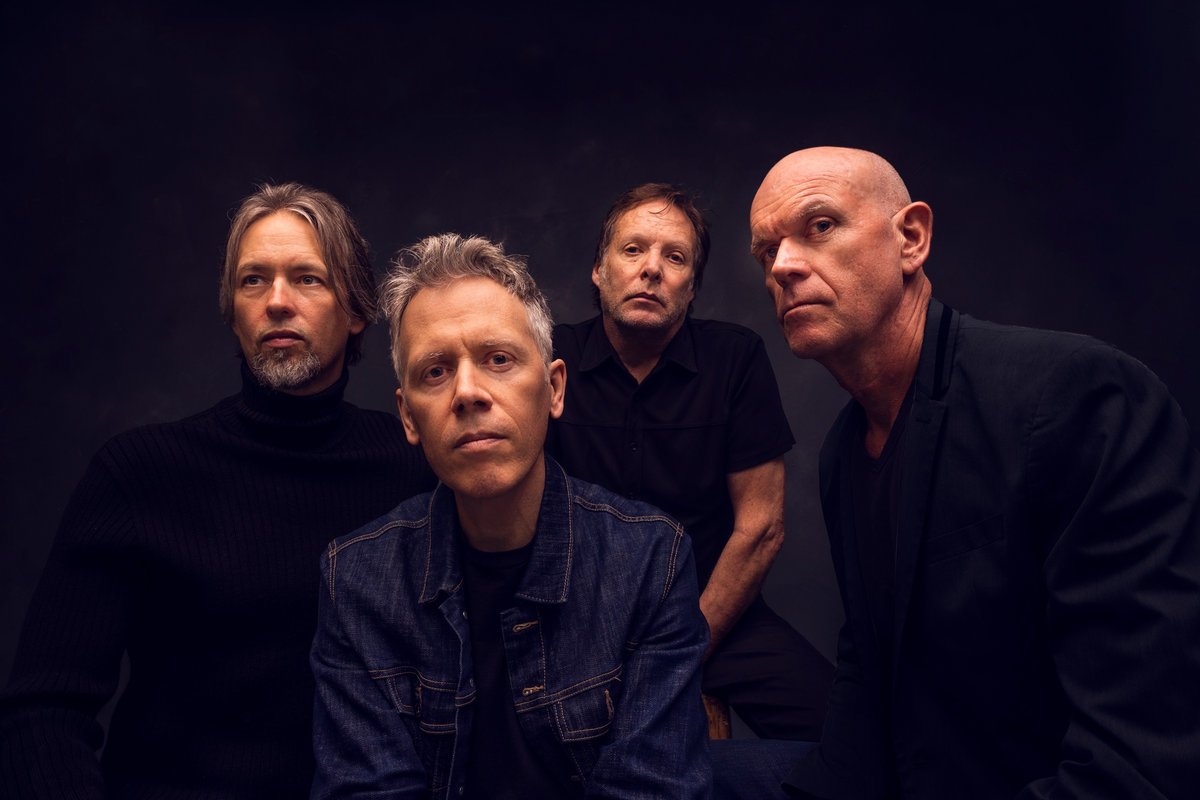
meyerman:
theo meyer: guitars and vocals
jeff preischel: bass, vocals
robert sadowski: guitars, lead guitars, vocals
danny diaz: drums